Let’s cut to the chase: these winged wonders aren’t just nature’s helicopter pilots – they’re forest architects. No joke, they’re the only mammals that can truly fly, and they do it while carrying seeds for tomorrow’s jungles. If that doesn’t make you want to grab binoculars, I don’t know what will.
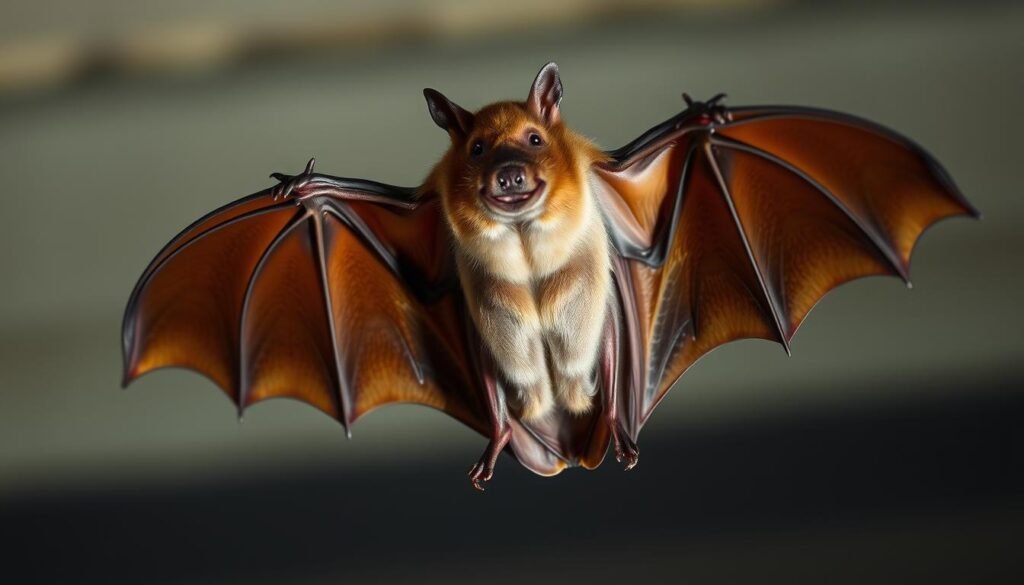
Forget Batman – real-life bats (yes, plural) have way better gadgets. Their massive eyes let them navigate moonlit skies without echolocation, like furry night-vision goggles. Ever seen an Indian flying fox? Picture a fuzzy body with wings stretching 5 feet – basically a leather umbrella with a face.
Here’s the kicker: when they’re not doing acrobatics, they’re upside-down engineers. Roosting headfirst isn’t just quirky – it’s their launchpad for those awkward-but-effective takeoffs. Think of it as their version of a trampoline, minus the bounce.
I’ll level with you: most people see “fruit bat” and think “flying rat.” But here’s my hot take – they’re Earth’s original gardeners. Every mango you’ve eaten? Thank their late-night snacking habits. Their scientific name, Pteropodidae, literally means “wing-footed,” which sounds way cooler than “fruit delivery service.”
Stick around – we’re diving into why these sky puppies matter more than your last TikTok obsession. And yes, I’ll explain the helicopter thing.
Fruit Bat Facts for Kids
Ever wonder what it’s like to live life upside down? These winged mammals flip the script – literally – while doing critical work for our planet. Let’s peel back the curtain on their daily routines and surprising behaviors.
A Glimpse into Their World
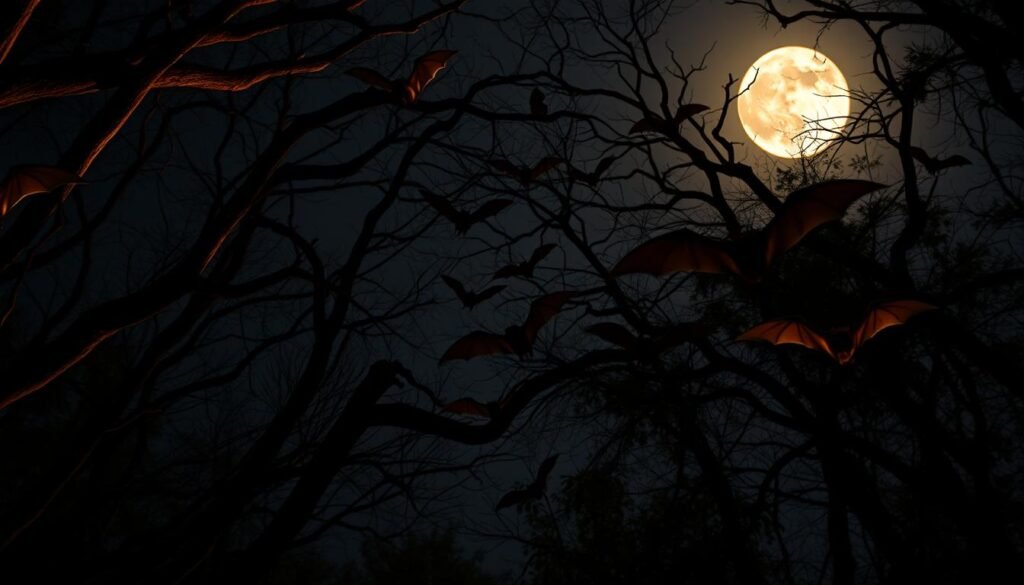
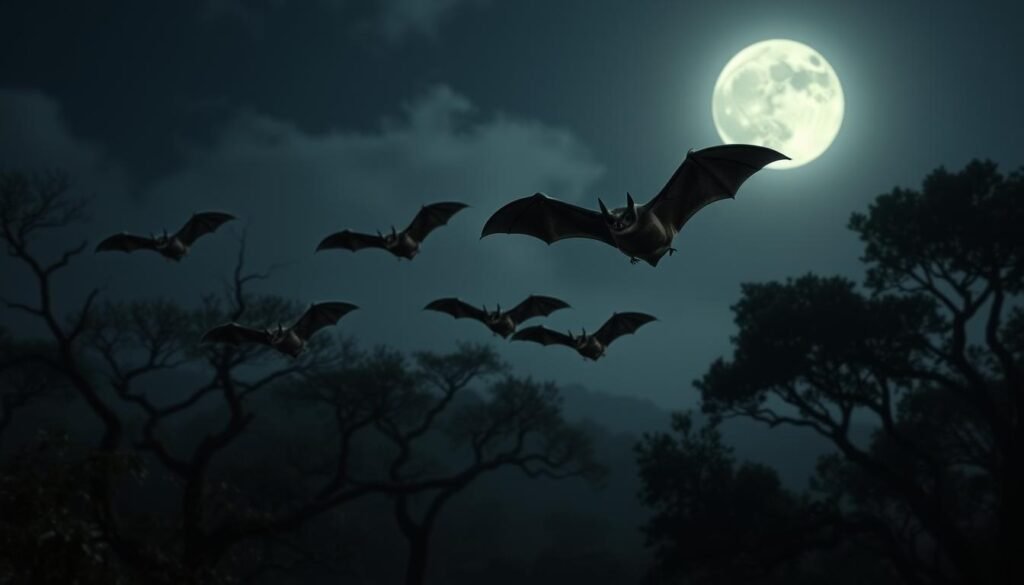
Picture this: dusk falls, and thousands of bat species stir awake. Unlike their insect-eating cousins, they’re hunting mangoes and figs, not mosquitoes. Their day starts when ours ends – a reverse schedule that keeps them safe from daytime predators.
I once watched a clip where a group feasted on ripe bananas, juice dripping everywhere. It looked like a chaotic picnic, but every messy bite serves a purpose. Their vision-based navigation lets them spot fruit from miles away – no echolocation required. Imagine grocery shopping with built-in night vision goggles!
Real Examples from Nature
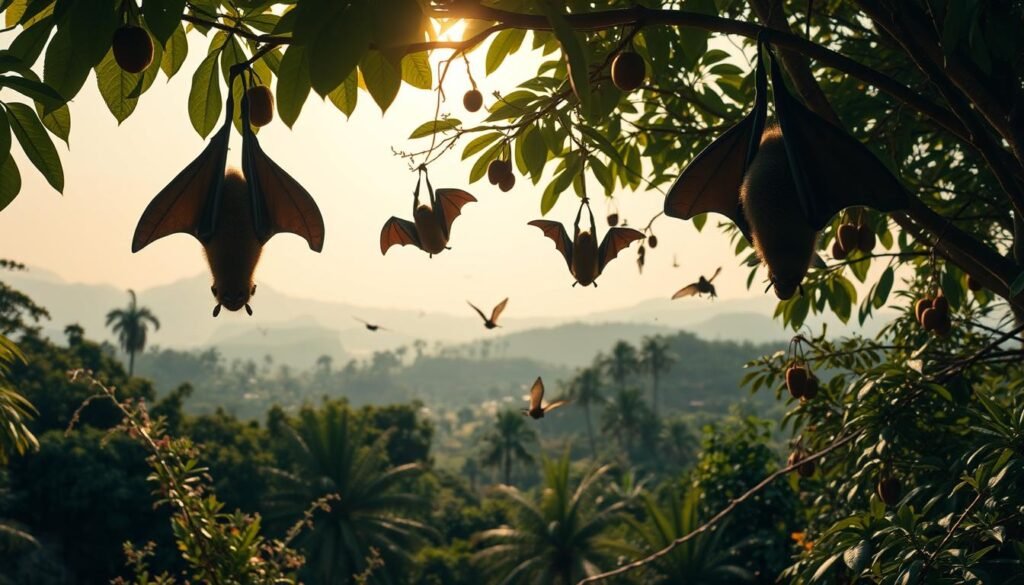
In Southeast Asian rainforests, these animals form colonies so large they darken the sky at sunset. But here’s the twist: despite living in crowds, they’ll often fly solo to find the juiciest snacks. It’s like having 500 roommates but still needing “me time.”
Their secret weapon? Spatial memory sharper than your phone’s GPS. Studies show they memorize fruit locations across vast territories. Next time you get lost downtown, remember: a bat could probably navigate better blindfolded.
When they’re not eating or flying, they’re grooming each other – social bonding that puts TikTok trends to shame. This isn’t just cute behavior; it’s how they maintain those impressive wingspans. Think of it as their version of a spa day, minus the cucumber slices.
Uncovering Their Unique Anatomy
Imagine having hands that double as wings—no, it’s not a superhero movie. These mammals’ flight gear evolved over 50 million years, and honestly? It puts Boeing engineers to shame. Let’s dissect their biological blueprints—no lab coat required.
Wing Structure and Flight Mechanics
Their wings aren’t just flaps—they’re modified hands with skin stretched between elongated fingers. Picture a leather glove blown up into a parachute. That thin membrane (called patagium) acts like a built-in stabilizer, letting them bank sharp turns without face-planting into trees.
Here’s the kicker: the greater flying fox uses these wings like a pro surfer rides waves. At 5 feet across, their span generates enough lift to glide for miles. Who knew biology could be so…hands-on?
Sensory Adaptations in Low Light
While most night fliers rely on echolocation, these guys? They’ve got eyeballs the size of marbles. Their retinas pack extra rod cells—nature’s night-vision tech—letting them spot fig trees in near darkness. I’ve seen owls look confused in comparison.
That skin membrane isn’t just for flying. It’s loaded with nerve endings, making their wings hypersensitive to air currents. Think of it as a built-in weather app—except it actually works.
Behavior Traits and Nighttime Activity
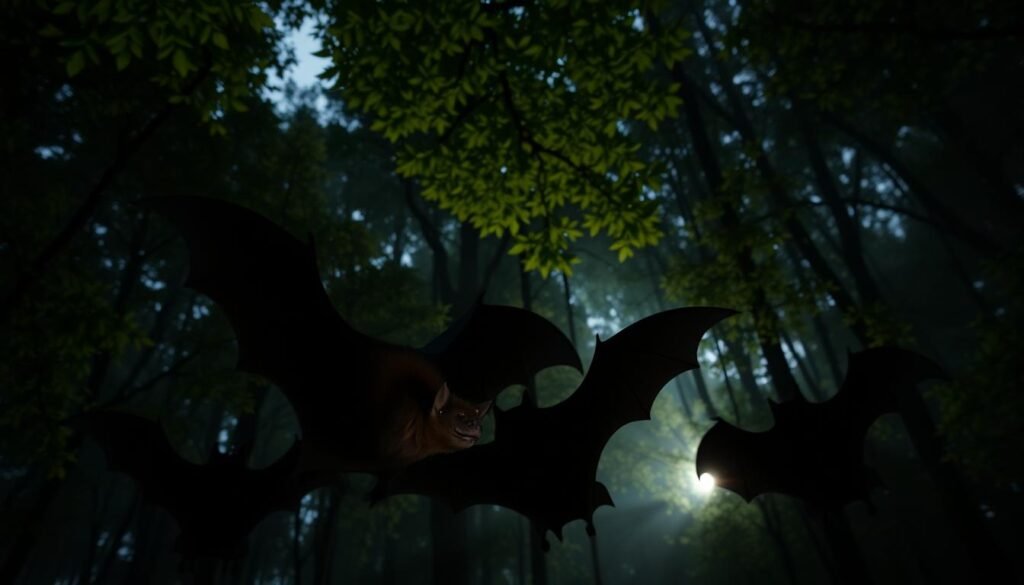
Let’s get real—when the sun dips, these night shift workers clock in with a mission. While you’re binge-watching shows, they’re out rebuilding forests one messy meal at a time. Their nocturnal hustle isn’t just random snacking; it’s a precision operation timed with nature’s clock.
Feeding Rituals on Fruit and Nectar
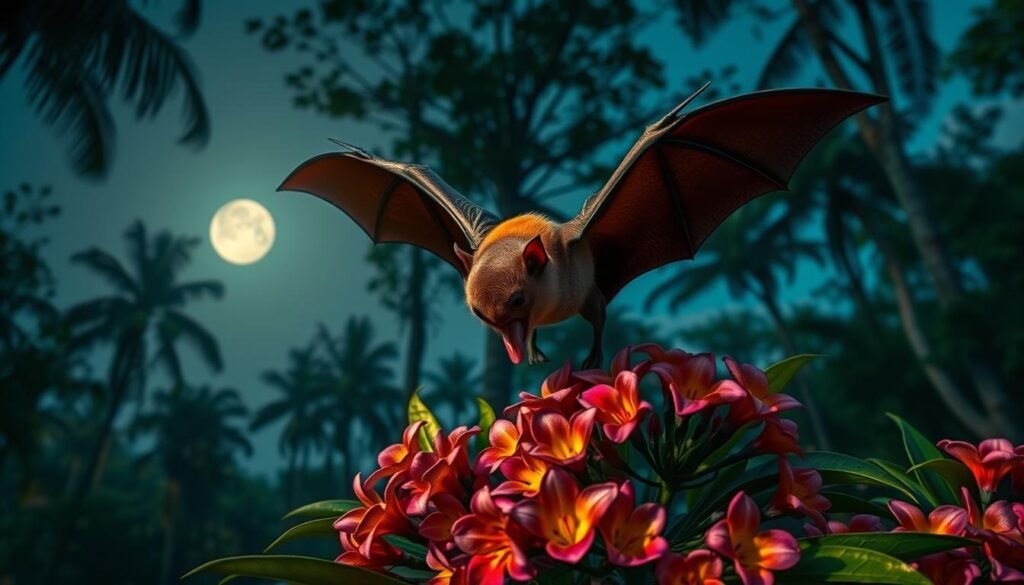
Picture a juice bar regular with zero chill—that’s your average nectar lover at dusk. They don’t just eat; they smoosh faces into ripe figs, wearing dinner like a badge of honor. But here’s the kicker: their food choices sync perfectly with seasonal fruiting cycles. No GPS needed—they’ve memorized every mango hotspot in their territory.
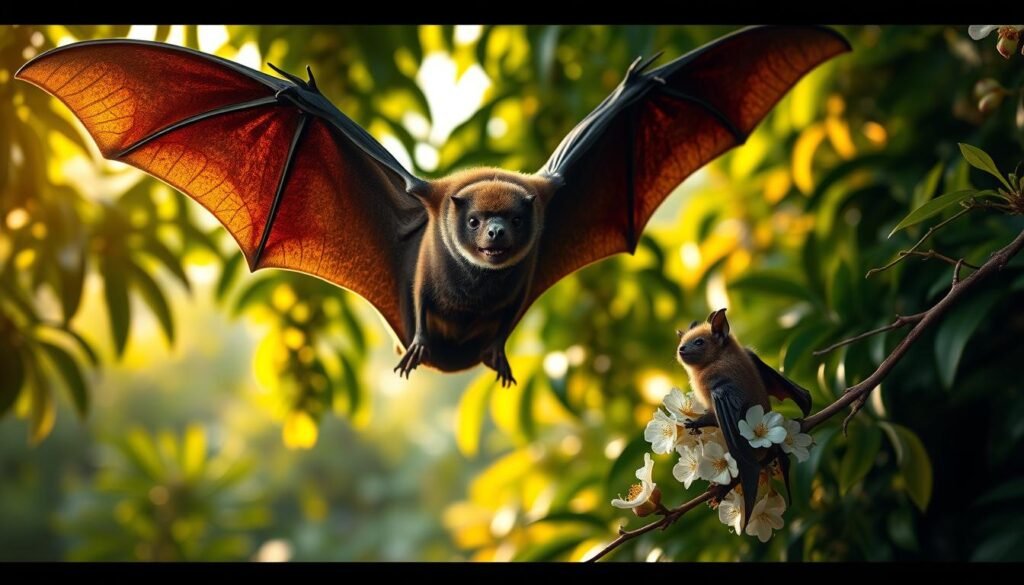
Their tongues? Built-in straws for slurping floral rewards. And before you ask—yes, pollen sticks to their fur like glitter at a rave. This isn’t gluttony; it’s eco-engineering with sticky fingers.
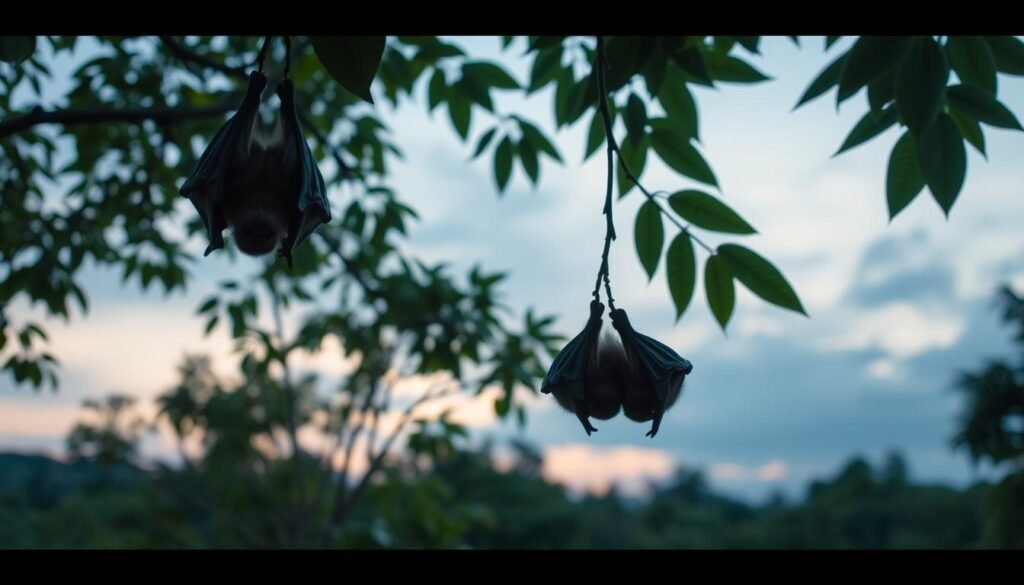
Daylight hours transform them into upside-down yogis. Hanging isn’t just quirky—it’s their version of a panic room. Predators can’t reach them, and takeoffs? Just let go and glide. Simple physics, zero effort.
Colonies operate like a well-oiled machine. Thousands strong, yet everyone knows their perch. Bats also have this chill vibe during downtime—grooming sessions that’d put spa days to shame. It’s not just survival; it’s community with wings.
Scientists lose sleep studying these patterns—literally. Because honestly, who wouldn’t obsess over creatures that party all night and nap like pros?
Diverse Species and Size Variations
Nature’s blueprint for bats reads like a mad scientist’s sketchbook. Some look like winged house cats, others resemble fuzzy origami projects. Let’s explore how size dictates survival strategies in these mammals – from sky giants to pocket-sized pollinators.
Giant Flying Fox Comparisons
Meet the flying fox – nature’s hang glider with a 5-foot wingspan. These animals weigh as much as a bowling ball (1.6 kg) but maneuver through dense forests like featherweight acrobats. Their secret? Specialized wing tendons that lock open during marathon flights to conserve energy.
Their fruit preferences match their size. Mangoes, jackfruits, bananas – nothing’s too big. I’ve seen them demolish a papaya in minutes, seeds raining down like confetti. This isn’t gluttony; it’s forest regeneration on wings.
Tiny Nectar Bat Profiles
Now shrink that image 40 times. The long-tongued nectar bat fits in your palm, weighing less than a nickel. Their entire body could hide behind a business card – yet they’re crucial for pollinating rare flowers.
These mini mammals sip nectar like feathered hummingbirds, their faces dusted with pollen from night-blooming plants. Unlike their fruit-gobbling cousins, they’re precision engineers – hovering mid-air to extract sweet rewards without damaging delicate petals.
Size shapes their worlds completely. Giants transport seeds for tomorrow’s forests. Tiny ones ensure fruits even exist. Both prove evolution’s genius – because when you’re flying for survival, every gram counts.
Ever stumbled upon a flying gardener? These mammals transform entire landscapes simply by existing where they do. Their stomping grounds stretch across continents, but tropical zones call their name loudest. Let’s map their hangouts – from steamy jungles to unexpected island hideouts.
Tropical Regions in Africa, Asia, and Australia
Picture the Congo Basin at dusk. Wings rustle through humid air as thousands emerge from trees dripping with figs. This nightly ritual repeats from Madagascar’s baobabs to Borneo’s rainforest canopies. Their habitat isn’t picky – dense forests, mangrove swamps, even city parks work if fruit’s available.
I’ve tracked groups in Australia’s Northern Territory that commute 60 miles nightly. Why? Their internal GPS knows exactly which eucalyptus blooms will burst open after sunset. It’s like they’ve memorized nature’s snack schedule.
Unique Cases: The Egyptian Fruit Bat on Cyprus
Now for the plot twist: Europe’s sole representative lives on a Mediterranean island. The Egyptian fruit bat colony in Cyprus roosts in sea caves – a far cry from tropical trees. Scientists debate how they arrived, but their survival proves adaptability trumps location.
While cousins munch rainforest treats, these islanders feast on carob pods and citrus. Their presence reshapes local ecosystems, dropping seeds that sprout into new habitat patches. It’s wild, isn’t it? One species, two continents, countless ecological fingerprints.
From Asian megacities to Cyprus’ cliffs, these mammals redefine “home.” Their world isn’t bound by geography – just the reach of their wings and the pull of ripe fruit.
Ecosystem Impact and Natural Roles
Here’s something you can’t ignore: without these winged landscapers, half the forests you know wouldn’t exist. They’re not just eating fruit – they’re replanting continents one sticky flight at a time.
Pollination and Seed Dispersal Examples
Take durian trees – the spiky “king of fruits.” Their flowers open exclusively at night, waiting for fuzzy visitors. As mammals feast, pollen clings to their fur like glitter at a rave. Scientists found one colony can transfer 50,000 seeds nightly – talk about a graveyard shift!
Their secret? Digestive systems that soften seed coats. What comes out the other end isn’t waste – it’s forest confetti. I’ve seen seedlings sprout from their droppings in places no human gardener would reach.
Plant
Bat Role
Region
Durian
Primary Pollinator
Southeast Asia
Baobab
Seed Disperser
Madagascar
Agave
Nectar Feeder
Mexico
In Australia’s outback, ghost gums rely entirely on these flyers. Their flowers dangle like chandeliers – perfect for hovering snackers. When researchers tracked seeds, they found new saplings growing 30 miles from parent trees. That’s like planting an apple orchard in the next state!
Here’s my take: they’re nature’s ultimate multitaskers. Eating becomes gardening. Flying becomes farming. And we’re just starting to grasp how many plants owe them everything – from your morning smoothie ingredients to medicines we haven’t discovered yet.
Misconceptions and Real Dangers
Time to flip the script on bat myths. Pop culture paints these mammals as sinister cave-dwellers, but reality? They’re more likely to flee than fight. Let’s unpack why Hollywood got it wrong – and what actually keeps conservationists awake at night.
Bats Aren’t Aggressive by Nature
Imagine being blamed for crimes you didn’t commit. These winged vegetarians would rather sip nectar than stalk prey. Studies show they bite only when cornered – like that time your cat hid under the couch. Their real survival strategy? Avoidance.
While you’ve heard tales of bloodthirsty vampire creatures, truth’s less dramatic. Their caves serve as safe houses from snakes and birds of prey. Think of it as nature’s witness protection program – minus the fake mustaches.
Debunking Myths with Hard Facts
Let’s gut-check common fears:
Myth
Fact
All bats suck blood
Only 3 vampire species exist (none eat fruit)
They attack humans
More people die from cows annually
Carry rabies
Less than 0.5% test positive
The real threats? Outdoor cats kill millions yearly. White-nose syndrome – a fungal disease – wipes out colonies faster than horror movie sequels.
Here’s the seed of truth: exaggerated stories overshadow their ecological value. Next time someone mentions “flying rodents,” remind them: real monsters don’t plant forests.
Scientific Perspectives and Research
What if I told you the key to vaccine breakthroughs might be hanging upside down in a cave? Modern science keeps uncovering how these night flyers shape human progress—and the findings are wilder than a midnight mango feast.
Medical Discoveries from Bat Studies
Here’s a fact that’ll stick: their immune systems are biological goldmines. Scientists discovered antiviral genes in their DNA that helped develop COVID-19 treatments. Think of it as nature’s cheat code—resilience evolved over 50 million years, now protecting humans.
Their echolocation skills aren’t just for dodging trees. Engineers copied their sound-wave navigation to create devices that help the blind “see” through vibrations. It’s like turning biology into tech—no lab coat required.
Comparative Research: Echolocation versus Vision
Let’s settle the debate: echolocation isn’t their only trick. While insect-eating cousins click like sonar submarines, fruit lovers rely on vision. Their scientific name, Megachiroptera, literally means “big hand-wing”—a nod to those night-vision eyes.
Feature
Echolocation
Vision
Used by
Insect-eaters
Fruit specialists
Range
Short-distance
Long-distance
Precision
Detects mosquito wings
Spots ripe figs at 100ft
Next time you swat a moth, remember: flying mammals and insects evolved opposite strategies for night life. One uses soundscapes, the other moonlit landscapes. Both prove evolution’s knack for problem-solving—no Wi-Fi needed.
Video and Media Resources
Want to see nature’s night shift in action? Let’s talk about turning your screen into a window for observing winged wonders. Quality footage reveals details even binoculars miss – if you know where to look.
Engaging YouTube Resources
Start with channels like Wildlife Watch or Nature Unfiltered. Their clips show acrobatic flights and grooming rituals most never witness. Pro tip: search “nocturnal behaviors” or “seed dispersal footage” for goldmine results.
Those facts you’ll see? Backed by researchers with night-vision cameras. I once spotted a colony’s time-coded feeding patterns in a documentary – their fruit runs sync with moon phases like clockwork.
Dawn and dusk matter. Great videos capture transitional light where wings glow amber against darkening skies. It’s not just pretty – it explains how they navigate shifting shadows.
Watch at 0.75x speed – you’ll catch wing mechanics textbooks miss
Trust me – once you see a pup learning to fly in reverse playback, you’ll never view media the same way.
Conservation Efforts and Growing Threats
Here’s the hard truth nobody wants to admit: we’re losing our winged gardeners faster than we’re saving them. While natural predators like owls and snakes keep populations balanced, human actions and diseases tip the scales dangerously. Let’s unpack what’s at stake – and how you can help rewrite this story.
Impacts of White-Nose Syndrome
Imagine a silent killer creeping through caves. That’s white-nose syndrome – a fungal disease wiping out hibernating colonies. Since 2006, it’s erased bat populations across 40 states. I’ve seen reports where 90% of cave-dwellers vanished in two winters. The fallout? Fewer pollinators for agave plants, more pests devouring crops – an eco domino effect.
Collaborative Steps to Save Bat Species
Global teams are fighting back with smart strategies:
Installing artificial roosts in protected forests
Testing antifungal sprays safe for megabats
Tracking migrations via tiny GPS backpacks
Here’s where people shine: supporting groups like Bat Conservation International funds critical research. Even avoiding caves during hibernation seasons helps. Your backyard? Plant native fruit trees – instant snack stations for traveling colonies.
Threat
Solution
Impact
Habitat loss
Urban roost boxes
+23% survival rates
Pesticides
Organic farming incentives
Cleaner food chains
Watching scientists nurse rescued pups back to health? That’s hope with wings. Every recovered bat isn’t just a win – it’s proof we can course-correct. The question isn’t whether we need them. It’s whether we’ll act before their midnight flights become ghost stories.
Fun and Fascinating Bat Quirks
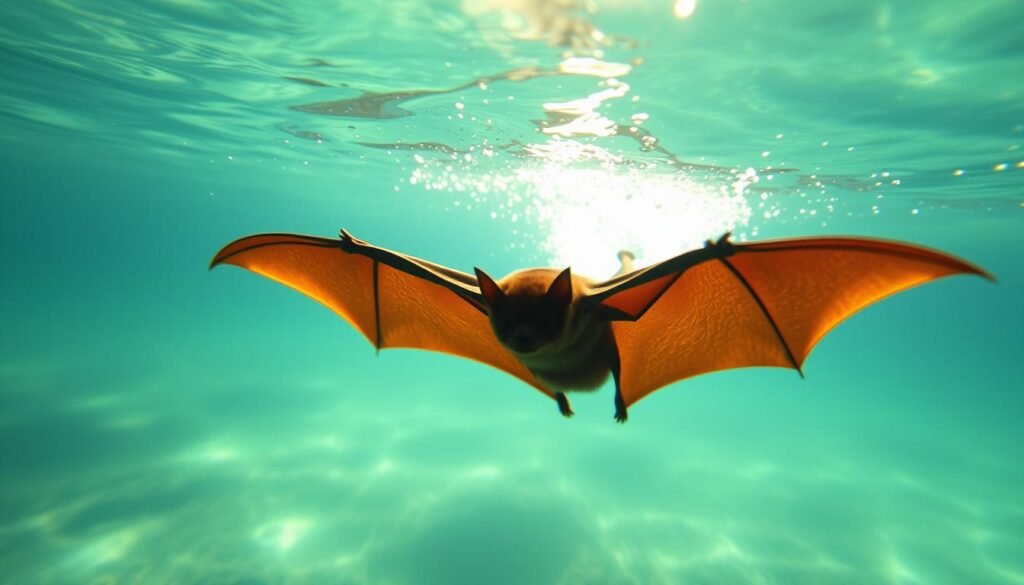
Who knew bats moonlight as backup swimmers? While they’re no Michael Phelps, certain species paddle through water like furry Olympians. Picture this: wings folded, feet kicking in a clumsy doggy paddle. It’s not graceful, but it works when escaping predators or grabbing floating snacks.
Swimming Abilities and Other Odd Behaviors
Here’s the kicker: their feet aren’t just for hanging. Some use them as makeshift spoons to scoop insects mid-flight. I’ve seen footage where they snatch moths like diners grabbing fries from a drive-thru window. Yet not all meals are predictable – one group was caught stealing fish from ponds!
Let’s clear the air: vampire bats hog the spotlight, but their fruit-loving cousins have weirder habits. Ever heard of cave-dwellers that stash food in rock crevices? It’s like nature’s version of hiding candy from siblings. And those late-night cave parties? Turns out they’re swapping grooming tips while upside-down.
Speaking of insects, some bats hunt them using… wait for it… echolocation and night vision. Imagine having radar built into your eyeballs. Their adaptability blows my mind – they’re basically Swiss Army knives with wings.
Final thought: next time you see a bat, remember they’re full of surprises. Whether dog-paddling or snack-hiding, these mammals prove nature’s rulebook has blank pages waiting for weirdness.
Final Thoughts on Fruit Bat Facts for Kids
So here we are, at the edge of the canopy. These animals aren’t just quirky night fliers – they’re living proof that evolution writes better stories than we ever could. Every species we’ve explored, from fig-hoarders to nectar-sippers, reveals a new layer in nature’s playbook.
I’ve watched researchers lose sleep tracking food routes and pollen trails. Their work shows how something as simple as a midnight mango snack can reshape entire ecosystems. Take durian trees – their survival hinges on sticky-furred gardeners who work shifts we’d call insane.
What gets me? Even now, in an age of satellites and AI, we’re still decoding their secrets. New bat species pop up in rainforests, challenging what we thought we knew. The more we learn, the clearer it becomes: every wingbeat matters in ways we’re just starting to grasp.
Maybe that’s the real magic. These creatures force us to rethink our place in the world. They’ve outlived dinosaurs, shaped fruits we love, and even inspired medical breakthroughs. And yet…