Sebastian Vizcaino was a Spanish explorer who mapped California’s coast in the late 16th and early 17th centuries. He sailed through uncharted waters, making discoveries that changed how people saw the Pacific coast.
Born in Spain around 1548, Vizcaino was a skilled adventurer. He mixed military skills with a business mind. His travels showed Europeans the beauty of California’s coast and sea.
Vizcaino’s work was more than just sailing. He made detailed maps, found important places, and set up trade paths. His efforts helped Europeans understand California’s unique landscape.
Sebastian Vizcaino’s life was full of exciting adventures. Kids will love hearing about his bravery, sailing skills, and the big challenges he faced. He explored places no one had seen before.
Who Was Sebastian Vizcaino?

Get ready to explore the life of a remarkable Spanish explorer. Sebastian Vizcaino was a true adventurer. His life was like an action-packed story from a history book. Born in 1548 in Extremadura, Spain, he became a key figure in Spanish exploration.
Vizcaino had an impressive background before becoming famous. He was more than just a sailor. His biography shows a man ready for any challenge.
Early Life in Spain
Growing up in Extremadura was tough. This region bred strong individuals. Vizcaino was one of them, coming from a time when Spanish explorers were heroes.
- Born in 1548 in Extremadura
- Raised during the golden age of Spanish exploration
- Developed skills that would later make him a remarkable navigator
Military Background
Vizcaino started his career in the military. He served in the Spanish invasion of Portugal from 1580 to 1583. These facts show he was a skilled warrior.
| Military Service Details | Years |
|---|---|
| Spanish Invasion of Portugal | 1580-1583 |
| Military Skills Developed | Navigation, Leadership, Strategy |
Trading Adventures
Vizcaino also had a career in trading. He saw merchant routes as his new challenge. He quickly became skilled in both navigation and business.
- Established trading connections across Spanish territories
- Developed a reputation for successful commercial ventures
- Prepared himself for future exploration missions
Birth and Childhood in Extremadura
Sebastian Vizcaino was born in 1548 in Extremadura, Spain. This region in the Crown of Castile is known for its rugged beauty. His childhood was filled with the rocky terrain and rich traditions that shaped his future.
Extremadura, Spain, was a unique place for young Sebastian. It was known for its tough landscapes and strong people. Growing up, Sebastian learned survival skills and adaptability. These skills were key to his later adventures.
- Born in a time of Spanish exploration
- Raised in the challenging terrain of Extremadura
- Developed resilience from an early age
In the 16th century, families in Extremadura lived simple lives. They focused on farming and military service. Sebastian’s childhood likely included:
- Learning local crafts and trades
- Understanding the importance of discipline
- Developing a strong work ethic
The Sebastian Vizcaino childhood was filled with stories of exploration. Young boys in his area dreamed of sea adventures and serving the Spanish Crown. These dreams shaped his remarkable career as an explorer and navigator.
Sebastian Vizcaino’s First Sea Voyages
Sebastian Vizcaino started his sea career with bold voyages. These journeys set him apart as a notable Spanish explorer. His early Pacific Ocean travels were the start of his exciting maritime adventures in the late 16th century.
Upon arriving in New Spain in 1583, Vizcaino quickly joined the Manila Galleon trade. This route linked Spanish colonies in the Philippines and Mexico. It was a key economic path for the Spanish Empire.
Manila Galleon Experience
The Manila Galleon trade was a big chance for merchants like Vizcaino. They carried valuable goods like:
- Silk from China
- Spices from Southeast Asia
- Porcelain and other luxury items
- Silver from Mexican mines
The Santa Ana Incident
In 1587, Vizcaino faced a dramatic moment. While on the Santa Ana, the ship was taken by the English privateer Thomas Cavendish. This showed the risks of maritime trade back then.
| Voyage Details | Year | Significance |
|---|---|---|
| Arrival in New Spain | 1583 | Beginning of maritime career |
| Manila Galleon Voyage | 1586-1589 | Extensive trading experience |
| Santa Ana Capture | 1587 | Encounter with English privateers |
These early voyages helped Vizcaino prepare for his future. He learned important skills in navigation, trade, and survival in tough sea conditions.
Pearl Fishing in the Gulf of California
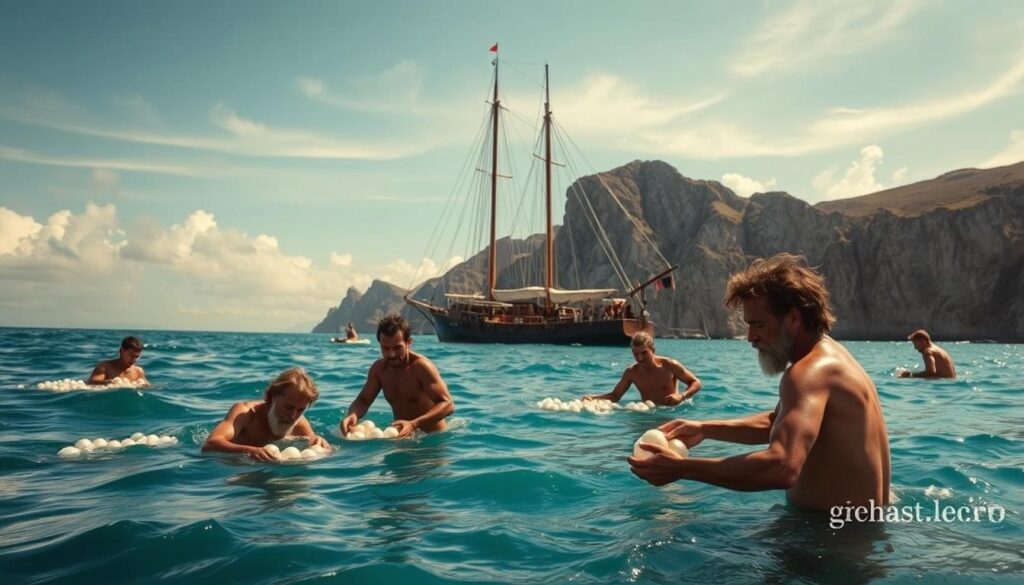

In 1593, Sebastian Vizcaino found a treasure trove of pearls in the Gulf of California. This was a major breakthrough. The western shores of this area were full of marine riches, exciting any adventurer.
Pearl fishing was a daring task. Divers dove deep into clear waters, facing risks to find oysters with pearls. Vizcaino’s expedition was a mix of skill, bravery, and luck.
- Divers used special techniques to collect oysters
- Pearls were incredibly valuable trading commodities
- The Gulf of California exploration was dangerous but potentially lucrative
The Gulf of California was a tough place to explore. Divers faced rough seas, unpredictable weather, and dangers from the sea. Vizcaino’s team had to be incredibly resilient to survive and thrive.
Not every oyster had a perfect pearl, but the chance of finding one kept explorers going. One stunning pearl could fund an entire expedition. The lure of wealth drove many to brave these dangers.
The Famous California Expedition
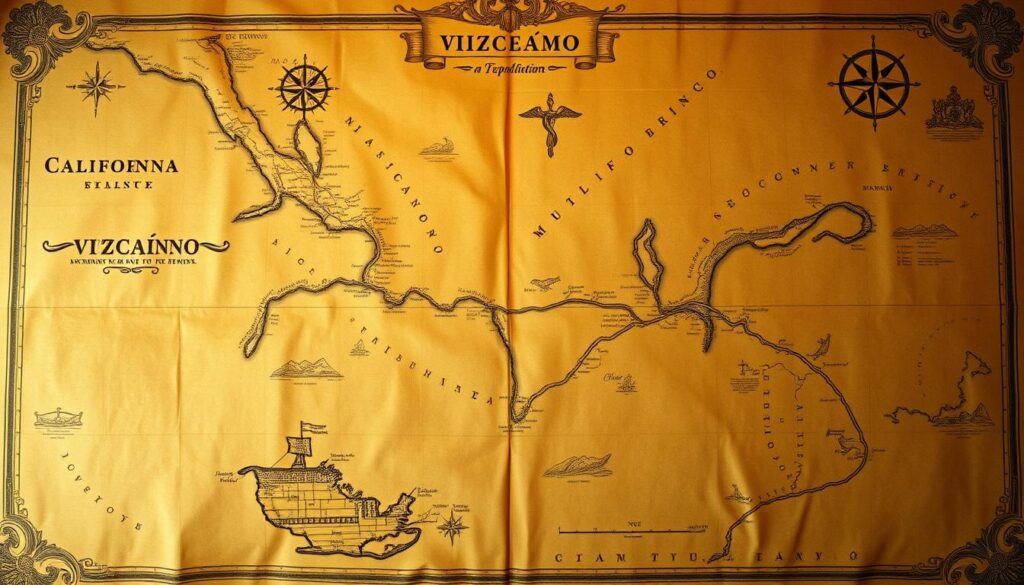
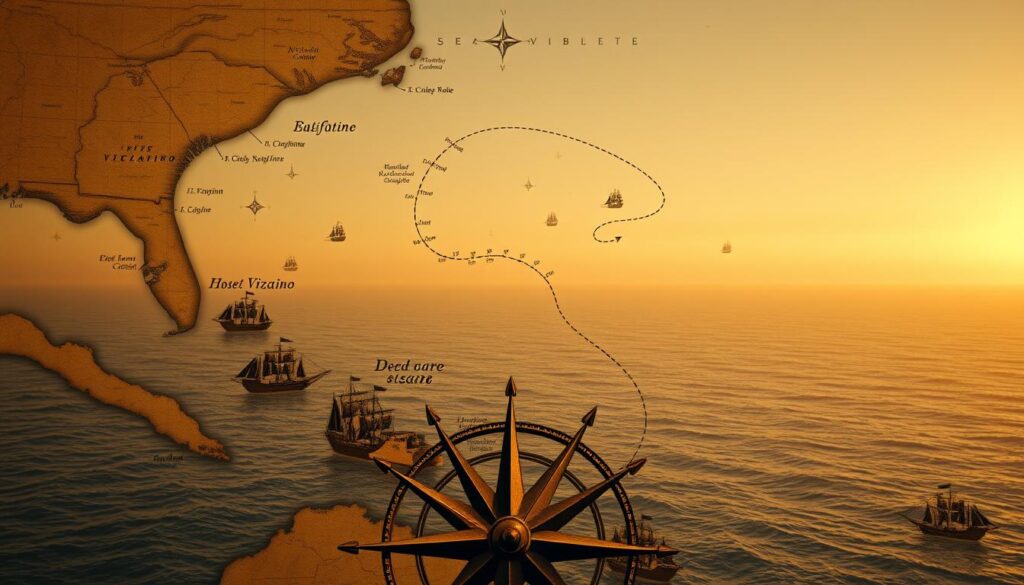
In 1601, Sebastian Vizcaino got a big mission from the Spanish viceroy in Mexico City. He was to find safe places for ships along California’s coast. This was key for Spanish galleons to travel safely.
Three Ships Prepare for Voyage
Vizcaino’s team was set to explore the west coast with three ships. Each ship was ready for the tough sea journey ahead. They had skilled sailors and navigators to find new lands.
- Ship names carefully selected for the voyage
- Experienced crew members recruited
- Specialized navigation tools prepared
Important Discoveries
Vizcaino made key discoveries during his journey. He mapped the coast with great detail. He found many new places that no one knew about before.
- Detailed coastal mapping
- Identification of possible harbor spots
- Notes on the sea life
His findings were very important for future Spanish sea trips. Vizcaino’s detailed records helped many explorers and traders after him.
Naming California’s Famous Places
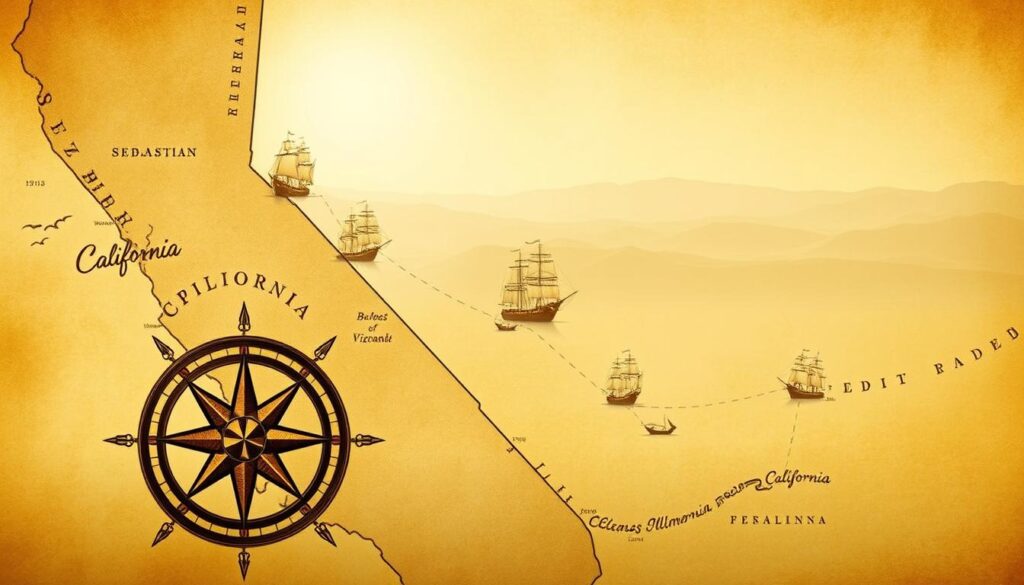
Sebastian Vizcaino was key in mapping and naming California’s famous spots. His 1602 journey along the coast marked a big moment in mapping history.
While sailing, Vizcaino found and named key places that are important today. His names include:
- Santa Barbara Channel Islands
- Point Conception
- Santa Lucia Mountains
- Point Lobos
- Carmel River
- Monterey Bay
Vizcaino’s work did more than just mark places. His naming process set a record for future explorers and settlers. His detailed maps and notes left a lasting impact on our view of California’s coast.
Vizcaino’s method of naming places made the unknown known. This helped European powers see the area’s value for exploration, trade, and settlement.
The names he chose often had religious or cultural meanings from his Spanish heritage. Many of these names are used today, showing the value of his work and skills.
Sebastian Vizcaino Facts for Kids

Ready to learn some cool Spanish explorer trivia? Sebastian Vizcaino was an adventurous sailor who explored the Pacific Ocean. He mapped out parts of California that Europeans had never seen before.
Here are some amazing Sebastian Vizcaino interesting facts that will amaze you:
- Vizcaino sailed with three ships during his famous California expedition in 1602
- He was the first European to explore and document California’s coastline
- He discovered important harbors like San Diego and Monterey
Vizcaino was a true navigation superstar! He was a Spanish explorer who could read maps like most kids read comic books. His adventures took him across vast oceans, mapping territories unknown to Europeans at the time.
Did you know something super exciting? This brave explorer named many geographic locations we use today. From mountain ranges to coastal regions, Vizcaino left his mark on the map – literally!
- Worked as a merchant and military commander
- Explored regions from Mexico to California
- Traveled to Japan as a diplomatic representative
Imagine sailing thousands of miles with just a compass, basic tools, and grit. That was Sebastian Vizcaino’s life! He wasn’t afraid of challenges and always pushed the boundaries of exploration.
Important Discoveries Along the Coast
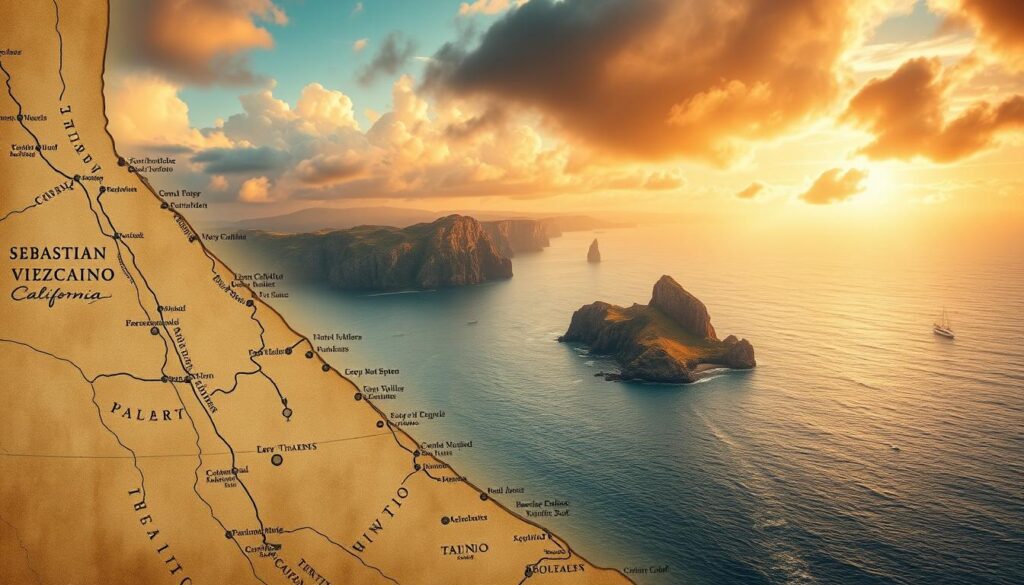
Sebastian Vizcaino’s journey along the California coast was groundbreaking. He changed how Europeans saw the Pacific coastline in the early 1600s. His detailed notes were a big step forward.
Vizcaino found new things about the coast that Europeans didn’t know. His discoveries showed the coast’s unique features. He mapped areas that were new to Europeans.
Marine Life Observations
Vizcaino studied the sea life of California’s coast. He wrote about:
- Diverse marine mammals
- Fish in coastal waters
- Underwater ecosystems
Geographic Features
Vizcaino noticed important details about the coast. Point Lobos was a key spot. He was the first European to see the Monterey cypress forest there.
He also noted:
- Coastline maps
- Natural harbors
- Mountain ranges
Vizcaino’s work gave Europeans a new view of California’s nature. It helped prepare for more explorations.
Mapping the California Coastline
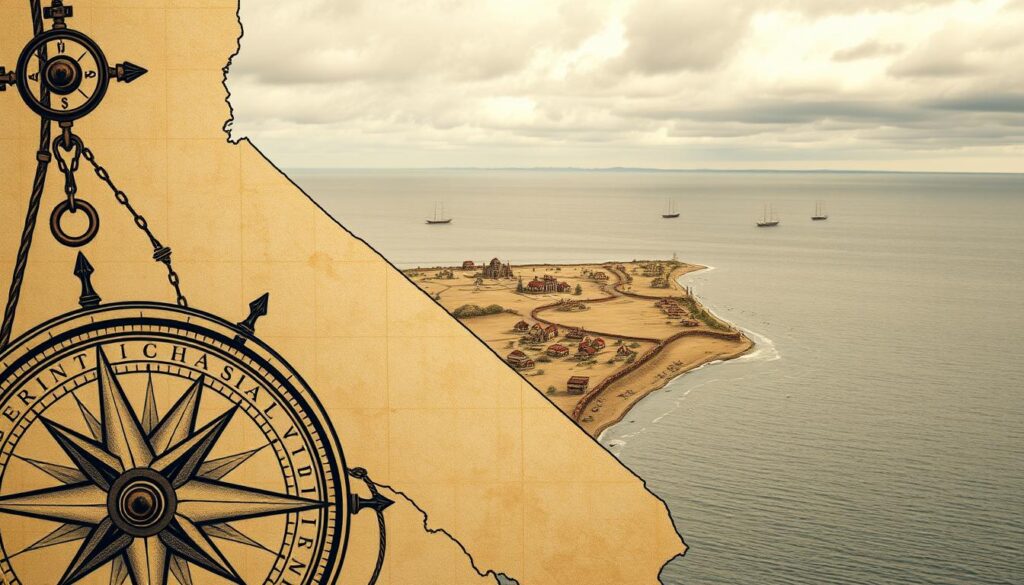
Sebastian Vizcaino changed how we map the California coast. In 1602, he went on a detailed map-making journey. The Spanish asked him to create charts of the coastline, which greatly helped Europeans understand the area.
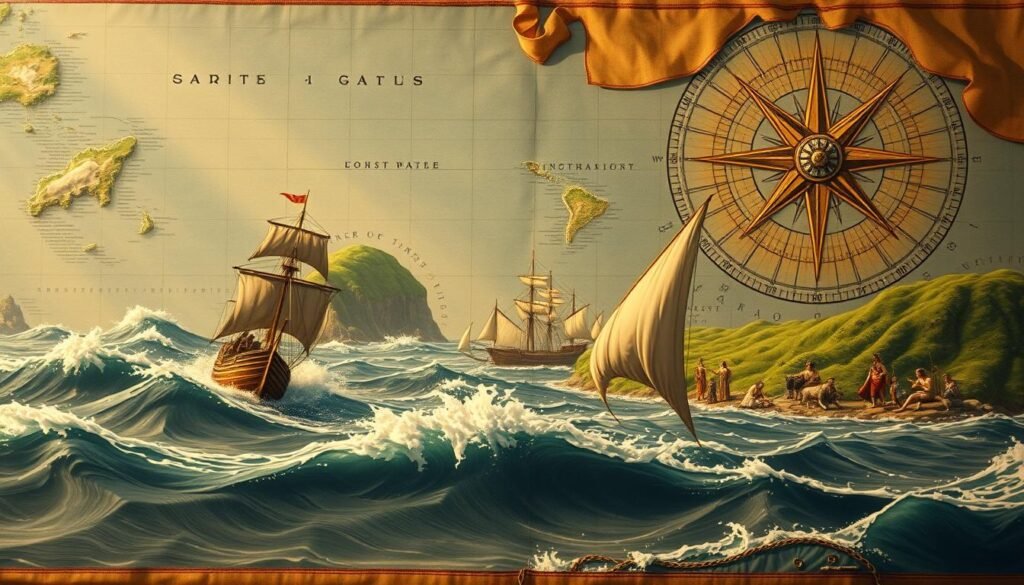
Creating these maps was a huge challenge. Back then, sailors used simple tools and faced tough sea conditions. Vizcaino used:
- Astrolabe for celestial navigation
- Compass for directional tracking
- Quadrant for measuring latitude
- Detailed ship’s log for recording observations
Vizcaino’s work included documenting:
- Coastal geographic features
- Natural harbors
- Potential settlement locations
- Marine wildlife observations
His maps were key for future Spanish explorers and traders. They helped them navigate the coast more accurately.
| Navigation Tool | Purpose | Accuracy Level |
|---|---|---|
| Astrolabe | Determine Latitude | Moderate |
| Compass | Direction Tracking | High |
| Quadrant | Angle Measurement | Low-Moderate |
Sebastian Vizcaino’s maps were some of the most accurate back then. He greatly improved Europeans’ understanding of California’s coastline.
Adventures in Japan
Sebastian Vizcaino’s journey to Japan marked a big step in Spanish-Japanese ties. In 1611, he bravely crossed the Pacific with a mission to change how countries interacted. It was a thrilling adventure on the seas!
Vizcaino was more than a sailor; he was a key figure in early diplomacy. He led a Japanese group from Mexico back home. His trip was tough, but he handled both the sea and politics with great skill.
- Diplomatic mission to Japan in 1611
- Carried Japanese delegation across the Pacific
- Met with influential Japanese leaders
During his expedition, he had amazing meetings with Japan’s top leaders. He met shōgun Tokugawa Hidetada and his father, the first shōgun Tokugawa Ieyasu. These talks were huge, showing a big cultural exchange between Spain and Japan.
Vizcaino’s diplomacy skills were on full display. He brought two far-off worlds closer, creating understanding between them. His work paved the way for better Spanish-Japanese relations, showing exploration is more than just finding new places.
But Vizcaino’s adventure was more than politics. He brought stories, knowledge, and curiosity that inspired many explorers after him. He showed that true exploration connects people and cultures, not just maps.
The Japanese Ambassador Story
Sebastian Vizcaino was key in the early 17th century’s Spanish-Japanese cultural exchange. His diplomatic talents merged two distant worlds in an extraordinary journey. This journey changed international relations forever.
In 1613, Vizcaino joined a Japanese embassy led by Hasekura Tsunenaga on a historic Pacific mission. This journey showcased Vizcaino’s skill in bridging cultural gaps and diplomacy.
Cultural Connections
The cultural exchange between Spain and Japan was more than a simple meeting. Vizcaino’s diplomacy built a bridge between two vastly different cultures. He helped them grasp each other’s customs, traditions, and lifestyles.
- Translated complex cultural nuances
- Facilitated communication between Japanese and Spanish officials
- Documented unique interactions and observations
Diplomatic Mission Details
Vizcaino’s role was more than translation. He navigated complex diplomatic rules, ensuring smooth talks between the Japanese and Spanish in Mexico. His knowledge was vital for respectful and effective talks.
This mission marked a significant moment in global relations. It showed how explorers like Vizcaino were vital cultural ambassadors in the age of exploration.
| Mission Aspect | Vizcaino’s Contribution |
|---|---|
| Cultural Understanding | Facilitated mutual respect and knowledge |
| Diplomatic Negotiations | Supported smooth communication processes |
Life as a Spanish Commander
Sebastian Vizcaino became a renowned Spanish naval commander. His military career was filled with remarkable explorations. He started his journey during the Spanish invasion of Portugal from 1580 to 1583.
As a commander, Vizcaino honed skills that were key to his success. His military background gave him several advantages:
- Strategic navigation techniques
- Leadership under challenging conditions
- Advanced maritime combat training
- Diplomatic negotiation skills
Vizcaino’s experience prepared him for complex missions at sea. Spanish naval training focused on discipline, cartography, and exploration. These skills were essential for his future voyages along the California coast.
His success as a commander boosted his reputation. The military discipline and strategic thinking he learned early on were vital for his later discoveries.
Vizcaino showed great adaptability throughout his career. He evolved from a traditional military leader to an explorer. He mapped large parts of the Pacific Coast, earning respect as both a soldier and a navigator.
Battle with Dutch Pirates
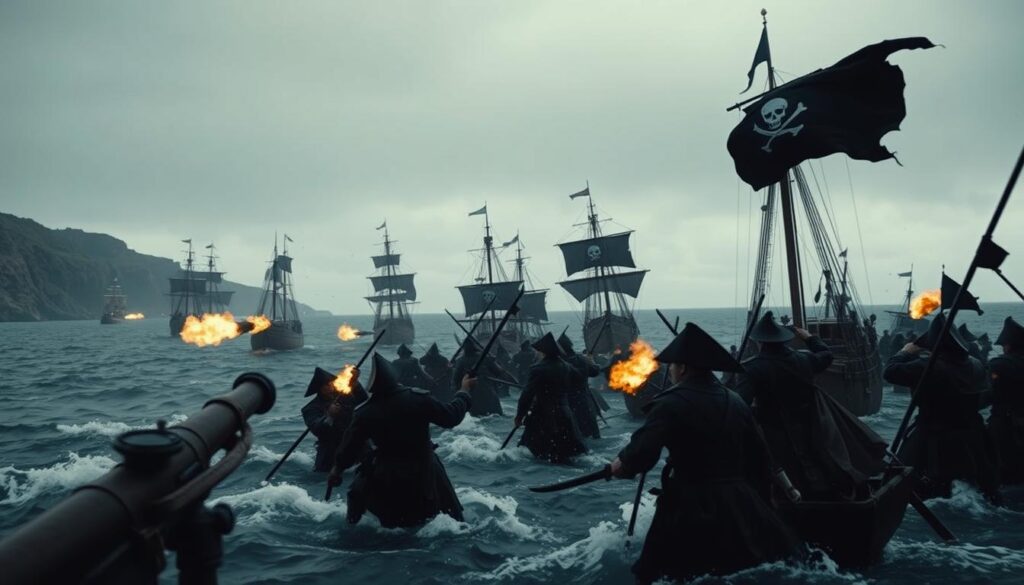
The Spanish-Dutch conflict turned into a dramatic sea battle. This battle tested Sebastian Vizcaino’s skills. In October 1615, Vizcaino faced a big challenge at Salagua port. There, 200 Dutch pirates, led by Joris van Spilbergen, threatened Spanish lands.
Vizcaino showed his leadership in this battle. He kept his cool and planned well. His 200 men were ready to defend against the Dutch. They knew they were fighting for Spain’s honor at sea.
- Battle Location: Port of Salagua
- Spanish Forces: 200 men under Vizcaino
- Dutch Pirate Forces: 200 men led by Joris van Spilbergen
- Date of Conflict: October 1615
The battle was intense, with both sides using smart tactics. Vizcaino’s skills were tested as he fought off the pirate attack. Naval warfare needed quick thinking and bravery. Vizcaino showed he was ready for the challenge.
| Commander | Forces | Strategic Advantage |
|---|---|---|
| Sebastian Vizcaino | 200 Spanish Sailors | Defensive Position at Salagua |
| Joris van Spilbergen | 200 Dutch Pirates | Offensive Naval Raid |
Vizcaino’s bravery in this battle is legendary. He stood strong against tough foes. He protected Spanish interests with great determination.
Legacy and Achievements
Sebastian Vizcaino’s work changed how we see California’s coast. His detailed maps helped future settlers find their way. His impact has lasted for many years, guiding many explorers and mapmakers.
His work had a big impact on early Pacific exploration:
- Detailed coastal mapping of California
- Identifying strategic harbors for possible settlements
- Documenting marine life and geographic features
- Establishing diplomatic connections with indigenous populations
Lasting Historical Impact
Vizcaino’s trips made people excited about settling California. Even though it didn’t happen right away, his reports were very important. His work even sparked interest in a Spanish settlement at Monterey, 167 years later.
Modern Recognition
Today, we celebrate Vizcaino’s legacy with historical markers and place names. Many places along California’s coast are named after him. Scholars and historians honor his role in exploring the Pacific.
His work greatly changed how Europeans saw the western coast of North America. He is a key figure in the history of maritime exploration.
Places Named After Vizcaino
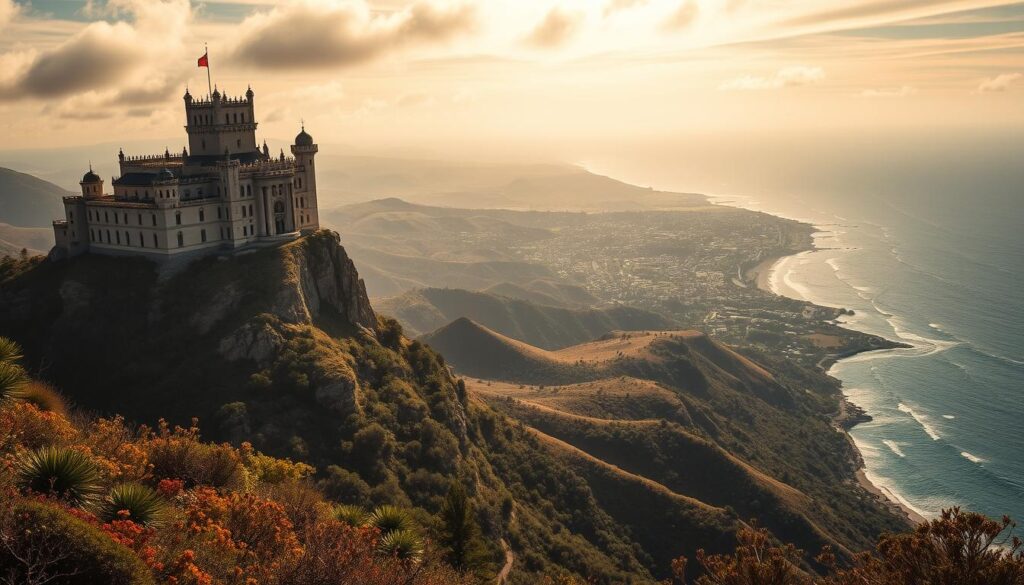
Sebastian Vizcaino made a big impact on California’s history. Many places and discoveries are named after him. His travels across California and beyond have inspired many tributes that keep his legacy alive today.
In 1888, scientists named a special plant genus after him. They called it Viscainoa. This plant, from Mexico, is a lasting tribute to the famous explorer.
- Vizcaino Bay in Baja California
- Vizcaino Desert in Mexico
- Vizcaino Peninsula
- Vizcaino Biological Reserve
Places in California and Mexico honor Vizcaino’s work. These names remind us of his important explorations and maps from the early colonial days.
Today, researchers and geographers keep Vizcaino’s legacy alive. The places named after him are more than just landmarks. They are historical markers that celebrate a key explorer who helped Europeans understand California’s landscape.
Fun Historical Facts About His Ships
Sebastian Vizcaino’s ships were true marvels of the 17th century. His flagship, the San Diego, and the San Tomás and Tres Reyes were wooden wonders. They sailed through waves like hot knives through butter.
Life on these ships was tough. Sailors faced sea sickness and unpredictable weather. The wooden planks creaked with every wave. Navigation was a challenge, relying on skills and simple tools like astrolabes and compasses.
Each ship carried vital supplies for long journeys. These included salted meat, hardtack bread, and barrels of fresh water. Vizcaino and his team used new techniques to map coastlines and track their location.
The ships were engineering marvels. Built with sturdy oak and pine, they had multiple masts and large canvas sails. Cannons lined their sides for protection. When Vizcaino’s fleet sailed, they were the cutting edge of 17th-century maritime technology.