Vampire bats are the only mammals that live by drinking blood. They are truly special nighttime flyers. Their unique features make them stand out from other bats.
Learning about vampire bats is like discovering a world of amazing biological wonders. These small mammals live in Central and South America. They hunt with great precision in the dark.
These bats have special skills that help them find and drink blood efficiently. Kids learning about vampire bats will find they are not scary monsters. Science shows they are smart and social, with complex behaviors to survive.
Vampire bats have incredible abilities that make them unique. Their night hunting, heat-sensing, and social structures are fascinating. These traits continue to amaze scientists all over the world.
What Makes Vampire Bats Unique Among Mammals
Vampire bats are the rock stars of the mammal world. They have cool traits that make them stand out. These mammals feed only on blood, showing amazing survival skills.
Let’s explore the wild world of these extraordinary mammals. We’ll see what makes them so special!
Physical Characteristics That Amaze
Vampire bats are small but mighty. They have impressive physical features for their lifestyle:
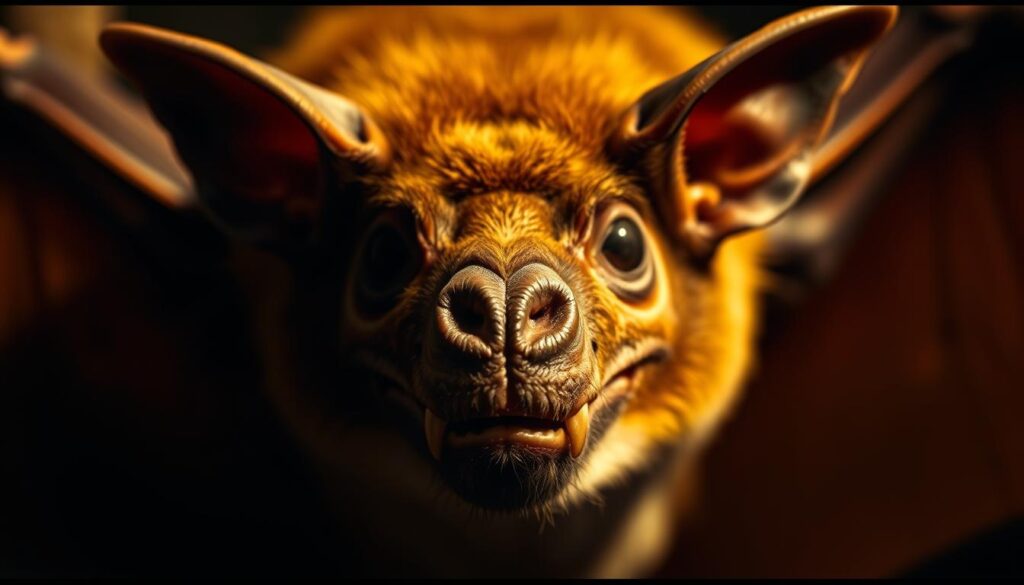
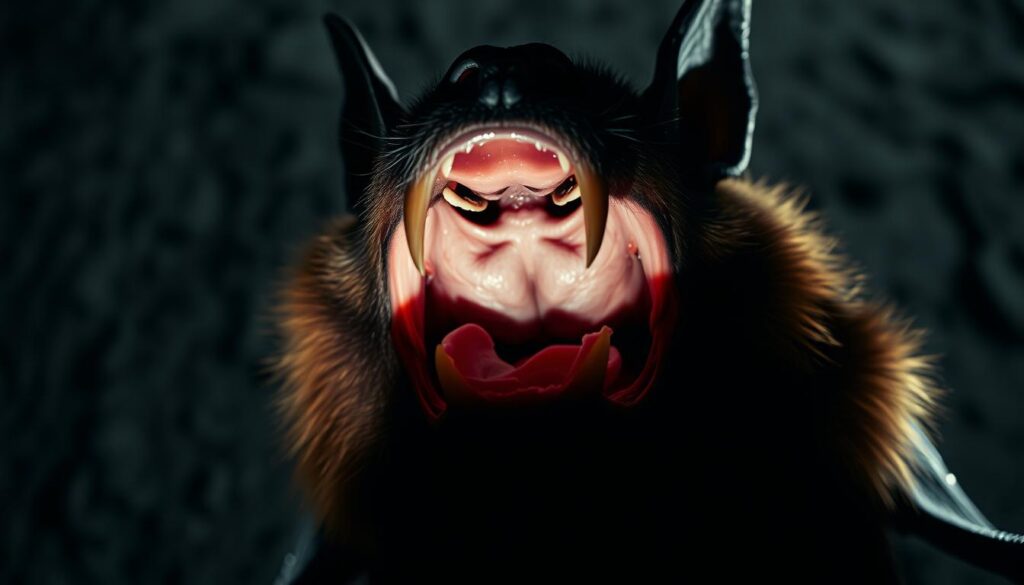
Razor-sharp teeth for precise blood feeding
Lightweight bodies for silent hunting
Specialized thumbs for crawling and gripping
Blood-Feeding Adaptations That Wow
These bats have a unique diet. They have fewer teeth but they are incredibly sharp. Their saliva keeps blood flowing smoothly during feeding.
Super Cool Heat-Sensing Abilities
Bat heat sensors are amazing. Each vampire bat has a special heat-detecting patch on its nose. It can find warm blood just beneath an animal’s skin.
These mammals have evolved to be nature’s most specialized blood-feeders. Being different is absolutely awesome for them!
Vampire bats live in specific areas of the Americas. They are found in the warm, tropical, and subtropical zones of Mexico, Central America, and South America. They choose their homes based on the environment and where they can find food.
There are three main types of vampire bats. Each lives in different places:
Common vampire bat (Desmodus rotundus): Found in Mexico and parts of South America
Hairy-legged vampire bat (Diphylla ecaudata): Restricted to northeastern Brazil and surrounding regions
White-winged vampire bat (Diaemus youngi): Distributed across South American rainforests
These bats love warm, humid places with lots of plants. Rainforests and tropical woodlands are perfect for them. They find shelter and food like blood from animals and livestock here.
Bat Species
Primary Habitat Range
Key Characteristics
Common Vampire Bat
Mexico to Argentina
Most widespread species
Hairy-legged Vampire Bat
Northeastern Brazil
Most restricted distribution
White-winged Vampire Bat
South American Rainforests
Prefers dense forest environments
The climate is very important for vampire bats. They can’t live in very cold places. This means they only live in warmer areas in the Americas. Their special features help them thrive in these tropical places.
The Secret Life of Vampire Bats: Feeding Habits
Vampire bats are nature’s ultimate night hunters. They have mastered the art of finding prey in the dark. These bats are extraordinary, able to find and feed on unsuspecting animals in complete darkness.
Vampire bat feeding is more than just survival. It’s a sophisticated strategy that involves incredible adaptations. These small predators have tricks that would make any animal superhero jealous.
How They Find Their Prey
Finding a meal isn’t luck for vampire bats. It’s a scientific marvel. They use infrared sensors on their nose to detect warm-blooded animals with accuracy. Their hunting techniques include:
Detecting body heat from prey
Using advanced echolocation
Identifying exposed skin areas
Selecting targets with accessible blood vessels
Blood-Drinking Process
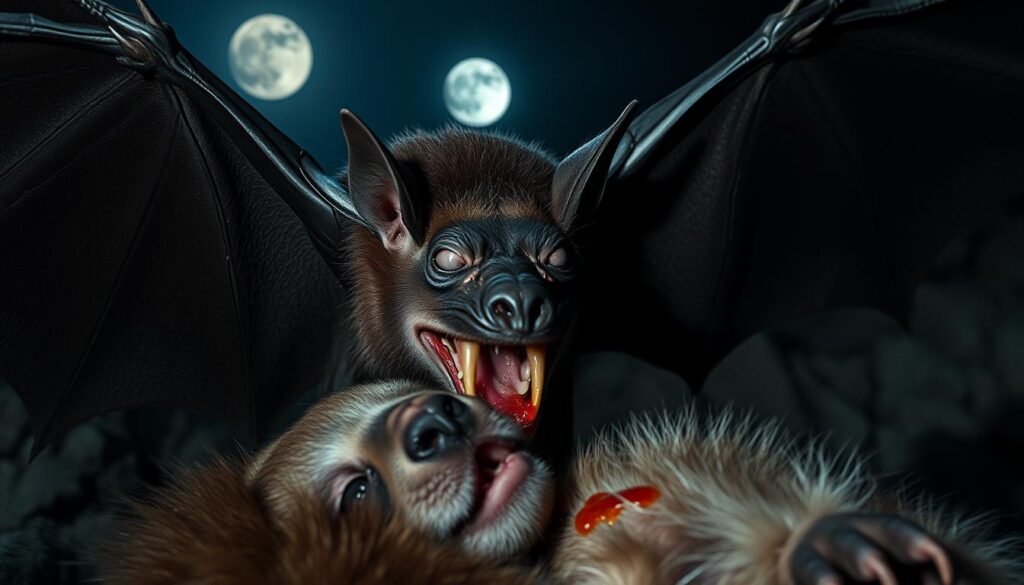
When a vampire bat finds its target, the feeding process is quick and precise. They make a tiny, nearly painless bite with razor-sharp teeth. They also inject an anticoagulant to prevent blood from clotting. This keeps the blood flowing smoothly during their meal.
Amount of Blood Consumed
Vampire bats don’t drink massive amounts of blood. A typical feeding session lasts around 30 minutes. During this time, they consume about 1-2 tablespoons of blood. Their small size means they need minimal nutrition to survive.
These fascinating creatures show that size doesn’t matter in hunting. Vampire bats are living proof of nature’s incredible design.
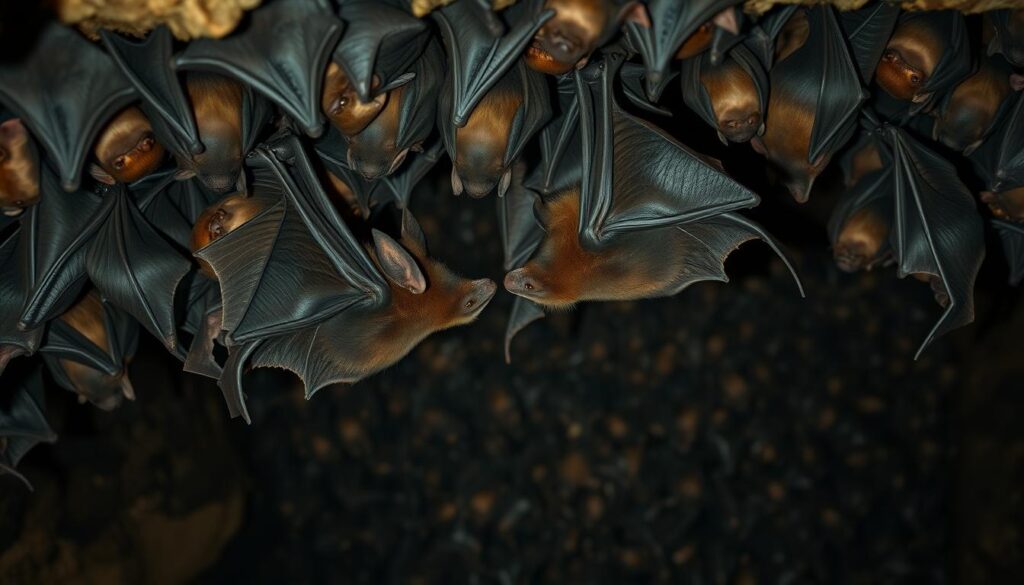
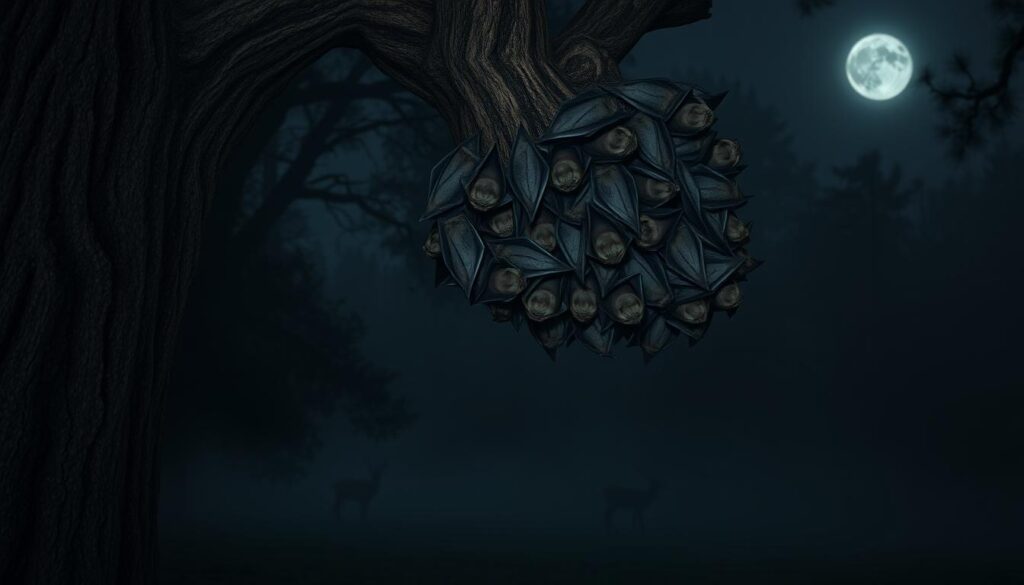
Vampire bats live in complex societies, forming bat colonies. These creatures are nocturnal and have a deep social structure. A colony can have 100 to 1,000 bats, all working together for survival.
Their social life is marked by cooperation and altruism. When one bat can’t find food, others will share their blood. This helps weaker bats survive.
Colonies typically house 100-1,000 bats
Bats share food through complex social interactions
Strong bonds form between colony members
Social grooming helps maintain group cohesion
Bats have a sophisticated way of communicating. They use unique calls and scents to recognize each other. Young bats learn from older, more experienced bats.
Female bats form strong bonds, often sharing childcare. They keep close ties within their colonies.
How Vampire Bats Navigate in Complete Darkness
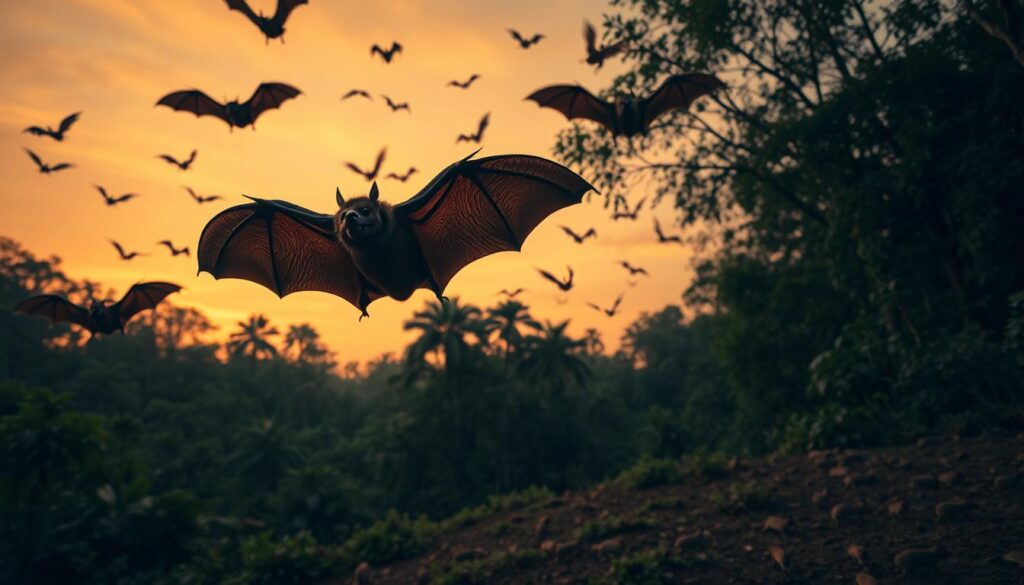
Vampire bats are experts at navigating in the dark. They use echolocation and night vision to move with ease. These abilities make them skilled at finding their way in blackness.
These creatures have amazing ways to find their path in the dark. Their navigation skills are not just luck. They are a result of their incredible senses.
Understanding Echolocation
Imagine having a sonar system in your head. That’s what vampire bats have with echolocation. They send out sound waves that bounce off objects. This helps them create a map of their surroundings.
Sound waves travel at different speeds depending on object distance
Bats can detect objects as thin as a human hair
Echolocation helps them hunt and avoid obstacles
Night Vision Capabilities
Bats aren’t blind; they have great night vision. Their eyes are specially adapted to low-light conditions. This lets them see even the smallest movements in the dark.
Vampire bats use their night vision and echolocation together. This makes them some of the best hunters in the dark.
Baby vampire bats start their life with a strong bond to their mothers. These tiny pups rely fully on their mothers for everything. Their growth stages are unique, different from other mammals.
In the first three months, pups drink only their mother’s milk. They hold on to her body, even when she flies. This close bond protects and feeds them during their early, vulnerable days.
Birth weight: Approximately 7-10 grams
Milk-feeding duration: Around 3-4 months
First independent flight: Between 3-4 months old
The growth of baby vampire bats is truly amazing. They learn important survival skills, like echolocation and hunting. Their mothers teach them how to survive and eventually eat blood.
Bat Growth Stage
Key Characteristics
Age Range
Newborn Stage
Completely dependent on mother’s milk
0-3 months
Learning Stage
Developing flight and hunting skills
3-6 months
Independent Stage
Hunting own blood meals
6-12 months
As pups grow, they start eating blood instead of milk. They learn from their mothers, who teach them how to hunt and survive. The journey of a bat pup from milk to blood is a remarkable story of adaptation and survival.
Vampire Bat Facts for Kids: Amazing Things to Know
Get ready to explore the wild world of vampire bats! These creatures are full of surprises that will amaze you. Vampire bat fun facts are not just cool – they’re mind-blowing for curious kids who love learning about unique animal behaviors.
Vampire bats are tiny champions of the night with amazing skills. Let’s look at some incredible bat size comparisons. They will help you understand how special these little creatures are!
Fun Size Comparisons
Vampire bats are super small – about the size of a human thumb
Their wingspan is 6 to 8 inches, shorter than most kids’ ruler
They weigh less than a baseball – usually around 1 ounce
Interesting Behaviors
Vampire bats are champions of kindness in the animal kingdom. They share food with other bats who haven’t eaten. This shows they’re not just blood-sucking machines but compassionate creatures!
They can recognize and remember bat friends for years
Vampire bats practice “food sharing” – a rare trait in wild animals
They groom each other and form tight social bonds
Did you know vampire bats are the only mammals that survive entirely on blood? These nighttime ninjas have super-cool adaptations. They make them absolute rock stars of the animal world!
The Truth About Vampire Bat Bites
Vampire bat bites might sound scary, but they’re actually quite fascinating. These unique mammals have a specialized feeding process. It’s different from what most people imagine.
Unlike movie monsters, vampire bats don’t attack humans or drain large amounts of blood. When hunting, vampire bats perform a precise bat feeding process. This process involves minimal harm to their prey.
Their bite is tiny and strategic, targeting livestock or wild animals. The bat’s anticoagulant saliva allows blood to flow smoothly. This enables them to lap up small amounts of blood without causing significant damage.
Bite size: Extremely small, often less than 8 millimeters
Blood consumed: Typically 1-2 tablespoons per feeding
Feeding frequency: Once every few days
Scientific research shows that vampire bat bites can potentially transmit diseases. Their saliva contains unique compounds that prevent blood clotting. This creates a risk of infection.
Wildlife experts recommend avoiding direct contact with these animals. They also suggest seeking medical attention if bitten.
Interesting fact: Vampire bats are actually quite social. They will share food with colony members who haven’t successfully fed. This shows remarkable cooperative behavior.
While their feeding method might sound intimidating, vampire bats play a key role in their ecosystem. They carefully select their prey and consume minimal blood. This ensures they don’t cause severe harm to their food sources.
Common Myths and Misconceptions About Vampire Bats
Vampire bat myths have been around for years, causing fear and confusion. Not all you’ve heard about vampire bats is true! Let’s look at some common misconceptions and find out what’s real.
When we fact-check bats, we find some surprising facts. Vampire bats aren’t bloodthirsty monsters that attack humans. They are actually social and smart animals with unique traits.
Debunking Popular Beliefs
Myth: Vampire bats attack humans regularly
Reality: Vampire bats mostly go after livestock, not humans. They’re more like careful surgeons than scary predators!
Myth: All bats carry rabies
Reality: Only about 1% of bats have rabies. You’re more likely to get struck by lightning than meet a rabid bat.
Myth: Vampire bats are blind
Reality: These bats have great vision and use echolocation to find their way. They are super-smart night hunters.
Scientific Facts vs. Fiction
Common Misconception
Scientific Fact
Vampire bats are aggressive
They’re actually gentle and share food with colony members
Bats are dirty animals
They groom themselves often and keep their social groups clean
Vampire bats drink large amounts of blood
They only drink about 1-2 tablespoons per feeding
Learning about vampire bat myths helps us see them in a new light. They’re not monsters from scary movies but amazing animals with complex social behaviors and incredible survival skills.
How Vampire Bats Help Their Environment
Vampire bats are more than just scary creatures. They play a key role in their ecosystem, surprising many. Their ecological benefits go beyond just drinking blood.
These bats show amazing social behaviors. They share food with each other, a unique form of cooperation. This helps their communities thrive in tough environments. It shows how important they are to their ecosystem.
Support animal population balance
Contribute to nutrient cycling
Maintain complex ecological relationships
Vampire bats also have interesting interactions with other animals. They make small wounds on their prey. These wounds can help remove parasites and improve the prey’s skin health.
Ecological Contribution
Specific Impact
Nutrient Distribution
Transfer nutrients through blood consumption
Ecosystem Balance
Regulate prey population dynamics
Biodiversity Support
Maintain complex predator-prey relationships
Scientists are learning more about vampire bats and their role in the environment. They see these bats as vital to complex ecosystems. They are more than just blood-drinking creatures.
Vampire Bat Survival Skills in the Wild
Vampire bats are experts at surviving in tough places. They have amazing skills that let them live where others can’t. Their special ways of surviving help them thrive in the wilderness.
Keeping away from predators is key for these night flyers. They have clever ways to stay safe:
Sleeping in hard-to-reach cave systems
Forming large, protective social groups
Using advanced echolocation for detecting threats
Camouflaging themselves during daylight hours
They can sense heat, which helps them find food and avoid danger. Talk about a survival superpower!
Their social groups are important for survival. They share food, protect each other, and care for the sick. This teamwork helps them survive in tough conditions.
Sharp teeth and special saliva are their survival tools. Their saliva stops blood from clotting, making it easier to feed. This helps them avoid predators.
Scientists are amazed by vampire bats’ survival skills. They adapt and survive in places that are hard for most animals. These bats are true champions of the wilderness.
The Special Features of Vampire Bat Wings
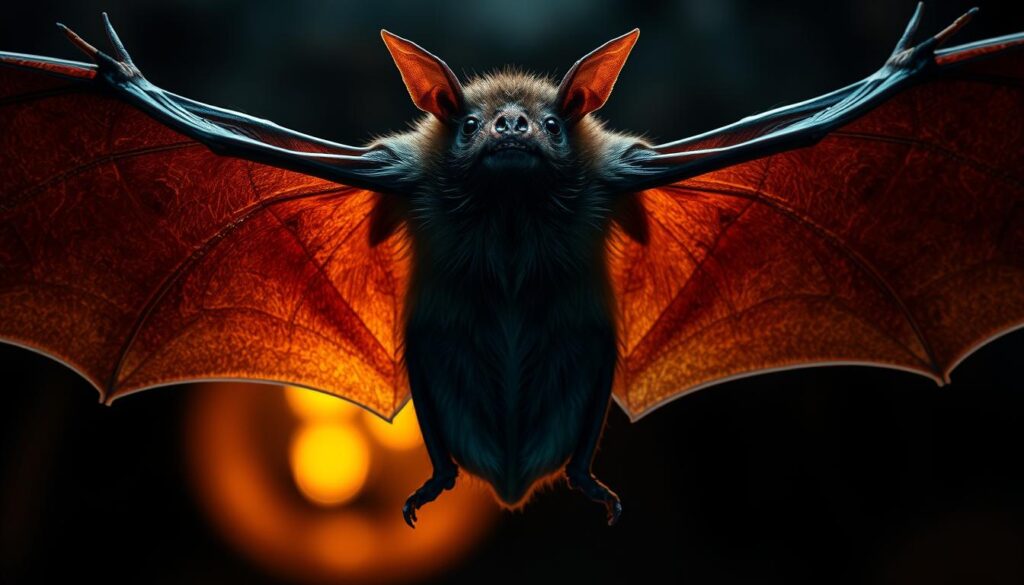
Vampire bat wings are a true marvel of nature. They are unlike any other flying creature. The design of their wings is incredibly unique, allowing for precise and flexible flight.
Vampire bat wings are made of thin skin stretched between long fingers. This design makes their wings a remarkable tool for flying. They can perform aerial stunts that others can’t:
Thin, lightweight skin that provides maximum movement
Specialized joint structures for complex wing manipulation
Their wings are like human hands, with four fingers and a thumb. This allows them to walk, climb, and do things other flyers can’t.
Scientists found that vampire bat wings have special blood vessels and nerves. These help control their body temperature and improve their senses. They can feel temperature changes, helping them find food and move in the dark.
Vampire bat wings are a perfect example of evolution’s power. They show how animals can adapt to their environments in amazing ways.
Why Scientists Study Vampire Bats
Scientists are studying vampire bats to learn a lot. These creatures are not just spooky flying mammals. They are full of secrets that could help humans.
Medical researchers are very interested in vampire bat saliva. It has special compounds that could change how we treat blood clots and strokes. Dr. Elizabeth Neustadt from the University of Pennsylvania is leading this research. She believes their saliva could lead to new blood-thinning medicines.
Vampire bats show us a lot about animal behavior and survival. Their social structures and how they hunt together are fascinating. They teach us about disease and genetics in ways we never thought possible.
Research on vampire bats shows us that scary creatures can be very valuable. By studying their unique traits, scientists are learning a lot about biology, medicine, and animal behavior. This knowledge could change how we see life.