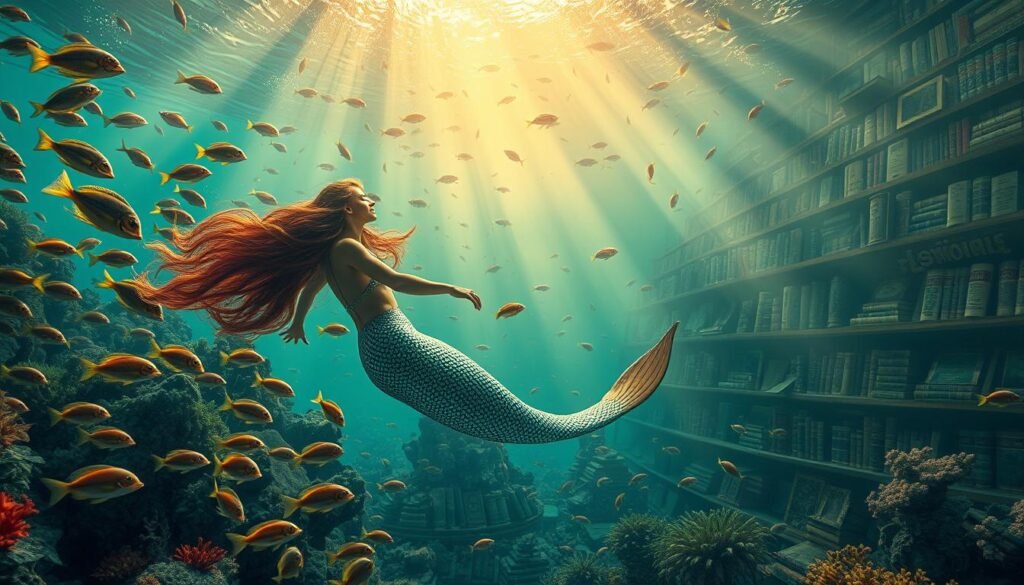
Think mermaids are just Disney princesses with fish tails? Think again. These slippery legends have bobbed up everywhere from ancient Assyrian temples to 19th-century sailor logs—and I’ve got the wild receipts to prove it. Let me tell you, the real story behind these sea creatures is way juicier than any cartoon.
Take that 1913 Charles Robinson illustration from Andersen’s fairy tales—you know, the one with the mermaid’s haunting gaze? It’s gorgeous, sure, but it’s just the tip of the iceberg. Ancient Assyrians worshipped a fish-tailed goddess named Atargatis 3,000 years ago, and British sailors swore they spotted real-life “merrows” off Ireland. (Spoiler: It was probably seaweed… or too much rum.)
And get this: In 1493, Columbus claimed he saw three mermaids near Haiti. Turns out? Manatees. No bull. But here’s the kicker—from Java to British Columbia, cultures worldwide have their own spin on these half-human hybrids. Why? Because the sea loves a good mystery, and honestly, so do we.
Stick around. We’re diving into 2,000 years of salty gossip, art hoaxes, and why your great-great-grandpa’s fishing buddy definitely saw one. For real.
Origins and Myths of Mermaid Legends
Let’s cut through the seaweed. Mermaid myths didn’t start with sparkly fins or singing crabs—they began with drowned goddesses and shape-shifting nightmares. Picture this: 3,000 years ago, a Syrian deity named Atargatis accidentally killed her mortal lover. What’s a heartbroken goddess to do? She dove into a lake and sprouted a fish tail. Boom—history’s first recorded mermaid origin story.
Atargatis and Ancient Beginnings
Atargatis wasn’t some cute sea creature. She was worshipped as a fertility goddess who ruled storms and marine life. Ancient priests offered honey cakes at her temples—though I’d bet they kept their distance from the water. Her story spread faster than a Mediterranean trade route, morphing into Babylonian myths and even influencing Greek lore.
The Evolution from Sirens to Mermaids
Speaking of Greeks—remember those winged sirens luring sailors to their deaths? By the Middle Ages, artists swapped their feathers for scales. Why? Blame mistranslations in medieval literature and a growing obsession with oceanic mysteries. Suddenly, Homer’s bird-women became the sleek-tailed mermaids we recognize today.
Myth Source
Transformation Trigger
Symbolism
Atargatis (Assyrian)
Grief & Shame
Duality of Life/Death
Sirens (Greek)
Divine Punishment
Dangerous Allure
Here’s the kicker: Both stories used hybrid creatures to explain humanity’s weird relationship with water—equal parts life-giver and grave. Next time you see a mermaid sticker, remember—it’s not just a fish lady. It’s 3,000 years of existential dread wearing a seashell bra.
Mermaid Facts for Kids: A Deep Dive Into Myth Meets History
Let’s crack open the dictionary like a seashell. The term “mermaid” isn’t just poetic—it’s a linguistic time capsule. Stitched together from Old English roots, it combines “mere” (sea) and “maid” (girl). Literally? “Sea girl.” But here’s the kicker: that simple pairing hides a 1,000-year-old debate about where myth ends and reality begins.
Medieval scribes weren’t messing around. When they coined “mermaid,” they defined a creature stuck between worlds—part human, part fish. Early texts describe these beings as “water-walkers” who could breathe air but vanished beneath waves. You know what’s wild? Similar dualities pop up globally:
French: “sirène” (from Greek sirens)
Spanish: “sirena” (same roots, different fins)
Language evolves like coral reefs—slowly, unpredictably. By the 1300s, “mermaid” wasn’t just a label. It became shorthand for nature’s contradictions: beauty tangled with danger, land battling sea. Ever wonder why these legends stick? Because the word itself is a riddle—one we’re still solving.
Old World Tales and Cultural Variations
Ever wonder why mermaid stories feel both familiar and wildly different across the globe? Let me show you how British sailors saw doom in every splash, while Arabian poets spun tales of aquatic philosophers. Honestly, the more I dig, the weirder it gets.
Assyrian and Arabian Narratives
Ancient Assyrians weren’t messing around with their fish-people lore. Take Queen Atargatis—she didn’t just become a mermaid after a tragic love affair. Nope, her entire body transformed into a walking (swimming?) metaphor for human fragility. Can you imagine the gossip in ancient Nineveh? “Psst… Did you hear about the goddess who turned herself into a carp?”
Arabian sailors told quieter stories. They spoke of mysterious “Sea People” who debated philosophy underwater. No singing, no shipwrecks—just deep thinkers with scales. I’d trade a siren’s song for that book club any day.
British Folkloric Oddities
Now flip the script to 18th-century Cornwall. Fishermen swore mermaids were death omens—spot one, and your boat was fish food by dawn. Local ballads describe giant mermaids crashing royal balls, demanding tribute. No tea parties here, folks.
And get this: Some villages displayed “mermaid” skeletons made from monkey bones and fish tails. Talk about commitment to the bit! These weren’t fairy tales—they were cautionary receipts from a world obsessed with the sea’s dark humor.
Culture
Mermaid Role
Wildest Detail
Assyrian
Divine Shapeshifter
Linked to seasonal floods
British
Harbinger of Doom
Allegedly cursed entire fleets
Here’s the kicker: Whether seen as wise or wicked, these stories prove one thing. Our ancestors used mermaids to explain everything from rogue waves to that weird cousin who really loves swimming. Sound familiar?
Mermaids in Art, Literature, and Popular Culture
Who knew fish tails could launch a thousand paintings? These aquatic icons have inspired creators for centuries—from Victorian painters obsessed with their flowing hair to modern CGI artists crafting underwater empires. Let’s wade through the weirdest, most wonderful portrayals that made mermaids permanent fixtures in our cultural bloodstream.
John William Waterhouse’s 1900 painting “A Mermaid” says it all. That red mane swirling like underwater fire? Pure Pre-Raphaelite drama. But Hans Christian Andersen’s 1837 fairy tale packed darker punches—original drafts describe the sea witch’s potion burning “like a thousand knives.” Ouch. No wonder Disney softened that for G-rated content.
Stage, Screen, and Sculpted Legacies
Fast-forward to 1989: Ariel trades her voice for legs, becoming animation’s most famous redhead. But let’s not forget 1984’s Splash, where Daryl Hannah’s mermaid discovers denim. Real ones know Copenhagen’s bronze Little Mermaid statue gets more tourist photos than Denmark’s actual royalty. Priorities, right?
Medium
Iconic Work
Hair Moment
Literature
Andersen’s Fairy Tale
Sea-foam blonde
Film
The Shape of Water (2017)
Otherworldly teal
Sculpture
Edvard Eriksen’s Copenhagen Statue
Wind-swept bronze
Here’s the kicker: Whether carved in marble or pixelated on Netflix, these hybrids mirror our own life contradictions—wild yet refined, mysterious yet familiar. Next time you spot a mermaid merch, remember: You’re not buying a trinket. You’re adopting 500 years of artistic peer pressure.
Mermaid Sightings, Hoaxes, and Live Legends
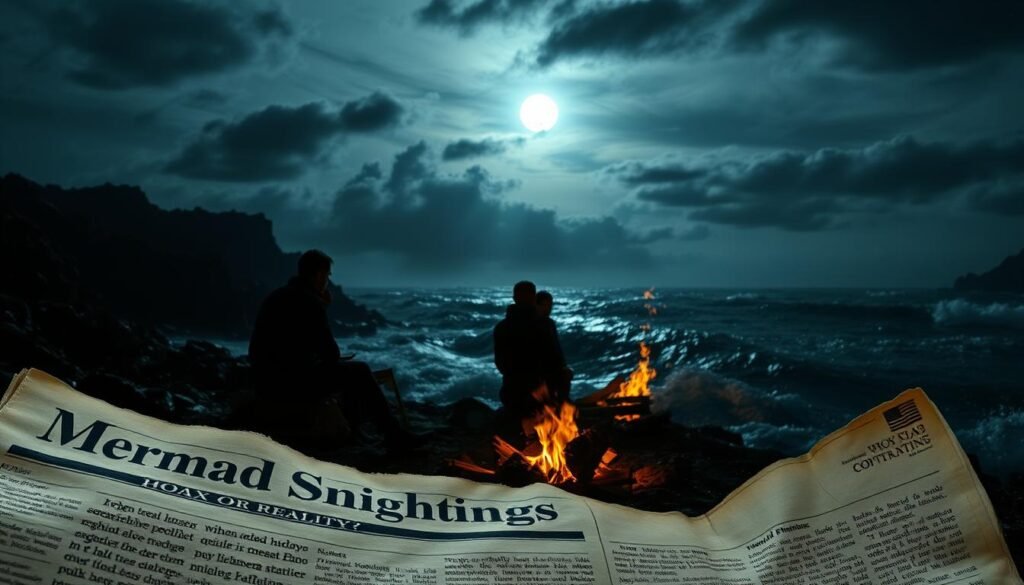
What happens when desperate showmen meet gullible crowds? You get the 1842 Fiji merman spectacle—a monkey torso stitched to a salmon tail. P.T. Barnum displayed this abomination as “scientific proof,” charging 50 cents per gawk. Spoiler: People still lined up.
Fast-forward to 2009. Israel’s Kiryat Yam beach became ground zero for modern sightings. Lifeguards swore they saw a creature doing backflips at sunset. Scientists? They found zero evidence. But here’s the kicker—the town offered $1 million for proof. Guess who’s still broke?
Let’s break down the wildest claims:
1493: Columbus’s “mermaids” (manatees with bad PR)
2012: Animal Planet’s fake documentary that fooled Congress
Why do humans keep falling for this? We’re wired to spot faces in waves and tails in seaweed. Our brains crave patterns—even when they’re nonsense. That’s why sailors swore they heard singing during storms. (Spoiler: It was wind through rigging.)
Year
Claim
Reality Check
1842
Fiji Merman
Taxidermy hoax
2009
Kiryat Yam “Nymph”
Mass hallucination
2012
Mermaids: The Body Found
Studio special effects
Here’s the truth: Every “sighting” reveals more about humans than creatures. We’ll forever project our hopes onto the water—because who wants to live in a world where oceans aren’t hiding something scaly and fabulous?
Scientific Curiosities and Mermaid-Like Mysteries
What if I told you science has its own mermaid stories—no glitter required? Let’s peel back the waves to reveal how real-world oddities fuel these aquatic fantasies. Spoiler: Nature’s rough draft is wilder than any sailor’s tall tale.
Sirenomelia and Real-Life Anomalies
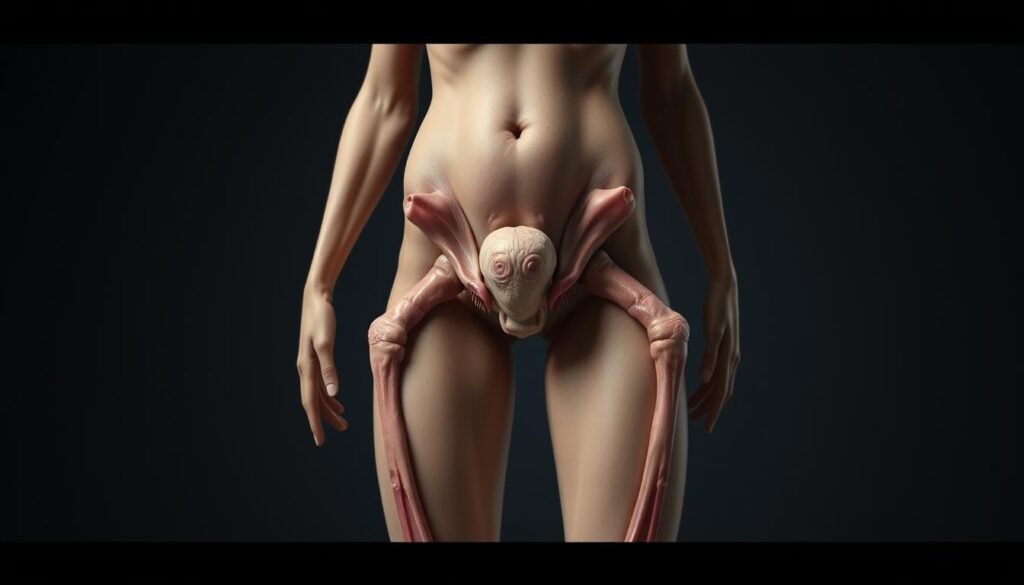
Meet sirenomelia: a 1-in-100,000 birth defect where legs fuse into a single limb. Doctors call it “mermaid syndrome,” though there’s nothing magical about the complications. I’ve seen X-rays—it’s like the body forgot to finish drawing two separate legs. Yet here’s the twist: These rare cases prove how biology sometimes mirrors myth, even by accident.
Animal Impostors in Oceanic Tales
Ever squinted at manatees and thought “fish-human hybrid”? Columbus did. These blubbery vegetarians surface like submarines, their paddle tails slapping water in rhythm. Add moonlit confusion and boom—you’ve got “mermaid” sightings. Same goes for dugongs, whose teats and nurturing behavior had sailors swearing they’d seen nursing sea maidens.
Myth Trigger
Scientific Explanation
Funny Factor
Fused Limbs
Sirenomelia genetics
Nature’s Photoshop fail
Manatee Surfacing
Buoyancy control
Seagrass breath = mermaid hair?
Here’s the kicker: Our brains want to see patterns. A dolphin’s curved fin becomes a tail. Seaweed tangles transform into flowing locks. It’s not deception—it’s humanity’s oldest party trick: turning animals and anomalies into stories that stick. And honestly? I’m here for it.
Engaging Tales and Classroom Curiosities
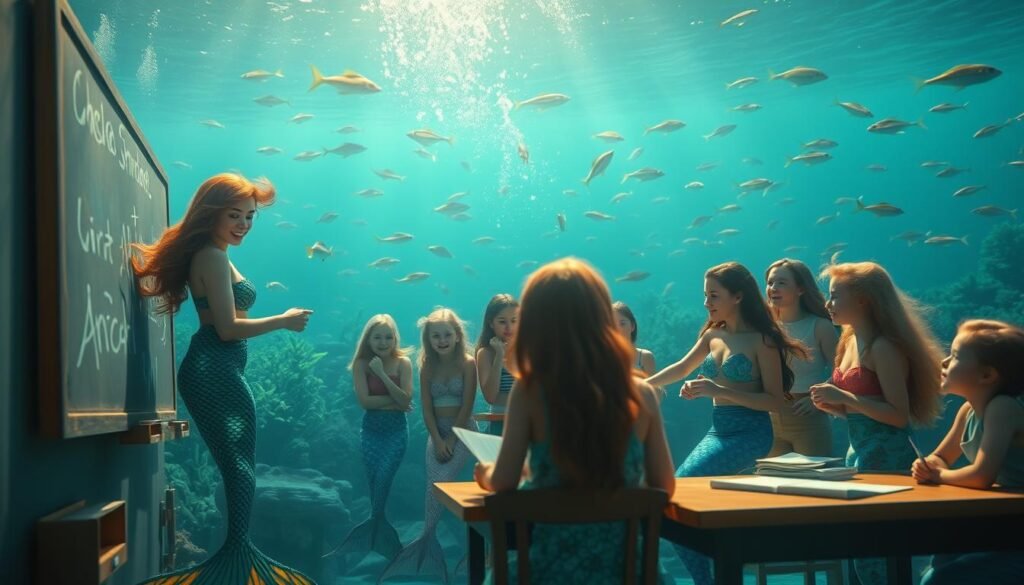
What if I told you mermaid legends could turn math class into an underwater adventure? I’ve seen third graders debate oceanic physics using seashell currency—all because we swapped dry textbooks for story-driven learning. Let me show you how to ride this creative wave.
Storytime Snippets to Spark Young Imaginations
Last Tuesday, Ms. Rodriguez’s class invented a mermaid named Coral who solves pollution puzzles. Kids designed her glowing hair to trap plastic bits—turning ecology lessons into hero missions. Pro tip: Hand out “mer-ified” name tags during roll call. Suddenly, Timmy becomes “Tidal Tim,” ready to save estuaries before lunch.
Check this out: My printable “Mermaid Market” worksheet teaches fractions through pearl trading. One student shouted, “This beats long division any day!” Exactly. When you wrap educational content in scales and seaweed, even decimal points feel magical.
Writing prompt: “What would you trade with a mermaid—and why?” (Spoiler: One kid offered TikTok lessons for a tide-controlling comb)
Science twist: Chart how real fish breathe vs. mythical merfolk
Art hack: Use coffee filters + blue markers for instant “aged” treasure maps
Activity
Learning Focus
Fun Twist
MerMath
Arithmetic
Calculate oyster gem yields
Currents & Crafts
Physics
Design floating coral cities
Legend Lab
Creative Writing
Invent hybrid sea creatures
Here’s the kicker: These stories aren’t just fluff. They’re memory anchors. When test day comes, kids recall Coral’s current-riding tricks faster than textbook diagrams. And honestly? Watching a 10-year-old passionately argue about mermaid housing rights? Best. Teaching Day. Ever.
Parting Words on the Enigma of Mermaid Legends
What if our ancestors weren’t just spinning fish tales? That time Columbus mistook manatees for “sea maidens”—maybe he wanted to believe. I’ll admit it: Some days, staring at spreadsheets, I’d rather picture Atargatis’ shimmering tail than another Zoom call.
Why do these legends stick? Maybe because the ocean owes us nothing—no explanations, no apologies. When medieval monks drew mermaids clutching combs, were they coding survival tips for rough seas? Or just flexing their artistic chops? Heck if I know. But I’ll keep wondering.
Here’s the kicker: Every “sighting” reveals our knack for finding magic in murky waters. Those blurry beach photos? The seal that looked just human? They’re not hoaxes—they’re hope in wetsuit form. Because let’s face it: A world without mystery is just… math homework.
So next time you spot seaweed swirling like hair? Don’t blink. Don’t rationalize. Just whisper: “I see you, Atargatis.” Then keep walking. Some legends prefer to stay… unfinished.