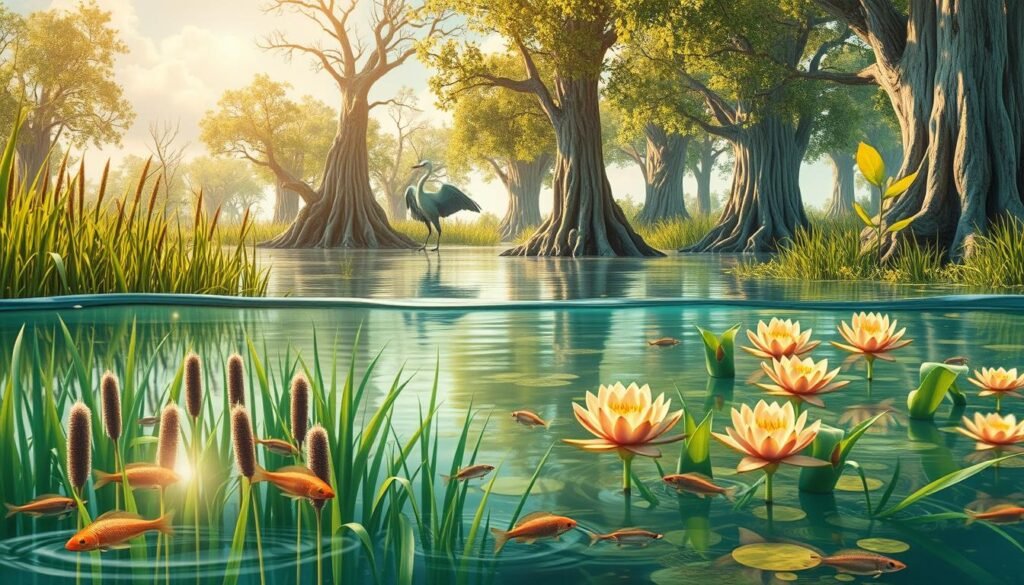
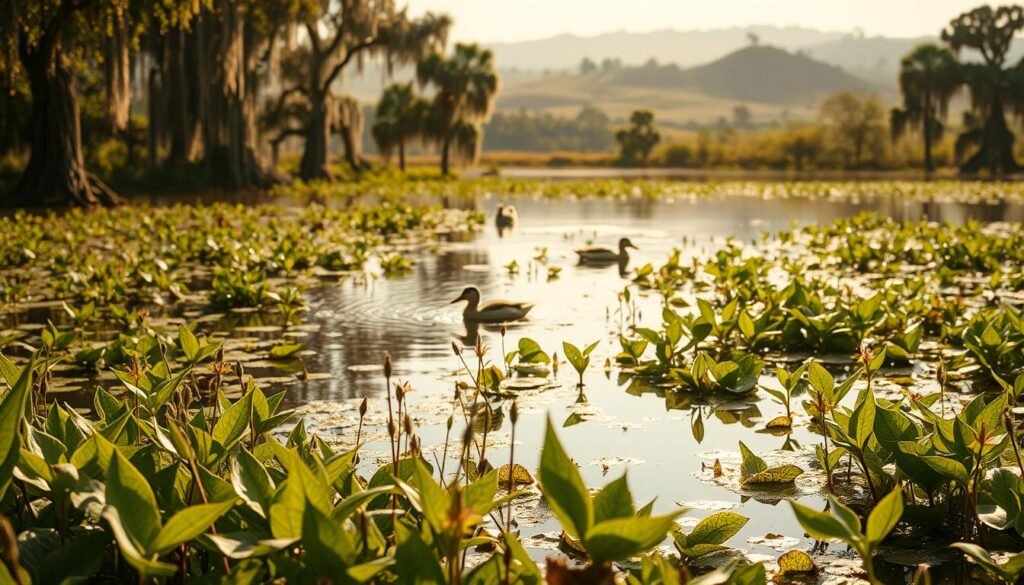
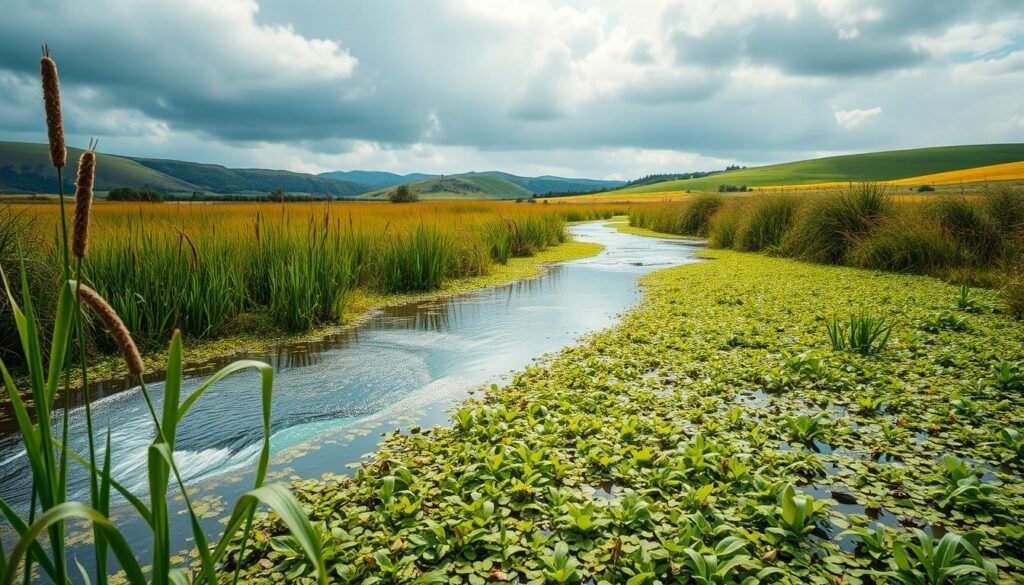
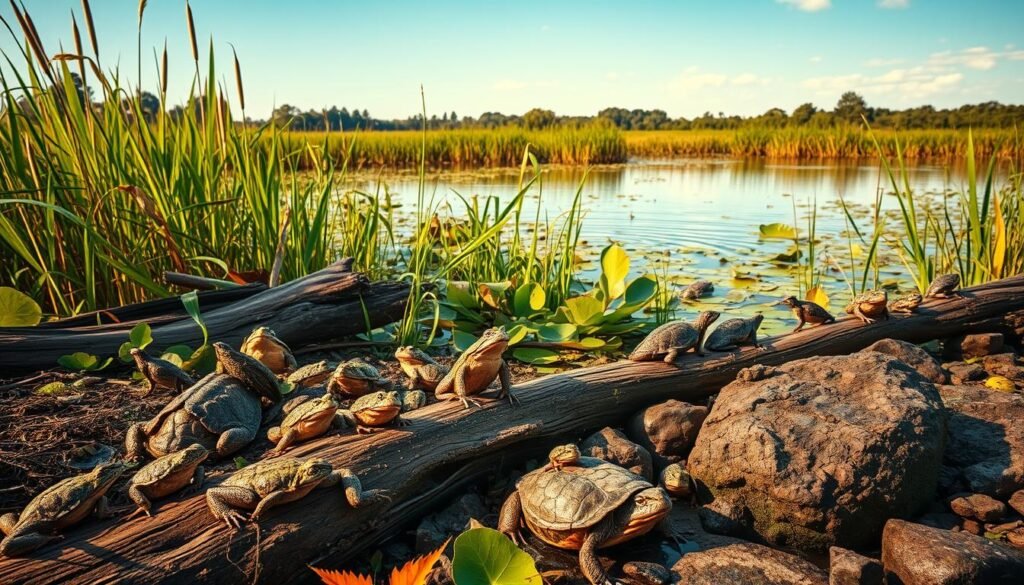
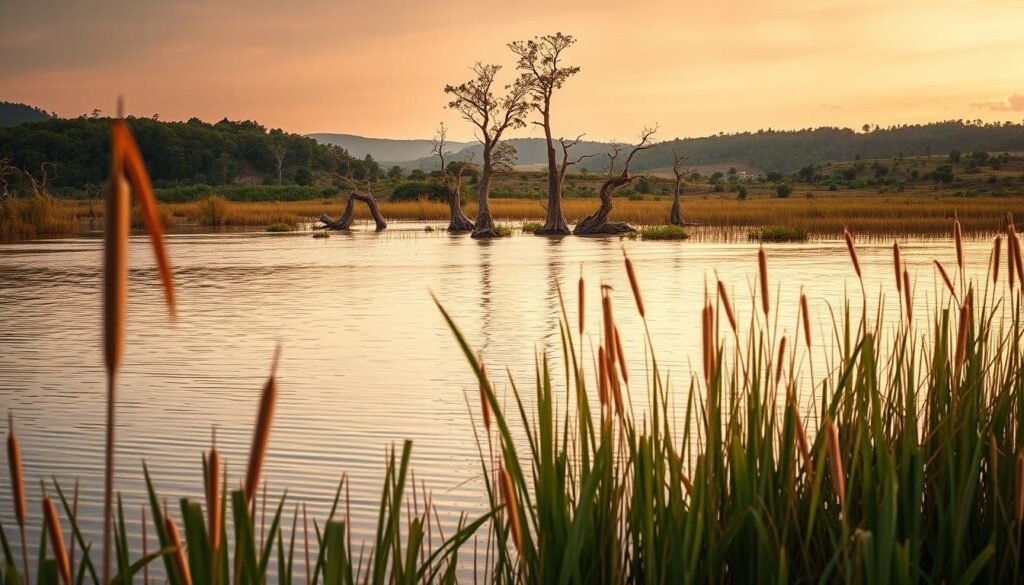
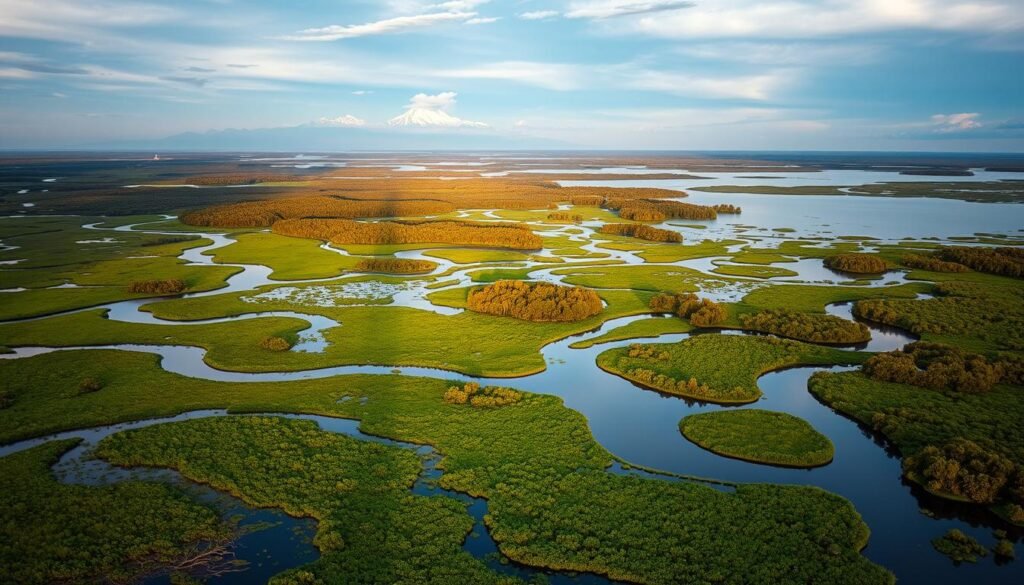
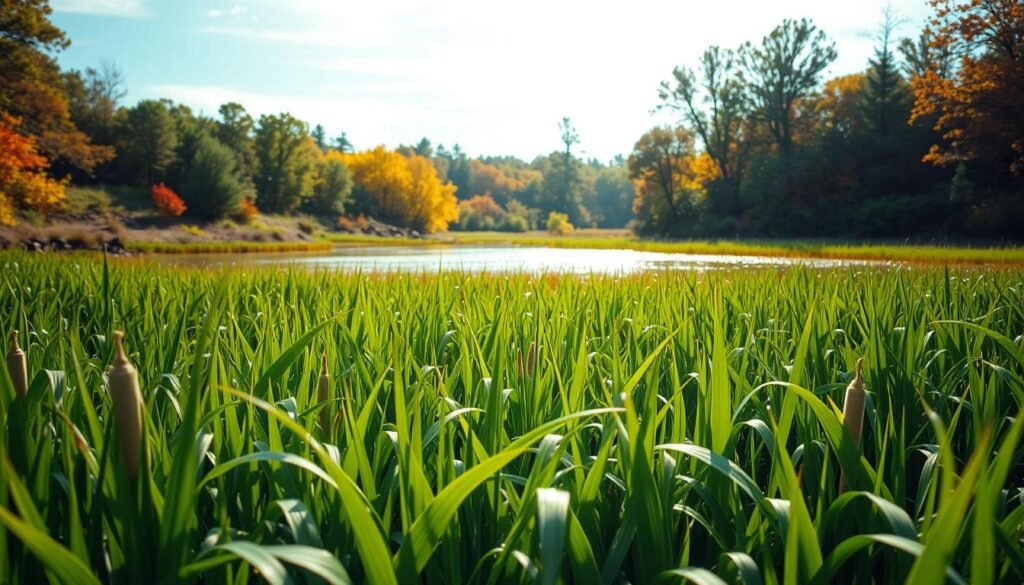
Wetlands are Earth’s incredible natural water filtration systems. They cover 6% of our planet’s land surface. These magical ecosystems are nature’s superheroes, cleaning water and protecting wildlife in ways you never imagined!
Wetland facts for kids show these special areas are more than just soggy ground. They’re complex natural environments teeming with life. Wetland ecosystems act like giant living filters, trapping pollutants and transforming them into clean, safe water that supports countless plants and animals.
Imagine a giant sponge that can clean water, prevent flooding, and provide homes for amazing creatures – that’s exactly what wetlands do! These unique landscapes range from marshy swamps to grassy meadows filled with water. They create incredible habitats that support biodiversity.
Scientists consider wetlands some of the most productive environments on our planet. They work like nature’s own water treatment plants. They remove harmful chemicals and provide critical support for environmental health.
From tiny insects to large mammals, wetlands are bustling ecosystems where life thrives in water-rich environments. Get ready to explore the incredible world of these extraordinary natural wonders!
What Are Wetlands and Why They Matter
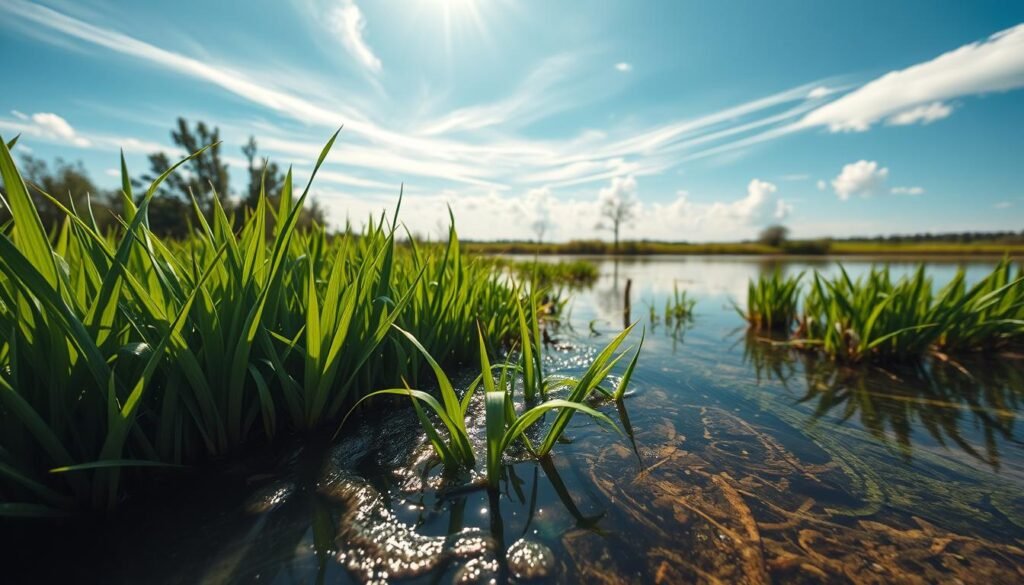
Wetlands are like superheroes of nature, where water and land meet. They are more than just water spots. They are magical places that connect the dry land with the underwater world. These areas are filled with water, creating unique environments that are vital for our planet’s health.
Wetlands are incredibly important. They act like nature’s ultimate filter and a safe home for many animals. From swamps to marshes, each type of wetland adds something special to our environment.
Water Varieties in Wetland Environments
Wetlands are not just about water. They have different types of water that keep ecosystems alive:
Freshwater wetlands with rivers and streams
Saltwater marshes near coastal regions
Brackish water zones mixing salt and fresh waters
Ecosystem Balance Superpowers
These watery wonders are the MVPs of ecosystems. They keep environments stable by:
Absorbing excess water during floods
Filtering pollutants naturally
Supporting diverse wildlife populations
Basic Wetland Characteristics
Wetlands are not random wet spots. They have special traits that make them unique:
Saturated soil conditions
Specialized plant species adapted to water-rich environments
Consistent water presence for significant periods
Understanding Nature’s Water Filtration Process
Wetlands act as a natural water cleaning system, like a giant, living filter. They remove harmful substances from water, supporting entire ecosystems. These environments trap sediments, absorb pollutants, and change dangerous chemicals into harmless ones.
The natural water cleaning process in wetlands involves several key mechanisms:
Biological filtration by microorganisms
Physical trapping of sediments
Chemical transformation of pollutants
Plant-based nutrient absorption
Wetlands are nature’s most advanced water purification system. Microscopic organisms in these environments break down contaminants. Plants with extensive root systems catch particles and absorb excess nutrients like nitrogen and phosphorus.
The water filtration process varies by wetland type. Marshes, swamps, and bogs each have unique features that help clean water. Some wetlands can remove up to 90% of nitrogen and phosphorus from water, making them very effective.
Scientists have found that wetland filtration is so strong that some communities use constructed wetlands to treat wastewater. This shows how amazing these ecosystems are at keeping water clean and protecting our environment.
Amazing Animals That Call Wetlands Home
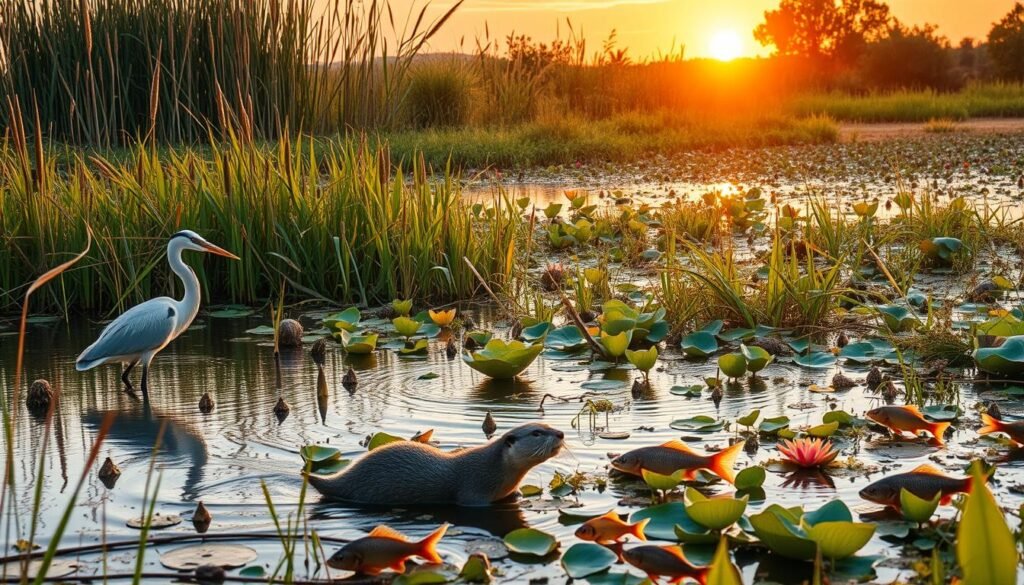
Wetlands are home to a wide variety of animals. These places are full of life, thanks to their unique water environments. Animals here, from tiny insects to big mammals, help keep the ecosystem balanced.
Wetlands have many different areas that support a lot of life. These areas give animals places to live, eat, and have babies.
Mammals Making Wetlands Their Home
Many mammals live in wetlands. Some of these animals are:
Beavers making dams
Muskrats building homes
River otters catching fish
Marsh rabbits living in wet areas
Birds Ruling Wetland Skies
Wetlands are also home to many bird species. These birds have special ways to live in the water.
Bird Species
Wetland Adaptation
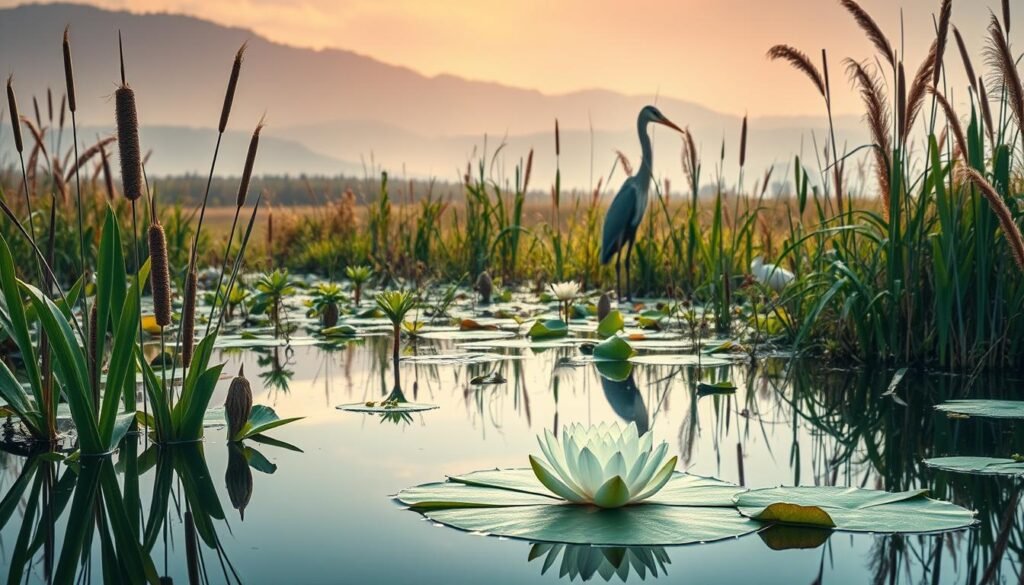
Great Blue Heron
Long legs for wading, sharp beak for fishing
Egrets
Specialized hunting techniques
Kingfishers
Diving skills for underwater prey
Reptiles and Amphibians of Wetland Ecosystems
Reptiles and amphibians also live in wetlands. They need the water to survive.
Alligators controlling wetland populations
Frogs using water for breeding
Salamanders hiding in marshy grounds
Water snakes hunting aquatic prey
Each group of wetland wildlife has amazing ways to survive. They show how nature can adapt to complex environments.
Special Plants Growing in Wetland Areas
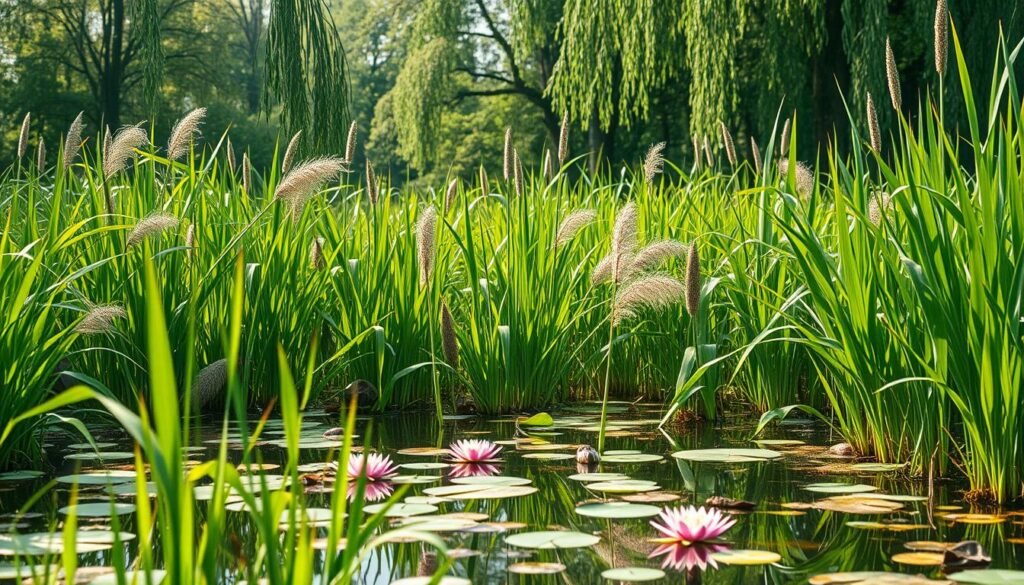
Wetland plants are amazing survivors. They have special ways to live in waterlogged places. These plants can’t be found in other environments.
Some plants can handle water all the time. Hydrophytes are made for wet conditions. They have special features to survive:
Underwater breathing mechanisms
Roots that can survive in low-oxygen soil
Flexible stems that bend with water currents
Specialized leaf structures for water absorption
There are many interesting wetland plants. Some examples include:
Plant Type
Unique Characteristic
Wetland Location
Water Lilies
Floating leaves
Freshwater marshes
Cattails
Dense root systems
Shallow water zones
Sedges
Triangular stems
Wet meadows
These plants are vital for ecosystems. They provide oxygen, filter water, and create homes for animals.
Different Types of Wetlands Around the World
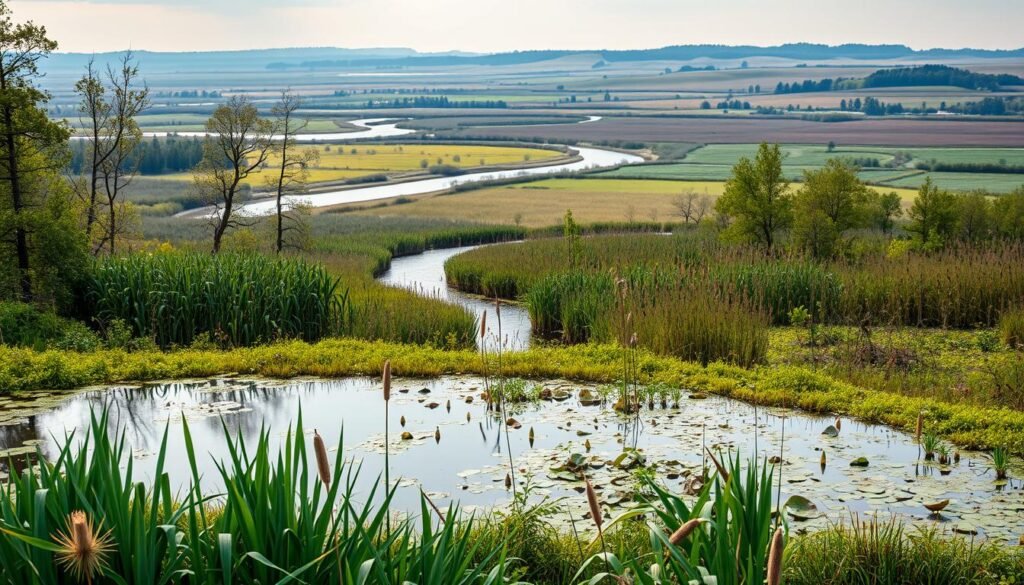
Wetlands are fascinating water-rich environments that are vital to our planet. They vary greatly around the world, each with its own special features and ecological importance.
Wetlands are more than just water. They are complex ecosystems with unique features. Scientists have found several main types of wetlands. These create amazing habitats for many species.
Swamps and Their Features
Swamps are wet areas filled with trees and woody plants. They are found in forested areas with slow-moving water. Key features include:
Dense tree coverage
Saturated soil conditions
Freshwater or saltwater environments
Rich biodiversity
Marshes: Grassy Water Worlds
Marshes are another interesting type of wetland. They are different from swamps because they have more grass and herbaceous plants. Their main traits are:
Shallow water depths
Abundant grass and reed populations
High nutrient concentrations
Critical habitats for migratory birds
Bogs and Their Unique Properties
Bogs are perhaps the most enigmatic wetland type. These waterlogged ecosystems develop in areas with poor drainage and acidic conditions. Their unique features include:
Thick moss layers
Acidic water environments
Slow decomposition rates
Specialized plant species like sphagnum moss
How Wetlands Clean Our Water
Wetlands are nature’s ultimate water cleaning champions. They perform an amazing natural water treatment process. This keeps our water pure and healthy. Imagine a giant, living filter that captures and removes harmful substances from water before they reach rivers, lakes, and groundwater.
The wetland water purification process works through several fascinating mechanisms:
Plants absorb dangerous chemicals and pollutants
Microorganisms break down toxic compounds
Sediments trap heavy metals and harmful particles
Natural filtration removes excess nutrients
Different types of wetland vegetation play important roles in cleaning water. Aquatic plants act like tiny water filters. They trap sediments and absorb excess nutrients that could harm water quality.
Wetland Cleaning Mechanism
Pollutant Removal Rate
Plant Absorption
Up to 90% of nitrogen and phosphorus
Microbial Breakdown
85% of harmful bacteria
Sediment Filtration
70-95% of suspended solids
Natural water treatment in wetlands is so effective. Some communities use constructed wetlands to clean wastewater. These engineered ecosystems mimic the incredible water purification abilities of natural wetlands. They show how powerful these environments can be in maintaining water quality.
Wetland Facts for Kids: Fun Things to Know
Wetlands are amazing places filled with surprises! They are like secret playgrounds in nature. These areas are home to over 100,000 species of plants and animals, despite covering only 6% of Earth’s land.
Here are some cool facts about wetlands that will change how you see them:
Wetlands act as nature’s water filters, cleaning millions of gallons of water every day
Some wetland plants can grow underwater and above water at the same time
Carnivorous plants like Venus flytraps often grow in wetland environments
Wetlands can store more carbon than entire forests
Did you know wetlands are like giant sponges? They soak up a lot of water during floods, helping protect communities. Many animals rely on these places to survive, making them key for biodiversity.
Wetland wildlife is incredibly diverse. From tiny insects to big mammals, these areas support a wide range of creatures. Salamanders, frogs, unique water birds, and even alligators live in wetlands.
Wetlands change with seasons, creating dynamic habitats
Some wetland areas can be freshwater or saltwater
Wetlands exist on every continent except Antarctica
Importance of Wetlands for Clean Drinking Water
Wetlands are key for clean water for millions in the U.S. They act as natural water treatment systems. They filter water better than many man-made methods.
Wetlands are more important for your water than you think. They filter water like giant natural filters. They catch sediments, remove pollutants, and make water clear for drinking.
Natural Filtering Process
The filtering in wetlands is amazing:
Vegetation traps sediments and harmful particles
Microorganisms break down chemical contaminants
Soil and plant roots absorb excess nutrients
Natural chemical reactions neutralize toxins
Cities like New York depend on wetlands for clean water. The Catskill Watershed, for example, gives nearly 90% of New York City’s water. It does this through natural filtering.
Water Quality Benefits
Wetlands improve drinking water quality:
Reduce water treatment costs
Eliminate harmful bacteria
Remove pollutants from farms and factories
Protect groundwater
Studies by the Environmental Protection Agency show a link between wetlands and water. One acre of wetland can filter up to 1.5 million gallons of water a year. This makes them vital for clean water across the country.
Cool Creatures of Freshwater Wetlands
Freshwater wetlands are amazing places full of fascinating animals. These areas, rich in water, support a wide variety of creatures. Each one has special ways to survive.
These wetlands are home to incredible animals. Small but mighty, they all play important roles. They help keep the environment in balance.
Diving Bell Spider: A remarkable arachnid that lives entirely underwater, creating air bubbles to breathe
Axolotl: A salamander with extraordinary regenerative abilities that can regrow lost body parts
Painted Turtles: Colorful reptiles perfectly adapted to wetland environments
Dragonfly Larvae: Aquatic predators that transform into beautiful flying insects
Some animals have amazing adaptations. Insects can walk on water’s surface. Amphibians, like frogs, breathe and get nutrients from the water.
These animals show how complex wetland ecosystems are. Each one is vital for the balance of wetland life. This makes wetlands some of the most fascinating places on Earth.
Exploring Saltwater Wetlands
Saltwater wetlands are amazing places where the ocean and land come together. They are found along tropical and subtropical coasts. These areas support a wide variety of wildlife.
Coastal wetlands are unique because they face the challenge of mixing saltwater and freshwater. Mangrove forests are a key part of these ecosystems. They have complex root systems that protect many species.
Mangrove trees can survive in extremely salty conditions
Roots act as natural barriers against coastal erosion
These ecosystems serve as critical nurseries for marine life
The wildlife in saltwater wetlands is incredibly diverse. Colorful crabs and graceful herons live here. Marine life like oysters and small fish find safe havens in these areas.
These ecosystems are vital for protecting coastlines from storms. They act like natural sponges, soaking up wave energy. This helps prevent coastal flooding during hurricanes.
Stabilize shoreline landscapes
Reduce erosion risks
Provide critical habitats for marine species
Saltwater wetlands are found in many places, from tropical to temperate zones. They show nature’s ability to thrive in tough conditions. Their complexity and resilience are truly awe-inspiring.
Weather Protection: How Wetlands Shield Us
Wetlands are nature’s defense against extreme weather. They protect communities and landscapes with their natural storm protection. This is thanks to their unique abilities.
Wetlands work like a living sponge. They soak up water during storms, stopping floods in nearby areas. This creates a buffer zone that lessens the storm’s impact.
Flood Control Mechanisms
Wetlands protect us in several ways:
They absorb water during heavy rain
They slow down stream flow during floods
They keep shorelines stable and prevent erosion
They trap sediments and prevent soil loss
Natural Storm Protection Strategies
Coastal wetlands are key in fighting storm surges. Salt marshes and mangrove forests block waves, protecting inland areas. Their roots hold soil in place, reducing damage from storms.
Wetlands act as living infrastructure, better than artificial methods. They adapt and regrow, making them essential for climate resilience.
Coastal wetlands cut storm surge by up to 20%
Wetland plants slow water flow
Roots keep soil stable and prevent erosion
Amazing Wetland Adaptations
Wetlands are tough places for plants and animals to live. They have to find ways to survive in waterlogged areas. Plants and animals in wetlands have come up with amazing ways to thrive.
Plants in wetlands have developed special ways to survive. Some plants grow pneumatophores, which are roots that stick up from the soil. This lets them breathe. Mangrove trees, for example, have roots that breathe in salty, muddy water.
Water-filtering root systems
Floating leaf structures
Specialized oxygen intake mechanisms
Animals in wetlands also have amazing adaptations. Ducks have feathers that keep them dry and warm. Amphibians have lungs that let them breathe underwater and on land.
Water-resistant skin coverings
Enhanced swimming capabilities
Camouflage techniques for predator protection
Wetland animals have webbed feet for swimming and eyes for seeing underwater. Their skin can even absorb oxygen from water. These amazing changes show how nature can survive in tough places.
Protecting Our Wetland Treasures
Wetland conservation is key to protecting some of the planet’s most valuable ecosystems. These water wonderlands are vital for keeping our environment balanced and supporting a wide range of wildlife.
In the early 1970s, governments around the world started to see how important wetlands are. Many efforts have been made to keep these unique habitats safe from pollution and development.
Conservation Efforts in Action
Protecting wetlands needs a team effort. Scientists, environmental groups, and local communities are working together. They’re using different strategies to keep these ecosystems safe.
Establishing protected wildlife reserves
Creating restoration projects
Implementing strict environmental regulations
Monitoring water quality and habitat health
What Kids Can Do to Help
Young people can really help with wetland conservation. Here are some ways you can make a difference:
Learn about local wetland ecosystems
Participate in community cleanup events
Spread awareness about protecting wetlands
Support local environmental education programs
Your actions count! By learning about and protecting wetlands, you help keep these natural water filters safe. They support countless plant and animal species.
The World’s Most Famous Wetlands
Wetlands are amazing places that fascinate people all over the world. They are known for their beauty, variety of life, and importance to the environment. Let’s look at some of the most amazing wetlands that show off nature’s incredible water filters.
The Everglades in Florida is one of the most famous wetlands. It covers 1.5 million acres and is full of rare animals. It also helps manage water and protect wildlife.
Everglades National Park: Largest tropical wilderness in the United States
Amazon River Basin: World’s most extensive wetland system
Sundarbans: Largest mangrove forest globally
The Pantanal in Brazil is another incredible wetland. It’s the biggest tropical wetland area, covering about 150,000 square kilometers. It’s home to many animals, like jaguars and capybaras, and hundreds of birds.
The Okavango Delta in Botswana is special too. It turns the dry Kalahari Desert into a green water paradise. This place is a key home for many endangered animals.
These famous wetlands show how diverse and vital these water-rich places are. They are important homes, water cleaners, and natural shields against climate change.
Wetland Seasons and Changes
Wetland ecosystems change a lot throughout the year. These special places go through big changes that affect all living things in them.
In spring, wetlands come alive. Water levels go up because of melting snow and spring rains. This is great for new plants to grow. Birds that migrate stop here, and frogs and salamanders start singing again.
Spring brings increased water levels
Migrating birds return to breeding grounds
Amphibians become active after winter
Summer makes wetlands green and lush. Water levels go down, showing muddy shores. Dragonflies fly around, and plants grow underwater, making it look like an underwater world.
Autumn brings big changes too. Plants turn colors, and animals get ready for winter. Water levels drop, showing off roots and making new homes for animals.
Plant colors change dramatically
Animals prepare for winter
Water levels become more variable
Winter is the biggest change in wetlands. Some places freeze, while others stay liquid. Animals hibernate, and plants sleep. Birds that migrate are gone, leaving a quiet place.
Science Projects and Activities About Wetlands
Explore exciting wetland experiments that turn learning into an adventure! Kids can dive into the world of wetlands through hands-on activities. These activities make ecological concepts come alive. They help kids understand how wetlands work.
Try a water filtration experiment with a clear plastic bottle. Use layers of gravel, sand, and activated charcoal. This shows how wetlands clean water. Cut the bottle’s bottom, add layers, and pour in muddy water. Watch as clear water comes out, just like in real wetlands.
Explore your backyard to learn about wetlands. Use a magnifying glass and notebook to record small creatures. Collect leaves, observe insects, and draw what you find. The National Wildlife Federation suggests keeping a field journal to track your discoveries.
Make a wetland diorama with recycled materials. Use clay, cardboard, and natural elements like moss. This project lets kids see how water, plants, and animals interact in wetlands.