The Tequesta tribe were amazing Native Americans in southeastern Florida. They were experts at gathering shellfish and surviving by the coast. They lived in southern Palm Beach, Broward, and Miami-Dade counties. Their culture was deeply connected to the sea.
Exploring the Tequesta tribe’s world is like diving into a rich Native American history. They were known for turning coastal resources into tools and food. This made them stand out among other indigenous groups.
Imagine a place where clear waters meet green landscapes. That was the Tequesta tribe’s home. They were not just survivors; they were experts in their coastal world.
The Tequesta had smart ways to fish, hunt, and gather. This helped them build stable and prosperous communities. They knew a lot about marine life and plants, which helped them thrive.
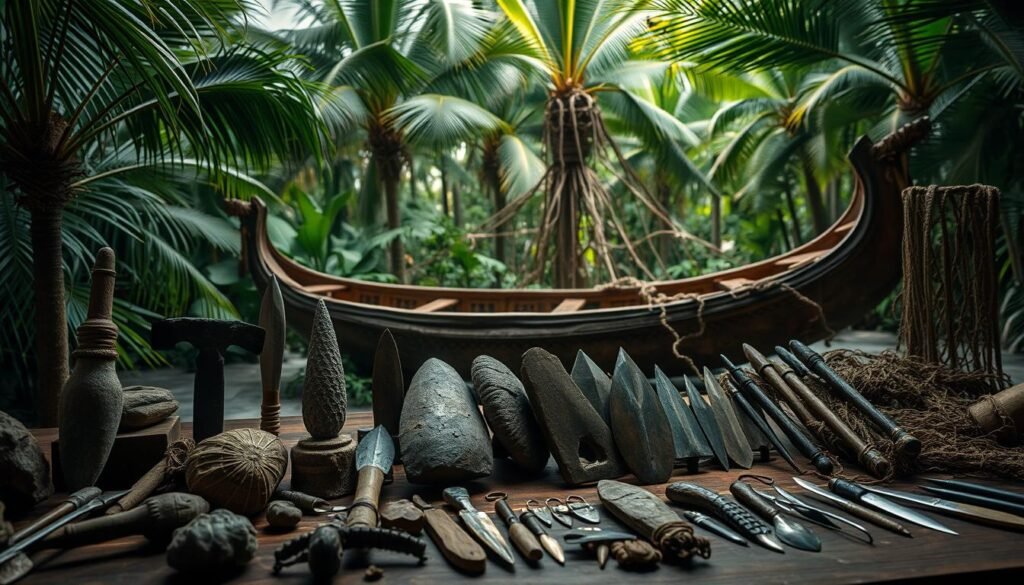
The Tequesta were creative with tools made from shark teeth and shells. Their skills turned simple materials into complex tools. This showed their deep understanding of their environment.
Ancient Origins of Florida’s First People
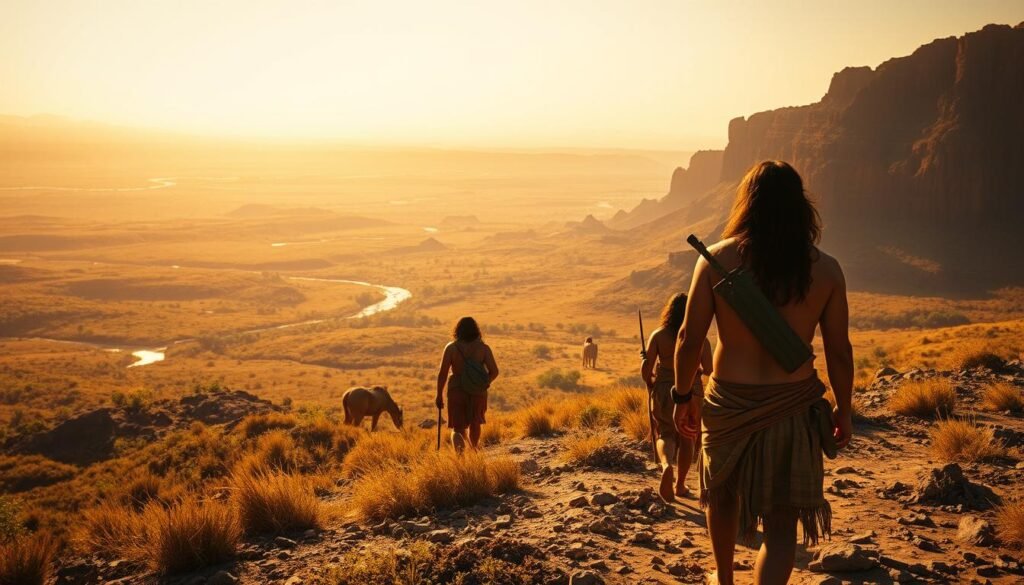
The story of Florida’s earliest people starts with a journey across vast lands during the last ice age. Paleo-Indians were the first to explore this peninsula. They traveled thousands of miles from Asia.
People migrated through the Bering Strait, crossing a land bridge between Asia and North America. This journey was possible when glaciers covered much of the land.
The Arrival Through Bering Strait
The Bering Strait migration was a key moment in human history. Researchers think these settlers arrived around 12,000 to 15,000 years ago. They faced:
Harsh cold environments
Tracking animal migrations
Diverse terrains
Survival techniques
Early Settlement Patterns
Early settlers found a very different Florida than today. With lower sea levels, coastal areas were much larger. This created unique conditions for their survival.
Migration Period
Key Characteristics
Estimated Time
Initial Crossing
Bering Land Bridge Passage
15,000-12,000 years ago
Coastal Exploration
Florida Peninsula Settlement
12,000-10,000 years ago
PaleoIndian Culture Development
Paleo-Indians developed survival strategies unique to Florida. They became skilled hunters and gatherers. Their culture focused on adaptability, tool-making, and understanding nature.
Specialized hunting techniques
Advanced stone tool production
Complex social structures
Spiritual connections with nature
Where Did the Tequesta Live in Florida
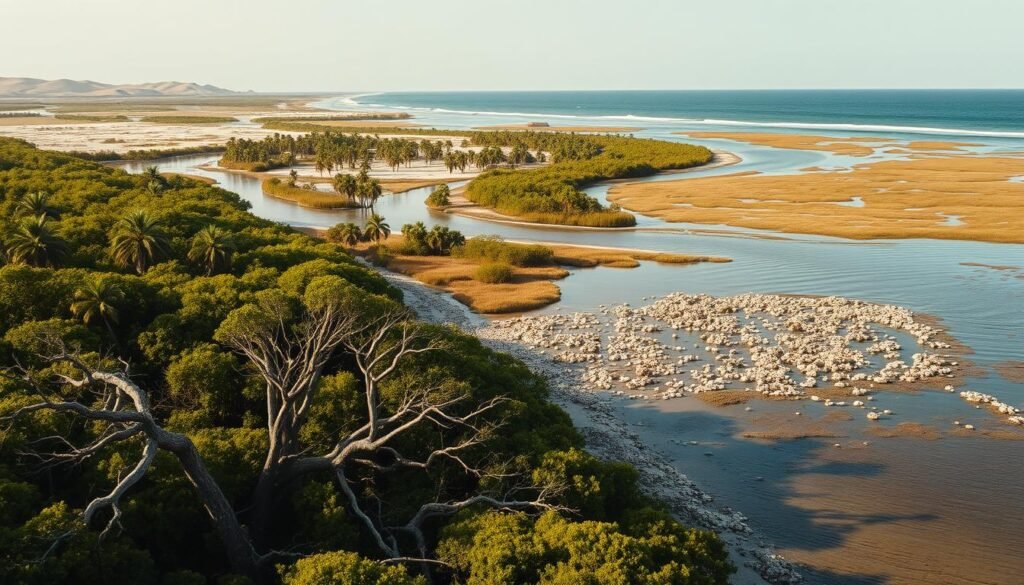
The Tequesta lived in the southeastern coastal areas of Florida. Their main settlements were in Miami and nearby. They chose the Miami River for their homes, using the area’s natural resources well.
Their land was varied, including:
Biscayne Bay coastline
Florida Keys
Miami River valley
Coastal regions of present-day Miami-Dade County
They picked places that helped them survive. The Miami River gave them access to water and food. This made it perfect for hunting, fishing, and gathering.
Studies show the Tequesta’s strong bond with their land. Coastal sites show their smart use of the environment. They built homes on high ground, safe from floods, yet close to food.
The Tequesta’s territory was about 50 miles long along Florida’s coast. They were one of the most focused Native American groups. Their location helped them build a complex society, tied to South Florida’s unique features.
Tequesta Tribe Facts for Kids
Explore the world of the Tequesta, a Native American tribe that lived in southern Florida before cities. Their daily life was a mix of survival skills, community spirit, and a deep bond with nature.
Young Tequesta kids learned survival skills early. They saw their parents fishing, hunting, and gathering. These skills kept their community going for many years.
Daily Life and Customs
The Tequesta’s customs centered on family. Each day was filled with challenges and chances:
Fishing in coastal waters using nets and spears
Gathering wild plants and fruits from forests
Crafting tools from shells, wood, and bones
Preparing food with complex cooking methods
Tribal Leadership Structure
Leadership was key in Tequesta society. The chief played a big role in guiding the community:
Leadership Role
Key Responsibilities
Primary Chief
Strategic decision-making and community protection
Village Elders
Preserving cultural knowledge and providing guidance
Hunting Leaders
Organizing hunting expeditions and managing resources
Traditional Ceremonies
Ceremonies were important in Tequesta culture. They connected the tribe spiritually to their surroundings. Rituals celebrated life events, seasonal changes, and community milestones. These gatherings helped keep their culture alive.
Hunting and Fishing Methods
The Tequesta tribe was skilled in hunting and fishing. They knew how to survive in South Florida’s rich ecosystem. Their fishing skills were amazing, showing they understood Florida’s wildlife and oceans well.
Tequesta men were great hunters. They used special methods to catch different animals. They hunted on land and in water with great skill.
Marine Hunting Strategies:
Catching large marine animals like sailfish, sharks, and porpoises
Using handcrafted spears and nets for fishing
Tracking marine migrations and seasonal patterns
Land Hunting Techniques:
Hunting small game using advanced tracking skills
Creating specialized hunting tools from local materials
Understanding animal behavior and habitat patterns
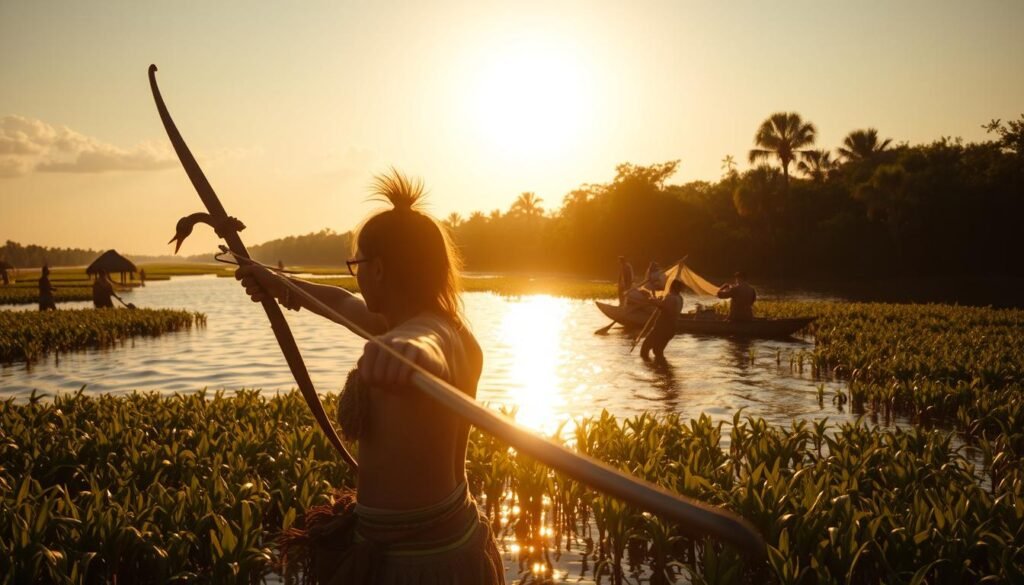
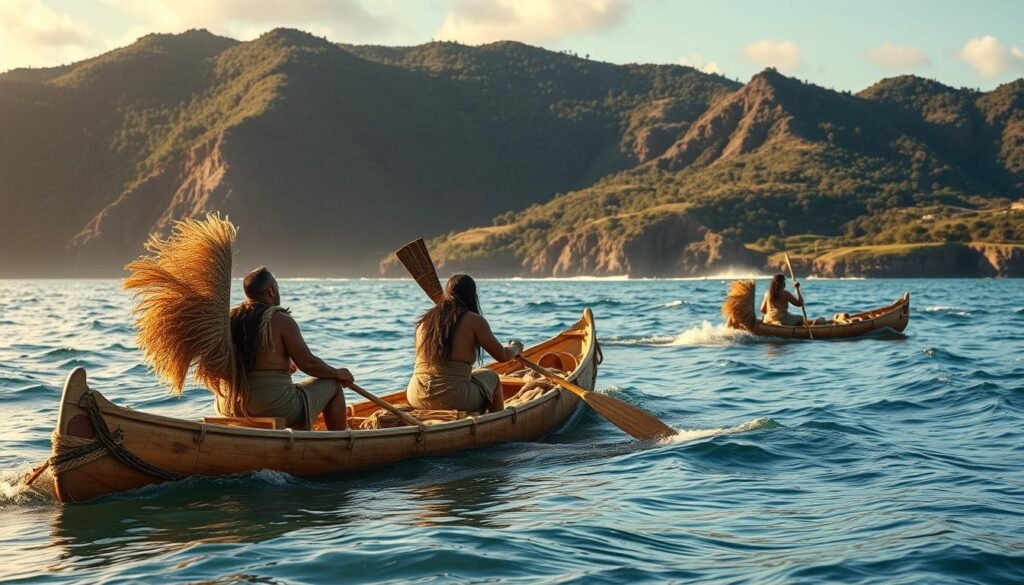
Their fishing methods showed incredible skill in Florida’s wildlife. They used lightweight canoes made from tree trunks. This let them move quietly in coastal waters and catch marine animals with ease.
Their hunting was more than just survival. It was a deep connection with nature. By knowing animal behaviors and seasonal changes, the Tequesta got food and resources efficiently.
Tools and Weapons of the Tequesta
The Tequesta people made amazing Native American tools. These tools showed their great skill in ancient Florida technology. They used natural materials from their coastal home to make weapons.
Tequesta weapons showed their smart use of resources. They turned local materials into tools that helped them survive every day.
Shark Tooth Technology
Shark teeth were a big deal for the Tequesta. They were very sharp and lasted a long time:
Used for cutting fishing nets and ropes
Attached to wooden handles as precision cutting tools
Created detailed carving tools
Shell-Based Tools
The Tequesta made useful tools from shells on Florida’s coast. Conch shells were used for:
Cutting things
Digging
Cooking
Wooden Implements
Wooden tools were key for the Tequesta. They made canoes, hunting tools, and everyday items with great skill.
Their work with Native American tools was truly innovative. They turned simple materials into complex tools that helped their community for many years.
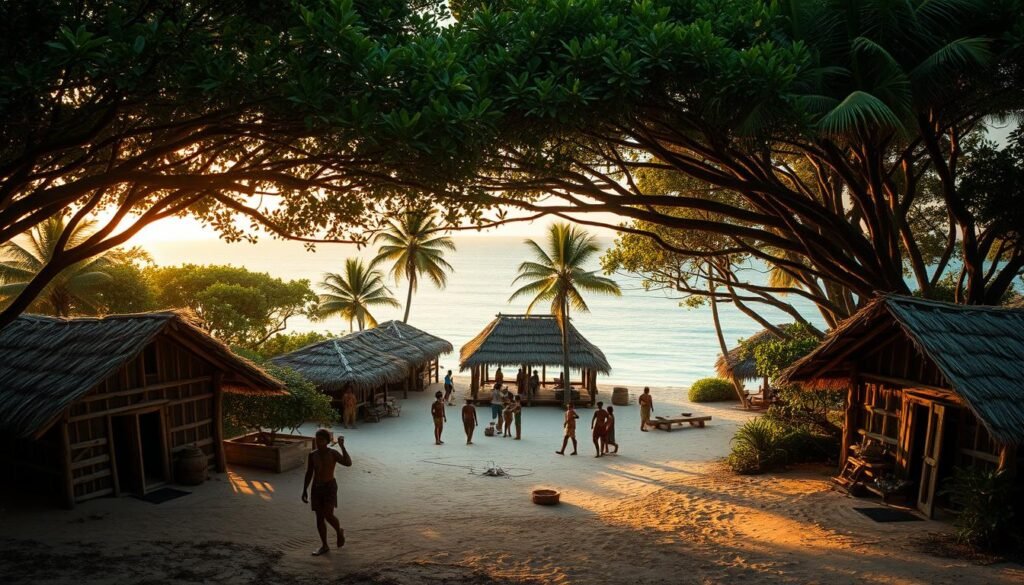
Traditional Tequesta Homes and Villages
The Tequesta people built homes that fit perfectly with Florida’s coastal environment. Their villages showed off their architectural skills. They used palm leaves and natural resources from around them.
Tequesta homes were known for their open-air design. They had:
Thatched roofs made from woven palm leaves
Elevated platforms to protect from flooding
Circular or rectangular ground layouts
Lightweight construction for easy relocation
These homes were built near water sources. This showed the Tequesta’s understanding of living with nature. Their villages were by the coast and rivers, making fishing and travel easy.
Tequesta homes were more than just places to live. They were shared spaces for families. Extended family groups often lived together. These homes were the heart of the tribe’s social life.
The Tequesta were skilled builders. They used:
Wooden support posts
Flexible plant materials for weaving walls
Natural insulation techniques
Advanced waterproofing methods
These building skills helped the Tequesta survive and grow in tough coastal areas. They turned challenges into chances for success and community growth.
What Did Tequesta People Eat
The Tequesta diet was a remarkable example of Native American food adaptation. It was perfectly tailored to the rich coastal environment of ancient Florida cuisine. These resourceful people crafted an impressive menu from the abundant natural resources surrounding their homeland.
Seafood wasn’t just a meal for the Tequesta—it was a way of life. Their coastal location provided an incredible buffet of marine delicacies. These foods sustained their entire community.
Seafood Diet Specialties
The Tequesta were expert fishers who harvested an impressive variety of marine foods. Their seafood diet included:
Large marine fish
Smaller reef fish
Sharks
Sea turtles
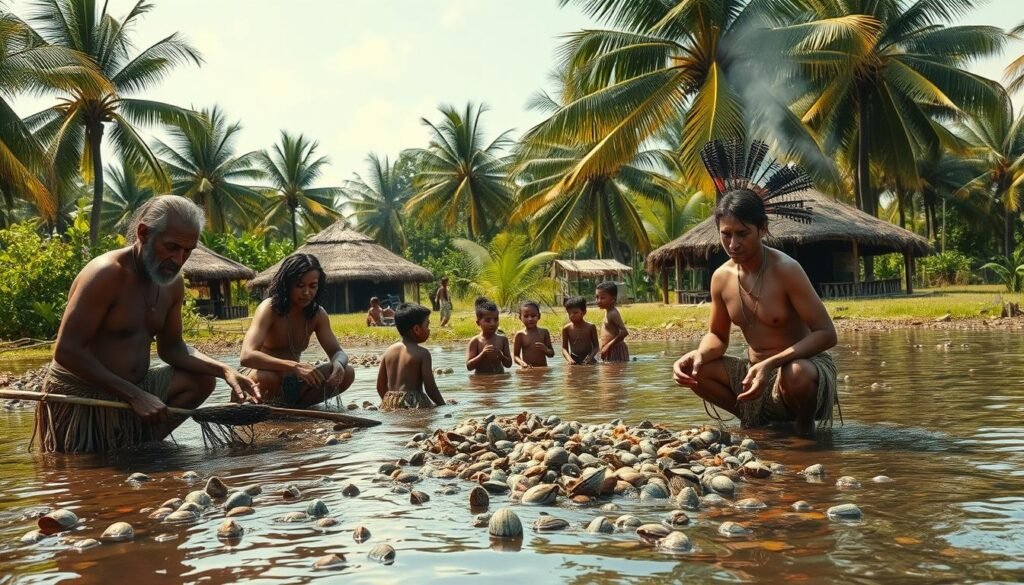
Shellfish played a key role in their nutrition. They collected:
Clams
Oysters
Conches
Plant Foods and Gathering
Women and children were the primary gatherers. They collected an impressive array of plant-based foods. These foods complemented their protein-rich diet. Their plant menu included:
Palmetto berries
Coco plums
Sea grapes
Palm nuts
Turtle eggs
The Tequesta’s diet showed remarkable nutritional balance. It combined protein-rich seafood with nutrient-dense plant foods. Their intimate knowledge of local ecosystems allowed them to create a sustainable and diverse menu. This menu supported their entire community.
Tequesta Clothing and Appearance
The Tequesta people had a special way of dressing that was perfect for Florida’s warm weather. Their clothes were made from lightweight materials. This kept them cool in the hot sun.
Tequesta fashion used plants found in their area. They made clothes from:
Palm leaves
Palmetto leaves
Spanish moss
Their clothes were simple because of Florida’s warm weather. They didn’t wear animal skins like some other tribes. Heavy clothes would have been too hot and uncomfortable.
Their clothes were made to fit the environment well. They were light and let air through. This made it easy to move and stay cool while doing daily tasks.
For special events, the Tequesta might add decorations to their clothes. Intricate weaving techniques and natural decorations likely made their ritual clothes stand out.
Studies show the Tequesta chose clothes that were practical, not fancy. Their simple style showed they knew how to live well in their environment.
The Miami Circle Archaeological Site
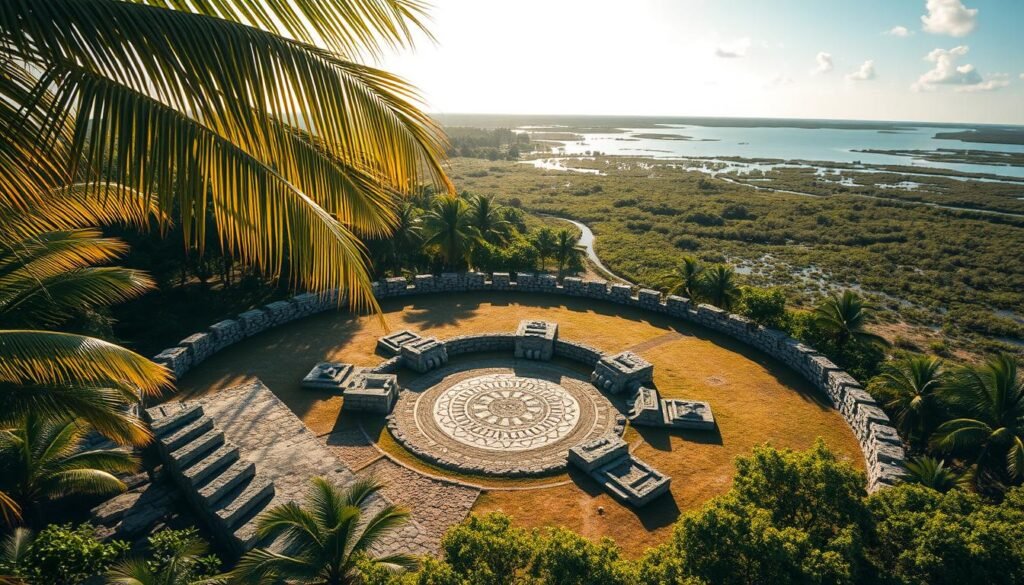
In the heart of Miami, the Miami Circle is a key piece of Tequesta archaeology and Florida Native American sites. It shows the advanced culture of ancient people who lived in South Florida.
In 1998, workers found the Miami Circle during a construction project. It’s a major find for learning about prehistoric Native American settlements. At Brickell Point, this site gives us a peek into the Tequesta civilization’s building and social ways.
Discovery of a Hidden Treasure
Archaeologists found the Miami Circle while getting ready for a new apartment building. The site has:
24 large limestone bedrock holes
Multiple smaller carved openings
A precise circular arrangement
Ancient Architectural Significance
The Miami Circle gives us a look at Tequesta building skills. Experts think it might have been:
A place for ceremonies
A key spot for the community
A complex social setup
Archaeological Feature
Significance
Circular Design
Shows advanced planning
Limestone Holes
Points to skilled tool-making
Site Location
Shows smart coastal living
The Miami Circle is an archaeological wonder. It links today’s researchers with Florida’s earliest culture.
Relations with Other Florida Tribes
Native American tribes in Florida had complex relationships. The Tequesta people made special bonds with the Calusa tribe. These ties helped them survive in early Florida’s coastal areas.
The Tequesta formed alliances that were more than just about land. Tribal diplomacy was key in their dealings with other tribes. Their bond with the Calusa was very important.
Tequesta chiefs often established family connections with Calusa leadership
Tribute payments were common to maintain peaceful relationships
Trade networks extended across different tribal territories
These alliances were not just for avoiding fights. They were about smart social and economic exchanges. The Calusa, being a strong tribe, offered protection and trade to the Tequesta.
Deals between Florida tribes were complex. The Tequesta gave shell tools, seafood, and rare items for protection and trade. This system of mutual help helped tribes thrive in tough environments.
Learning about these tribal relations shows us the advanced social structures of Native American communities before Europeans arrived. The Tequesta’s skill in forming alliances shows their diplomacy and adaptability in a changing coastal world.
Tequesta Art and Crafts
The Tequesta people were skilled craftsmen. They turned their natural surroundings into beautiful Native American art. Their creativity was seen in every tool, decoration, and ceremonial object they made.
Shells were key in Tequesta crafts. They made jewelry, hunting tools, and sacred objects from them. Ancient Florida artifacts show the Tequesta’s amazing skill in making simple shells into complex, beautiful items.
Fish bones became precise fish hooks and sharp arrowheads
Shells were crafted into spears and specialized tools
Decorative jewelry showcased their artistic abilities
Religious ceremonies featured unique shell-based ornaments
The Tequesta’s craftsmanship showed their respect for nature. Each artifact told a story of survival, culture, and art. Their tools were not just useful but also beautiful, showing their deep bond with the Florida coast.
Archaeological finds keep showing the advanced techniques in Tequesta crafts. From detailed shell necklaces to carved bone tools, these ancient pieces give us a glimpse into a remarkable Native American culture in southeastern Florida.
First European Contact
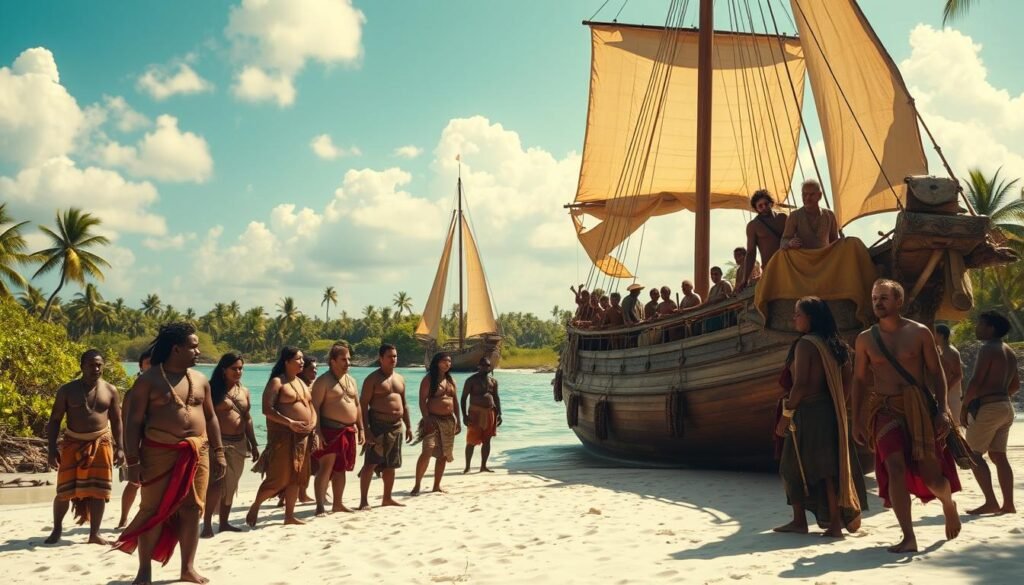
Spanish exploration in Florida changed the Tequesta people’s world. When European ships arrived, the Tequesta faced a critical moment. The Spanish conquistadors’ arrival started a new era of Tequesta-European interactions, altering their culture.
The first meetings between the Tequesta and Europeans happened in the early 16th century. These early meetings were complex and often tense. The Spanish wanted resources, land, and converts, while the Tequesta aimed to protect their lands.
Early Spanish ships first approached the Florida coastline around 1513
Juan Ponce de León was among the first European explorers to make contact
Interactions typically involved trade, conflict, and cultural exchange
The Tequesta were not just bystanders in these meetings. They negotiated, traded, and sometimes fought against the Europeans. Their local knowledge and survival skills helped them initially.
Year
Event
Significance
1513
First Spanish Contact
Initial exploration of Florida coast
1520-1550
Trade and Conflict
Increasing European presence
1565
Spanish Settlement
Permanent European establishment
Despite their strength, the Tequesta faced severe consequences from European contact. Diseases, land disputes, and cultural changes threatened their way of life in ways they could not have imagined.
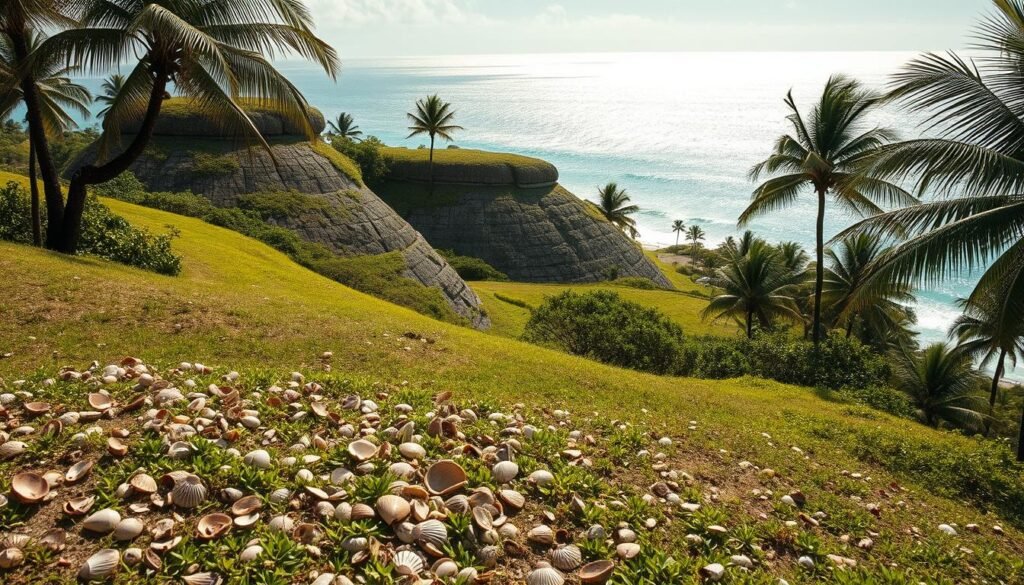
Shell Mounds and Middens
Tequesta archaeology shows us the lives of Native Americans in Florida’s shell mounds. These sites are like ancient time capsules. They keep the secrets of people who lived long ago.
Native American shell mounds, or Florida middens, are like ancient trash heaps. They tell us about the Tequesta people’s lives. These heaps of shells, bones, and artifacts give us a peek into the past.
Archaeological Discoveries
Archaeologists have found amazing things about Tequesta life in these shell mounds. They’ve learned about:
Dietary habits of the Tequesta people
Tools and technologies used in daily life
Environmental conditions of ancient Florida
Historical Significance
These shell mounds are more than just trash. They show us the complex culture and survival strategies of the Tequesta people.
Mound Type
Purpose
Archaeological Importance
Shell Middens
Waste Disposal
Dietary Research
Burial Mounds
Ceremonial Sites
Cultural Practices
Habitation Mounds
Living Spaces
Settlement Patterns
Tequesta archaeology is uncovering the secrets of these amazing Native American shell mounds. It helps us understand Florida’s rich cultural heritage.
The Disappearance of the Tequesta People
The Tequesta extinction is a sad part of Florida’s Native American history. By the 18th century, this thriving coastal tribe faced huge challenges. These challenges led to their disappearance from the region.
European colonization was a major blow to the Tequesta. Several factors contributed to their decline:
Deadly infectious diseases introduced by Spanish conquistadors
Violent conflicts with European settlers
Forced relocation and enslavement
Disruption of traditional hunting and fishing territories
The Florida colonial impact hurt the Tequesta’s social and cultural ways. Their numbers fell fast as diseases like smallpox and measles hit them hard. They had no defense against these diseases.
Period
Population Decline Factors
Estimated Impact
16th Century
Initial European Contact
50% Population Reduction
17th Century
Disease and Conflict
75% Population Loss
18th Century
Complete Tribal Disintegration
Near Total Extinction
By 1763, the last of the Tequesta were sent to Cuba with Spanish settlers. This was the end of their time in Florida. Their culture was a reminder of the big changes brought by colonialism.
Legacy of the Tequesta in Modern Florida
The Tequesta’s cultural heritage is deeply woven into Florida’s Native American history. Sites like the Miami Circle show their advanced urban planning and connection to nature. These people left a lasting impact on South Florida’s history.
Today, researchers and historians are dedicated to preserving Tequesta sites. They uncover new insights into their society. The Miami Circle, a National Historic Landmark, showcases their architectural and social skills.
Modern Florida is embracing the Tequesta’s influence through education and preservation. Museums in Miami and Miami-Dade County have exhibits on Tequesta culture. This helps younger generations learn about the area’s original inhabitants.
Florida’s Native American history is key to understanding the state’s cultural growth. The Tequesta’s adaptability, maritime skills, and social systems teach us about human resilience and nature. Their legacy inspires research and cultural appreciation in South Florida.