Howler monkeys are the loudest animals in the jungle. They can make sounds that travel up to three miles. This makes them the champions of noise.
These amazing animals live in Central and South America. They are not just loud, but also very interesting. Their loud calls can even stop other animals in their tracks.
Kids who love animals will find howler monkeys fascinating. Their voices are so strong that they can be heard from far away. They are the ultimate sound masters.
Howler monkeys have amazing vocal abilities and live in the treetops. They are one of nature’s most remarkable primate species. Let’s explore why they are so special!
What Are Howler Monkeys?
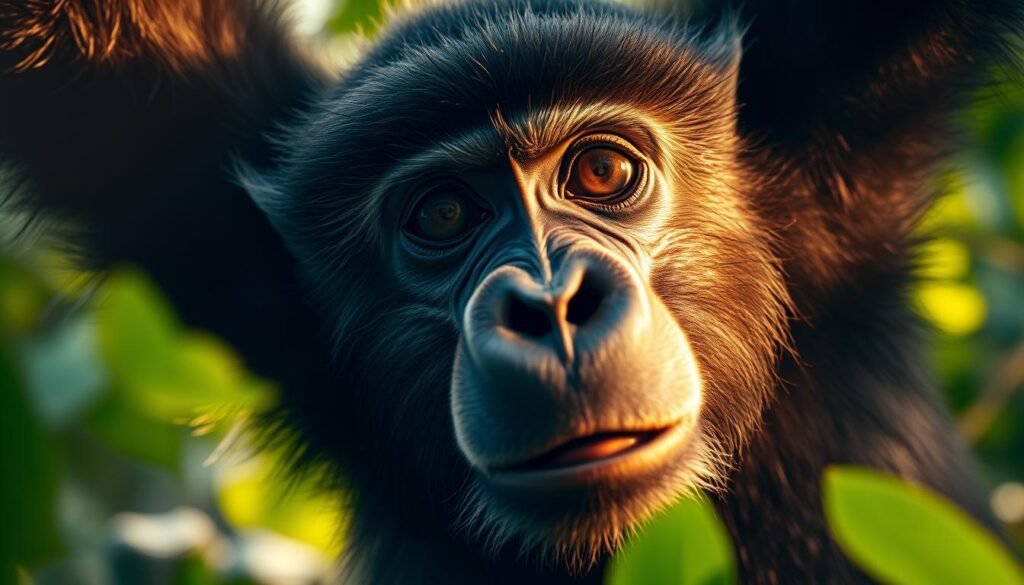
Imagine a primate that can shake the entire forest with its thunderous roar! Howler monkeys are remarkable creatures that dominate the treetops of Central and South American forests. They are known for their powerful voices and unique primate characteristics that set them apart from other monkey species.
These fascinating howler monkey species are among the largest New World monkeys. They have some serious survival skills that help them thrive in their lush monkey habitats.
Physical Characteristics
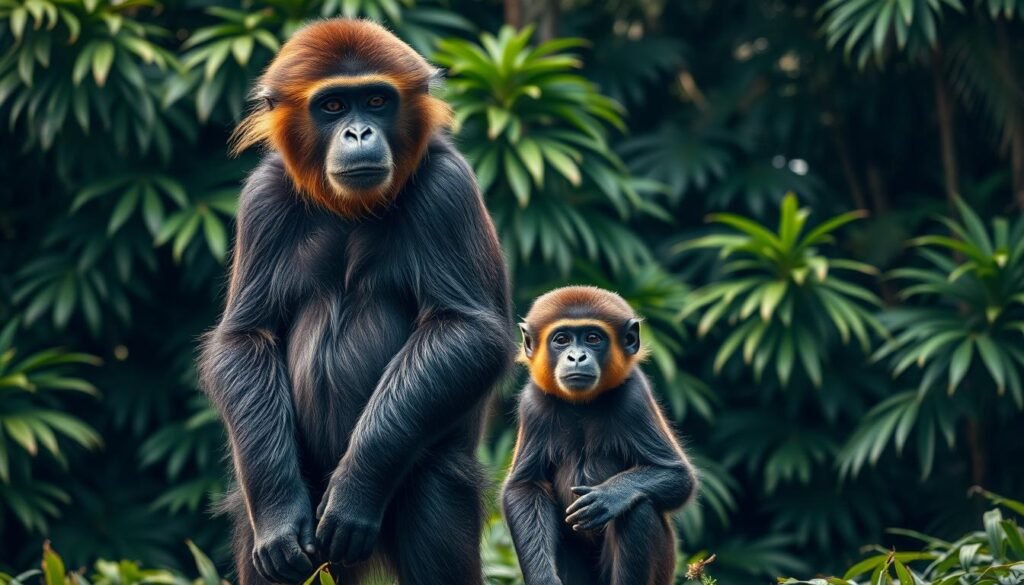
When it comes to looks, howler monkeys are pretty cool customers. They typically sport:
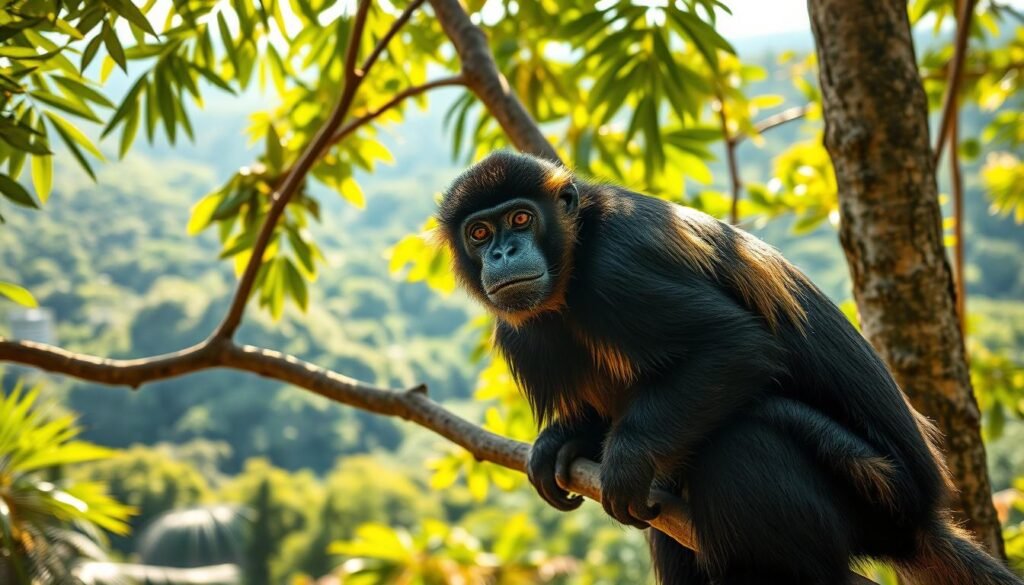
Thick, shaggy fur in colors ranging from black to brown
Muscular bodies perfect for life in the treetops
A super impressiveprehensile tail that acts like an extra limb
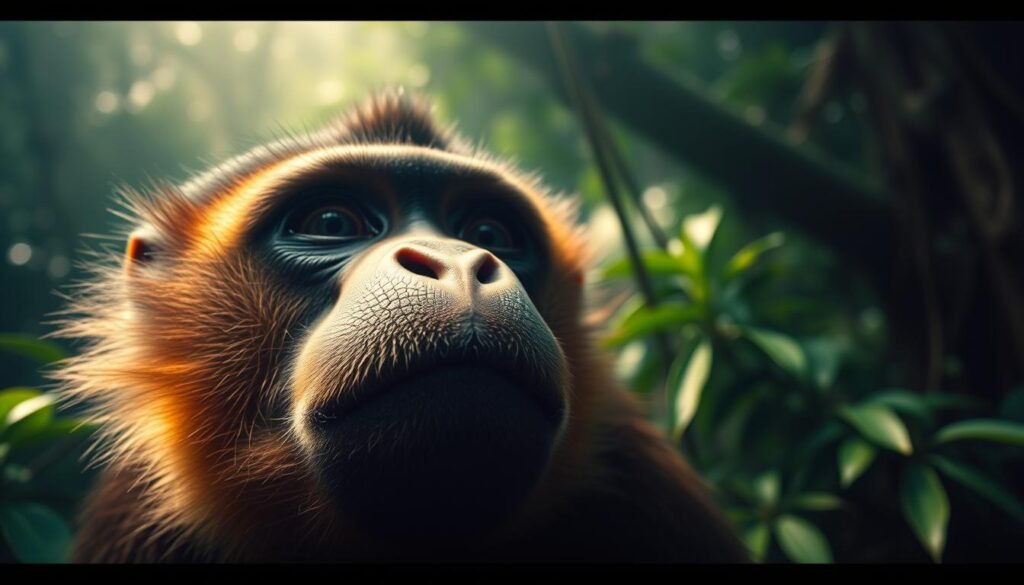
Faces with distinctive beard-like fur around their cheeks
Where They Live
These amazing primates call the dense tropical forests of Central and South America home. From Mexico to Argentina, howler monkeys swing through the canopy like true jungle VIPs. Their monkey habitat stretches across several countries, making them true masters of the forest ecosystem.
Different Species Types
Nature loves variety, and howler monkeys are no exception! Scientists have identified about 15 different howler monkey species, each with its own unique quirks. Some of the most famous include:
Mantled Howler Monkey
Black Howler Monkey
Red Howler Monkey
Guatemalan Howler Monkey
Whether they’re bellowing from the treetops or quietly munching on leaves, these primates are some of the most fascinating creatures you’ll ever learn about!
Howler monkeys are the loudest animals in the jungle. Their calls can travel up to 5 kilometers through dense forests. This makes them the acoustic stars of the animal kingdom.
Imagine a sound so loud it echoes through miles of thick trees. It’s truly amazing.
These primates make sounds that are incredible. Their howl can reach up to 140 decibels. That’s louder than a rock concert or a chainsaw!
Scientists have studied their vocalizations. They found some interesting facts about their unique abilities.
Sound travels up to 5 kilometers (3 miles)
Decibel level reaches 140 – extremely loud!
Can be heard through dense forest environments
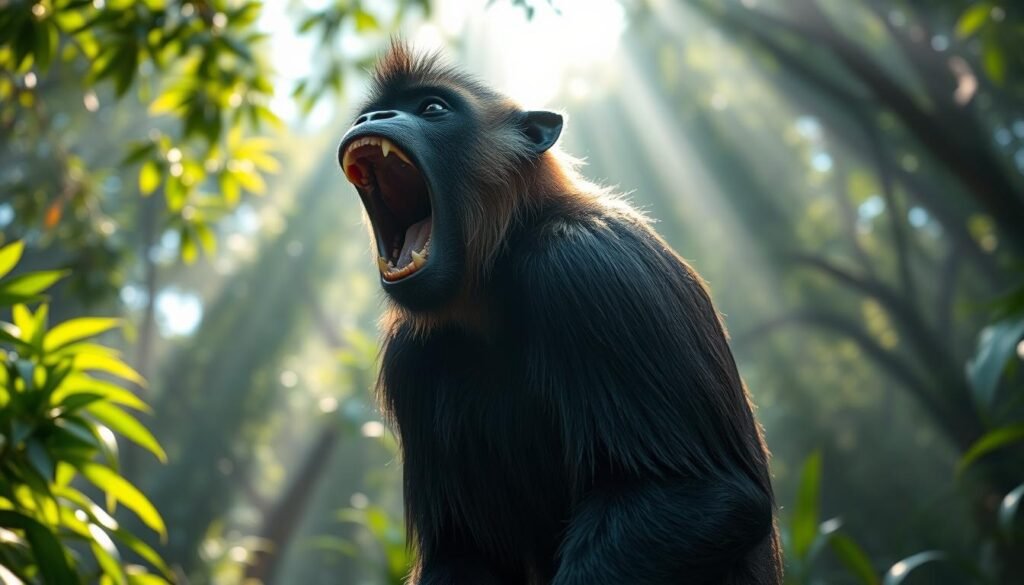
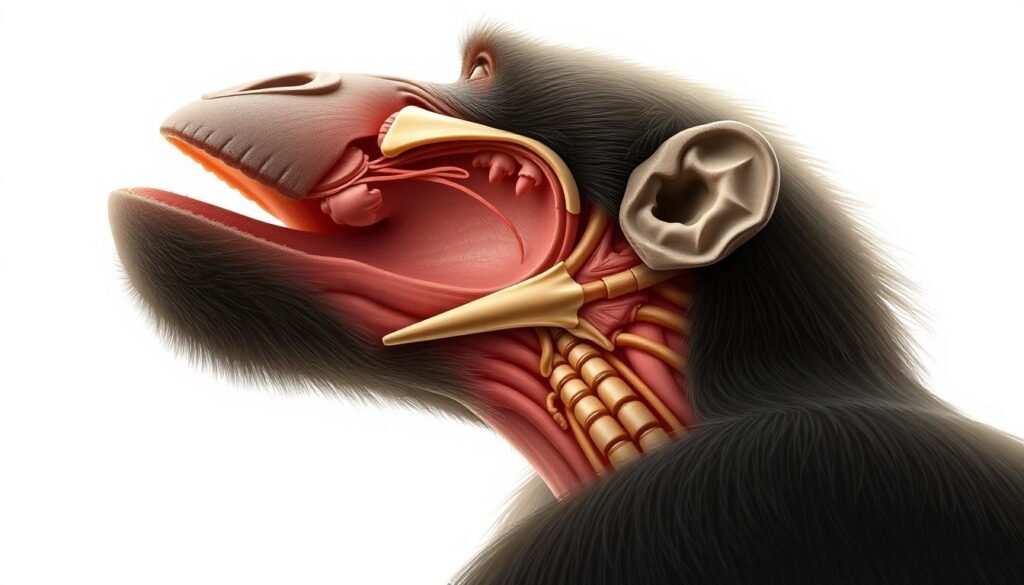
The secret to their loud sound is their special vocal anatomy. Male howler monkeys have an enlarged hyoid bone in their throat. This acts like a built-in megaphone.
This unique feature lets them make incredibly loud calls. These calls serve many purposes in their jungle home.
Their loud voices help them mark territory, warn off rivals, and attract mates. These calls are not just noise. They are a complex way of communicating that keeps their troop safe and connected in the rainforest.
Understanding Howler Monkey Families
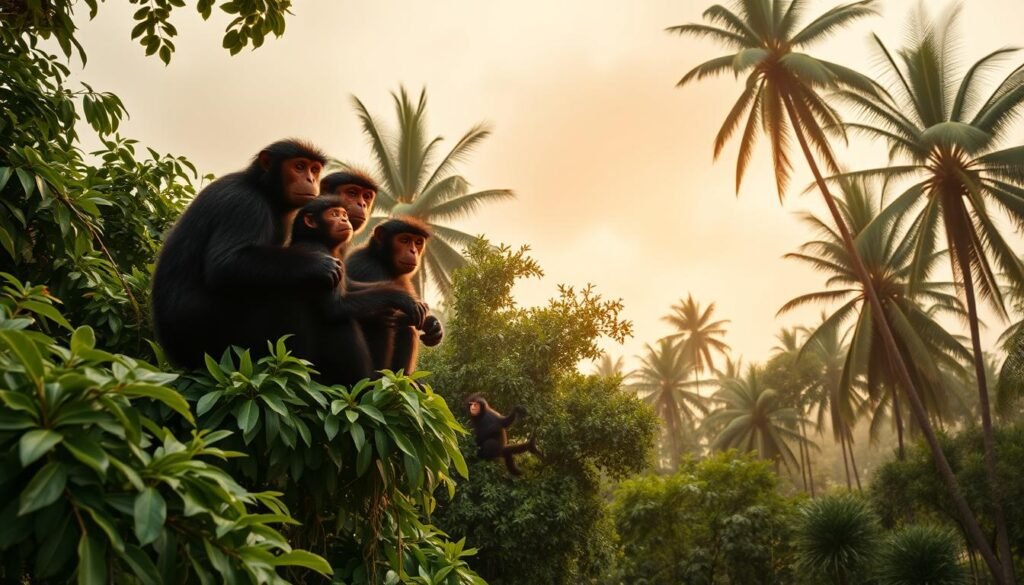
Howler monkeys live in fascinating social groups that show complex primate family structures. These amazing primates form tight-knit communities. They have unique behaviors that help them survive in the dense tropical forests of Central and South America.
The monkey social groups of howler monkeys have specific roles and hierarchies. Most troops have six to 15 individuals. They include a mix of adult males, females, and younger monkeys.
Group Structure
Howler monkey behavior shows a structured approach to family living. Their troops usually have:
Within these primate family structures, howler monkeys engage in several key social interactions. They communicate through loud vocalizations. They also use grooming as a bonding mechanism and establish complex social hierarchies.
Daily Life in the Troop
A typical day for a howler monkey troop involves foraging for food and resting in tree canopies. Their cooperative nature ensures group survival through shared responsibilities and mutual protection.
The mantled howler monkeys present an interesting variation. They often form larger groups of 15 to 20 individuals. This shows the adaptability of these remarkable primates.
Amazing Tail Powers and Abilities
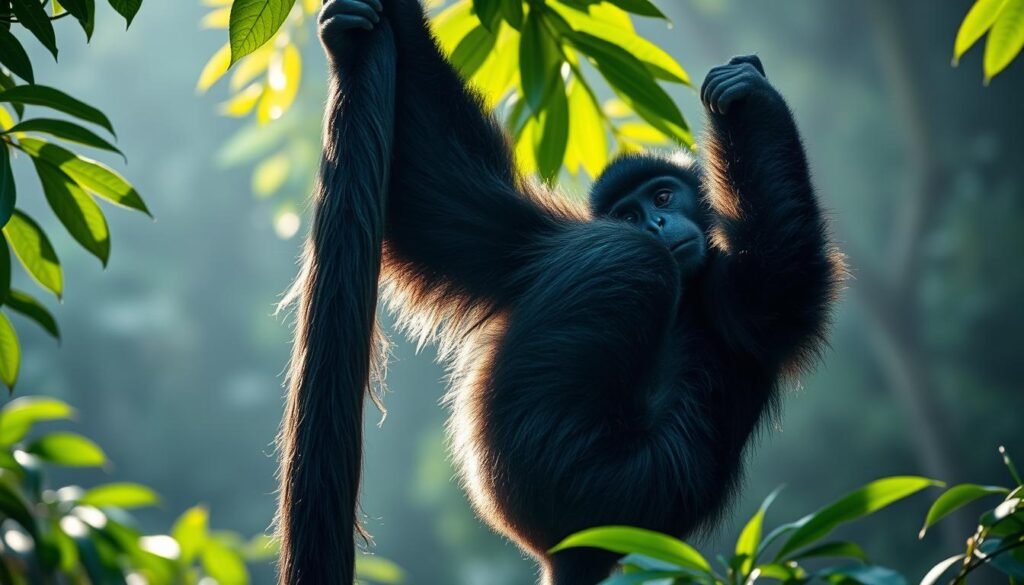
Howler monkeys have an incredible adaptation: their prehensile tail. This feature makes their tail a strong fifth limb. It helps them move through the dense forest canopy.
Their tail is like a superhero tool. It can hold their whole body weight. So, they can hang from branches and grab fruit or leaves with ease. It’s like having an extra arm that can grip and explore.
Tail strength can support the monkey’s full body weight
Contains sensitive tactile pads similar to fingertips
Functions as an extra limb for movement and exploration
Adaptations like the prehensile tail are key for survival in forests. The tail’s surface lets howler monkeys feel textures and detect changes. It’s like how humans use their hands to explore.
These amazing tails help howler monkeys:
Maintain balance while moving through tree branches
Gather food from hard-to-reach places
Communicate with other troop members through tail movements
The prehensile tail is more than just an appendage. It’s a sophisticated tool. It shows the incredible evolutionary adaptations of these fascinating primates.
Howler Monkey Facts for Kids
Get ready for some wild primate trivia that will blow your mind! Howler monkeys are some of the most fascinating creatures in the animal kingdom. They have cool tricks that make them stand out among jungle dwellers.
Let’s dive into some interesting monkey facts that will make you say “Wow!” Howler monkeys have superpowers that most animals can only dream about. Did you know they can smell ripe fruit from two kilometers away? That’s like being able to smell a pizza cooking from across your entire neighborhood!
Their super-sensitive noses help them find the yummiest fruits in the dense rainforest
They can communicate using incredibly loud calls that can be heard up to three miles away
Baby howler monkeys ride on their mother’s back for the first few months of their life
These amazing animals are champions of the treetop world. Their powerful tails act like an extra limb, helping them swing from branch to branch with incredible skill. Animal fun facts about howler monkeys never fail to amaze kids and adults alike!
Imagine having a voice so powerful that you could announce your presence to an entire forest. That’s exactly what howler monkeys do every single day. Their throat bones are specially designed to create sounds that can travel through thick jungle vegetation.
Male howler monkeys are louder than female monkeys
They use their loud calls to mark their territory
Their voices can reach up to 140 decibels – that’s as loud as a rock concert!
Diet and Eating Habits
Howler monkeys have a fascinating diet that’s key to the rainforest’s food chain. They are experts in primate nutrition, picking their food from the tropical forest’s canopy.
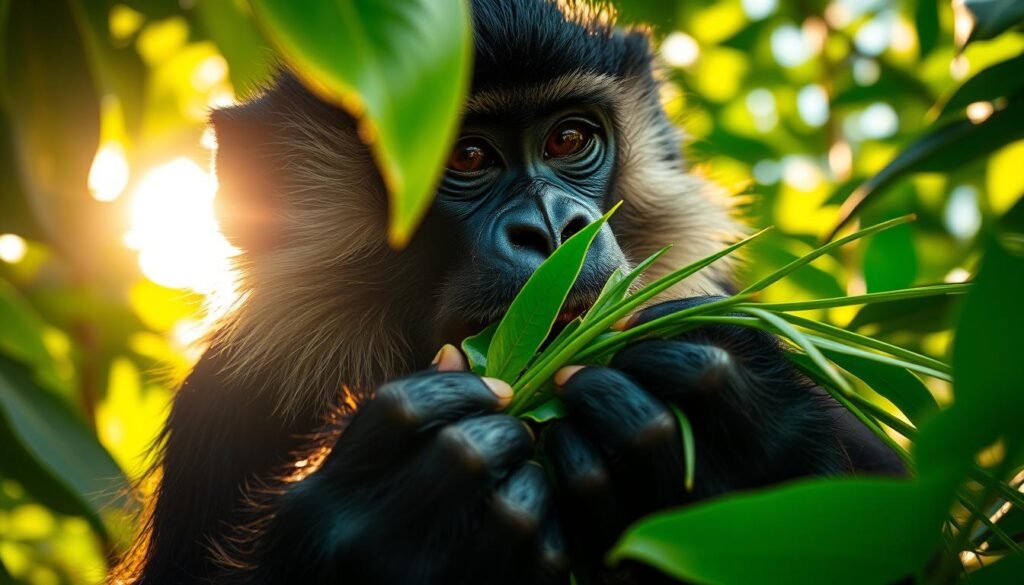
Their diet is complex and strategic. Howler monkeys mainly eat leaves, which might seem dull to us. But it’s a clever survival tactic. They spend their days eating tree leaves, choosing the best ones.
Favorite Foods
Howler monkeys have a varied diet. They enjoy:
Young, tender leaves from different trees
Ripe fruits when they’re available
Flowers and buds
Occasionally, nuts
Feeding Patterns
Primate nutrition for howler monkeys is all about careful selection. They can tell which leaves are safe and good to eat. Some leaves have toxins, so they must be very careful.
Their unique digestive system lets them eat tough leaves others can’t. This adaptation helps them thrive in the rainforest, making them vital to the food chain.
Interestingly, howler monkeys also help spread seeds. As they move through the treetops and eat fruits, they spread seeds across the forest. This helps the ecosystem grow and regenerate.
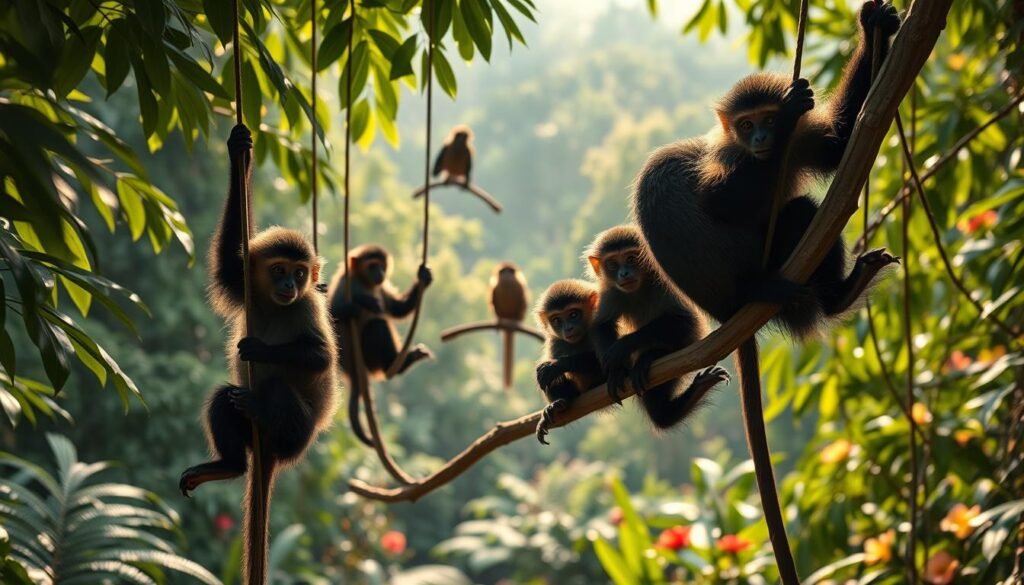
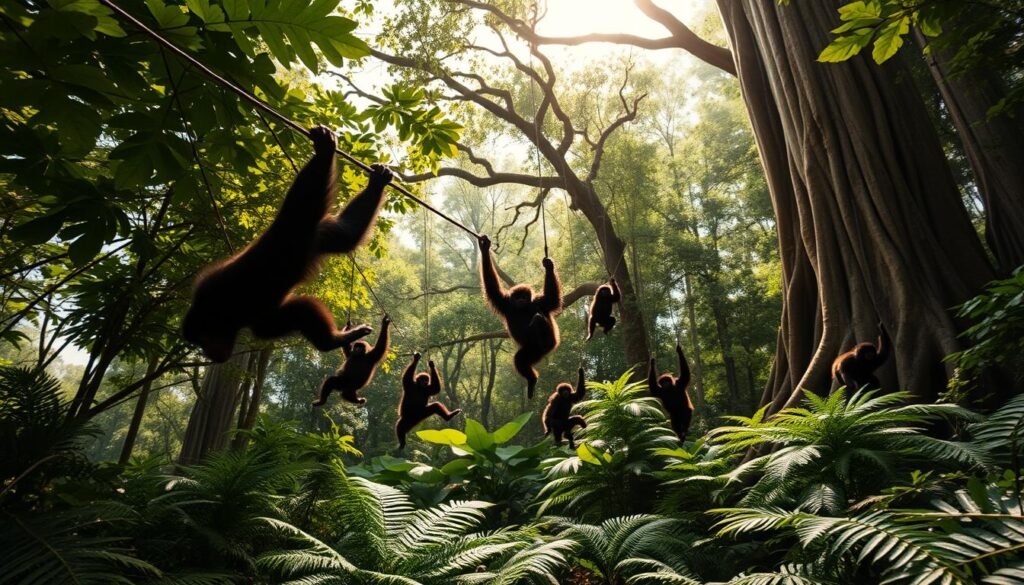
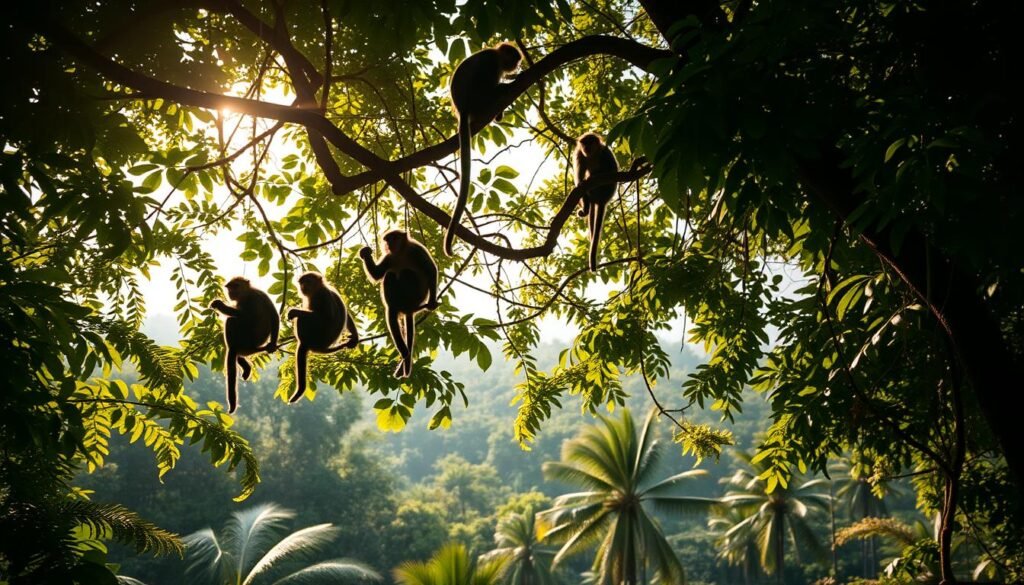
Howler monkeys are amazing animals that live in the rainforest canopy. They are experts at moving through the trees, showing great skill and grace. Their home is high up, far from the forest floor.
They have special features that help them live in the treetops. Howler monkeys use all four limbs to move, like a quadruped. Their strong, flexible tails help them balance and move.
Hands and feet grip branches securely
Prehensile tail provides additional stability
Ability to move quickly through the forest canopy
Living in the treetops is very good for these monkeys. The treetops offer:
Protection from ground predators
Easy access to fresh leaves and fruits
Optimal temperature and humidity levels
Treetop Adaptation
Unique Benefit
Powerful Grip
Secure movement between branches
Long Limbs
Efficient branch-to-branch travel
Specialized Tail
Additional support and balance
Howler monkeys are great climbers. They can explore a lot of the rainforest canopy. Their amazing abilities make them true masters of the air.
The Special Throat Bone That Makes Them Howl
Howler monkeys have a special feature that makes them stand out. They can howl loudly thanks to a big hyoid bone in their throat. This bone acts like a megaphone.
These amazing creatures can make sounds that are heard far and wide. Their unique bone helps make them the loudest land animals.
How They Make Their Loud Calls
Howler monkeys have a natural sound system in their throats. They make their calls in a cool way:
Air moves through their enlarged hyoid bone
The bone acts as a resonating chamber
Sound waves are dramatically amplified
Calls can be heard up to 3 miles away
Why They Howl
These powerful vocalists use their sounds for important reasons:
Marking territorial boundaries
Communicating with other monkey groups
Warning off predators
Maintaining social connections within their troop
Male howler monkeys usually make noise at dawn and dusk. They create a jungle alarm system that echoes through the forest.
Size and Weight of Howler Monkeys
Howler monkeys are fascinating primates with unique physical characteristics. They stand out in the animal kingdom. These remarkable creatures range from 56 to 92 cm (22 to 36 in) in body length, not including their impressive tails.
Understanding monkey physical characteristics reveals interesting details about their size and weight. Male howler monkeys typically weigh more than females, with a difference of 1.5 to 2.0 kg. This variation demonstrates sexual dimorphism, a common trait in many primate species.
Average body length: 56-92 cm
Tail length: Equally long as body
Weight difference between males and females: 1.5-2.0 kg
Animal measurements show that howler monkeys are medium-sized primates. Their size allows them to navigate the treetops with remarkable agility. Imagine a monkey about as long as a baseball bat! That’s roughly the size of an average howler monkey.
Different species of howler monkeys can vary in size. Some are smaller, while others grow larger. But most share similar physical proportions that help them thrive in their forest habitats.
Super Smell Powers
Howler monkeys have amazing senses that help them live in the dense rainforest. Their incredible smell is a special primate adaptation. They can sniff out ripe fruit from as far as 2 kilometers!
Imagine smelling food from two whole football fields away. That’s what howler monkeys can do. Their super smell helps them find the best food in the jungle.
Detect ripe fruit from 2 kilometers away
Navigate complex forest environments
Find the most nutritious food sources
Their nose is incredibly powerful, like a food-finding device. They can tell different fruits apart and find the ripe ones. This skill helps them save energy and get the most nutrition in the rainforest.
Smell Ability
Distance
Purpose
Fruit Detection
2 kilometers
Finding Ripe Food
Danger Awareness
Immediate Surroundings
Predator Detection
Their amazing smell is not just for finding food. It also helps them spot dangers in the rainforest. This makes their sense of smell very important for survival.
Moving Through the Forest
Howler monkeys are experts at moving through dense tropical forests. They use special skills to travel through the treetops. These monkeys are like acrobats, moving with grace and precision.
For howler monkeys, moving is all about being efficient and safe. They usually move by using all four limbs. This way, they stay stable and fast while using less energy.
Climbing Techniques
Howler monkeys have amazing climbing methods:
They grasp branches with multiple limbs at once.
They always keep in touch with at least two points.
They swing between branches using their strong arms.
They pick the best branches for easy movement.
Using Their Tails
Their prehensile tails are truly unique. These tails act like an extra limb. They help with balance and support while moving through the forest.
Tail Function
Description
Weight Support
Can fully support the monkey’s entire body weight
Balancing
Acts as a counterweight during complex movements
Grip Strength
Capable of holding onto branches with remarkable force
These special adaptations make howler monkeys amazing treetop travelers. They are perfectly suited for life high up in the forest.
Baby Howler Monkeys
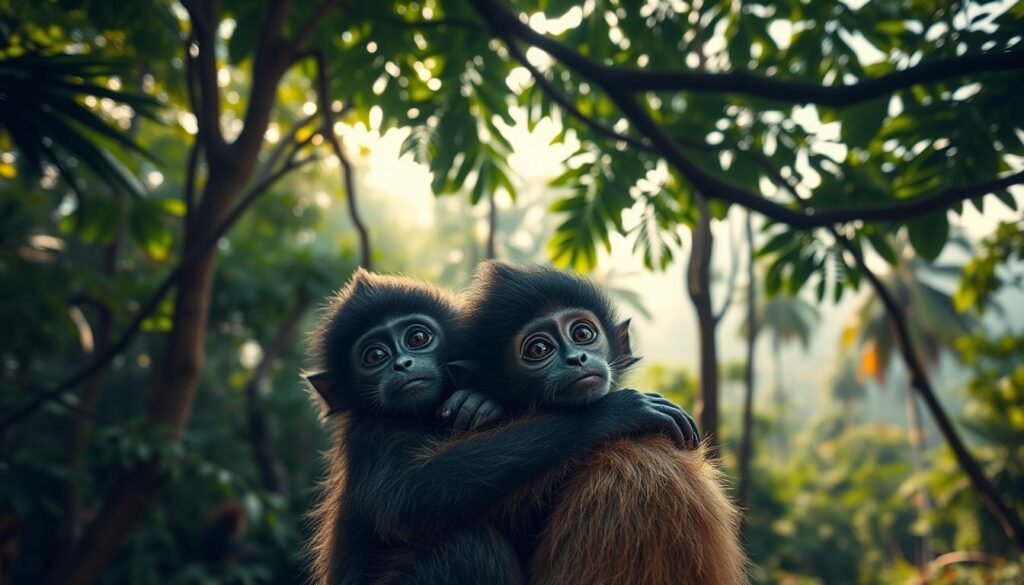
Primate infants in the howler monkey world are truly fascinating. They grow and develop at an incredible rate. Baby howler monkeys cling tightly to their mothers from the start, relying on them for everything.
These adorable primate infants are born weighing just a few ounces. They have soft, delicate fur. Their survival depends on the care and protection of their animal families. Young howler monkeys develop unique traits to thrive in their tropical forest home.
Newborn howler monkeys are born with pale skin that gradually darkens
Baby howlers remain close to their mothers for the first 18 months of life
They learn critical survival skills by observing adult troop members
As these young primates grow, they start to explore their surroundings. Around six months old, baby howler monkeys start sampling solid foods while continuing to nurse. Their diet changes from mother’s milk to leaves, fruits, and other vegetation typical of their forest habitat.
Juvenile howler monkeys eventually leave their birth groups. This is a critical part of their life cycle. They join new troops, which helps prevent inbreeding and maintains genetic diversity among these remarkable primates.
What Makes Howler Monkeys Different from Other Monkeys
Howler monkeys are unique in the primate world. They have special features that make them stand out. These traits set them apart from other monkeys.
One amazing thing about howler monkeys is their diet. They are folivores, which means they mainly eat leaves. This helps them survive in places where other monkeys can’t.
Unique color vision for both male and female howlers
Specialized leaf-eating diet
Exceptional vocal capabilities
Powerful prehensile tails
Howler monkeys also have amazing color vision. Unlike many primates, they can see all colors. This is rare among New World monkeys.
Another unique feature is their incredible voices. They can make sounds heard up to three miles away. Their special throat bones allow these loud calls, helping them talk across forests.
Prehensile tails are also a big plus for howler monkeys. These tails act like extra hands. They help the monkeys grip, balance, and move through the trees with ease.
Protecting Howler Monkeys
Howler monkeys are facing big challenges in wildlife conservation. These amazing primates are fighting to survive in their rainforest homes. Threats are putting their whole species at risk.
Understanding and tackling the threats they face is key to their survival. Protecting endangered species like howler monkeys is now more urgent than ever.
Current Threats to Survival
Rapid deforestation is destroying their rainforest homes.
Illegal wildlife trade is targeting young monkeys.
Habitat fragmentation is shrinking their living spaces.
Human expansion is encroaching on their territories.
Conservation Efforts in Action
Scientists and wildlife experts are working hard to save howler monkeys. They are using specific strategies to protect these animals:
Creating protected wildlife reserves.
Starting breeding programs.
Teaching local communities about rainforest conservation.
Developing sustainable land-use practices.
You can help protect howler monkeys by supporting organizations focused on their conservation. These groups work to safeguard these unique primates and their vital rainforest habitats.
Every effort counts in preserving these incredible animals for future generations.
Living in the Amazon Rainforest
The Amazon rainforest is a stunning home for howler monkeys, hosting nine of the fifteen known species. This amazing tropical habitat is full of life. It’s where these incredible primates live in the dense canopy.
Howler monkeys have adapted well to the rainforest’s unique challenges. Their strong bodies and special tails help them move through the forest’s complex branches. The Amazon’s wildlife helps them survive with plenty of food and protective plants.
Elevation range: 100-500 meters above sea level
Average temperature: 75-85°F
Humidity levels: 80-90%
Canopy height: 100-150 feet
The rainforest gives many benefits to these amazing primates. The dense trees protect them from predators. The variety of plants ensures they have a rich diet of fruits, leaves, and flowers. Their loud calls help them talk to each other over long distances.
Habitat Feature
Howler Monkey Adaptation
Dense Canopy
Superior climbing and hanging abilities
Diverse Vegetation
Omnivorous diet flexibility
High Humidity
Efficient thermoregulation
The Amazon’s complex web of life supports not just howler monkeys but creates an interconnected environment. These primates are integral to the forest’s delicate balance. They help spread seeds and contribute to the ecosystem’s ongoing regeneration.
History with Ancient Mayans
The ancient Mayans saw howler monkeys as more than just animals. They were sacred beings in Mayan culture and art. Sculptures from the Classic period often showed howler monkeys as gods, helping scribes and sculptors.
Howler monkeys were key in Mayan mythology, seen as powerful spirits. Their loud calls and big presence made them important. Many temple artworks show these monkeys, linking them to the spiritual world.
Studies of Mayan artifacts show howler monkeys’ role in religion. They were seen as spiritual symbols in sacred texts and objects. The Mayans valued howler monkeys for their unique traits, making them mythological figures.
Looking at howler monkeys and the Mayans shows their deep respect for wildlife. Their reverence for these monkeys shows a spiritual bond. This bond made howler monkeys culturally and religiously significant.