Are ghosts real spirits or just campfire-fueled fiction? Let’s crack this coffin open: some cultures swear by shadowy figures like Union Cemetery’s White Lady, while scientists blame sleep paralysis for “hauntings.” Your brain might be trolling you—but hey, that won’t stop Casper from crashing your next slumber party.
Ancient texts describe floating specters, and Henry Fuseli’s painting “Hamlet and His Father’s Ghost” still gives art students nightmares. But modern researchers say flickering lights or creaky floors aren’t proof—they’re just physics being dramatic. Want chills? Check Connecticut’s “White Lady” legend. Want logic? Blame carbon monoxide leaks for “phantom” smells in old houses.
This article won’t tell you what to believe. We’ll unpack haunted folklore, like Japan’s yūrei spirits, alongside sleep studies showing how brains invent shadowy figures at 3 a.m. (Thanks, survival instincts!). Whether you’re team “Ghostbusters” or team “Explain It With Science,” one thing’s clear: the world’s full of mysteries that make bedtime stories—and skeptical debunking—equally thrilling.
Unearthing Ghost Origins Through Ancient Beliefs
Let’s time-travel to when whispers in the dark shaped civilizations’ deepest fears. Picture this: a Mesopotamian priest scribbling warnings about “etemmu” spirits on clay tablets, or Egyptian papyrus scrolls describing animal-headed specters guarding the underworld. Our modern boo-worthy tales? They’re just recycled versions of humanity’s oldest bedtime stories.
Old English Got Spooky Before TikTok
That word we toss around—“ghost”—started as “gāst” in Old English. It meant “terror” or “fury,” which explains why medieval moms warned kids about attic-dwelling “shuckes.” Meanwhile, Latin’s “spiritus” (breath) gave us “spirit”—a gentler term for what your brain might conjure during sleep paralysis.
Ghosts Had Day Jobs in Ancient Times
Mesopotamians believed spirits needed beer and bread offerings. Egyptians painted animal-human hybrids on tomb walls to guide souls. Even Pliny the Younger documented a philosopher named Athenodorus who rented a haunted house to prove ghosts were fake—only to find a rattling chain leading to a buried skeleton. Oops.
So are these stories historical receipts or campfire creativity? Your call. But next time you hear floorboards creak, remember: someone 3,000 years ago probably blamed it on a disgruntled etemmu demanding snacks.
Haunted Images: Ghosts in Art, Folklore, and Media
Visual storytelling has always been humanity’s favorite way to freak itself out—and I’m here for it. From Edo-period scrolls to CGI specters, our obsession with spirit imagery reveals more about us than the afterlife. Let’s dissect how artists and filmmakers turn whispers into bone-chilling visuals.
Computer-Animated Casper and Classic Ghost Cinema
Remember Casper’s glow-up from comic books to 1995’s CGI charm? That friendly blob redefined spirits as approachable—a far cry from Japan’s yūrei in Hyakkai Zukan scrolls. Those pale, kimono-clad figures with hollow eyes still haunt classroom worksheets today. Meanwhile, Utagawa Kuniyoshi’s woodblock prints gave ghosts animal traits, like kappa demons with turtle shells.
Historical Portraits of Apparitions in Paintings
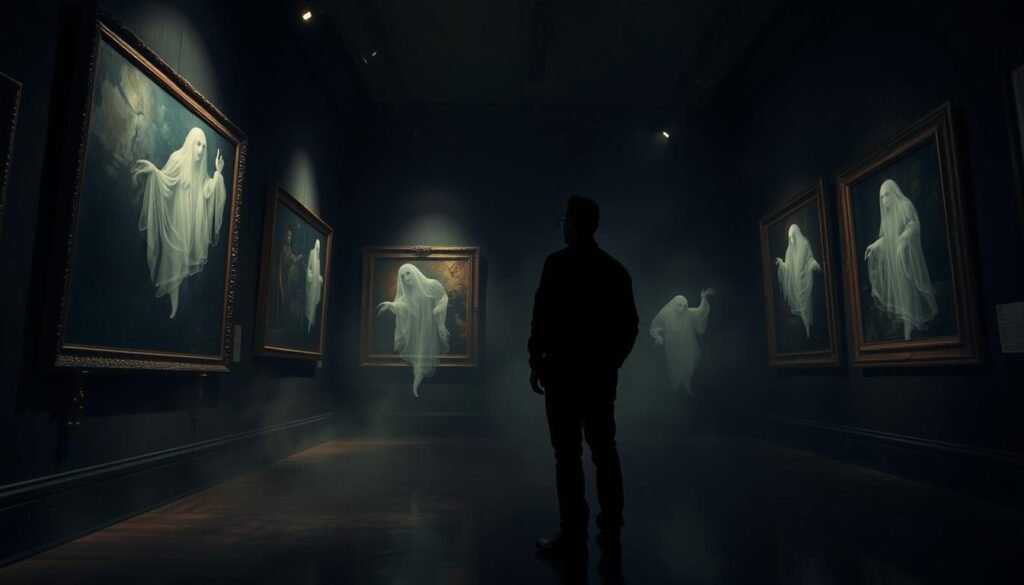
Théodore Chassériau’s 1854 “The Shade of Hamlet’s Father” makes Shakespeare’s ghost look like a smoky VIP. Henry Fuseli? His 1789 nightmare fuel “Hamlet and His Father’s Ghost” uses stark shadows to scream “I’m not okay!” These artists weaponized visual language centuries before Photoshop.
Legends Captured on Film and in Literature
Modern horror flicks borrow tricks from 1800s ghost photography—double exposures, blurred edges. But literature’s ghosts? Emily Brontë’s Wuthering Heights specter scratches windows, while Japanese folklore’s kuchisake-onna (slit-mouthed woman) thrives in manga. Fun fact: Many “haunted” images in encyclopedic articles? They’re just dust motes caught on camera.
So next time you spot a wispy figure in art class, ask: Is this really a lost soul—or just someone’s wild imagination? Either way, it’s a killer conversation starter.
ghost facts for kids: Fact or Fiction?
Imagine a tug-of-war between lab coats and campfire tales—that’s where we’re at. Scientists say there’s zero proof floating sheets exist, but classrooms buzz with legends of glowing figures. Let’s dissect this clash of logic and legend.
Scientific Skepticism Versus Childlike Curiosity
Here’s the cold truth: peer-reviewed articles call ghost sightings “pattern-seeking brain glitches.” Infrared cameras? They catch dust motes, not spirits. Take the famous Brown Lady of Raynham Hall photo—experts say it’s lens flare playing dress-up.
But try telling that to sixth graders debating sleep paralysis “shadow people.” Their curiosity mirrors ancient shamans interpreting owl hoots as spirit messages. Teachers harness this energy with ghost fact worksheets asking: “Could drafts explain cold spots?” versus “Why do cultures worldwide describe similar apparitions?”
Real-World Encounters and Classroom Curiosities
Ever met someone who swears they’ve seen a translucent figure? My neighbor claims her cat hisses at empty corners—animals reacting to what we miss. Yet biologists note cats also chase laser dots.
Modern ghost hunters use EMF meters, but physicists laugh: “That’s like using a thermometer to find unicorns.” Meanwhile, schools use Casper-themed math problems. One worksheet I saw had students calculate how many “haunted” houses could fit in the Empire State Building—science sneaking into spooky fun.
So where do you stand? If a classmate describes a wispy figure in grandma’s attic—
Wrapping Up the Spook: Final Thoughts on Ghost Evidence
Ghosts straddle the line between cultural anchors and brain hiccups—ancient scrolls describe shadowy souls, while science blames drafts or tired eyes. I’ve seen encyclopedia pages dissect King Saul’s biblical ghost debate alongside sleep studies showing how brains invent figures in dim light. Your neighbor’s “haunted” attic? Could be mice… or Shakespeare-level drama.
Here’s my take: animal reactions—like dogs barking at empty corners—mirror our own pattern-seeking instincts. Artists paint translucent figures; researchers cite carbon monoxide leaks. Both sides agree: the world thrums with mysteries begging for answers. Worksheets and documentaries let you play detective—was that Victorian-era photo a soul or just dust?
So grab a flashlight (or a lab coat). Whether you’re team science or team storytime, one truth remains: curiosity outlives every campfire tale. What’s your verdict—physics quirk or lingering spirit? The evidence—and the thrill—is yours to unpack.