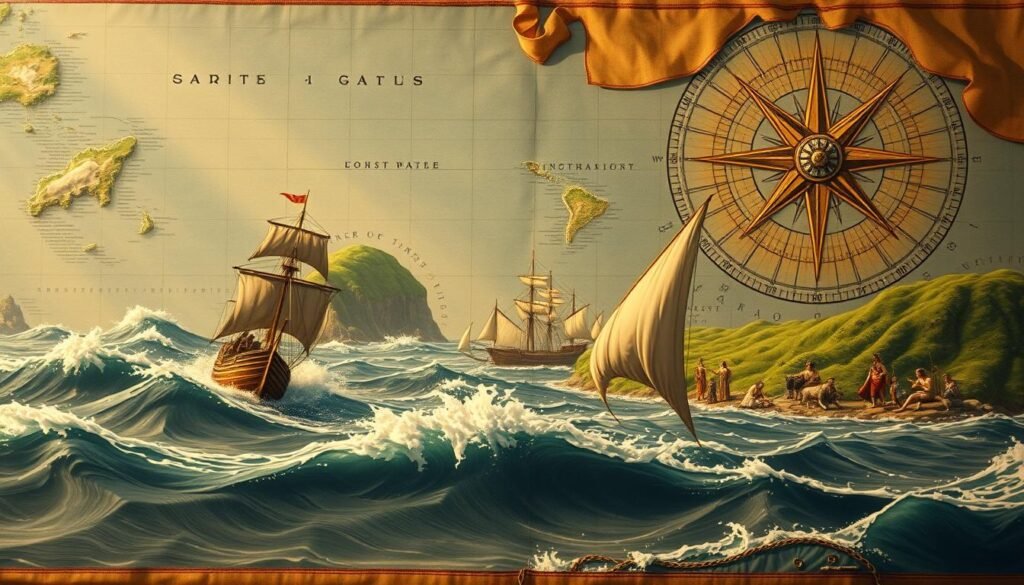
The Chumash tribe were amazing Native American ocean explorers. They lived along California’s central and southern coasts. They made the Pacific Coast their home, using advanced maritime tech and complex cultures.
They lived from Morro Bay in the north to Malibu in the south. Their location made them expert navigators. They built wooden canoes called tomols to sail through tough waters.
Native American history calls the Chumash one of the most advanced coastal societies. They knew the ocean well and could navigate it skillfully. This made them stand out from other groups back then.
Young explorers will learn about the Chumash’s social structures and traditions. They also developed survival strategies to thrive in California’s coastal areas. Their story is an inspiring part of Native American history that continues to motivate people today.
Who Were the Chumash People
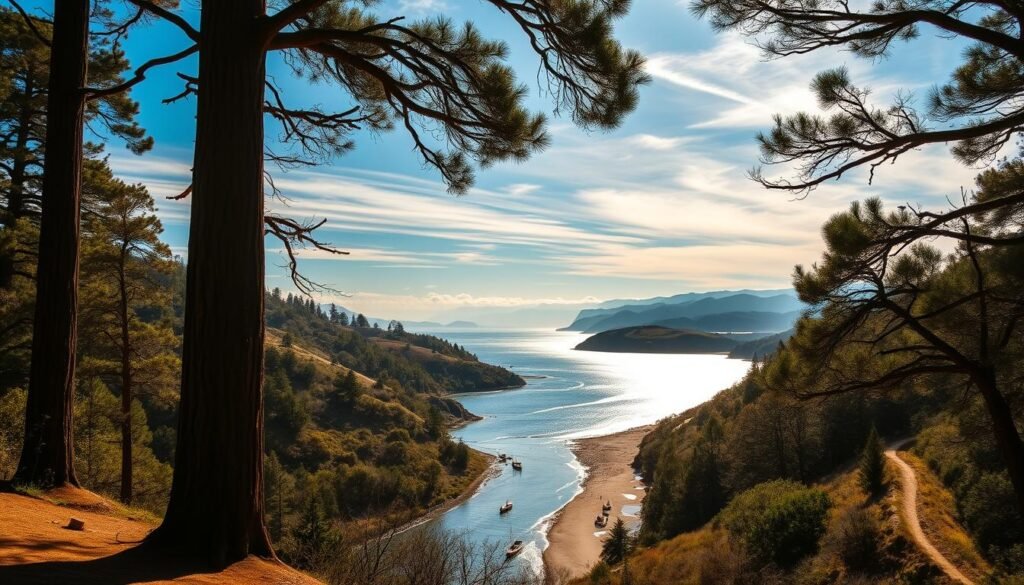
The Chumash were amazing California Native Americans who lived in the beautiful coastal areas. They called the southern California coastline home. Their territory went from Malibu to San Luis Obispo, covering a stunning landscape.
Original Homeland Location
The Chumash people had the best spot on earth. They were experts in both land and sea. Their homeland included:
Mainland coastal regions of Southern California
The breathtaking Channel Islands
Inland areas extending to the edge of the San Joaquin Valley
Historical Timeline Overview
The Chumash had a rich history that would make history books come alive. Their story spans thousands of years. They were true survivors who thrived in their challenging environment.
Cultural Significance
The Chumash were true innovators among California Native Americans. They were masters of the sea, creating impressive tomol canoes. They had complex social structures, artistic traditions, and a deep connection to nature.
Their cultural practices were deep and sophisticated. They had advanced astronomical knowledge, trading systems, and a deep respect for the environment. This would make modern environmentalists proud.
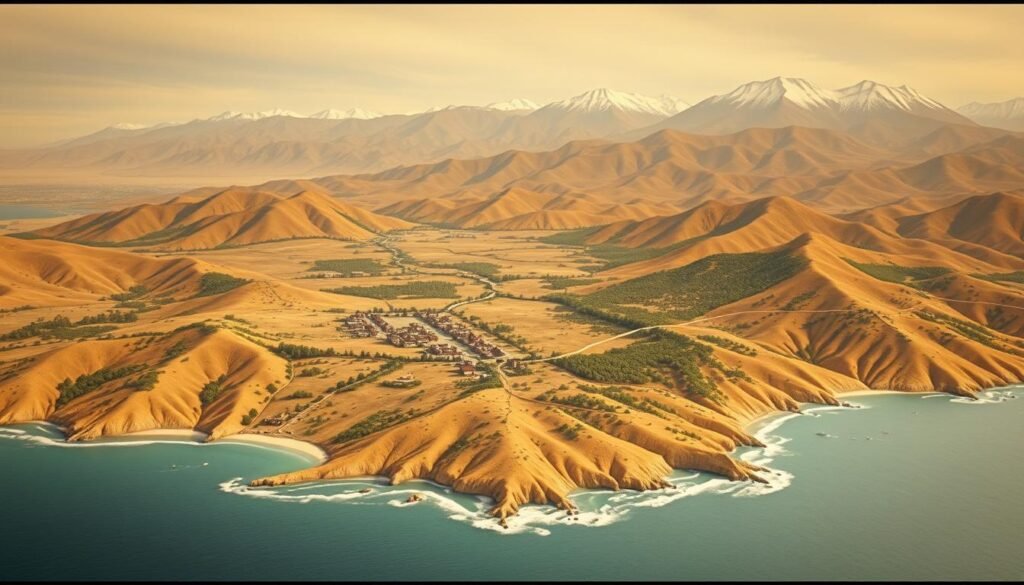
The Chumash land covered a vast and varied area along the California coast. They lived in a region from San Luis Obispo to Malibu. Their territory included mainland and several Channel Islands.
Three main Channel Islands were key to the Chumash:
Santa Cruz Island
Santa Rosa Island
San Miguel Island
They visited these islands seasonally. Anacapa Island was used sometimes because of water issues. The coast offered rich marine and land resources, supporting their complex societies.
The Chumash’s knowledge of their land was deep. They thrived in different environments, from coast to mountains.
Traditional Chumash Homes and Village Life
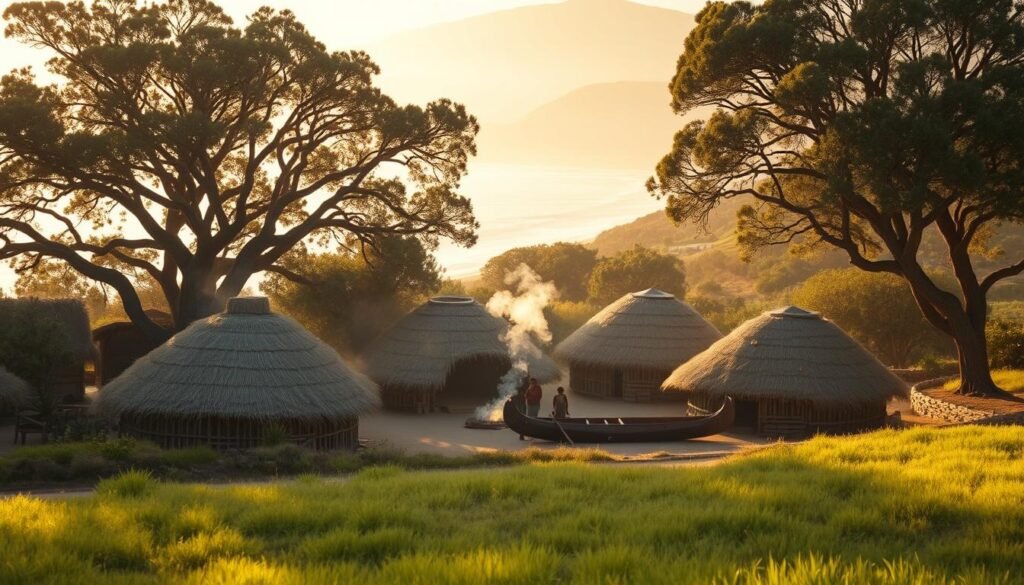
The Chumash homes were amazing examples of architecture that showed their love for nature. Their ‘aps were built with a deep understanding of living in harmony with coastal California. These homes were true marvels of sustainable living.
Dome-Shaped ‘Aps Construction
The Chumash villages had unique dome-shaped shelters. These homes were made with a special technique:
Willow branches formed the main structure
Tule reeds were woven and folded onto the frame
Reed mats could divide the inside into different rooms
Village Organization
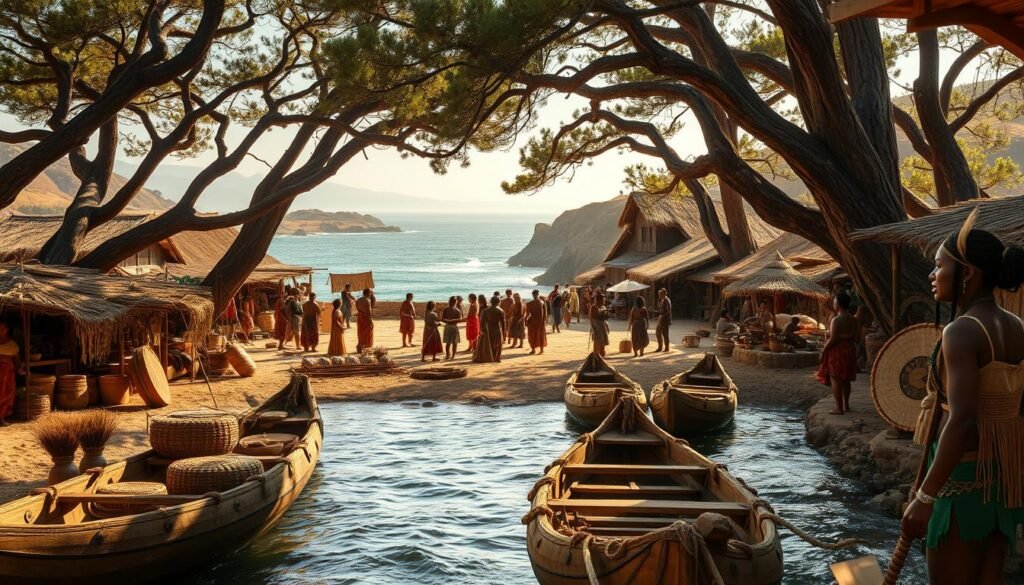
Chumash villages were well-planned communities. They had areas for different activities. The layout included:
Central gathering spaces
Residential zones
Communal work areas
Storage for food and tools
Daily Community Activities
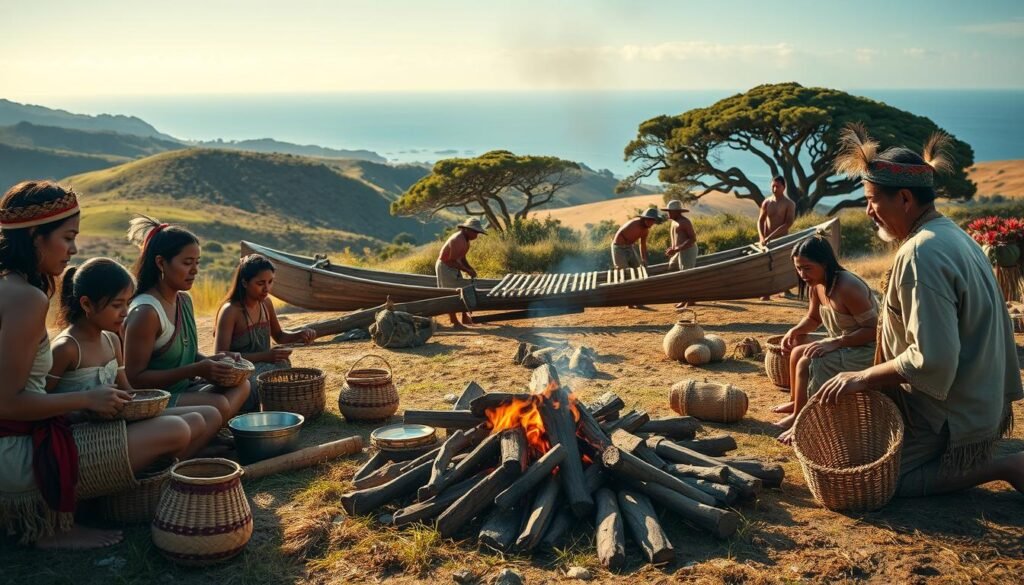
Life in Chumash villages was all about teamwork. People worked together on important tasks:
Activity
Description
Fishing
Harvesting ocean resources using advanced canoe techniques
Basket Weaving
Creating detailed containers for storage and trade
Food Preparation
Processing acorns and marine resources
Ocean Navigation and Tomol Canoes
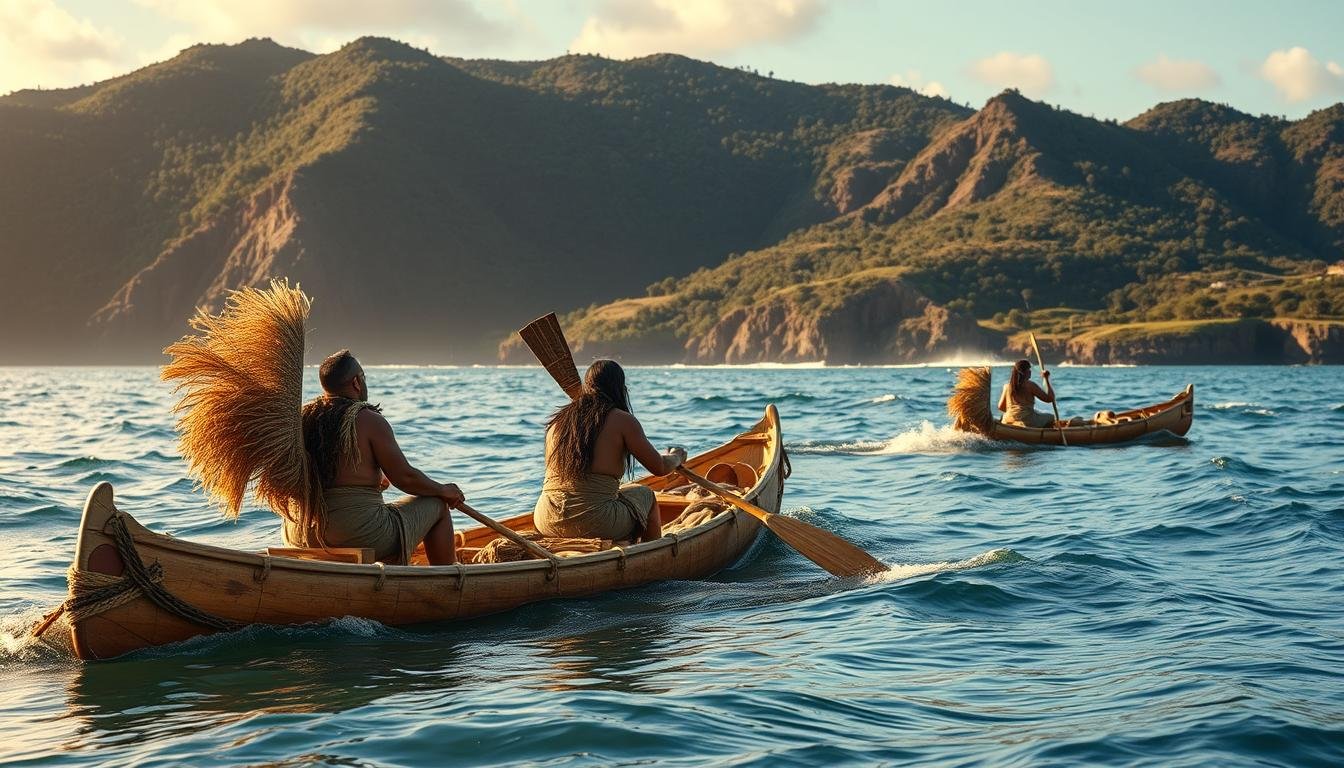
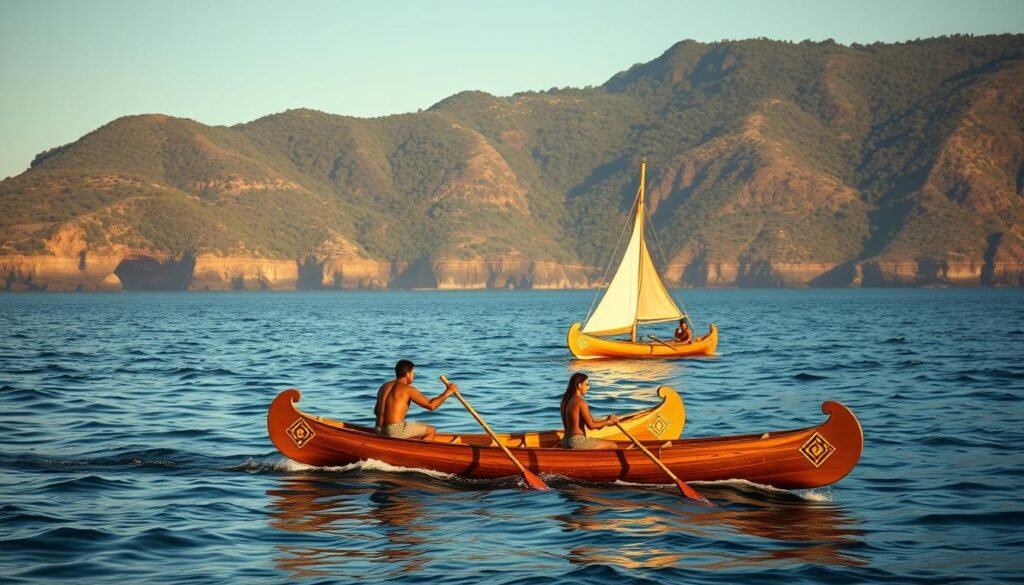
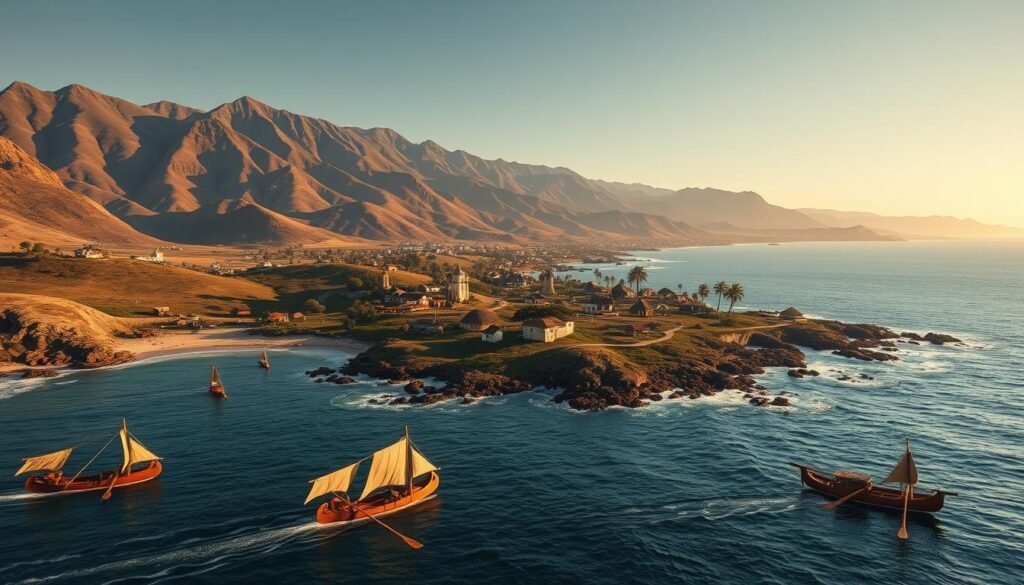
The Chumash people were expert sailors who dominated the Pacific coast with their unique boats. Their tomol canoes were true marvels, unlike any other coastal tribe’s vessels. These boats were not just for travel; they were the heart of Chumash life at sea.
Creating a tomol was a challenging task. Skilled craftsmen chose redwood planks, shaped them with stone tools, and joined them with advanced methods. These canoes, up to 30 feet long, allowed traders and fishermen to face the ocean’s challenges with skill.
Unique plank construction method
Capable of traveling long coastal distances
Used for fishing, trading, and inter-island transportation
For the Chumash, navigating was an art. They knew the ocean’s currents, star patterns, and weather to cross the Pacific. Their boats were more than just vessels; they were signs of their advanced culture and survival skills.
Tomol Canoe Characteristics
Details
Length
20-30 feet
Construction Material
Redwood planks
Primary Uses
Fishing, Trading, Travel
The tomol was more than a technological feat; it showed the Chumash’s deep bond with the sea. These boats let them explore, trade, and flourish in their coastal home. They became legendary pioneers in Native American maritime history.
Chumash Facts for Kids: Daily Life and Customs
The Chumash culture was full of life and tradition. Their daily life was all about community and meaningful activities. These activities shaped how they interacted with each other.
Chumash kids had a world of learning, play, and community. The village was the heart of their social life. Everyone played a key role in keeping the community strong and their culture alive.
Traditional Games
Chumash kids loved playing games that helped them grow strong and smart. These games were more than fun. They helped pass down culture and brought the community together.
Peon: A guessing game involving hidden sticks
Athletic competitions testing strength and agility
Chumash families were big and close-knit. Lineage and clan membership were very important. They helped shape social bonds and individual duties.
Family Role
Responsibilities
Elders
Wisdom keepers and cultural instructors
Men
Hunting, tool making, protection
Women
Basket weaving, food preparation, child-rearing
Social Organization
The Chumash social system was complex and well-organized. Leaders were chosen based on family ties. Chiefs and elders made decisions together, using their wisdom.
Chiefs selected based on hereditary lineage
Specialized roles for different community tasks
Collaborative decision-making processes
Food and Hunting Practices
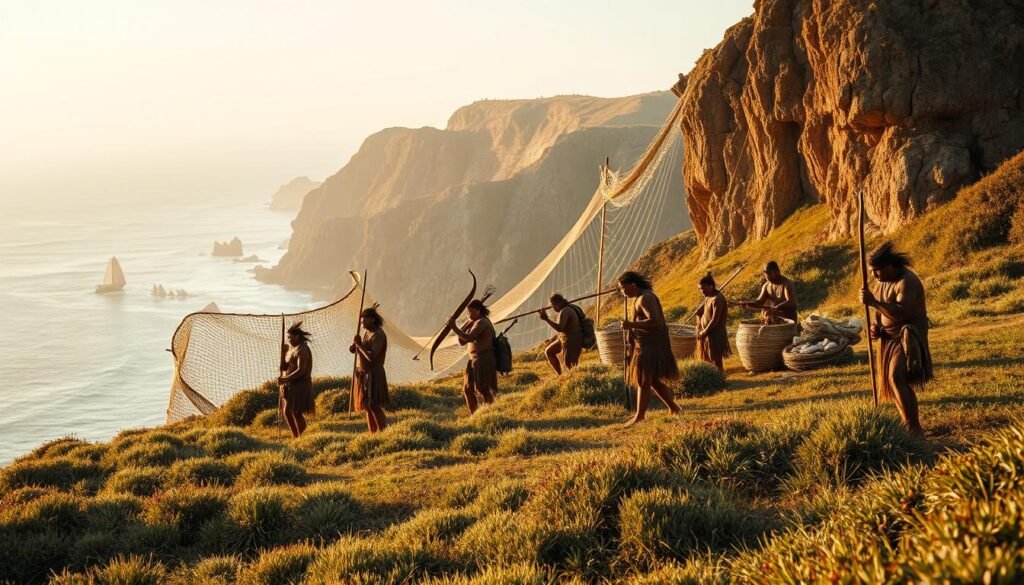
The Chumash diet showed their deep bond with nature. Their hunting skills were key to their survival in California’s coastal areas. They chose food based on what was in season and what the land offered.
Their hunting methods were advanced and effective. They made special tools for different animals, like:
Acorns were a mainstay of their diet. They ground these nuts into flour for bread and other foods. Seafood, including fish, shellfish, and mammals, also played a big role in their nutrition.
Their activities followed the seasons. In autumn, they gathered acorns. Winter was for fishing. Spring was for berries and roots, and summer for bigger game.
Hunting was more than just getting food. It was a sacred act tied to their culture. Each hunt was done with respect for animals and the land, showing their deep connection with nature.
Arts and Crafts of the Chumash
The Chumash people were amazing artists. They made some of the most advanced Native American crafts in North America. Their art showed incredible talent and deep cultural meaning.
Chumash art was more than just pretty. It was a way to share their culture and spiritual beliefs.
Basket Weaving Techniques
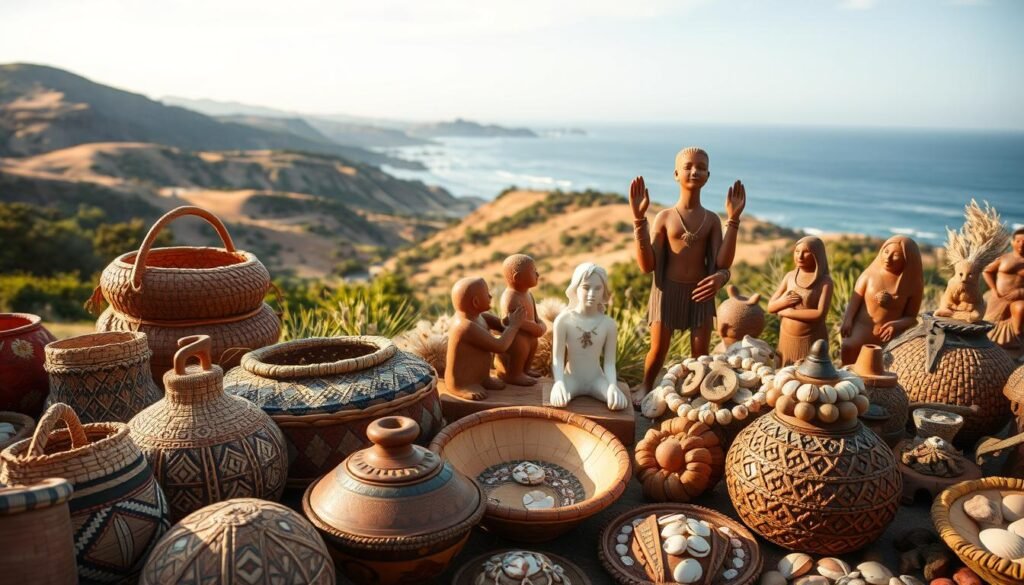
Basket weaving was a highlight of Chumash art. Their baskets were some of the most detailed and stunning Native American crafts.
Used native willow, sumac, and juncus grasses
Created watertight containers for storing food
Developed intricately designed baskets
Made baskets that lasted a long time
These exceptional baskets are now famous in museums around the world. They show the incredible skill of Chumash artisans.
Rock Art and Paintings
Chumash rock art told their spiritual stories in bright colors. They used natural pigments like chalk, ochre, and charcoal mixed with pine sap or animal fat.
Painting Material
Source
Purpose
Chalk
Local mineral deposits
White pigmentation
Ochre
Clay-based earth
Red and yellow tones
Charcoal
Burned wood
Black coloration
These paintings told stories of their tribe, beliefs, and everyday life. They are important historical records for the future.
The Chumash people were experts in Native American commerce. They built a vast trading network. Their system was key to connecting communities and cultures.
They used a special currency called ‘alchum’. This currency helped them trade goods over long distances. Archaeologists have found ‘alchum artifacts in places like:
Nevada
Arizona
New Mexico
The Chumash trading network was big. They traded many valuable resources. This kept their economy strong. Here are some of their main trade goods:
Trade Good
Purpose
Regional Significance
Shell Beads (‘alchum)
Currency and Decoration
High-value trade item
Obsidian
Tool Making
Prized for sharp edges
Food Supplies
Survival and Exchange
Vital for inter-tribal relationships
The Chumash didn’t just trade goods. They built strong relationships through commerce. They connected communities in a meaningful way.
Spiritual Beliefs and Ceremonies
The Chumash religion was deeply connected to nature. It was not just a belief but a way of life. It touched every part of their lives.
The paxa’ was a key figure in Chumash spiritual life. This respected leader organized important ceremonies. They kept the community connected and in harmony.
Spiritual ceremonies celebrated natural cycles
Rituals honored connections between humans and environment
Ceremonies marked significant seasonal changes
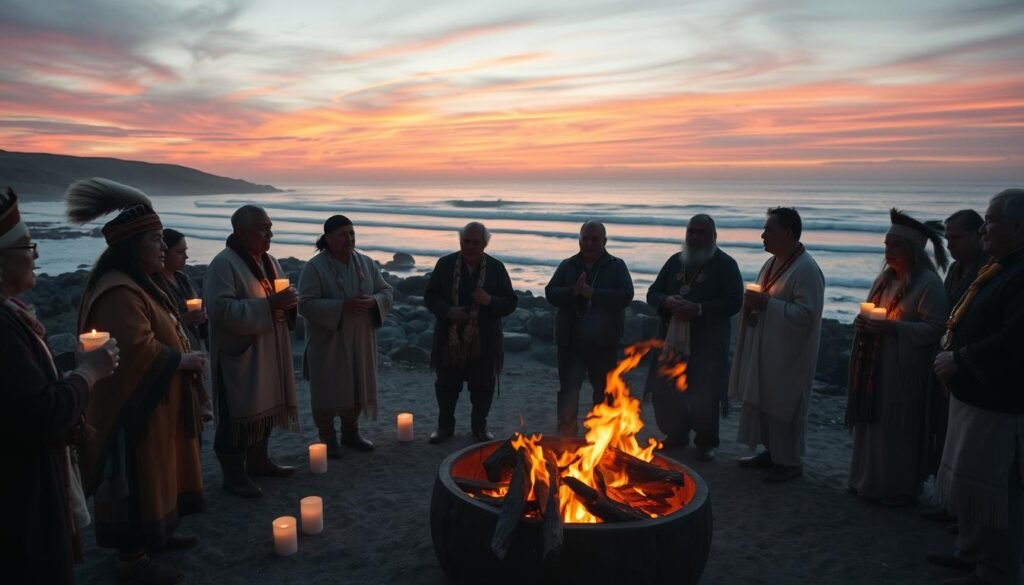
The Chumash saw the universe as a connected system. They believed spiritual energy flowed through all living things. Their rituals included dance, songs, and symbols.
Ceremony Type
Purpose
Significance
Winter Solstice Ceremony
Celebrate seasonal transition
Renewal of community spirit
Harvest Ritual
Gratitude for food resources
Spiritual connection to land
Healing Ceremony
Community health restoration
Spiritual and physical wellness
The Chumash religion showed a deep understanding of the world. It respected the balance between humans and nature.
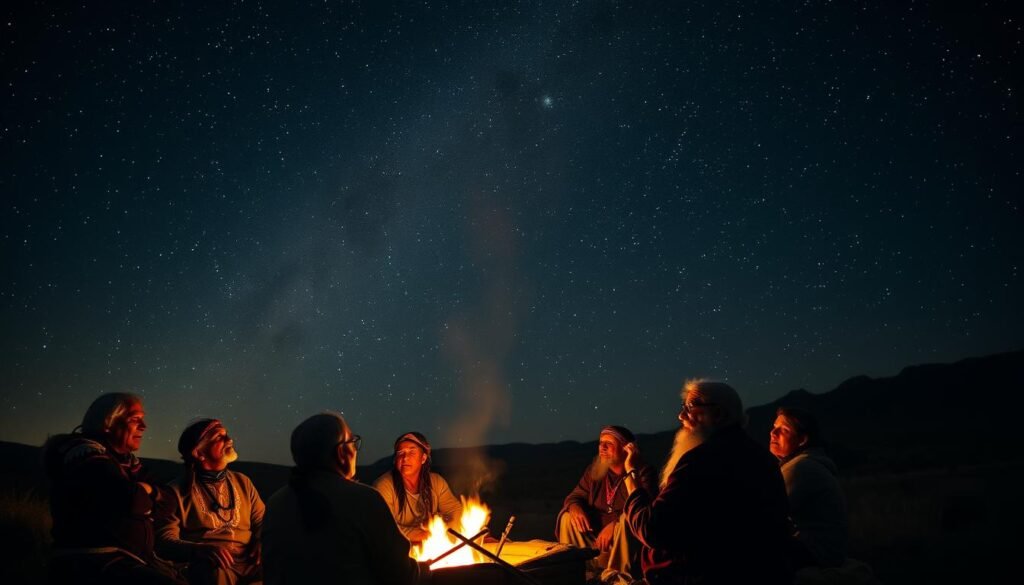
The Chumash Calendar and Star Knowledge
The Chumash people created a detailed Native American calendar. It was based on their deep understanding of the sky and nature’s cycles. Their knowledge of the stars was more than just for keeping time. It was a key part of their culture and beliefs.
Studying the stars was vital for the Chumash. Their shamans were experts at tracking the sky. They used their skills to predict the seasons and important events.
Seasonal Celebrations
The Chumash calendar was linked to nature’s cycles. It marked key times with special celebrations. Their star watching helped plan these important events:
Winter solstice gatherings
Spring equinox ceremonies
Harvest moon festivals
Summer solstice rituals
Astronomical Observations
The Chumash were skilled at tracking the stars. Their knowledge helped them navigate and predict the seasons. They used the stars to guide their way and plan for the future.
Celestial Observation
Purpose
Cultural Significance
Star Position Tracking
Navigation
Maritime Exploration
Solstice Alignments
Agricultural Planning
Seasonal Ceremonies
Lunar Cycle Monitoring
Timekeeping
Spiritual Practices
The Chumash astronomy showed a deep understanding of the universe. It mixed science with spiritual beliefs. Their calendar showed a strong bond between humans and the stars.
Native Plants and Medicine
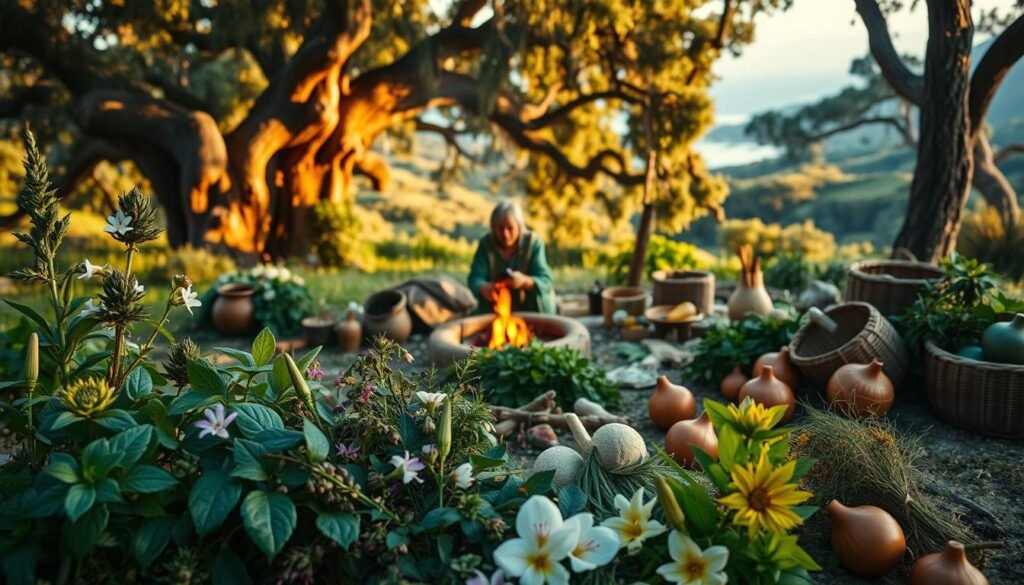
The Chumash people knew a lot about native plants. They created a system of medicine that combined healing, nutrition, and spiritual practices. They used plants from their surroundings to make remedies and food.
Chumash herbs were key in their daily and medicinal life. They used many plants for different needs:
Chia seeds were used for:
Nutritional food
Medicinal drink
Eye medicine
Poison oak treatment
Pine nuts were used for:
Jewelry
Nutritional food
Ceremonial offerings
Dogbane was used for:
Fishing lines
Canoe stitching
Headdress strings
Acorns were also important, used for food and making toys and jewelry. The Chumash healers passed on this knowledge to keep their community healthy and strong.
Their medicine showed deep wisdom about nature. They used plants to heal body, mind, and spirit. This showed their deep connection with the earth.
Famous Chumash Villages and Settlements
The Chumash people were true settlers who left a lasting mark on California. Their settlements covered a stunning coastal area, creating lively communities. Many modern place names have Chumash roots!
Let’s explore some amazing Chumash sites. The Chumash built many villages along the California coast. Each had its own culture and importance. Some of the most famous include:
Syuxtun – A major village near modern-day Santa Barbara
Mikiw – A coastal settlement with rich fishing traditions
Qanaqtuqan – An important village with complex social structures
Today, place names like Malibu, Nipomo, Lompoc, and Ojai show the Chumash’s lasting impact. These names are more than just words. They are memories of a vibrant culture that thrived here for thousands of years.
Archaeologists keep finding new details about Chumash sites. They’ve uncovered village layouts, trading networks, and social structures. Each find helps us understand the Chumash’s life along the California coast better.
The Chumash built communities that fit different environments. They knew how to read the landscape and use natural resources. Their work as pioneers in California’s history is unmatched.
Mission Period and Cultural Changes
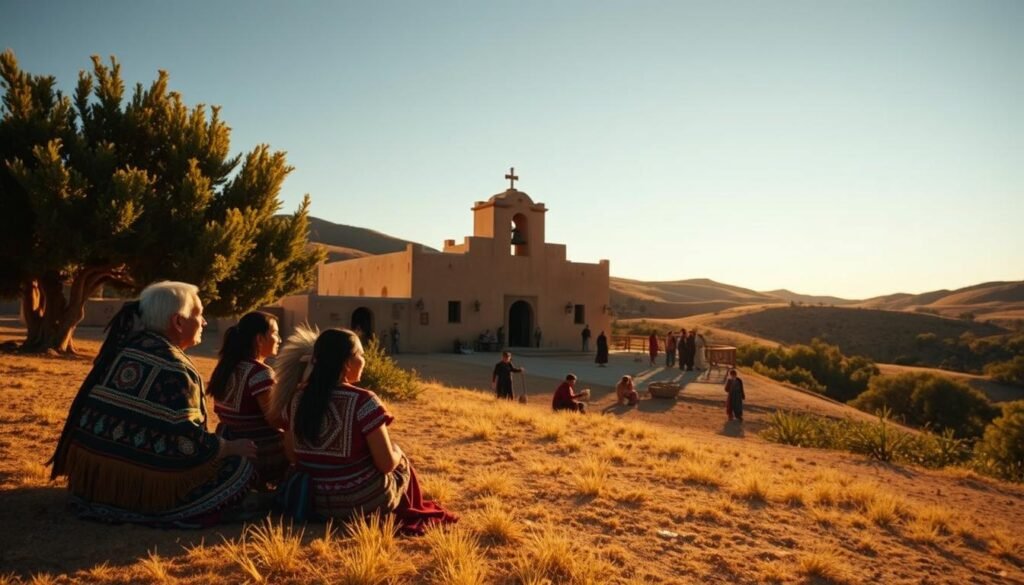
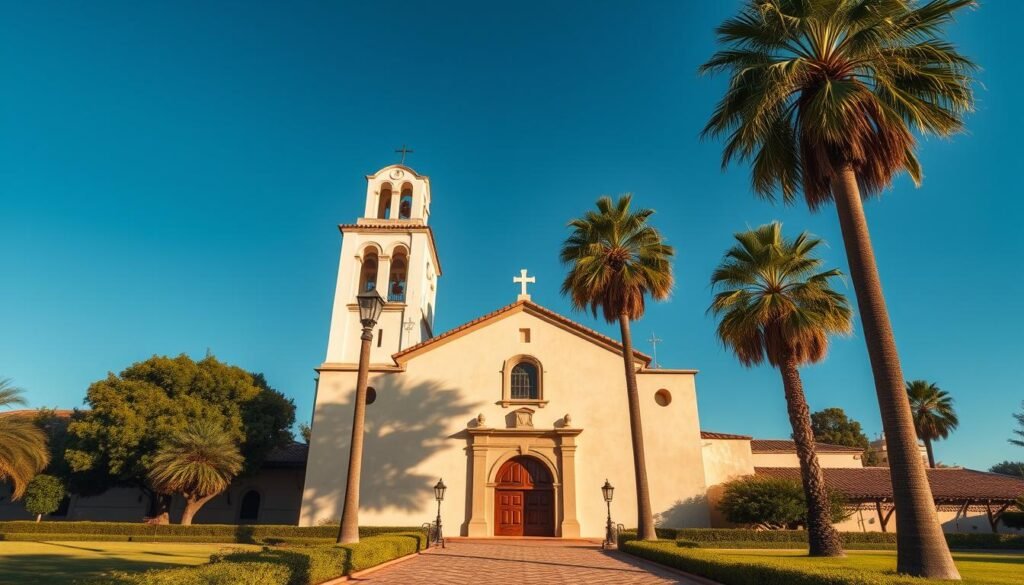
In the late 18th century, Spanish colonizers changed Chumash Native American history. Spanish missions became key places that changed how indigenous people lived in California. These missions, starting in 1769, changed how Chumash people lived and practiced their culture.
The Chumash missions brought big changes. Native Americans had to adjust to new ways of living, believing, and working. The main changes were:
Being moved from their old lands
Being forced to adopt a new religion
Having to work hard under new rules
Seeing their old social groups break down
But, the Chumash people didn’t give up. The Chumash Revolt of 1824 showed their fight to keep their culture alive. Warriors stood up against the Spanish, trying to save their way of life.
Spanish missionaries tried to change Native American communities. They taught them new things and helped them farm. But, the Chumash people kept many parts of their culture alive.
By 1834, the mission system started to fall apart. This had a big impact on Chumash society. It was a turning point in Native American history, changing how indigenous communities lived in California.
Modern Chumash Communities Today
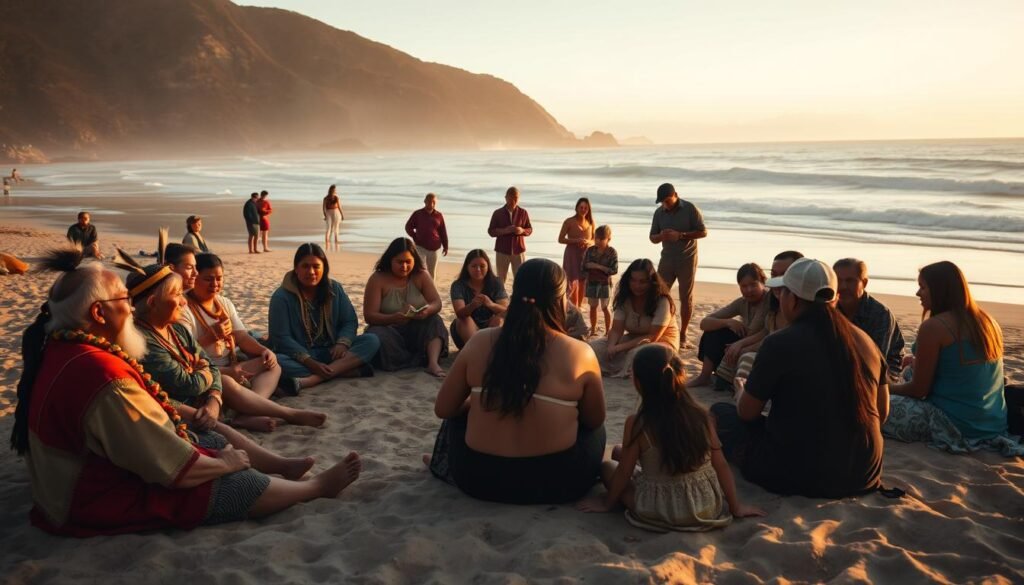
The Chumash people are thriving in California. They work hard to keep their culture alive and connect with their land. Preserving their traditions is a big focus for them.
Today, there are about 5,000 Chumash people in Southern California. They are working hard to keep their culture strong. This shows their dedication to their unique identity.
Current Population Dynamics
The Chumash live in several areas, including the Channel Islands National Park. They are growing and staying connected to their traditional lands.
Santa Barbara County hosts significant Chumash populations
San Luis Obispo County includes several Chumash communities
Ventura County maintains active Chumash cultural centers
Cultural Preservation Initiatives
New programs are helping to protect Chumash culture. They focus on language, traditional crafts, and education. These efforts are key to keeping their heritage alive.
Preservation Area
Key Activities
Language Revitalization
Community language classes and digital documentation
Traditional Arts
Basket weaving and canoe-building workshops
Cultural Education
School programs and community museum exhibits
Despite past challenges, the Chumash are showing great strength. Their efforts to preserve their culture mean future generations will know and value their heritage.
The Chumash Language Legacy
The Chumash language is a vital part of Native American linguistics. It survives thanks to dedicated efforts to preserve it. With only about 50 fluent speakers left, it shows the deep cultural heritage of the Chumash people. It connects them to their traditional ways of life and ancestral knowledge.
In April 2008, a major achievement was the Samala-English Dictionary. It’s a 600-page book with 4,000 entries and over 2,000 illustrations. This dictionary is a key tool for scholars and the Chumash community. It helps document and revitalize their ancestral language.
Today, efforts focus on teaching the Chumash language to the young. Workshops, digital recordings, and classes are used to pass on the language. Young tribal members learn traditional words and phrases. This keeps the Chumash language alive and connected to their cultural identity.
Language is more than just talking—it’s a keeper of cultural memory. Protecting and teaching the Chumash language helps communities keep their wisdom, stories, and unique views alive. This is part of their Native American linguistic heritage.