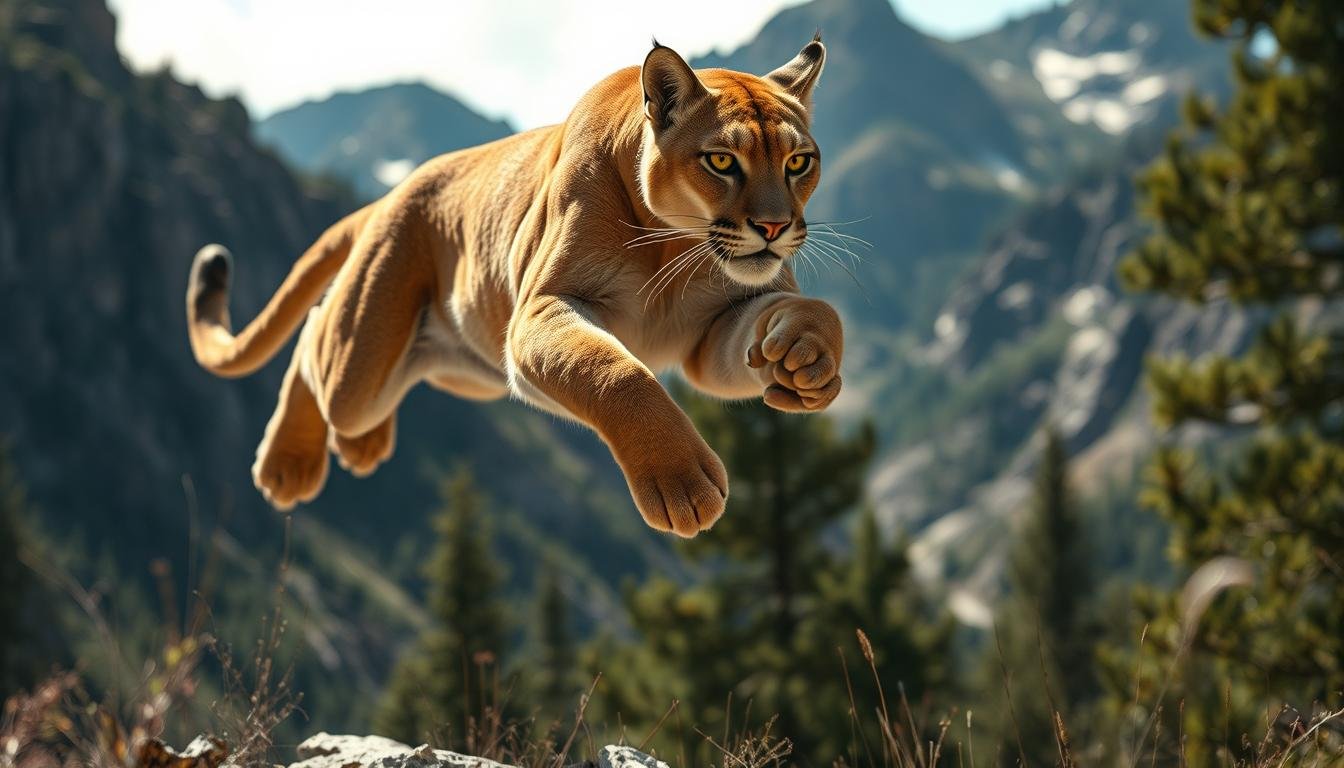
Cougars are truly amazing wild cats. They can jump an incredible three stories high. This makes them the top aerial predators in the animal world.
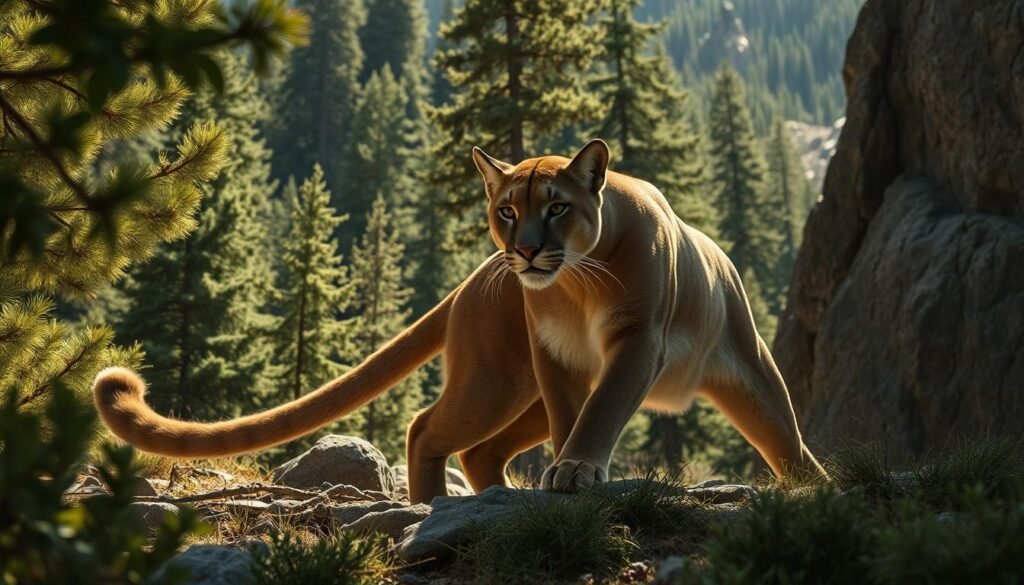
Mountain lion facts show they are experts in being quiet and strong. They have powerful muscles and quick reflexes. They are like ninja warriors in the wild, silent and powerful.
Cougar facts tell us they live in North and South America. They move through different places, from dense forests to rocky mountains. They are not just big cats. They are survival experts with many skills to survive in tough places.
Imagine a cat that can sneak up on its prey, jump far, and live in places where others can’t. That’s the mountain lion. They are a wonder of nature, full of amazing abilities that fascinate many people.
Meet America’s Biggest Wild Cat
Imagine a predator so magnificent it could be the superhero of the animal kingdom. Cougars are North America’s most impressive wild feline. They capture our imagination with their extraordinary physical presence.
These remarkable creatures blend power and grace in a unique way. They stand out among wilderness inhabitants.
Cougars, also known as mountain lions, are an incredible example of natural engineering. Adult males can grow up to 2.4 meters long. Female cougars are slightly smaller, averaging around 2.05 meters.
Physical Characteristics That Amaze
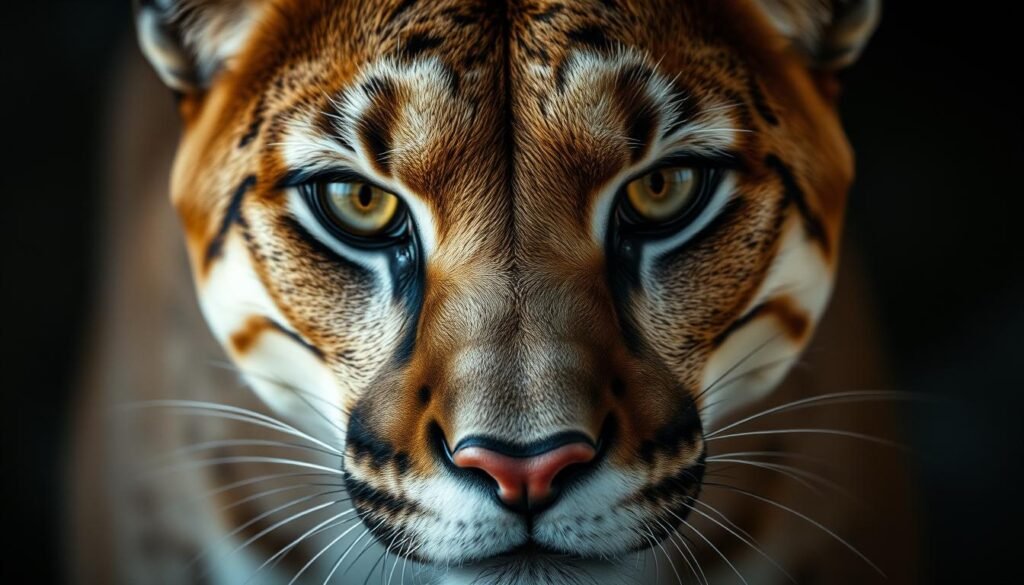
The cougar appearance is a masterpiece of evolutionary design. Their muscular build is like that of athletic linebackers. Let’s explore their most fascinating physical features:
Muscular body built for ultimate predator performance
Powerful legs designed for incredible jumping and stalking
Specialized paws acting as silent movement shock absorbers
Physical Characteristic
Male Cougar
Female Cougar
Average Length
2.4 meters
2.05 meters
Weight Range
53-100 kg
40-60 kg
Coat Color
Tawny Brown
Tawny Brown
Nature has crafted these animals as living poetry of motion and strength. Their piercing eyes and silent movement earn them the nickname “ghost cats”. This shows their incredible hunting prowess and mystique.
Wildlife fans, get ready! Our sleek, powerful puma has more names than a Hollywood star in hiding. It’s known as the cougar, mountain lion, or panther. Native Americans and early settlers were creative with its names.
This big cat holds the Guinness World Record for the most animal names in English. Here are some amazing cougar aliases:
Mountain lion
Puma
Panther
Catamount
Ghost cat
Painter
Want to impress your friends? Share these wild name variations. In Florida, it’s called a panther. In the western states, it’s a mountain lion. Each name shows how adaptable and mysterious this creature is.
Regional nicknames highlight the cougar’s unique traits. The “ghost cat” name shows its stealth. “Painter” might puzzle you. But one thing’s for sure: this cat shines in any name!
Incredible Jumping and Running Abilities
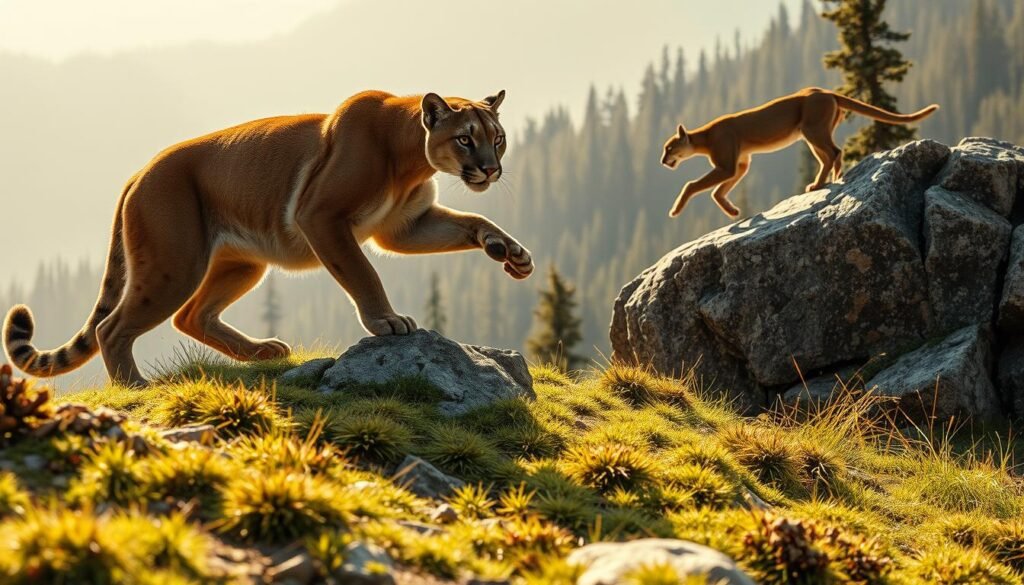
Cougars are the ultimate athletes of the animal kingdom. Their physical abilities are so amazing that they would make Olympic gymnasts look like amateurs. These big cats have an incredible combination of cougar jump and cougar speed. This makes them stand out from other predators.
Let’s break down the incredible athletic skills of these mountain lions:
A cougar can leap up to 18 feet vertically in a single bound
Their cougar jump can cover distances of up to 40 feet horizontally
They can sprint at speeds reaching 50 miles per hour in short bursts
Peak Performance Predators
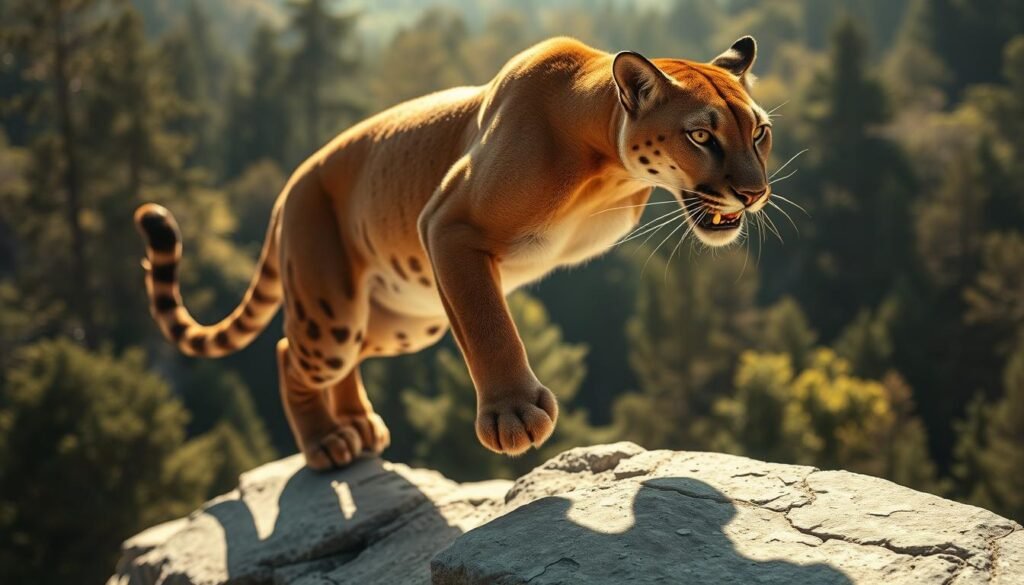
Their jumping prowess isn’t just for show. Cougars use these skills to hunt, navigate rough terrain, and escape threats. A cougar jump lets them scale trees, leap over obstacles, and surprise animals with fast attacks.
Imagine a creature that can leap over a two-story building and run faster than most cars. That’s the cougar – nature’s perfectly designed hunting machine. It combines raw power with incredible agility.
The cougar’s speed and jumping ability make them one of the most formidable predators. They are perfectly adapted to survive in challenging mountain and forest environments.
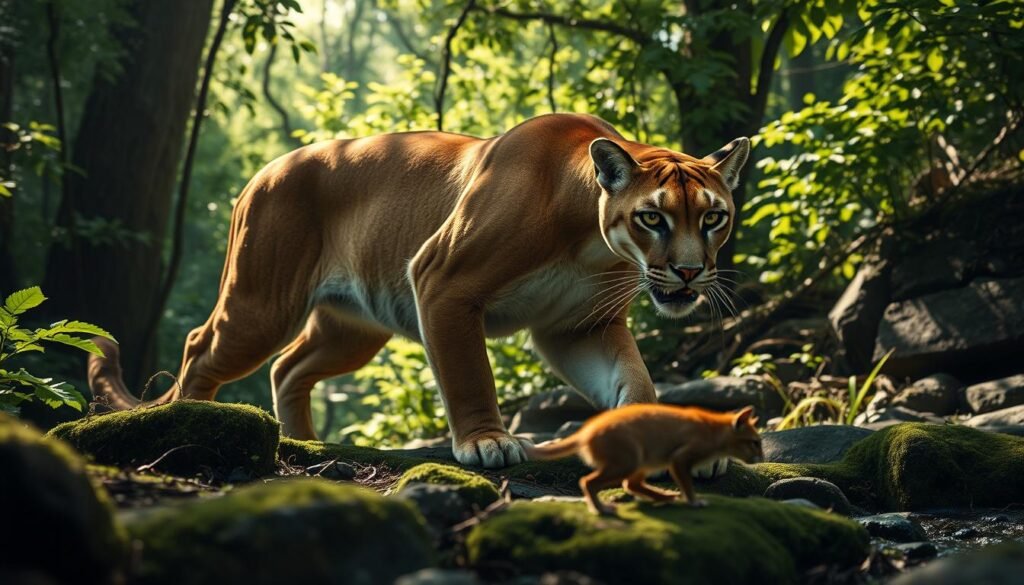
Imagine a predator that can turn any forest into its hunting ground. Cougars are the ultimate hunters, with skills that make them legends. They’re not picky about their meals, making them generalist hypercarnivores.
Let’s explore cougar prey and their amazing hunting techniques:
Preferred prey include mule deer, white-tailed deer, and elk
They can take down animals much larger than themselves
Opportunistic hunters who adapt to available food sources
Cougars are like the special forces of the wilderness. They use stealth, power, and precision in their hunts. They don’t just chase their prey – they plan every move. A cougar can track an animal for miles, waiting for the perfect moment to strike.
Their menu isn’t limited to large mammals. These adaptable predators will hunt:
Mountain goats
Bighorn sheep
Small mammals like porcupines
Occasional smaller predators
What makes cougars truly remarkable is their ability to survive in diverse environments. Their hunting skills allow them to thrive where many other predators would struggle. They’re nature’s ultimate survival experts, turning the wilderness into their hunting playground.
Where Mountain Lions Call Home
Cougars are experts at adapting to different places. They turn almost any area into their home. They live in many places, from dense forests to rocky mountains. This shows how flexible and adaptable they are.
Mountainous regions up to 19,000 feet elevation
Dense forest ecosystems
Arid desert landscapes
Open prairies with minimal vegetation
Rocky canyon territories
Habitat Diversity Explained
Cougars don’t mind where they live. They’re the ultimate wilderness adaptors, able to survive in tough places. They live in many different areas, making them very flexible predators in North America.
Habitat Type
Elevation Range
Typical Characteristics
Mountain Regions
Sea Level to 19,000 ft
Rocky terrain, sparse vegetation
Forest Ecosystems
0-10,000 ft
Dense tree cover, abundant prey
Desert Landscapes
Below 5,000 ft
Minimal vegetation, extreme temperatures
Mountain lions are nature’s most adaptable big cats. They can climb steep mountains or cross hot deserts. Their ability to adapt is truly amazing and keeps wildlife lovers in awe.
Super Senses of the Silent Hunter
Mountain lions are experts at hunting thanks to their amazing senses. They have incredible cougar senses that turn them into top survival machines.
Let’s explore the amazing tools that make mountain lions such skilled hunters:
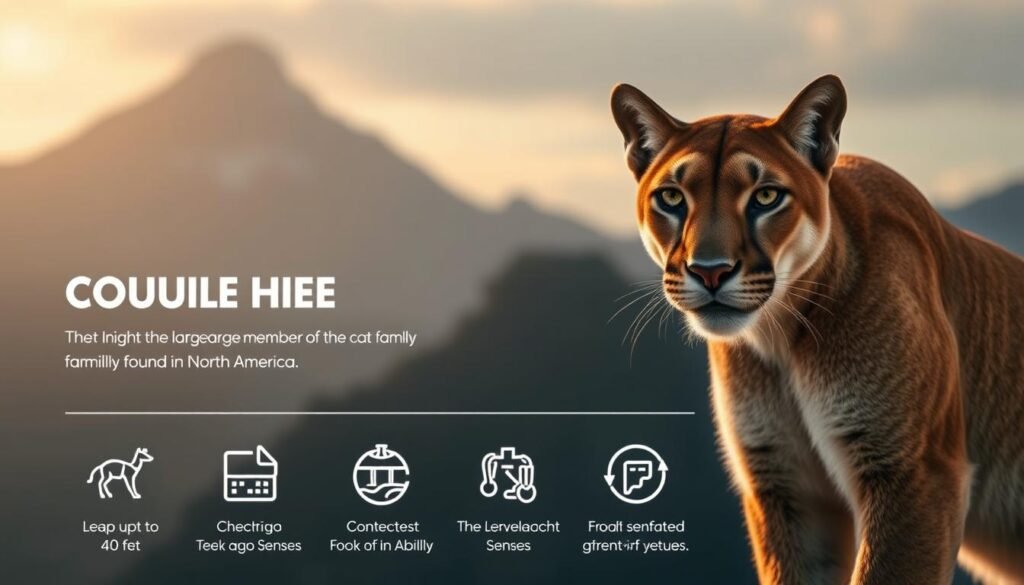
Vision: Cougars can see six times better than humans in low light, giving them a massive advantage during twilight and night hunting
Hearing: Their ears act like precision radar dishes, detecting even the slightest rustle of possible prey
Whiskers: Incredibly sensitive, these act as navigation tools in dense forests and can detect minute air movements
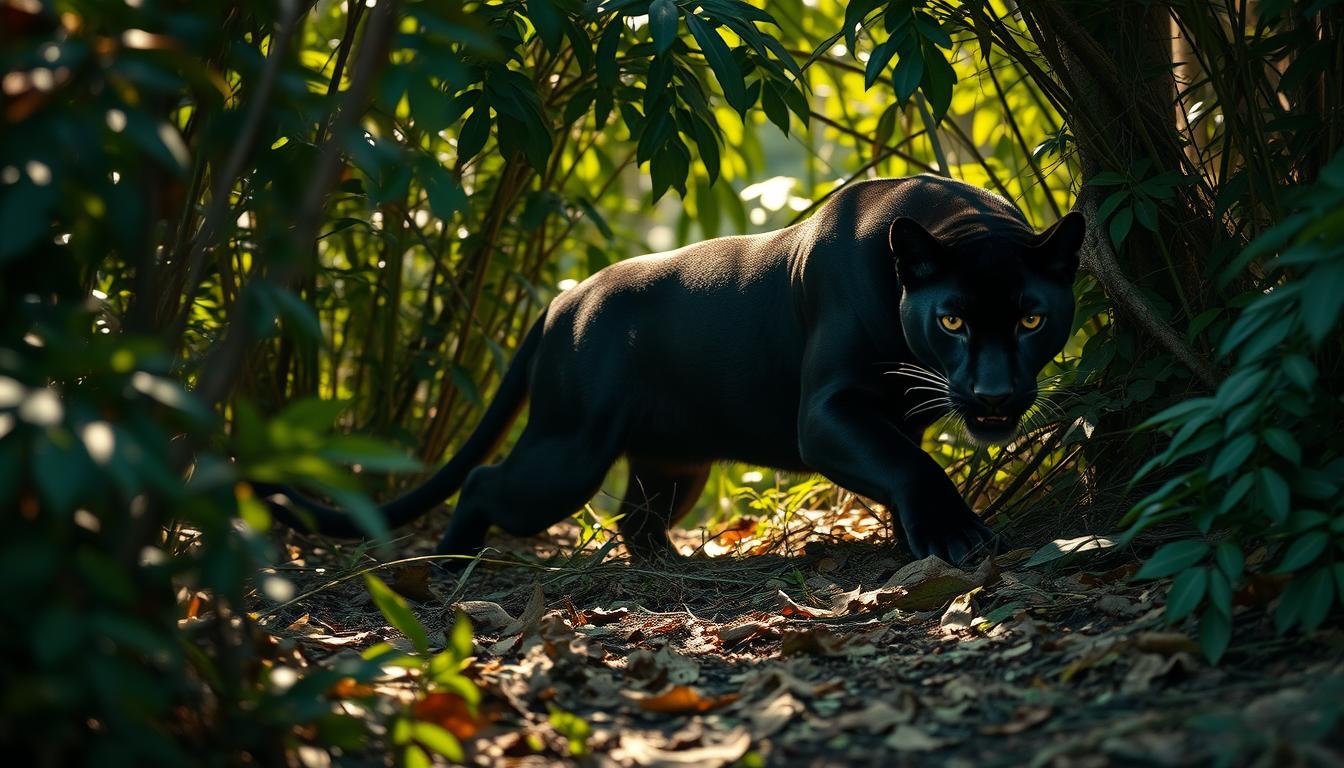
When hunting, mountain lions use their exceptional senses to stay hidden. They move with incredible stealth, using natural cover to blend in perfectly.
Sense
Capability
Hunting Advantage
Night Vision
6x Better Than Humans
Excellent Twilight Hunting
Hearing
Detect Sounds 100+ Yards Away
Precise Prey Location
Whisker Sensitivity
Can Feel Air Movements
Navigation in Dense Terrain
Their hunting is like a silent dance – a silent approach, calculated steps, and a quick pounce. This leaves prey with little chance of escape. These magnificent predators are truly nature’s perfect hunting machines.
Mountain Lion Family Life
The world of mountain lion family dynamics is full of survival and maternal dedication. Cougar cubs grow from helpless kittens to powerful predators. This journey is unique and transformative.
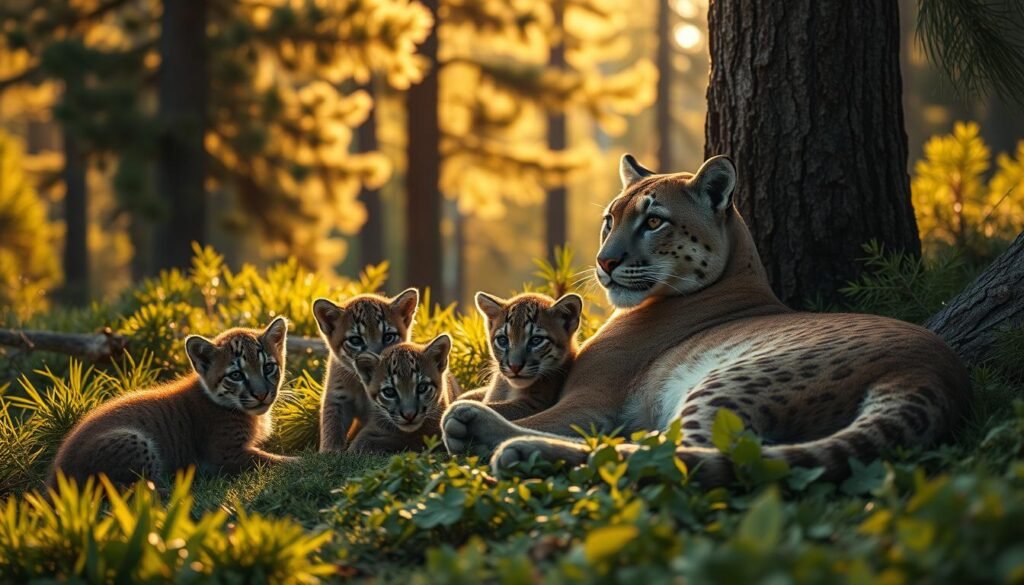
Mountain lion family life is intimate and challenging. Female cougars raise their cubs alone, forming a strong bond that lasts about 18 months.
The Incredible Journey of Cougar Cubs
Cougar cubs are born small and spotted, unlike their tawny parents. Their spots help them hide from predators in their early weeks.
Born weighing just 1 pound
Develop distinctive spots for initial protection
Stay in den for first few weeks
Learn hunting skills through play
Adult males rarely join the family, except for mating. Mothers teach their cubs how to survive by playing with them. This method helps the cubs learn hunting skills.
Cougar Cub Development Stage
Key Characteristics
Birth to 2 months
Completely dependent, staying in protected den
2-6 months
Begin learning hunting skills through play
6-18 months
Developing independent hunting capabilities
Nature’s design ensures these young predators become self-sufficient warriors of the wilderness. The mountain lion family shows amazing maternal resilience in the animal kingdom.
Nighttime Hunters in Action
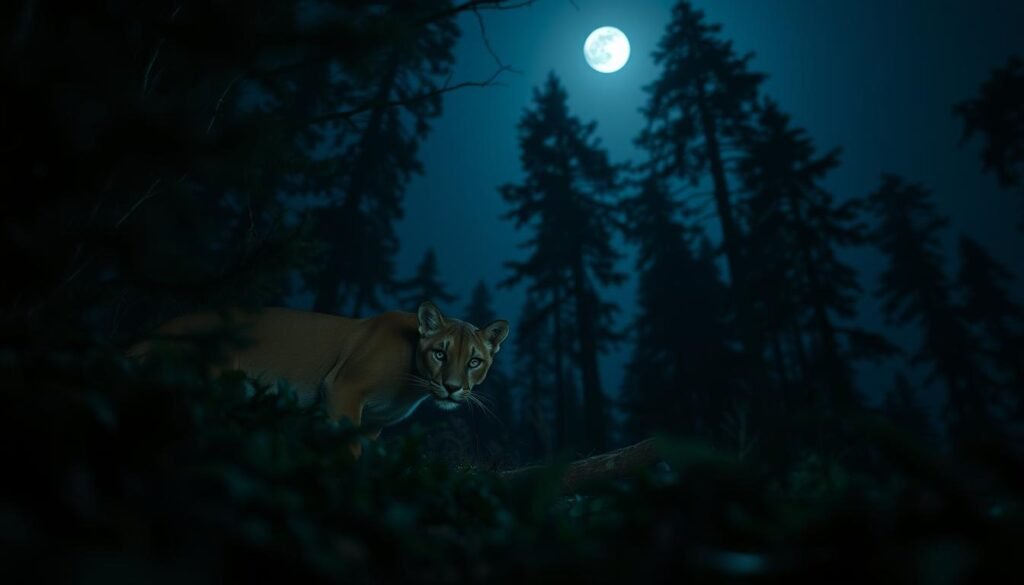
When night falls, cougars become expert hunters. They use the moonlight to hunt in the forest. Their hunting skills are unmatched, showing their stealth and precision.
Cougars are built for hunting at night. Their eyes see well in the dark, giving them an edge. They have special ways to hunt:
Silent stalking through dense forest areas
Using shadows for camouflage
Waiting patiently near game trails
Utilizing acute hearing to track possible meals
These nocturnal predators plan their hunts carefully. They go after deer, elk, and small mammals at night. They watch, move slowly, and then leap quickly, usually catching their prey.
Hunting Characteristic
Details
Primary Hunting Time
Dusk to Dawn
Typical Prey
Deer, Elk, Smaller Mammals
Hunting Success Rate
60-70%
Hunting Strategy
Ambush and Quick Pursuit
Cougars often prefer fresh kills but sometimes eat deer carcasses. A study in California found they might scavenge for food. This shows they are adaptable in finding food.
Cougars are top predators in North America’s wilderness. Their sharp senses and hunting skills amaze both fans and scientists. They are truly amazing creatures.
Amazing Survival Skills
Mountain lions are nature’s ultimate survival experts. They have adapted to conquer some of the most challenging environments across the Americas. From the frozen Canadian wilderness to the scorching South American deserts, they have developed incredible survival strategies.
Cougars have amazing survival skills that make them stand out. They can thrive in diverse landscapes, showing their incredible versatility. Let’s look at the key adaptations that make these big cats successful survivors:
Exceptional camouflage capabilities that help them blend into various terrains
Highly flexible muscular bodies allowing rapid movement through different environments
Precise hunting techniques adapted to specific regional conditions
Remarkable water conservation skills in arid regions
Survival Toolkit of Mountain Lions
Their survival toolkit includes amazing physical and behavioral adaptations. Mountain lions can adjust their hunting patterns based on prey availability and human activity. They switch between diurnal and nocturnal hunting depending on environmental conditions, showing their incredible mental flexibility.
Their muscular physique enables them to survive in areas ranging from mountainous regions to dense forests. A mountain lion’s body is a living survival machine. It can endure extreme temperature variations and challenging landscapes across 110 degrees of latitude.
Weight range: 64-220 pounds
Territory span: From Yukon to Southern Andes
Adaptive hunting range: Multiple ecosystems
Cougar adaptations truly represent nature’s most sophisticated survival blueprint. These magnificent creatures continue to inspire researchers with their remarkable ability to thrive in seemingly impossible conditions.
Mountain Lions and Their Neighbors
Cougars are kings of the wild, showing off their hunting skills. They live among other animals in a delicate balance. This balance is key to their survival.
Mountain lions face challenges from bears and wolves. These encounters are not always fights. They show how each side tries to survive and thrive.
Bears sometimes try to steal food from cougars
Wolf packs fight for hunting grounds
Cougars keep their place as top predators
When it’s just one against one, mountain lions usually win. Their hunting skills and strength help them protect their territory. Predator relationships in the wild are less about constant fighting and more about strategic positioning.
Coyotes might follow mountain lions, hoping to get some food. This shows how complex survival can be in the wild.
Cougars have learned to adapt well, staying at the top of the food chain. Their ability to live among other animals ensures their survival in different places.
Conservation and Protection
Mountain lions face big challenges in their survival journey. Wildlife experts and animal lovers across the United States are working hard to save them. These amazing predators once roamed freely but now face habitat loss and human encroachment.
The current status of mountain lion protection shows both hope and urgency. The International Union for Conservation of Nature (IUCN) says cougars are “Least Concern.” But, their numbers are going down in many places.
Protecting Our Wild Cats
Key strategies for mountain lion protection include:
Creating wildlife corridors to connect fragmented habitats
Implementing strict hunting regulations
Developing public education programs
Protecting critical breeding areas
Cougar conservation efforts aim to understand their role in nature and reduce human-wildlife conflicts. Researchers and wildlife managers work hard to find ways for humans and mountain lions to live together.
Conservation Strategy
Impact
Wildlife Corridors
Reduces habitat isolation
Public Education
Increases understanding and tolerance
Habitat Protection
Preserves critical ecosystem areas
Every individual can contribute to mountain lion protection. By supporting conservation organizations, spreading awareness, and respecting wildlife habitats, we can help ensure these incredible predators continue to thrive in their natural environments.
Record-Breaking Mountain Lion Facts
Mountain lions have some amazing stats that will amaze you. The largest mountain lion ever recorded was a true giant.
Here are some incredible facts about mountain lions:
The biggest cougar record was in 1901, weighing 232 pounds (105.2 kg)
Some reports say cougars could weigh up to 276 pounds (125.2 kg), but these are likely too high
Mountain lions can jump an amazing 40 feet in one bound, higher than a three-story building!
These wild cats are incredibly powerful. They can jump over a school bus or outrun a bike. That’s how strong mountain lions are!
Cougar records show they’re not just big, but also super athletic. Their muscles and hunting skills make them legends of the wild. From their impressive jumps to their strength, mountain lions amaze everyone.
Ancient Mountain Lion History
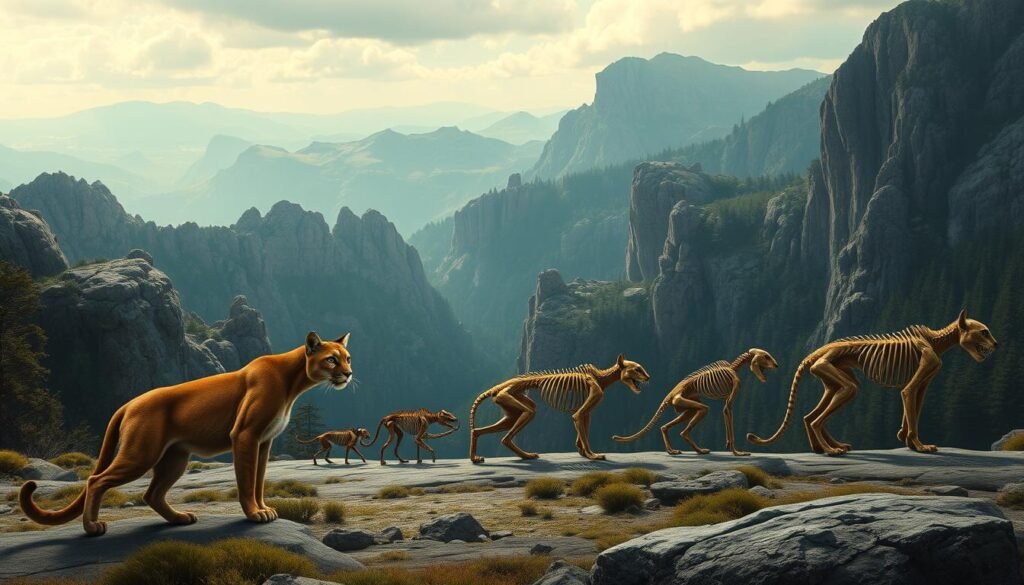
Imagine stepping into a time machine and traveling back millions of years. You’d explore the cougar evolution. The history of mountain lions is a journey through ancient landscapes and time.
The Felidae family, which includes our majestic mountain lions, started in Asia about 11 million years ago. These incredible predators have a rich genetic history that spans continents and generations.
Prehistoric cougars emerged during the Pleistocene epoch
Genetic studies reveal complex migration patterns
Mountain lions adapted to diverse North and South American environments
Scientists have found amazing insights into cougar evolution through DNA analysis. Mitochondrial DNA research has been key in understanding how these cats spread across the Americas.
Evolutionary Period
Key Developments
11 Million Years Ago
Felidae family originates in Asia
Pleistocene Epoch
Mountain lions begin migrating to Americas
Recent Millennia
Adaptation to diverse North American habitats
The mountain lion’s evolutionary journey is an incredible story. It’s one of survival, adaptation, and resilience. From their ancient Asian origins to becoming top predators in the Americas, these cats have shown remarkable evolutionary strength.
Living Alongside Humans
As cities grow, they meet the wild places where mountain lions live. These big cats usually stay hidden in forests. They prefer to avoid people and stay in their natural homes.
Experts say we can safely share space with mountain lions. When outdoors, make noise, hike in groups, and carry sprays. This way, we can avoid surprises that might make them defend themselves.
Learning to spot cougar signs is key. This includes tracks and scat. Knowing these signs helps us stay safe and avoid unexpected meetings.
In places like California, Oregon, and Washington, people and mountain lions learn to live together. Local groups teach about these cats’ habits. This knowledge helps keep both humans and mountain lions safe.
Most times, mountain lions and people don’t meet. They naturally stay away from us. By being careful and respecting their space, we can keep these amazing animals safe in their homes.