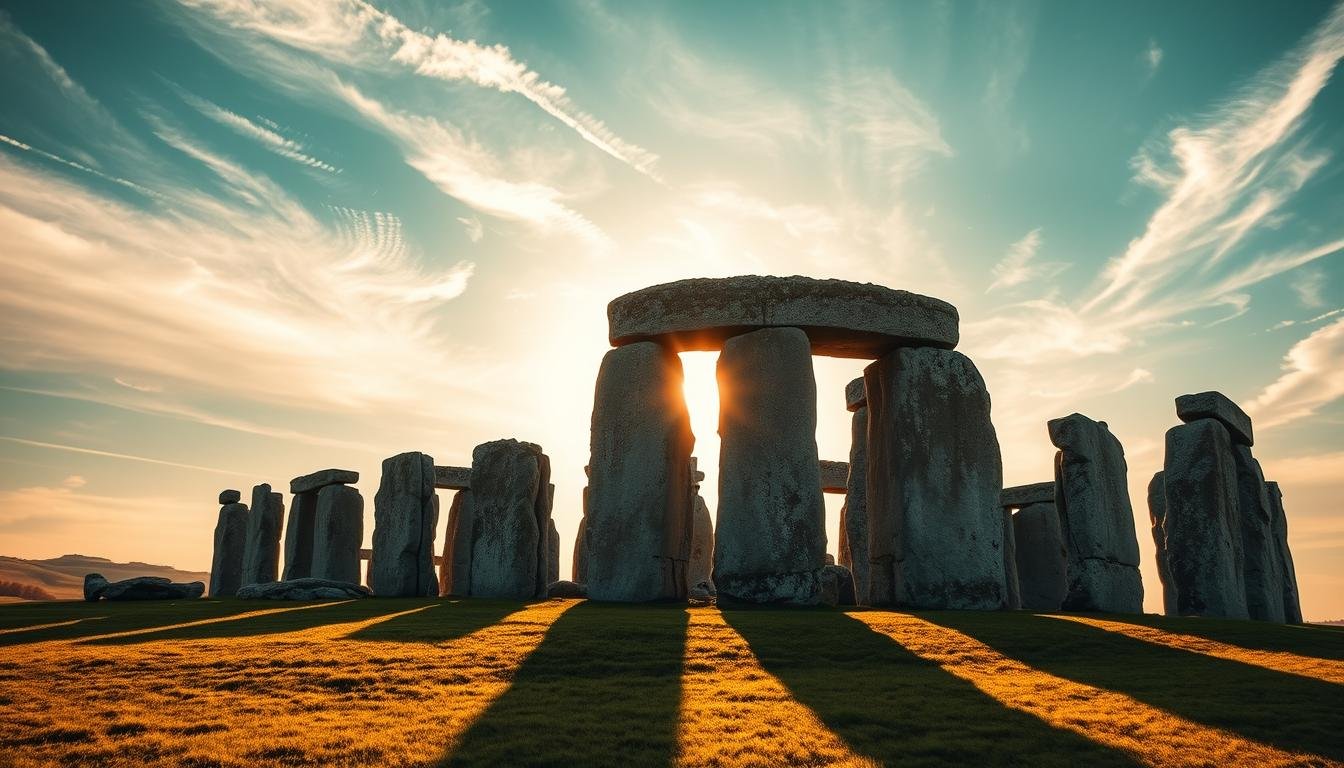
Stonehenge is a mind-blowing prehistoric monument on England’s Salisbury Plain. It’s a giant stone puzzle that has puzzled archaeologists and adventurers for centuries. It challenges everything we know about prehistoric engineering.
Imagine a massive circle of towering stones, each as heavy as a school bus. These stones were carefully arranged by people who lived thousands of years ago. Stonehenge facts for kids show a prehistoric mystery that sparks imagination and curiosity.
Located in the heart of Wiltshire, England, this site shows the incredible skills of ancient builders. The stones were moved from hundreds of miles away. This was done using techniques that seem impossible without modern technology.
Archaeologists have been trying to solve Stonehenge’s secrets for a long time. Was it a burial ground? A massive calendar? Or a place of spiritual significance? The ancient stone circle keeps its secrets, inviting young explorers to learn more about its history.
Get ready to explore the incredible story of Stonehenge. It’s a prehistoric puzzle that has fascinated people worldwide for generations!
What Makes Stonehenge So Special
Get ready to explore the world’s most amazing prehistoric monument! Stonehenge is a stunning example of ancient human ingenuity and creativity. It’s a window into the past, showing us the wonders of prehistoric civilizations.
Stonehenge is located in Wiltshire, England, on the beautiful Salisbury Plain. Its spot is not random. It was chosen for its significance by the ancient builders of this incredible monument.
The World’s Most Famous Stone Circle
So, what makes Stonehenge stand out? Let’s look at its special features:
Massive stone blocks weighing up to 40 tons
Perfectly aligned circular design
Constructed over multiple generations
Visible from miles around
Location on Salisbury Plain
The location of Stonehenge is truly remarkable. Salisbury Plain offers a vast, open space. This makes the stone circle stand out dramatically, leaving a lasting impression.
Location Detail
Specific Information
Region
Wiltshire, Southern England
Landscape
Chalk Grassland
Elevation
Around 90-100 meters above sea level
A Prehistoric Wonder
Stonehenge is more than just stones. It shows us the incredible abilities of prehistoric humans. Imagine the skill needed to move and place these huge stones without modern tools! This famous circle continues to intrigue archaeologists and amaze people worldwide.
The history of Stonehenge goes back thousands of years, starting in the Neolithic Age. Archaeologists have found a story of human effort and skill that lasted over a thousand years.
Building this ancient wonder wasn’t quick. Stonehenge grew in four stages:
First Stage (c. 3000 BCE): Early earthwork began with a circular ditch and bank
Second Stage (c. 2900 BCE): First wooden structures appeared
Third Stage (c. 2500 BCE): Major stone arrangements were introduced
Final Stage (c. 1500 BCE): Final modifications during the early Bronze Age
In the Neolithic Age, builders moved huge stones from far away. The sarsen stones came from Marlborough Downs, and bluestones from Wales, over 150 miles away. Each stone showed the incredible journey of human will.
Building Stonehenge took about 1,500 years. That’s longer than the time between the pyramids and now!
The Massive Stone Types at Stonehenge
Stonehenge is a prehistoric puzzle built from two incredible types of stone. These ancient builders carefully selected and transported massive stones across long distances. They created one of the most mysterious monuments in human history.
The incredible stone circle consists of two primary stone varieties. These make this archaeological wonder so unique:
Sarsen stones
Bluestones
Sarsen Stones: The Giants
Sarsen stones are the massive backbone of Stonehenge. These enormous stones weigh around 25 tons, about the same as four adult elephants. Sourced from nearby Marlborough Downs, these enormous gray sandstone blocks form the main structure of the monument.
Sarsen Stone Characteristics
Details
Average Weight
25 tons
Origin
Marlborough Downs, Wiltshire
Composition
Sandstone
Bluestones: The Welsh Travelers
Bluestones represent an incredible prehistoric achievement. These smaller stones traveled roughly 140 miles from quarries in Wales. An astonishing journey for ancient people. Each bluestone weighs approximately 3,600 kg, making their transportation a remarkable feat of engineering.
Stone Arrangements and Patterns
The arrangement of sarsen stones and bluestones is not random. Ancient builders carefully positioned these stones in specific circular and horseshoe-shaped patterns. Some stones align perfectly with astronomical events, suggesting sophisticated knowledge of celestial movements.
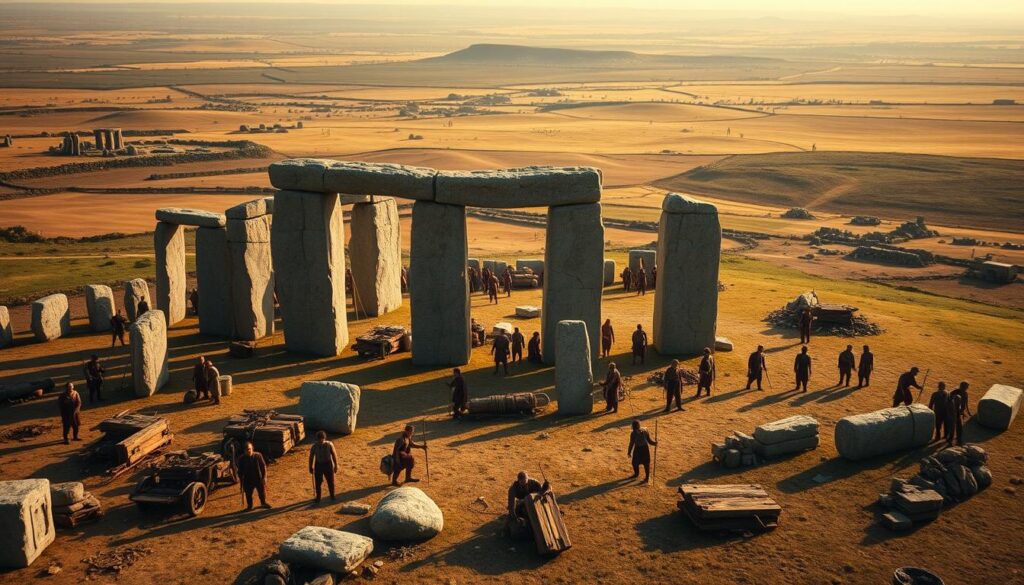
The construction of Stonehenge was a huge engineering challenge. It needed incredible ancient building techniques. Builders used amazing skills to turn huge rocks into a precise monument.
Archaeologists have found out how these ancient architects moved and placed the big stones:
Sarsen stones weighing up to 40 tons were moved from Marlborough Downs
Bluestones traveled an incredible 225 kilometers from Welsh quarries
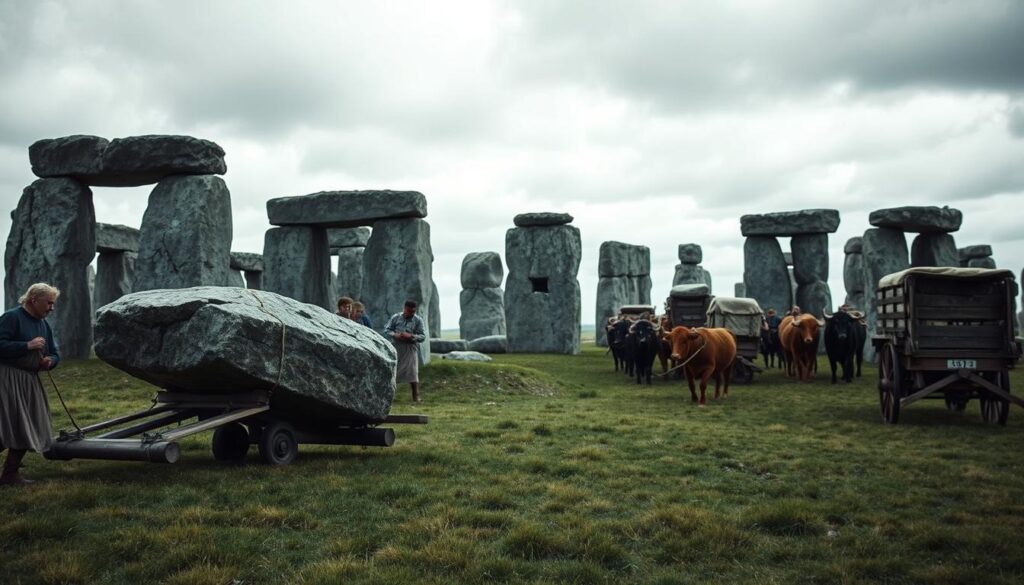
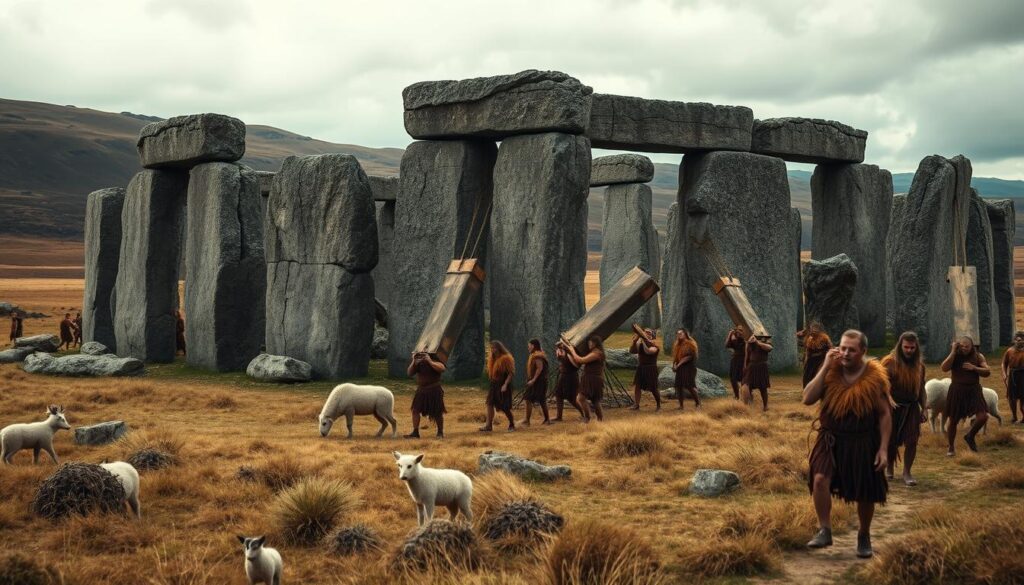
Wooden sledges and rollers were likely used for moving them
The process of moving these stones needed a lot of teamwork and creative problem-solving. Imagine dragging massive stones across rugged terrain without modern machinery!
Stone Type
Origin Distance
Estimated Weight
Sarsen Stones
32 kilometers
20-40 tons
Bluestones
225 kilometers
2-4 tons
Ancient builders used smart methods to lift and place the stones. They likely used wooden levers, ropes, and log rollers to move these massive rocks into place.
The precision of Stonehenge shows these builders had advanced math and engineering skills. This was far beyond what we might expect from Stone Age cultures.
Stonehenge Facts for Kids: Amazing Discoveries
Get ready to be amazed by the incredible discoveries at Stonehenge! These findings have changed how we see this ancient wonder. Archaeologists keep finding secrets hidden in the ground.
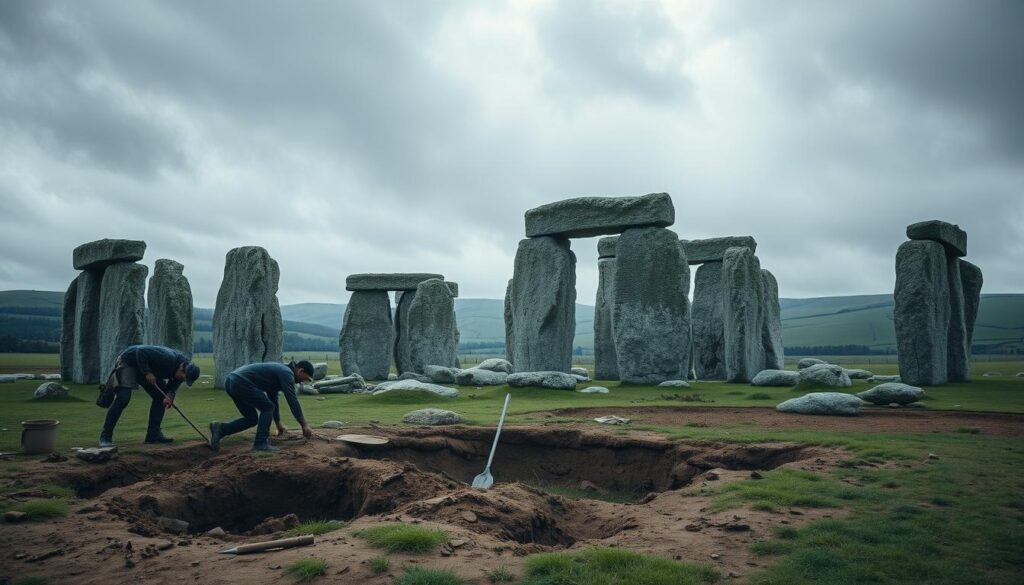
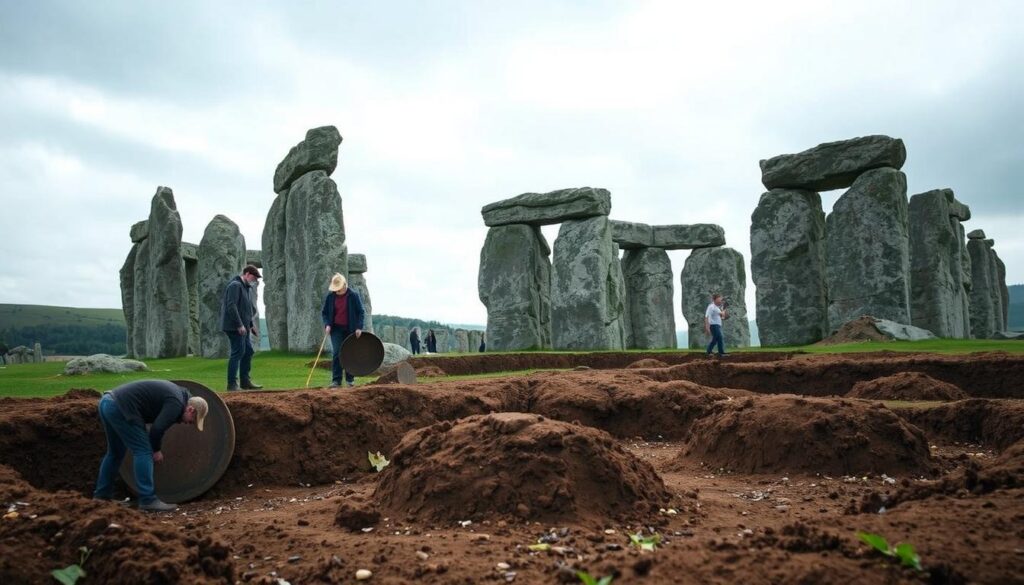
Archaeologists have found amazing things about Stonehenge. They use modern technology to look into the ground. This helps them uncover secrets that have been hidden for thousands of years.
Massive Stone Size and Weight Records
The stones at Stonehenge are huge! Here are some amazing size facts:
Largest sarsen stone weighs about 40 tons
Tallest standing stone is about 24 feet high
Stones are as big as a large school bus
Hidden Underground Features
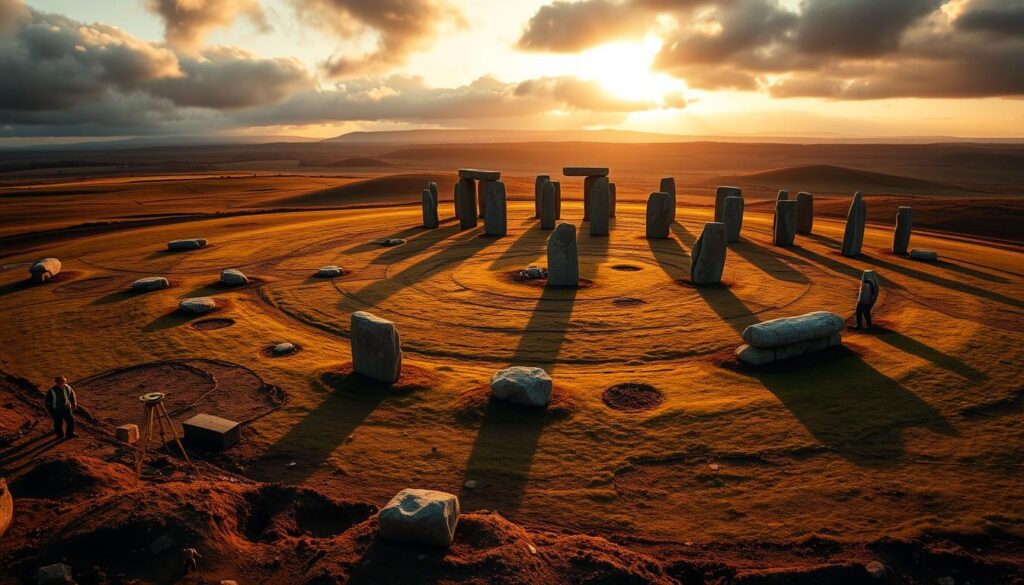
Recent finds have shown a hidden world under Stonehenge. Ground-penetrating radar has found a network of buried stones and mysterious circles.
These discoveries show that archaeology is like a treasure hunt. Each new find helps us learn more about the people who built Stonehenge.
The Mystery of Moving Giant Stones
Building Stonehenge was a huge challenge for ancient engineers. They had to move massive stones over long distances. This required skills that are hard to understand today.
Many theories exist about how they moved these stones. The most interesting idea is that they used several clever methods:
Wooden sledges dragged across flat ground
Log rollers to reduce friction during stone movement
Waterway transportation for longer distances
Can you imagine moving stones as heavy as 40 tons without machines? They likely planned carefully and worked together. Some think wooden rollers and sleds were key in moving sarsen stones from nearby quarries.
The stones traveled long distances. Bluestones from Wales were about 140 miles away. Sarsen stones came from Marlborough Downs, 20 miles away. This shows how determined the ancient builders were.
Recent studies show they used advanced techniques. Experts found that 100 people could move a huge stone. They used pulling techniques and wooden sledges.
Average stone weight: 25 tons
Estimated transportation time: Several weeks to months
Number of workers: Potentially 100-200 people
These ancient engineering feats inspire us today. They show how clever our ancestors were in solving problems.
Ancient Tools and Construction Methods
Building Stonehenge was a huge achievement in prehistoric engineering. It needed a lot of skill and hard work. The builders used stone age tools to turn big rocks into a complex structure.
Building Stonehenge was a big challenge. The ancient builders used simple tools to move huge stones. They solved problems in creative ways.
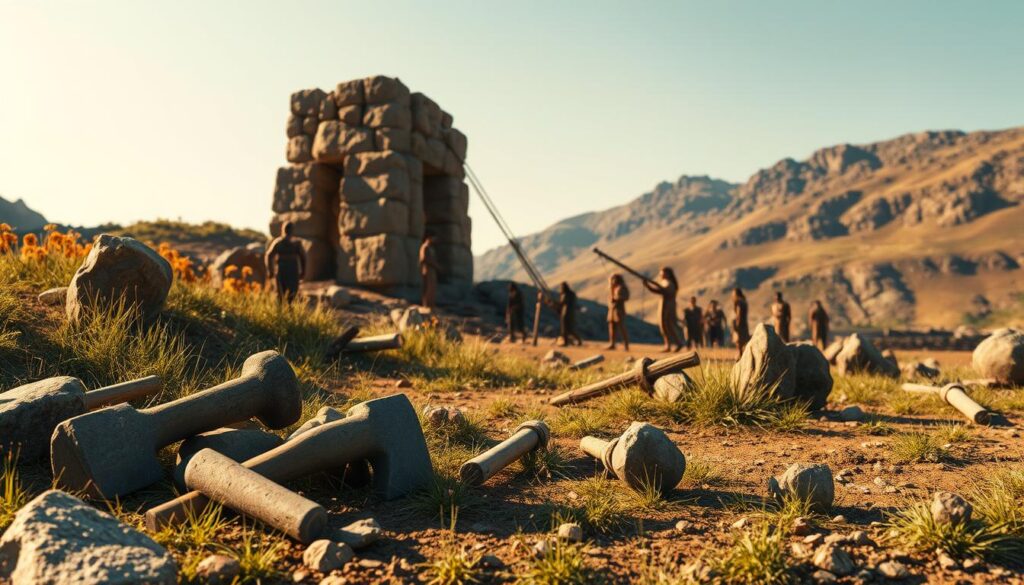
Creating Stonehenge was a big technical challenge. The tools used included:
Stone hammers for rough shaping
Antler picks for precise cutting
Wooden wedges for splitting rocks
Rope and wooden rollers for transportation
Prehistoric Building Techniques
The construction process was complex. Workers chose stones, shaped them, and found ways to move big blocks. These blocks could weigh up to 40 tons.
Shaping the stones took hundreds of hours of work. Skilled craftsmen used stone hammers and chisels. They showed great patience and skill.
It took dozens of people to move a single stone. They used wooden rollers, sleds, and ropes. This was done over difficult terrain.
The Sun and Stars Connection
Ancient people were amazing sky watchers. They understood complex celestial movements, as shown by Stonehenge astronomy. This massive stone circle was more than just a monument. It was a prehistoric observatory that tracked solar and astronomical patterns.
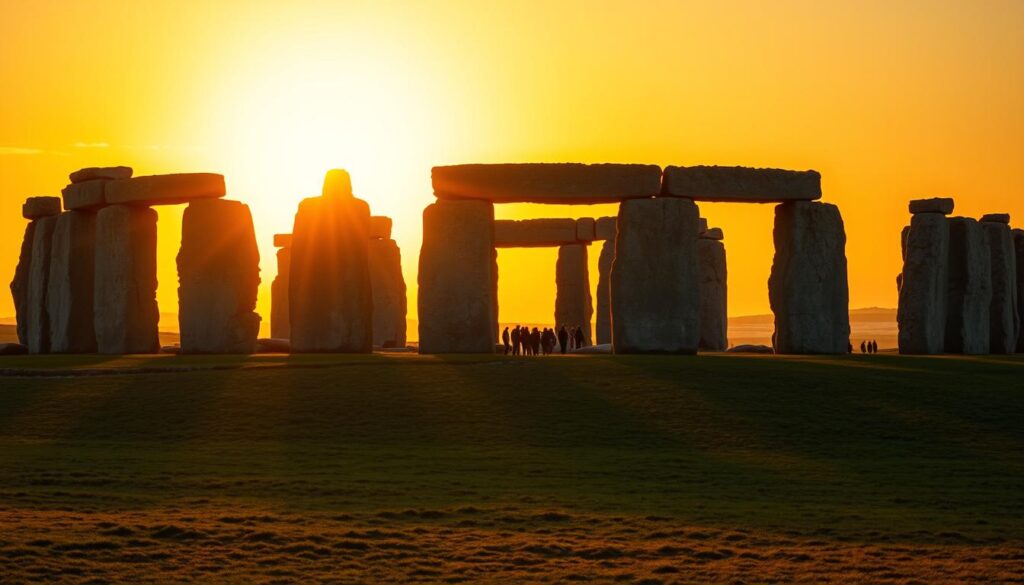
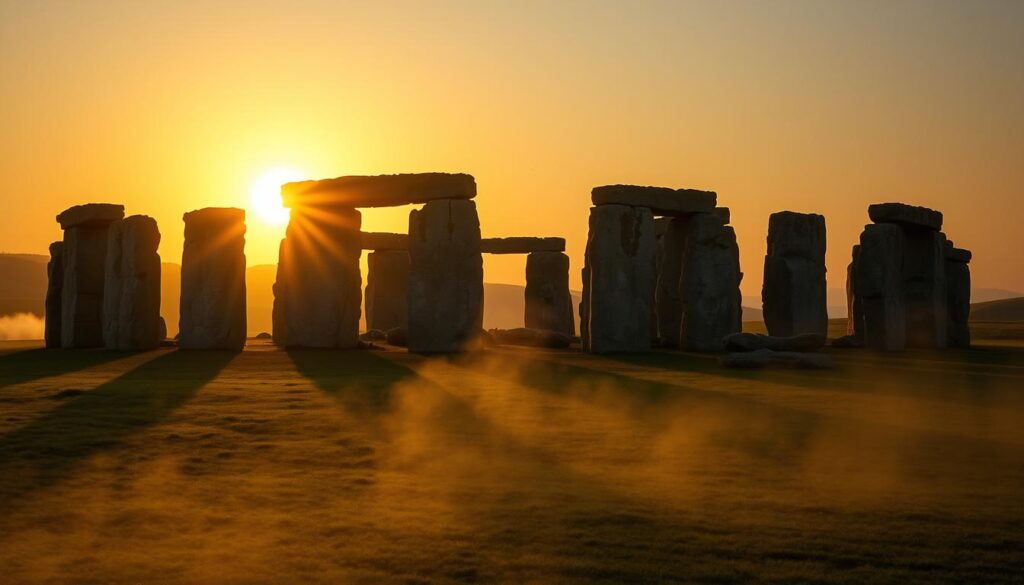
The solar alignment at Stonehenge is truly remarkable. Archaeologists found that the monument aligns with specific solar events. This includes the summer and winter solstices. On the summer solstice, the sun’s rays perfectly line up through the stone circle’s design.
Summer solstice: Sunlight streams directly through specific stone openings
Winter solstice: Stones create unique shadow patterns tracking solar movement
Astronomical calculations embedded in stone arrangements
The prehistoric builders showed incredible mathematical precision. They calculated sun positions years in advance. This created a complex calendar system that tracked seasonal changes. Their solar alignment techniques showed a deep scientific understanding, long before modern tools existed.
Stonehenge is more than just stones. It shows human curiosity about the universe. By tracking celestial movements, ancient people could predict important events. This included agricultural cycles, religious ceremonies, and migration patterns with great accuracy.
Secrets of the Summer Solstice
Stonehenge turns into a magical stage during the summer solstice. It shows ancient wisdom that fascinates people today. The monument marks the longest day of the year with amazing precision.
The summer solstice at Stonehenge is more than a celestial event. It’s a moment when sunlight aligns perfectly with the ancient stones. This creates a stunning display of ancient engineering.
Special Sunrise Alignments
During the stonehenge solstice, something extraordinary happens:
The sun rises precisely over the Heel Stone
Sunlight streams through carefully positioned stones
Shadows create unique patterns across the monument
Prehistoric builders designed Stonehenge with incredible knowledge. The summer celebration shows their advanced understanding of solar movements.
Modern Day Celebrations
Today, the summer solstice attracts huge crowds:
Year
Attendees
Event Highlights
2022
Around 20,000
Sunrise viewing, cultural performances
2023
Estimated 25,000
Druids, musicians, astronomy enthusiasts
Visitors from around the world come to see this magical astronomical alignment. They connect modern celebrations with ancient traditions.
Ancient Burial Ground Discoveries
Stonehenge was more than a mysterious stone circle. It was a key prehistoric cemetery where ancient people honored their dead. Archaeologists have found interesting evidence that shows the site’s complex burial practices.
Researchers think about 200 individuals were buried at Stonehenge. These burials give us a peek into the social structures and spiritual beliefs of Neolithic communities.
Burial sites span different archaeological periods
Multiple cremation and inhumation techniques discovered
Evidence suggests selective burial of important community members
The prehistoric cemetery around Stonehenge shows detailed funeral rituals. Archaeologists found burial mounds and cremation deposits placed with care. These were not random burials but meaningful ceremonies.
Radiocarbon dating has helped researchers understand when these burials happened. Some human remains are nearly 5,000 years old. This shows Stonehenge’s long-standing importance as a memorial landscape.
Scientific analysis of skeletal remains shows a mix of ages, genders, and social statuses. This suggests Stonehenge was a complex social and spiritual center. It was much more than just a collection of massive stones.
Scientific Studies and Modern Research
Stonehenge research is uncovering new secrets about this ancient site. Modern archaeology has changed how we see this ancient stone circle. It has revealed mysteries hidden for thousands of years.
New technologies have changed how archaeologists study Stonehenge. Tools like ground-penetrating radar and advanced satellite imaging let researchers look under the ground without harming the site.
Archaeological Findings
Recent discoveries have given us a deeper understanding of Stonehenge’s history. Archaeologists have found exciting new information about its construction and purpose:
Hidden stone circles buried underground
Evidence of sophisticated prehistoric engineering
Unexpected human burial sites surrounding the monument
New Technology Revelations
Modern archaeology uses amazing tools to solve Stonehenge’s mysteries. Scientists use techniques that were once unimaginable:
Laser scanning creates precise 3D models of stone positions
DNA analysis tracks prehistoric population movements
Spectroscopic investigations reveal stone origins
These technological advances are pushing our understanding of ancient cultures and their achievements.
The West Woods Connection
Imagine solving a mystery that had stumped scientists for years! Researchers found where the huge sarsen stones of Stonehenge came from. They discovered the source in a two-square-mile area in West Woods, near Lockeridge in Wiltshire.
By using advanced chemical analysis, archaeologists found the stones’ origin. West Woods became a key part of the Stonehenge mystery. It showed how ancient builders chose and moved these massive stones over tough terrain.
Chemical fingerprinting helped identify the unique geological signature of the stones
The sarsen source was narrowed down to a small region in Wiltshire
Prehistoric builders likely chose stones with special geological characteristics
This find gives us a glimpse into the ancient engineering prowess. Moving these huge stones from West Woods to Salisbury Plain was a huge task. It required careful planning and teamwork.
Location Detail
Significance
West Woods
Confirmed sarsen source for Stonehenge stones
Area Size
Approximately two square miles
Distance from Stonehenge
Approximately 15 miles
This research changes how we see stonehenge origin. Finding the exact source of the sarsen stones shows how science can reveal ancient secrets.
Prehistoric People Who Built Stonehenge
The builders of Stonehenge were amazing Neolithic people. They changed the look of Salisbury Plain. Their skills allowed them to build one of the world’s most mysterious monuments over many years.
Neolithic people were more than just farmers. They were advanced community builders. They knew a lot about engineering, astronomy, and how to organize themselves. Their ability to move huge stones shows their teamwork and tech skills.
Skilled in stone cutting and transportation
Developed complex social structures
Understood astronomical alignments
Worked collaboratively across generations
These ancient architects used innovative techniques to move sarsen and bluestones from far away. They likely used wooden rollers, sleds, and ropes to move stones up to 40 tons over tough terrain.
Neolithic Skill
Description
Stone Transportation
Moving stones up to 240 kilometers
Construction Techniques
Complex stone positioning and alignment
Social Organization
Coordinating large workforce
Stonehenge builders were not just builders but visionaries. They created a monument that would puzzle and inspire people for thousands of years. Their work continues to challenge our views of ancient human abilities.
Myths and Legends About Stonehenge
Stonehenge has captivated people for centuries. It has inspired many stonehenge legends, making it more than just a site. These stories turn the massive stones into something magical.
A legend from the 12th century tells an enchanting tale. It says the stones were once on a mountain in Ireland. The wizard Merlin, known in British folklore, moved them to England using magic.
Magical transportation of stones
Supernatural origins
Mythical connections to legendary characters
These myths show how ancient people tried to make sense of the unknown. Stonehenge’s size was so awe-inspiring that it seemed impossible to build with old technology. The stories highlight human creativity and the need to solve mysteries.
Different cultures have their own tales about Stonehenge. Some say giants built it, while others believe it was for spiritual rituals. These legends show how sites like Stonehenge become part of our cultural stories.
Today, researchers value these myths as a peek into the past. Even with science, the stories remind us of our curiosity about ancient wonders.
Protecting Stonehenge Today
Stonehenge needs careful protection from experts around the world. As a UNESCO World Heritage Site, it faces many challenges. English Heritage works hard to keep it safe for all to see and learn from.
Visitors must follow rules to avoid harming the site. Paths and controlled entry help prevent damage. New methods track the stones’ condition closely, ensuring they stay safe.
Everyone, kids and adults, can help protect Stonehenge. Learning about its history is key. Educational programs teach the importance of preserving cultural sites.
Research keeps uncovering new facts about Stonehenge. Tools like radar and 3D scanning help study it without harm. These technologies allow us to learn more while keeping the site in good shape.