John Cabot was a brave Italian explorer who changed North America’s map forever. He sailed for England and was the first European to find new lands across the Atlantic in 1497.
Kids who love adventure will be excited by Cabot’s journeys! His bold trips opened up new possibilities for European exploration. They set the stage for future discoveries that would change the world.
As a professional explorer, Cabot changed maritime history with his amazing voyages. He risked everything to explore unknown territories. He navigated dangerous waters with just his courage and skills.
Sailing from Venice to England, Cabot combined Italian maritime skills with English royal support. His trips were backed by King Henry VII. He hoped Cabot could find a new route to Asia and boost England’s trade.
Get ready to explore the amazing world of John Cabot – an explorer who faced the unknown and left a lasting mark on global exploration. His story is full of adventure, mystery, and groundbreaking discoveries that amaze people today.
Early Life and Background of John Cabot
John Cabot was born in Genoa, Italy, around 1450. He was named Giovanni Caboto. This young Venetian explorer would become a key figure in the Renaissance era. His early life was a stepping stone to an incredible journey that changed how Europeans saw the New World.
Growing up in Genoa, Cabot was surrounded by the sea’s excitement. His biography shows a childhood deeply tied to the sea. This connection shaped his remarkable career.
Family Origins and Childhood
Cabot’s family was deeply rooted in Italy’s maritime culture. As a young boy, he was exposed to:
Intricate trade networks of the Mediterranean
Sophisticated shipbuilding techniques
Stories of distant lands and merchant adventures
Maritime Education and Training
Cabot’s early life was shaped by rigorous maritime training. He learned essential skills for his future expeditions:
Navigation techniques
Cartography
Celestial navigation
Merchant trading principles
Life in Venice
Venice was the spark for Cabot’s maritime dreams. The city’s reputation as a maritime powerhouse gave him the chance to hone his skills. He dreamed of exploring beyond known horizons.
By his young adult years, Cabot had grown from a local merchant’s son to a skilled navigator. He had big dreams of finding new trade routes and lands to explore.
The Exciting Move to England
In 1495, John Cabot made a bold move. He sailed to England, seeking new opportunities in the Tudor era. He arrived in Bristol, a city known for its maritime adventures and trading.
Cabot’s move was both strategic and adventurous. He saw the English crown’s support for exploration as a chance. The Tudor period was full of discovery, with monarchs wanting to expand their territories and trade.
Bristol was a key maritime center for expeditions
English merchants were looking for new trade opportunities
The Tudor exploration spirit was at its peak
King Henry VII was intrigued by Cabot’s voyages. The monarch wanted to challenge Spanish and Portuguese dominance. Cabot’s maps and presentations convinced the royal court he could find new trade routes to Asia.
Cabot’s background in navigation and cartography made him perfect for exploration. He brought skills from Venice and a desire to chart new territories. The Tudor era was the perfect time for his dreams.
Cabot presented compelling navigation plans
He sought royal sponsorship for his expeditions
His expertise in mapping was key to his success
The move to England was a turning point for Cabot. He was about to start journeys that would change our view of North America.
John Cabot Facts for Kids
Get ready to explore the exciting world of John Cabot. He was a brave explorer who sailed across vast oceans. His adventures were filled with danger and amazing navigation skills.
Young explorers wonder how sailors like Cabot survived their long journeys. Let’s discover some cool facts about his maritime adventures!
Amazing Discoveries
John Cabot’s discoveries were huge for his time. He explored areas few Europeans had seen before. His voyages showed:
Sailing in the 15th century was tough. Cabot and his crew faced harsh conditions and limited food. Imagine being on a small ship for months, facing storms and unknown waters!
Sailing Condition
Daily Challenge
Food Supplies
Preserved meats, hardtack, dried fish
Water
Limited fresh water, beer as primary drink
Living Space
Cramped quarters, shared sleeping areas
Navigation Tools
Cabot’s navigation was ahead of his time. He used advanced tools for his oceanic travels:
Astrolabe: A circular instrument used to determine latitude
Magnetic compass for direction tracking
Nautical charts and maps
Celestial navigation using stars
These tools helped Cabot make incredible discoveries. They changed how Europeans saw the world.
The First Voyage in 1496
John Cabot’s first voyage in 1496 was a turning point in sea exploration. He got support from King Henry VII, who gave him letters patent. This allowed Cabot and his son to start a journey of discovery.
The first voyage faced many challenges. Cabot aimed to find a western route to Asia, like Christopher Columbus. He prepared well, gathering supplies and a skilled crew.
Secured royal support from King Henry VII
Planned to find a new trade route to Asia
Assembled a dedicated maritime team
The 1496 voyage ended in disappointment. Cabot faced harsh weather and navigation issues. He had to return without reaching his goal. But this failure only made him more determined.
Despite the failure, Cabot learned a lot. He documented his journey, improved his navigation, and planned a bigger expedition. This would change exploration forever.
The 1496 voyage was just the start for Cabot. His drive for discovery led him to a major maritime achievement. His passion for the unknown would soon pay off.
The Historic 1497 Journey
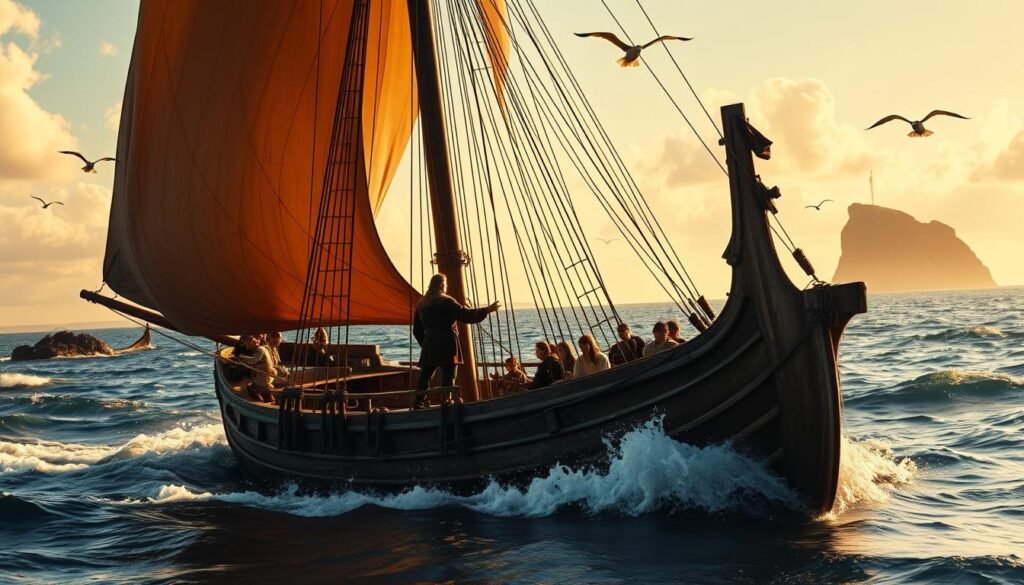
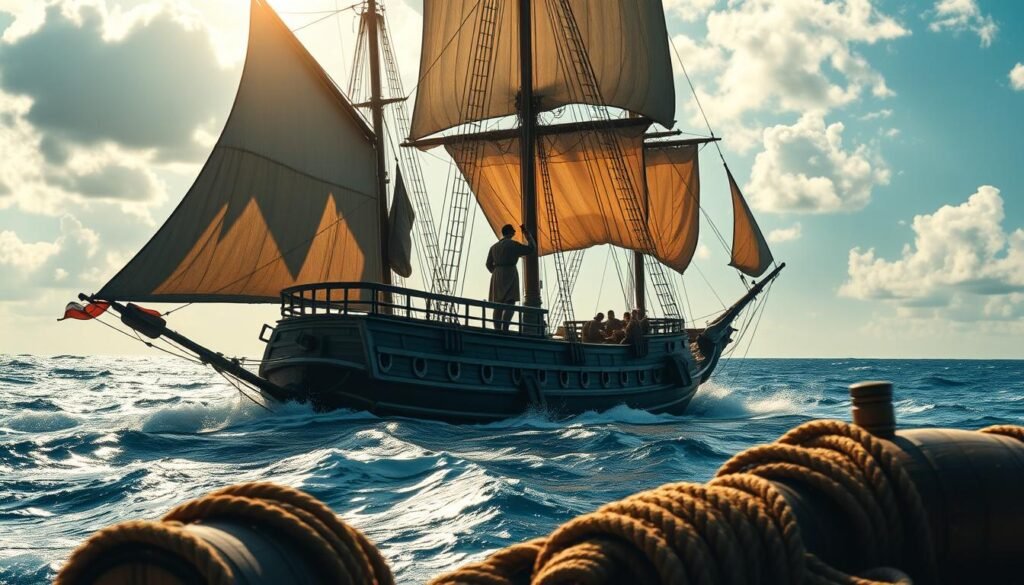
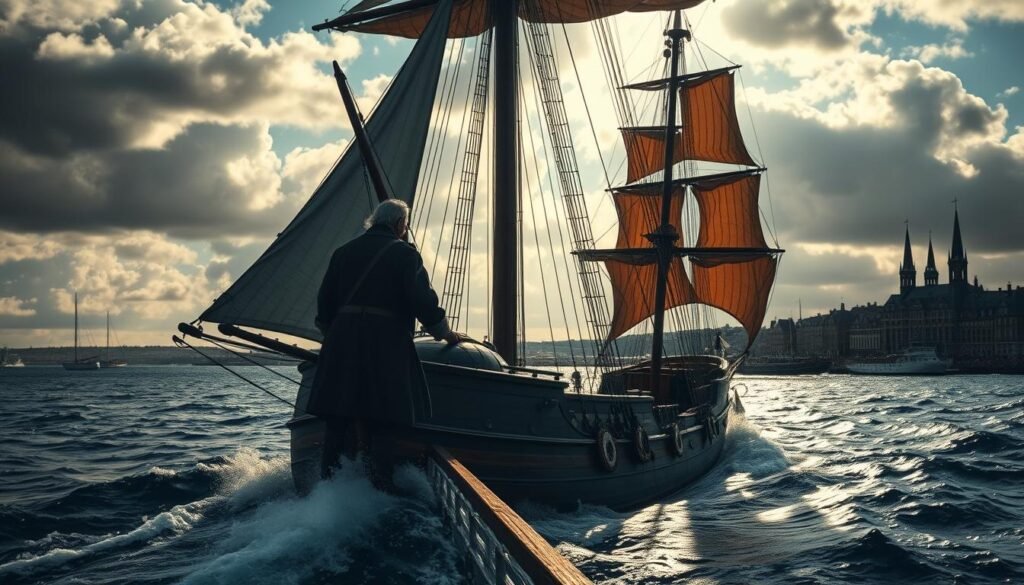
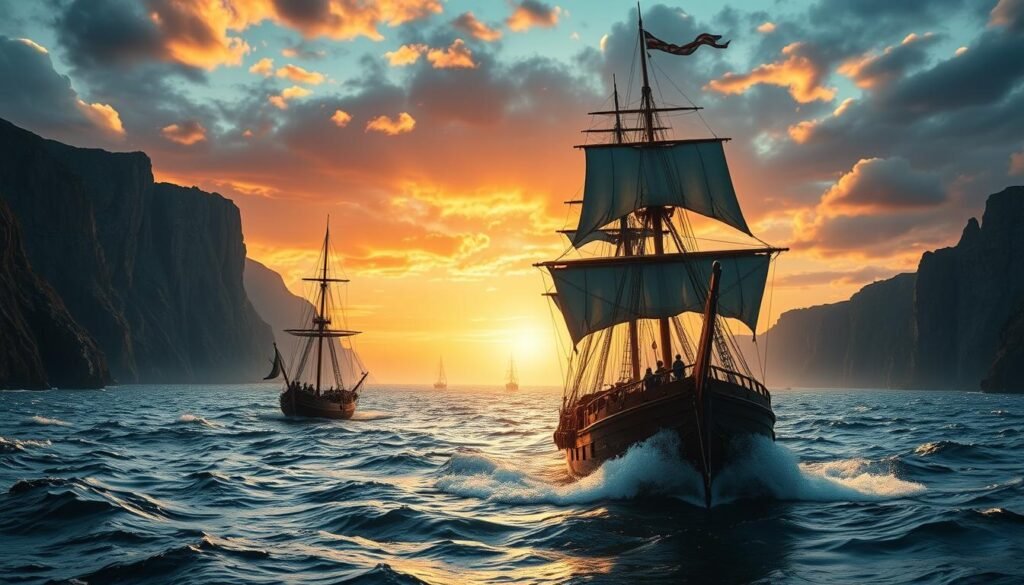
The John Cabot 1497 voyage was a key moment in maritime history. He sailed from Bristol on the Matthew ship. This journey across the Atlantic changed history.
Get ready for an exciting story from the 15th century! This journey was a major step in European exploration of North America.
The Matthew Ship
The Matthew was a remarkable ship for its time. It was about 50-70 feet long. This caravel-style ship was made for ocean exploration.
It had a few key features:
Compact and easy to maneuver
Shallow draft for coastal travel
Multiple sail setups
Strong wooden build
Crew Members
Cabot’s crew had about 18 brave sailors. They were chosen for their skill and bravery. Though we don’t know their names, they were among the best from Bristol.
Route and Navigation
Cabot used advanced navigation during the journey. He used:
Celestial navigation with stars
Compass for direction
Maritime charts
Dead reckoning
The John Cabot 1497 voyage showed amazing seamanship and navigation. It inspired future explorers.
Landing in North America
John Cabot’s New World discovery was a big deal in European history. On June 24, 1497, his ship, the Matthew, landed in North America. This was a key moment in exploring the seas.
The exact spot where Cabot landed is a mystery. Many think it could be:
Southern Labrador
Newfoundland Island
Cape Breton Island
Cabot’s journey was a big step for Europeans. His bravery and skills opened up new waters and lands for England. This expanded what Europeans knew about the New World.
Why was Cabot’s landing so important? He was one of the first Europeans to land on purpose in North America. His detailed notes helped future explorers plan their journeys.
The land Cabot found was untouched. He saw dense forests, rocky shores, and maybe even people living there. His arrival marked the start of England’s claims in the area.
Discovery of the Rich Fishing Grounds
John Cabot’s exploration found a treasure that changed fishing forever. The Grand Banks discovery was a turning point in maritime history. It opened up new fishing opportunities for European nations.
When Cabot explored North America’s coast, he found something amazing. The John Cabot fishing grounds were so rich that fishermen could catch cod easily.
The Grand Banks: A Marine Wonderland
The Grand Banks lay across a huge underwater plateau off Newfoundland’s coast. This area became famous for its:
Incredible fish population
Exceptional water temperatures
Perfect breeding conditions for marine life
Impact on European Fishing
Cabot’s discovery changed European fishing practices a lot. The fish abundance in these waters offered huge economic chances.
Region
Fish Abundance
Economic Impact
Grand Banks
Extremely High
Massive Expansion
Previous European Fishing Zones
Limited
Restricted Growth
European nations saw the fishing grounds’ huge value. Ships from Portugal, England, and France started regular trips. This marked a new era of maritime trade.
Return to England as a Hero
John Cabot returned to England in August 1497, causing a big stir. His journey was a huge win for himself and King Henry VII’s dreams of the sea. He came back to Bristol with tales of new lands and opportunities that would change everything.
The royal court was overjoyed by Cabot’s success. King Henry VII saw the big chances for money and land that Cabot found. Cabot got big rewards for his journey, including:
A royal pension of £10 per year
An additional bonus of £100
An official royal warrant granting him special privileges
Soon, Cabot was known as a hero. The Matthew, his ship, showed England’s strength at sea. People from all walks of life came to hear about his amazing finds in the Atlantic.
Cabot told of rich fishing spots and places to settle. His stories of lots of cod and other sea life got everyone excited. His trip started England’s claim to North America.
The Second Expedition of 1498
John Cabot’s second voyage was set to be an epic adventure. He was eager to return to the lands he had seen in 1497. This journey promised to explore new horizons.
In February 1498, King Henry VII gave Cabot new letters patent. This sparked excitement for the upcoming voyage. The 1498 expedition was a massive undertaking, with preparations that amazed many.
The Five Ships of Adventure
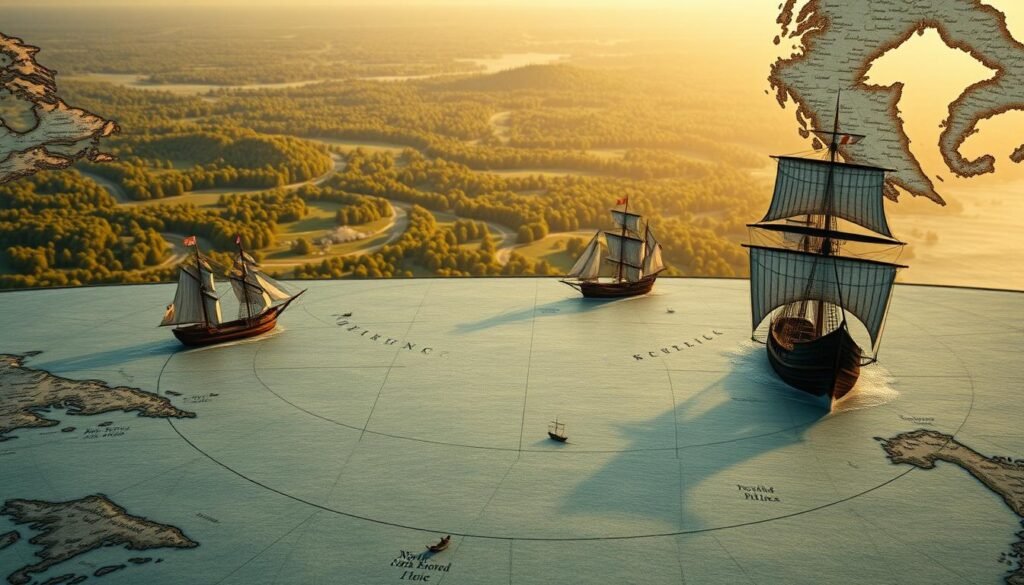
Cabot sailed from Bristol in May, leading a fleet of five impressive ships. This endeavor was backed by the king and merchant investors. They hoped to find new trade routes and territories.
Five ships prepared for the long journey
Approximately 300 brave crew members
Fully equipped for extended exploration
The Mysterious Disappearance
The 1498 expedition quickly became shrouded in mystery and speculation. What happened to Cabot and his fleet remains a mystery. It’s one of the greatest unsolved maritime mysteries in history.
Theories about the disappearance include shipwrecks and hostile encounters. No definitive evidence confirms what happened to Cabot and his crew. This voyage remains a legendary mystery.
No survivors returned to tell the tale
No official records of the expedition’s ultimate outcome
Multiple historical speculations exist
The John Cabot second voyage is a legendary maritime mystery. It continues to intrigue historians and adventure enthusiasts. The 1498 expedition is a critical moment in early North American exploration, leaving many questions unanswered.
Legacy and Historical Impact
John Cabot’s voyages changed European exploration and set the stage for British colonization. His legacy went beyond his first trips, making a big impact on North American geography.
The explorer’s journeys hit several key milestones:
He made the first European claims to North American territories
He opened strategic maritime routes across the Atlantic Ocean
He paved the way for future British colonial expansion
Cabot’s discoveries were groundbreaking. He mapped new territories and found rich fishing grounds. He showed that a faster, more direct route existed across the northern Atlantic, helping future explorers and traders.
The importance of Cabot’s work is huge. His voyages changed how Europeans saw the world, sparked a lot of maritime exploration, and helped England become a major colonial power.
Nations like England used Cabot’s detailed maps and reports for their colonization plans. His work inspired many explorers to explore beyond known areas.
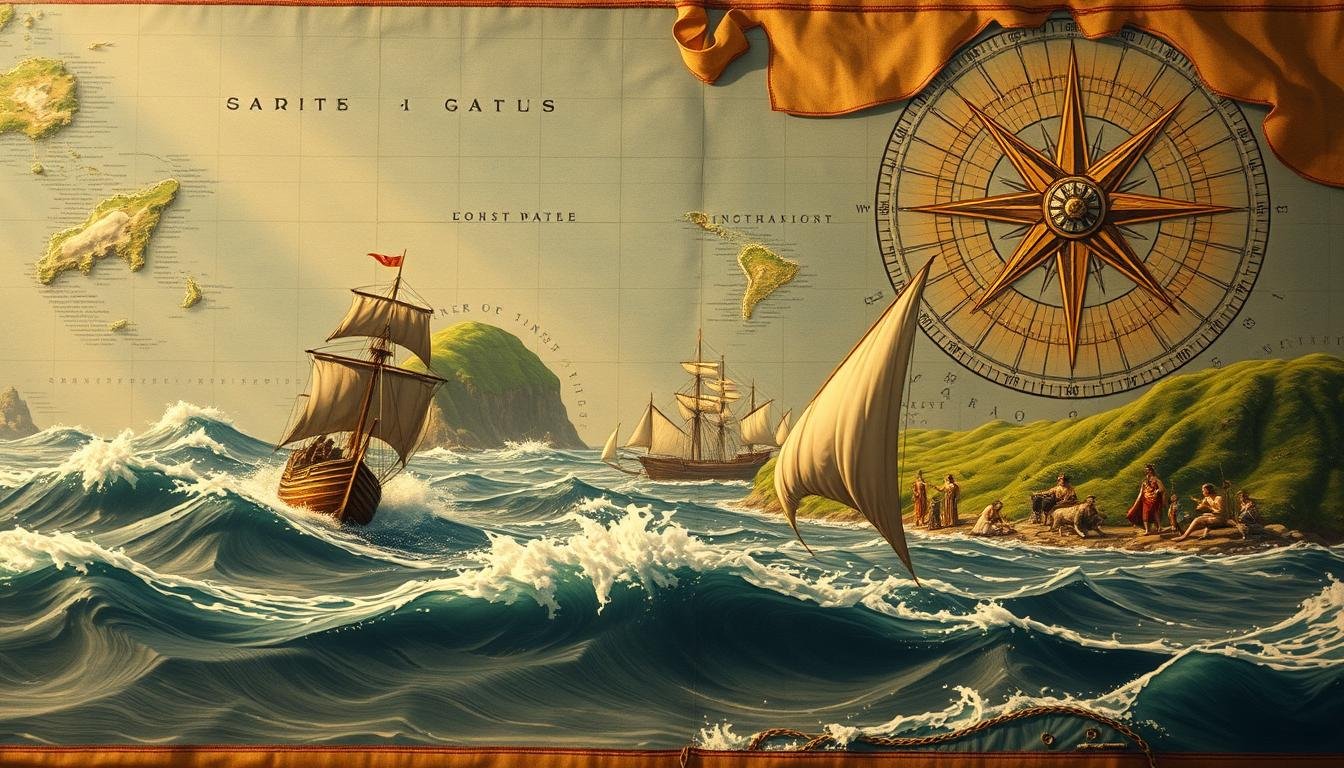
Maps and Territories Claimed
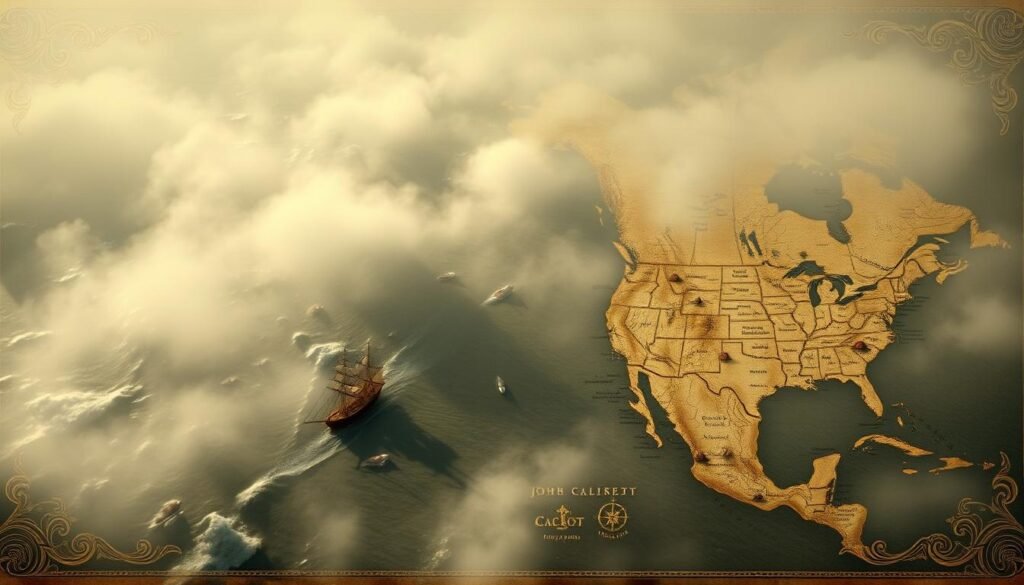
John Cabot’s expeditions were key in making the first detailed maps of North America. His journeys were a big step for English claims in the New World. This marked a major moment in exploration history.
Cabot carefully documented the lands he found, naming key places. His work helped England grasp the size of the new lands across the Atlantic.
English Claims in North America
Cabot’s explorations helped England claim a lot of land along the North American coast. He found:
Newfoundland’s eastern coast
Parts of modern-day Atlantic Canada
Potential regions in northeastern United States
Important Landmarks Named
The explorer named many important places during his trips. This left a lasting mark on maps:
Landmark Name
Location
Significance
Cape Discovery
Newfoundland Coast
First sighting point
Island of St. John
Eastern Canada
Strategic territorial marker
St. George’s Cape
Atlantic Coastline
Navigational reference point
Trinity Islands
North Atlantic Region
Archipelago documentation
England’s Cape
Northeastern Coast
Symbolic territorial claim
These names showed Cabot’s skill in navigation and England’s growing interest in the New World. His maps were vital for future explorers and plans for expansion.
Comparison with Other Explorers
John Cabot and Christopher Columbus were key figures in the Age of Exploration. They were both on a quest to find new trade routes. Yet, their journeys showed different sides of exploration.
Let’s explore the world of these two legendary explorers. We’ll look at what made them similar and different.
Exploration Aspect
John Cabot
Christopher Columbus
Sponsoring Country
England
Spain
Primary Goal
Finding Northwest Passage
Reaching Asia via Western Route
Key Discovery
Newfoundland, Canada
Caribbean Islands
Navigation Belief
Reached Northeast Asian Coast
Believed Reached Asian Mainland
Both explorers thought they had reached Asia’s northeastern coast. Spoiler alert: They were mistaken. Cabot and Columbus were actually exploring different parts of North America.
Cabot mapped the northern territories
Columbus explored the Caribbean and Central America
Both greatly expanded European knowledge of the world
Their journeys sparked endless curiosity about the unknown. Cabot’s precise navigation and Columbus’s bold spirit were key. They helped Europeans understand the world better.
Modern Discoveries About Cabot’s Voyages
Recent research on John Cabot has uncovered exciting new facts about his journeys. Archaeologists and historians are finding amazing details about his voyages. These findings are changing how we see early North American exploration.
A Spanish map from 1500 is a key discovery. It shows northern coastal areas with English names. This map proves Cabot’s big discoveries across the Atlantic.
Teams are using new tech to study Cabot’s voyages. They’re using satellite imaging and underwater exploration. These methods help them figure out Cabot’s routes and where he might have landed.
New research shows Cabot’s voyages were more complex than we thought. Archaeologists keep finding new evidence. Each find adds to the mystery of Cabot’s maritime adventures in the late 15th century.