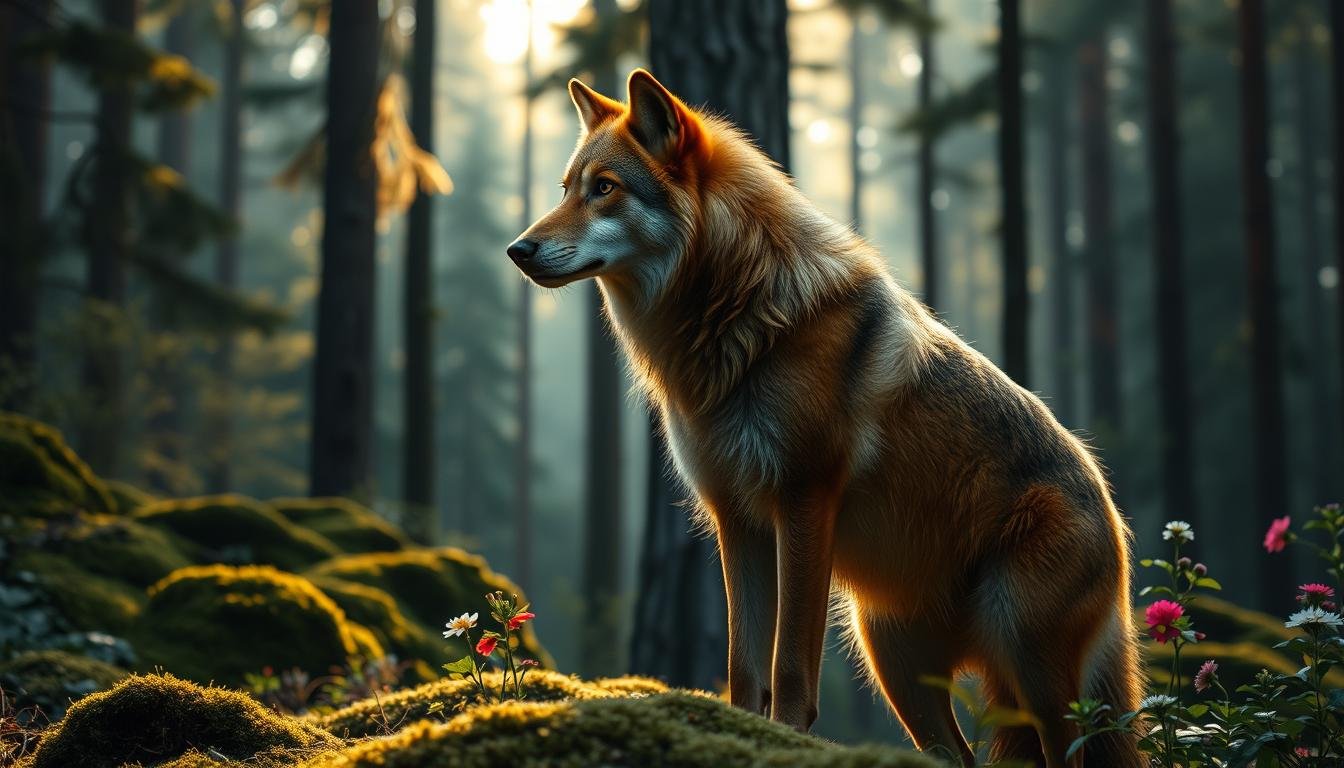
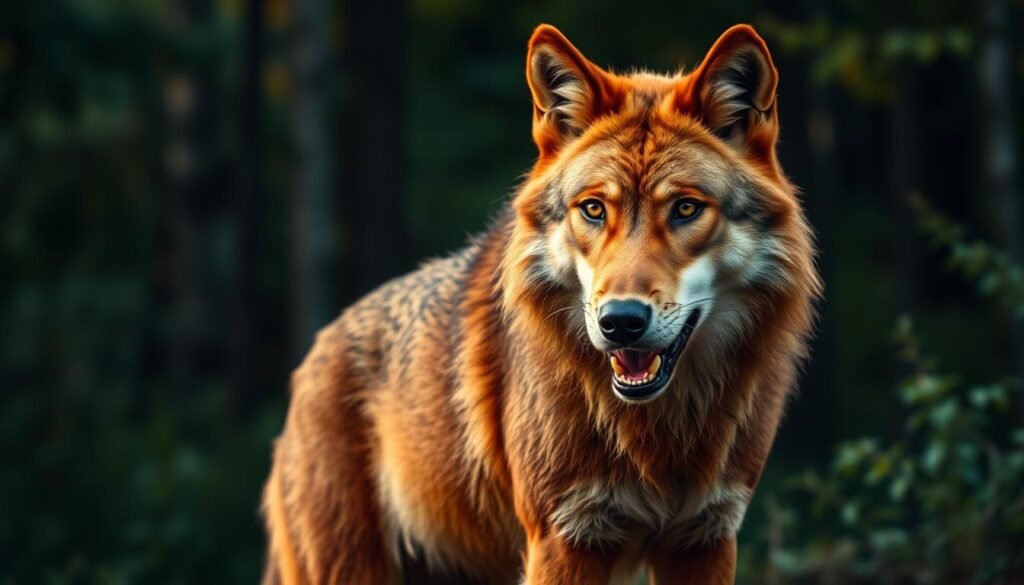
Ever heard a howl so unique it sounds like a furry opera singer warming up? Meet the red wolf—North America’s most endangered canine, rocking a cinnamon-colored coat and a comeback story wilder than your favorite superhero movie. These compact predators max out at 4 feet long (about the length of your dad’s golf bag) and weigh as much as a medium-sized dog, but don’t let their size fool you—they’re apex survivors.
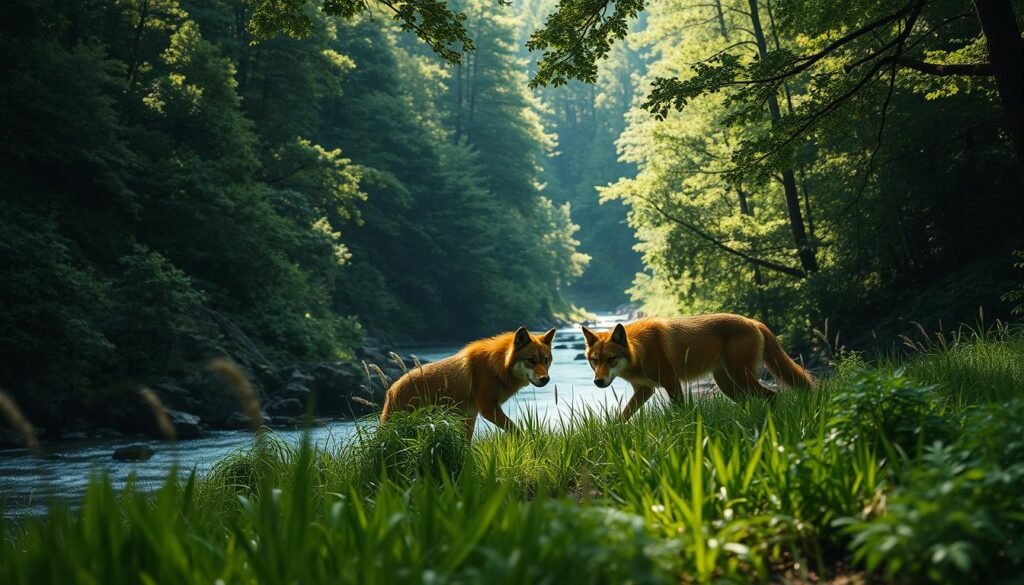
I call them “America’s wolf” because they’re found only in the southeastern United States. Imagine a mix of gray and rusty hues blending into swampy forests—like nature’s own camouflage artist. Scientists even track them with radio collars, which is basically giving wolves their own Instagram location tags. Talk about a glow-up from near extinction!
Why should you care? Well, fewer than 20 wild red wolves roamed Earth in the 1970s. Today, conservation efforts have boosted their numbers, but they’re still rarer than a quiet cafeteria. Their haunting howls—used to communicate across miles—are like secret codes in the wilderness. And guess what? They’re not just “big foxes” or “small coyotes.” This species stands alone, proving that sometimes the underdog deserves the spotlight.
Exploring Unique Red Wolf Traits That Set Them Apart
Picture a creature that’s part ninja, part family therapist—welcome to the red wolf’s world. These cinnamon-dusted canines aren’t just another pretty face in the wild. Their ear design alone deserves an award: those satellite-dish-sized ears aren’t just for hearing prey rustle leaves a mile away. They’re like built-in air conditioners, radiating heat in swampy habitats.
Distinct Physical Characteristics
Compared to gray wolves, these guys rock leaner legs—perfect for sprinting through marshes like furry track stars. Their coats? Think “autumn leaves meets espresso”—shorter fur with reddish undertones that shift in sunlight. One biologist friend jokes it’s nature’s way of saying, “This model comes in earth tones only.”
Social Behavior Tidbits
Family is everything in wolf packs. Picture a tight-knit crew where everyone has roles—alpha parents lead, teens babysit pups, and uncles teach hunting tricks. Their communication isn’t just howls: subtle ear flicks and tail wags convey messages clearer than group texts. When they hunt, it’s teamwork straight out of a heist movie—silent signals, flanking moves, shared rewards.
Fun fact: A pack’s size directly impacts survival. Smaller groups stick closer, while bigger crews split tasks like a well-oiled machine. It’s the ultimate “work smart, not hard” strategy in the animal kingdom.
red wolf facts for kids: Small Size, Big Impact
Imagine a wild canine that could curl up in your school backpack—if it weren’t busy ruling swamps. These compact predators weigh about as much as a Thanksgiving turkey (45-80 lbs) but hunt with the precision of a chess grandmaster. Their secret? Being just right—not too bulky to get stuck in thickets, not too small to take down deer.
Curious Coat Color Variations
Their fur isn’t just “red”—it’s a living art project. I’ve seen coats shift from caramel to charcoal mid-stride, like nature’s mood ring. One minute they’re cinnamon toast crunch, the next they’re espresso beans with legs. This chameleon trick helps them vanish into marshes faster than your dad’s hairline at 40.
Think you’re seeing a coyote? Check the legs. These guys have stilt-like limbs that make coyotes look like they skipped leg day. Gray wolves? They’re the SUVs of the canine world—bigger, broader, and way less nimble. Here’s a cheat sheet:
Feature
Red Wolves
Coyotes
Gray Wolves
Height
26 inches
24 inches
32 inches
Coat Texture
Short + Russet Tones
Fluffy + Grayish
Thick + Grizzled
Ear Shape
Oval Radars
Pointy Antennas
Rounded Cones
Their ears aren’t just cute—they’re biological Wi-Fi receivers. Tilted slightly forward, they catch prey whispers from half a mile away. Next time you see a German shepherd, remember: that’s basically their body double, but with way better wilderness survival skills.
Roaming Habitats and Diet: Living on the Edge
What’s better than a five-star restaurant? A whole wilderness buffet served 24/7. These canines aren’t picky eaters—they’ll hunt anywhere from soggy swamps to pine forests, proving adaptability is their superpower. Scientists track their moves using radio collars (think Fitbits for wolves), revealing just how versatile their habitat choices really are.
Varied Habitat Types
Forget cookie-cutter homes—these animals crash in nature’s version of luxury suites. Bottomland forests? Check. Coastal marshes? Double-check. They’ve even been spotted in agricultural areas, like furry commuters blending into rural United States landscapes. Their long legs help them wade through wetlands faster than you’d say “muddy paws.”
Prey Preferences
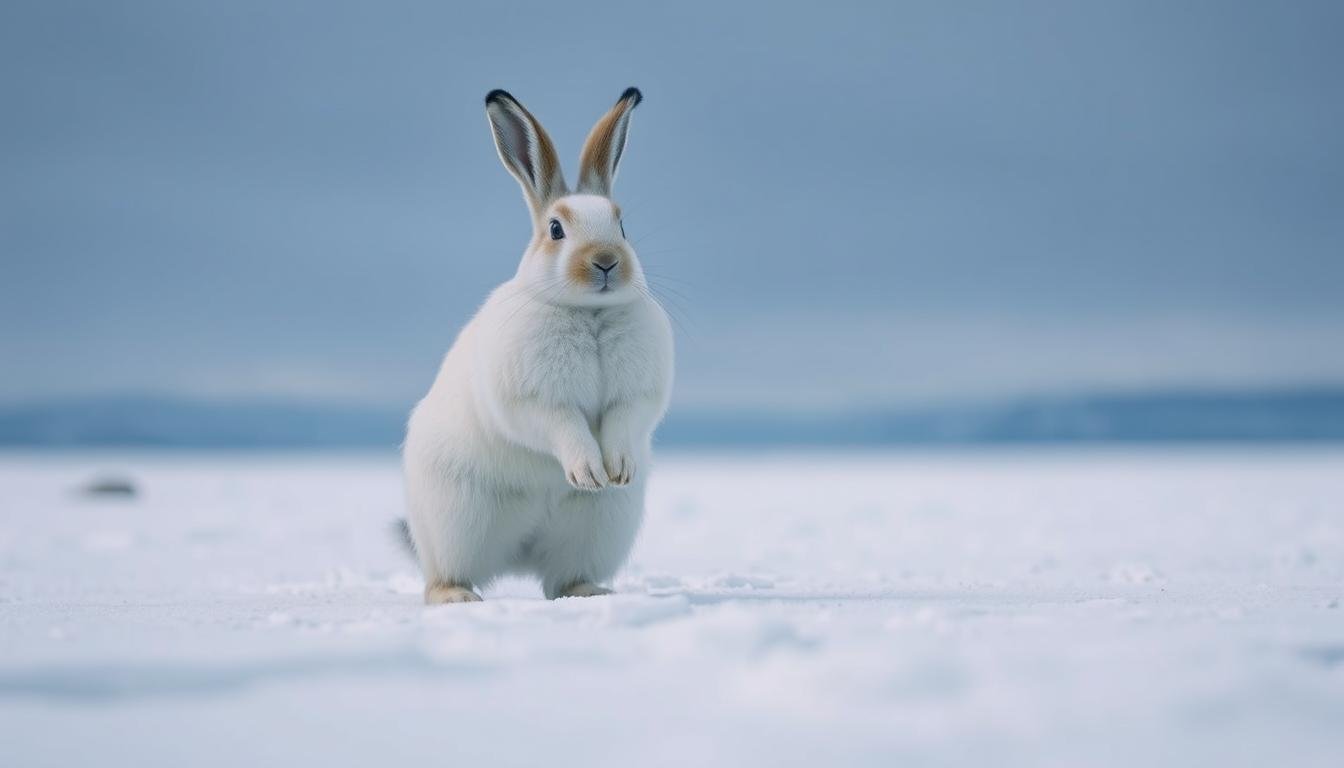
Imagine a chef’s menu: rabbits as the daily special, raccoons as appetizers, and deer as the occasional surf-and-turf. Small mammals make up 90% of their diet, but they’ll scavenge leftovers like nature’s cleanup crew. Bonus points: they eat 2-5 pounds of food daily—about the weight of your math textbook.
Foraging and Food Intake
Dinner time isn’t casual here. Packs coordinate hunts with military precision, using terrain to ambush prey. Need energy? A single deer can fuel a wolf for days. But when snacks are scarce, they’ll chow down on rodents—proving survival isn’t about being fancy, just resourceful.
Family Bonds and Pack Dynamics in Red Wolves
What if I told you wolf families have better teamwork than most sports teams? Meet the ultimate crew—alpha parents lead like seasoned coaches, yearlings play assistant roles, and pups soak up life lessons like sponges. Their family units operate like a well-rehearsed playbook, where every move matters.
Pup Rearing and Pack Roles
Here’s how it works: The alpha pair calls the shots, but everyone chips in. Older siblings babysit while parents hunt, teaching pups to stalk insects before graduating to deer. Imagine your big brother showing you how to ride a bike—but with more howling and fewer training wheels.
Role
Responsibilities
Alpha Pair
Lead hunts, choose den sites, discipline pups
Older Siblings
Guard dens, share food, play “tag” with pups
Yearlings
Scout territory, practice hunting moves
Pups
Learn survival skills, test boundaries
I’ve watched packs where 8-month-old “teens” carry meat back to younger siblings—like furry Uber Eats drivers. Their cooperation isn’t just cute; it’s evolution’s cheat code for survival. Dens in hollow trees become nurseries where pups master pouncing through trial and error.
Sound familiar? Swap howls for text messages, and it’s not so different from human families. These red wolves prove that sticking together isn’t just heartwarming—it’s how their species claws back from the brink.
Conservation Challenges and Breeding Programs in Modern Times
Imagine a species clawing back from near-oblivion through science and sheer grit. That’s the red wolf’s reality. Declared extinct in the wild by 1980, these animals owe their second chance to captive breeding programs that started with just 14 survivors. Today, over 240 live in protected areas and zoos—a comeback story written in DNA and determination.
Captive Breeding Success Stories
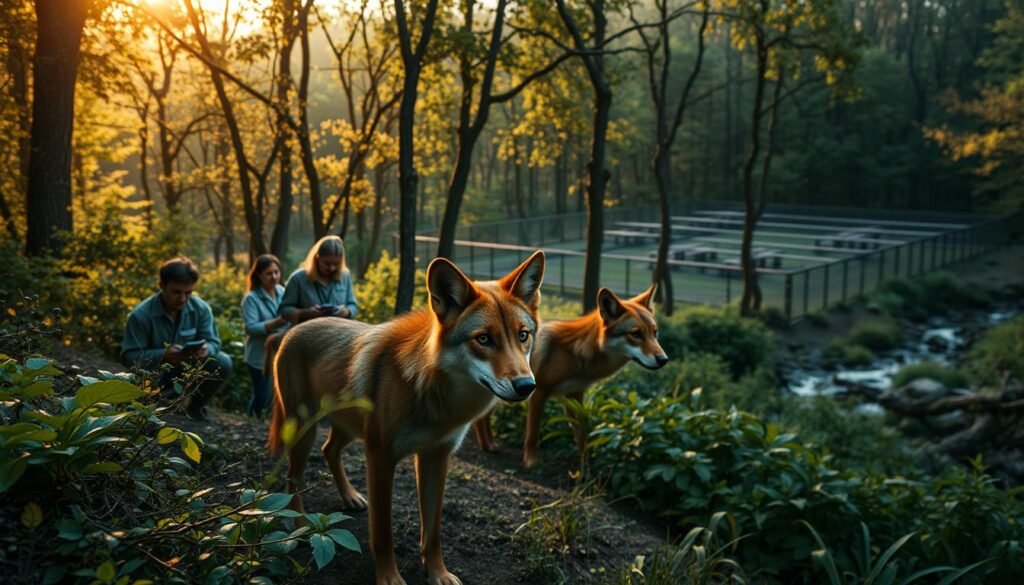
Take the Point Defiance Zoo’s breeding pair, Luna and Jasper. Their pups became the first reintroduced to North Carolina’s Alligator River refuge in 2021. Zoos now use genetic matchmaking to pair wolves like puzzle pieces, ensuring healthy diversity. The result? Wild-born litters now outnumber captive-born pups in recovery zones—a milestone that had biologists high-fiving.
Modern Tracking Innovations
Bright orange GPS collars do double duty: they ping locations to researchers and act as neon signs for drivers. I’ve watched teams use real-time data to reroute wolves from highways, saving lives with tech sharper than a hound’s nose. Check how old and new methods stack up:
Method
1980s Approach
2020s Tech
Tracking
Radio collars (1-mile range)
Satellite GPS (global)
Data Collection
Monthly check-ins
Live movement maps
Community Alerts
Newspaper ads
Text alerts to landowners
Farmers once saw wolves as threats. Now, workshops teach coexistence—like using guard dogs instead of bullets. Last year, a landowner spotted a collared wolf near chickens and called biologists instead of grabbing a gun. Progress, one conversation at a time.
Historically Speaking: Red Wolves versus Human Conflict
What do you call a predator that outsmarted extinction? The red wolf—barely. For centuries, these canines faced habitat loss so severe it turned forests into ghost towns. Settlers saw them as livestock thieves, triggering a war where bullets outnumbered howls.
By the 1920s, predator-control programs turned systematic. Trappers earned bounties for every pelt—like a twisted game show where survival meant elimination. Swamps dried up for farms, pushing the species into shrinking pockets of the southeastern united. By 1967, only 14 purebreds remained—fewer than students in a minivan.
Threat
Primary Causes
Impact
Habitat Loss
Deforestation, urbanization
90% range reduction
Direct Conflict
Bounties, poisoning
Declared extinct wild (1980)
Competition
Coyotes, gray wolves
Genetic dilution
Here’s the kicker: people didn’t just erase their homes—they blurred their identity. Interbreeding with coyotes created hybrids, making purebloods rarer than honest parking meters. When biologists finally intervened, they faced a puzzle: rebuild a critically endangered species from genetic scraps.
Enter the breeding program era. Like Noah’s Ark with DNA tests, scientists paired survivors to resurrect bloodlines. Today’s wild packs? They’re descendants of those last 14—proof that even declared extinct doesn’t mean game over. But highways still slice through territories, reminding us: coexistence remains a work in progress.
Wild Encounters: Red Wolf Reintroduction and Life in the Forest
How do you reboot an entire species? Let me walk you through North Carolina’s real-life wildlife revival project. Since 1987, biologists have been releasing captive-born canines into Alligator River National Wildlife Refuge—a swampy paradise roughly the size of 250 Disney Worlds stacked together.
Here’s the playbook: First, pick a protected area with minimal roads and plenty of deer. Next, release 14 radio-collared animals. Then? Wait for magic. Today, about 20 roam free here, with another 230 in breeding centers. That’s like restarting a video game level with better power-ups each time.
Locals now spot them trotting through soybean fields at dawn—proof that endangered species can adapt when given space. GPS collars ping locations every 15 minutes, creating digital breadcrumb trails for researchers. Farmers get text alerts when packs wander near livestock, turning potential conflicts into teachable moments.
Year
Milestone
Impact
1987
First 4 pairs released
Established initial territory
2002
Peak wild population (130+)
Proved breeding success
2023
24 collared individuals
Enhanced tracking accuracy
These animals aren’t just surviving—they’re rewriting survival rules. Last fall, a den with six pups was found in a drainage ditch, showing their knack for unconventional real estate. Biologists high-fived over trail cam footage of the family hunting raccoons—nature’s version of a grocery run.
Want to help? Support programs that protect southeastern habitats. Every restored acre gives these rare canines room to howl, hunt, and remind us that wild spaces matter. Who knew swamps could host such epic comebacks?
Looking Ahead: Future Paths for the Red Wolf …
What if saving a species meant thinking like the animal itself? Decades of breeding breakthroughs have given these canines a fighting chance, but the next chapter demands sharper tools. I’m betting on habitat corridors—wildlife highways connecting swamps to forests—to let packs expand beyond current recovery zones.
Survival hinges on details most miss. Tracking rabbit populations matters as much as counting wolves. A single deer provides 50 pounds of meat—enough to fuel a pack for days. But when raccoons outnumber prey? Biologists adjust feeding grounds like chefs tweaking recipes.
Here’s the kicker: Even a 10% size difference in pups could determine who thrives in shrinking habitats. Future conservation plans might include “mini reserves” tailored for smaller-bodied wolves. Imagine pocket-sized forests where every hollow log becomes prime real estate.
We’ve already rewritten extinction’s script. Now it’s about refining the story—using GPS collars to map ideal den sites or tweaking breeding pairs based on paw size. The wild red’s legacy? It’s still being drafted, one howl at a time. Could your backyard someday echo with their calls? Stranger things have happened.