Ever met someone who reinvented art before turning 30? Meet the guy who painted blue when others used rainbows, then shattered reality with shapes. Born in 1881 in Málaga, Spain, this creative tornado didn’t just make paintings—he blew up the rulebook.
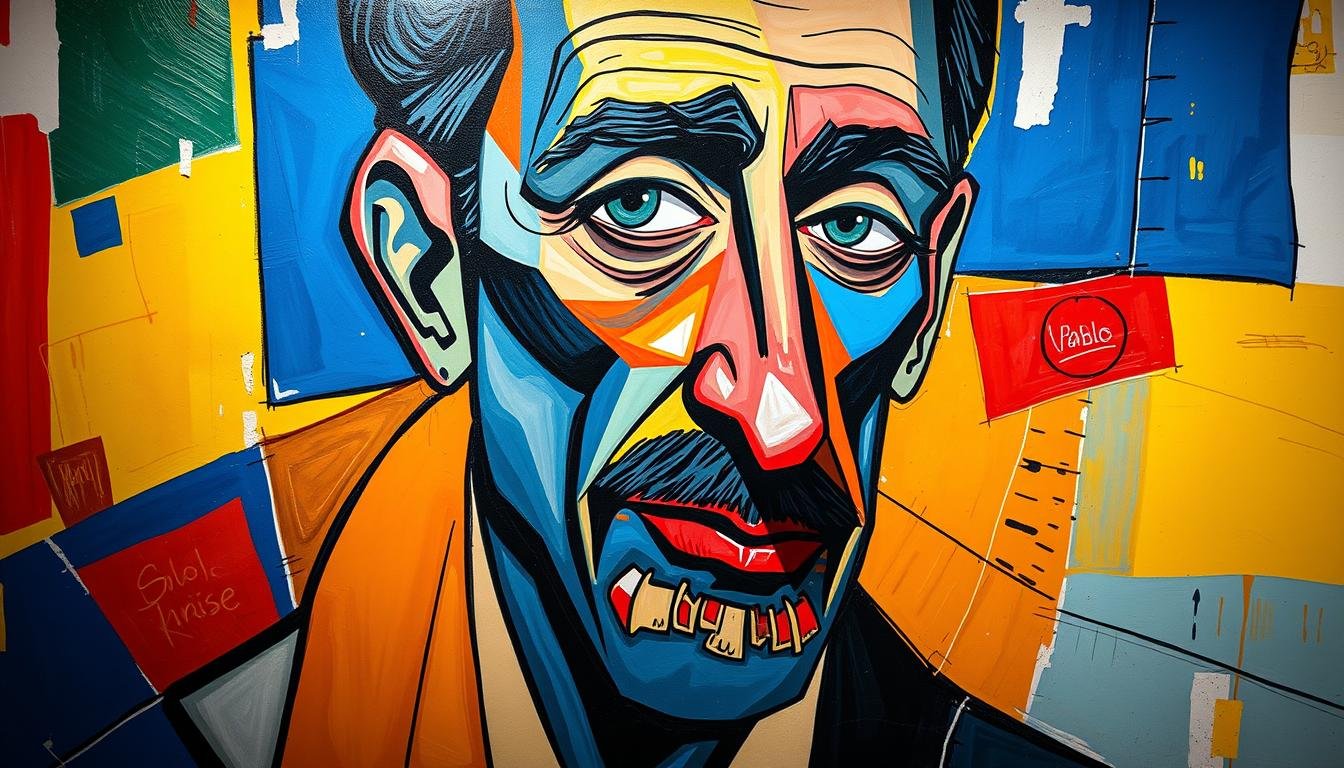
Think “weird” is a modern invention? Nope. By 1907, he’d already created Cubism—a style that made faces look like smashed puzzles. His work Les Demoiselles d’Avignon wasn’t just a painting; it was a declaration of war on boring art.
Here’s the kicker: he produced over 50,000 artworks in his lifetime. That’s roughly two pieces every day for 70 years. But this wasn’t just about quantity. He co-founded movements, sculpted like a mad scientist, and even designed costumes for ballet.
Why should you care? Because his wild experiments prove creativity isn’t about following instructions—it’s about burning them. Stick around, and I’ll show you how a kid from Spain became the ultimate art rebel.
Early Inspirations and Bold Beginnings
Imagine a seven-year-old outpainting his art teacher—that’s where our story begins. The man who’d later redefine creativity started with strict pencil drills and oil paint fumes swirling through his childhood home.
Brushstrokes Before Breakfast
His father, José Ruiz Blasco, wasn’t just any painter. This guy taught at art schools and painted doves so realistically, locals thought they might fly off the canvas. But here’s the twist: by age 13, young Pablo was finishing his dad’s unfinished sketches. Talk about family teamwork!
Ever seen a kid correct his teacher’s anatomy drawings? That was our boy in school. While others copied dusty plaster casts, he’d sneak in bullfight scenes between math problems. His notebooks? Filled with galloping horses that looked alive enough to neigh.
Name Game, Legacy Flame
Let’s unpack that mouthful of a name: Pablo Diego José Francisco de Paula Juan Nepomuceno María de los Remedios Cipriano de la Santísima Trinidad Ruiz y Picasso. Buried in those 23 words? A family’s artistic DNA—and the spark of someone destined to outgrow tradition.
Traditional Art Training
Young Picasso’s Approach
Precise anatomy studies
Distorted bull legs for drama
Still life compositions
Street scenes with emotional punch
Oil paints on canvas
Charcoal on whatever paper was handy
By 15, he’d mastered realism better than most artists twice his age. But here’s what teachers missed: those perfectly shaded oranges? Just target practice for the rule-breaking ahead.
Picasso’s Transformative School Years
What happens when a teen genius crashes Spain’s top art academy? At 16, the young prodigy aced Madrid’s Royal Academy of Fine Arts entrance exam in one day—a test others took months to prepare for. Teachers gasped at his anatomical sketches, but rigid classes soon clashed with his restless creativity.
Madrid’s Real Academia Experience
Picture this: classrooms filled with plaster casts for copying, while our rebel sneaks off to the Prado Museum. Instead of mimicking Greek statues, he studied Velázquez’s bold brushwork. “Why paint what’s there,” he’d argue with classmates, “when you can show how it feels?”
Barcelona: Sketches in Transition
Returning to Barcelona at 17, he found his tribe. The Quatre Gats café buzzed with avant-garde poets and painters who’d shape modern art. Here, friend Carlos Casagemas introduced him to Parisian trends—fueling experiments that twisted reality into something wilder.
Madrid’s Rules
Barcelona’s Freedom
Classical figure drawing
Street-inspired sketches
Formal oil techniques
Mixed-media experiments
Teacher-led critiques
Late-night art debates
By 19, he’d mastered every traditional skill—then set fire to the rulebook. Those school years weren’t just about learning painting; they were bootcamp for becoming art’s ultimate disruptor.
Pablo Picasso Facts for Kids: His Colorful Periods Unveiled
Ever wonder why an artist’s palette shifts like mood rings? Let’s crack open two game-changing phases where color became emotion—no words needed.
Blue Period: Moody Moods and Heartache
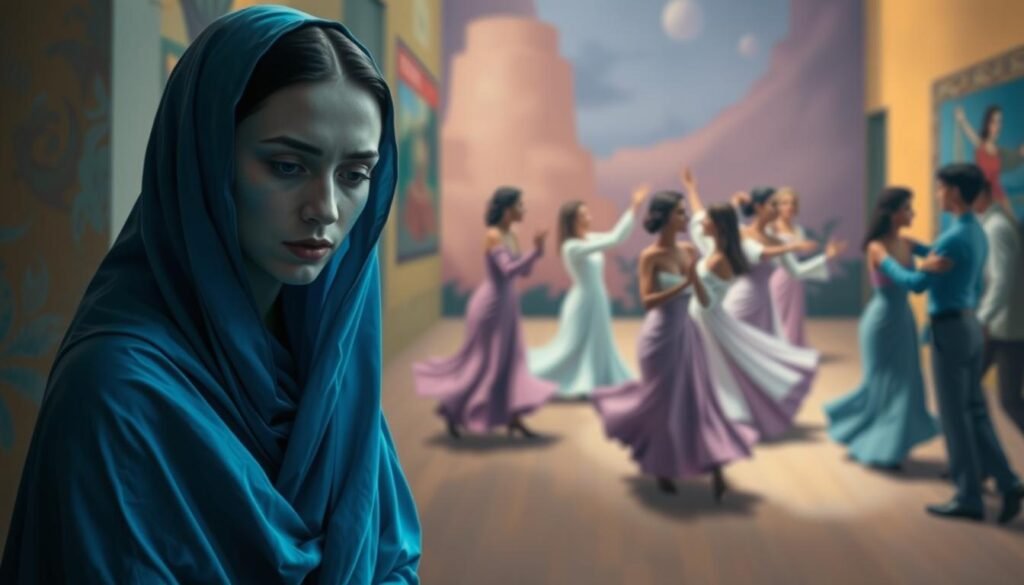
Between 1901-1904, the world turned cerulean for our artist. Picture this: he’s broke, grieving a friend’s death, and painting figures so gaunt they’d make skeletons look chubby. The Old Guitarist? That bony musician isn’t just strumming strings—he’s playing the blues literally.
Why blue? It wasn’t just about sadness. The monochrome scheme stripped away distractions, forcing viewers to feel poverty and isolation. Think of it as painting’s first sad playlist—all slow jams, no bangers.
Rose Period: Circus Vibes and Warm Hues
By 1905, his palette did a 180—like swapping storm clouds for carnival confetti. Enter pinks, oranges, and acrobats! Family of Saltimbanques shows tumblers in dusty rose outfits, their loneliness hidden under whimsy.
What sparked the shift? New love, Parisian nightlife, and a fascination with circus performers. Those harlequins weren’t just subjects—they symbolized artists as societal outsiders. Suddenly, rose period canvases felt like backstage passes to a poetic carnival.
Blue Period (1901-1904)
Rose Period (1904-1906)
Monochrome blues/greens
Warm pinks/reds
Beggars, prisoners
Acrobats, harlequins
Emotional isolation
Masked melancholy
Shattering Norms with Cubism and Collage
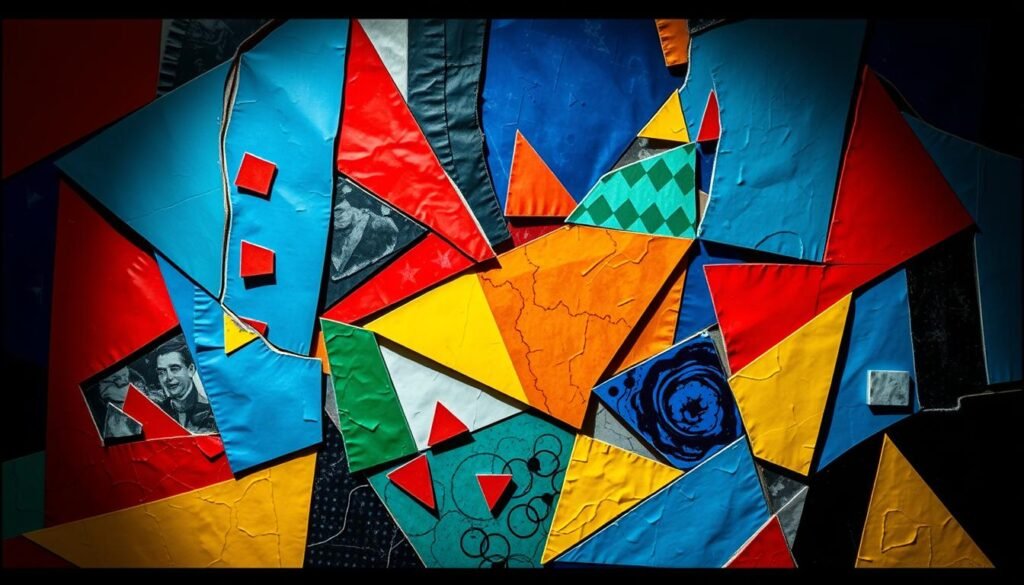
What if I told you art got demolished and rebuilt between 1907-1914? Grab your mental hard hats—we’re entering the construction zone where reality got smashed into angles and glue became art supplies.
Analytic Cubism: Breaking Shapes Apart
Step 1: Find object (guitar? Sure). Step 2: Imagine viewing it through a kaleidoscope while spinning. That’s how Georges Braque and our artist dissected reality. Their secret? Painting multiple perspectives simultaneously. Think of Ma Jolie—not a portrait, but a visual autopsy where planes intersect like drunken geometry.
Synthetic Cubism: Collage and Unexpected Forms
By 1912, scissors entered the art toolkit. Why paint wood grain when you can glue actual newspaper? Enter ruiz picasso—the name blending his father’s traditional roots with explosive innovation. His Still Life with Chair Caning used oilcloth and rope to mock the idea that “real” art needs fancy materials.
Analytic Cubism (1907-1912)
Synthetic Cubism (1912-1914)
Monochrome palette
Bold colors reintroduced
Fractured perspectives
Collaged textures
Oil paint only
Sand, newspaper, even hair
Here’s the kicker: Braque once glued a fake wood panel to his work. When critics called it “cheating,” he grinned: “Art’s not a recipe—it’s a revolution.” Suddenly, modern art wasn’t just about brushstrokes—it was about rewriting the rules with whatever stuck to the canvas.
Explosive Career Moves in Tumultuous Times
What happens when an artist’s studio becomes a war zone? The 20th century’s chaos didn’t slow our rebel—it supercharged his output. Bombs fell, dictators rose, and he kept redefining what art could do.
Guernica and Art as a Bold Statement
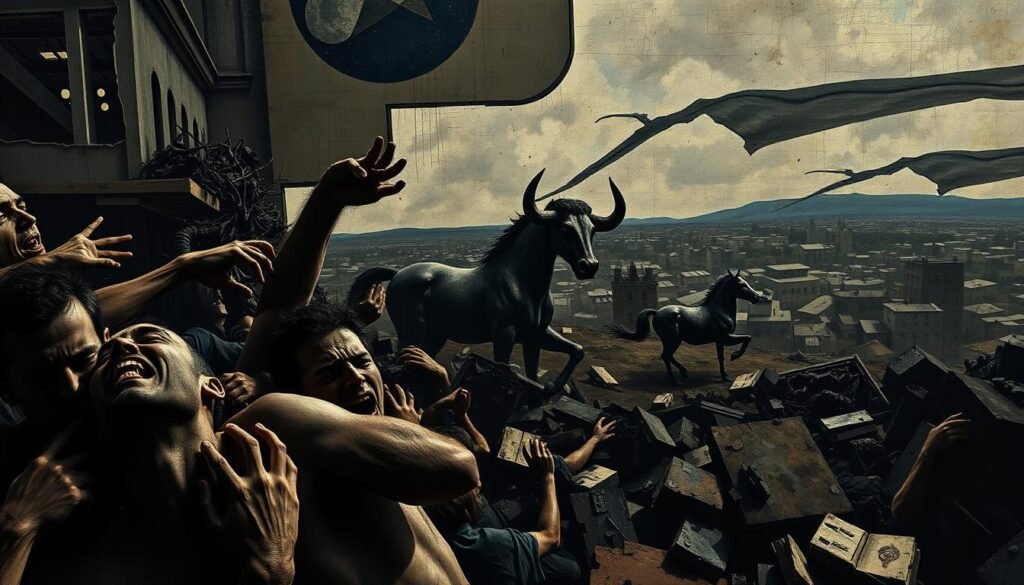
April 1937: Nazi planes reduced a Spanish town to rubble. The artist responded with an 11-foot-wide scream on canvas. Guernica wasn’t just a painting—it was a visual air raid siren. Those twisted horses and shattered lightbulbs? Each element shouted the horrors of civil war louder than any speech.
Here’s the kicker: he completed it in 35 days for the Paris World’s Fair. No color—just black, white, and gray to mirror newspaper photos. Critics called it messy. Historians now see it as the 20th century’s most powerful anti-war work.
War-Time Creativity Without Limits
When WWII trapped him in Paris, he turned his attic into a rebellion factory. Sculpted with stolen bronze. Painted by candlelight. Even his death-themed works crackled with dark humor—skulls grinning like they knew Hitler would lose.
Occupiers once demanded he stop working. His reply? “I haven’t been told to stop breathing.” By 1945, he’d created over 100 pieces that mocked tyranny through coded symbols. Bullfighting imagery became resistance propaganda. A simple candle? A beacon of hope.
Personal Life, Passion, and Unconventional Choices
Behind every rule-breaking masterpiece stood a man whose private life was messier than a paint-splattered studio floor. His mother once told him, “If you become a soldier, be a general. If a monk, be the pope.” He chose neither—but that fierce ambition shaped both his art and chaotic relationships.
Romantic Twists and Family Dramas
Married twice. Seven kids. Countless muses. His love affairs read like a telenovela script. Take Olga Khokhlova—a ballet dancer who inspired soft portraits, until their marriage crumbled into jagged Cubist screams. Or Dora Maar, the photographer who captured his Guernica process while battling depression he later painted.
His father’s rigid teachings backfired spectacularly. Instead of orderly family life, he collected ex-lovers like paintbrushes. Daughter Paloma? Born during a bitter custody fight. Son Paulo? Drawn as a melancholy clown. Every heartbreak became fuel: “It takes a long time to become young,” he’d joke, swapping stability for creative sparks.
Political Pivots and Unfiltered Acts
In 1944, he dropped a bombshell article declaring membership in France’s Communist Party. Critics gasped. “I stand with life against death,” he fired back. When Stalin died, he sketched the dictator as a harmless giant—triggering outrage from both sides.
A friend once dared him to paint politically. The result? Posters for peace congresses and dove symbols that flew worldwide. Yet he refused to play the hero: “I’m a painter first… Communism? Just my bullfight against fascism.” Even his politics were Cubist—all angles, no easy answers.
Intriguing Tidbits: Quirky, Unusual Picasso Facts
Let’s peel back the curtain on the man who turned his identity into performance art. What if I told you his birth certificate reads like a Shakespearean monologue?
Mind-Blowing Name Origins and Odd Anecdotes
His baptismal scroll wasn’t just a name—it was a prophecy. Feast your eyes: Pablo Diego José Francisco de Paula Juan Nepomuceno María de los Remedios Cipriano de la Santísima Trinidad Ruiz y Picasso. Let’s decode this:
Diego José Francisco: A trio honoring saints and his art-teacher dad
María de los Remedios: “Mary of the Remedies” for divine protection
Santísima Trinidad: The Holy Trinity—because one god wasn’t enough
Here’s the kicker: his first word wasn’t “mama.” It was “piz”—baby talk for lápiz (Spanish for pencil). Even as a toddler, he knew his tools.
Typical 1880s Names
His Name
3-5 words
23-word masterpiece
Family surnames
Mashup of saints + parents’ names
Predictable
Unapologetically extra
That Paula Juan Nepomuceno section? Pure drama. Juan Nepomuceno was a martyred priest who refused to spill royal secrets. Coincidence that our artist later guarded his creative process like Fort Knox? I think not.
Even his signature rebelled. He dropped his father’s “Ruiz” surname early, letting Picasso—his mom’s maiden name—steal the spotlight. A tiny act of rebellion that foreshadowed his entire career.
Art’s Everlasting Echo: Parting Thoughts on Picasso’s Legacy
What if one man’s brushstrokes could rewrite history? Seventy years after his death, auction houses still tremble when his works hit the block. A 1932 portrait sold for $179 million—enough to buy 25,000 years of art supplies. Yet 1,100+ stolen pieces remain missing, ghostly reminders of his global grip on culture.
Think modern art’s chaotic? Thank his style explosions. From fractured Cubist guitars to weeping Blue Period mothers, his 50,000+ creations broke more rules than traffic laws. Graffiti artists swipe his angles. Designers mimic his collages. Even memes echo his knack for remixing reality.
Here’s the kicker: his words outlived him too. “Art washes away life’s dust,” he claimed—a quote now plastered on studio walls worldwide. Yet the real magic? How his paintings still work like time machines. One glance at Guernica, and 1937’s bombs feel current.
So where does this leave us? Staring at a canvas splashed with questions. Museums overflow with imitators. Auction gavels keep pounding. And somewhere, a kid sketches a wonky guitar, unaware they’re continuing a revolution started by… well, you know who.