These polka-dotted superheroes aren’t just backyard eye candy – they’re agricultural assassins saving crops from annihilation. Lady beetles (their less cuddly official name) devour aphids like kids inhale candy, preventing billions in farm losses yearly. Want proof? One beetle can eat 5,000 pests in its lifetime. That’s some serious bug brawn.
Farmers don’t rely on luck – though those red-and-black shells do scream “back off!” to predators. Their color variations aren’t fashion statements: orange beetles tolerate cold better, while extra spots sometimes mean older insects. I’ve watched them weather winters by squeezing into tree bark crevices like tiny, six-legged survivalists.
Here’s the wild part – their wings aren’t just for show. Those delicate-looking flaps snap open like switchblades, letting them dart between plants faster than you can say “aphid buffet.” Next time you spot one, check how it folds its wings like origami under that spotted shell. Nature’s engineering at its finest.
Still think they’re just cute garden decor? Tell that to the soybean farmer whose fields they’ve protected. These beetles mean business – and they’ve got the pest body count to prove it.
Vivid Traits and Remarkable Defenses
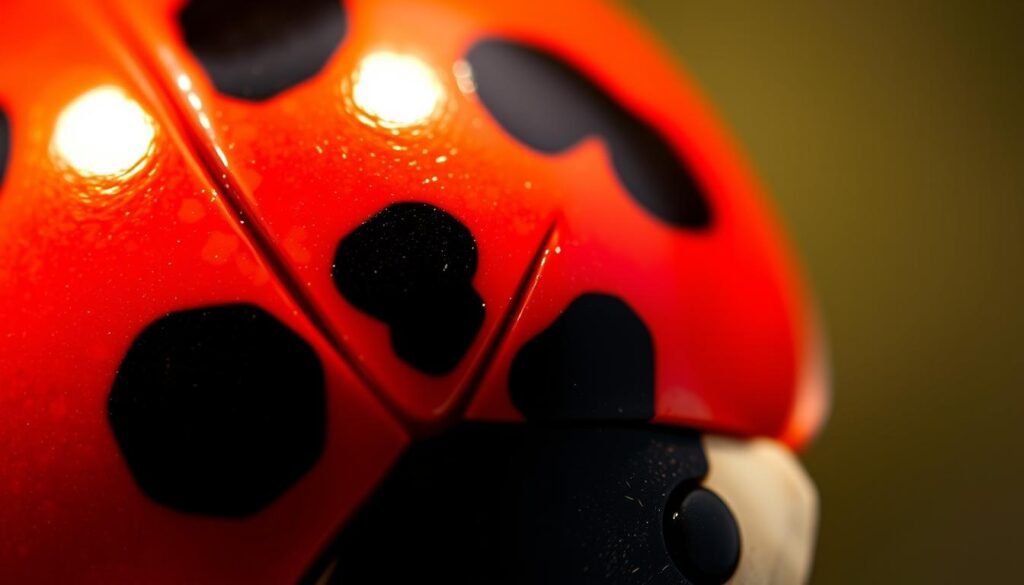
Nature’s color palette isn’t just pretty – it’s a survival cheat code. These beetles rock bright reds and oranges like nature’s own “danger zone” signage. I once watched a sparrow recoil mid-dive after spotting that flashy shell. That’s biological branding at work.
Bright Markings that Warn Predators
Think of their colors as a universal “don’t eat me” label. Specific species crank up the contrast – seven-spotted varieties look like flying stop signs to birds. Even their patterns matter: more spots often mean stronger chemical defenses. It’s evolution’s version of “read the fine print before biting.”
Orange-shelled beetles? They’re the winter warriors. Their darker pigments absorb sunlight better during cold months. I’ve seen them sunbathing on frosty leaves like tiny solar panels.
Clever Chemical Defenses in Action
When colors fail, they break out the stink bombs. Those knee-looking joints? Secret factories for nasty yellow goo. One whiff makes predators gag – I’ve smelled it while handling them. Imagine kombucha mixed with burnt hair.
This defense isn’t just gross – it’s strategic. The fluid sticks to attackers’ mouths, teaching them to avoid similar bugs. Farmers love this free pest control. Birds? Not so much. Next time you see one, watch how it tucks its legs – that’s survival mode activated.
Ladybug Facts for Kids: Impact on Crop Fields
Forget scarecrows – farmers’ real field heroes wear polka dots. These spotted mercenaries work graveyard shifts munching through soft-bodied pests that threaten our food supply. I’ve watched soybean fields transform from aphid-apocalypses to thriving ecosystems within weeks when these beetles arrive.
Think of them as nature’s pest control SWAT team. A single beetle can vacuum up 50 aphids daily – that’s like you eating 600 hot dogs in a day. Their larvae? Even hungrier. These spiky mini-monsters devour pests while farmers sleep, saving crops without pesticides.
Check this out:
Life Stage
Aphids Per Day
Total Impact
Larvae
60+
1,200+ before pupating
Adult
40-50
5,000+ lifetime
Egg to Adult
Saves 1/8 acre of crops*
California citrus growers release millions annually to combat scale insects. One vineyard owner told me, “They’re better than any spray – and work for free.” When aphid armies invade, these beetles deploy faster than superhero sidekicks.
Kids digging into strawberries? Thank the beetles’ larvae that protected those plants. Their appetite’s so legendary, some species get air-dropped onto infested fields via crop dusters. Now that’s bug-level dedication to pest control.
The Beetle Blueprint: Life Cycle and Adaptations
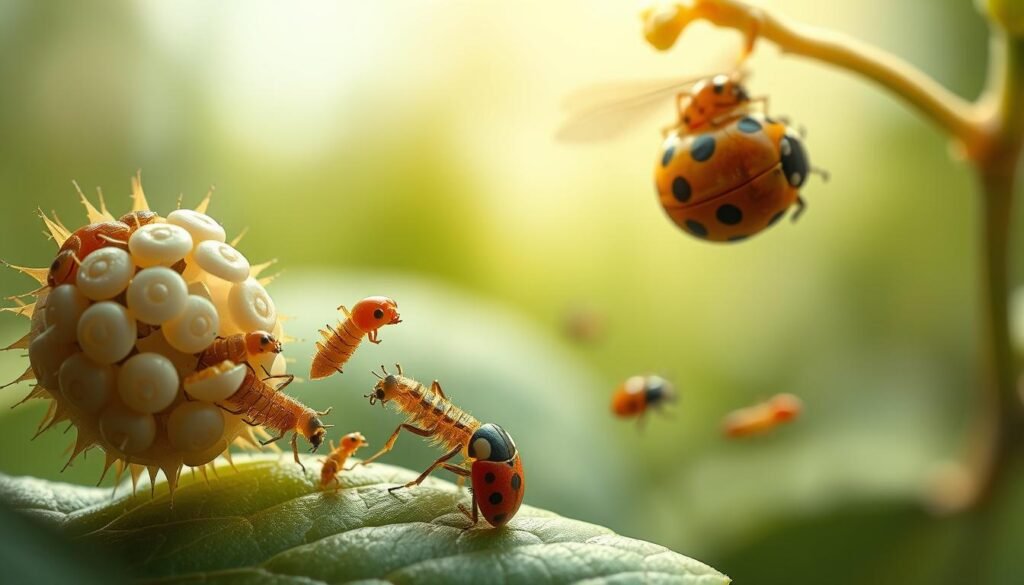
Hidden beneath leaves, a dramatic metamorphosis unfolds—here’s how ladybirds level up their bug game. Picture this: I’m flipping over a milkweed leaf last spring when I spot a cluster of yellow pins clinging to the underside. Ladybird eggs—nature’s tiny time capsules. What happens next is wilder than any sci-fi flick.
Eggs, Larvae, and the Pupa Process
Those rice-grain-sized eggs hatch in 3-5 days, revealing spiky “alligator babies” with legs built for destruction. I’ve watched larvae demolish aphid colonies while molting four times—each shed skin looks like a mini horror movie prop.
After two weeks of nonstop eating, they glue themselves to plants using sticky silk. The pupa stage? Pure alchemy. That jade-colored capsule transforms into a spotted beetle in 7 days flat. Last summer, I found one mid-metamorphosis—its wings unfolding like crinkled origami.
Stage
Duration
Survival Hack
Egg
3-5 days
Hidden under leaves
Larva
2 weeks
Eats 60+ pests daily
Pupa
1 week
Camouflaged as plant debris
Adult
1-3 years
Hibernates in colonies
Winter Hideouts and Habitat Huddles
When temperatures drop, these cold-blooded survivors become master squatters. I’ve peeled back bark to find 50+ beetles huddled like six-legged sardines. Their antifreeze-like blood lets them freeze solid and thaw unharmed—a trick I wish my car had last winter.
Prime real estate? Rotting logs, rock piles, even your garden shed’s cracks. Last December, I discovered a ladybird condo behind my garage—hundreds tucked between weathered boards. They’ll stay put until spring, proving even tiny animals know the value of good insulation.
Parting Thoughts on These Tiny Agricultural Heroes
Next time a red-and-black beetle lands on your arm, remember: you’re meeting nature’s pest control MVP. Those vibrant spots aren’t just decoration—they’re a survival billboard advertising “bad taste ahead” to hungry birds. I once watched a chickadee spit out a ladybug faster than a toddler rejects broccoli.
Farmers have banked on these bugs for years because they deliver results. A single colony can protect an acre of crops from aphids—no chemicals needed. Last summer, I found their larvae cleaning up my kale plants like tiny green janitors.
What’s wild? These animals spark curiosity at any age. Point out a ladybug on a leaf to a kid, and you’ve got a gateway to discussing ecosystems. Their markings teach color theory; their hunting skills demonstrate food chains.
Here’s my final take: ladybugs prove small details create big impacts. Whether you’re seven or seventy, keep your eyes peeled for these spotted allies. They’ve been rewriting the rules of pest control—one aphid feast at a time—long before humans showed up.