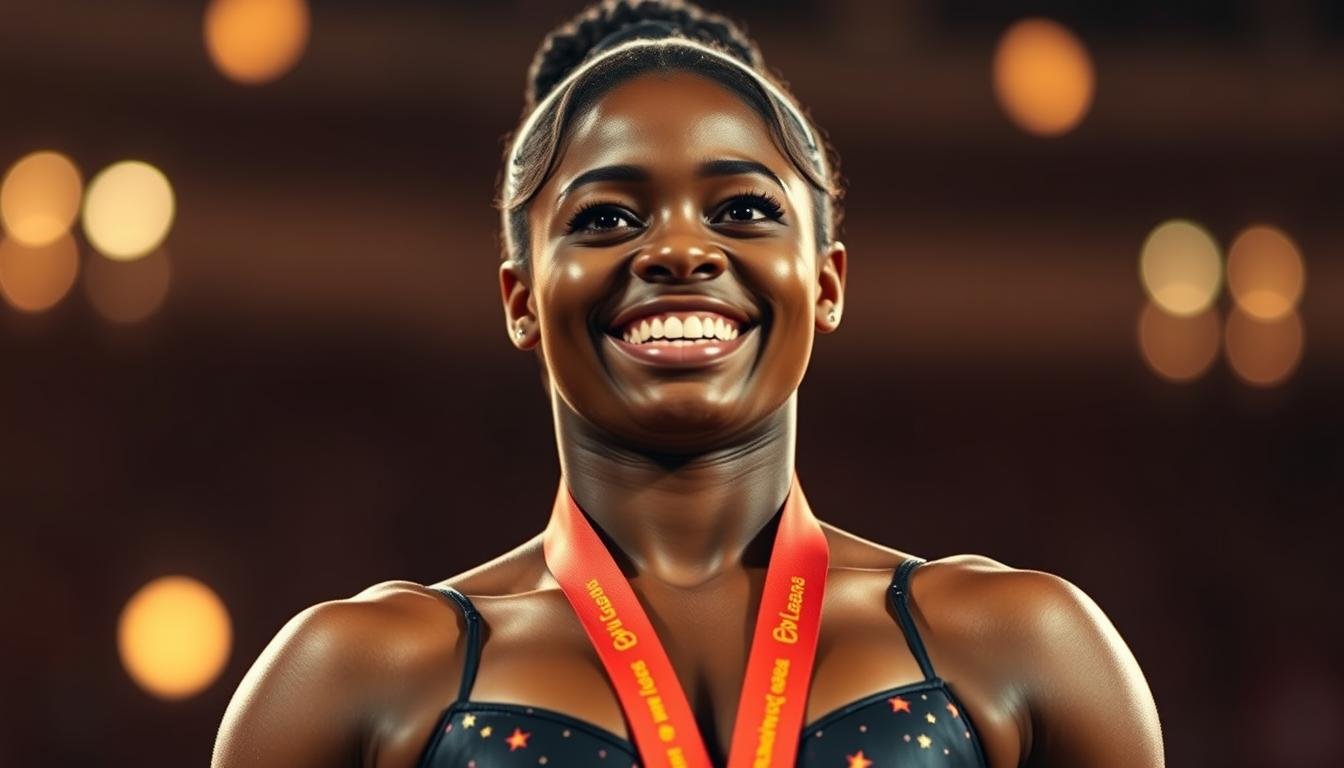
Ever wondered who shattered ceilings in gymnastics? Meet the powerhouse who became the first Black athlete to clinch Olympic gold in the individual all-around—a title no American had won in over a decade. Her name’s Gabby Douglas, and her story? Pure fire.
Born in Virginia Beach, Gabby started flipping before most kids learn to ride bikes. By 14, she’d moved to Iowa (yep, Iowa) to train with coach Liang Chow. Why? To chase greatness on the uneven bars and vault—no biggie.
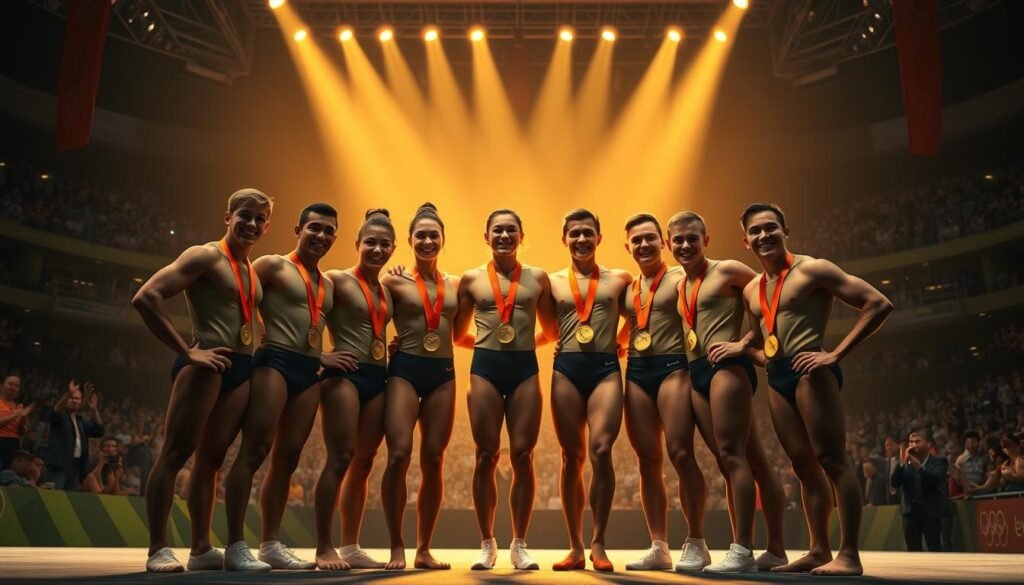
At the 2012 Olympics, she didn’t just win. She dominated. Her team gold with Aly Raisman and crew? Legendary. But her solo victory? Historic. Picture this: a 16-year-old sticking landings like Velcro while the world held its breath.
Here’s the kicker: Gabby’s wins weren’t just about medals. They rewrote the playbook for Black gymnasts everywhere. Want to know how she nailed that gravity-defying routine or handled fame at 16? Buckle up—we’re diving into the grit, flips, and glory that made her a world championships icon.
Origins and Early Gymnastics Journey
Picture a six-year-old flipping through the air like a wind-up toy—that’s where our story begins. Before medals and podiums, there was a Virginia Beach neighborhood where future history took shape.
Growing Up in Virginia and the Early Spark
Big sisters know best. When Gabby’s older sibling spotted her backyard cartwheels, she begged their mom for gymnastics classes. By eight? She’d crushed her first state championship. Talk about a fast track!
Weekdays meant 4 AM wake-ups. Mom drove 45 minutes to Gymstrada while Gabby snoozed in the backseat. “We’d arrive with cereal stuck to her face,” her coach once joked. But once those hands hit the beam? Magic.
Initial Training and Breakthrough Wins
Local competitions became her playground. Judges marveled at her bars routine—tiny frame swinging like a metronome. One tight victory at 9 years old changed everything. “That’s when I knew,” she’d say later. “This was my language.”
Her secret sauce? Turning living room furniture into practice equipment. Coffee table vaults. Couch cushion landings. You’d never guess those makeshift drills would forge an Olympic team contender.
Rise from Junior Competitions to Olympic Spotlight
Let me take you back to 2010—a pivotal year when a 14-year-old phenom packed her bags for Iowa. Leaving family and friends behind, she bet everything on training with Liang Chow, the coach who’d sculpted Olympic champions. What followed? A masterclass in resilience.
Overcoming Setbacks with Real Grit
Her first event with Chow’s team? A disaster. She fell twice on beam and scored 13th place. But here’s the kicker: instead of quitting, she drilled harder. Three-hour morning sessions. Evening conditioning. Even a fractured wrist couldn’t stop her—she taped it up and nailed bars routines.
By 2011, she’d earned a spot at the World Championships. But the title slipped away after a wobbly vault. “That loss lit a fire,” her teammate recalled. Six months later? She dominated the American Cup, outperforming rivals twice her age.
Event
Year
Placement
Junior Nationals
2010
7th
World Championships
2011
Team Bronze
American Cup
2012
1st
You could feel the tension at Olympic Trials that summer. Nerves? Sure. But when she stuck that double-twisting Yurchenko vault, the crowd exploded. History was made—she’d officially became first American in over a decade to claim the all-around crown. Not bad for a kid who’d once bombed at junior meets.
In-Depth Gabby Douglas Facts for Kids: Record-Breaking Moments
Ever watched an athlete rewrite history live? That’s exactly what happened when the team gold contenders stepped onto the London floor in 2012. Let’s break down how one gymnast’s flawless execution made her the first African American to claim Olympic all-around glory.
Historic 2012 Olympic Triumph
Picture this: 31.5 million viewers glued to screens as she nailed a 15.966 on uneven bars. Under coach Liang Chow’s guidance, her routines blended power and elegance—like mixing rocket fuel with ballet. The Fierce Five squad dominated the team event, but her 62.232 all-around score? Unbeatable.
What’s wild? She nearly missed the vault finals after slipping during qualifications. “Pressure? Nah,” she later joked. “Just me and the apparatus having a heated debate.” That comeback spirit secured two gold medals—one for team, one individual—in 48 hours flat.
Memorable World Championship Performances
Her World Championships run? Equally explosive. Check out these jaw-dropping stats:
Event
Year
Score
Result
All-Around
2011
59.299
Team Bronze
Uneven Bars
2015
15.633
Gold
Team Final
2015
181.338
Gold
While Simone Biles later raised the difficulty bar, our all-around champion pioneered a new standard for artistry. Her 2015 bars routine? So precise, judges reportedly checked their stopwatches—turns out gravity just took a coffee break.
Here’s the kicker: those U.S. national titles weren’t flukes. They were stepping stones to proving Black excellence belongs center stage. Next time you see a gymnast stick a landing, remember—this african american win helped pave the way.
Iconic Achievements and Unforgettable Gymnastics Routines
What does perfection look like in gymnastics? Let’s break down the routines that turned a Virginia Beach prodigy into a global sensation. Precision meets artistry here—every twist, grip, and landing calculated like clockwork.
When Teamwork Makes the Gold Work
The 2012 Summer Games showcased her secret weapon: blending individual brilliance with team event chemistry. Watch her uneven bars routine from London—a 15.733 score built on coach Liang’s meticulous drills. Her releases? Higher than rivals’. Her transitions? Butter-smooth.
At the Olympic Trials that year, she didn’t just qualify—she dominated. Check how her scores stacked up:
Event
Score
Rank
Uneven Bars
15.900
1st
Beam
15.233
2nd
Floor
15.100
3rd
Douglas also thrived under pressure during team finals. Remember that stuck beam dismount? Teammates erupted—it sealed their gold. “We needed every tenth of a point,” she later admitted. “No room for ‘almost’.”
What sticks with me? Her ability to elevate when it mattered. The all-around title wasn’t just skill—it was mindset. Coach Liang Chow drilled this daily: “Your body knows. Trust it.” From Virginia Beach backyard flips to Olympic podiums, that trust rewrote history.
Reflecting on a Trailblazing Legacy in Gymnastics
What happens after you’ve already made history? The U.S. team legend they call the “Flying Squirrel” keeps rewriting the script. I still get chills rewatching her win Olympic gold twice in London—once with the squad, once solo. But here’s the kicker: those victories were just the opening act.
Let’s be real. Being the first African American to claim that all-around crown wasn’t just about medals. It reshaped who gets to dominate this sport. Remember that New York exhibition where she stuck a layout Jaeger? Kids in Harlem suddenly saw themselves on those bars.
Now she’s grinding at WOGA, eyeing another leap faith toward Paris. Teammates like Jordyn Wieber once pushed her limits—now she’s the blueprint. What sticks with me? How her african american identity fuels every release move. Like she’s saying, “This airspace? Mine.”
Think about it. Every time a young gymnast mimics her “Flying Squirrel” bar flips, that legacy breathes. The U.S. team’s future stars? They’re standing on shoulders that carried a revolution. And as for what’s next—well, let’s just say her story’s still mid-vault…