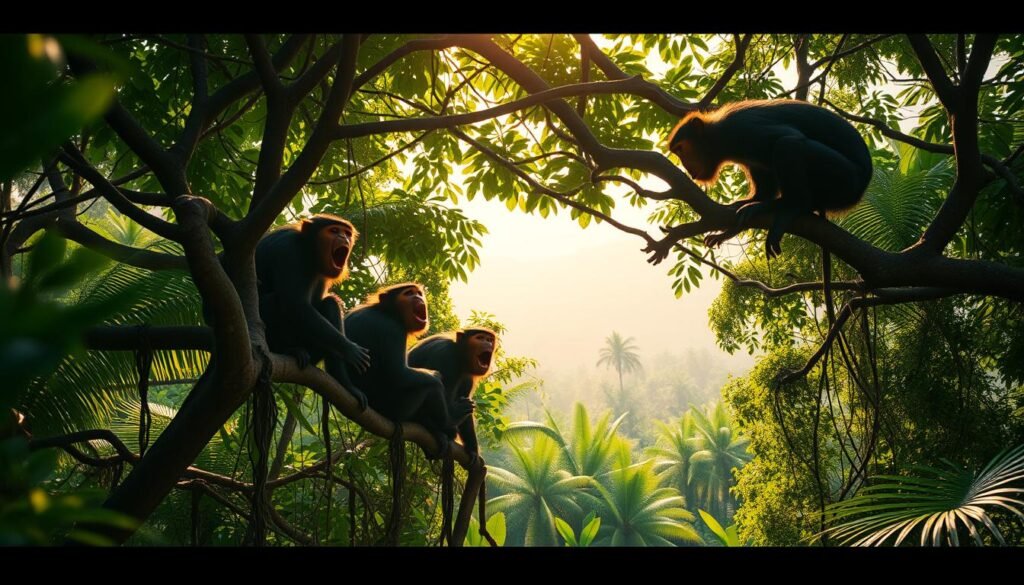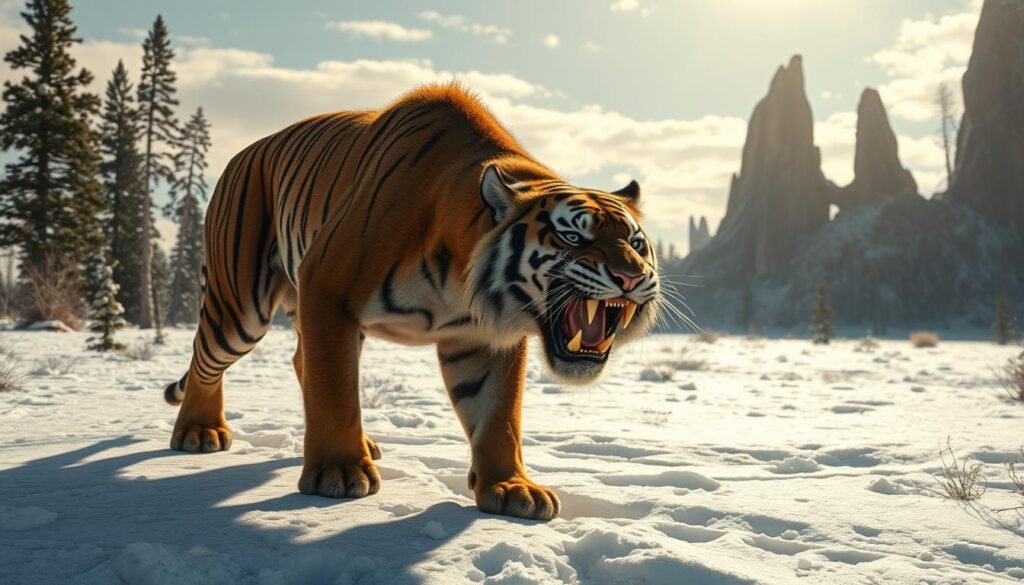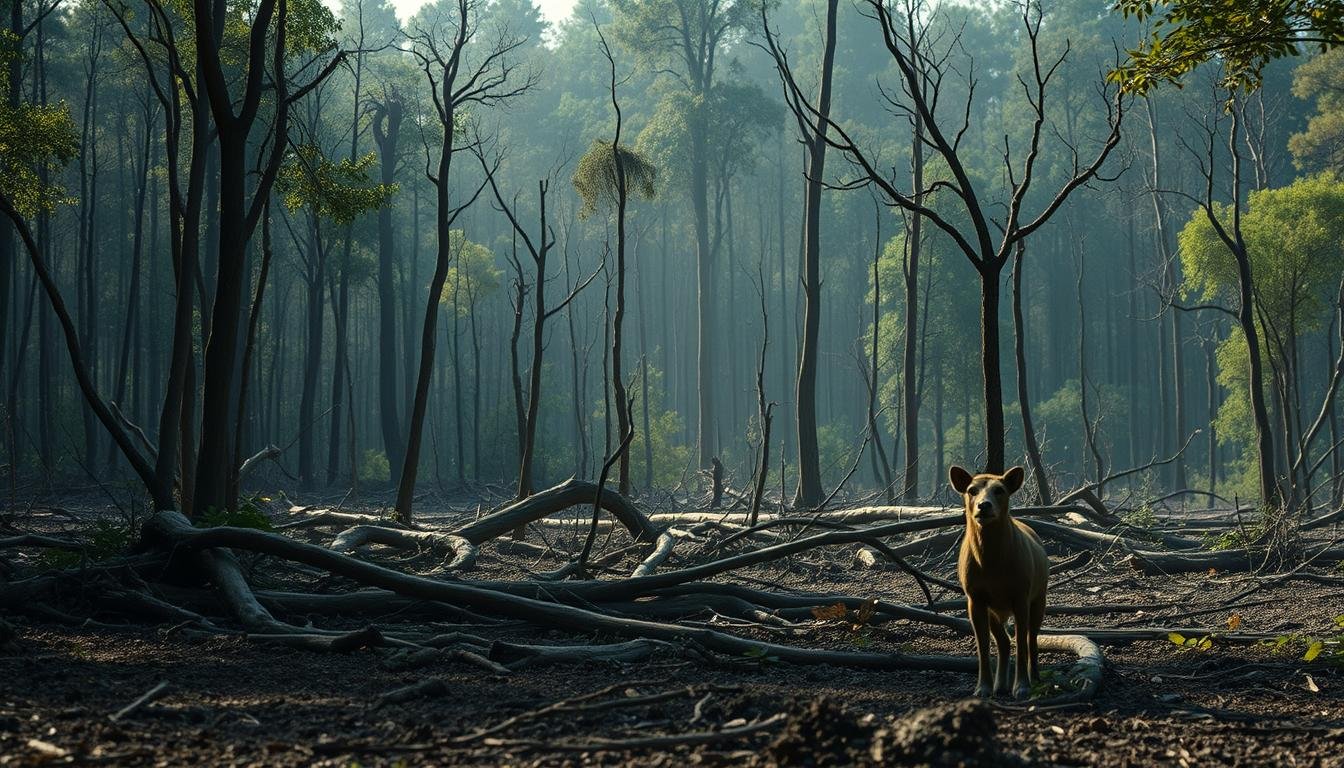
Forests are magical kingdoms for animals. Cutting down trees is destroying their homes fast. Every minute, an area of forest the size of 20 football fields disappears.
Imagine your favorite tiger, monkey, or colorful parrot losing their home. When trees are cut down, animals lose their shelter, food, and safety. It’s like bulldozing your house while you’re inside!
Removing trees isn’t just about wood. It breaks entire ecosystems. Wildlife needs forests to survive. From tiny insects to big elephants, each plays a key role.
Deforestation affects more than animals. It changes landscapes, disrupts climate patterns, and has unknown effects. Your actions can help protect these amazing places.
Kids like you can make a difference. Learning about deforestation is the first step to becoming an environmental champion. Are you ready to help save animal homes and protect our forests?
What Happens When Forests Disappear?
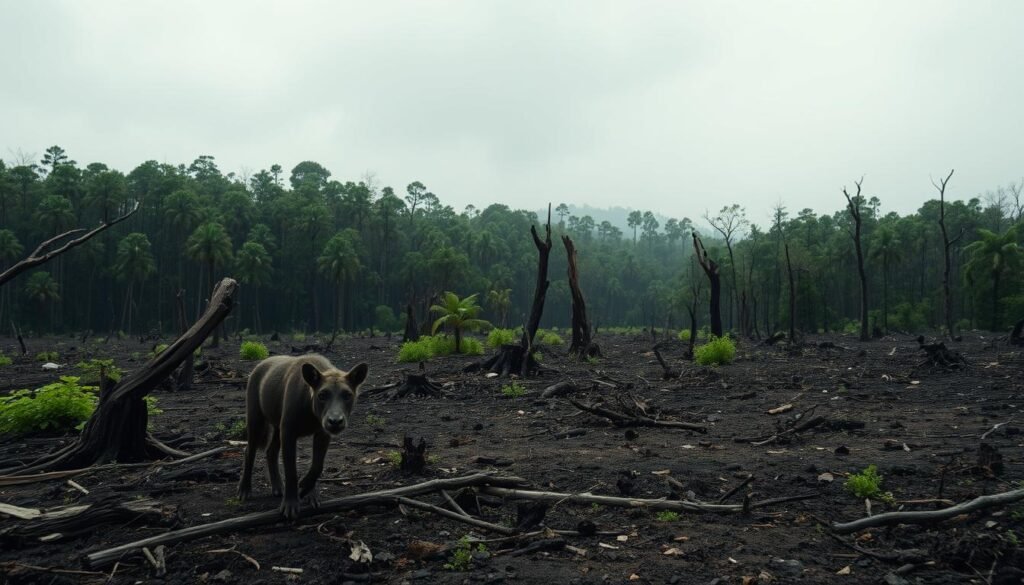
Imagine your favorite playground suddenly vanishing. That’s what happens to animals when forests disappear. Deforestation causes a devastating chain reaction, changing entire ecosystems quickly.
The Domino Effect on Wildlife
Wildlife habitats are complex networks of life. Every creature has a vital role. When trees are cut down, animals lose more than just their homes.
- Shelter from predators
- Food sources
- Breeding grounds
- Protection from extreme weather
Small changes can cause big disruptions. A single lost tree might mean survival is impossible for entire animal communities. Nature’s delicate balance hangs by a thread.
How Trees Keep Our Air Clean
Trees are Earth’s natural air purification system. They absorb carbon dioxide and release oxygen. This acts like giant lungs for our planet. When forests disappear, we lose these incredible carbon sinks that help regulate our global climate.
Nature’s Perfect Balance
Every forest is a complex ecosystem. Plants, animals, and microorganisms work together. Deforestation disrupts this web, causing ripple effects far beyond the immediate area.

Understanding these connections shows why protecting wildlife habitats is key for our planet’s future.
Meet the Animals Losing Their Forest Homes
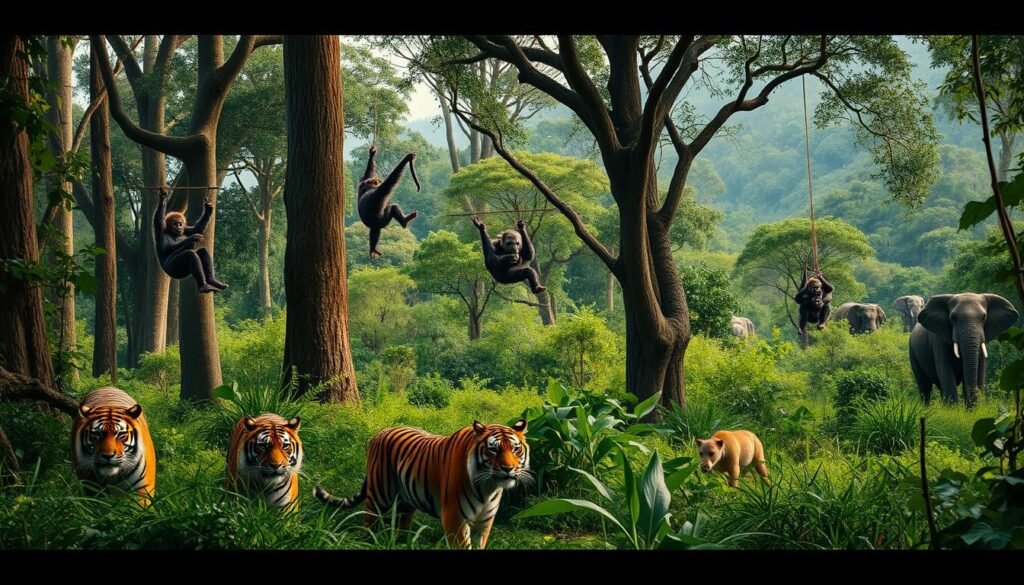
The world of endangered animals is shrinking fast. Forest habitat loss is a big threat to many amazing creatures. Their homes are turning into dangerous places.
Scientists warn that over 40% of animal species in Southeast Asian forests could vanish by the 21st century. Let’s look at some incredible animals fighting to stay alive:
- Orangutans: These ginger-haired acrobats are losing their treetop homes quickly
- Sumatran Tigers: Striped predators with fewer places to hunt
- Clouded Leopards: Rare wildcats finding it hard to find safe places
- Proboscis Monkeys: Unique primates seeing their forest homes disappear
Forest habitat loss affects more than just animals. It disrupts entire ecosystems. It’s like a symphony where musicians keep leaving the stage.
These animals are not just losing homes; they’re at risk of extinction. Their survival depends on understanding the link between forests and wildlife conservation.
Protecting these creatures means saving entire ecosystems. Every saved tree is a lifeline for many animals trying to survive in a broken world.
Why Trees Are Earth’s Superheroes
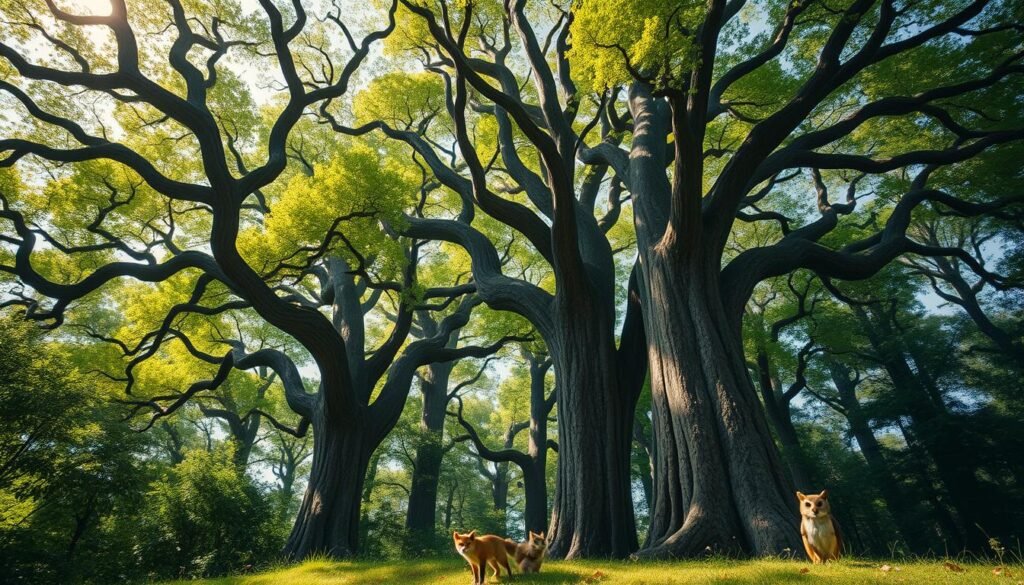
Imagine a superhero that works all day, every day, to protect our planet. Trees are those heroes, silently doing amazing things to keep our world healthy. They do more than just look good in landscapes.
Trees are nature’s ultimate multitaskers, giving us incredible benefits we often overlook. They act as invisible guardians, working hard to keep Earth’s balance.
The Oxygen Factory
Trees’ most amazing power is making oxygen. They turn carbon dioxide into oxygen through photosynthesis. One mature tree can make enough oxygen for:
- Four human beings
- Multiple small animals
- Countless microscopic organisms
Nature’s Air Conditioner
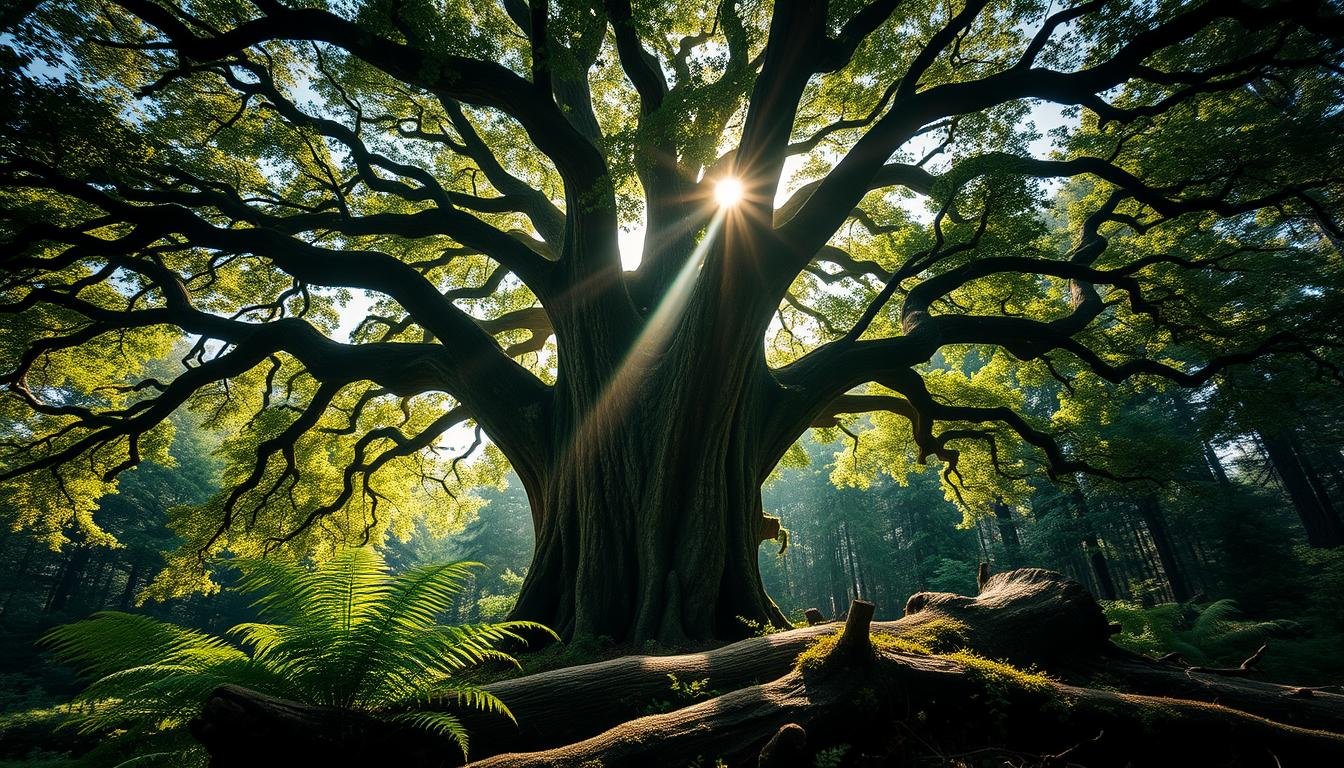
Trees do more than just make oxygen; they also cool our climate. They provide shade and release water vapor, creating natural cooling systems. Cities with more trees are cooler than those without.
The Water Keeper
Water management is another skill trees have. Their roots act like natural filters and reservoirs. They:
- Prevent soil erosion
- Absorb excess rainwater
- Replenish groundwater reserves
Next time you see a tree, remember: you’re looking at a true planetary superhero!
Deforestation Facts for Kids
Let’s explore some amazing deforestation stats that will blow your mind! Our planet’s forests are disappearing at an incredible rate. Forest loss facts show a dramatic environmental shift that impacts all living things.
Here are some incredible numbers about forest destruction:
- More than 50% of tropical forests have vanished in the last 50 years
- Every second, an area the size of a football field of forest disappears
- The Amazon rainforest has lost an area bigger than France
Picture a football field-sized forest disappearing in just 60 seconds. That’s the harsh reality of deforestation today. These numbers aren’t just figures; they represent entire ecosystems disappearing before our eyes.
Scientists track these deforestation stats to help us grasp the massive changes on our planet. Each tree lost means less oxygen, fewer animal homes, and a bigger environmental challenge.
The good news? You can make a difference! Learning about these facts is the first step. Knowledge is power, and understanding forest loss helps protect these incredible natural spaces.
The Amazon Rainforest: Earth’s Green Lung
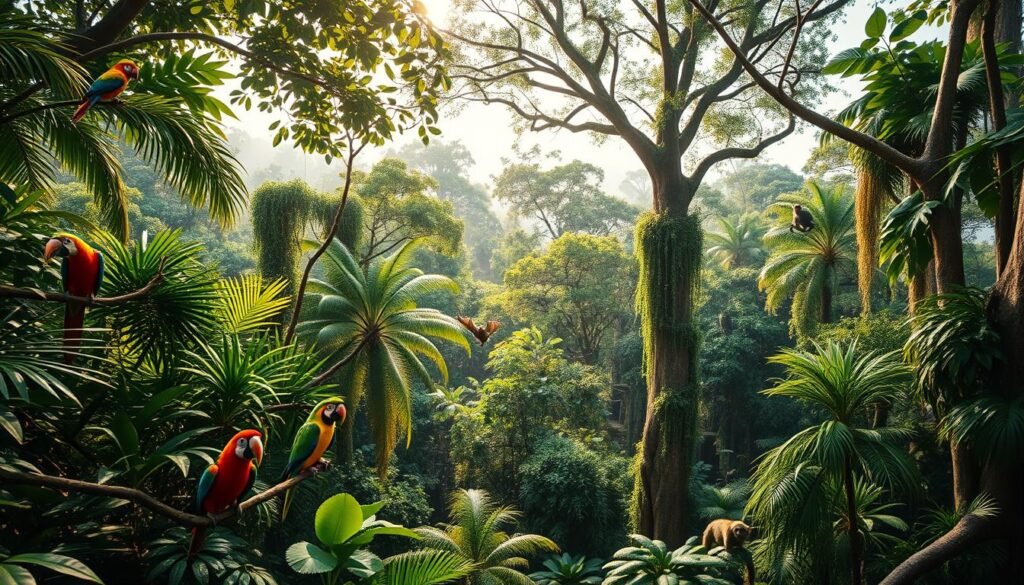
Imagine a vast green world that gives life to our planet. The Amazon rainforest is nature’s most amazing creation. It’s a breathtaking ecosystem that supports a wide range of life.

This massive forest is not just trees. It’s Earth’s most powerful oxygen maker. The Amazon rainforest produces 20% of the world’s oxygen. That means every fifth breath you take comes from this incredible forest!
This amazing ecosystem covers about 2.1 million square miles. It spans nine countries in South America.
Amazing Amazon Animals
The Amazon rainforest is home to incredible creatures. Here are some amazing animals that live there:
- Electric eels that can generate powerful electric shocks
- Poison dart frogs smaller than a fingernail
- Pink river dolphins swimming through mysterious waterways
- Jaguar predators stalking through dense vegetation
- Countless species of colorful tropical birds
Indigenous People and Their Forest Home
For thousands of years, indigenous communities have lived in harmony with the Amazon rainforest. These forest guardians understand every whisper of the jungle. They protect a landscape that’s vital to our planet’s health.
Their connection with the forest shows how humans can live with nature. They preserve biodiversity and live sustainably. Each indigenous community holds centuries of ecological wisdom.
How Fast Are We Losing Trees?
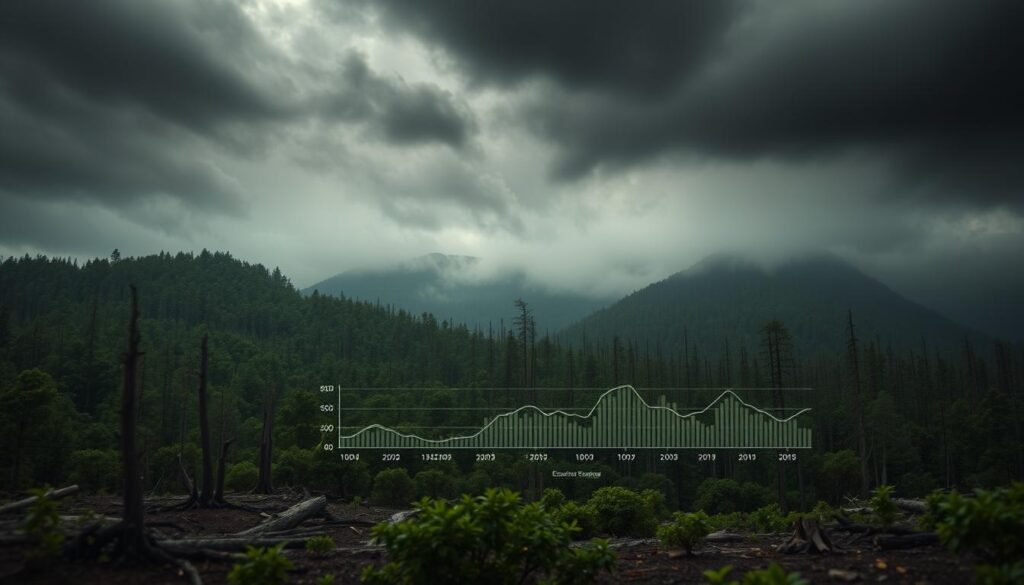
The rate at which we’re losing trees is alarming. Imagine losing an entire soccer field of primary rainforest every six seconds! Our planet’s green lungs are disappearing at a breathtaking speed that would make your head spin.
Let’s break down the global forest loss in some eye-opening numbers:
- Every minute, we lose forest area equivalent to 40 football fields
- In a single year, we lose enough trees to cover the entire country of Panama
- Over the past century, about 50% of the world’s forests have vanished
To put this into perspective, check out these shocking deforestation statistics:
| Time Frame | Forest Area Lost |
|---|---|
| 6 seconds | 1 soccer field |
| 1 minute | 40 football fields |
| 1 year | Area of Panama |
These numbers aren’t just statistics – they’re a wake-up call for our planet’s future. The rapid deforestation rate threatens not just trees, but entire ecosystems, wildlife habitats, and our global climate.
We’re losing forests faster than nature can regenerate. Each second counts in the battle to protect our planet’s green treasures.
Why Do People Cut Down Trees?
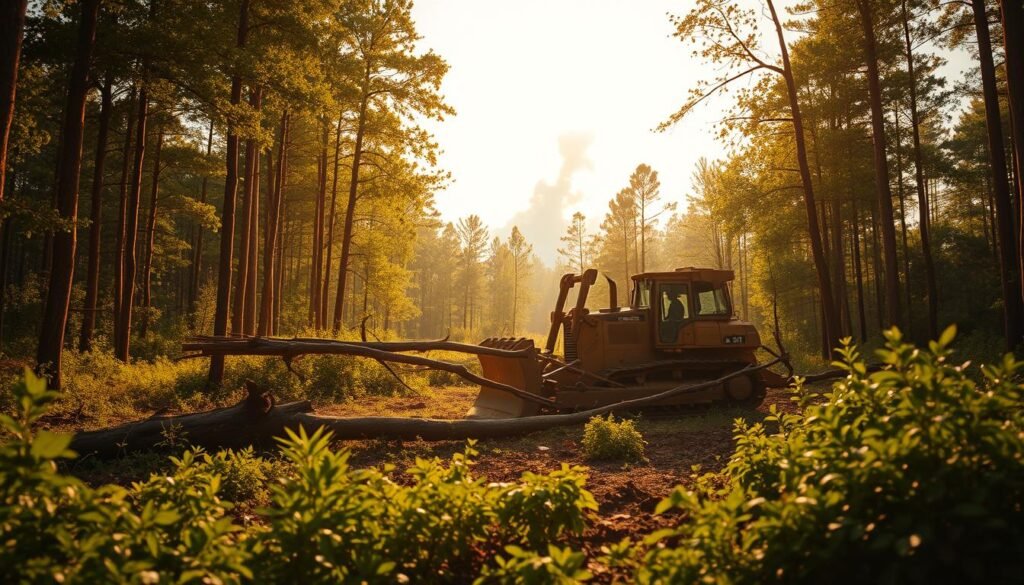
Forests are disappearing quickly, and the reasons are surprising. Deforestation is caused by human needs and economic pressures. Let’s explore why trees are being cut down at an alarming rate.
The logging industry is a big reason for forest destruction. People cut down trees for several important reasons:
- Creating space for agricultural expansion
- Generating building materials
- Producing paper products
- Supporting economic growth
Farming and Food Production
Farmers need land to grow crops and raise livestock. Transforming forests into farmland is a global trend. As the population grows, more land for farming is needed. Tropical rainforests are very vulnerable to this.
Building Materials and Paper
Wood is a key construction material worldwide. The demand for timber leads to a lot of deforestation. From houses to furniture, wood products need a lot of trees. Paper production also uses millions of trees every year.
About 80% of global deforestation is linked to farming. The logging industry changes landscapes, turning forests into open spaces for human activities.
Understanding these causes helps us see the challenges in saving forests. Each tree lost is a big loss for our planet’s ecosystem.
How Deforestation Makes Animals Sick
When forests disappear, something scary happens. Wildlife diseases start spreading in ways we never expected. Habitat destruction isn’t just about making animals homeless – it’s creating a dangerous health crisis for both animals and humans.
Imagine a forest as a natural barrier that keeps different animal populations separated. When we cut down trees, we’re mixing up different animal groups. This mixing creates perfect conditions for wildlife diseases to jump between species.
- Approximately 60% of emerging infectious diseases originate from animals
- Habitat destruction increases direct contact between wildlife and human populations
- Disrupted ecosystems lead to unpredictable disease transmission patterns
Scientists have discovered that shrinking forest environments force animals into smaller spaces. These cramped conditions increase stress and weaken immune systems, making animals more susceptible to infections.
| Forest Type | Disease Transmission Risk | Animal Population Impact |
|---|---|---|
| Intact Rainforest | Low | Stable |
| Fragmented Forest | High | Unstable |
By understanding the connection between wildlife diseases and habitat destruction, we can develop better conservation strategies. Protecting forest ecosystems isn’t just about saving trees – it’s about preventing global health risks.
Cool Ways Trees Help Other Trees
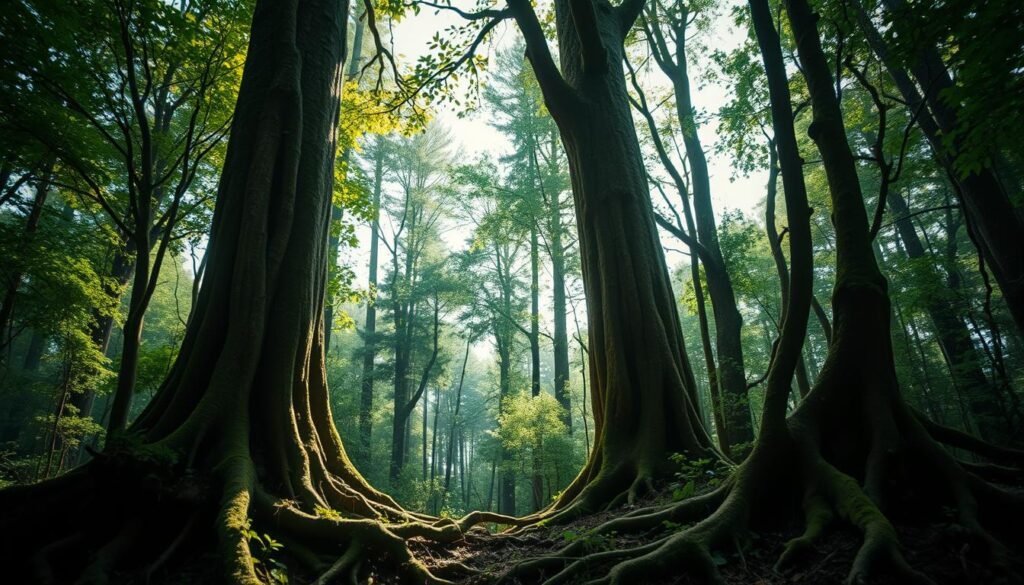
Get ready to have your mind blown by the secret world of tree communication! Forests are more than just wooden plants. They are complex networks of living beings that talk, share, and support each other in amazing ways.
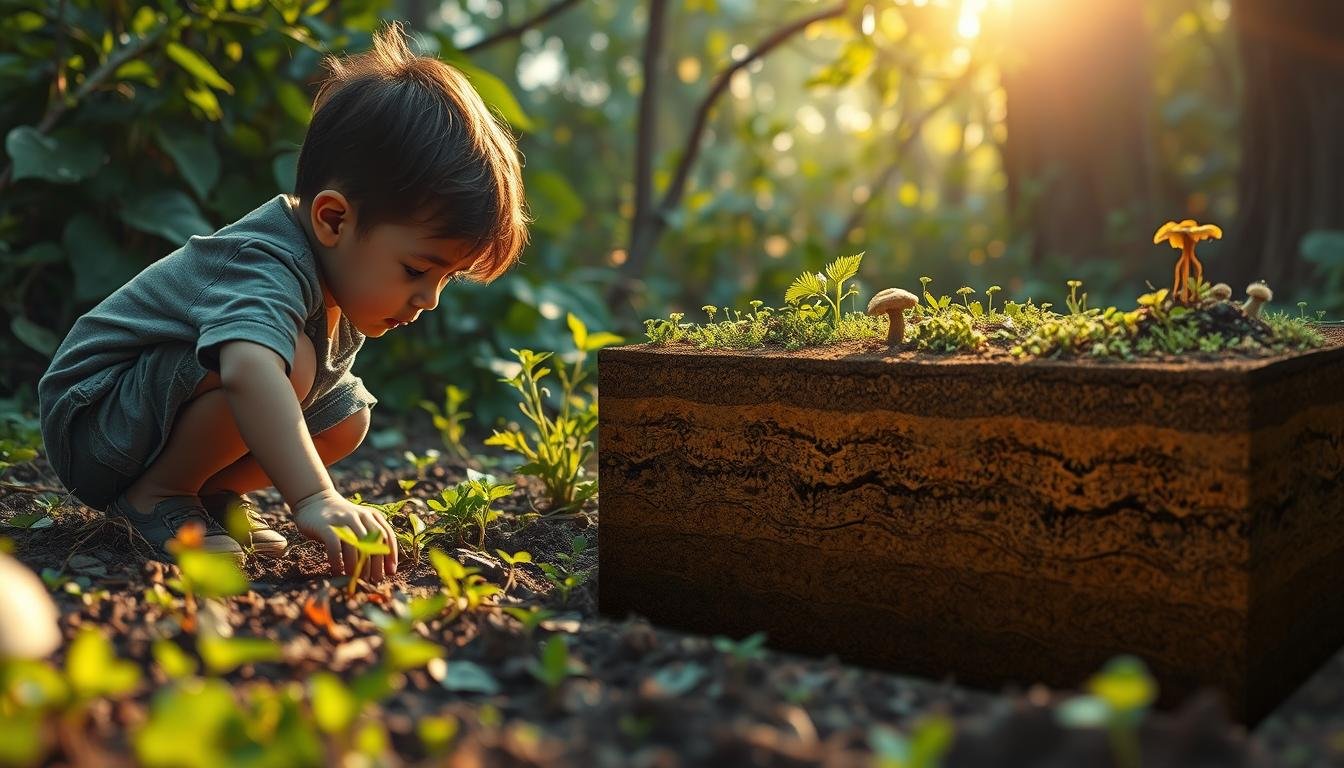
Trees have developed incredible ways to connect in their forest ecosystem. They’re not just standing there quietly. They communicate through an amazing underground network called the “wood wide web”!
The Underground Network
Imagine a massive internet made of roots and fungi connecting trees across entire forests. This underground network lets trees:
- Share nutrients between different trees
- Send warning signals about threats
- Support younger or weaker trees
Fungal networks act like magical communication highways. Older, stronger trees can send food and resources to smaller saplings. It’s like a secret support system happening right beneath our feet!
Tree Messages Through the Air
Trees don’t just communicate underground – they also send messages through the air! When a tree is attacked by insects or disease, it releases special chemical signals. These signals warn neighboring trees to boost their defense mechanisms.
These chemical messages are like urgent text messages traveling through forest breezes. Nearby trees can quickly prepare their own protective responses before the threat even reaches them. Talk about smart survival strategies!
Next time you walk through a forest, remember you’re not just surrounded by trees. You’re in the middle of an incredible, interconnected living community that’s constantly communicating and supporting each other.
From Forest to Desert: How Land Changes
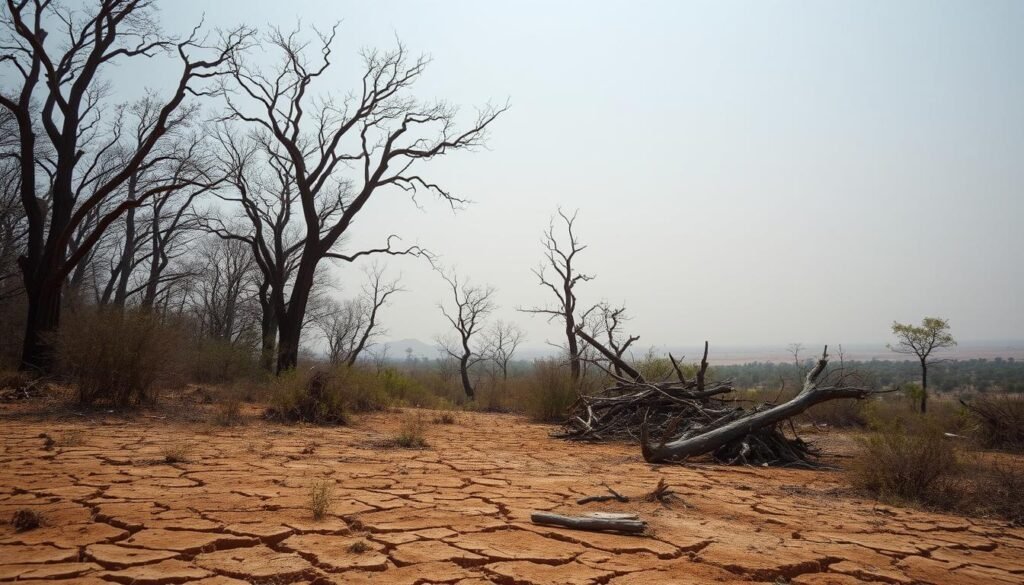
Imagine a forest turning into a desert. It’s not science fiction; it’s happening now. Land degradation means healthy places can no longer support life.
The change from forest to desert is dramatic:
- Trees get removed through deforestation
- Soil loses protective vegetation cover
- Wind and rain erode topsoil quickly
- Nutrients disappear from the ground
When a place turns into a desert, the effects are severe. Tree roots that once held soil in place disappear. This leaves the land open to big changes.
| Stage of Land Degradation | Environmental Impact |
|---|---|
| Initial Deforestation | Reduced biodiversity |
| Soil Erosion | Decreased agricultural productivity |
| Advanced Desertification | Complete ecosystem collapse |
This change happens fast. What was once alive can become a desert in decades. Saving our forests is more than just trees. It’s about keeping whole worlds alive.
Saving Animal Homes: What Kids Can Do
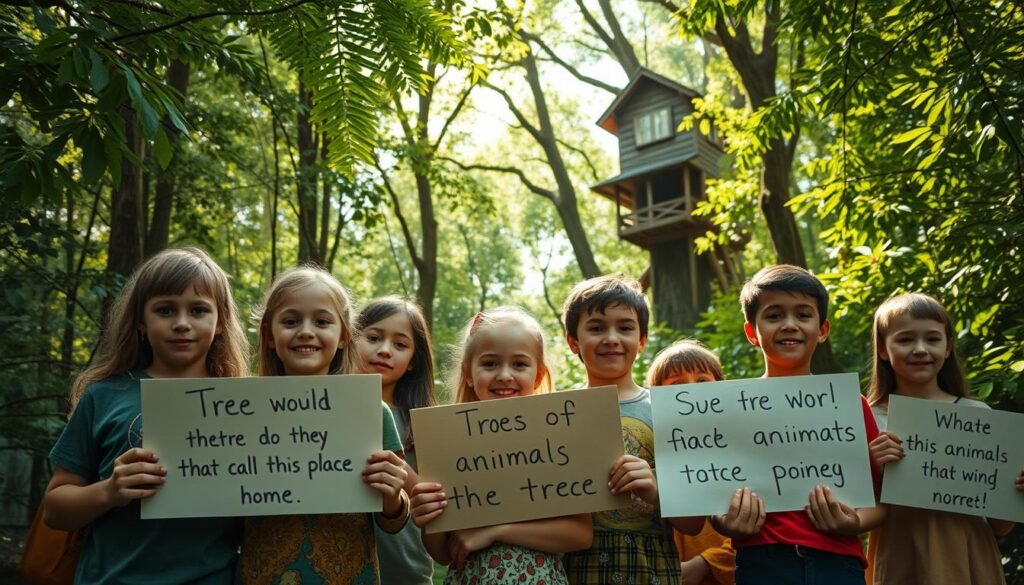
Wildlife conservation isn’t just for grown-ups! You can make a big difference in protecting animal habitats. Kids like you can become real forest heroes with just a few simple actions.
Let’s explore some awesome ways you can help save animal homes and protect our planet’s amazing ecosystems:
- Start a school environmental club focused on wildlife conservation
- Learn about endangered species in your local area
- Create awareness posters about forest protection
- Encourage your family to buy sustainable products
- Participate in local tree-planting events
Your voice matters more than you might think! Environmental activism starts with passionate young people who care about nature. Local communities and organizations are always looking for motivated kids who want to make a positive impact.
| Action | Impact |
|---|---|
| Tree Planting | Creates new habitats for wildlife |
| Recycling | Reduces pressure on forest resources |
| Spreading Awareness | Educates community about conservation |
Remember, every small step counts in wildlife conservation. You don’t need to be a superhero to make a difference – just a kid with passion and determination!
Tree Planting Adventures Around the World
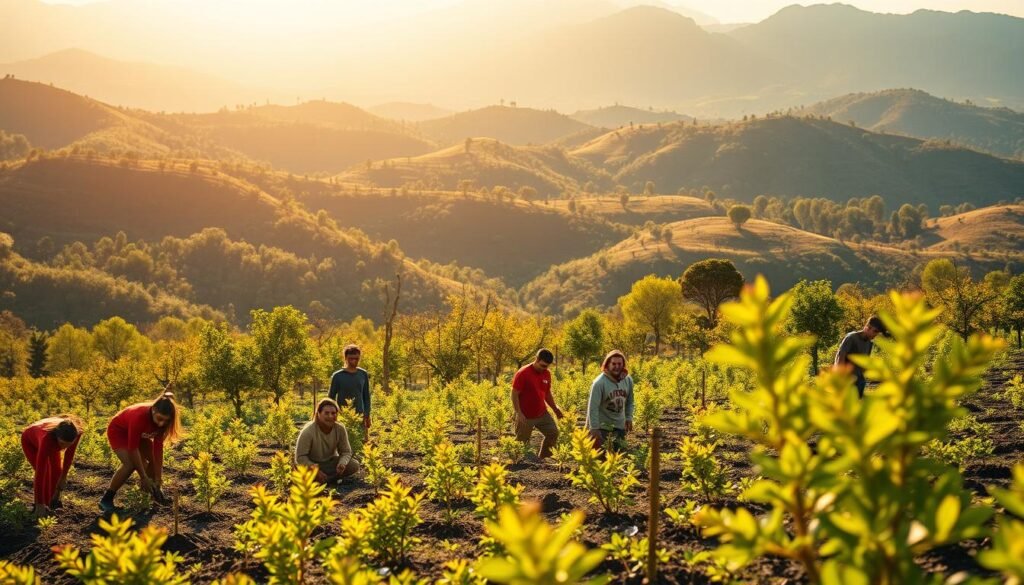
Imagine a world where everyone plants trees like superheroes! Reforestation projects are changing landscapes everywhere. They show that small actions can make a big difference. Global tree planting is changing how we protect our planet.
Let’s look at some amazing tree-planting adventures that will inspire you:
- In Tanzania, people in Kokota have planted over 2 million trees in just ten years.
- In India, Jadav Payeng turned a sandbar into a forest by planting trees for decades.
- China’s “Great Green Wall” project aims to stop desert growth with big reforestation efforts.
- Ethiopia set a record by planting 350 million trees in just 12 hours!
These stories show the power of community in reforestation. From small islands to big continents, people are working together. They’re restoring ecosystems and giving us hope for the future.
Tree planting is more than just adding trees. It’s about making habitats, protecting wildlife, and creating sustainable places. Every tree planted is a promise to future generations. It’s a small seed of hope that grows into something amazing.
Forest Heroes: Kids Making a Difference
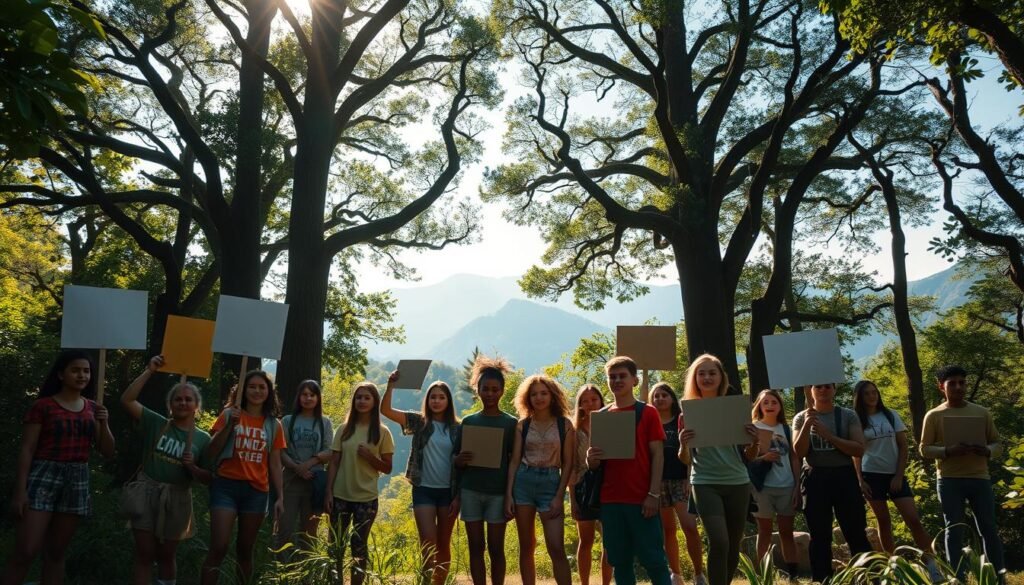
Imagine young people changing the world, one tree at a time. Youth environmental activists show that age doesn’t matter when it comes to making a difference. These amazing kid conservationists are fighting to save our planet’s forests in incredible ways!
Let’s meet some remarkable young heroes who are fighting for forest conservation:
- Felix Finkbeiner started his tree-planting mission at just 9 years old
- Ridhima Pandey challenged her government’s climate policies as a young activist
- Lesein Mutunkei combines his love for football with environmental protection
These young warriors aren’t just talking about saving forests – they’re taking massive action. Their passion proves that kids can be powerful environmental champions.
| Young Activist | Country | Environmental Achievement |
|---|---|---|
| Felix Finkbeiner | Germany | Planted over 14 billion trees worldwide |
| Ridhima Pandey | India | Filed climate change lawsuit against government |
| Lesein Mutunkei | Kenya | Plants trees for every football goal scored |
Want to join these forest heroes? Start small! You can:
- Plant trees in your community
- Educate friends about forest conservation
- Support local environmental organizations
- Reduce paper and wood consumption
Remember, every young person has the power to create incredible change. These kid conservationists show us that passion, creativity, and determination can protect our planet’s most precious ecosystems.
Amazing Forest Facts That Will Blow Your Mind
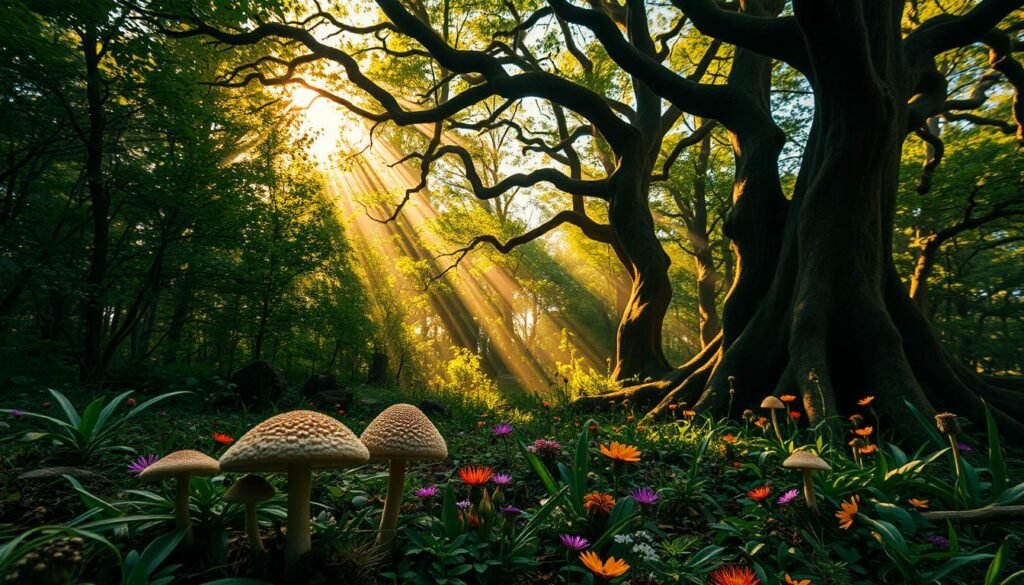
Get ready to explore some amazing forest facts that will change how you see trees. Forests are full of surprises that most people don’t know about.
Did you know trees are like communication experts? Scientists found that trees can talk to each other through roots and fungi. It’s like a secret internet in the forest, helping trees share nutrients and warn each other!
- The oldest living tree on Earth is a bristlecone pine named Methuselah, standing strong for over 4,800 years
- More trees exist on our planet than stars in the entire Milky Way galaxy
- A single large tree can produce enough oxygen to support four people for an entire day
Some tree trivia will shock you. In Poland, there’s a forest called the Crooked Forest. Every pine tree there grows with a curved trunk. Imagine walking through a forest where every tree looks like it’s dancing!
Forests cover about 30 percent of the world’s land. But they’re more than just trees. They’re living ecosystems that keep our planet healthy and balanced.
Next time you see a forest, remember it’s a world full of secrets and surprises!
The Future of Our Forests
Imagine a world where saving forests is a reality we’re making happen. Scientists and experts are coming up with new ways to protect our planet’s forests. They’re using sustainable forestry to change how we deal with woodland ecosystems.
Technology is key in saving our forests. Drones are now planting trees in places humans can’t reach. Studies show that tropical trees can help us meet global environmental goals by 23 percent. So, every tree we plant helps heal our planet.
Young people are leading the way in saving forests. Your generation knows how vital it is to protect nature. Kids are starting environmental clubs and joining global movements. They’re pushing us to think differently about forests and our place in the world.
We’re at a key moment in saving our planet. Saving forests isn’t optional; it’s essential. By using sustainable forestry and supporting new projects, we can change our planet’s forests. Every action we take helps protect these amazing ecosystems.