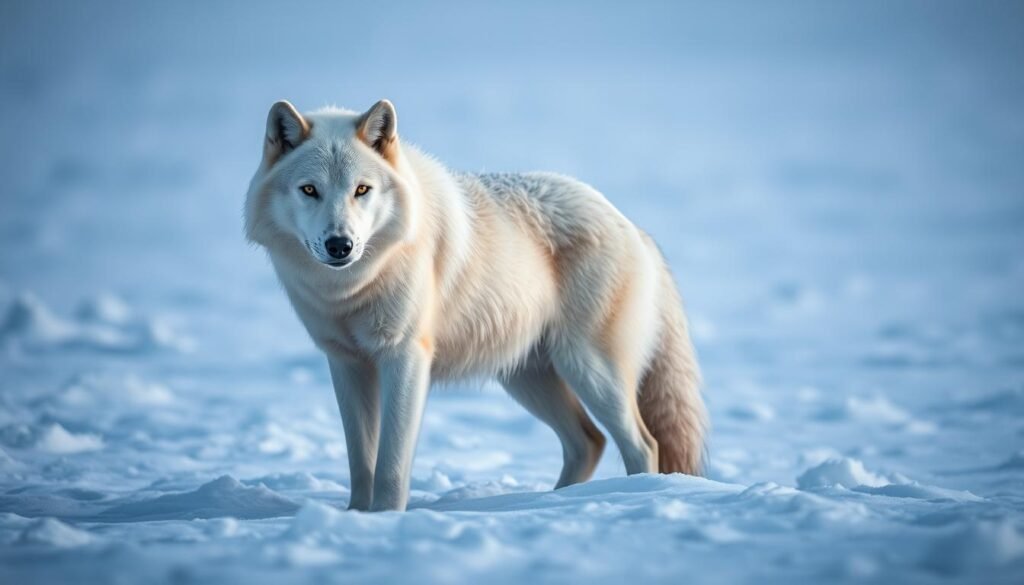
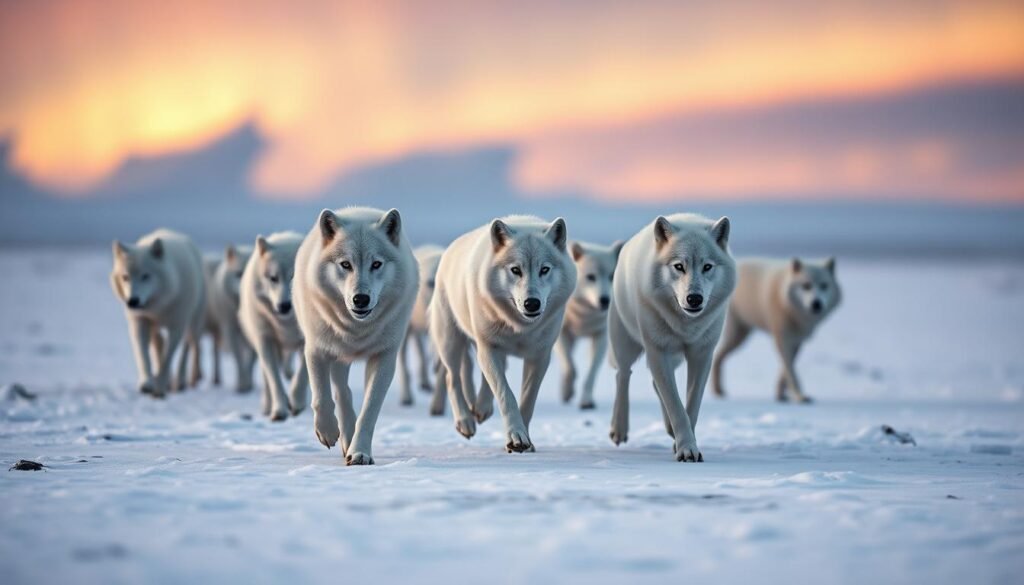
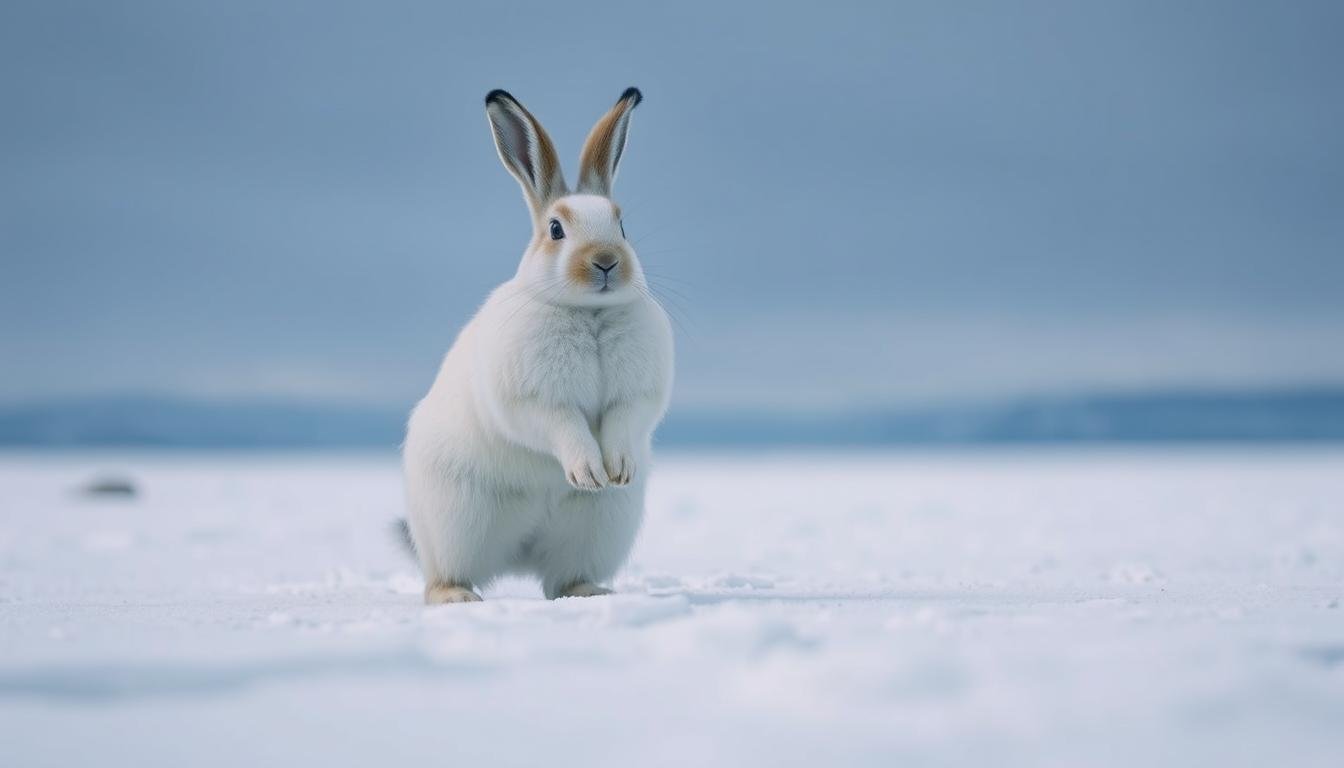
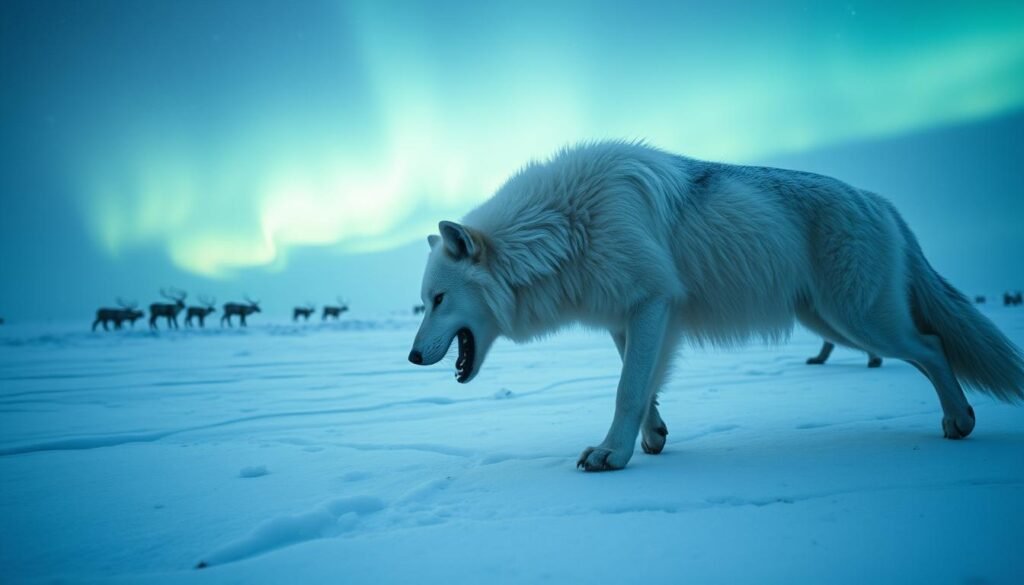
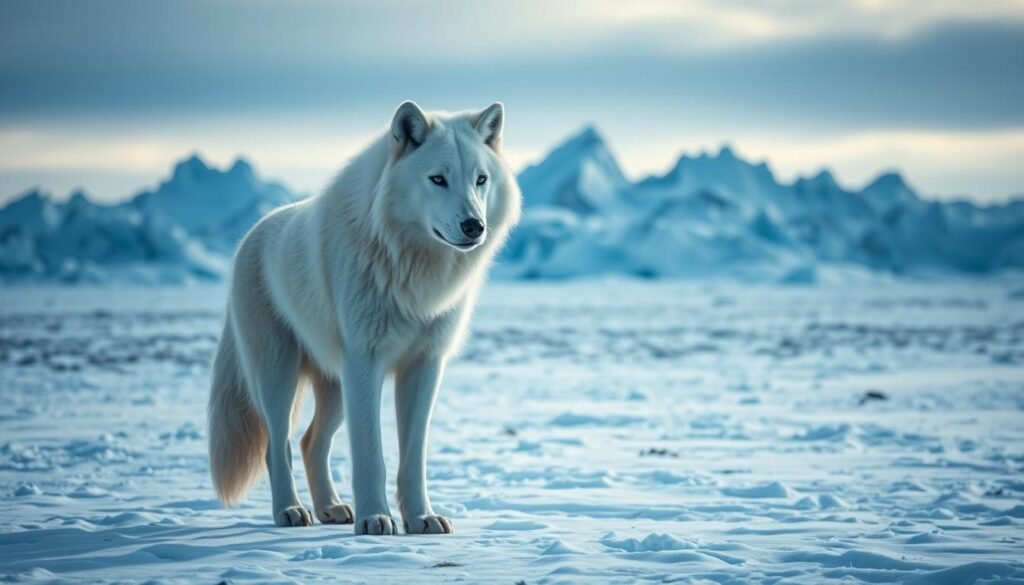
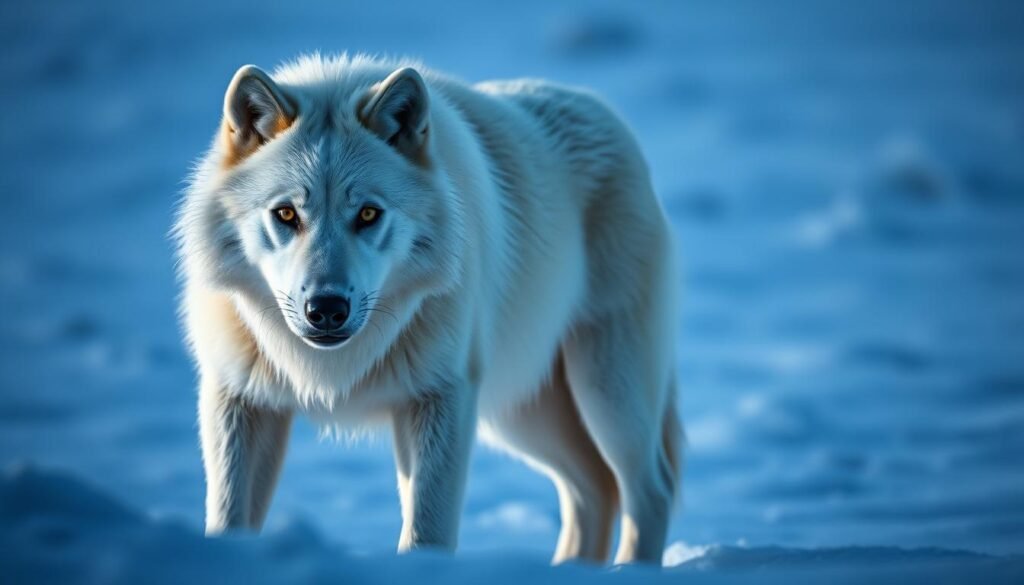
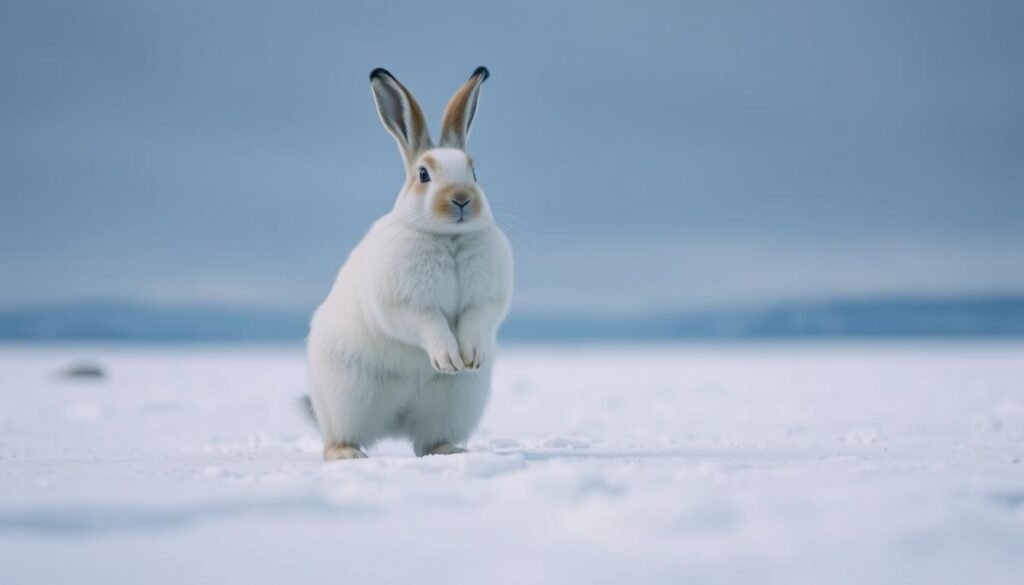
Ever wonder how wolves survive in places where your breath freezes mid-air? Meet the Arctic wolf—nature’s ultimate winter warrior, rocking a permanent white coat and skills that’d make even Santa jealous. These “white ghosts” don’t just haunt the tundra—they own it, blending into snowbanks like invisible ninjas while hunting caribou or snacking on Arctic hares.
Here’s the kicker: their home isn’t some cozy forest. They live above the northern treeline in Canada’s High Arctic, where temperatures drop to -70°F. Imagine wearing the same snowsuit your whole life—that’s their fur, thicker than your winter jacket and whiter than a marshmallow. Even their skulls are built differently from gray wolves, like a frosty upgrade for crunching frozen dinners.
But here’s what’s wild: they’ve never seen a human in their territory. Zero. Zip. While we’re binge-watching Netflix, they’re mastering survival hacks we can’t even fathom. Want to know how they communicate in blizzards or why their paws are like snowshoes? Let’s crack this frozen detective story wide open.
Origin and Taxonomy Insights
Reginald Pocock’s 1935 discovery on Melville Island changed everything. He stumbled upon a wolf that looked like a frostbitten ghost compared to its southern cousins. The Canis lupus arctos wasn’t just another gray wolf—it had a compact frame, smaller skull, and fur that screamed “I own winter.” But here’s where it gets messy: scientists still argue whether it’s a true subspecies or just a frost-adapted version of Canis lupus.
Species Classification and Subspecies Distinctions
Modern DNA studies reveal these white hunters split from other gray wolf populations around 50,000 years ago. Their genes tell a story of isolation—no interbreeding with dogs or southern wolves. Check this out:
Subspecies
Habitat
Avg Weight
Unique Trait
Canis lupus arctos
High Arctic
100 lbs
Shorter muzzle
Canis lupus occidentalis
Northwest Territories
130 lbs
Larger jaw muscles
Canis lupus lupus
Eurasian forests
90 lbs
Narrower paws
Why does this matter? That subspecies label determines conservation priorities. Yet some researchers claim differences are just “snow depth adaptations.” I call BS—their bone density and tooth structure scream “evolved separately.”
Geographic Footprint in the High Arctic Tundra
You won’t find these ghosts south of 75°N latitude. Their kingdom spans:
Ellesmere Island’s glacier-carved valleys
Baffin Island’s wind-scoured plateaus
Greenland’s ice sheet fringes
They’ve mastered survival where even gray wolves tap out. No trees. No people. Just endless tundra and the occasional muskox herd. Their name isn’t just science—it’s a badge of polar endurance.
Behavior and Social Dynamics in the Wild
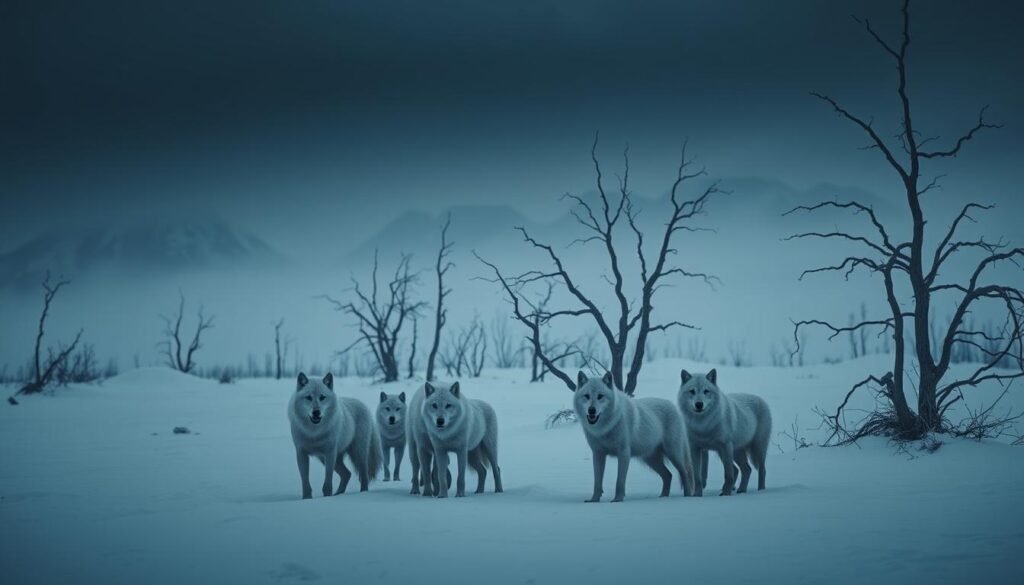
Imagine living in a place where teamwork isn’t just nice—it’s life or death. These snow-white hunters operate like a hockey team that never clocks out. Every member has a position, from babysitters to quarterbacks, all glued together by trust and frozen nose boops.
In 2019, researchers in Alert, Nunavut, got schooled in wolf etiquette. A young male once sniffed a scientist’s recording device, then gently grazed her cheek with his muzzle. No teeth. No panic. Just a frosty “Hey, what’s this?” moment.
But don’t mistake curiosity for friendship. Their body language screams boundaries:
Ears forward = “I’m watching you”
Tail straight up = “Back off, snowbird”
Low growl + stepped paw = “This hare? Mine.”
Pack Structure and Social Order
Think of their pack as a family business where everyone’s got shares. The alpha pair aren’t dictators—they’re more like team captains. Here’s how duties split:
Role
Job
Age Group
Scouts
Track prey for miles
Young adults
Nurses
Guard pups during hunts
Elders
Teachers
Show pups hunting tricks
All adults
Even the pups contribute by play-fighting. Those tumbling matches? Survival training disguised as fun. When a hunt succeeds, the whole family feasts—alpha pair eats first, but everyone gets a share. It’s how they survive winters where daylight’s just a rumor.
Diet and Hunting Techniques on Icy Terrain
What’s on the menu when your backyard is a frozen wasteland? These snow warriors turn every meal into a group project where failure means starvation. Their food strategy? Think military precision meets dinner theater—except the audience might become dessert.
Primary Prey: Muskoxen, Hares, and More
Forget takeout—their grocery list reads like a polar survival guide. Muskoxen are the main course, but catching one requires teamwork. Six wolves minimum: two distract the herd, three isolate a target, one goes for the throat. Arctic hares? Those are “snack packs”—quick solo hunts when energy dips.
Prey
Hunting Strategy
Success Rate
Caloric Value
Muskox
Group ambush
30%
40,000 kcal
Arctic Hare
Solo chase
60%
1,200 kcal
Caribou
Opportunistic strike
15%
25,000 kcal
Fun fact: They’ll even raid polar bear leftovers. Waste not, want not in the tundra buffet line!
Cooperative Feeding and Scent Marking Signals
Ever seen wolves play “hot potato” with a muskox leg? After a kill, adults use nose-taps and tail flicks to:
Assign guard duty for pups born that season
Signal “seconds available” through urine marks
Claim priority bites without fighting
Their secret sauce? Scent glands near their paws leave chemical notes saying “Dinner’s ready—follow the stink trail!” It’s like texting, but smellier and way more effective in blizzards.
Nature’s ultimate winter survival kit isn’t sold in stores—it’s built into these masters of the frozen realm. Picture a snowsuit that never gets soggy, paws that double as snowshoes, and ears designed to dodge frostbite. These aren’t upgrades—they’re non-negotiable features for life where winter lasts 10 months.
Built for Blizzards, Born for Ice
Their fur isn’t just a fashion statement. That double-layered coat traps heat like a thermos, with guard hairs shedding snow and a woolly undercoat 4x denser than huskies’. At -53°C (-63°F), it’s the difference between “chilly” and “crispy wolf popsicle.” Even their eyelashes are frost-proof!
Trait
Function
Survival Benefit
Compact size
Reduces heat loss
30% less exposed surface
Small ears
Prevents frostbite
Bloodflow stays internal
Snowshoe paws
Distributes weight
Walks atop deep drifts
Here’s the kicker: their habitat isn’t cozy dens. They bunker down in rock crevices when winds hit 60mph. And that pearly white coat? It’s seasonal camo—they molt to gray-brown for summer’s brief thaw, like swapping winter pajamas for a dirt-friendly tracksuit.
Mothers teach pups to hunt in total darkness by age 6 months, because in this climate, childhood ends fast. Every trait—from nose to tail—has been sharpened over 50,000 years of ice-age refining. Call it evolution’s hardest-core bootcamp.
Arctic Wolf Facts for Kids
Picture two siblings raised in different worlds—one in endless winter, the other in shadowy forests. That’s the Arctic and gray wolves. I spent weeks comparing their frost-forged features, and let me tell you: these aren’t just cousins—they’re polar opposites.
Snow Ninjas vs. Forest Dwellers
Their fur alone tells a story. While gray cousins sport earthy tones, northern packs wear winter camo 24/7. That coat isn’t just white—it’s a thermos suit with two layers. Outer guard hairs repel snow, while dense underfur traps heat better than your grandma’s quilt.
Feature
Arctic Wolves
Gray Wolves
Survival Advantage
Fur Density
4x thicker
Single layer
-70°F resistance
Skull Shape
Shorter muzzle
Elongated snout
Crushing frozen prey
Paw Size
Snowshoe-wide
Narrow pads
Ice traction
Even their ears are different. Frost-dwellers have smaller, rounded tips to prevent heat loss—like built-in ear muffs. Gray wolves? Bigger satellite dishes for forest sound tracking.
Here’s what blew my mind: their lifestyle shapes their meals. While forest packs chase deer through trees, snow ninjas rely on muskoxen and quick-footed hares. Those fluffy arctic hares aren’t just snacks—they’re survival tutors, teaching wolves to sprint across ice without face-planting.
Scientists obsess over their skulls. Arctic variants have reinforced jaw hinges for cracking frozen carcasses—like nature’s nutcracker. Next time you see a wolf documentary, check those frosty details. Evolution’s a wild sculptor.
Conservation Challenges and Environmental Pressures
You’d think living in Earth’s freezer aisle would keep these frosty hunters safe. Think again. Even the most remote corners of North America aren’t immune to modern threats. I’ve tracked studies showing their home turf warming three times faster than the global average—like turning a deep freezer into a lukewarm fridge.
Climate Change and Human Encroachment Effects
Bad years hit hard here. In 2021, erratic snowfall patterns left arctic hares scrambling—their numbers dropped 40% in parts of Nunavut. Fewer hares mean hungrier packs. One researcher told me, “It’s like watching a grocery store slowly empty while the line at checkout grows.”
Industrial footprints are creeping north too. Mining companies now probe areas once too icy to access. A 2023 report found:
Drilling sites within 50 miles of 3 major denning places
Helicopter traffic up 200% since 2010
Chemical traces in snow samples near exploration camps
But here’s what keeps scientists up at night: climate change doesn’t just alter weather. It reshapes entire food chains. Muskox herds—their main protein source—now face new parasites moving north with warmer temps. Last year, one pack I followed killed a sick muskox calf… then got sick themselves. Nature’s domino effect in action.
Conservation groups estimate fewer than 200,000 arctic wolves remain. That number sounds big until you realize their animals live across an area twice the size of Texas. Every disruption echoes through the pack. As one elder in Greenland told me, “When the ice speaks, all creatures listen.” Right now, it’s whispering warnings.
Parting Thoughts on Life Amid the Ice
Living where the sun barely rises, these creatures redefine what it means to thrive against the odds. Their snow-white fur isn’t just camouflage—it’s a thermal fortress. Those wide paws? Nature’s snowshoes, distributing weight like built-in flotation devices. I’ve watched footage of pups tumbling through drifts, their playful bites secretly honing survival skills they’ll need in six short months.
Every pack member matters here. Scouts track prey across frozen miles, while elders guard dens against -70°F winds. When a hunt succeeds, the feast isn’t chaos—it’s a lesson in sharing where even the smallest get fed. Behind those yellow eyes lies a calculus we’re only starting to grasp: how to turn scarcity into strategy.
Here’s what stays with me: these animals don’t just endure the ice—they’ve rewritten the rules. Their existence whispers that adaptation isn’t about changing the world, but mastering your place within it. And if that’s not genius dressed in fur, I don’t know what is.