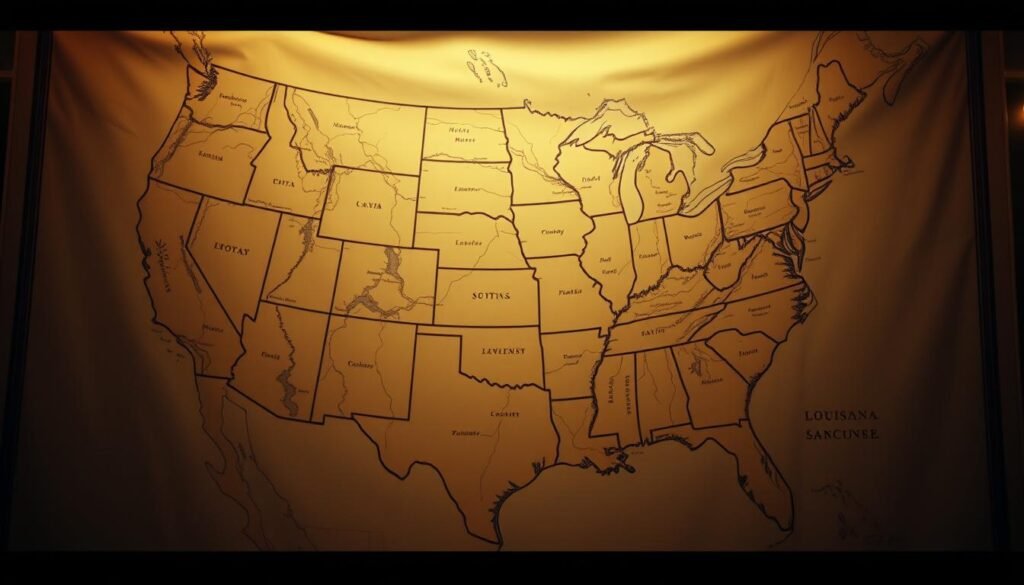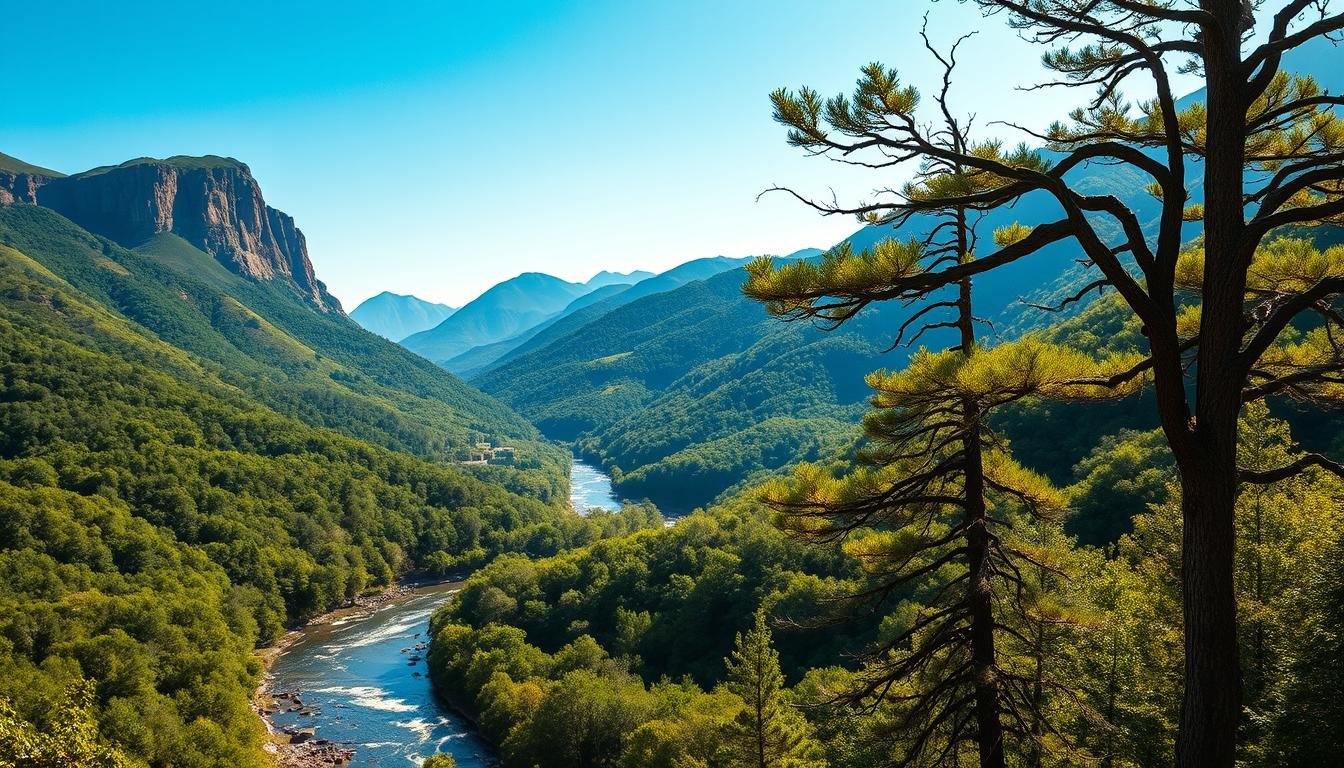
Let me tell you why this 35th state is cooler than a popsicle in July. West Virginia became part of the United States in 1863 during the Civil War, and its 10,500-year history includes ancient caves, wild rivers, and towns built on coal. Picture a place where you could literally trip over fossils while hiking – that’s the real-deal Mountain State.
Charleston, the capital, sits smack in the middle of borders with five states. Think of the map like a pepperoni slice – weird shape, but totally delicious. With 1.7 million people, it’s got more deer than humans and enough forest to hide Bigfoot’s entire family.
Want proof it’s cool as heck? Early settlers called this place “Kanawha” before picking its current name. You’ll find hidden salt caves bigger than football fields and Civil War reenactments where locals argue about who makes better cornbread. Stick around – we’re just scratching the surface of America’s most underrated adventure playground.
A Deep Look at West Virginia’s Early Days
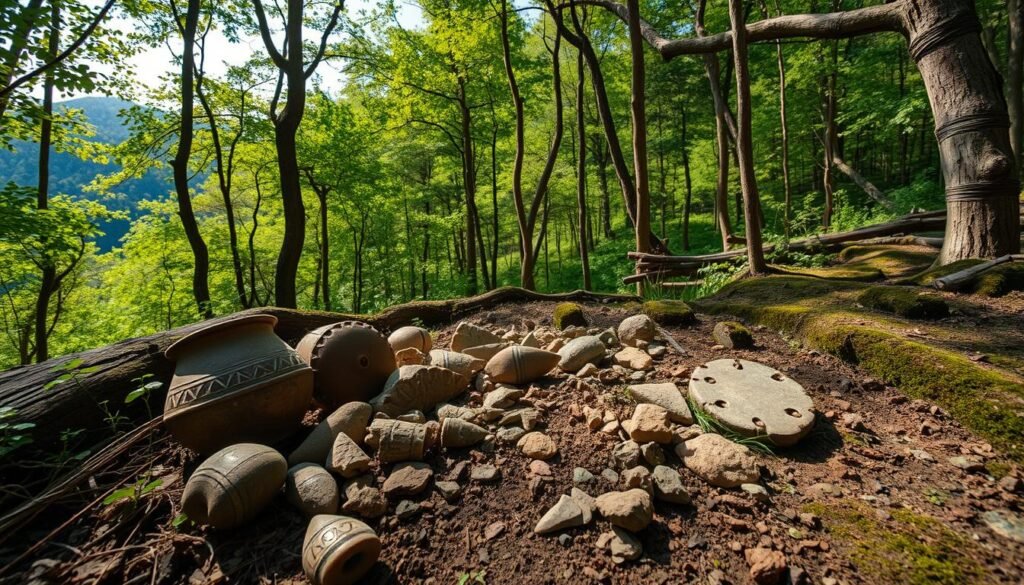
Ever wondered who walked these hills before us? Let’s dig into the dirt – literally. For over 10,000 years, this rugged land saw Paleo-Indians crafting spear points sharper than your grandma’s knitting needles. Archaeologists still find their tools buried like nature’s hidden treasure chests.
Ancient Inhabitants and Archeological Finds
Meet the Adena people – mound-building legends who stacked earth into ceremonial shapes bigger than school buses. Their Grave Creek Mound could fit three basketball courts! Later, Archaic tribes turned river valleys into bustling neighborhoods. Can you believe they invented nut-cracking stones 4,000 years before TikTok?
| Group | Time Period | Coolest Discovery |
|---|---|---|
| Paleo-Indians | 10,500+ years ago | Clovis spear points |
| Archaic Peoples | 8,000-1,000 BCE | Nutting stones |
| Adena Culture | 500 BCE-100 CE | Grave Creek Mound |
Native Tribes and Early European Encounters
By the 1600s, Shawnee and Cherokee tribes called these forests home. Then came European traders – and trouble. The French and Indian War turned the land into a tug-of-war rope. British victory? Sure, but Native Americans lost homelands faster than you lose socks.
Government treaties redrew maps like bored kids doodling in class. Within 50 years, settlers outnumbered original peoples 10-to-1. Still, artifacts whisper stories if you listen closely. Found any arrowheads lately?
Historic Moments Around Civil War Time
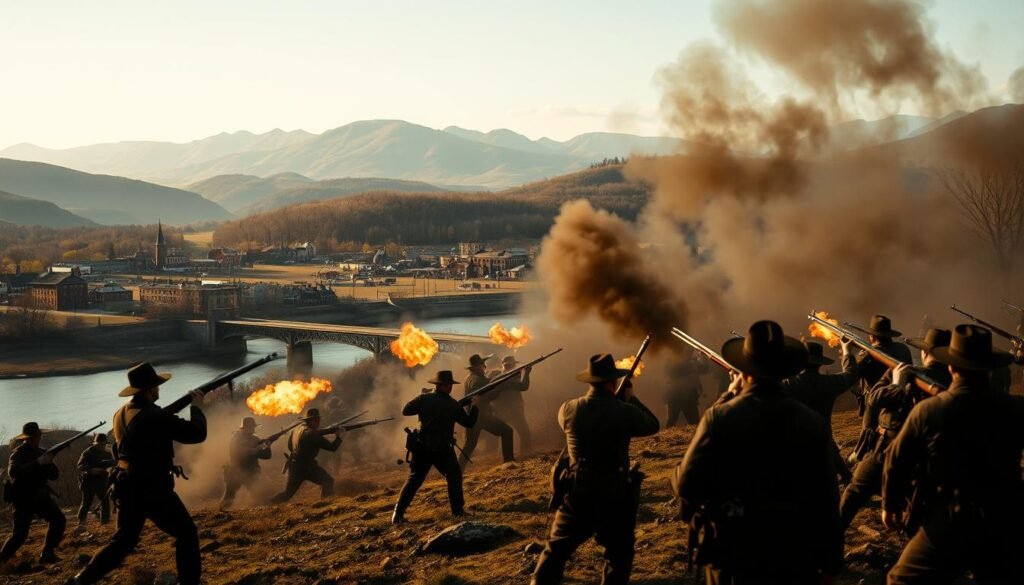
Hold onto your hats—history class just got wild. While most states fought in the American Civil War, this place fought to exist. Let’s unpack how a single raid and a mountain-sized disagreement birthed a new state.
Harpers Ferry and John Brown’s Notorious Raid
Picture this: October 1859, and some guy named John Brown storms a federal arsenal like it’s Black Friday for guns. His plan? Arm enslaved people and spark a rebellion. Spoiler: It went sideways faster than a raccoon on espresso.
Brown’s crew took over Harpers Ferry for 36 chaotic hours before Colonel Robert E. Lee (yes, that Lee) showed up. Fun fact? The first casualty was a free Black baggage handler. History’s messy like that.
The Split from Virginia in 1863
Here’s the plot twist: Western Virginians hated Richmond’s pro-slavery politics more than kids hate broccoli. When Virginia seceded in 1861, mountain counties went, “Nope—we’re out.”
Congress greenlit statehood on June 20, 1863, creating the only state born from Civil War drama. But get this—Lincoln almost vetoed it! Why? Legal loopholes about “consent” from Virginia’s government. Talk about family drama.
| Region | Economy | Stance on Slavery |
|---|---|---|
| Western Virginia | Small farms, mining | Mostly opposed |
| Eastern Virginia | Plantations | Pro-slavery |
West Virginia Facts for Kids Unwrapped
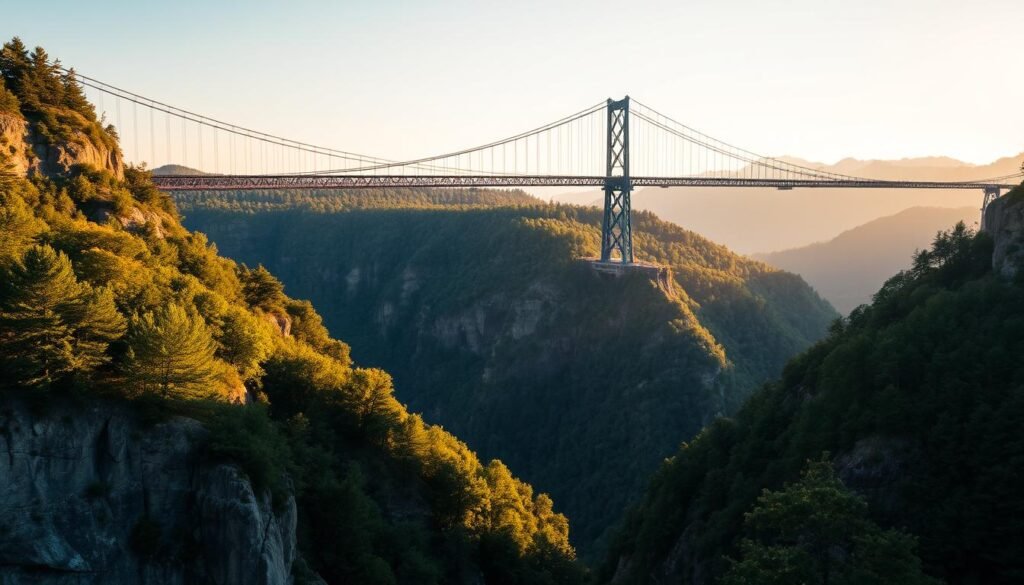
Ready to peel back the curtain on nature’s greatest magic tricks? Let’s start with the New River Gorge – a canyon so deep it could swallow the Statue of Liberty’s torch. This ancient river gorge carves through rock layers older than dinosaurs, while the New River itself laughs at its name. Scientists say it’s one of North America’s oldest waterways – think Nile’s grandpa with better rapids.
Now meet the gorge bridge – a steel beast stretching 3,030 feet. Its arch held the world record for decades, like a giant’s playground slide frozen mid-descent. Picture 88 million pounds of metal hovering above treetops. Would you walk across? Over 1,000 feet down, your stomach might disagree.
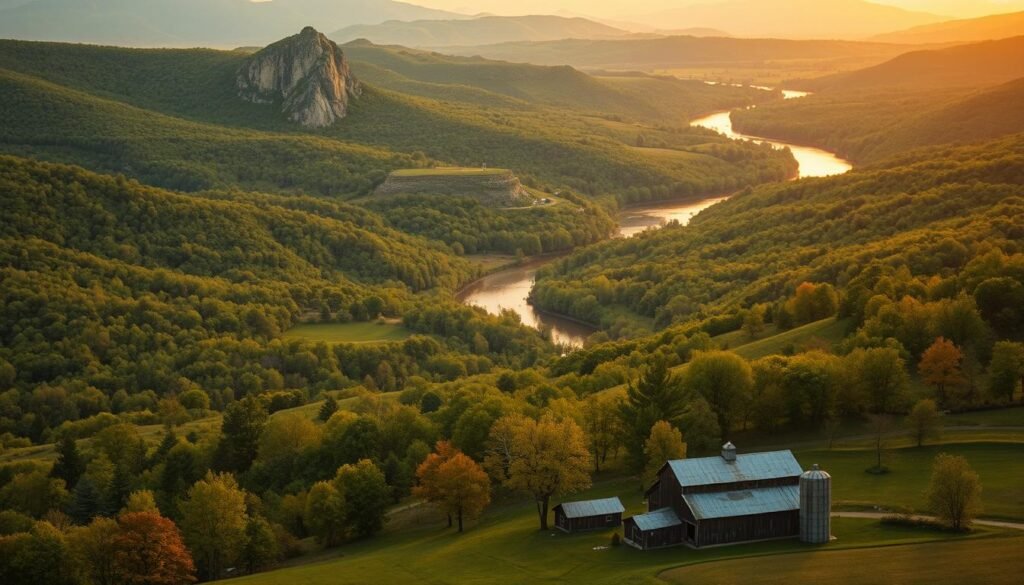
Those blue ridge mountains aren’t just pretty wallpaper. They’re the reason this state looks like a crumpled napkin. Rivers zigzag through valleys like hyperactive toddlers, shaping cliffs that glow orange at sunset. It’s why autumn here feels like someone spilled a paintbox.
Here’s the kicker: The New River flows north – rebellious as a cat ignoring commands. Compare it to the Amazon? Nah. This waterway hides secrets in every bend, from hidden waterfalls to fish that haven’t changed since T-rex roamed. Next time you see a map, trace its squiggles. That’s the Mountain State’s heartbeat.
Scenic Landscapes and Architectural Marvels
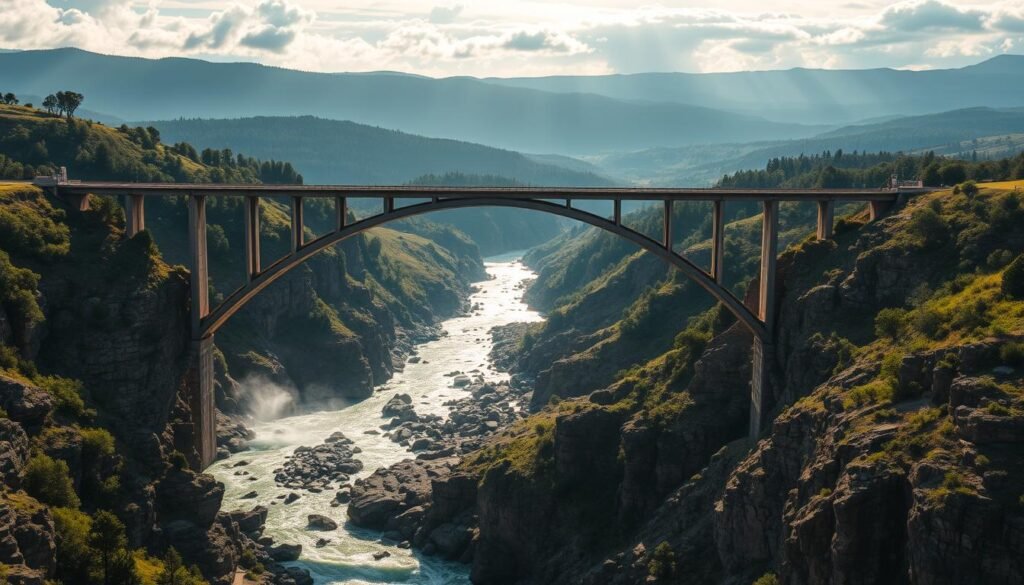
Imagine standing on a bridge so high, your lunch might consider a comeback. This state’s landscapes mix engineering genius with raw nature – like someone welded a skyscraper to a mountain range. Let’s explore structures and secrets that’ll make your jaw drop harder than a loose hiking boot.
The New River Gorge Bridge’s Impressive Stature
This steel giant isn’t shy. Stretching 3,030 feet across a canyon deeper than your last Minecraft dig, the river gorge bridge once held the title of longest single-span arch in the Americas. Its 876-foot arch could swallow the Washington Monument – sideways. Walk the catwalk under the deck if you dare. The view? Let’s just say birds get jealous.
| Bridge | Location | Length | Height |
|---|---|---|---|
| New River Gorge | Fayetteville | 3,030 ft | 876 ft |
| Golden Gate | San Francisco | 8,981 ft | 746 ft |
| Brooklyn | New York | 5,989 ft | 127 ft |
Hidden Caves and Mangled Mountain Passes

Now let’s talk underground. The ridge mountains hide caves bigger than subway stations. Organ Cave – yes, that’s real – has 45 miles of passages. I’d rather get lost there than in Ikea.
Up high, Spruce Knob laughs at your local hill. At 4,863 feet, it’s the state’s rooftop. The blue ridge views? Like green ocean waves frozen mid-crash. Trails here twist like spaghetti, perfect for spotting bobcats or inventing new curse words when your boots slip.
Pro tip: Visit Seneca Rocks at dawn. Those jagged mountains glow like dragon teeth. Makes you wonder – did nature build this, or did giants have a rock-throwing contest?
Wildlife Wonders and Lush Vegetation
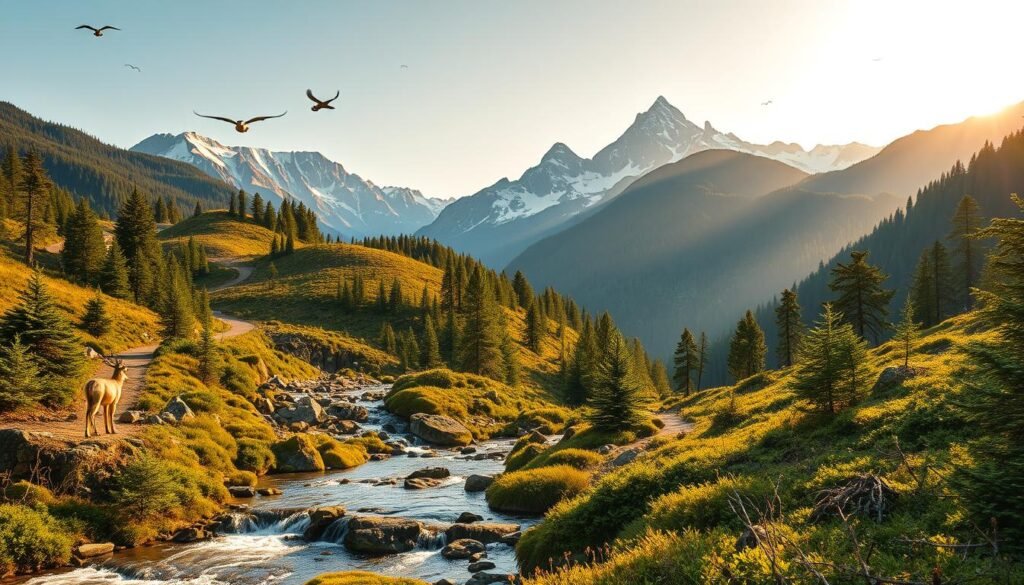
Grab your binoculars – class is in session where trees whisper secrets. This green kingdom hides more life than a birthday piñata. Let’s crack it open.
Unique Mammals and Birds on the Mountain Trails
Meet the northern flying squirrel – nature’s fuzzy glider. These guys soar 150 feet between trees like furry superheroes. Their secret? Skin flaps that turn arms into wings. Kids, imagine jumping off your bed and landing three houses down. That’s their daily commute.
Black bears rule these woods too. Adults weigh up to 550 pounds – heavier than four sixth-graders combined. But don’t worry, they’d rather raid berry patches than your picnic basket. Pro tip: Hang food 10 feet up in trees. Bears can’t climb and text, right?
| Animal | Size | Habitat | Cool Fact |
|---|---|---|---|
| Flying Squirrel | 12 inches | Old-growth forests | Glides 150+ feet |
| Black Bear | 5-6 feet tall | Forested mountains | Eats 20,000 berries/day |
| Scarlet Tanager | 7-inch wingspan | Oak canopies | Migrates 3,000 miles |
Rivers here aren’t just pretty – they’re animal highways. The Gauley River hosts otters sliding down rapids like they’re at a waterpark. Meanwhile, cerulean warblers nest 80 feet up in sycamores. Their blue feathers? Nature’s version of highlighter markers.
Looking for trails? Try the Dolly Sods Wilderness site. Its 17,000 acres burst with cranberry bogs and spruce forests. You might spot bobcats – but they’ll ghost you faster than a dropped Wi-Fi signal. That’s wilderness etiquette: peek but don’t poke.
Mining, Labor, and Industrial Shifts
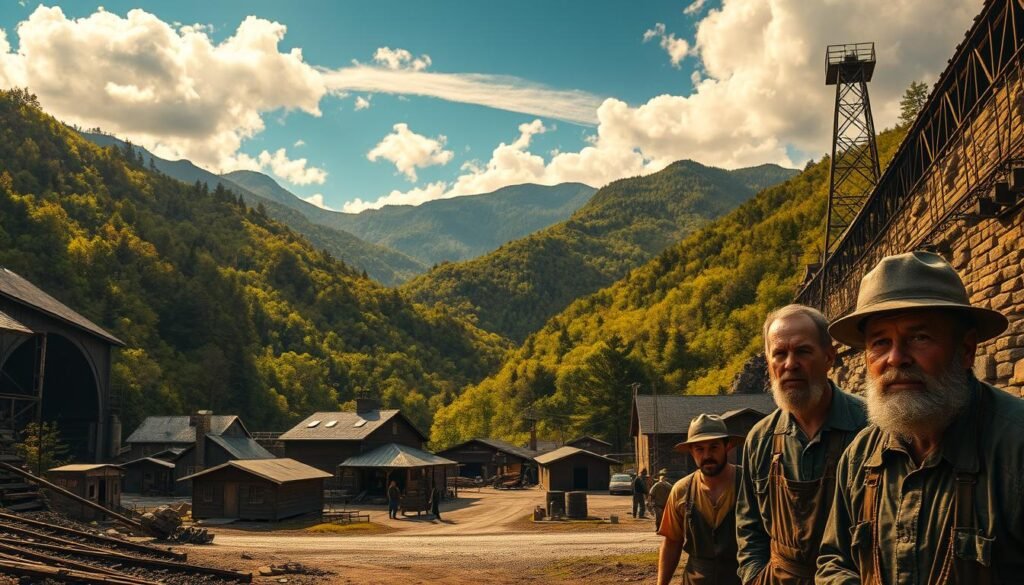
Ever tasted coal dust in your morning coffee? That’s how deep this fuel ran through daily life here. For generations, coal wasn’t just a job – it was breakfast, bedtime stories, and backyard ballgames. Whole towns woke to mine whistles, their streets smelling like burnt toast from processing plants.
Coal’s Role in Shaping Local Communities
Picture this: Company-owned houses, schools teaching mining safety, and paychecks spent at the company store. Entire counties lived and breathed coal. By 1920, over 100,000 miners dug 90 million tons annually. But darkness followed the boom.
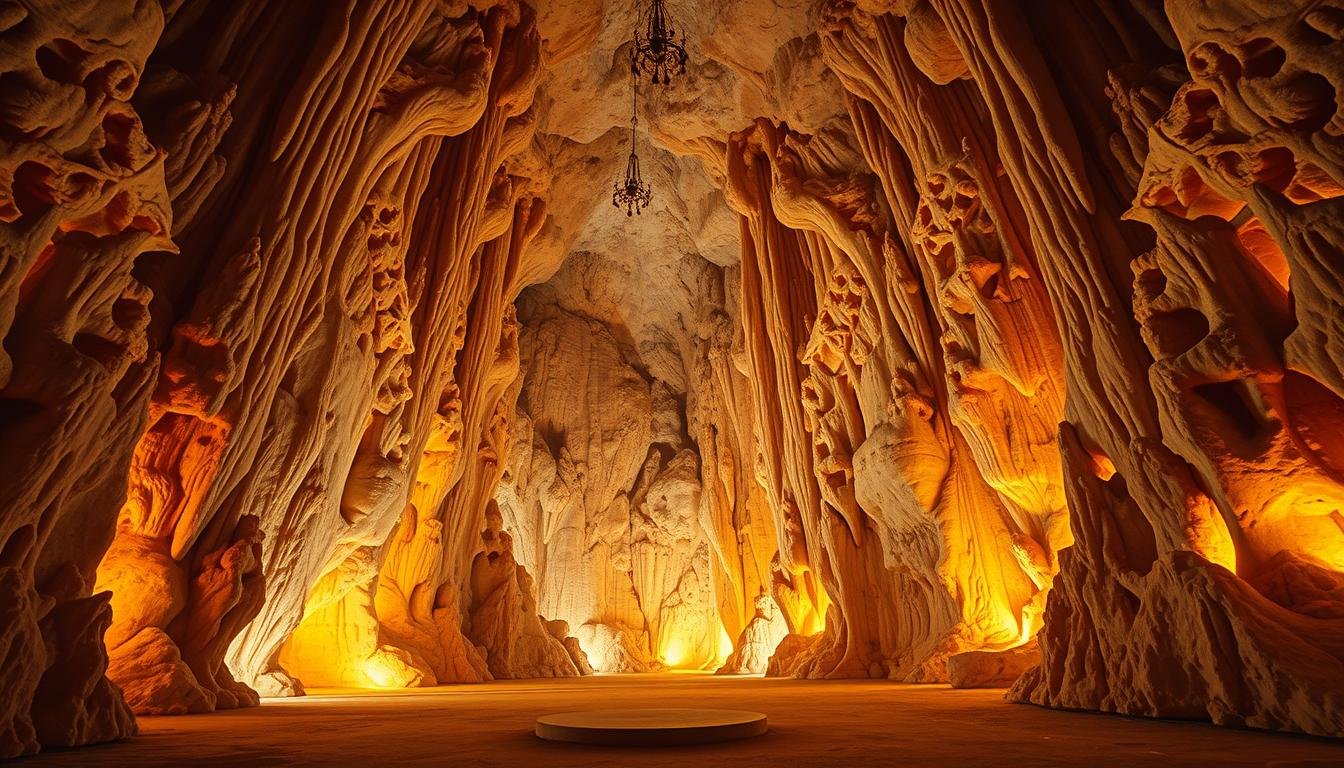
January 2, 2006: The Sago Mine disaster. An explosion trapped 13 men 260 feet underground. Rescue teams fought toxic air for 41 hours. Only one survivor emerged. Five years later, the Upper Big Branch explosion killed 29 – the worst U.S. coal accident since 1970. Heroes? Miners left farewell notes for families while waiting for help.
| Disaster | Year | Lives Lost | Key Change |
|---|---|---|---|
| Sago Mine | 2006 | 12 | Emergency oxygen rules |
| Upper Big Branch | 2010 | 29 | Mine Safety Act reforms |
Labor revolts erupted like underground fires. The 2012 “Justice for Janitors” strike saw 22,000 workers demand safer conditions. Result? Stricter air quality checks and mandatory rescue chambers by 2015. Today, automated drones map unstable tunnels – tech replacing canaries in cages.
Here’s the twist: Coal employment dropped 60% since 2009. But communities adapted. Old mines became whitewater rafting parks. Miners retrained as solar installers. The fuel that built towns now fuels reinvention – proving grit shines brighter than any mineral.
Geographical Regions: Plateau and Ridge Regions Explored
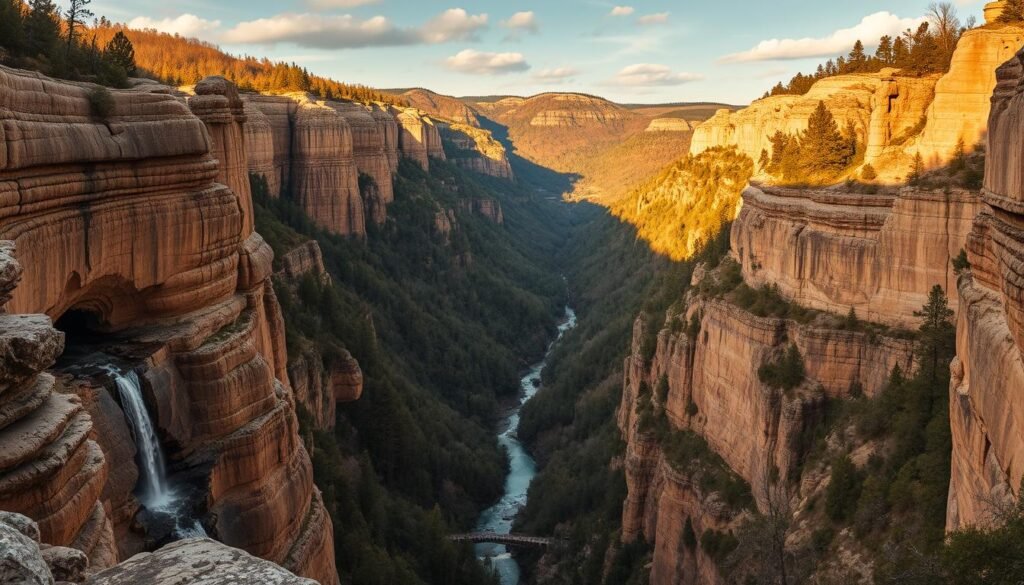
Think of the state’s geography as a layer cake – but instead of frosting, you get jagged ridges and pancake-flat plateaus. The Allegheny Plateau covers 60% of the land, shaped like God forgot to finish baking the crust. This region hides gorges deeper than your last video game level, carved by rivers older than your great-great-grandma’s quilts.
Allegheny Plateau and Its Gorges
Here’s the kicker: The plateau isn’t flat. It’s crumpled like a rejected homework paper. The New River Gorge slices through it, revealing 350-million-year-old rock layers. That’s older than most dinosaur fossils! This within Appalachian wonder drops 750 feet – tall enough to stack two Statues of Liberty with room for a raccoon on top.
Now meet the Allegheny Front – nature’s version of a “Do Not Enter” sign. This 150-mile cliff separates the plateau from the Ridge-and-Valley region. Imagine tripping off a 3,000-foot ledge. That’s the elevation change here. Don’t worry, trails wind through like spaghetti strands if you’re brave enough.
| Feature | Allegheny Plateau | Ridge-and-Valley |
|---|---|---|
| Elevation | 1,500-4,863 ft | 800-2,400 ft |
| Rock Type | Sandstone & Coal | Limestone & Shale |
| Signature Spot | Seneca Rocks | Dolly Sods |
The appalachian mountains here play favorites. West of the Front, plateaus stretch like lazy cats. East? Parallel ridges rise like dragon spines. It’s why early settlers called this part virginia “the Switzerland of America” – minus the chocolate and yodeling.
Pro tip: Stand at Spruce Knob’s peak. You’ll see why this west virginia state landscape looks like God dropped a box of Legos. Plateaus flatten horizons while ridges scribble the skyline. Geography class never tasted this wild.
Cultural Tidbits, Festivals, and Local Flavors
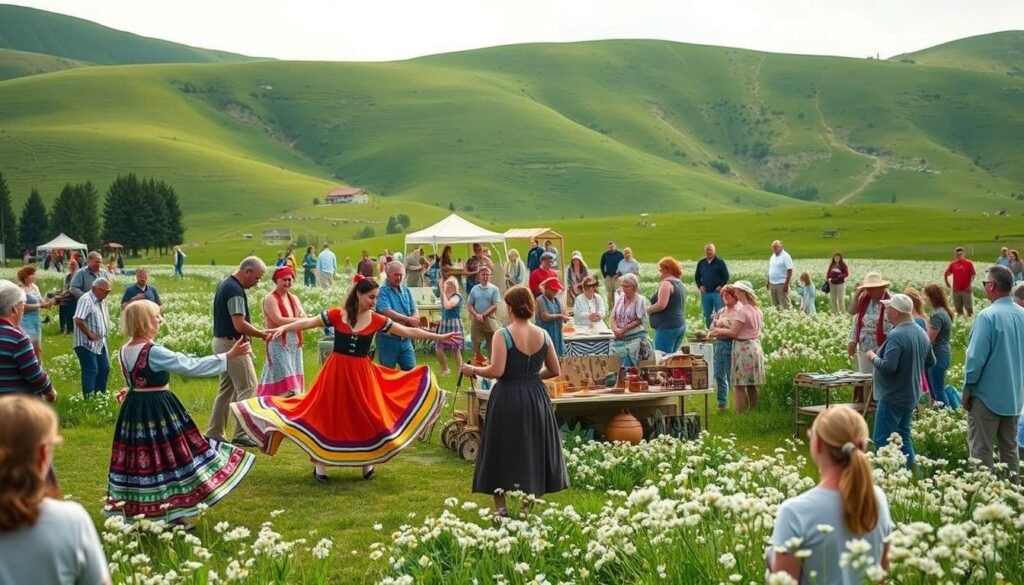
Ever bitten into a sandwich and tasted history? Here, traditions simmer like a pot of ramson stew – equal parts earthy and surprising. Let’s dig into celebrations where onions get standing ovations and trades from the 1800s come alive.
The Ramson Festival and Wild Onion Traditions
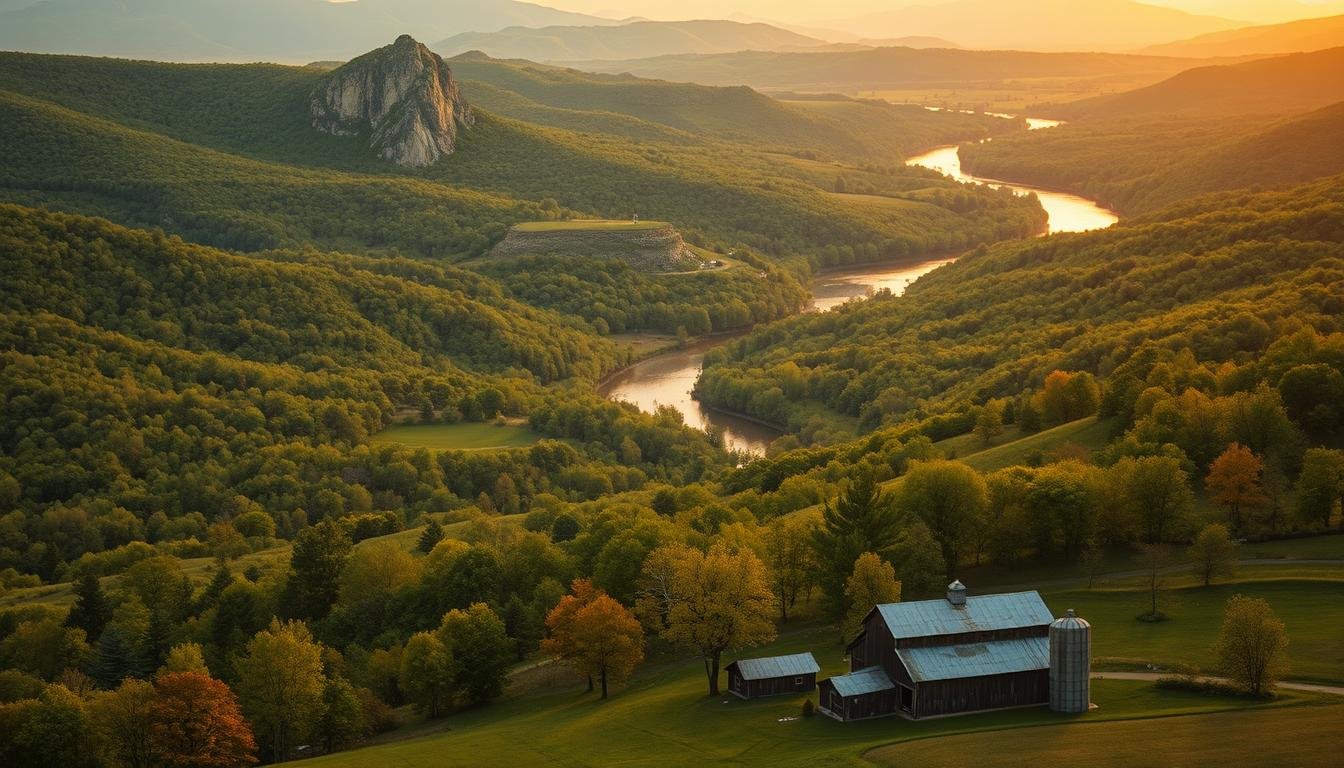
April in Richwood smells like garlicky confetti. The Feast of the Ramson draws 5,000+ folks to celebrate wild leeks. Picture this: chefs battling in ramson chili cook-offs, kids racing with onion bunches, and fiddle music bouncing off Appalachian hills. Pro tip: Try the ramson ice cream. It’s weirder than a squirrel wearing sunglasses.
Meanwhile, March brings wild onion dinners hosted by the Cherokee community. Families gather in the area to fry up greens passed down through seven generations. Did you know? These meals once marked spring’s arrival – nature’s version of hitting refresh.
| Festival | Time of Year | Must-Try Dish | Quirky Fact |
|---|---|---|---|
| Feast of the Ramson | April | Ramp Cornbread | 2019 eating contest: 42 onions in 8 minutes |
| Wild Onion Dinners | March | Sassafras Tea | Recipes date to 1700s Cherokee settlements |
Historic Trades and Period-Dressed Tour Guides
Step into Harpers Ferry, where blacksmiths hammer history into shape – literally. Costumed interpreters in the area demonstrate 19th-century trades like candlemaking and barrel-cooping. My favorite? The weaver’s hut where you can watch wool transform into fabric slower than TikTok loads in the woods.
At Cass Scenic Railroad, engineers in striped overalls operate 1940s steam locomotives. It’s like Thomas the Tank Engine grew a beard and started telling stories about the time coal was king. Kids can even “hire on” as junior brakemen – unpaid, but the bragging rights? Priceless.
Famous Natives, Local Legends, and Unexpected Celebs
What do a Nobel Prize winner and a supersonic pilot have in common? They both sprouted from this mountain state’s rocky soil. Let’s meet the icons who put West Virginia on the map – and a few who’ll make you say, “Wait, them?!”
From Pearl S. Buck to Chuck Yeager
Pearl S. Buck wasn’t just any writer. Born in Hillsboro, she became the first American woman to win the Nobel Prize in Literature. Her stories about Chinese peasants? Inspired by her missionary parents’ tales. Bet you didn’t expect that from a mountain state girl!
Then there’s Chuck Yeager. This Lincoln County native broke the sound barrier in 1947 – basically turning aviation into a superhero movie. His secret? Growing up fixing engines in his dad’s garage. “You don’t concentrate on risks. You concentrate on results.” Classic West Virginian grit.
Here’s a fun twist: George Washington surveyed land here at 16. Yep, before he chopped cherry trees or crossed the Delaware. Those early maps helped shape the 35th state’s borders. Talk about a teenage summer job!
- Don Knotts: The Andy Griffith Show star from Morgantown made Mayberry feel like home
- Henry Louis Gates Jr.: Harvard scholar tracing African American roots? Born in Keyser
- Kathy Mattea: Grammy-winning singer who turned coal mining stories into chart-toppers
These legends prove something: The mountain state doesn’t just grow trees – it cultivates trailblazers. Next time you hike these hills, remember you’re walking where giants literally and figuratively stood.
Parting Reflections on the Mountain State’s Allure
Ever stood where history whispers through the trees? This state’s story isn’t just dates and dirt – it’s coal dust in grandma’s biscuit recipe, Civil War arguments echoing off ridge mountains, and rivers that carve rebellion into bedrock. Every part of its past – from Shawnee hunting grounds to miners’ lunch pails – stitches together a quilt wilder than a midnight thunderstorm.
Think about it: The same north-flowing rivers that baffle map nerds once floated timber for frontier forts. Those hidden salt caves? They sheltered both Native traders and Prohibition-era moonshiners. It just blows my mind how state west of the Alleghenies became a pressure cooker for America’s growing pains – splitting from Virginia, fueling industries, then reinventing itself when coal’s spotlight dimmed.
Today’s festivals? They’re living virginia history with a side of ramson onions. Old rail trails now host hikers instead of steam engines. But here’s the kicker – this place still feels unfinished, like a cliffhanger waiting for your next visit. What stories could those blue ridge valleys spill if we…