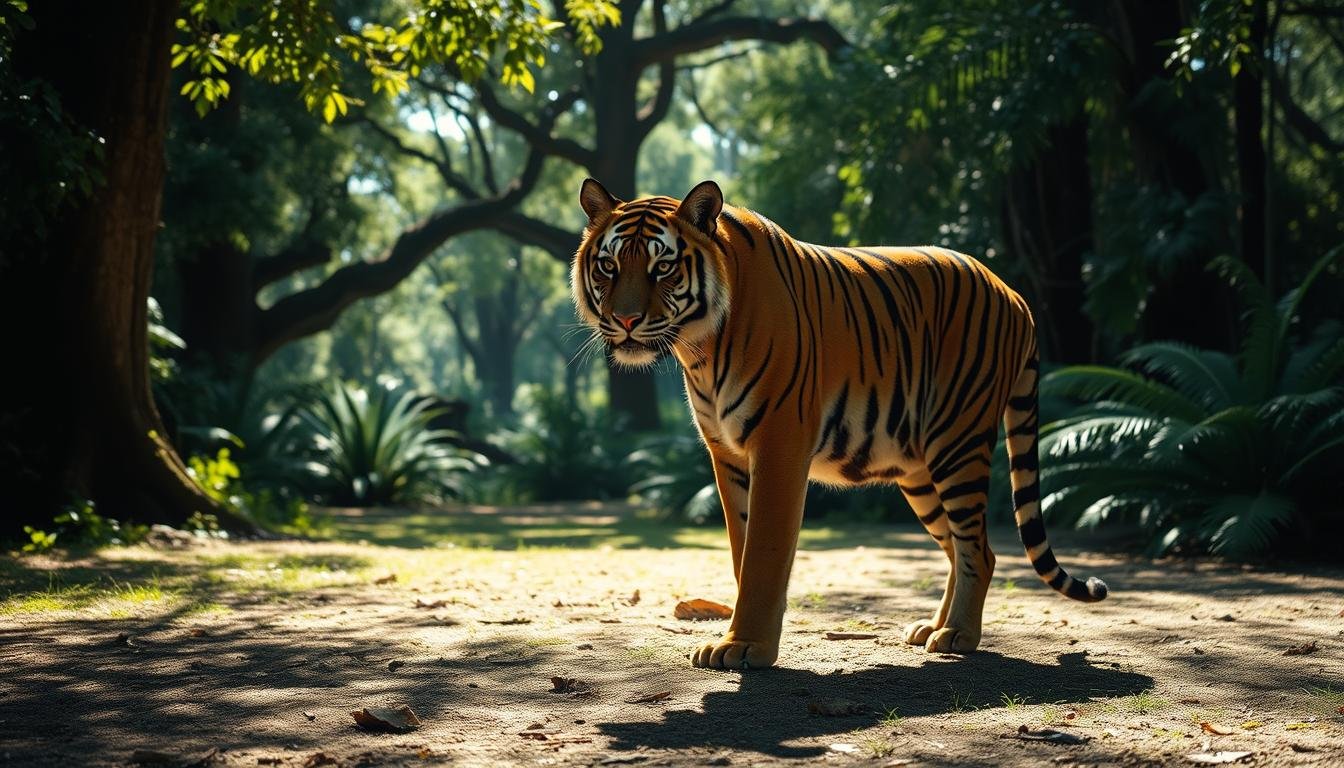
Spoiler alert: This isn’t a tiger—it’s a dog-faced, kangaroo-bellied marsupial that vanished before your great-grandparents were born. So why does Tasmania still slap its face on everything from government logos to beer bottles? Buckle up, because this cold case is wilder than a detective show.
The Thylacinus cynocephalus (try saying that three times fast) disappeared from mainland Australia 3,600 years ago—around the time Egyptians were building pyramids. But here’s the kicker: it clung to life in Tasmania until the 1930s. Imagine explaining to Cleopatra that this striped oddball outlived her by 16 centuries!
Before you ask: no, nobody’s seen one alive since the last one died in a zoo. Yet Tasmania treats it like a celebrity ghost, stamping its silhouette on official seals like a “Wanted” poster for extinction. We’ve got false sightings, cloning rumors, and enough mystery to fuel a Netflix doc. Ready to dig into the animal that’s equal parts family mascot and enigma?
What Was the Tasmanian Tiger? (Spoiler: Not a Tiger)
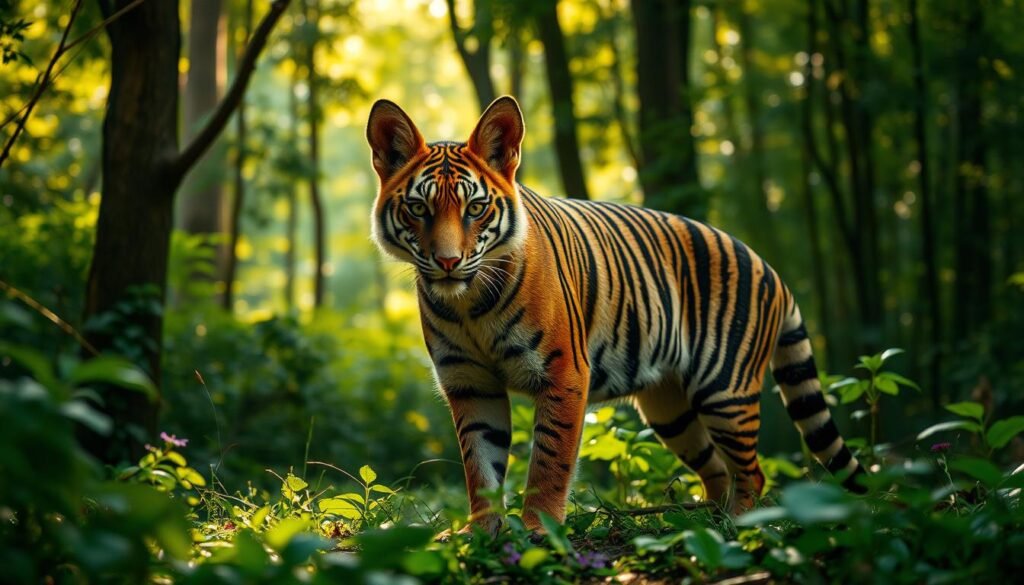
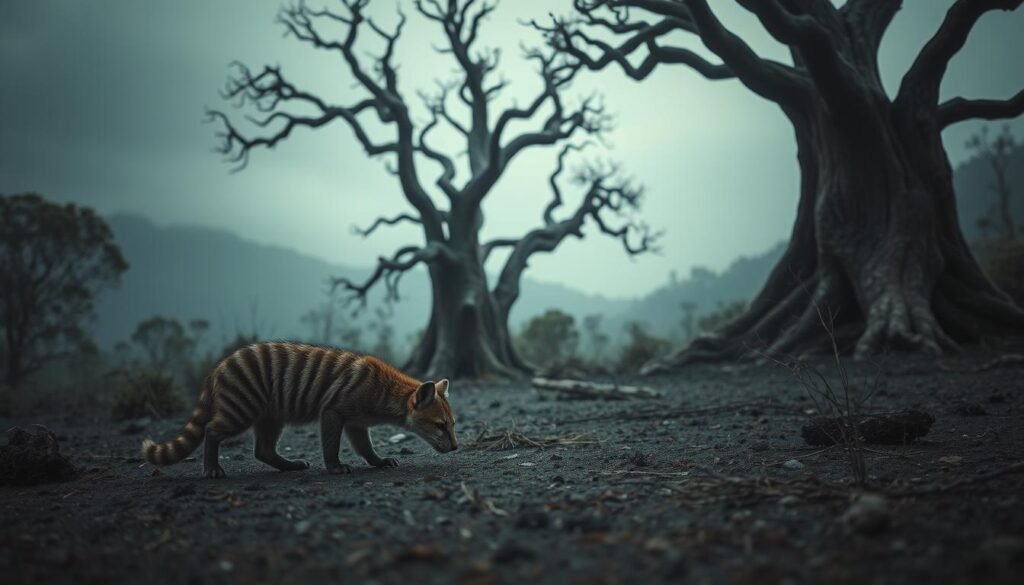
Nature played a prank when it created this striped marsupial. The thylacine looked like a dog dressed as a tiger for Halloween—complete with a kangaroo’s pouch. Scientists basically called it ‘pouch dog’ (Thylacinus cynocephalus) and called it a day.
A Marsupial in Wolf’s Clothing
While wolves perfected pack hunting, thylacines were busy being evolutionary oddballs. As a carnivorous marsupial, it filled the same niche as dingos. But here’s the kicker: when dingos invaded Australia, thylacines lost a 3,000-year turf war. Talk about bad luck.
Pouches, Not Puppies: Weird Parenting
Both males and females had rear-opening pouches—yes, dads got stuck with diaper duty too. Unlike placental mammals, thylacine joeys crawled into the pouch like tiny hitchhikers. Early settlers saw the stripes and yelled ‘tiger!’ proving colonial naming skills were trash.
Built Like a Dog, Striped Like a Candy Cane
Ever seen a dachshund try to cosplay as a wolf? That’s basically the thylacine’s vibe. Long legs, a stiff kangaroo-like tail, and those infamous stripes—like someone doodled on its back with a Sharpie.
Those Jaws Could Swallow Your Homework
Let’s be real—those jaws were nightmare fuel. With a 120-degree gape, they worked like a biological nutcracker. Scientists think it could unhinge its mouth to gulp whole possums. Compare that to your average dog’s yawn:
Animal
Jaw Gape
Prey Size
Thylacine
120°
Whole wallabies
Gray Wolf
90°
Deer legs
Why the Heck Did It Have Stripes?
Science still debates the stripes. Camouflage? Fashion statement? Maybe both. Early settlers drew it like a mangy kangaroo until photos revealed the truth. And that stiff tail? Imagine it thumping against your tent at night—no thanks.
Here’s the kicker: it hunted like a wolf but parented like a kangaroo. Evolution’s ultimate mashup.
History has a way of repeating itself. Humans wiped out yet another species—this time, the thylacine. Blame sheep, colonial greed, and a bounty program straight out of a dystopian novel.
Sheep Panic and the 1800s Bounty Program
In 1888, Tasmania offered £1 per thylacine head. The math was brutal: kill 2,184, buy a farm. By 1909, it was the island’s worst get-rich-quick scheme.
Year
Bounty Paid
Thylacines Killed
1888–1909
£2,184
2,184
1930
N/A
Last wild kill
Spoiler: Later studies showed thylacines preferred pademelons over sheep. Oops.
The Last Known Thylacine Died in a Zoo—Alone
In 1936, the final known thylacine froze to death on a concrete slab at Hobart Zoo. Keepers forgot bedding. Tasmania protected the species 59 days later. Slow clap for bureaucracy.
Meanwhile, in 2023 labs, scientists stare at DNA vials. Could this be the comeback story of the century?
Tasmanian Tiger Facts for Kids: Debunking the Myths
If conspiracy theories were a sport, the thylacine would be its undefeated champion. Between bogus sightings and wild cloning claims, this species has become the Bigfoot of marsupials. Let’s separate fact from fiction—no blurry photos required.
Nope, It Didn’t Actually Hunt Tigers
As if anything in Tasmania could take on a Bengal tiger. Please. The name “Tasmanian tiger” was colonial branding at its worst—like calling a raccoon a “trash panda.”
Truth is, thylacines preferred smaller prey: wallabies, birds, and possums. Their jaw structure couldn’t handle anything bigger than a medium-sized dog. And New Guinea’s folklore? Zero tales of striped wolf-dogs battling jungle cats.
Yes, People Still “See” Them (They’re Wrong)
Your uncle’s 2003 “thylacine photo”? That’s a mangy fox with bad lighting. Since the last confirmed death in 1936, alleged sightings pile up like lost socks:
1960s: Government sent biologists with cameras. Result? A portfolio of very disappointed scientists.
2020s: Trail cams keep capturing foxes. Or possums. Or literally any other animals.
Meanwhile, science keeps trying to back-engineer the species. The 1999 cloning attempt? Failed harder than a kid’s volcano project. The 2022 Colossal Biosciences plan? Basically Jurassic Park with dunnart DNA. What could go wrong?
Bonus weirdness: A 4,650-year-old mummified cave specimen in Australia still gives forensic experts nightmares. Some mysteries refuse to stay buried—even after thousands of years.
Science’s Wild Plot Twist: Bringing It Back?
De-extinction sounds like sci-fi, but labs are dead serious. The thylacine could be the first species to cheat extinction, thanks to CRISPR and stubborn scientists. Let’s be real—it’s like Frankenstein’s taxidermy project with worse DNA.
Here’s the catch: 100-year-old specimens give geneticists less to work with than your grandpa’s VHS tapes. The 2008 gene reactivation was a start, but Colossal Biosciences’ 2022 plan? Editing a mouse-sized dunnart’s DNA until it’s thylacine-sized. Easy, right?
Even if we clone it, where does it live? Tasmania’s sheep farms haven’t gotten friendlier in 90 years. Spoiler for 2040: First lab-born thylacine chews through its leash. Would it still be the same species, or just a striped ghost of time?