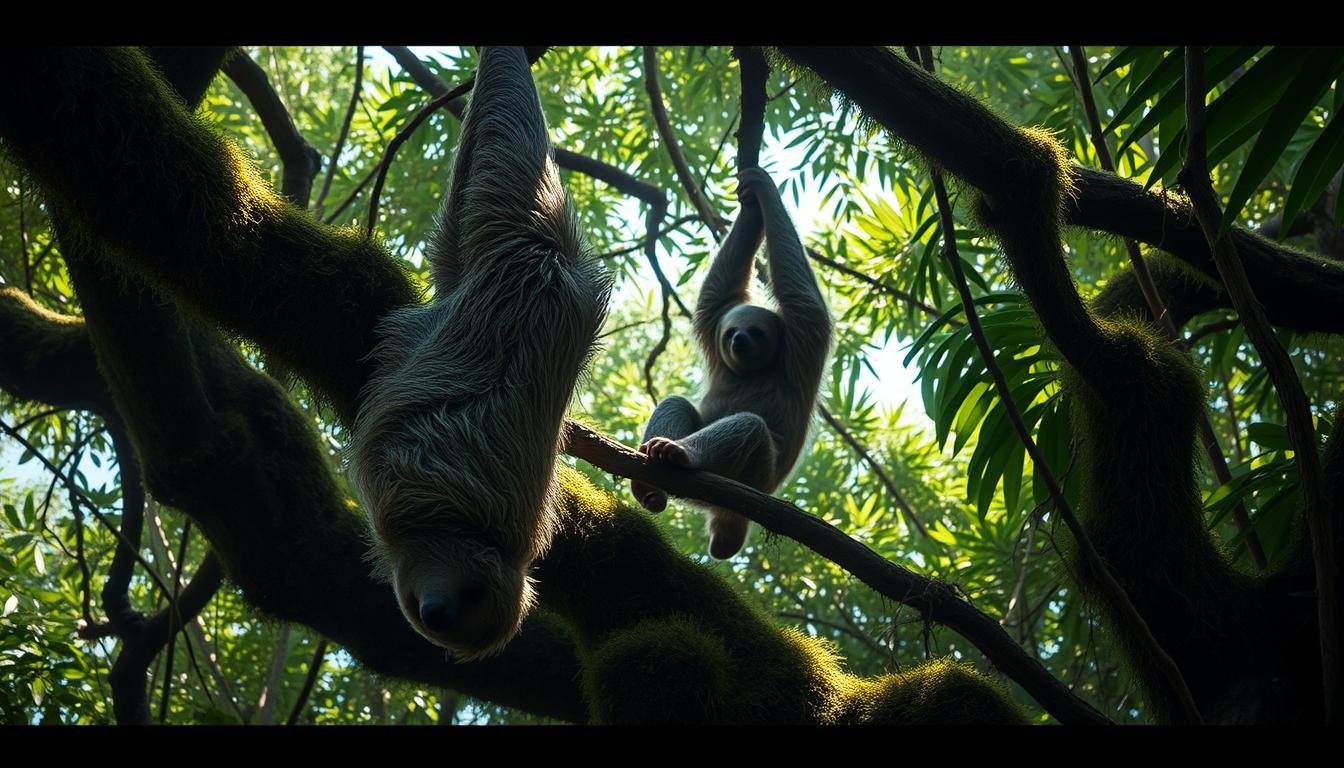
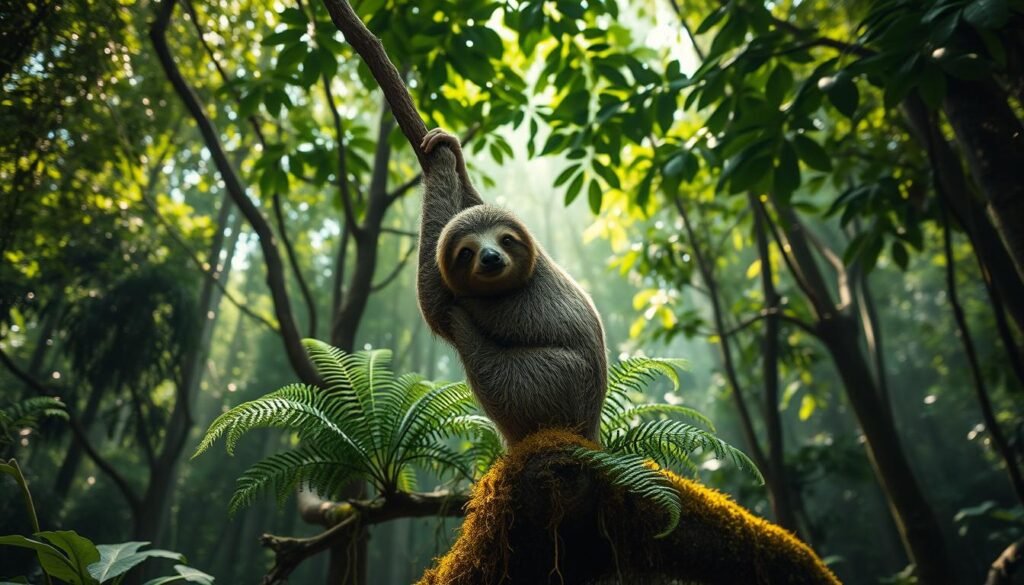
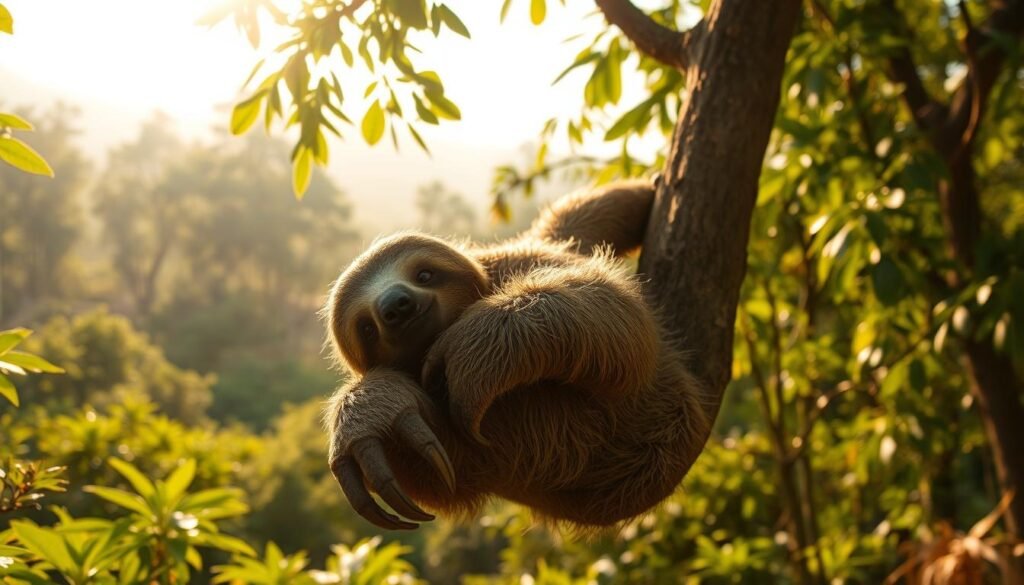
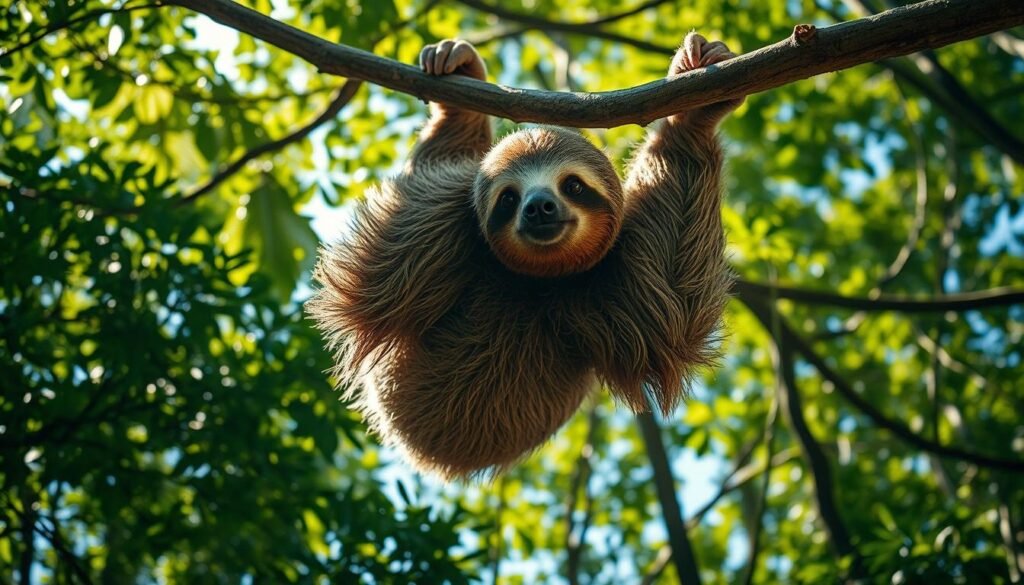
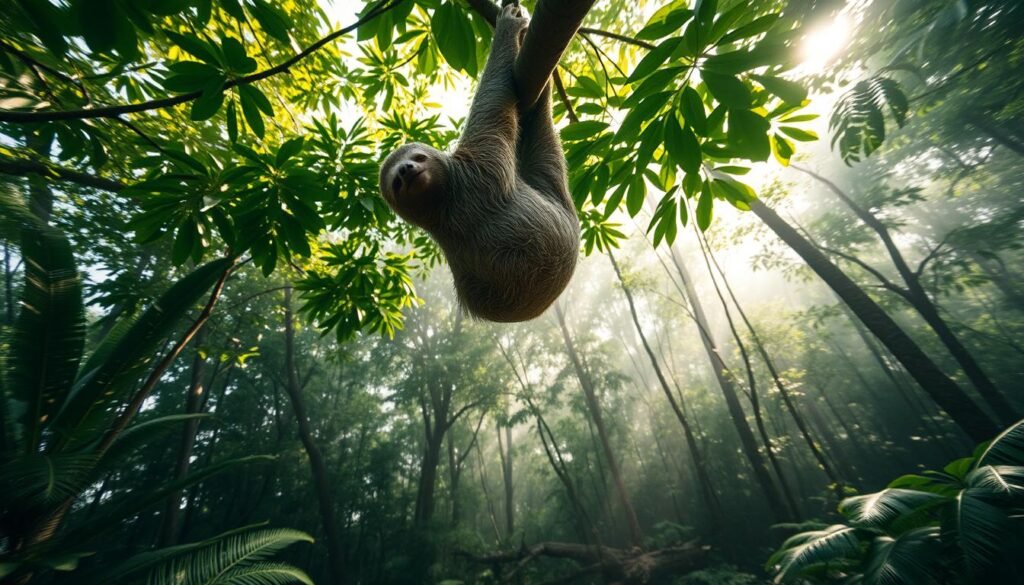
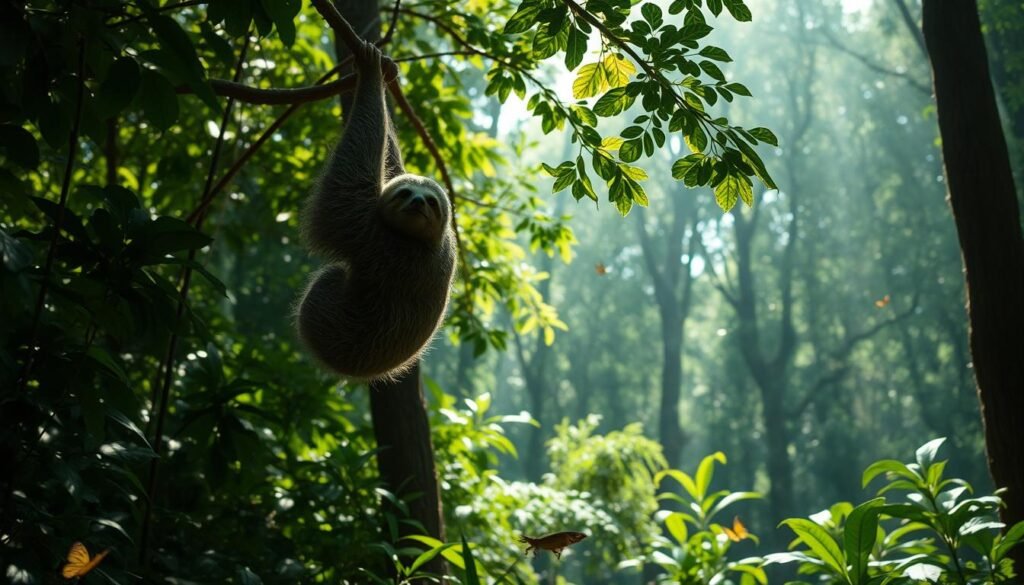
Sloths are the ultimate slow animals, showing that being slow is smart. They turn the speed race in the animal kingdom upside down. They prove that slow and steady can win.
Imagine an animal so clever it saves energy and hides from predators. Sloths move so slowly, they make snails look fast. Their slow pace is not laziness but a superpower!
Sloth facts for kids show that being slow is an amazing advantage. These furry tree-dwellers have incredible survival skills. They have unique metabolisms and amazing camouflage, showing that speed isn’t always key.
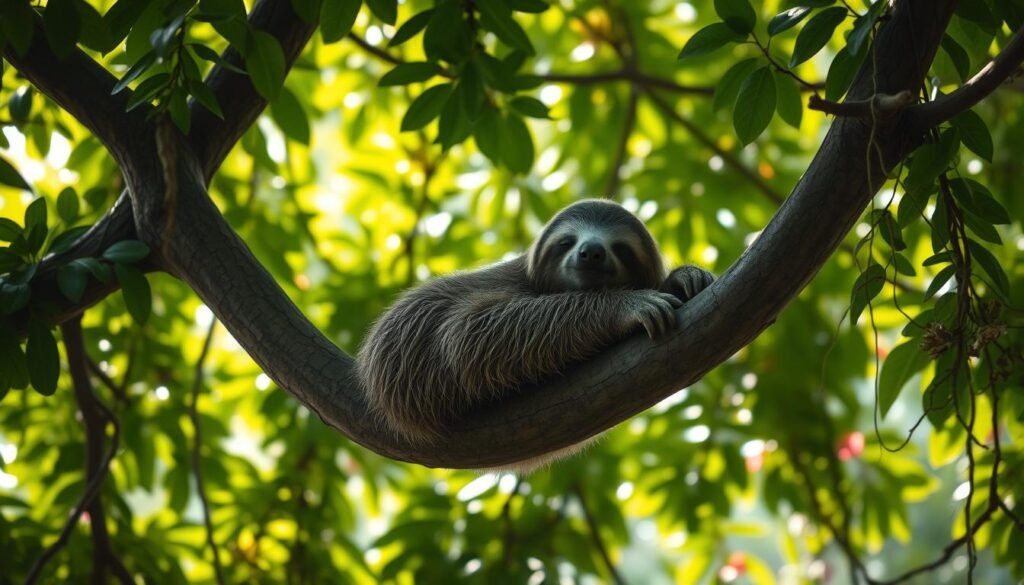
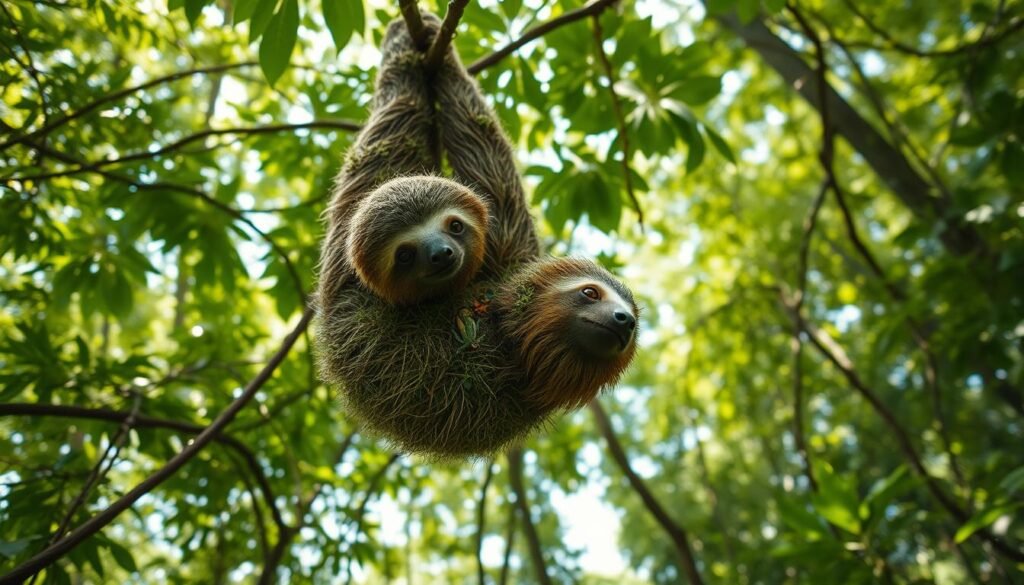
Sloths are nature’s stealth masters. They move so slowly, moss and algae grow on their fur. This helps them blend into their forest homes. Their lazy lifestyle is actually a smart survival technique that has helped them thrive for millions of years.
Get ready to learn why these adorable, slow creatures are fascinating. Our sloth adventure is just starting, and it’s going to be exciting!
Meet Your New Favorite Animal: What Makes Sloths Special
Imagine a creature that changes how we think about speed. Sloths are the slow-motion stars of the animal kingdom. They live life at their own pace, making them unique.
Sloths are divided into two types: two-toed and three-toed. Each type adds its own charm to the tropical forest. Let’s explore what makes these animals so captivating!
Physical Features of Sloths
Their body is a survival masterpiece. Sloths have:
Curved, powerful claws for hanging from trees
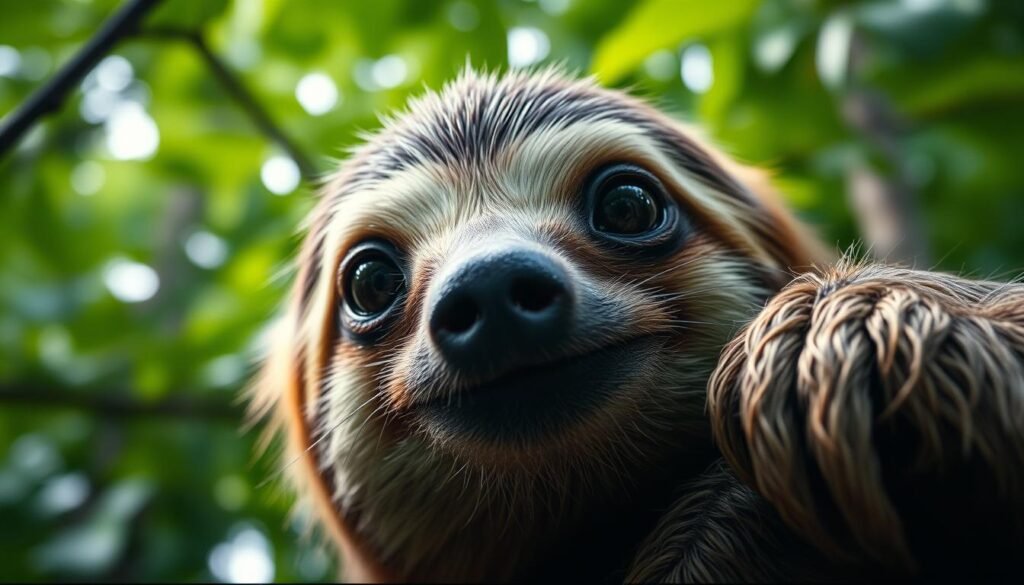
Thick fur for camouflage in the forest
Unique muscles for slow movement
Long arms for tree-dwelling
Types of Modern Sloths
The world of sloths is diverse. Modern sloth species include:
Linnaeus’s Two-toed Sloth
Hoffmann’s Two-toed Sloth
Brown-throated Three-toed Sloth
Pale-throated Three-toed Sloth
Maned Three-toed Sloth
Pygmy Three-toed Sloth
Where Sloths Live Today
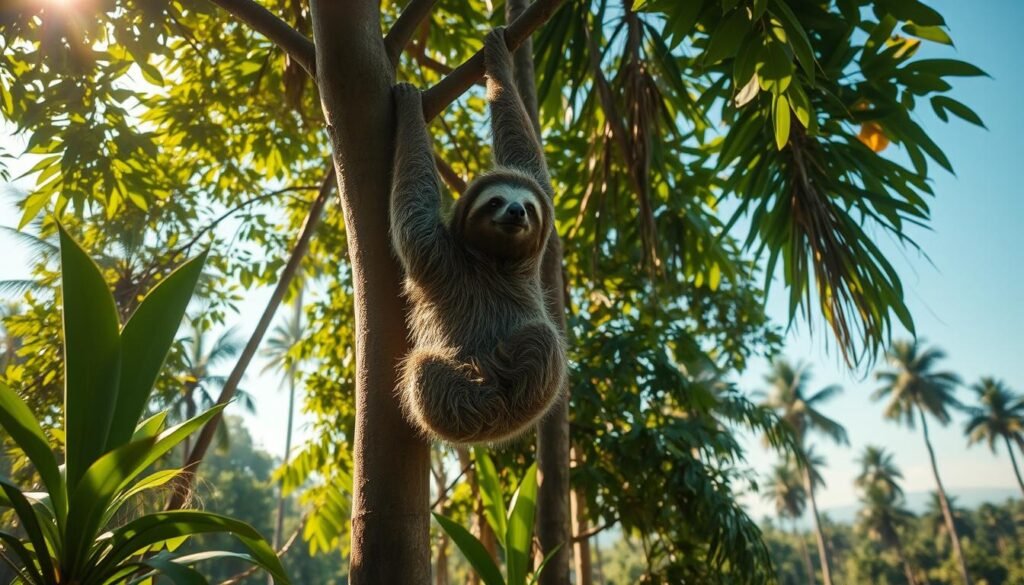
Sloths are tropical forest experts. They live in the rainforests of Central and South America. Their home ranges from Panama to Brazil, filled with green canopies and leafy spots.
The Ancient History of Sloths: From Giant Ground Dwellers to Tree Climbers
Imagine a world where prehistoric sloths roamed as massive giants on the ground. These creatures were far from the small, tree-dwelling sloths we know today. Their evolution is a story of change that spans millions of years.
The Megatherium was one of the most amazing prehistoric sloths. It could grow up to 20 feet tall and weigh about 4 tons, similar to an elephant. These ground sloths lived in the Americas during the Pleistocene epoch.
Prehistoric sloths lived about 10,000 years ago
They ranged from small dog-sized to massive elephant-sized creatures
Most ground sloths were herbivores with powerful claws
As the climate changed, sloth evolution took an interesting turn. These massive ground dwellers became smaller and learned to climb trees. This change allowed them to adapt to new environments and develop the unique traits we see in modern sloths.
The journey from ground-dwelling giants to today’s tree-hugging sloths shows nature’s incredible adaptability. Their ability to change and survive is a testament to their remarkable resilience through prehistoric times.
Why Sloths Move Like They’re in Slow Motion
Imagine an animal that makes slowness its superpower. Sloths are the ultimate slow-movers. Their unique metabolism is a survival strategy that turns weakness into strength.
Sloths have a special way to survive by moving slowly. Their metabolism is much slower than other mammals of the same size. Scientists found that they burn energy 40-74% slower.
The Science Behind Their Slowness
Sloths’ slow movement is not just laziness. It’s a survival strategy. Their metabolism is adapted to survive on little food in tough environments. Here’s how their slowness works:
Extremely low energy consumption
Reduced metabolic rate
Minimal muscle movement
Strategic energy conservation
Benefits of Being Slow
Being slow is a survival technique for sloths. Their slow metabolism helps them:
Survive on limited food resources
Avoid detection by predators
Conserve critical energy
Maintain body temperature efficiently
Their amazing adaptation shows that slow and steady is more than a saying. For sloths, it’s a way of life that helps them survive in tropical forests.
Metabolic Characteristic
Sloth Performance
Energy Consumption Rate
40-74% slower than similar mammals
Daily Movement
Approximately 40 meters per day
Metabolic Efficiency
Extremely high conservation
Super Strength in Slow Motion: The Power of Sloth Muscles
Sloths might seem lazy, but they’re actually incredibly strong. Their muscles are a secret that gym-goers would love. These animals have special adaptations that let them show off their strength in amazing ways.
So, what’s special about sloth muscles? Unlike other mammals, sloths have muscles made for survival, not speed. They can lift their whole body with just one arm. This is a feat that would be hard for most humans to do.
Can lift entire body weight with a single arm
Have muscles that are incredibly efficient
Demonstrate remarkable strength-to-weight ratio
Let’s explore their muscle magic with some interesting facts:
Muscle Characteristic
Sloth Capability
Strength Comparison
2-3 times stronger than average human
Muscle Efficiency
Extremely high energy conservation
Hanging Endurance
Can hang from branches for days without fatigue
Their incredible muscle adaptations aren’t just about power. Sloths use little energy but have a lot of strength. Their muscles are like high-tech tools, helping them survive in tough forests.
Next time you see a sloth hanging from a tree, remember: you’re looking at a true strength champion. They might look slow and fuzzy, but they’re incredibly powerful!
Sloth Facts for Kids: Amazing Things You Never Knew
Get ready to explore the world of sloths and discover their incredible secrets! Sloths are more than just slow-moving animals. They have unique features that will amaze you.
Sloths are nature’s survival experts, with abilities that seem magical. Let’s look at some of their most amazing traits!
Cool Body Features That Will Amaze You
Neck Rotation: Sloths can turn their heads almost 270 degrees – that’s like having built-in mirrors!
Camouflage Fur: Their fur hosts entire ecosystems of algae and tiny creatures
Super Flexible Limbs: They can hang upside down for hours without getting tired
Surprising Skills That Prove Sloths Are Awesome
You might think sloths are lazy, but they’re actually incredible survivors. They have some pretty remarkable skills:
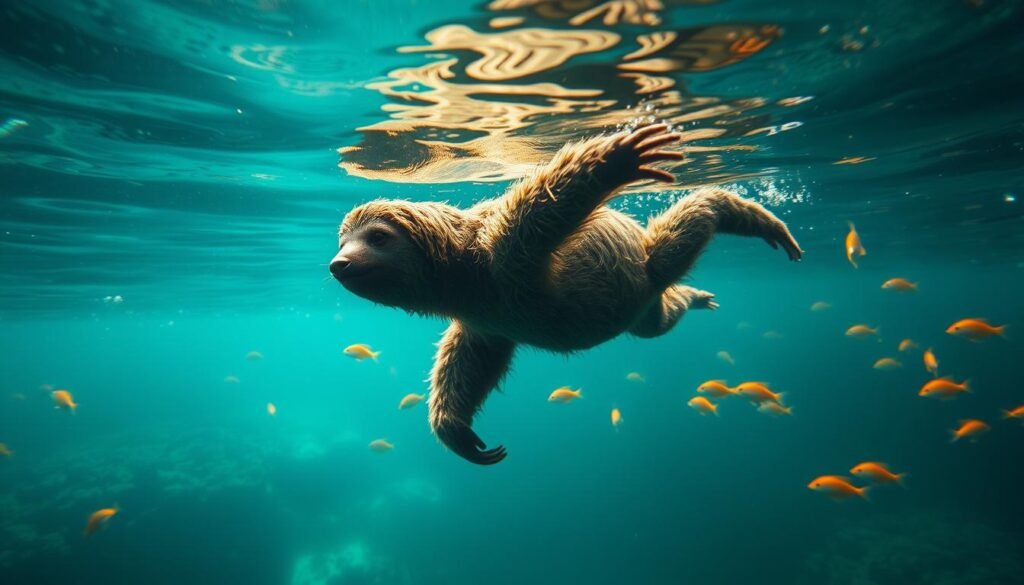
Swimming Champions: Despite being tree-dwellers, sloths are surprisingly good swimmers
Stealth Masters: Their slow movement helps them avoid predator detection
Incredible Strength: They can support their entire body weight with just one arm
Unique Sloth Ability
Incredible Fact
Head Rotation
Can turn head up to 270 degrees
Swimming
Three times faster in water than on land
Hanging Ability
Can hang upside down for up to 24 hours
These amazing creatures show that being slow doesn’t mean being weak. Sloths are living proof that nature has countless surprises waiting to be discovered!
A Day in the Life of a Sloth: Eating and Sleeping Habits
Ever wondered what a typical day looks like for a sloth? These creatures live a life full of relaxation and saving energy. They sleep a lot, up to 15-20 hours a day, in the treetops.
When they’re awake, sloths eat leaves. It might seem simple to us, but it’s a feast for them. Slow and steady is more than a saying for sloths; it’s their life philosophy!
Sleep: 15-20 hours daily
Food: Mostly leaves from trees
Movement: Extremely slow and deliberate
Habitat: Tropical rainforest canopies
Sloths are experts at saving energy. They move slowly, eat leaves, and hang upside down a lot. Their slow metabolism means they might only go to the bathroom once a week. This helps them live in tough forest environments.
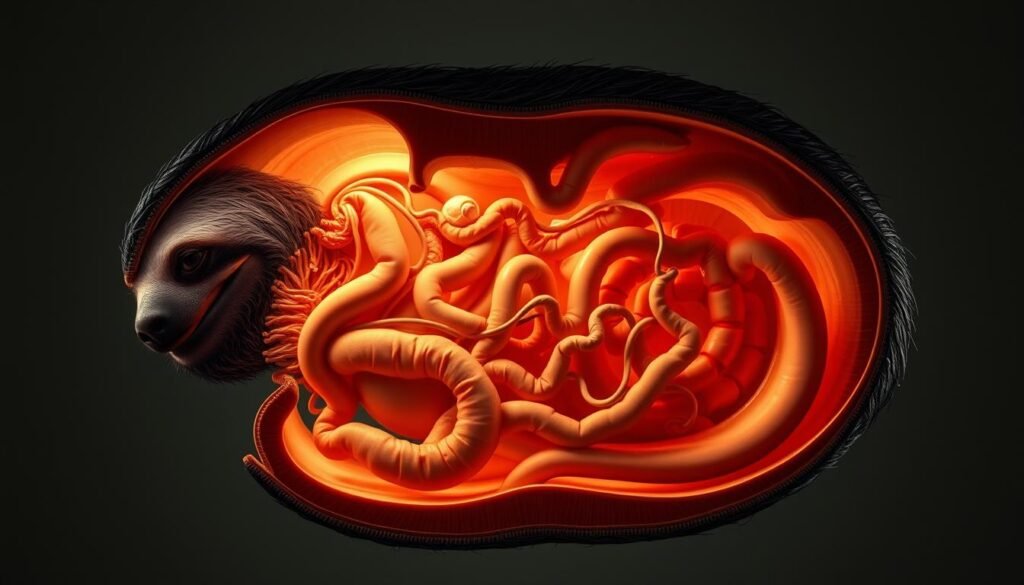
Eating is also a slow process for sloths. They can take a whole day to digest a meal. Their stomach works like a slow cooker, breaking down leaves for nutrition. This amazing ability lets them get the most from their plant-based diet.
The Super Strange Way Sloths Digest Their Food
Imagine a digestive system so unique it turns eating into an epic adventure! Sloths are experts in slow living, and their digestion is the ultimate proof. Their digestive process is so special, it would make most creatures dizzy.
Their stomach isn’t just an organ – it’s a complex processing plant designed for maximum nutrition extraction. A single leaf can take up to a month to digest. That’s right – one month for breakfast!
What Sloths Love to Munch
Tender tree leaves
Soft green foliage
Specific types of tropical vegetation
Leaf-eating animals like sloths have special adaptations. These allow them to survive on a diet most creatures would find nutritionally insufficient. Their multi-chambered stomachs work like slow-motion food processors, breaking down tough plant material inch by inch.
Why Digestion Crawls at a Snail’s Pace
The secret behind their glacial digestion? Efficiency. By processing food incredibly slowly, sloths maximize nutrient absorption while minimizing energy expenditure. This remarkable strategy helps them survive in environments with limited food resources.
Their digestive system is basically a living, breathing compost machine. It transforms low-energy leaves into survival fuel through an incredibly methodical process. Each leaf becomes a treasure trove of nutrients, extracted with surgical precision over weeks.
Swimming Champions: Why Sloths Love Water
Sloths are more than just slow tree-dwellers. They have amazing swimming skills. Their ability to swim might surprise you. Despite their slow pace on land, sloths can swim with grace.
Swimming is a key survival skill for sloths. When rivers flood their homes, they use their swimming to stay safe. They move through water three times faster than on land, using their long arms as paddles.
Can hold breath underwater for up to 40 minutes
Swim much faster than their land movement
Use swimming as an essential survival mechanism
Their swimming skills are not just impressive but also life-saving. Imagine being able to swim for miles using nothing but your arm strength! Sloths have adapted to their rainforest home over generations. They turn water hazards into safe paths.
Scientists have studied sloths’ swimming abilities. They found that sloths don’t just tolerate water; they love it. Their fur and muscles help them move well in rivers and streams. They are true water champions.
The Hidden World Living in Sloth Fur
Imagine a walking ecosystem that moves in slow motion! Sloths are more than cute creatures; they’re living habitats. Their fur supports a microscopic world, showing how animals can live together in harmony.
A sloth’s fur is not just for protection. It’s a complex home for many life forms. This mini-jungle includes:
Green algae that provide camouflage
Tiny fungi that thrive in the moist environment
Numerous insect species that call the fur home
This amazing animal symbiosis is not random. Each organism helps the sloth survive. The algae helps them blend in, while insects clean them.
Scientists found that a single sloth can have up to 950 different invertebrates in its fur! This ecosystem is so complex, it’s like a miniature rainforest. It has its own food web and balance.
The bond between sloths and their tiny friends shows nature’s amazing connections. Each creature benefits from this unique living arrangement. It proves that survival in the animal kingdom is all about teamwork and adaptation.
How Baby Sloths Learn to Be Slow and Steady
Baby sloths are nature’s cutest learners. They start learning how to live slowly from the beginning. Their way of growing up is both fascinating and endearing.
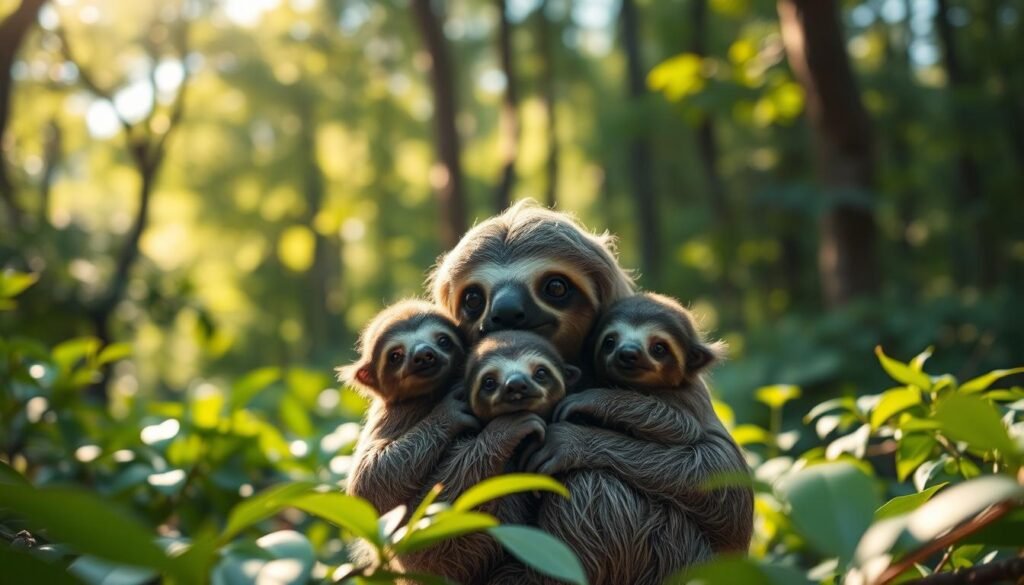
Sloth parenting is a journey of patience and closeness. Baby sloths have a very close bond with their mothers in the first months. They learn skills that will help them for the rest of their lives.
Life with Mom: A Treehouse Education
The first 5-6 months of a baby sloth’s life are filled with learning. They cling to their mothers, learning important survival skills:
Perfecting upside-down hanging techniques
Identifying safe and nutritious leaves
Navigating tree branches with precision
Understanding the art of slow movement
Growing Up in the Trees
Baby sloths become experts at living in the trees. They learn by watching and practicing:
Watching mom’s every move
Gradually increasing independence
Developing muscle strength
Learning camouflage techniques
Interestingly, baby sloths are natural climbers, inheriting an incredible ability to move seamlessly through their forest home.
Sloth Development Stage
Key Learning Milestones
0-2 Months
Constant mother attachment
2-4 Months
Initial branch navigation
4-6 Months
Independent movement
The world of baby sloths shows the power of patient learning and maternal guidance. These incredible creatures prove that slow and steady truly does win the race!
Sloth Superpowers: Special Abilities That Keep Them Safe
Sloths are nature’s ultimate survival experts. They have incredible defense mechanisms that make them true champions of animal adaptations. Their unique abilities allow them to thrive in challenging rainforest environments where many other creatures would struggle.
Let’s dive into the remarkable superpowers that keep these fascinating creatures safe:
Camouflage Mastery: Their fur becomes a living ecosystem, covered in algae that helps them blend perfectly with tree branches
Incredible flexibility to rotate heads nearly 270 degrees, scanning for possible threats
Shock-absorbing body structure that allows them to survive falls from extreme heights
The most fascinating aspect of sloth defense mechanisms is their algae-covered fur. This green camouflage isn’t just decorative – it’s a sophisticated survival strategy. The algae provides multiple benefits, including:
Camouflage Benefit
Survival Advantage
Green Color Blending
Invisible to predators
Moisture Retention
Temperature regulation
Nutrient Exchange
Microhabitat for tiny organisms
These animal adaptations transform sloths from seemingly vulnerable creatures into wilderness survival specialists. Their slow movement isn’t weakness – it’s a calculated strategy that confuses predators and conserves critical energy in challenging tropical environments.
How Sloths Use Their Environment to Stay Warm
Sloths are experts at keeping warm, using their surroundings as a natural heater. They have special ways to stay warm with little effort. This makes them fascinating creatures.
Their fur is more than just cute. It’s a smart way to manage their body temperature. Each hair has tiny grooves that hold warm air close. This keeps them warm without using a lot of energy.
Sunbathing is a key strategy for warming up
Slow metabolism reduces heat loss
Specialized fur acts like natural insulation
The tropical forests are ideal for their temperature control. Sloths find sunny spots to soak up warmth. Their slow pace means they use less energy, helping them stay warm.
It’s interesting how their metabolism works like a thermostat. Moving slowly and saving energy means they don’t need to make a lot of heat. This unique way helps them live well in the forest.
Nature’s own heating system – powered by sunlight and sloth ingenuity!
The Secret Success of Being a Slow Animal
Nature has a way of making weaknesses into strong survival tools. Sloths show this perfectly with their slow pace. This slow movement is a key adaptation that keeps them safe.
Sloth survival strategies are truly clever. They have developed slow animal adaptations that might seem odd at first. Their survival secret is simple: less is more.
Survival Advantages of Being Slow
Energy conservation at its finest
Minimal food requirements
Reduced metabolic rate
Near-invisible presence to predators
Sloths move so slowly, they trick predators in ways others can’t. Their slow pace makes them almost invisible in the forest canopy. Predators look for fast movements, but sloths blend right in.
Natural Defense Mechanisms
Their slow adaptations go beyond just hiding. Sloths have surprising defensive features:
Camouflage fur that looks like tree bark
Sharp claws for unexpected protection
Ability to stay motionless for hours
Unique metabolic processes that reduce their vulnerability
Being slow can be a superpower, as sloths show. They’ve turned a weakness into their best survival strategy. Their approach shows that survival isn’t always about being fast – it’s about being smart.
Why Sloths Need Our Help to Survive
Sloth conservation is now more urgent than ever. These gentle animals face many dangers in their homes. Threats like deforestation and human activities are making it hard for them to survive.
The problems sloths face are serious and need quick action. Their rainforest habitats are being cut down fast. This leaves them with fewer places to live. Some big issues include:
Massive forest clearing for agriculture and development
Fragmentation of forest habitats
Increased human-wildlife conflicts
Climate change disrupting ecosystem balance
Some sloth species are in even greater danger. The pygmy three-toed sloth is almost gone, with only about 100 left in the wild. Their home in Panama is very vulnerable to changes.
We can help sloths by supporting conservation efforts. Protecting rainforests, creating wildlife paths, and spreading the word about these animals can help. This way, we can ensure a future for sloths.
Even small actions can help a lot. By choosing eco-friendly products, supporting conservation groups, and sharing what we know, we can all help protect sloths.
Fascinating Ways Sloths Use Their Senses
Sloths live in their forest world in a unique way. Their senses are different from most animals. This makes them super good at surviving.
They might not see well, but sloths have other ways to understand their world. They are like nature’s stealth experts. They use smell and hearing more than sight.
Incredible sense of smell that helps locate food and detect threats
Highly sensitive hearing that makes up for poor vision
Ability to detect subtle environmental changes through special senses
A sloth’s nose is like a GPS. It helps them find their way in thick vegetation. Their smell is so sharp they can find food, detect threats, and even find other sloths far away.
When it comes to hearing, sloths are very alert. Their ears catch the smallest sounds in the forest. This helps them stay safe from predators.
Sloths see the world in black and white. Their color vision is limited. But they make up for it with their amazing senses.
Record-Breaking Facts About Sloth Life
Explore the amazing world of sloth records, where these incredible animals set jaw-dropping facts. Sloths are the ultimate champions of slow living. They hold records that make us rethink animal performance.
These furry champions lead in energy saving, using less energy than any mammal. Imagine an animal running on a single AA battery, unlike others needing huge power. Their digestive system is also a marvel, taking a month to digest a meal. It’s like a slow-motion food festival inside them.
But here’s the surprise: sloths turn from slow tree-dwellers to fast swimmers. On land, they move slowly, but in water, they swim three times faster. This shows they’re adaptable, turning from lazy to speedy swimmers.
Scientists are amazed by sloths’ abilities. Their records show that being slow is not weak. It’s a strategy for survival and amazing adaptations that have helped them thrive for millions of years.