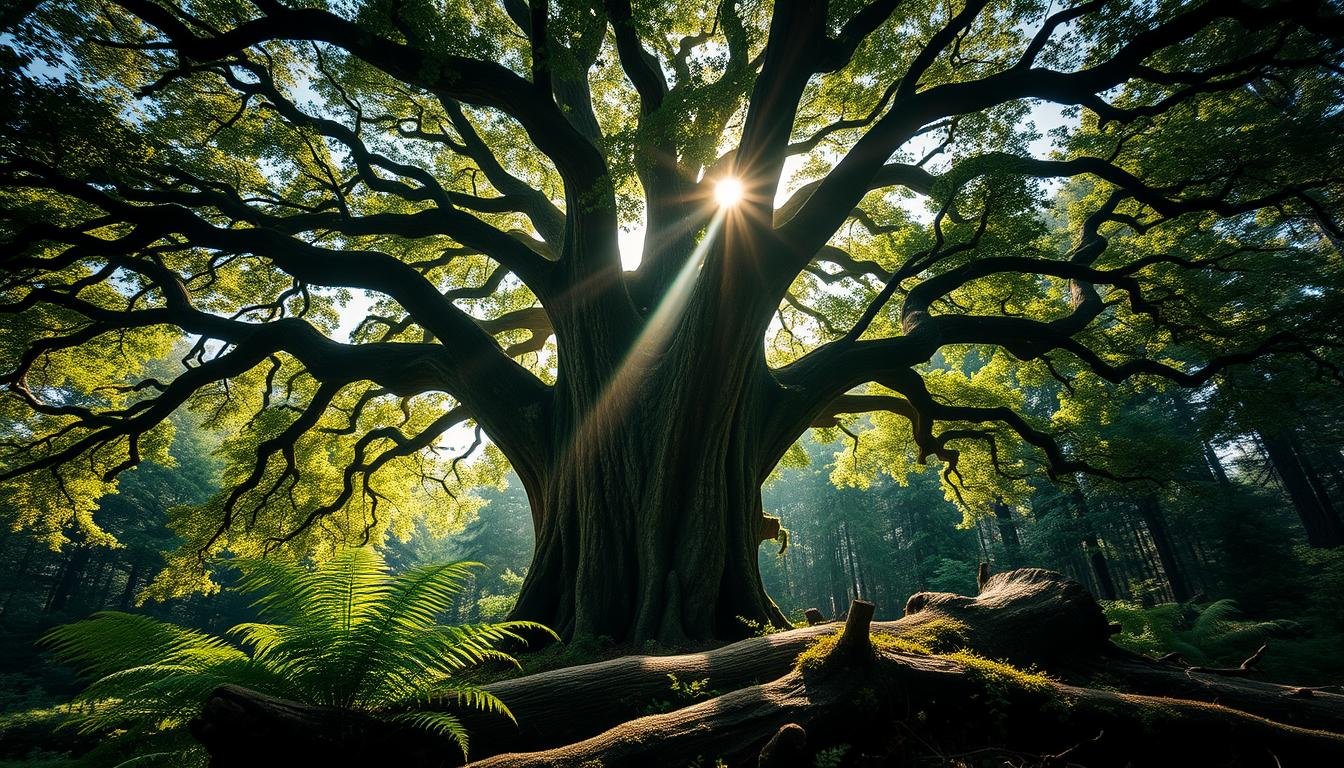
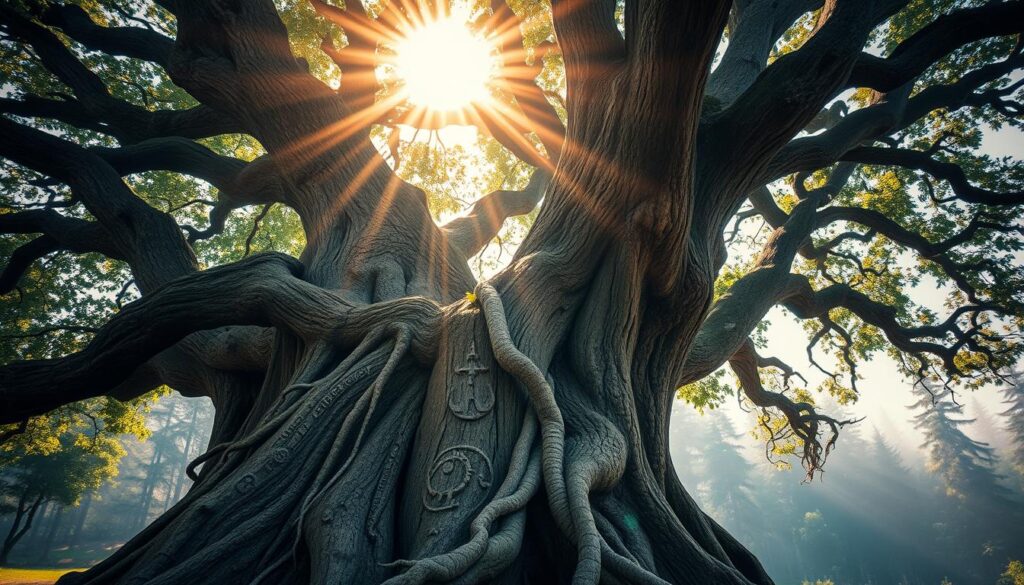
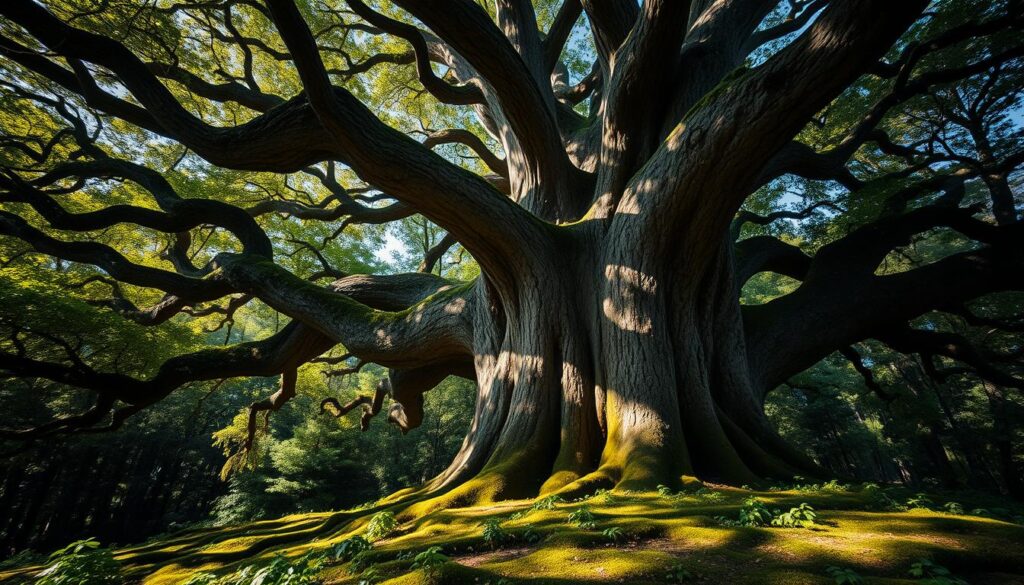
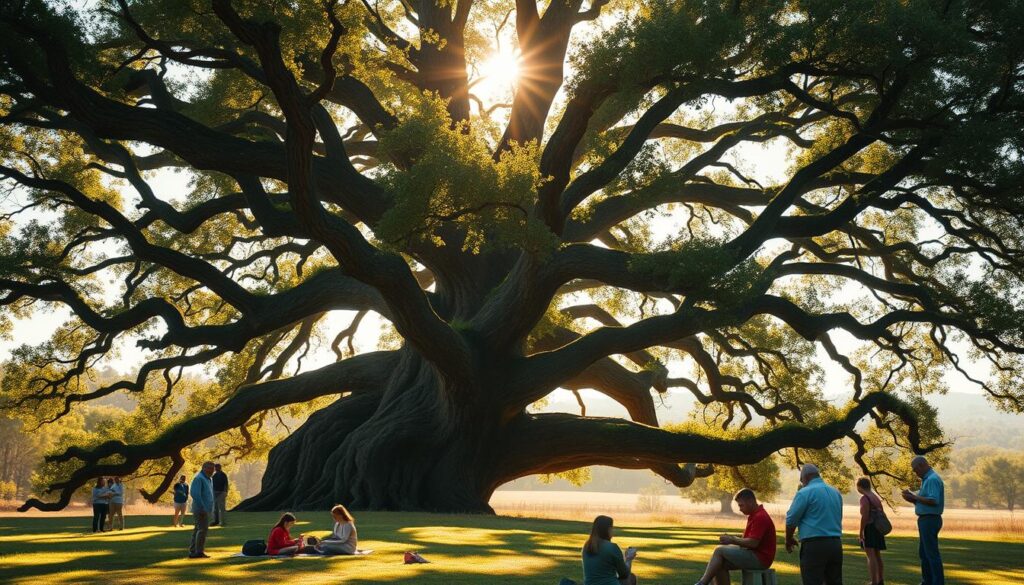
Oak trees are incredible forest giants that have been standing tall for thousands of years! These amazing trees are some of the most important plants in nature. They provide shelter and food for countless wildlife species.
When exploring oak tree information, kids discover these magnificent trees are like natural skyscrapers of the forest. Each oak tree tells a story of survival, strength, and incredible ecological importance. From their massive trunks to their sprawling branches, oak trees create entire ecosystems that support hundreds of different creatures.
Oak trees facts for kids reveal these trees are not just ordinary plants. They are living history books that have witnessed generations of animals and humans. Native Americans used oak trees for food, tools, and medicine, making them critical to human survival for centuries.
The roots of these trees dig deep into the ground, creating a stable foundation that supports entire forest communities. Their branches reach high into the sky, creating canopies that protect smaller plants and animals from harsh weather conditions.
Get ready to explore the fascinating world of these forest champions and learn why oak trees are truly nature’s most remarkable living structures!
What Makes Oak Trees Special
Oak trees are amazing giants of the forest. They stand tall and proud in many landscapes. With about 435 oak tree species on five continents, they show incredible diversity and adaptability.
Physical Characteristics
Oak trees have strong and unique features:
Thick, rough bark that protects them from damage
Wide-spreading branches that create massive canopies
Deep root systems that anchor them firmly in soil
Leaves with unique lobed or serrated edges
Types of Oak Trees
The world of oak tree species is incredibly rich and varied. North America alone has 90 different oak tree species, each with its own unique characteristics.
Oak Tree Type
Native Region
Distinctive Feature
Red Oak
Eastern United States
Pointed leaf lobes
White Oak
Eastern North America
Rounded leaf edges
Live Oak
Southeastern United States
Evergreen leaves
Where Oak Trees Grow
Oak tree habitats are incredibly diverse. You can find these amazing trees in:
Temperate forests with moderate climates
Mountainous regions with varying elevations
Subtropical zones with warm temperatures
Coastal areas with specific microclimates
Their ability to adapt to different habitats makes them true survivors in the plant kingdom.
Oak trees have been stars of human history for thousands of years! They were more than trees; they were sacred symbols in ancient cultures worldwide. Get ready for a journey through oak tree history!
Ancient people saw oak trees as magical beings tied to gods and myths. Oak tree mythology was deep in many cultures:
Greeks saw oaks as sacred to Zeus, their king of gods
Romans linked them to Jupiter, symbols of strength
Celtic druids held important ceremonies in oak forests
Vikings believed oak trees connected them to their spiritual world
In Greek mythology, oak trees were seen as ways for humans to talk to gods. Priests would listen to the leaves, believing the wind carried messages from above. It was like a supernatural phone!
Warriors and leaders wore oak leaf crowns for courage and wisdom. These trees stood for resilience, protection, and timeless strength. Oak trees have watched over human history’s most significant moments, from ancient temples to royal ceremonies.
Oak Trees Facts for Kids: Nature’s Giants
Oak trees are incredible forest champions that capture the imagination of nature lovers everywhere. These magnificent trees stand as true giants of the woodland. They showcase remarkable growth and survival skills that make them truly extraordinary.
Nature has designed oak trees to be some of the most impressive living organisms on our planet. Their ability to grow tall and live for centuries makes them true wonders of the natural world.
How Tall Do Oak Trees Grow
Oak tree size varies dramatically depending on the specific species and growing conditions. Most oak trees can reach impressive heights between:
40 to 80 feet tall for average mature trees
Some exceptional species growing up to 100 feet or more
Red oak and white oak typically grow the tallest
How Long Do Oak Trees Live
The oak tree lifespan is truly remarkable. These resilient trees can survive for centuries. Certain ancient oak trees have been documented to live for an astounding 1,000 years or more.
Amazing Growth Facts
Oak trees grow slowly but steadily. Young oak trees might only grow 1 foot per year, but they continue expanding for hundreds of years. Their growth pattern ensures strong, stable, and incredibly durable trees that become ecosystem anchors.
Seedling oak trees grow approximately 12-24 inches annually
Mature oaks add rings that tell their life story
Root systems can spread as wide as the tree’s canopy
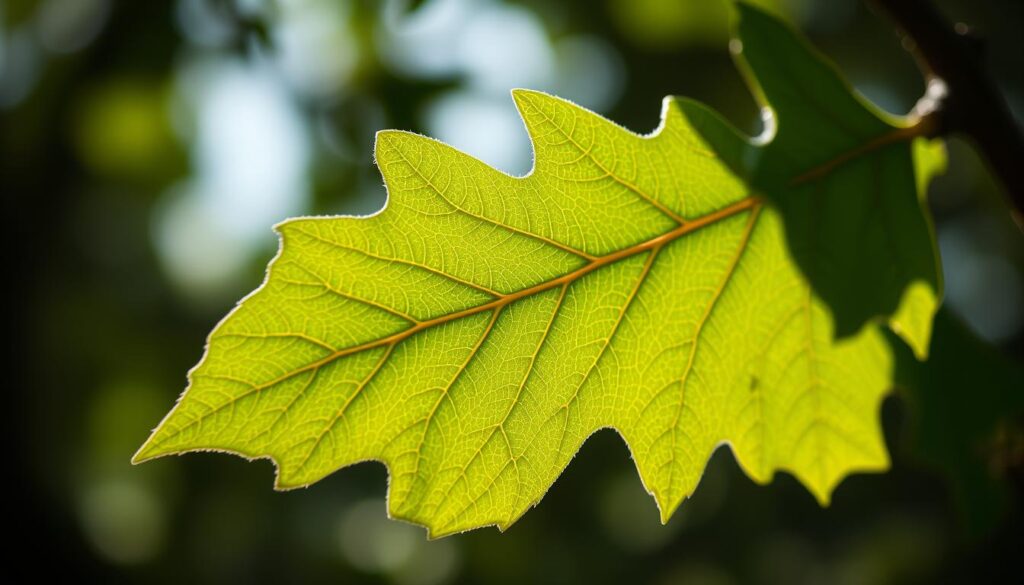
Oak leaves are truly unique in nature. They are essential for oak trees to grow and survive. For those who love nature, identifying oak leaves is a fun adventure.
Oak leaves have special shapes that change with each species. Some have deep, rounded lobes, while others have sharp edges. These differences make it easy to tell which oak tree you’re looking at.
Leaf Shapes: Deeply lobed with smooth or serrated edges
Color Range: Dark green to light green, changing with seasons
Size Variations: 4-12 inches long depending on species
Oak leaves are great at catching sunlight. Their design helps them make food from sunlight. This is why oak trees can grow in many places.
Oak Species
Leaf Characteristic
Typical Leaf Shape
White Oak
Rounded lobes
Broad, smooth-edged
Red Oak
Pointed lobes
Sharp, deep cuts
Bur Oak
Wide lobes
Massive, deeply divided
Experts can tell which oak tree a leaf comes from by looking at its edges and shape. Each leaf has its own story to tell about its tree.
Understanding Oak Tree Acorns
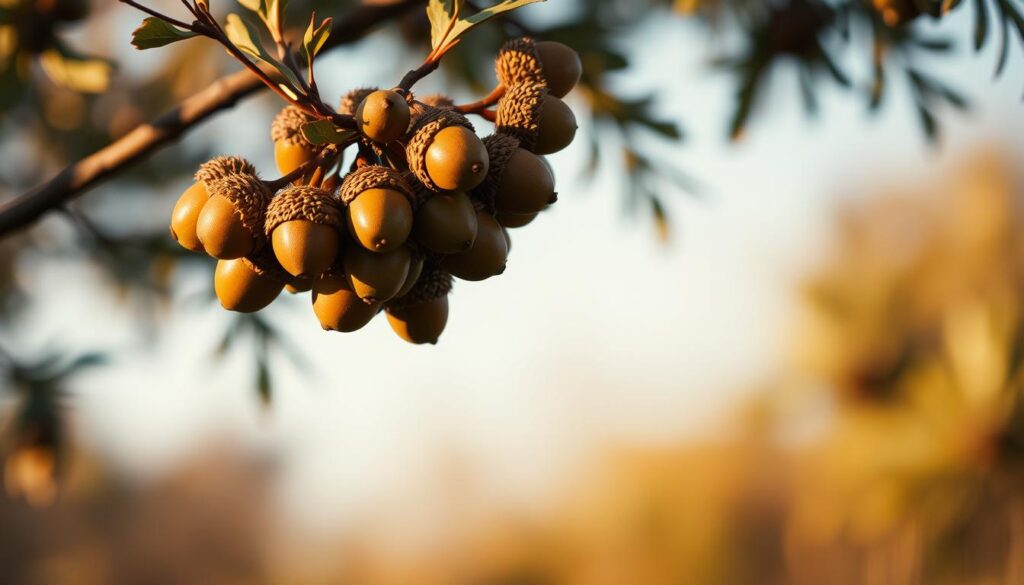
Oak tree acorns are fascinating little packages of nature’s power. They are more than seeds; they are survival kits for forests. A single white oak can produce thousands of acorns each season. These nuts are a vital food source for wildlife and help new trees grow.
Acorn facts for kids show how amazing these tiny forest treasures are. They vary in shape and size based on the oak tree species. Each acorn has everything a new oak tree needs to start its life journey.
Why Animals Need Acorns
Wildlife depends on oak tree acorns as a critical food source. Many forest creatures rely on these nutritious nuts for survival:
Squirrels collect and store acorns for winter meals
Deer and wild turkeys feast on fallen acorns
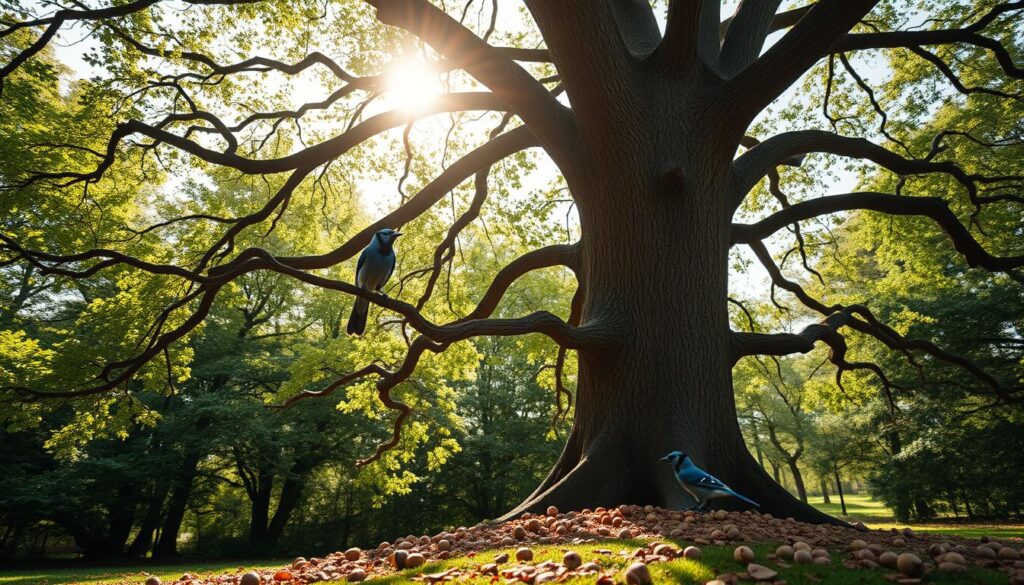
Woodpeckers and blue jays help spread acorn seeds
How Acorns Become Trees
The transformation of an acorn into a massive oak tree is amazing. Not every acorn becomes a tree, but those that do have an incredible journey of growth and adaptation.
Acorn Growth Stage
Description
Seed Formation
Develops on oak tree branches
Falling
Drops to ground in autumn
Germination
Sprouts root and first leaves
Sapling
Grows into young tree
Acorns need specific conditions to grow: good soil, adequate moisture, and protection from predators. Some acorns will be eaten, while others will take root and begin their journey to becoming mighty oak trees.
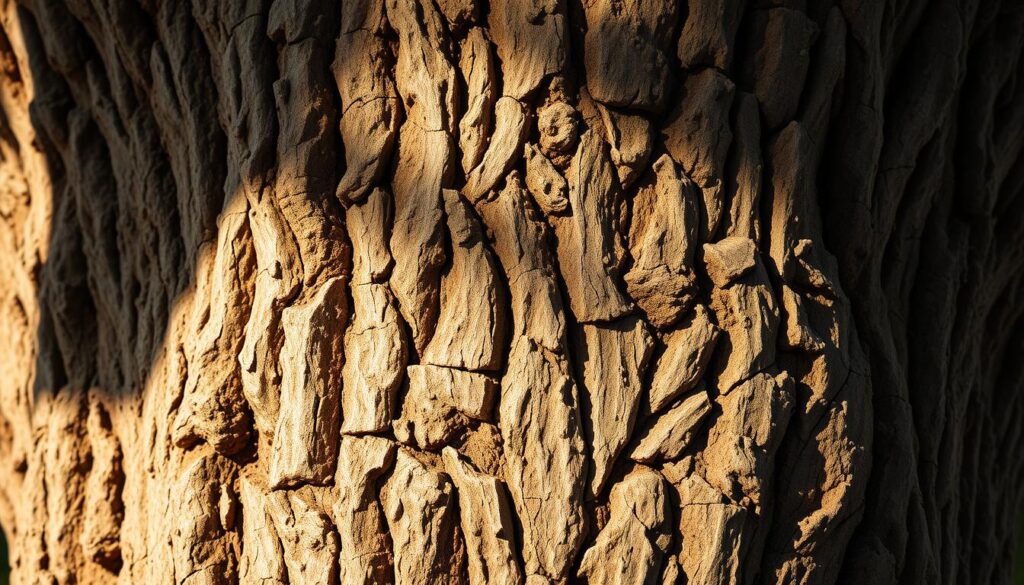
Oak trees have fascinated humans for centuries with their bark and wood. The bark is thick and rough, protecting the tree from harsh weather and threats. Its unique texture helps the tree survive in various environments.
Oak wood is highly valued in many industries. It’s strong and durable, making it perfect for furniture and building. Here are some ways oak wood is used:
Furniture making with premium wooden pieces
Construction of sturdy wooden structures
Shipbuilding for marine vessels
Creating wine and whiskey barrels
Crafting musical instruments
The bark and wood of oak trees are incredibly valuable. Woodworkers love oak for its dense grain and resistance to wear. This wood can handle a lot of pressure and environmental challenges, making it ideal for lasting products.
Different oak species have wood with unique qualities. Some oaks have darker, harder wood for furniture, while others have lighter wood for decoration. Oak wood’s versatility makes it a favorite among professionals and hobbyists.
Wildlife Living in Oak Trees
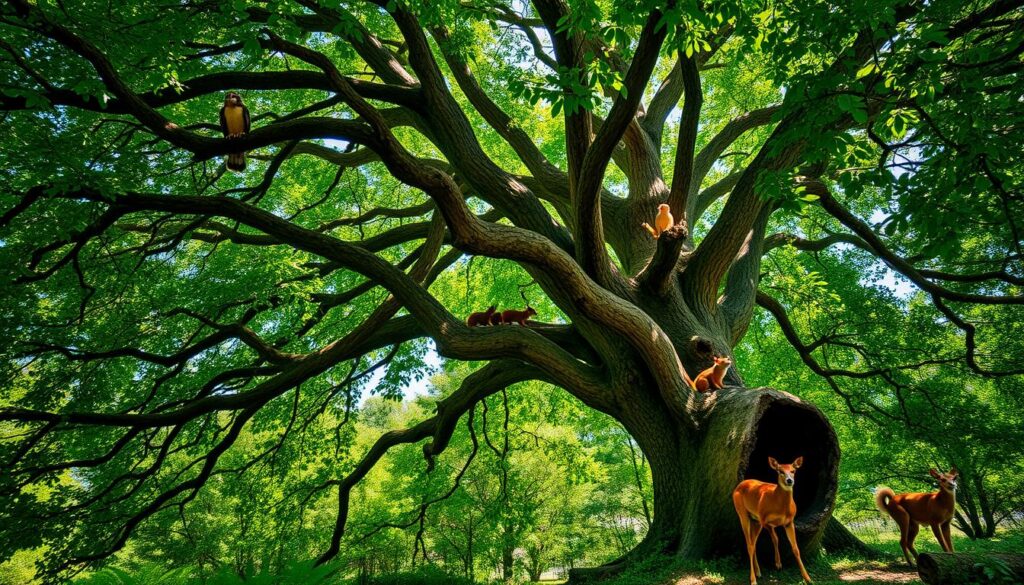
Oak trees are amazing homes for many animals. They offer food, shelter, and safety. From the ground up, oak trees are full of life.
The variety of animals in oak trees is incredible. Each tree is a world for many species. They depend on the tree’s special environment.
Birds Calling Oak Trees Home
Many birds live in oak trees. Some of these birds include:
Woodpeckers creating nesting holes
Blue jays storing acorns for winter
Owls hunting from high branches
Warblers building complex nests
Insects and Small Animals
Oak trees are home to many small creatures. Almost 900 caterpillar species live in U.S. oak forests. They are a key food source for birds and other animals.
Beetles burrowing into bark
Squirrels gathering acorns
Mice finding shelter in root systems
Ants creating complex underground colonies
Each animal is important for the oak tree’s ecosystem. They show how nature is connected.
How Blue Jays Help Oak Trees Grow
Blue jays are nature’s secret gardeners for oak trees. They spread and plant oak trees across forests and landscapes. Their behavior helps oak trees reproduce and expand their territories in amazing ways.
Blue jays don’t just eat acorns; they store them in clever ways. A single blue jay can bury up to 5,000 acorns in a season. Not all of these acorns will become trees, but many will.
Blue jays carry acorns in their throat pouches
They transport acorns several miles from parent trees
Birds bury acorns in different locations
Some buried acorns germinate and grow into new oak trees
The bond between blue jays and oak trees shows nature’s connection. Blue jays don’t plant forests on purpose. But their foraging helps oak trees grow.
Scientists found that blue jays pick healthy acorns. They’re choosing the best spots for oak trees to grow. Their memory helps them remember where they buried acorns, even if they don’t get them all back.
Oak Trees Through the Seasons
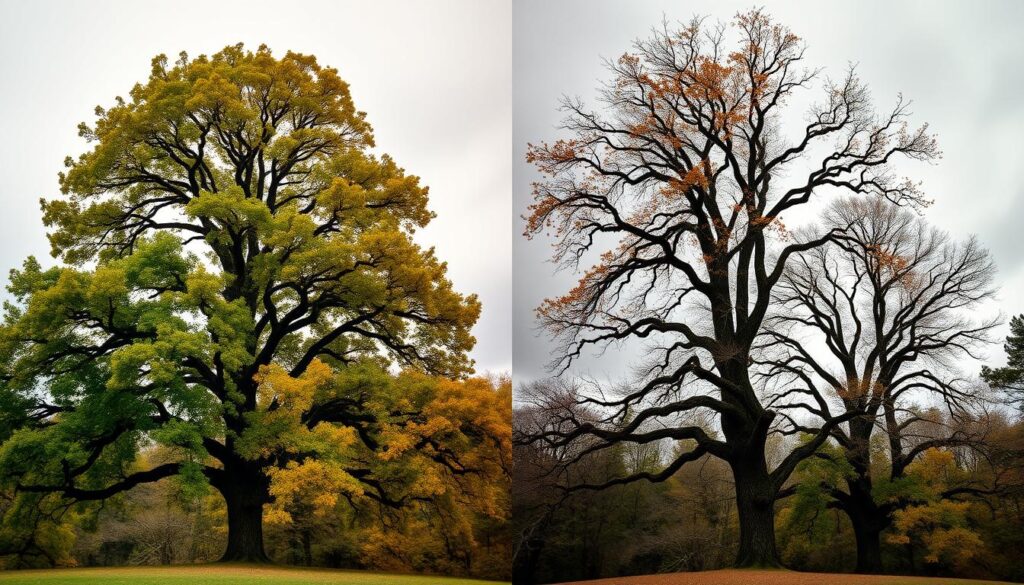
Oak trees change a lot throughout the year. They go from tiny buds in spring to colorful leaves in autumn. These changes are amazing and tell a story of survival and adaptation.
Each season brings something special to oak trees. They adapt and thrive, showing their incredible resilience. These forest giants are true survivors of nature.
Spring Awakening
In spring, oak trees transform in an incredible way. New leaves grow in shades of green, creating a fresh canopy. The changes are most visible as:
Tiny leaf buds burst open
Flowers called catkins appear
Branches become lush with new growth
Summer and Fall Transitions
Summer brings full foliage and rapid growth. Oak trees soak up sunlight, making energy through photosynthesis. As autumn comes, leaves turn vibrant colors:
Leaves turn vibrant shades of red, orange, and brown
Acorns develop and mature
Some oak species begin preparing for winter dormancy
Winter Features
Winter is a challenge for oak trees. Some species keep dead leaves on branches, a phenomenon called marcescence. This helps protect the tree and provides shelter for wildlife.
Why Oak Trees Are Important to People
Oak trees are vital to us, providing uses for centuries. They have helped build and support communities. Their wood is used for many things.
Oak trees are more than just wood. They have been used in many ways throughout history:
Construction materials for homes and ships
Furniture manufacturing
Traditional woodworking crafts
Creating musical instruments
Barrel-making for wine and whiskey aging
Different cultures have valued oak trees for their own reasons. Native American tribes used oak wood for tools. European shipbuilders used it for strong naval vessels. The durability and strength of oak wood made it a critical resource for human development.
Oak Tree Use
Cultural Significance
Economic Value
Construction
Structural buildings
High-quality timber
Furniture
Artistic craftsmanship
Premium woodworking
Barrel Making
Wine and spirits production
Specialized industry
Today, oak trees are used in many ways. They help with sustainable forestry and environmental conservation. These trees are key to our ecosystem and society.
Taking Care of Young Oak Trees
Growing oak trees needs patience, knowledge, and careful attention. Oak tree care is rewarding and helps these trees thrive from the start. Young oak trees need the right conditions to grow strong roots and stay healthy.
Before starting, it’s key to know their basic needs. The first years are critical for their health and growth.
Essential Planting Tips
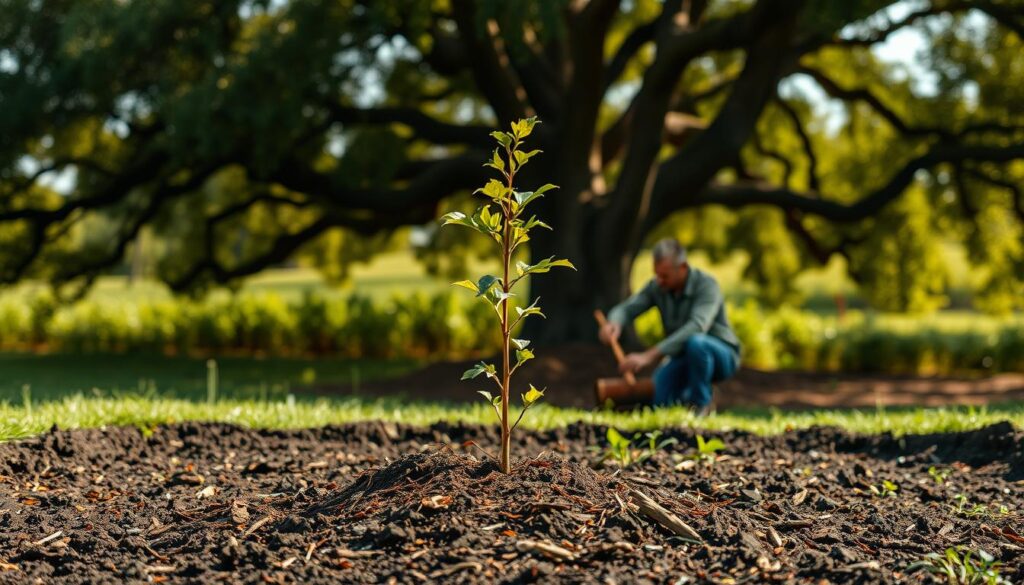
Good oak tree care starts with the right spot and planting method. Here are important steps:
Choose a sunny spot with well-draining soil
Dig a hole twice as wide as the root ball
Place the tree carefully, ensuring it’s straight
Backfill with original soil, avoiding fertilizers
Water thoroughly after planting
Growth Requirements for Healthy Oak Trees
To ensure strong growth, oak trees need specific care:
Soil Conditions: Most oak trees prefer slightly acidic soil with good drainage
Watering: Deep, infrequent watering encourages strong root development
Mulching: Use organic mulch to retain moisture and regulate soil temperature
Protection: Shield young trees from lawn equipment and animal damage
Consistent care in the first few years helps your young tree grow strong.
Mighty Oak Trees in Famous Stories
Oak trees have fascinated people for centuries. They appear in many stories and myths from different cultures. Their grand presence in literature shows their deep cultural meaning and symbolic power.
Ancient stories see oak trees as symbols of strength and wisdom. Greek myths linked them to gods like Zeus. In Celtic traditions, druids believed oak trees were magical, connecting to the spiritual world.
Greek myths linked oak trees to divine protection
Celtic traditions viewed oaks as mystical communication portals
Native American stories often depicted oak trees as guardians of forest wisdom
Literature often uses oak trees as powerful symbols. William Shakespeare often mentioned oak trees in his plays, showing nobility and endurance. Henry David Thoreau wrote about oak trees, exploring their role in nature and the spirit world.
Culture
Oak Tree Symbolism
Notable References
Greek
Divine Connection
Zeus’s Sacred Tree
Celtic
Spiritual Communication
Druidic Rituals
Native American
Forest Wisdom
Tribal Legends
Oak trees inspire stories around the world. They stand for resilience, growth, and the beauty of nature.
How Oak Trees Help Our Planet
Oak trees are amazing environmental heroes. They play a key role in keeping our planet safe. These trees work hard to keep the environment balanced.
They act as natural carbon capture systems. They soak up huge amounts of carbon dioxide. This helps slow down climate change.
Oak trees are vital for our planet. They help prevent soil erosion and stabilize landscapes. They also create homes for many animals.
Each mature oak supports hundreds of insects, birds, and small mammals. This makes them essential for forest ecosystems.
Oak trees do more than just capture carbon. Their wide canopies cool the air and reduce pollution. A single oak can produce enough oxygen for two people.
By protecting and planting oak trees, we help the environment. These trees are more than just trees. They are guardians of our planet’s health, supporting life and fighting climate change.