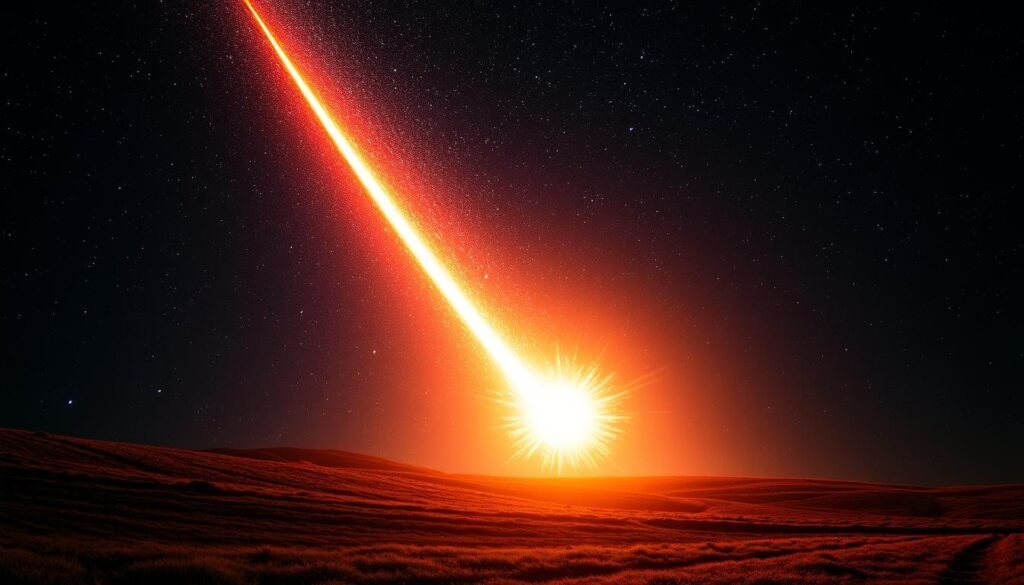
The universe isn’t just big—it’s a fireworks show of exploding stars, colliding galaxies, and mysteries that’ll make your jaw drop. Did you know there are more stars out there than all the sand grains on every beach? Our planet’s been spinning for 4.5 billion years, and guess what? We’re still finding new cosmic surprises daily.
Think outer space is just a dark void? Nope—it’s expanding faster than my laundry pile during finals week. Scientists measure this growth using tools sharper than your math teacher’s ruler. They’ve discovered galaxies racing away from each other like hyperactive toddlers on sugar crashes.
Here’s my favorite head-scratcher: light from distant stars takes so long to reach Earth, we’re basically watching ancient Netflix reruns of the cosmos. That twinkle you see tonight? Could’ve started its journey before dinosaurs existed. My brain still hurts thinking about it.
Want proof space isn’t boring? Black holes act like cosmic vacuum cleaners, neutron stars spin faster than TikTok trends, and Saturn’s rings? They’re basically a giant disco ball made of ice. Stick around—we’re just getting warmed up.
Astronomical Oddities: Stars, Galaxies, and Black Holes
Imagine a place where stars outnumber sand grains and black holes play hide-and-seek with light. Our solar system isn’t some static diagram—it’s a 4.5-billion-year-old rock concert where planets orbit to gravity’s beat. Scientists keep rewriting the rulebook, and honestly? It’s hilarious how often they’re surprised by what they find.
More Stars Than Beach Sand? No Kidding
Here’s a brain-tickler: there are 10 times more stars in space than grains of sand on Earth. Let that sink in. Our Milky Way alone hosts 100-400 billion stars—and that’s just one galaxy in a crowd of trillions. I once tried counting rice grains in a bag for comparison. Gave up after 47 seconds.
Celestial Object
Mind-Blowing Feature
Scale Comparison
Neutron Star
1 teaspoon = 1 billion tons
Heavier than Mt. Everest
Black Hole
Light can’t escape
10,000 light-years away
Red Giant Star
Could swallow Earth
100x Sun’s size
Black Holes: The Ultimate Light Thieves
When big stars explode, they leave behind black holes—cosmic vacuum cleaners that suck in light like it’s candy. The closest one’s 10,000 light-years away, but don’t relax yet. Time gets weird near these beasts: 6 hours of spacesuit prep here equals months passing back home. Crazy, right?
And get this: the moon’s gravity controls our tides, but black holes? They warp entire galaxies. Next time you’re at the beach, thank the moon—and maybe whisper a thank-you to those invisible space monsters keeping things interesting.
Universe Facts for Kids: Real Science and Surprising Stats
Ever wonder why astronauts need six hours just to suit up? It’s not your average wardrobe choice—it’s like preparing for a marathon where one wrong zipper could mean disaster. Every spacesuit has 14 layers of protection, and astronauts practice dressing faster than you finish homework. Trust me, I’d rather untangle Christmas lights than deal with that oxygen hose.
Spacesuit Routines That Take Hours to Perfect
Picture this: astronauts spend longer prepping their suits than streaming a Marvel movie. Why? They’re battling zero gravity, radiation, and temperatures swinging from -250°F to 250°F. The checklist includes 87 steps—like a IKEA manual, but with higher stakes. Forget forgetting your keys; in space, a loose glove means game over.
The Earth’s Age Compared to a 13.5 Billion-Year Universe
Our planet’s 4.5 billion candles would need a galaxy-sized cake. Here’s the kicker: the universe is three times older. If cosmic history were a 365-day calendar, Earth shows up on September 12th. The Milky Way galaxy? It’s been spinning stardust since day one, holding our solar system like a speck in its spiral arms.
Cosmic Feature
Age
Fun Comparison
Universe
13.5 billion years
Grandparent of all matter
Milky Way Galaxy
13.5 billion years
Ancient star metropolis
Earth
4.5 billion years
Teenager in cosmic terms
Our solar system’s been orbiting the Milky Way’s center for 18 trips—about 225 million Earth days per lap. Next time you complain about long car rides, remember: planets don’t get pit stops.
Mind-Bending Planetary Phenomena
Ready to have your brain do a backflip? Planetary physics serves up head-scratchers that make quantum mechanics look straightforward. Take Mercury—our solar system’s speed demon orbits the sun in just 88 Earth days. But here’s the kicker: one full day-night cycle there lasts 176 Earth days. That’s like celebrating two birthdays before your next sunrise. Makes daylight savings look tame, right?
Mercury’s Day Lasting Twice as Long as Its Year
This isn’t some math error—it’s orbital mechanics throwing a cosmic curveball. Mercury spins slower than a vinyl record on low battery while zipping around our star at 112,000 mph. Imagine jogging around a track while barely rotating your body. The result? A single solar day there takes two full trips around the sun. I’d need three calendars just to keep track.
Here’s why it matters: this quirk reveals how our planet solar system dances to gravity’s tune. Light from the sun hits Mercury’s surface in wild patterns, creating temperature swings hotter than a pizza oven. Scientists studying this 4.5 years old phenomenon keep rewriting physics models—proving even ancient planets still surprise us.
Next time you glance at the night sky, remember: the galaxy operates like a jazz band—structured chaos with killer solos. Mercury’s time warp isn’t trivia—it’s a masterclass in cosmic rule-breaking. And honestly? I’m here for the drama.
Cosmic Effects on Everyday Life
Think outer space is just a distant light show? Think again—it’s pulling strings in your backyard right now. From shifting oceans to ancient panic attacks, celestial events shape our lives in ways that’ll make you side-eye the moon next time you hit the beach.
The Moon’s Pull Creating Tides and Ocean Rhythms
That glowing nightlight in our sky isn’t just for werewolf stories—it’s yanking 3 billion tons of water daily like a cosmic puppet master. High tide isn’t just surfers’ happy hour; it’s proof the moon’s gravity could bench-press entire seas. I once tracked tide charts during a Florida vacation—turns out sandcastles have expiration times thanks to lunar drama.
Ancient Eclipses and the Weird Reactions They Sparked
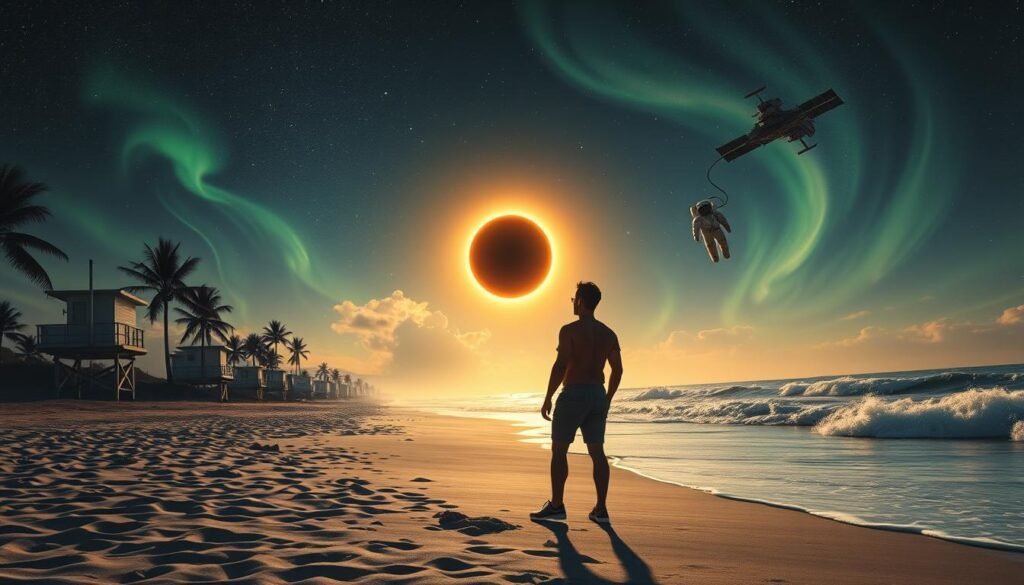
When the sun vanished in 840 CE, Emperor Louis of Bavaria reportedly died of fright. Can’t blame him—imagine your afternoon latte run interrupted by sudden darkness and screaming villagers. Ancient cultures saw eclipses as angry gods or dragon attacks. Today? We Instagram them with eclipse glasses selfies. Progress!
Astronauts don’t just float around—they’re rewriting science playbooks daily. Scott Kelly’s year in space altered his DNA, proving humans adapt faster than TikTok trends. When Chris Hadfield sang Bowie aboard the ISS, he made orbital mechanics feel as relatable as a garage band gig. These pioneers show us planets aren’t just dots—they’re future road trip destinations.
Next time you check surf reports or share eclipse pics, remember: stars and planets aren’t just “up there.” They’re messing with your beach days, freaking out historical rulers, and inspiring astronauts to jam in zero gravity. The cosmos? It’s basically that friend who can’t stop meddling—but way cooler.
Farewell to Stellar Secrets, Leaving You to Ponder Out…
Here’s the thing about space—it’s a choose-your-own-adventure book where every page flips faster than we can read. Those billions of forces bending light and warping time? They’re not done rewriting the rules. Even now, black hole mysteries make physicists toss their coffee cups in frustration.
Think about this: the data we’ve gathered is just one part of a story older than dirt. Distant sites in the cosmos hum with energy we can’t see—dark matter’s backstage crew keeping the galactic show running. And those swirling voids? They’re less “monsters” and more cosmic editors, trimming the universe’s excess matter.
I’ll leave you with this: our understanding shifts like Saturn’s rings—beautiful but never static. What we call answers today might become tomorrow’s head-scratchers. Maybe that faint glow from a far-off hole holds clues, or perhaps the real magic lies in…
(Go ahead—stare at the stars tonight. Let your brain chew on the billions of unwritten chapters. Just don’t blame me if you miss dinner.)