Let’s get one thing straight: These “black” rhinos? Totally gray. And they’re disappearing faster than your allowance after a candy store trip. But don’t let the name fool you—these 3,000-pound tanks with horns are full of surprises. Imagine a creature that takes mud baths like it’s a spa day and can smell you from a mile away. You know what I mean? They’re basically nature’s grumpy superheroes.
Take Folly Farm’s resident mud-rollers, for example. They’ll dive into a puddle like it’s their job, coating their armor-thick skin to block bugs and sunburn. And get this: They’ve been around longer than your grandparents. Fifty years in the wild? Trust me on this—that’s a lot of birthdays to celebrate with thorny acacia snacks.
Here’s the kicker: Their hearing’s so sharp, they could detect a soda can opening across a football field. Yet poachers still sneak up on them. That’s why there are barely 5,000 left. But hey, we’re not here to bum you out. Stick around, and I’ll spill how these grumpy giants communicate by… uh… leaving “messages” in their poop. Bet your science teacher never mentioned that.
Meet the Black Rhino: History, Habitat, and Unique Traits
Okay, time travelers—let’s dig into how these armored beasts came to rule the scrublands. Their name comes straight from ancient Greek: “rhinoceros” literally means “nose-horned.” But here’s the kicker—their signature hooked lip? It’s basically nature’s salad tongs, perfect for plucking leaves off thorny bushes like they’re grabbing fries from a drive-thru. Pretty cool, right?
Origins and Evolutionary Backstory
These rhinos have been around longer than your favorite dinosaur memes. Fossil records show they evolved 15 million years ago as solitary species built for survival. Unlike their grass-munching cousins, they became pros at browsing trees—think of them as the picky eaters of the savanna. Their pointy upper lip? A 50-million-year-old upgrade for snagging acacia snacks without getting stabbed.
Distinctive Features in the Wild
Imagine a creature the size of a compact car but with the agility of a skateboarder. That’s your East African rhinoceros—clocking in at 1.5 tons yet pivoting on a dime. Their skin isn’t just thick; it’s layered like medieval armor, shrugging off sunburn and bug bites. And those horns? Made of keratin—the same stuff as your fingernails—but way more intimidating.
Feature
Black Rhino
White Rhino
Lip Shape
Prehensile (hooked)
Square (flat)
Diet
Leaves & bushes
Grass
Habitat
Scrublands
Open plains
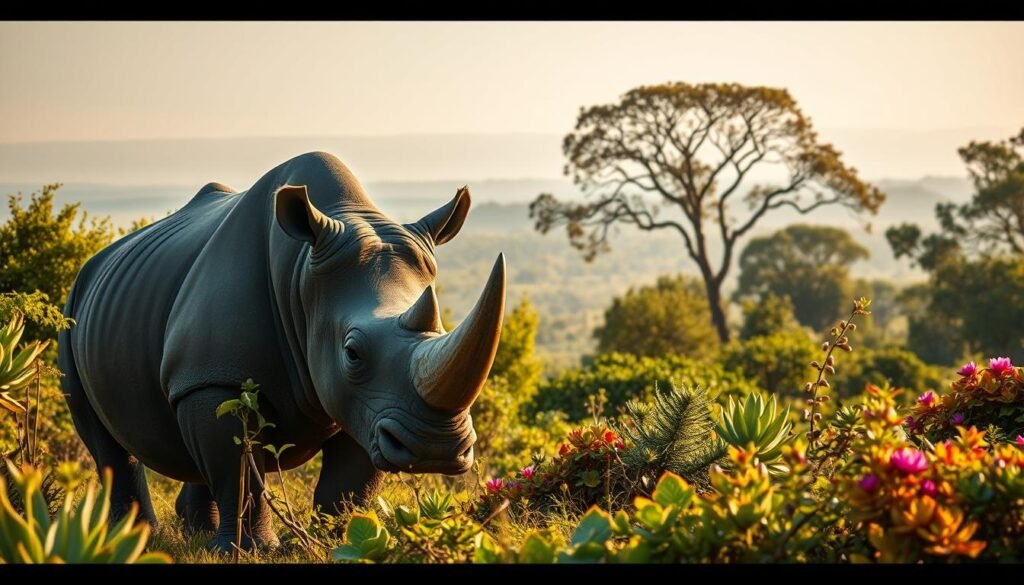
Today, you’ll mostly find these grumpy geniuses in reserves like Kenya’s Tsavo East—living proof that evolution’s weirdest ideas sometimes work out. Just don’t call them “black” to their face—they’re more of a charcoal-gray vibe.
Black Rhino Facts for Kids in Action
Hold onto your hats—we’re diving into the wild side of these armored giants! Picture a rhino revving up like a monster truck when startled. No kidding—they can charge at 34 mph (55 kph), faster than your dad’s pickup on a highway. At Folly Farm, their resident tank-on-legs once plowed through a mud wallow like it owed him lunch money.
But here’s the twist: these animals are total spa enthusiasts. Rolling in mud isn’t just messy fun—it’s survival mode. That crusty coating blocks UV rays and bugs better than your sunscreen. Believe it or not, their skin cracks without regular mud baths. Talk about high-maintenance!
Now, let’s chat about their menu. These picky eaters munch on over 220 plants—from thorny acacias to juicy succulents. Imagine having a different snack every 10 minutes! Unlike white rhino cousins who graze on grass, they’re the ultimate foodies of the scrubland.
Think that’s wild? Their horns aren’t just for show. They’ve been caught using them to flip over logs like pancakes—breakfast hunting, anyone? And get this: they’ll “talk” to neighbors by leaving poop piles as messages. Science class never covered that kind of texting!
Tough Skin and Mighty Horns: Anatomy Spotlight
Let’s talk armor—rhino edition. These walking fortresses come equipped with built-in weapons and a suit tougher than your dad’s old leather jacket. But here’s the twist: even superheroes have weaknesses. Grab your magnifying glass—we’re dissecting their most iconic features.
Horn Structure, Length, and Function
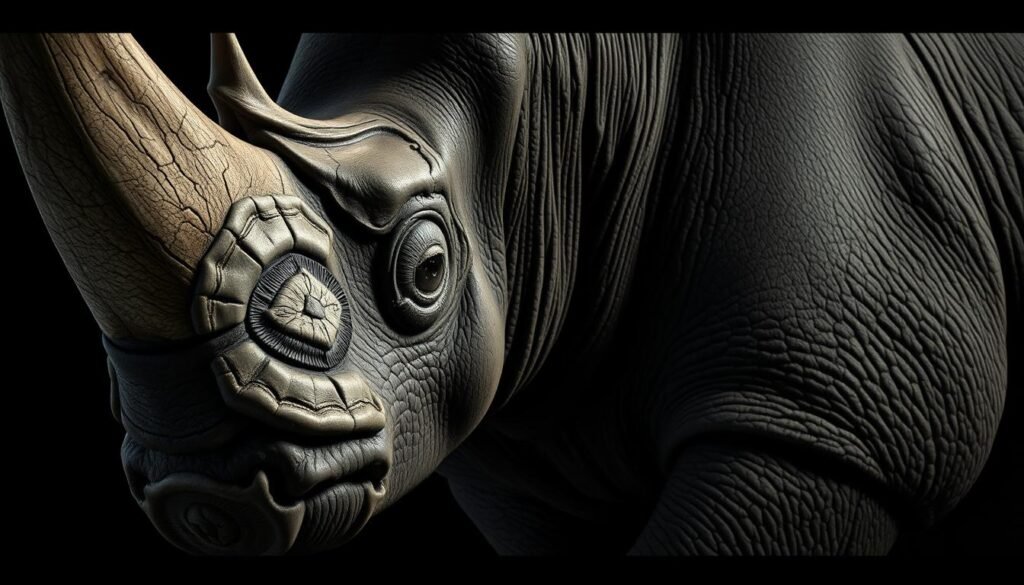
That front horn isn’t just for show—it’s pure keratin, the same stuff as your fingernails. Imagine growing a 50cm spike from your face. Now double that. Some legends sport 140cm horns—taller than most third graders! It’s like carrying a baseball bat on your snout 24/7.
But here’s the kicker: they’re not attached to the skull. Lose one in a fight? No sweat—it’ll regrow. Think of it as nature’s replaceable Swiss Army knife. Defense? Check. Digging up roots? Double check. Flipping jeeps? Okay, maybe don’t test that last one.
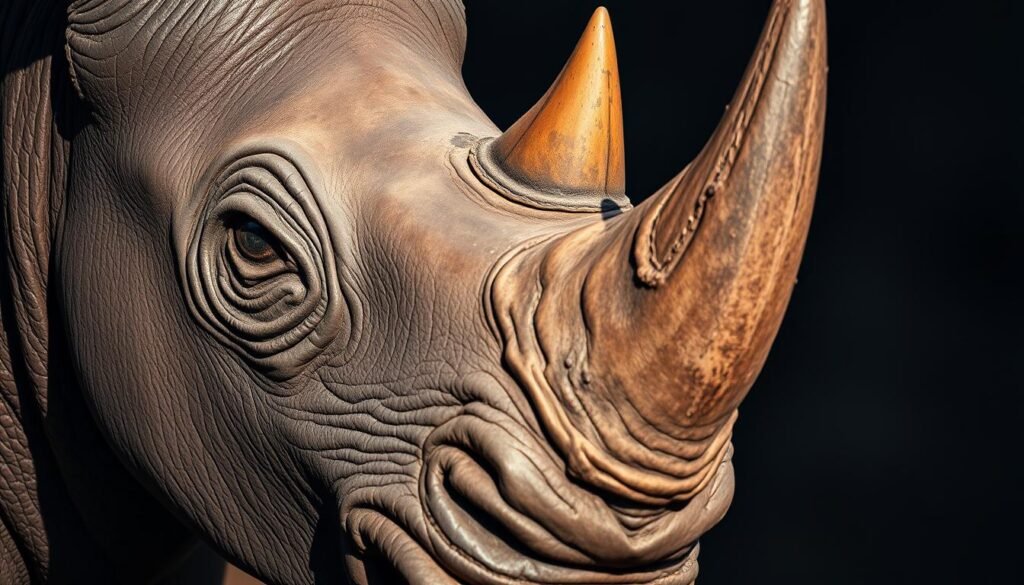
Skin as Natural Defense Against the Elements
Their skin isn’t just thick—it’s layered like a croissant. Those folds can trap mud for days, creating a bug-proof, SPF 1000 shield. But surprise! Under that armor? Sensitive skin that burns faster than marshmallows at a bonfire. Hence the constant mud baths—part spa day, part survival hack.
And that nose? It’s basically a built-in radar dish. While their eyesight’s worse than yours without glasses, they can sniff out water three miles away. Talk about overcompensating!
So next time you see one, remember: beneath that grumpy exterior lies a masterpiece of weird evolution. Just don’t ask them about sunscreen—it’s a touchy subject.
Daily Foraging and Surprising Eating Habits
Picture this: a 3,000-pound food critic sampling 220 dishes daily. That’s your average armored giant’s approach to dining. Forget buffets—they’re gourmet browsers with standards higher than a Michelin-star chef.
These selective eaters mix their meals like a DJ blends tracks. Acacia thorns? No problem. Their hooked upper lip works like nature’s Swiss Army knife, deftly plucking leaves while avoiding stab wounds. Imagine peeling a banana with your eyelid—that’s the precision we’re talking about.
Feature
Armored Giants
African Elephants
Daily Plant Types
220+ species
50-60 species
Feeding Style
Precision browsing
Bulk grazing
Daily Intake
75 lbs (34 kg)
300 lbs (136 kg)
Favorite Snack
Thorny acacia leaves
Baobab bark
Here’s the kicker: they’ll taste-test branches like a sommelier sniffs wine. Too woody? Toss it. Juicy succulent? Devour it. Their diet changes more often than a TikTok trend—yesterday’s favorite bush could be today’s rejected side dish.
And get this: they’ve mastered eco-friendly eating. By trimming plants instead of uprooting them, they help vegetation regrow. Talk about sustainable snacking! Isn’t that just wild?
Mating Rituals and Calf Care in the Wild
Ready for some rhino romance? These solitary giants only really socialize when it’s time to make babies. Picture two armored tanks trying to flirt—there’s snorting, circling, and enough drama to rival a reality TV show. Can you believe their courtship lasts weeks? They’re pickier than your aunt choosing a wedding date!
From Pregnancy to Playtime
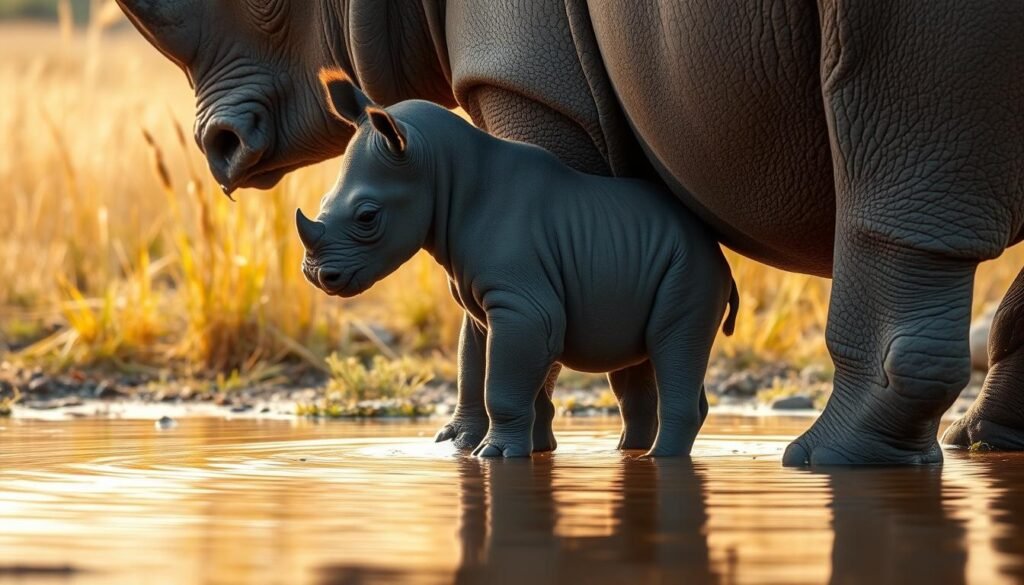
After the lovefest comes a 15-month pregnancy—longer than two school years back-to-back! When Junior finally arrives, he’s up and wobbling within hours. Three days later? He’s tailing mom through the bush like a fuzzy gray shadow. Talk about fast learners!
Stage
Rhino Behavior
Human Equivalent
Courtship
Weeks of cautious bonding
6-month dating app streak
Gestation
465 days
Carrying twins… twice
Calf Care
2-3 years with mom
College dorm drop-off
Here’s the kicker: adult rhinos usually avoid each other like rival soccer teams. Moms and calves? Total exception. She’ll hide her baby in bushes during danger—nature’s original “hide and seek” champion. The little one stays undercover until she gives the all-clear whistle.
By age three, junior’s kicked out to live solo. No family group dinners here! This tough love approach helps the species survive—fewer mouths to feed means better chances in harsh habitats. Still, watching mom and calf nuzzle? That’s the wild’s version of a heartwarming Disney moment.
Peculiar Communication and Social Cues
Ever wonder how grumpy neighbors communicate without yelling? These armored giants have mastered the art of silent conversations. Forget texts—they leave scent-based “post-it notes” everywhere. Picture walking through the bush and stumbling on a steaming message that says: “Terry was here. Don’t even think about moving in.”
Scent Marking and Head Rubbing Tactics
Their secret weapon? Pee. Lots of it. Males spray urine backward like graffiti artists tagging territory. Females? They’re more subtle—leaving poop piles that act as dating profiles. Scientists found each deposit reveals age, sex, and even mood. One whiff tells rivals: “This buffet’s taken” or whispers to mates: “Single and ready to mingle.”
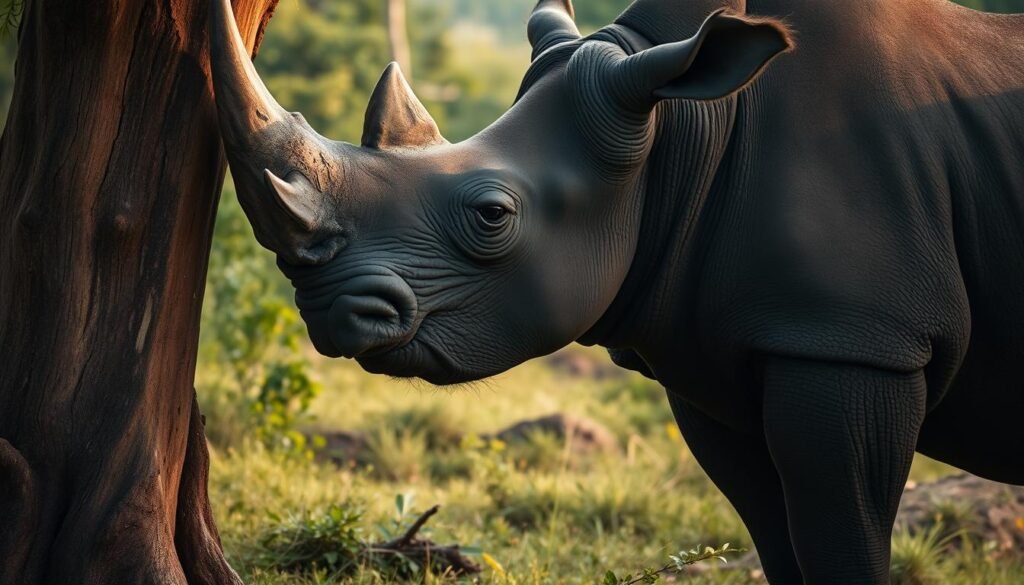
Then there’s the tree-trunk head rubs. It’s like scratching an itch while carving “I ❤️ Acacia” into bark. Those oily forehead glands leave chemical signatures visible for weeks. Researchers tracked one male rubbing 27 trees in a single patrol—talk about commitment issues!
Here’s the kicker: 80% of these markings come from adults. Teens? Too busy napping. Moms with calves? They’ll sneakily overwrite rival scents to protect their turf. Pretty crafty for creatures that look like walking boulders, huh?
Understanding these quirks cracks open their solitary world. Those smelly messages? They’re the original social network—connecting grumpy giants across miles without a single “hey.” Makes you rethink what “staying in touch” really means, doesn’t it?
Conservation Battles: Poaching and Habitat Stress
Let’s cut through the noise—these armored giants face real-world threats every day. Poachers target their horns, fueling a deadly trade that’s persisted since the 1970s. Just last year, 451 rhinos were killed across Africa. Eastern populations? Down to fewer than 1,000. It’s a rough world out there.
Habitat stress piles on the pressure. Tanzania’s population nosedived from 10,000 to under 100 in 30 years—like losing a puzzle piece from every box. Expanding farms and roads fracture their scrubland homes, forcing rhinos into smaller areas. Less space means more clashes over food and water.
Threat Type
Black Rhino Impact
White Rhino Impact
Poaching Rate
3% annual loss
5% annual loss
Habitat Loss
50% reduction since 1960
30% reduction
Conservation Status
Critically Endangered
Near Threatened
Here’s the kicker: rhino horns regrow, but poachers rarely wait. Demand in Asia drives prices to $60,000/kg—more than gold. Anti-poaching units now use drones and sniffer dogs, yet it’s an uphill battle.
Conservation wins do happen. Namibia’s rhino numbers doubled since the 1990s through strict protection. But without tackling both poaching and habitat loss? Even these living tanks can’t outrun extinction.
Wrapping Up with Real-Life Rhino Encounters
You haven’t truly met a rhino until you’ve watched one snort mud across its back like a toddler with a spaghetti bowl. At Folly Farm, their resident mud-rollers turn every puddle into performance art—flopping sideways with the drama of a reality TV star. I once saw a 1.5-ton “charcoal-gray bulldozer” delicately pluck acacia leaves using that signature hooked lip, proving even giants have finesse.
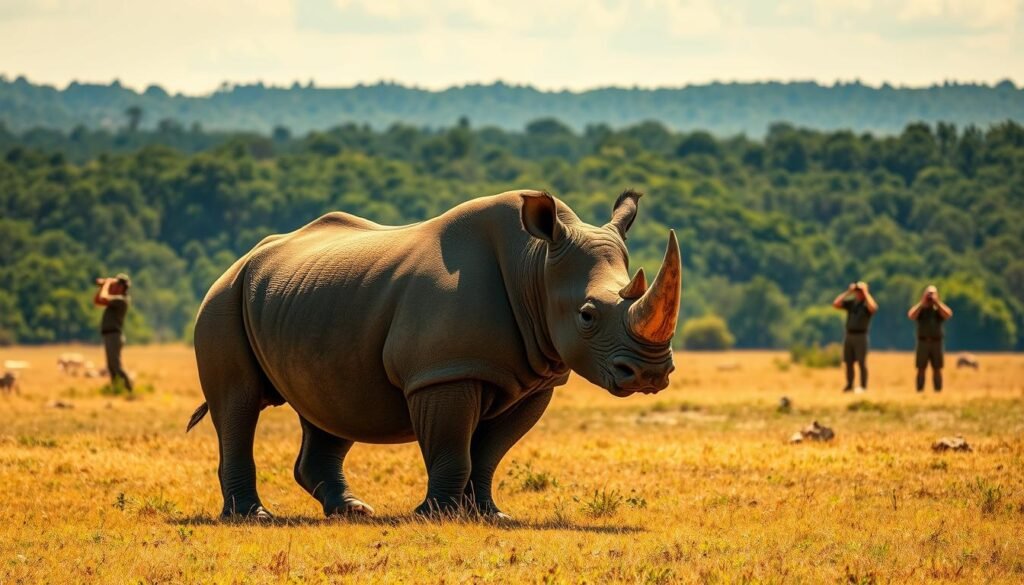
In Kenya’s Ol Pejeta Conservancy, relocated rhinos from poaching hotspots now bulldoze through bushes like they own the place—because they kinda do. Rangers share stories of calves playfully headbutting termite mounds, their tiny horns barely nicking the dirt. Conservationists track their progress through radio collars and… well, let’s just say creative poop analysis.
Here’s the kicker: these animals redefine “personal space.” One adult at Lewa Wildlife Trust charged our jeep, then abruptly veered off to scratch its nose on a thorn tree. Their mix of raw power and quirky vulnerability? It’s like watching a grumpy uncle try ballet.
What secrets might tomorrow’s encounters reveal? Maybe how they—