Let’s get one thing straight: Australia’s boxing superstar can’t walk backward, but it doesn’t need to. Why? Because this furry athlete can leap the length of six ten-year-olds in one jump and hit speeds faster than your dad’s golf cart. And guess what? Its baby is smaller than a chicken nugget when born.
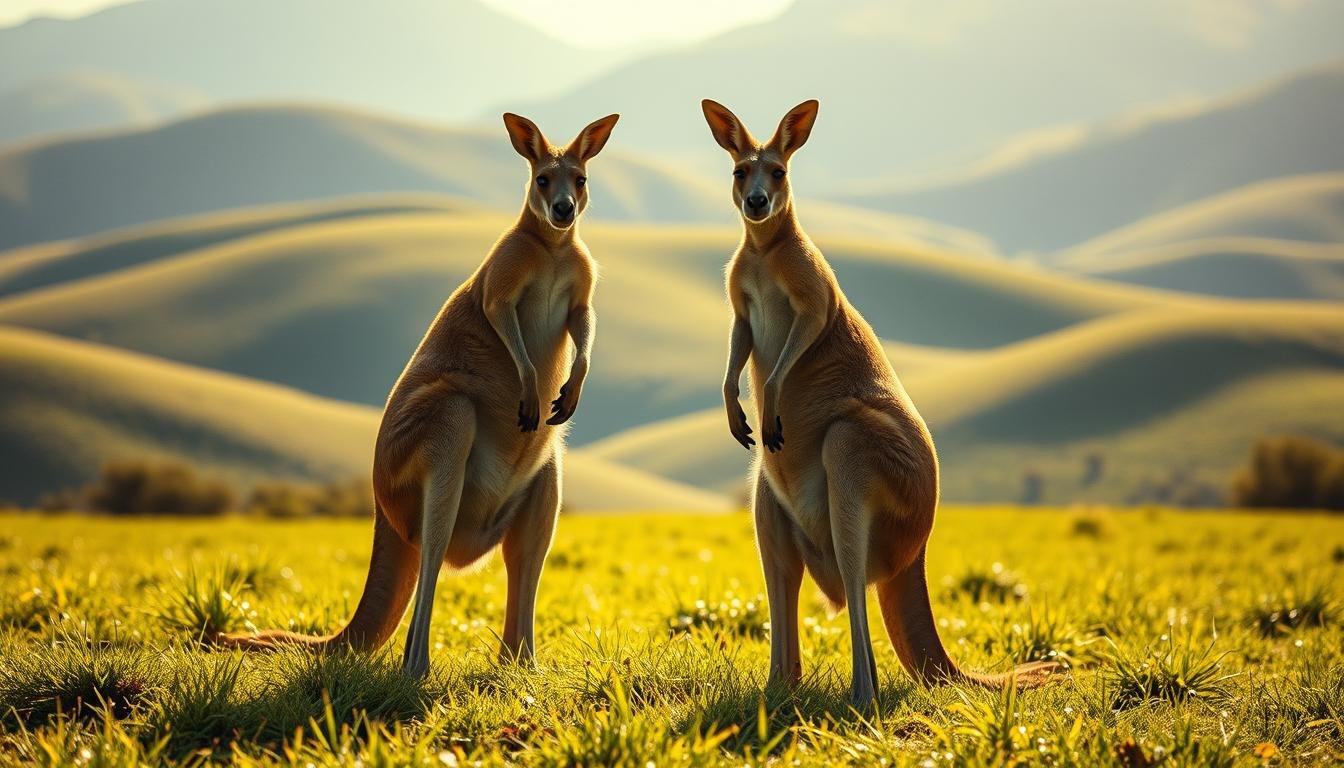
Meet the red kangaroo – nature’s ultimate trampoline. These animals don’t just hop; they dominate the Outback like living pinballs. Their tails aren’t just for balance – they’re built-in chairs when they want to kick back. Want proof? A full-grown male can launch itself 30 feet forward. Talk about skipping leg day!
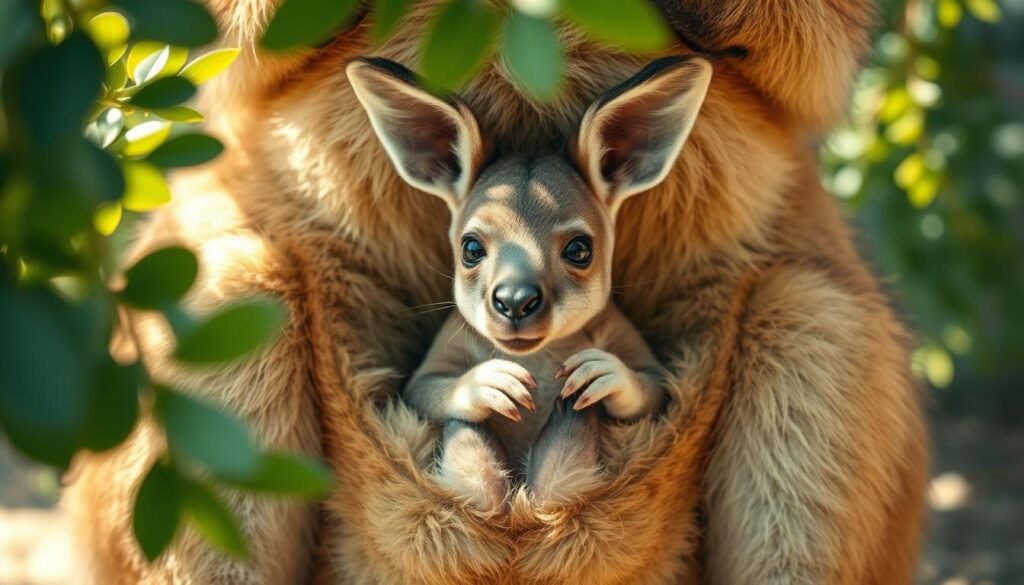
Here’s the kicker: joeys are born blind and hairless, then crawl into their mom’s pouch like tiny astronauts docking at a space station. They’ll live there for six months, growing from jellybean to junior boxer. And that pouch? It’s basically a 24/7 snack bar with built-in climate control.
But why should you care? Because these creatures aren’t just animals – they’re Australia’s answer to superheroes. From their grape-sized newborns to their knockout kicks, they’re proof that nature loves a good plot twist. Stick around – we’re just getting to the part where they punch like Rocky Balboa and eat like competitive eaters.
Discovering Australia’s Unique Marsupials
Australia’s bouncing icons have a backstory wilder than a rodeo. Picture this: 18th-century sailors staring at these odd creatures, scribbling in journals like they’d discovered aliens. Captain Cook’s crew famously asked locals what the animal was called – the reply “gangurru” (meaning “I don’t understand you”) became “kangaroo.” Talk about a translation fail that stuck!
The roots behind the name “kangaroo”
That linguistic mix-up gave us their title, but the real magic lies in their family tree. Kangaroos belong to Macropodidae – Latin for “big feet.” And boy, do they earn that name! Their hind legs aren’t just springs; they’re evolutionary masterpieces that let them dominate landscapes from deserts to forests.
A glimpse into their wild beginnings
These marsupials roll deep. Groups called mobs act like furry motorcycle gangs – eastern grey crews can have 50 members. Unlike deer herds or wolf packs, mobs are chill. They’ll lounge together, groom, and watch for dingoes. Fun fact: some mobs develop distinct hopping styles, like neighborhoods with their own dance moves.
Here’s what blows my mind: after centuries of study, wild kangaroos still pull new tricks. Last year, rangers spotted a mob using tree shade as natural air conditioning. Evolution’s greatest improv artists? You bet.
Kangaroo Facts for Kids: Hopping Through Biology
Here’s a secret: evolution built these hoppers like sports cars with built-in baby seats. Their entire body design revolves around one rule – go big or go home. Let’s unpack why their moves defy physics and how newborns survive an obstacle course before they’ve even opened their eyes.
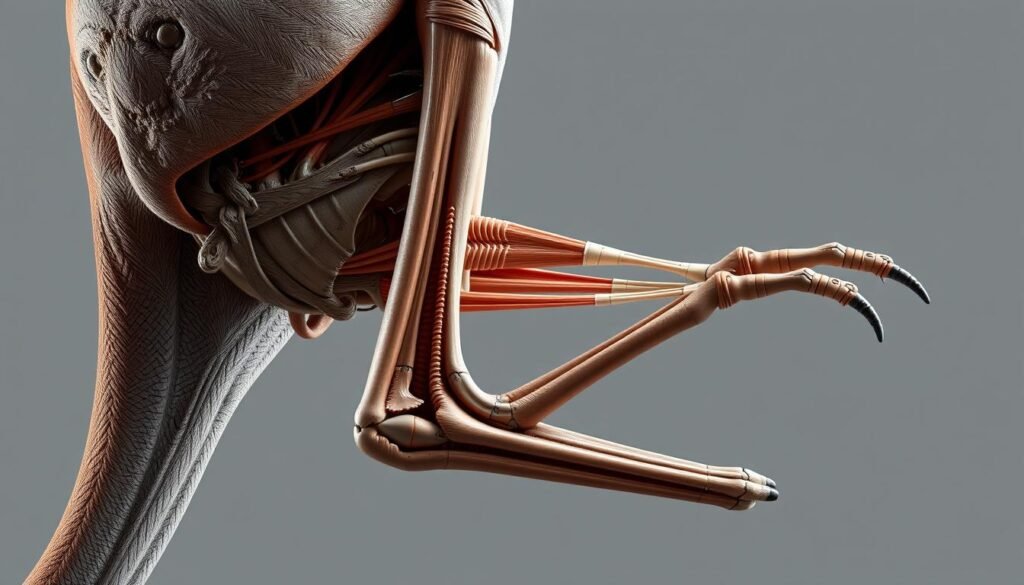
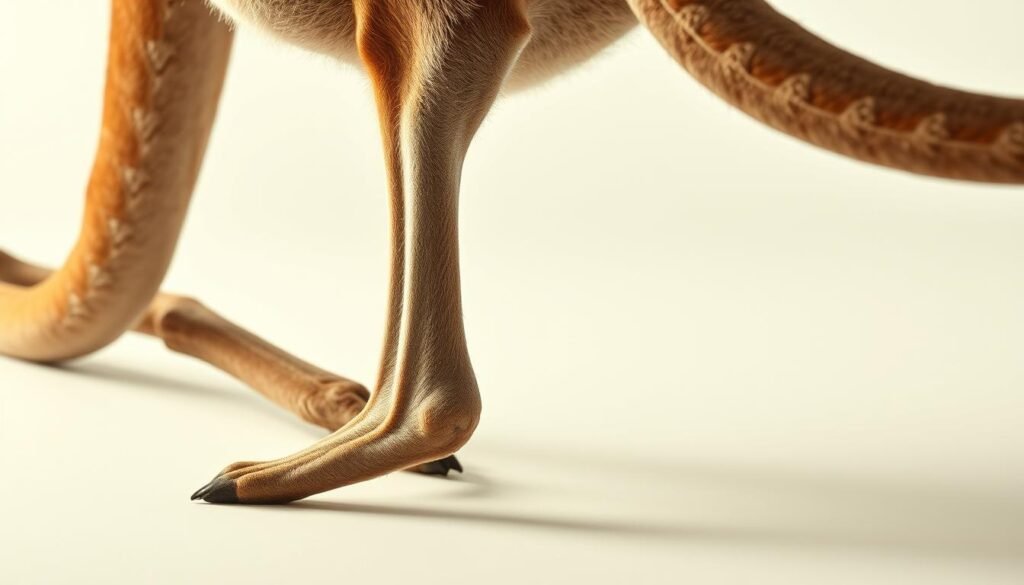
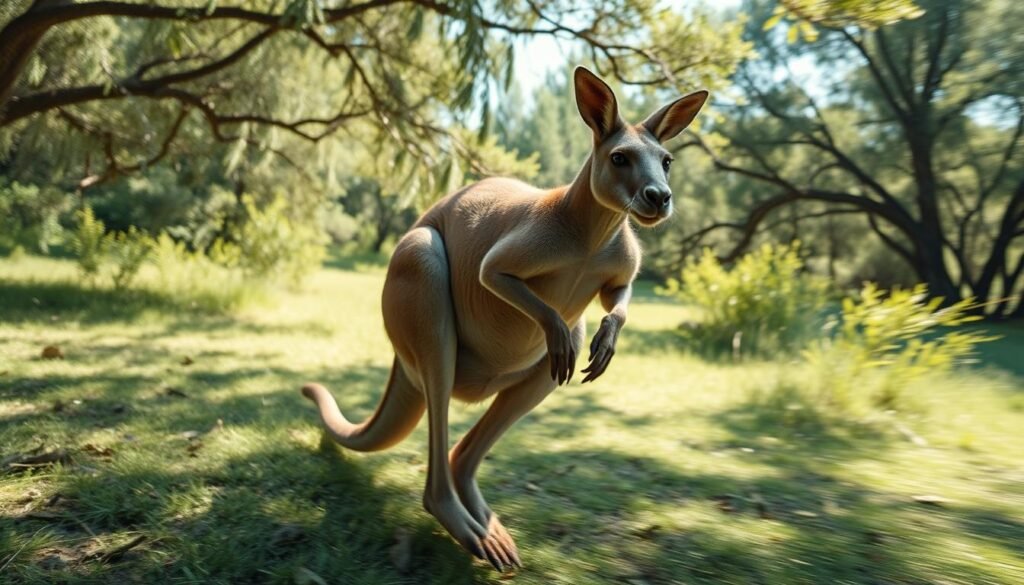
Those iconic hind legs aren’t just for show. They’re spring-loaded with elastic tendons that store energy like rubber bands. When a red roo hits 35 mph (faster than city speed limits!), its feet act as shock absorbers. Smaller species like wallabies have compact legs for zigzagging through bushes – nature’s version of sports car vs ATV.
Ever seen a kangaroo kick? Their powerful hind legs can snap timber. But here’s the genius part: they barely burn calories while hopping. Their tendons recycle 70% of the energy from each jump. It’s like having a perpetual motion machine built into their legs.
How a tiny joey scales a giant pouch
Now picture this: a grape-sized joey born blind, using its front limbs to climb a 6-inch fur mountain into the pouch. No GPS, no practice runs – just pure instinct. Their clawless paws grip like velcro while their wriggling body navigates upward. Some scientists think they follow scent trails like tiny detectives.
Once inside, the real work begins. Joeys triple in size within weeks, their back legs developing last – because why walk when you’ve got a five-star mobile home? Different species tweak this blueprint: tree kangaroos have stickier paws for climbing, while swamp wallabies time their pouch exits with lunar cycles. Wild, right?
Boxing in the Outback: When Roos Throw a Punch
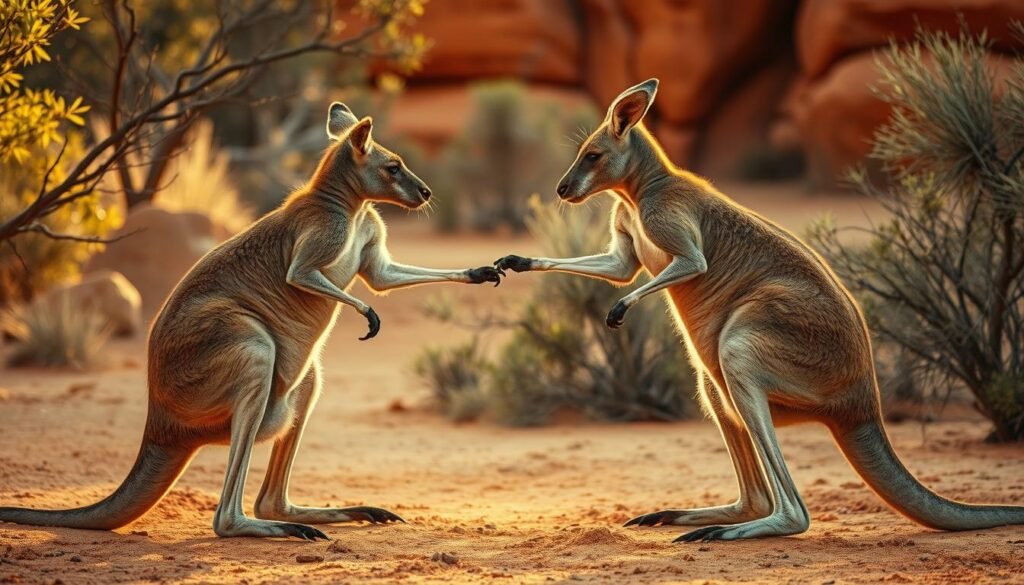
Ever watched a kangaroo throw a punch? It’s like a WWE match meets a nature documentary. These animals don’t just fight—they put on a show where powerful hind legs become knockout weapons and tails turn into tripod stands. Let’s break down why their sparring sessions would make Rocky Balboa take notes.
How their powerful hind legs deliver a punch
Male kangaroos fight like they’ve trained at a marsupial dojo. They lean back on their tails, lift those powerful hind legs, and kick with enough force to dent car doors. Their front legs? They’re not just for show—they grapple opponents like tiny wrestlers while delivering rapid jabs.
Combat Move
Body Part Used
Purpose
Force Generated
Tail Slam
Tail + Hind Legs
Knock opponent off balance
200+ lbs pressure
Double Kick
Hind Legs
Defend against predators
Can break bones
Clinch Hold
Front Legs
Control rival during fights
Equivalent to human arm wrestle
Predators think twice before tangling with these brawlers. Dingoes learn the hard way—one kick can send them flying like furry soccer balls. Even mobs get rowdy: during mating season, groups of males will box for hours, kicking up dust clouds visible from space.
Here’s the kicker (pun intended): joeys start practicing these moves young. They’ll play-fight in mom’s shadow, tiny front legs flailing like wind-up toys. By adulthood? They’re throwing Bruce Lee-worthy spin kicks without breaking a sweat. Nature’s ultimate fight club? You’re looking at it.
Anatomy in Action: Hind Legs, Tails, and Feet in Sync
Imagine strapping springs to your feet while balancing a third leg behind you. That’s essentially a kangaroo’s daily reality. Their powerful hind legs aren’t solo acts—they’re part of a biomechanical trio perfected over 25 million years. Let’s break down how these parts become nature’s ultimate trampoline.
Start with the hind legs—built like coiled bungee cords. Each leap stores energy in elastic tendons, recycling 70% of the force from the previous jump. An eastern grey kangaroo weighing 150 pounds can clear 30 feet in one bound. That’s like you jumping over three parked cars… after eating Thanksgiving dinner.
Now the tail: it’s not just a rudder. When hopping, it acts as a counterbalance. At rest? A fifth leg supporting their entire body weight. Studies show tails generate as much propulsion as both hind legs combined during slow movements. Engineers call this “biological genius.” I call it cheating physics.
Eastern greys dominate Australia’s forests because their feet evolved Swiss Army knife versatility. Broad pads cushion landings, while sharp claws dig into terrain. Their legs also rotate independently—try doing a split mid-air while changing direction. Even Olympic long jumpers can’t pull that off.
Body Part
Function
Eastern Grey Advantage
Hind Legs
Energy-efficient propulsion
30% longer tendons than red kangaroos
Tail
Balance + propulsion
15% stronger muscle mass
Feet
Shock absorption
Wider pads for forest terrain
Here’s the kicker: this system uses less energy than walking. A 200-pound roo burns fewer calories hopping than a human jogging. No wonder eastern grey mobs outnumber humans in some regions—they’ve cracked the code to effortless travel. Take that, Tesla engineers!
Joey Tales: Life Inside the Pouch
Buckle up for the ultimate baby story – a 6-month adventure where survival means climbing a fur mountain and milk comes with muscle-powered delivery. Picture this: a newborn the size of a jellybean crawls blindly upward, guided by instinct toward nature’s ultimate snack bar.
From grape-sized newborns to hopping juniors
Phase one: Operation Pouch Entry. Fresh from birth, the tiny joey uses sticky forelimbs to scale its mother’s belly. No GPS, no practice runs – just pure determination. Success means claiming a VIP seat in a temperature-controlled pouch that’s part nursery, part 24/7 diner.
Months two through six? Growth spurts on steroids. The joey quadruples in size while perfecting two crucial skills: sucking (mom’s milk changes formula-like compositions weekly) and kicking (play-fighting air inside the pouch). By month five, it resembles a fuzzy boxing glove with legs.
The grand exit isn’t graceful. First pouch peeks look like a toddler wearing a sleeping bag – all wobbly legs and confused stares. But here’s the genius part: baby kangaroos practice hopping while still nursing. They’ll dive back into the pouch for snacks, treating it like a drive-thru window with fur curtains.
Moms deserve medals. Their bodies produce different milk types for joeys of varying ages – like running a daycare with customized meal plans. When humans need eight arms to handle one infant, these mothers juggle an external baby and a pouch occupant simultaneously. Now that’s multitasking!
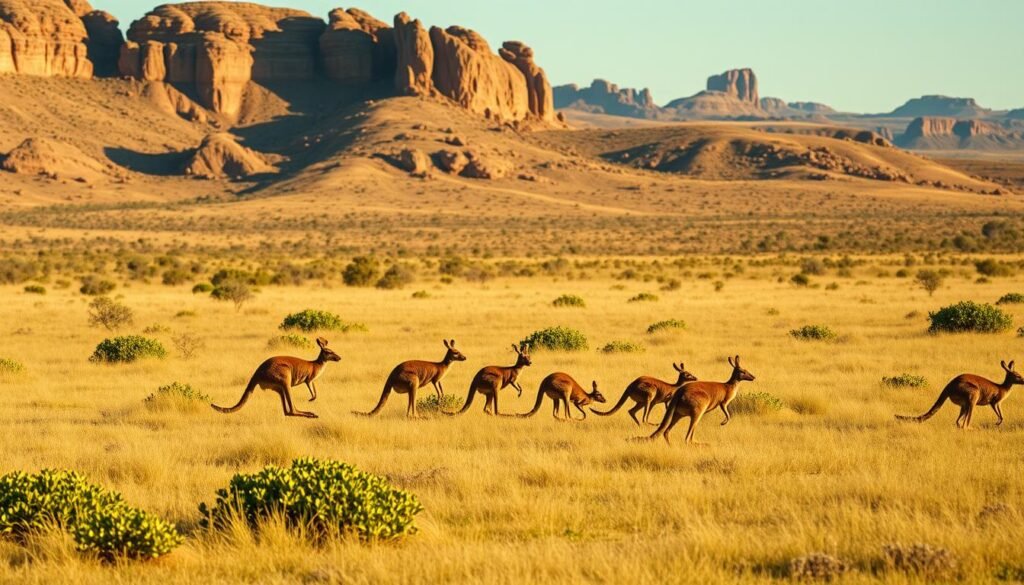
Hold onto your hats—these marsupials don’t just move, they rewrite the rules of motion. Picture a red blur zipping across the Outback at 25 mph, legs pumping like pistons while its tail steers like a rudder. This isn’t just hopping—it’s biomechanical wizardry that leaves Olympic sprinters blinking in disbelief.
Bounding distances that trip up even tall tales
Let’s break it down: one leap can cover 30 feet—the length of two parked SUVs. Smaller eastern grey roos? They’re the parkour experts, nimbly dodging predators with 10-foot sideways hops. Their secret? Tendons that recycle energy like rubber bands, letting them cruise for years without leg day.
Animal
Top Speed
Jump Length
Energy Efficiency
Red Kangaroo
35 mph
30 ft
70% energy reuse
Eastern Grey
25 mph
20 ft
65% energy reuse
Cheetah
75 mph
N/A
Exhausts in 30 sec
Watch a mob in action—it’s like seeing a living slingshot. They accelerate faster than your dad’s pickup, changing direction mid-air like they’ve got invisible trampolines. And that tail? It’s not just for balance. During high-speed chases, it whips around to execute hairpin turns that’d flip ATVs.
Here’s the kicker: their speed isn’t about raw power. It’s about efficiency. A 150-pound roo burns fewer calories hopping than you do scrolling TikTok. Next time someone mentions “fast animals,” remind them nature’s original speed demons bounce on two legs.
Hopping Habitats: From Grasslands to Desert Outbacks
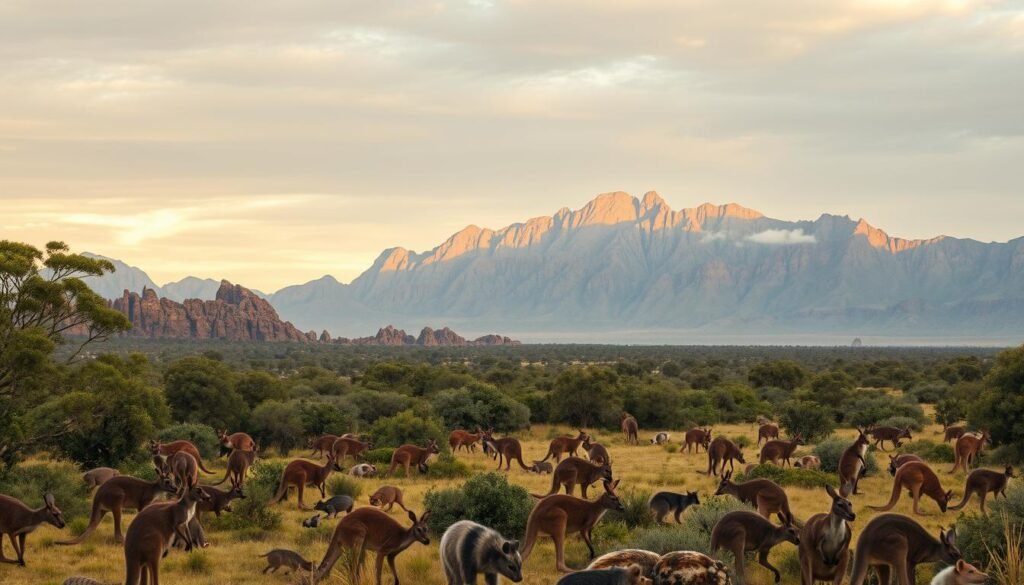
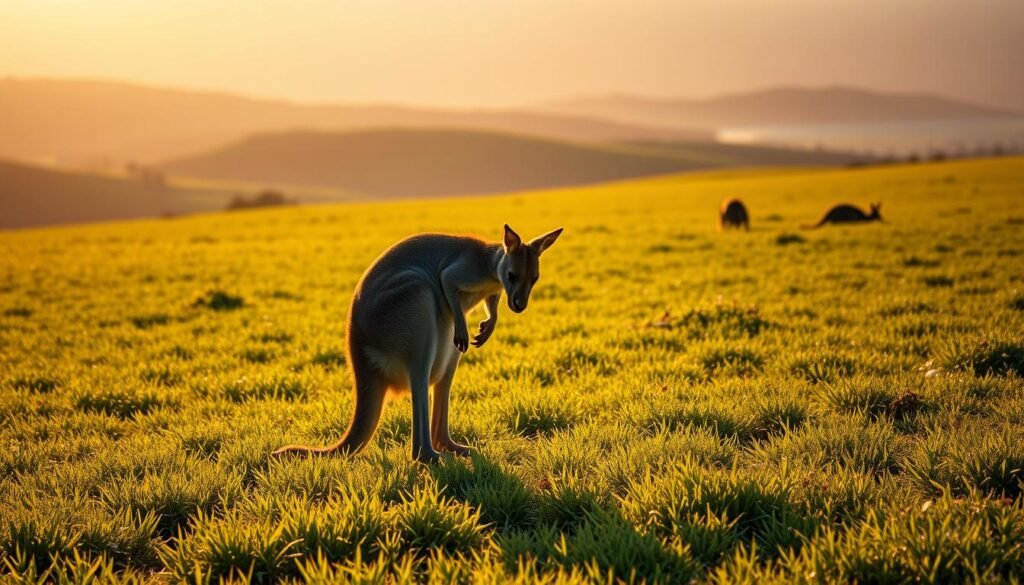
Think Australia’s Outback is just red dirt and tumbleweeds? Think again. These animals turn every landscape into a survival playground. Red kangaroos rule sun-baked deserts, sniffing out shrubs like fuzzy botanists. Meanwhile, eastern greys transform grassy plains into all-you-can-eat buffets. Talk about a glow-up!
Here’s the menu math: desert roos survive on tough, dry food – think thorny bushes and saltbush. Grassland crews? They’re the salad lovers, munching tender shoots and native grasses. Their diet shapes everything from group size to daily routines. Arid zone mobs stay small (10-15 members) and nomadic, while lush regions host 50-roo parties that lounge like they own the turf.
Predator pressure changes the game too. Desert kangaroos time their grazing for cooler hours, using those tail-powered hops to vanish faster than ice cream in July. Forest dwellers? They’ve mastered the art of vanishing – one second they’re there, next they’re ghosts in the gum trees.
Species play habitat chess better than grandmasters. Red roos dominate 70% of Australia’s interior, needing just 12% water content in their food. Eastern greys claim coastal zones where rainfall measures in bathtubs, not teaspoons. Even their paws differ – desert versions have tougher footpads than their soft-pawed cousins.
Next time you picture these hoppers, remember: they’re not just surviving Australia’s extremes. They’re rewriting the rulebook on how animals conquer continents. And they do it all without backward gears – because who needs reverse when you’ve got rocket legs?
When Humans and Roos Cross Paths: Real-Life Encounters
Ever had a kangaroo block your driveway? In Australia, it’s like hitting a furry speed bump with attitude. I’ve seen tourists freeze mid-selfie when a group of eastern greys strolls through campgrounds, tails dragging like they own the place. But sometimes, these meetings get wilder than a rodeo clown convention.
Take farmer Joe’s story: A hand-reared joey named Rocky once body-slammed a dingo threatening his mother. Picture a 3-foot-tall marsupial throwing jabs like a featherweight champ! Rocky’s story went viral, but here’s what they don’t show – the rescued joey peeked from his pouch for days afterward, like a fuzzy security guard.
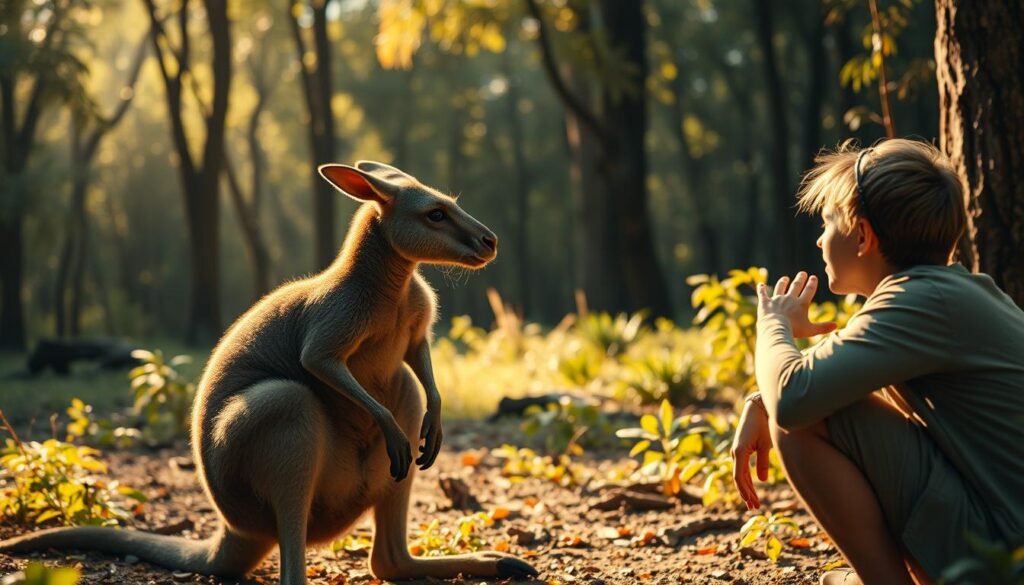
You won’t believe what happened to hiker Sarah Mills. A kangaroo trapped in barbed wire let her approach – then held still while she snipped the wires. “Those legs could’ve kicked my head off,” she told reporters. “But he knew I was helping.”
Roadside surprises: Groups of 10+ roos often stop traffic on Outback highways
Backyard brawls: Males sometimes shadowbox with reflection in windows
Unexpected allies: Park rangers use roos as natural dingo deterrents
Last summer, a mother kangaroo in Queensland made world news. She led firefighters to her trapped joey by hopping frantically toward smoke. When rescued, the baby’s ears barely reached the rescuer’s palm – proof that even in the wild, parental love crosses species lines.
Grass-Fed Goodness: The Diet of a Mighty Kangaroo
Let’s talk about what fuels these hopping powerhouses. Their menu reads like a survivalist’s grocery list – 90% grasses and shrubs, with occasional flowers or ferns for dessert. Red kangaroos in deserts survive on plants so tough, they’d make salad lovers cry. Eastern greys? They’re the picky eaters, choosing tender shoots like fuzzy food critics.
Here’s the math: a 200-pound male needs just 1.5% of his weight in food daily. That’s like you thriving on three granola bars! Their secret? Special stomachs ferment tough plants into energy, working like organic compost bins. Different species tweak this recipe – swamp wallabies munch rainforest greens, while tree roos snack on tropical leaves.
Species
Primary Diet
Average Weight
Lifespan
Red Kangaroo
Desert grasses/shrubs
200 lbs
8-12 years
Eastern Grey
Lush grasses
145 lbs
10-15 years
Swamp Wallaby
Ferns + leaves
35 lbs
12-15 years
This diet builds Olympic-ready bodies. Their meat stays lean because they’re basically living lawnmowers – always moving, never storing fat. Farmers joke it’s the original keto plan: zero carbs, all greens. Yet these athletes outlive many pets, with wild kangaroos hitting 15 years in ideal conditions.
Next time you see one bouncing by, remember: they’re not just eating. They’re mastering the art of turning weeds into rocket fuel.
Signing Off with a Hop: More Surprises Await…
Before you click away, let me drop this bombshell: female kangaroos are nature’s ultimate multitaskers. They can nurse a baby kangaroo outside the pouch while growing another inside – like running a daycare with a built-in snack bar. Their parenting secrets alone could fill three documentaries, and we haven’t even touched their communication tactics!
These animals aren’t just Australia’s symbol – they’re walking paradoxes. A creature the size of a linebacker moves with ballerina precision, its foot structure defying every physics textbook. And that joey you thought was cute? It’s already practicing survival moves that’d make Bear Grylls blush.
Here’s what keeps me up at night: kangaroos have gossip circles. Seriously. Mobs share intel through subtle ear twitches and tail flicks we’re just beginning to decode. Want to know how they vote on group travel routes? Or why some female kangaroos adopt orphans? Let’s just say… this story’s still got legs.
Next time you see that iconic silhouette, remember: you’re looking at a living lesson in balance. Between raw power and delicate care, ancient instincts and modern adaptability. The real question isn’t what we’ve covered – it’s what’s still hopping through the shadows, waiting to astonish us.