You read that right: the original “computer” was an actual human who did math for a living. Picture someone in 1600s France calculating tax records by hand – no screens, no keyboards, just ink-stained fingers and a headache waiting to happen.
Before machines took over, people used tools like the abacus (think fancy bead rack) to crunch numbers. Then came ENIAC in 1945 – a room-sized beast with 18,000 vacuum tubes that could barely add or subtract. Let that sink in: your phone today does trillions more calculations while you scroll cat videos.
I’m not making this up. Early “computers” were literally job titles. Imagine applying for work as a “human calculator” – talk about a résumé icebreaker! These folks paved the way for punch cards, clunky machines the size of refrigerators, and eventually the sleek devices we can’t live without.
Want to know how we went from counting on fingers to coding TikTok filters? Stick around. We’re diving into wire-filled dinosaurs like ENIAC, the accidental genius of early software, and why your laptop owes its existence to a bunch of math nerds with slide rules.
Origins: The Abacus and It All Began
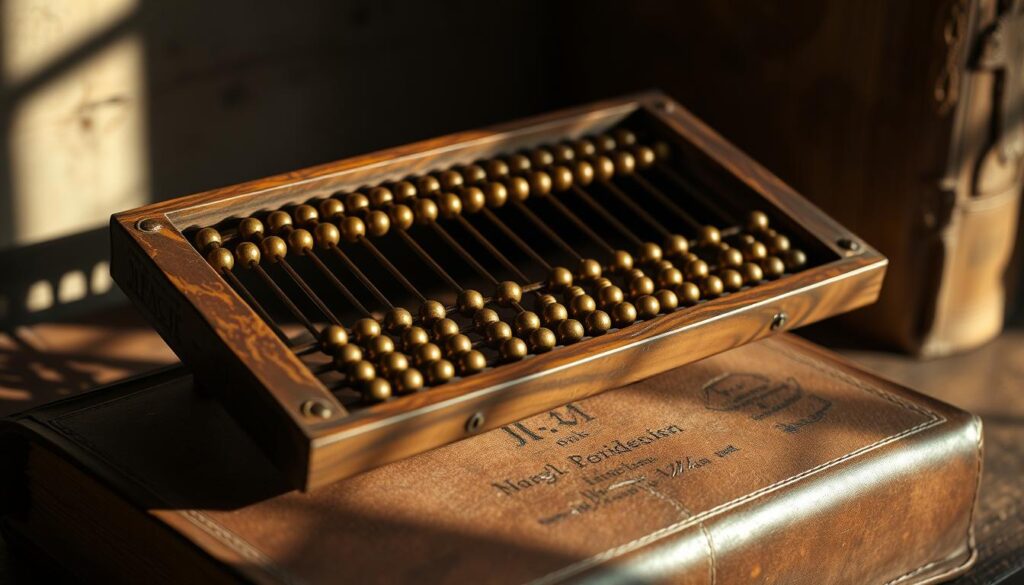
Think your calculator app is cool? Meet its 2,500-year-old ancestor: the abacus. Ancient Chinese traders slid beads on bamboo rods around 500 BC to track taxes and trades – no batteries required. Every part of this wooden wonder worked like a math ninja’s toolkit, with upper beads representing “5s” and lower ones as “1s.” Picture swiping a bead sideways like leveling up in your favorite game – that’s how people added numbers faster than you can say “Wi-Fi.”
Here’s the kicker: merchants used this device before written numerals existed. Imagine haggling over silk prices using only bead positions – pure mental gymnastics! The frame, rods, and beads weren’t just parts; they formed the first “user interface” for crunching numbers. I’d bet my pizza money that kids back then raced to solve problems faster than their friends, just like we compete in mobile games today.
What blows my mind? This simple board inspired every calculator since. Those sliding beads taught civilizations how to organize data spatially – a concept your laptop’s keyboard still uses. Next time you tap a screen, thank the abacus: it’s the great-great-grandparent of every “easy” button in history.
Mechanical Marvels: Abacus, Slide Rule, and More
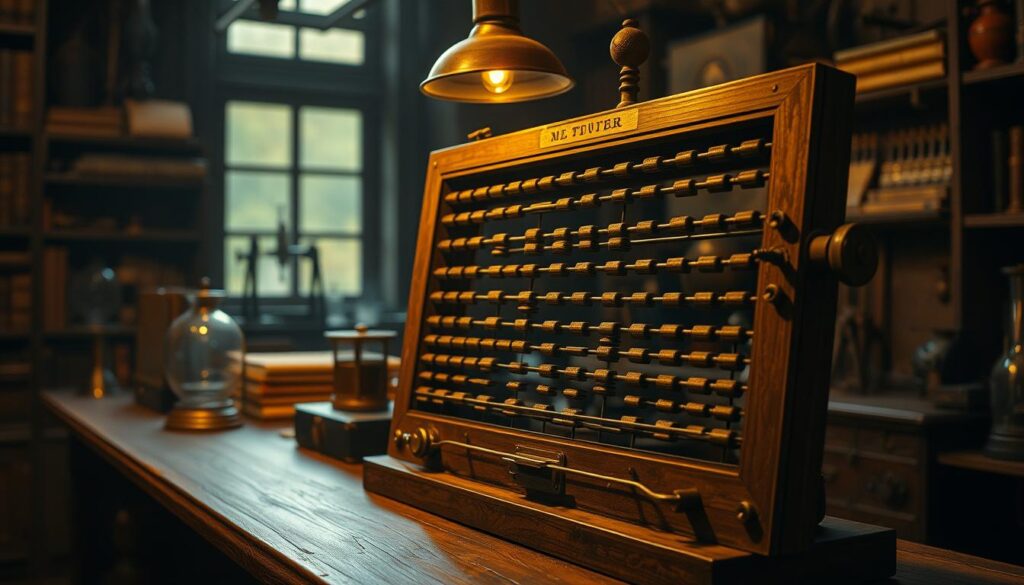
Ever wonder how math geniuses solved problems before smartphones? Meet the OGs of calculation – tools that turned number-crunching into an art form. These devices weren’t just clever; they rewrote the rules of problem-solving centuries before anyone dreamed of operating systems.
Abacus: The Original Counting Board
Imagine a wooden frame with beads that could out-calculate most humans. The abacus wasn’t just a toy – it was the ultimate math hack. Each bead’s position mattered: slide one left for addition, right for subtraction. Merchants tracked entire inventories this way, faster than you can type 2+2 into a calculator.
Slide Rule: Precision in a Simple Ruler
Fast-forward to 1622: William Oughtred invents the slide rule, a gadget that fit complex math into a pocket-sized stick. Engineers used these analog marvels to build bridges and launch rockets. Align two logarithmic scales, and boom – instant calculations for everything from interest rates to moon landings.
| Device | Best For | Cool Factor |
|---|---|---|
| Abacus | Basic arithmetic | No power needed |
| Slide Rule | Advanced equations | Space-age precision |
Here’s the kicker: these tools taught us how to organize information visually – a skill your laptop’s operating system uses daily. The abacus showed numbers could “move,” while the slide rule proved math could slide. Together, they paved the way for the first computer that didn’t need human fingers to work.
Human Computers: People Doing the Calculations
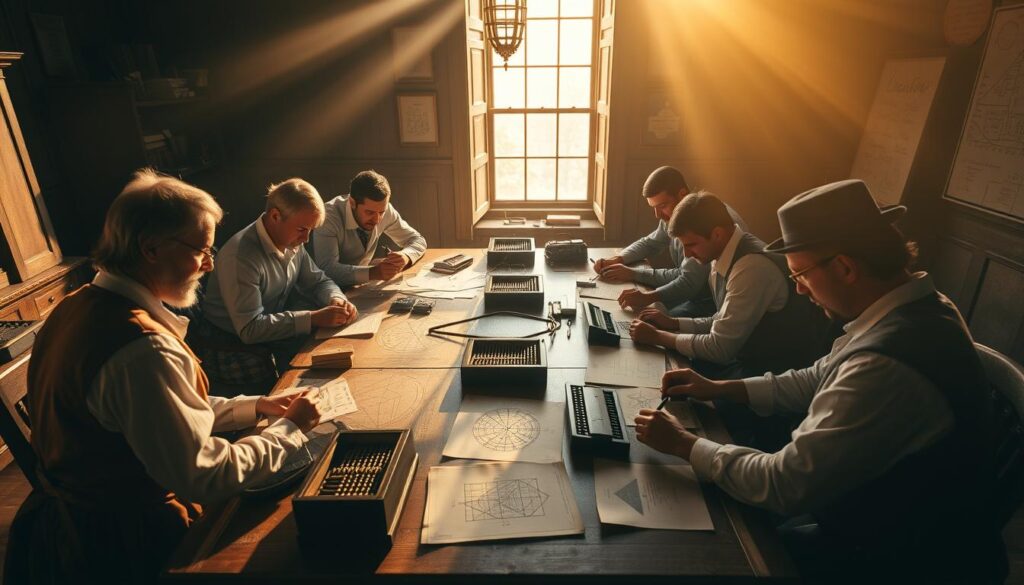
Long before silicon chips, human brains were the original processors. In 18th-century Europe, teams of mathematicians called “computers” solved equations for navigation charts and artillery tables – all without a single button press. These folks could multiply three-digit numbers faster than you can text an emoji, using tricks we’d now call “life hacks.”
Finger Counts and Mental Math Tricks
Ever play piano? Imagine using those finger moves for calculus. Human computers memorized finger multiplication tables – bending joints to represent numbers. One hand tracked units, the other tracked tens. It’s like solving Sudoku with your knuckles!
Here’s the kicker: they also used memory palaces. Picture storing numbers as vivid images in a mental mansion. Need to recall 3.14159? That’s a pie (3) on a chair (1) wearing a hat (4)… you get the idea. This method let them juggle data better than most first modern machines.
| Method | Speed | Tools |
|---|---|---|
| Finger Math | 15 calculations/hour | Hands + memory |
| Mental Mapping | 30+ equations/day | Visual imagination |
| Early Devices | 100+ operations/hour | Gears + punch cards |
Why does this matter? Because these humans taught machines how to operate. Their repetitive tasks became the blueprint for modern computer programs. Next time your laptop runs an update, thank those finger-counting geniuses – they basically wrote the first operating manual!
Think you’ve got it rough with homework? Try doing tax calculations for an entire kingdom… after dinner. Yet without their grind, we’d never have devices that use computers to handle the boring stuff. Funny how history’s “human errors” led to flawless tech!
The Birth of Electronic Calculation
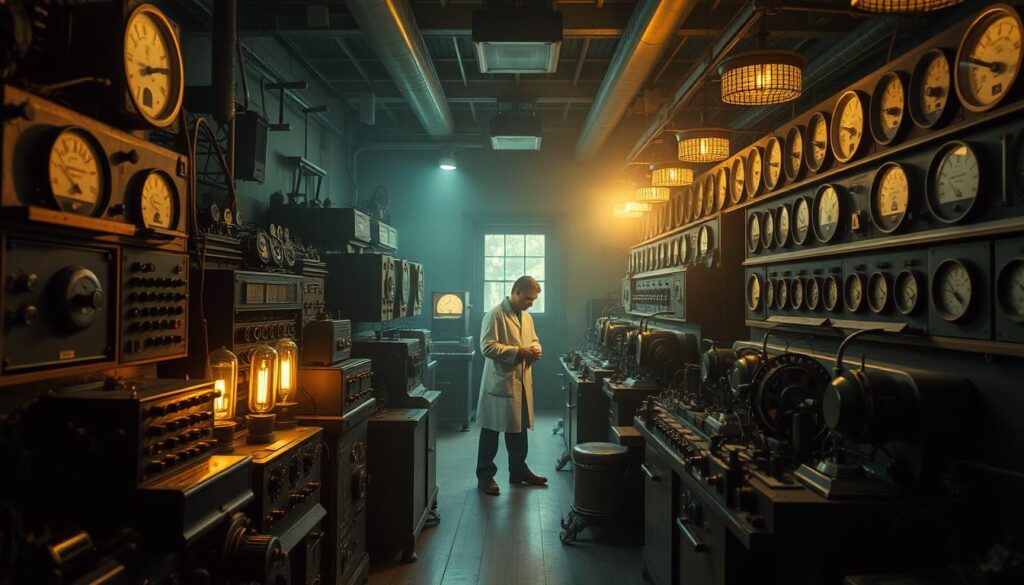
Picture a machine so big it could swallow your bedroom whole – that was ENIAC in 1946. This 30-ton beast needed an entire gymnasium just to stretch its 17,000 vacuum tubes. One wrong tube meant hours of debugging, like finding a burnt-out bulb in Times Square’s neon jungle.
ENIAC: Massive Yet Limited
Operating this monster required physical rewiring for every new task. Forget apps – technicians plugged cables into wall-sized panels like solving a giant Lite-Brite puzzle. The clunky keyboard looked like a telephone switchboard on steroids, with buttons big enough to mash with your fist.
Here’s the kicker: ENIAC could only handle four math operations. Your $10 calculator today does more before breakfast. But back then, solving 5,000 additions per second felt like magic – even if changing instructions meant literally moving wires.
From Vacuum Tubes to Transistors
Those glowing tubes weren’t just fragile – they guzzled power like thirsty elephants. Engineers swapped them for transistors in the 1950s, shrinking machines from house-sized to desk-friendly. Suddenly, devices could store memory longer than a goldfish’s attention span.
| Component | ENIAC Era | Transistor Era |
|---|---|---|
| Size | 1,800 sq ft | 4 sq ft |
| Speed | 5,000 ops/sec | 100,000 ops/sec |
| Power Use | 150 kW | 100 watts |
Funny thought: those early engineers would’ve fainted seeing today’s keyboard-free smartphones. Yet without their sweat (and occasional electric shocks), we’d still be flipping switches instead of sending memes.
Programming Pioneers: Ada Lovelace and Early Codes
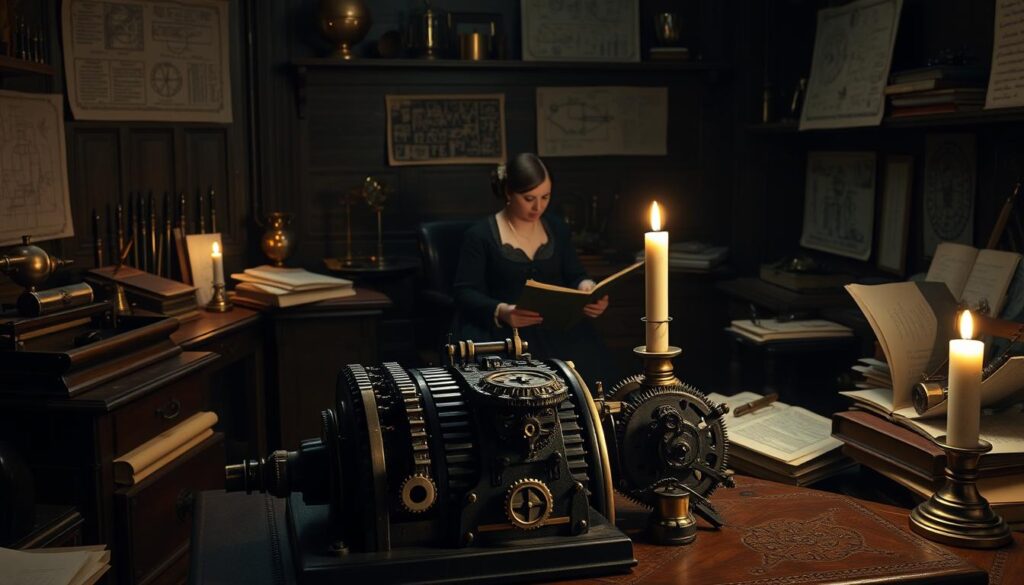
What if I told you the first coder wore Victorian skirts? Meet Ada Lovelace – the 19th-century math whiz who saw poetry in numbers. While working on Charles Babbage’s machine called the Analytical Engine, she scribbled notes that became the world’s first computer program in 1843. Her algorithm wasn’t just math – it was a data symphony predicting how machines could handle more than arithmetic.
Here’s how it worked: Ada mapped out steps to calculate Bernoulli numbers using punch cards. Each hole in those cards acted like a drive command, telling the machine when to add, subtract, or store results. Imagine writing code with paper clips and patience – no backspace key, no undo button. One wrong punch? Start over.
The First Algorithm Written by a Human
Ada’s breakthrough wasn’t just about numbers. She envisioned systems that could create music or art if given the right instructions. Her notes read like a recipe: “Step 1: Feed these cards into the mill. Step 2: Crank the handle exactly seven times.” It’s the tech equivalent of teaching your dog to fetch… if your dog weighed three tons and ran on steam.
Early programmers faced challenges we’d find hilarious today. Debugging meant physically untangling wires. Storing data required swapping punch cards like Pokémon trades. Yet these quirks built the foundation for every app you use – from TikTok to Google Maps.
Next time your game loads instantly, thank Ada. She proved machines could be more than calculators – they could be canvases for human imagination. Not bad for someone who coded in an era when “Wi-Fi” meant waving a fan!
Eye-Opening Computer Facts for Kids: Surprising Firsts
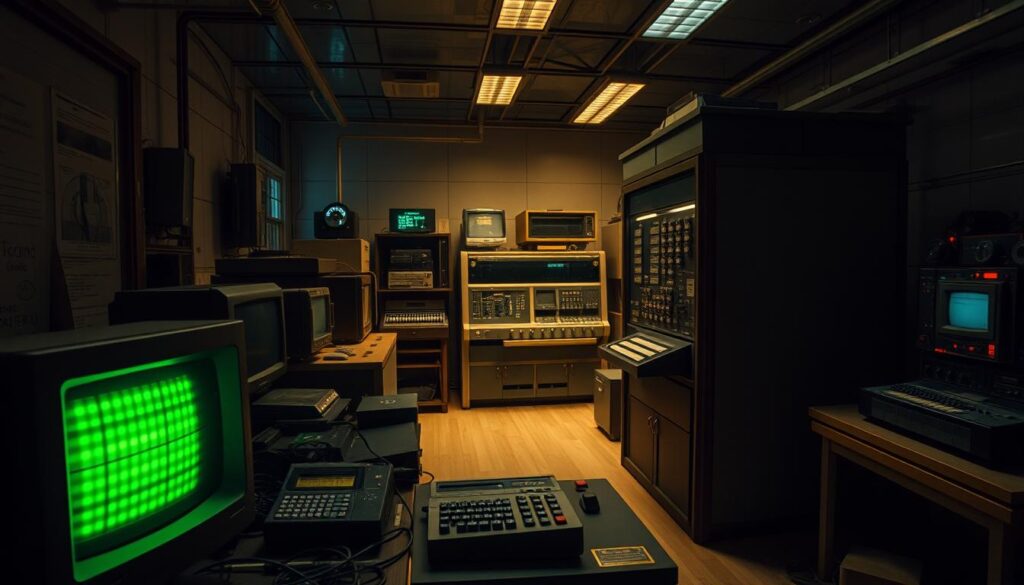
Buckle up for tech history’s wildest plot twists. Did you know the first “screens” were just holes in paper? Punch cards from the 1800s worked like primitive QR codes – one wrong poke and your entire program became confetti. I’m not joking – early programmers spent more time literally debugging paper jams than writing code.
Here’s a shocker: the original portable “laptop” weighed 25 pounds. The 1981 Osborne 1 had a screen smaller than your hand, yet people lugged it around like a briefcase full of bricks. Imagine your math teacher hauling that to class instead of an iPad!
| Then vs. Now | 1940s Tech | Modern Laptops |
|---|---|---|
| Weight | 30 tons (ENIAC) | 2.5 lbs |
| Screen Size | 0 inches (punch cards) | 13-17 inches |
| Math Power | 5,000 additions/sec | 11 trillion ops/sec |
My favorite quirk? Early machines couldn’t even spellcheck. The 1951 UNIVAC took an entire room to store less data than your microwave’s clock. Yet engineers thought it was revolutionary – which it was, in the same way stone wheels were cutting-edge transportation.
Crazy enough? These clunkers paved the way for your pocket-sized powerhouse. Next time your device crashes, remember: we’ve come a long way from machines that needed physical rewiring to switch tasks. Now that’s what I call progress – no paper punches required!
Modern Computer Evolution: From Mainframes to Laptops
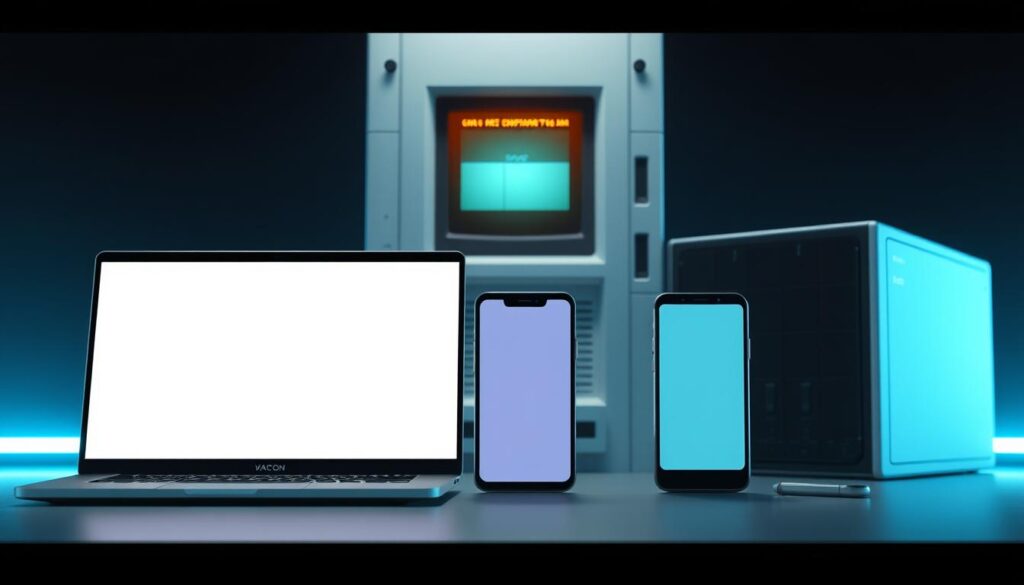
Ever tried fitting a swimming pool in your pocket? That’s basically what engineers did over 50 years. Early mainframes like the 1964 IBM System/360 needed entire basements – your entire school cafeteria couldn’t hold one. Fast-forward to today: devices thinner than a pencil case handle HD video editing while riding the bus.
Room-Sized Machines vs. Pocket-Sized Powerhouses
Let’s break it down. The 1975 Altair 8800 weighed 20 pounds and couldn’t display text. Your smartphone? It holds more processing muscle than every rocket from the Apollo missions combined. Here’s the kicker: that shift happened faster than pizza delivery – from room-filling giants to sleek slabs in under 60 years.
| Feature | 1970s Mainframe | 2020s Laptop |
|---|---|---|
| Weight | 2,000+ lbs | 2.2 lbs |
| Storage | 5 MB (entire fridge) | 2 TB (thumb-sized) |
| Tasks/Hour | 300 payroll slips | Stream 4K video globally |
Funny how progress works. Early programmers literally rewired machines like fixing plumbing. Now, a toddler’s tablet swipe can launch apps worldwide. Remember those clunky VCR tapes? Your device holds 10,000+ HD movies – enough to binge for years without repeats.
This evolution reshaped our world. Scientists simulate black holes on laptops. Artists create Oscar-winning effects in coffee shops. And you? You’re holding a pocket powerhouse that makes 1970s “supercomputers” look like abacuses. Not bad for something that fits between your math book and lunchbox!
Operating Systems and Interfaces: How Machines Listen
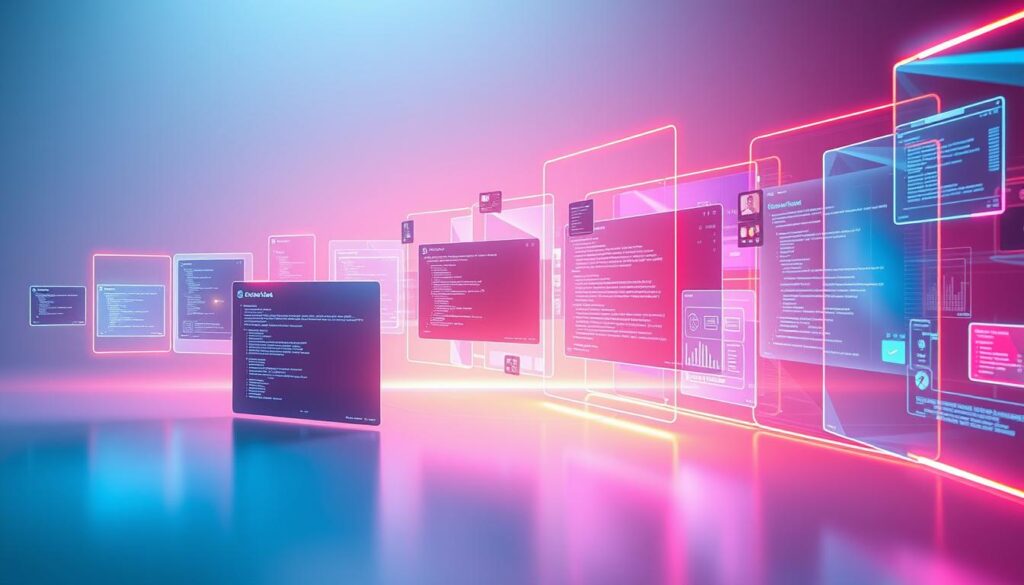
Ever typed “run” into a black screen and prayed something happened? That’s how we talked to machines before icons existed. Early operating systems spoke in cryptic code words – like learning Morse code just to play solitaire. I’m not kidding: the 1970s UNIX system required typing commands like a secret handshake. Want to open a file? Better spell every single letter right.
Companies like Apple changed the game with graphical interfaces. Suddenly, “double-click” became a magic word everyone understood. The 1984 Macintosh transformed screens into desks with folders – no PhD needed. This shift wasn’t just pretty pixels; it let regular folks boss machines around like pros.
Check this out:
| Era | Interface | Input | Example |
|---|---|---|---|
| 1970s | Command Line | Text-only | IBM’s DOS |
| 1980s | Graphical (GUI) | Mouse clicks | Macintosh 1.0 |
| 2000s | Touchscreen | Finger swipes | iOS/Android |
| 2020s | Voice/AI | Natural speech | Alexa, Siri |
These examples show how interfaces evolved from military-grade complexity to Minecraft-level intuitiveness. Early systems used blinking cursors – now we pinch-zoom cat videos. Companies like Microsoft bridged the gap with Start menus, while games like SimCity taught us drag-and-drop before it was cool.
Here’s the kicker: every “open file” dialog owes its existence to those text-only pioneers. Modern systems still use their word-based DNA under flashy surfaces. Next time you yell at Siri, remember – she’s just the latest company trick to make machines listen better.
Networking & Internet: Beyond the ARPANET
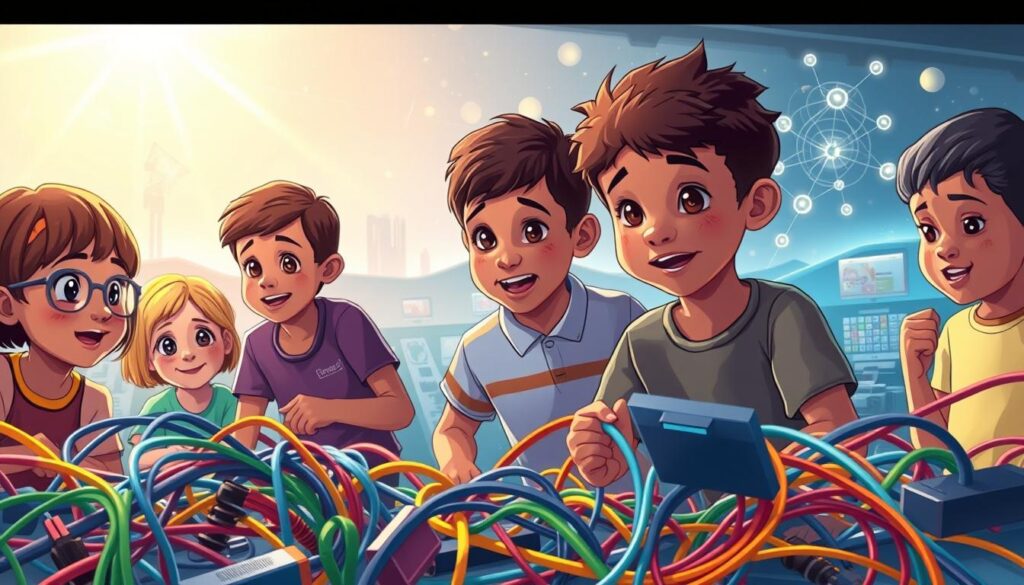
What if your fridge could text your grocery list? That’s the magic engineers cooked up after ARPANET. Born as a military project in 1969, this early network could barely send “LOGIN” across two states – and crashed after three letters. Today, we stream 4K videos while microwaving popcorn, thanks to visionaries who turned clunky cables into invisible data highways.
Connecting Devices in Real Time
Those early engineers played digital matchmaker. They built protocols letting machines “shake hands” across continents. Imagine two persons exchanging secret nods through a crowded room – that’s how packets of info navigate the web today. Your TikTok upload zips through fiber optics faster than you can say “buffering.”
Here’s the kicker: ARPANET’s space was limited to universities and labs. Now, your smartwatch chats with satellites while tracking your jog. This shift didn’t just happen – it required reinventing how work flows between devices. Early systems moved data like postal mail; modern networks operate at light-speed FedEx levels.
| Feature | 1969 ARPANET | 2020s Internet | Impact |
|---|---|---|---|
| Speed | 50 kbit/s | 10 Gbit/s | 200,000x faster |
| Users | 4 nodes | 5B+ devices | Global playground |
| Data Capacity | Store a novel | Stream 40M HD movies | Infinite creativity |
Today’s engineers face wilder challenges. How do you secure a space where every person’s photos, chats, and bank details coexist? By building digital fortresses with firewalls and encryption – the same way medieval castles used moats. Your work now lives everywhere at once, safer than a dragon’s treasure hoard.
Next time you video-call someone overseas, remember: you’re basically time-traveling. ARPANET’s founders would’ve traded their slide rules for that superpower!
Hardware & Software Synergy: Inside the Machine
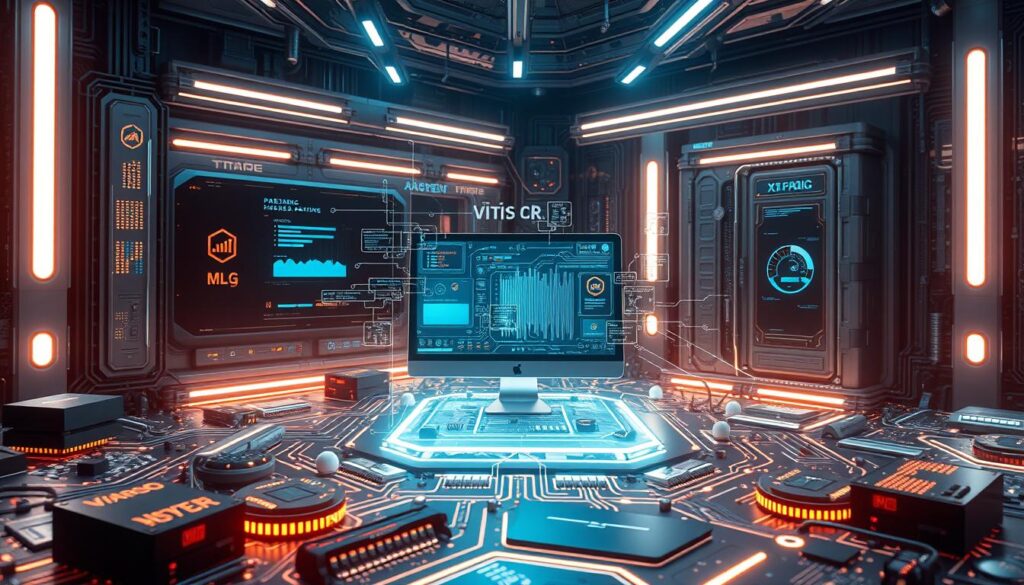
Ever tap a screen and wonder how your device instantly obeys? It’s like a symphony where every instrument knows its part. Modern machines blend physical parts with digital commands so smoothly, you’d think they read minds. Let’s crack open the magic box.
CPUs, Memory, and the Invisible Nerves
Your device’s brain – the CPU – works faster than a calculator on espresso. When you click “play,” it fires up millions of transistors in nanoseconds. But raw speed means nothing without memory chips whispering: “Hey, remember that video buffer? It’s over here.”
Think of RAM as a list maker. It jots down temporary tasks like loading websites or tracking game scores. The CPU checks this list 2.5 billion times per second – faster than you blink. Meanwhile, your storage drive acts like a librarian, shelving data for long-term use.
| Component | Role | Real-World Impact |
|---|---|---|
| CPU | Problem solver | Runs apps 10,000x faster than 1990s PCs |
| RAM | Short-term memory | Holds 16GB of active tasks |
| SSD | Long-term storage | Stores 1TB of photos/videos |
Here’s the kicker: components talk through invisible highways called buses. These pathways move data like speakers pump out sound – precise timing, zero mistakes. During peak times, your machine juggles more connections than a stadium Wi-Fi network.
Why care? Because this dance powers everything from TikTok edits to math homework. That calculator app? It’s just the tip of an iceberg where hardware and software hold hands. And those speakers blasting your playlist? They’re the encore to a performance that starts with silicon and electrons.
Wrapping Up Our Technological Adventure
Who knew beads on sticks would lead to this? From dusty abacus frames to screens thinner than a playing card, our tech journey’s been wilder than a time-travel movie. Every line of history – those clunky vacuum tubes, punch-card puzzles – shows how tiny ideas snowball into world-changers.
Look around. Your devices aren’t just tools – they’re living proof that innovation never sleeps. Ancient traders tracked taxes with beads; now we swipe screens to split dinner bills. The math hasn’t changed… just the speed and sparkle.
Here’s the kicker: tech’s greatest trick is blending into daily life. We don’t “use” gadgets anymore – we breathe them. Like oxygen, they’re everywhere yet invisible. But peek behind the curtain, and you’ll find centuries of human grit powering every pixel.
What’s next? Maybe holograms replacing screens. Or AI that predicts your pizza cravings. One thing’s certain: the next line in this story will surprise us all. Stay curious – tomorrow’s tech is already scribbled on some napkin…