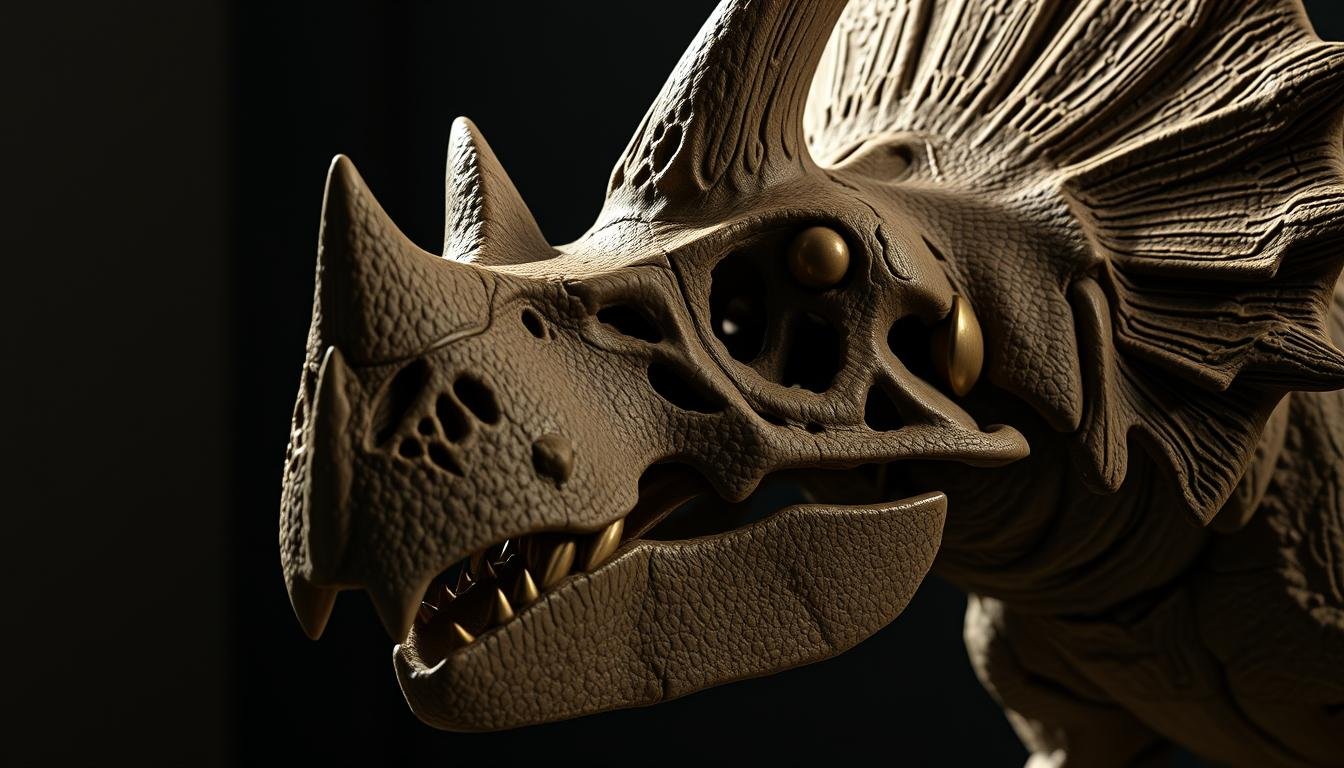
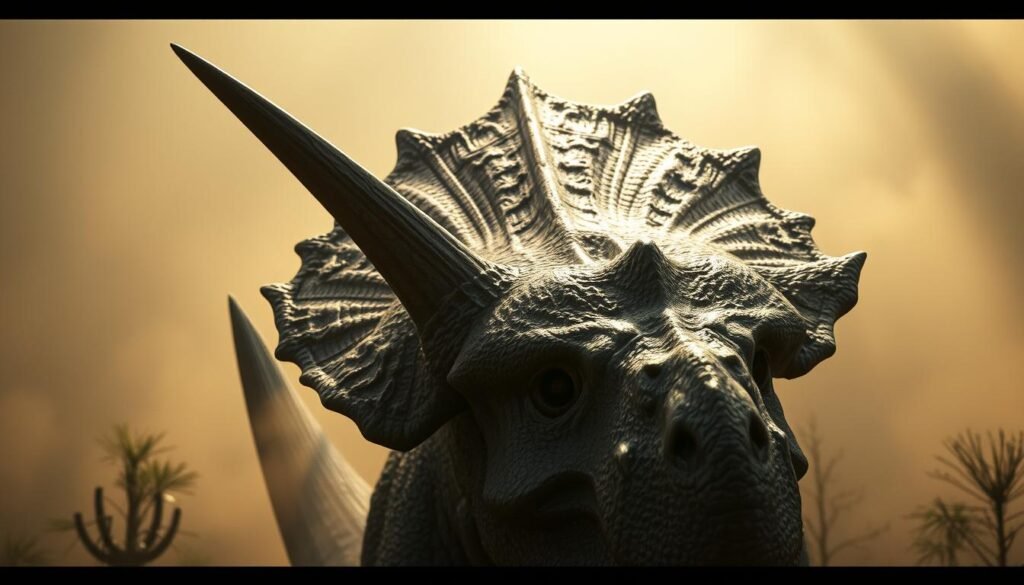
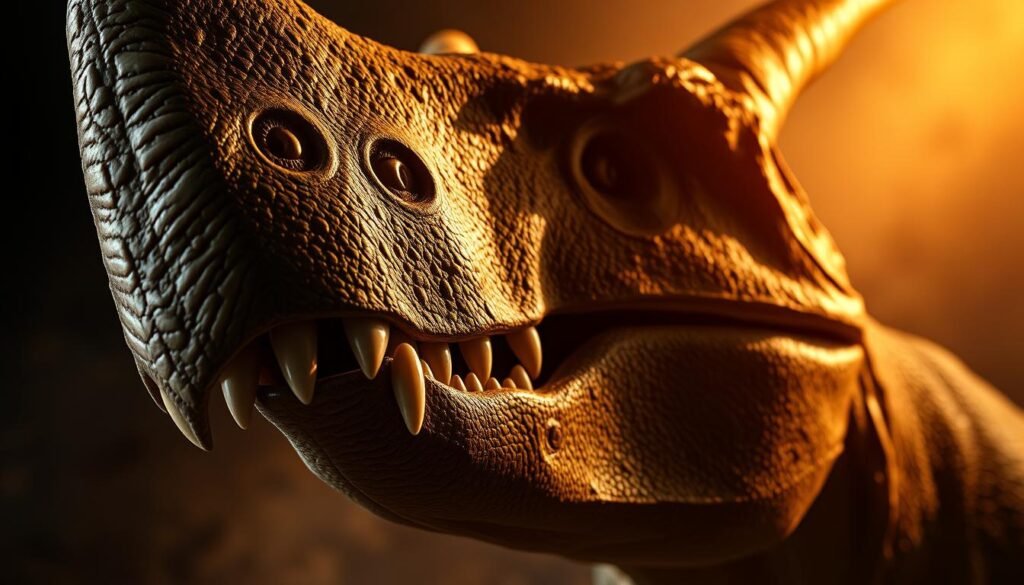
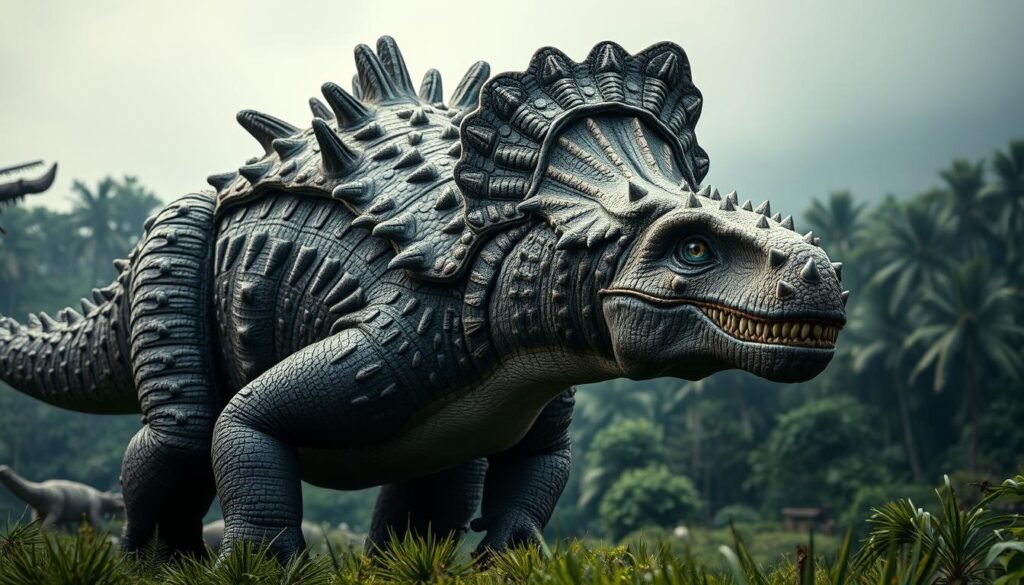
Picture a tank with horns—that’s basically the three-horned face of this dino superstar. Its skull alone weighed as much as a grand piano, topped with two brow horns and a nose spike that could make a rhino jealous. But the real showstopper? The bony frill behind its head—a natural shield thicker than your math textbook.
Scientists at places like the Boston Museum of Science have found fossils showing this creature’s bone structure wasn’t just for display. That frill? Total multitasker. It protected its neck from predators like T. rex and might’ve been used to impress other dinos with flashy colors. Talk about a prehistoric flex!
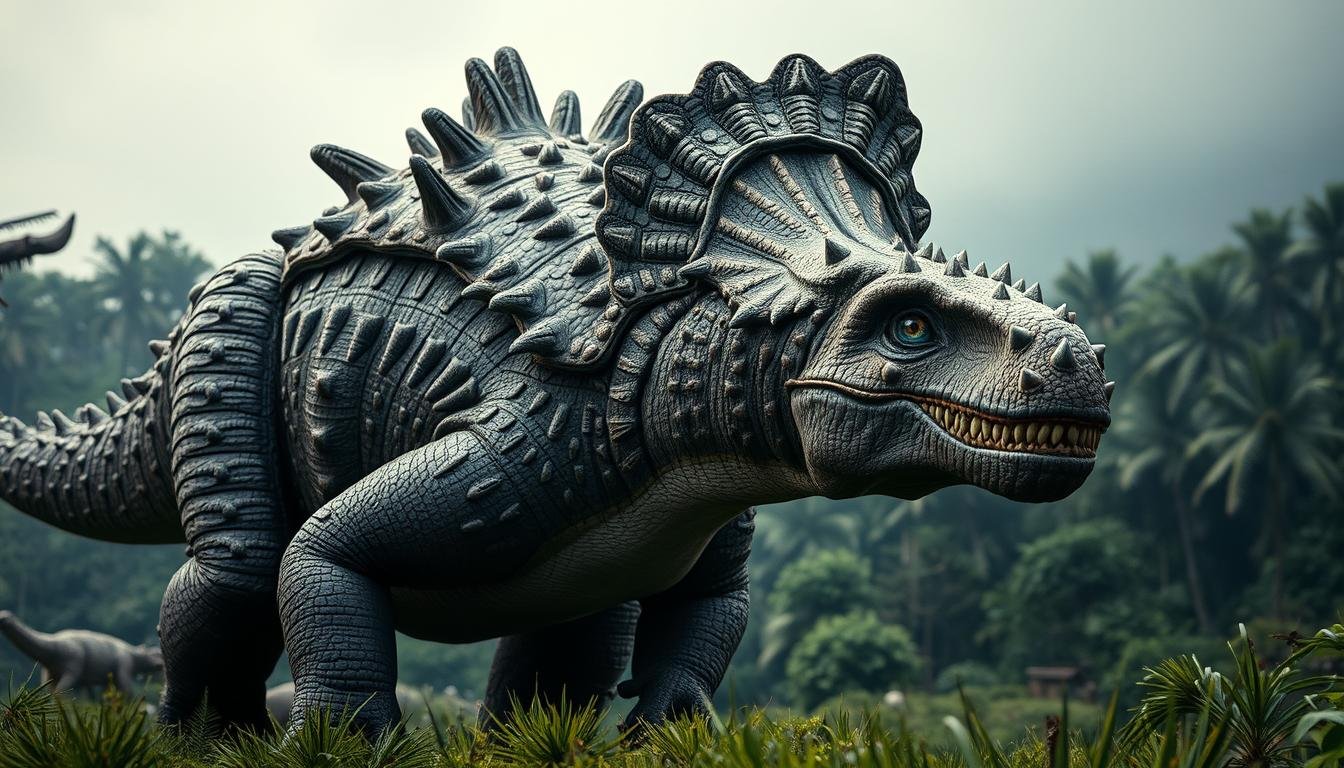
At 30 feet long, this plant-muncher wasn’t just big—it was clever. Those horns weren’t decorations. Imagine using them like Swiss Army knives: defending territory, battling rivals, or even digging up roots. And here’s the kicker—its shield grew bigger as it aged, like a built-in upgrade package.
Still think dinosaurs were just giant lizards? This guy’s skull alone proves they were engineering marvels. Let’s dig deeper into why this horned heavyweight deserves its rockstar status in the dino hall of fame.
Unpacking the Three-Horned Anatomy and Bone Frill
Imagine wearing a helmet fused to your head—except yours comes with two spears and a shield. That’s how this dinosaur rolled. Its three signature horns weren’t accessories. Think rhino meets medieval knight: those curved brow spikes could hook into rivals during clashes, while the nose horn jabbed like a fencing sword.
Sharp Horns in Action Against Predators
Ever seen mountain goats ram heads? Picture that—but with horns longer than your arm. Fossilized skull injuries in T. rex bones suggest these weapons did real damage. One museum display I saw showed a horn tip embedded in a predator’s rib—nature’s receipt for a failed attack.
Frill Mechanics: Nature’s Built-in Defense
That bony collar wasn’t just fancy headgear. Unlike hollow antlers, this frill was solid bone—a crash helmet for the neck. When locked in combat, it shielded vital arteries from slashing teeth. Some specimens even show healed bite marks, proving it worked like a prehistoric Kevlar vest.
Here’s the kicker: the frill’s texture changed with age. Juveniles had smooth edges, while adults sported jagged ridges—like battle scars turned into armor upgrades. Modern bison? They’ve got nothing on this level of evolutionary swagger.
Triceratops Facts for Kids: Essential Features & Fossil Finds
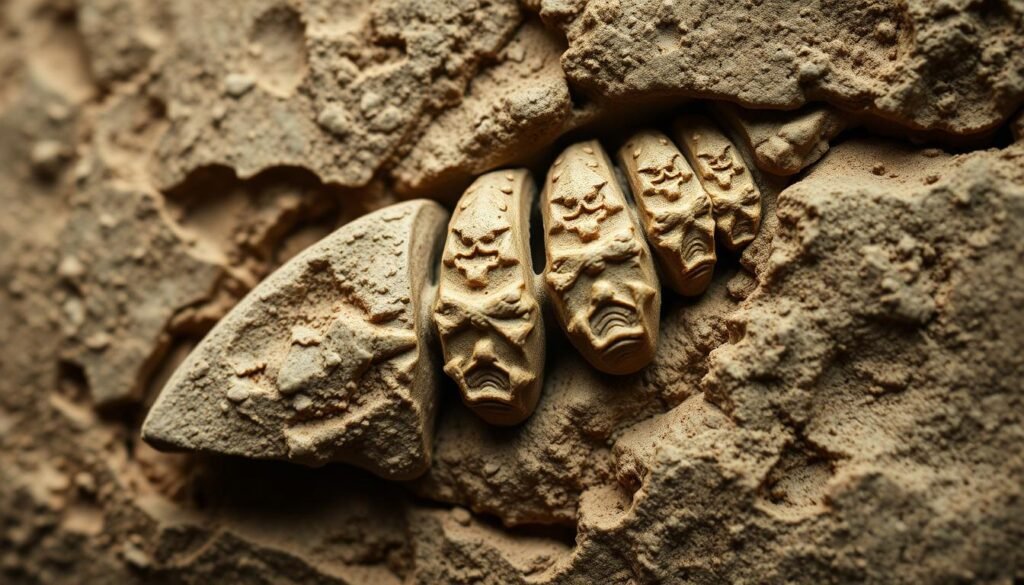
Ever tried chewing a cactus? That’s basically lunch for this dino. Fossils from North America reveal teeth built like industrial grinders—rows of 800+ chompers stacked in “dental batteries” that self-sharpened as they wore down. Picture a Swiss Army knife made of enamel.
Dig sites in Montana’s Hell Creek Formation are gold mines. Paleontologists found jawbones with subtle grooves—evidence these dinosaurs selectively munched tough plants like cycads. Wyoming’s fossil beds show younger specimens had narrower skulls, suggesting diets changed with age.
South Dakota’s Black Hills Institute uncovered something wild: bite marks on frills from T. rex attacks. These fossils are like crime scene photos from the late cretaceous. But the real showstopper? A Montana quarry revealed a complete dental battery—a toothy conveyor belt that kept growing new blades.
Here’s what blows my mind: these fossils survived 66 million years, yet we’re still debating basics. Were those jaws built for shredding palms or crushing pine needles? And why do some skulls from the cretaceous period have weird notches? Every discovery answers one question… and asks three more.
Survival Tactics: Diet, Herd Behavior, and Dinosaur Battles
Ever wondered how a 9-ton herbivore defended itself against the ultimate predator? This dino didn’t just rely on horns—it had a full survival playbook. From specialized beaks that snipped through prehistoric palms to herd formations that outsmarted hungry tyrannosaurus rex, let’s break down its genius strategies.
Beak and Dental Battery Functionality in Foraging
Imagine a pair of built-in gardening shears. That curved beak could snap branches thicker than your wrist, while 800+ teeth worked like self-sharpening blades. Fossilized jaws show wear patterns suggesting they ate fibrous plants—think cycads and ferns—with the efficiency of a woodchipper.
Head-to-Head Encounters and Social Clashes
Those horns weren’t just for show. I’ve seen fossils with healed fractures in frills—proof of ritual combat. Picture bighorn sheep locking horns, but scaled up for dinosaurs. These clashes likely settled disputes over mates or territory, leaving rivals with more than bruised egos.
Herd Dynamics Amid Late Cretaceous Landscapes
Safety in numbers? Absolutely. Moving in herds offered 360° defense against predators. Juveniles stayed shielded at the center, while adults faced outward—a living fortress. Plus, huddling conserved body heat during chilly seasons, much like modern bison.
Here’s the kicker: fossil tracks in Wyoming reveal groups traveling together. A lone tyrannosaurus rex would think twice before charging 20 horned giants. And those massive feet? They could stampede through mudflats without sinking—nature’s own snowshoes.
Yet mysteries linger. How did they communicate during attacks? Did herds migrate with food sources? Every discovery peels back another layer of their survival mastery—a testament to evolution’s relentless creativity.
Final Thoughts on a Legendary Late Cretaceous Icon
Millions of years ago, a walking shield patrolled North America—an animal built like a bulldozer with horns sharper than spears. At 30 feet in length and weighing more than four elephants, this creature’s skull alone stretched longer than a compact car. Yet its true power lay in evolution’s genius: a frill thicker than armor plating and weapons that put medieval knights to shame.
The Cretaceous world was no picnic. Lush forests of cycads and ferns demanded jaws that could grind vegetation like industrial shredders. Fossils from sites like Triceratops Cliff show healed battle scars—evidence of survival in an age when predators ruled. That iconic three-horned face? More than a display—it was a multi-tool for defense, digging, and dominance.
Here’s what stuns me: these giants thrived until the extinction event 66 million years ago. Their frill designs changed with age, their horns grew more lethal over time—yet we’re still debating if they herded like bison or fought solo. Picture the last ones standing beneath asteroid-lit skies, horns raised against inevitable darkness…
Next time you see an elephant, remember: this animal made them look small. And those debates about its “true” size or behavior? That’s the thrill of paleontology—every answer digs up three new questions. The ground beneath your feet still holds secrets waiting to