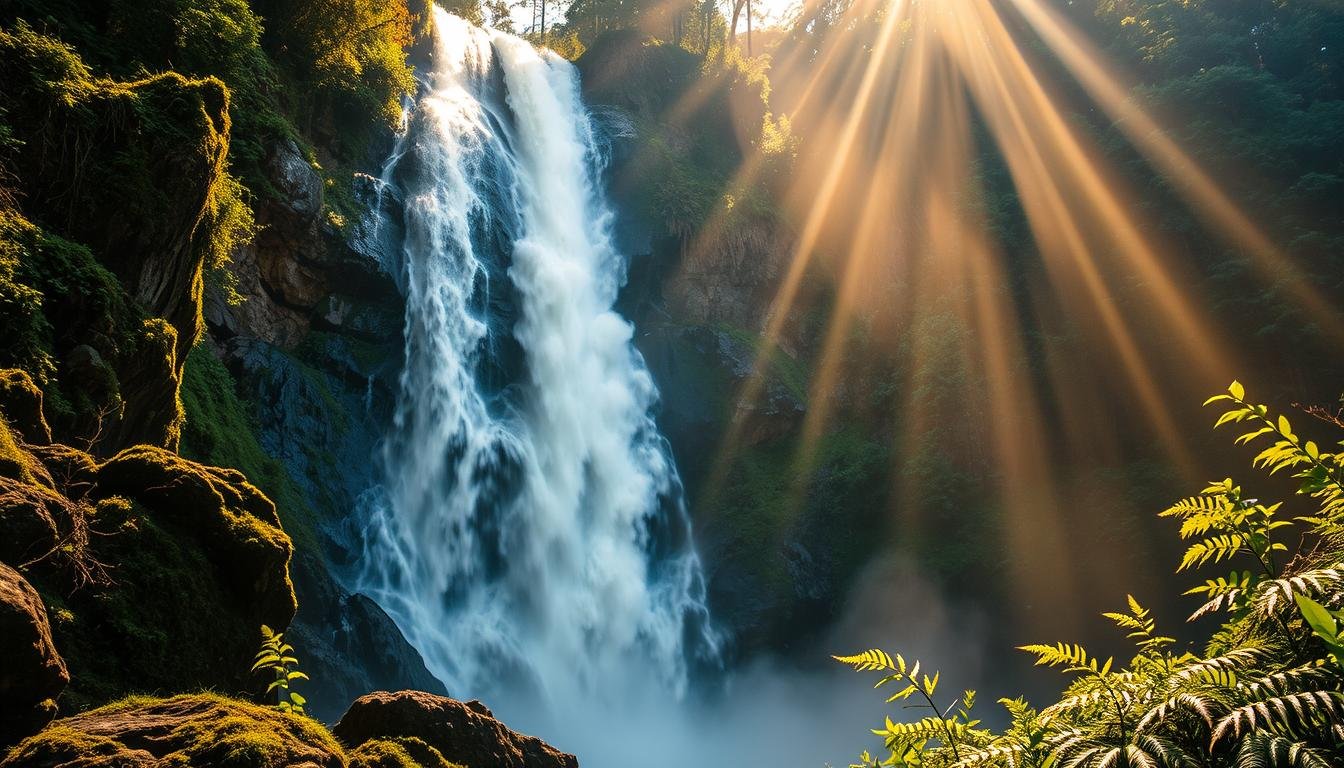
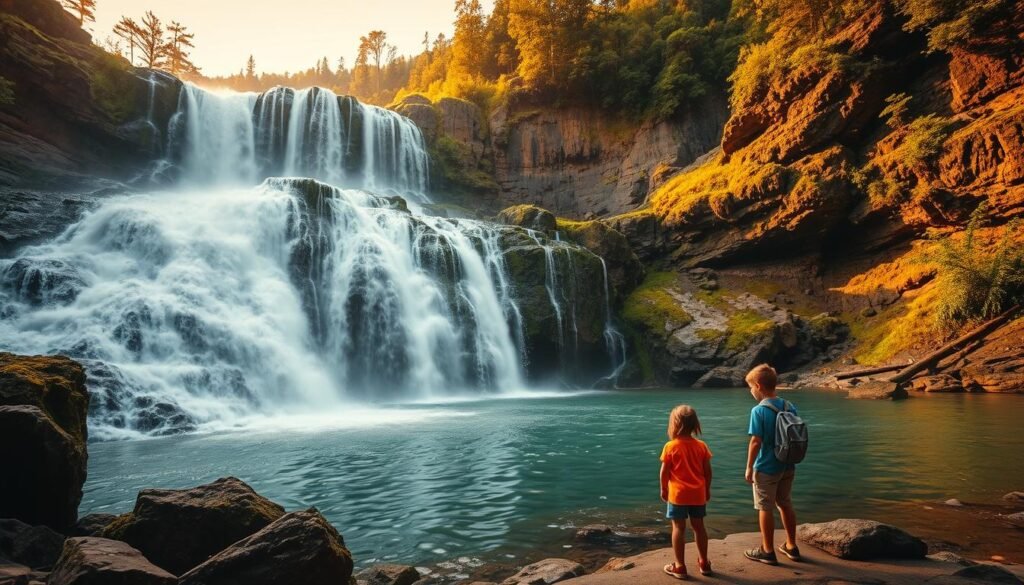
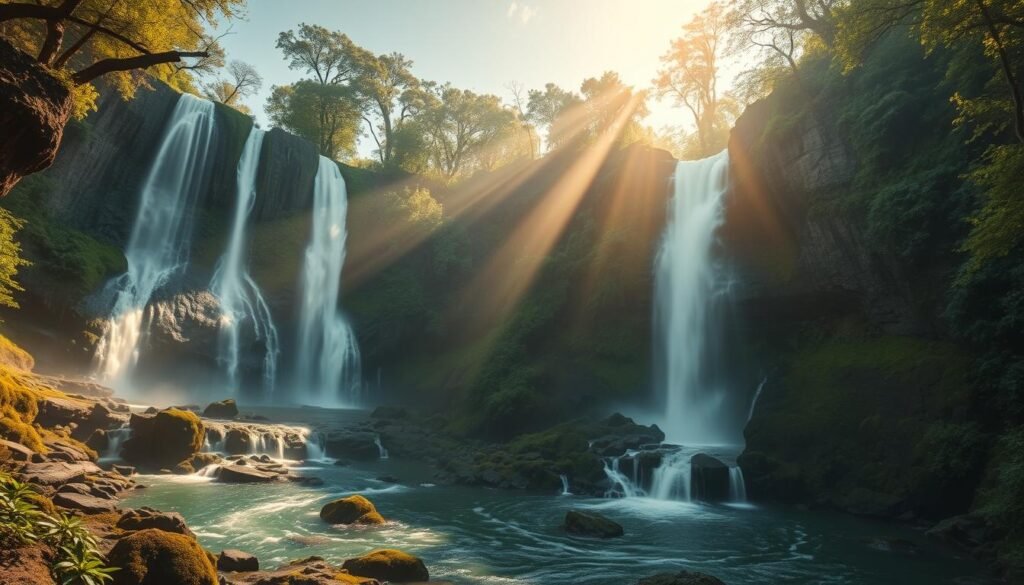
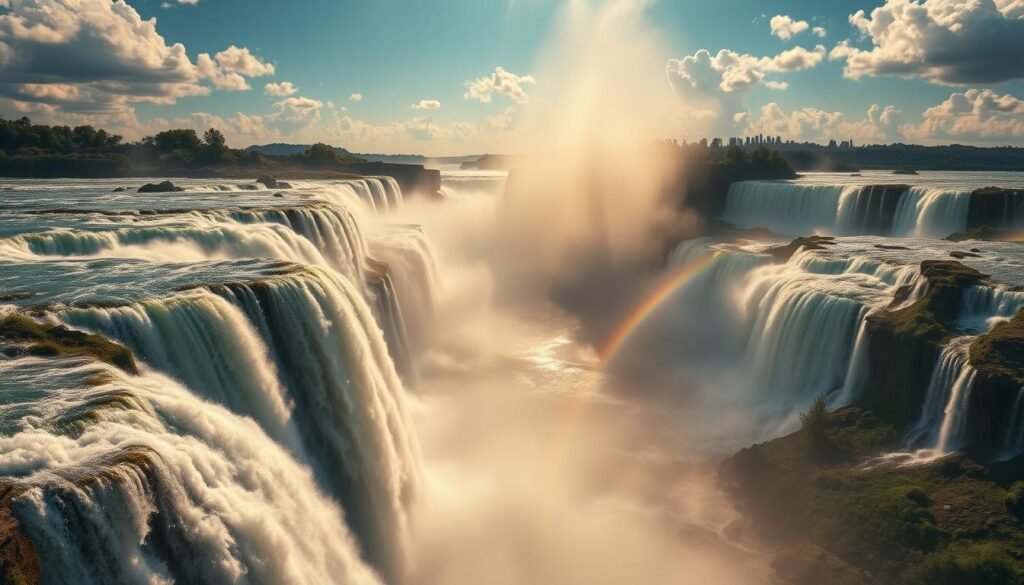
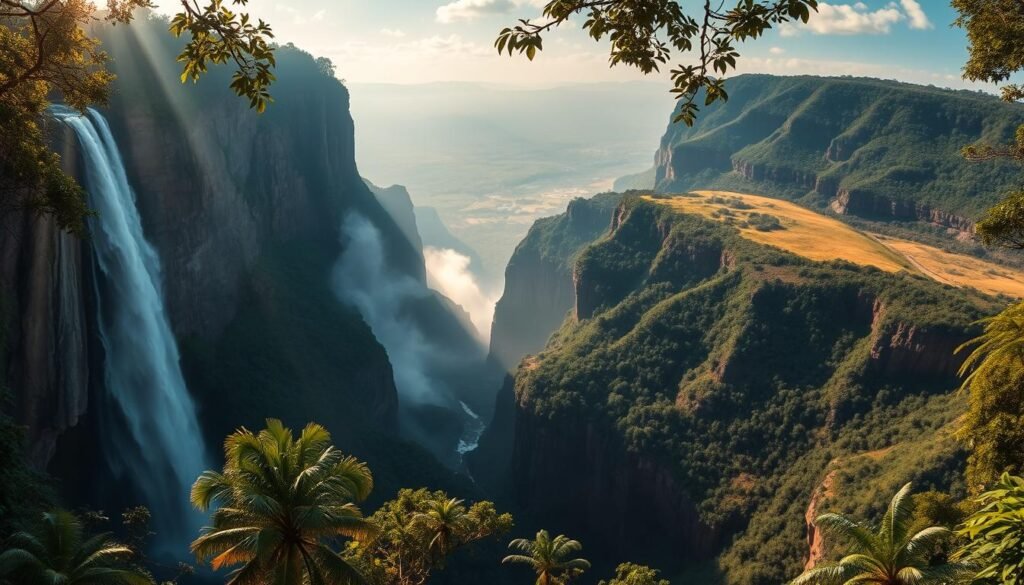
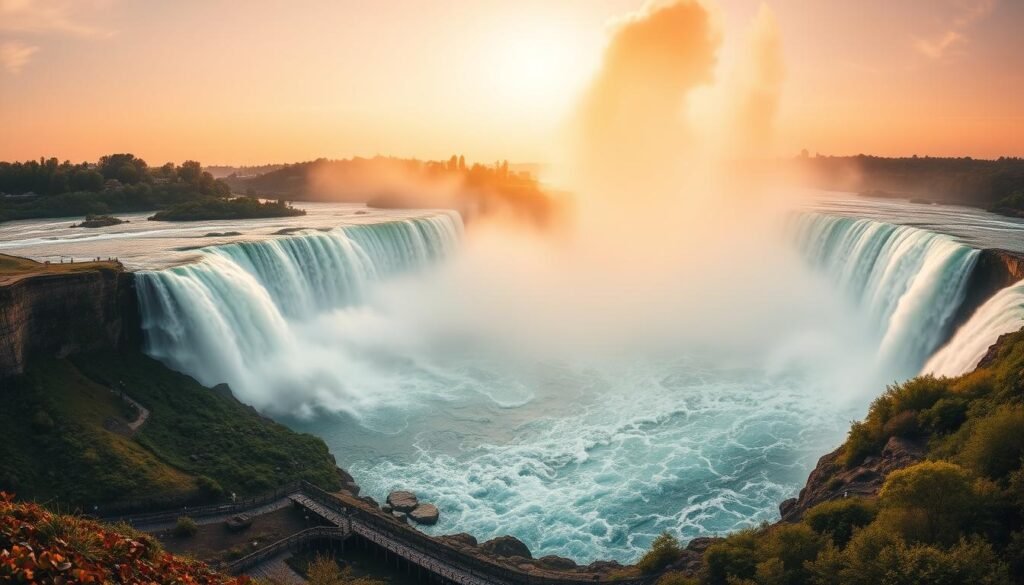
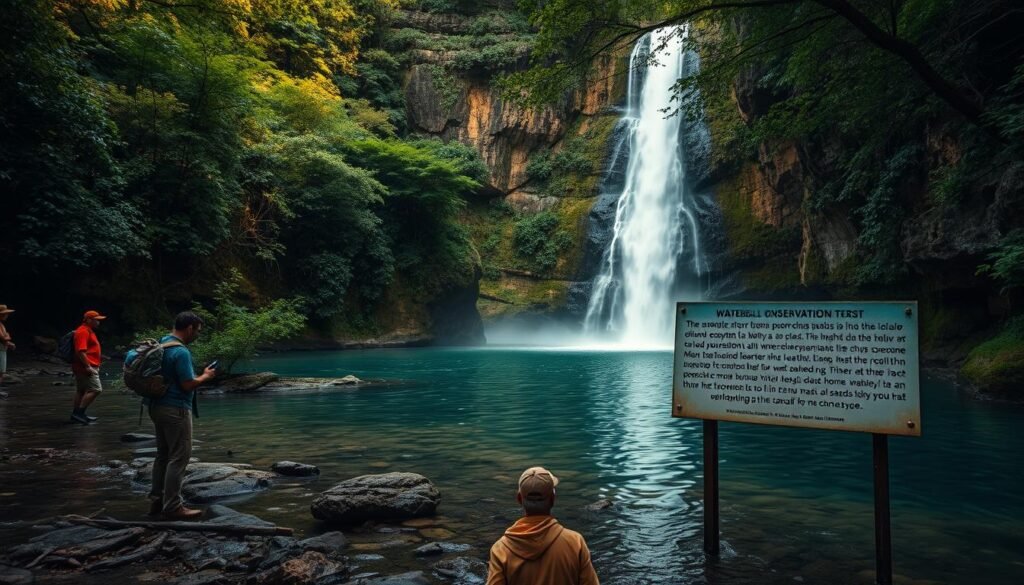
Waterfalls are nature’s most spectacular liquid adventures. They create stunning drops of water that turn ordinary rivers into incredible natural water slides! These formations happen when water falls dramatically from high rocky cliffs, showing off raw natural power.
Waterfall facts open up a world of geological wonder. Kids will learn how these water features develop through unique geological processes. They turn simple streams into powerful cascading attractions.
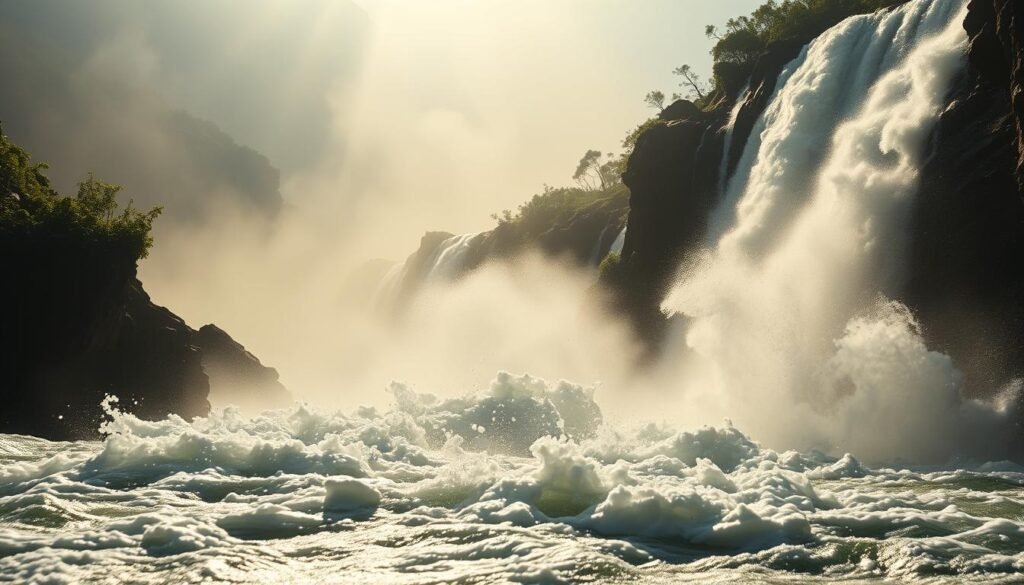
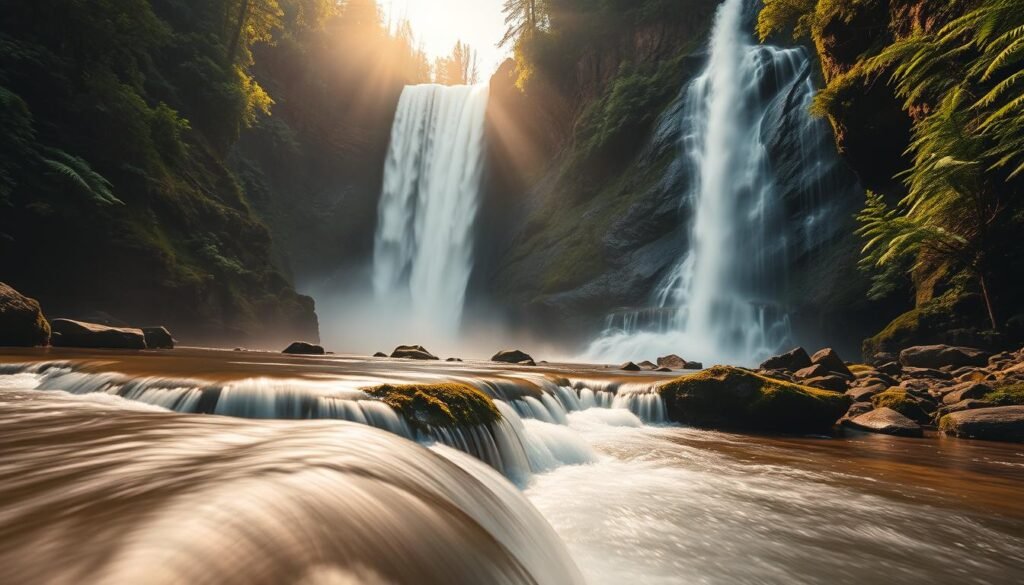
Imagine standing near a massive waterfall, feeling the mist on your face and hearing the thunderous roar of water crashing against rocks. These natural water slides show Earth’s most dynamic and impressive hydraulic performances. They demonstrate the incredible force of moving water.
We will explore how waterfalls form, their different types, and the science behind them. From tiny mountain streams to massive global landmarks, waterfalls are some of nature’s most exciting geological phenomena.
Get ready to dive into an adventure that will change how you see these incredible liquid landscapes!
What Is a Waterfall and How Does It Form?
Waterfalls are nature’s amazing water slides, carved by erosion’s power. Imagine water cutting through rock like a superhero through butter! These wonders don’t appear overnight. They form through a slow, fascinating geological dance.
Water is a master sculptor, reshaping landscapes through waterfall formation. Stream beds are key in this process, wearing away different rock types with constant energy.
The Role of Erosion in Waterfall Creation
Erosion is like nature’s chisel, slowly cutting through rock layers. Here’s how it works:
Water flows over rocks with varying hardness
Softer rock layers get worn away faster
Harder rock layers create natural ledges
Different Ways Waterfalls Can Form
Not all waterfalls are the same! Some appear suddenly through dramatic events, while others take thousands of years to form.
Formation Type
Description
Geological Fault
Caused by vertical rock movements
Glacial Carving
Created by ancient ice movements
River Erosion
Gradual wearing of stream beds
Understanding Stream Beds and Rock Types
Different rock types affect how fast a waterfall forms. Soft rocks like limestone erode faster than hard rocks like granite. It’s like comparing a sandcastle to a concrete wall – some materials can’t resist water’s power!
Waterfalls are nature’s amazing water slides that amaze everyone! Did you know that no two waterfalls are exactly the same? Just like your unique fingerprint, each waterfall has its own special characteristics.
Get ready to dive into some mind-blowing waterfall facts. They will spark your curiosity and make learning about these natural wonders super exciting!
The world’s widest waterfall is Khone Falls in Laos, stretching an incredible 35,376 feet wide!
Some waterfalls can be so powerful that they generate their own electricity
Water droplets from large waterfalls can create tiny rainbows in the mist
Waterfall trivia can be a blast for curious kids! The sound you hear from a waterfall comes from millions of water droplets crashing against rocks. It creates an epic natural symphony.
Waterfall Fact
Interesting Detail
Tallest Waterfall
Angel Falls in Venezuela (3,212 feet tall)
Fastest Waterfall
Gullfoss in Iceland (140 cubic meters per second)
Scientists who study waterfalls are called geomorphologists. They explore how water shapes landscapes and creates these incredible natural wonders. Your next waterfall adventure could reveal secrets about how our planet works!
The Power of Moving Water: Understanding Waterfall Force
Waterfalls show off nature’s raw power and energy. The waterfall force is a mix of physics, geology, and beauty. Water turns from a calm stream into a loud cascade, showing off gravity’s power.
Water pressure is key in how waterfalls work. As water falls, several scientific principles come into play:
Gravitational acceleration increases water velocity
Potential energy converts to kinetic energy
Rock formations impact water movement
How Water Pressure Works in Waterfalls
The pressure of water in waterfalls depends on height and volume. Taller waterfalls have more intense pressure, making them visually and audibly stunning. Smaller streams flow gently, while big waterfalls like Victoria Falls have incredible force.
What Creates the Roaring Sound
The waterfall sound comes from physical interactions. Water hitting rocks or pools creates air compression and vibrations. This leads to the loud roar we hear:
Water volume
Falling distance
Impact surface characteristics
Interestingly, some waterfalls generate sounds so powerful they can be heard miles away!Water pressure, gravity, and geology come together to create these natural sounds.
Scientists have found many ways to sort waterfalls globally. To truly understand waterfalls, we must look at different ways to group them. This helps us see what makes each one special.
When classifying waterfalls, experts focus on a few important things:
Water volume
Width of water flow
Height of the drop
Rock formation structure
There are a few main ways to sort waterfalls:
Geological Formation: Looking at the rocks they’re built on
Water Flow Characteristics: Checking how much water flows and how fast
Vertical Drop Measurement: Measuring how high and steep they are
Classification Method
Key Factors
Examples
Volumetric Classification
Water flow rate
Niagara Falls, Victoria Falls
Height-Based Classification
Vertical drop distance
Angel Falls, Yosemite Falls
Geological Classification
Rock type and erosion pattern
Cascade Falls, Block Waterfalls
Each way of sorting waterfalls gives us special insights. It helps both scientists and nature lovers understand these amazing sights.
Block and Fan Waterfalls Explained
Waterfalls come in many shapes and sizes. Block and fan waterfalls are two unique types that amaze nature lovers. They show the amazing variety of water’s movement in landscapes.
Water’s power creates different waterfall shapes. Some waterfalls spread out wide, while others fall in solid streams.
Characteristics of Block Waterfalls
Block waterfalls show off water’s power with a wide display. They have:
Wide horizontal water flow
Uniform descent across rock surfaces
Consistent water volume
Typically found in areas with flat, broad rock layers
The width of block waterfalls can be a few meters or hundreds. They look like a liquid curtain falling from a cliff.
What Makes Fan Waterfalls Special
Fan waterfalls are special because they spread out as they fall. They create a stunning sight by:
Dispersing water in a fan-like pattern
Creating delicate, spreading water streams
Revealing intricacies of rock formations underneath
Fan waterfalls happen in areas with complex rocks. Their graceful, spreading motion attracts photographers and nature fans.
Cascade and Cataract Waterfalls
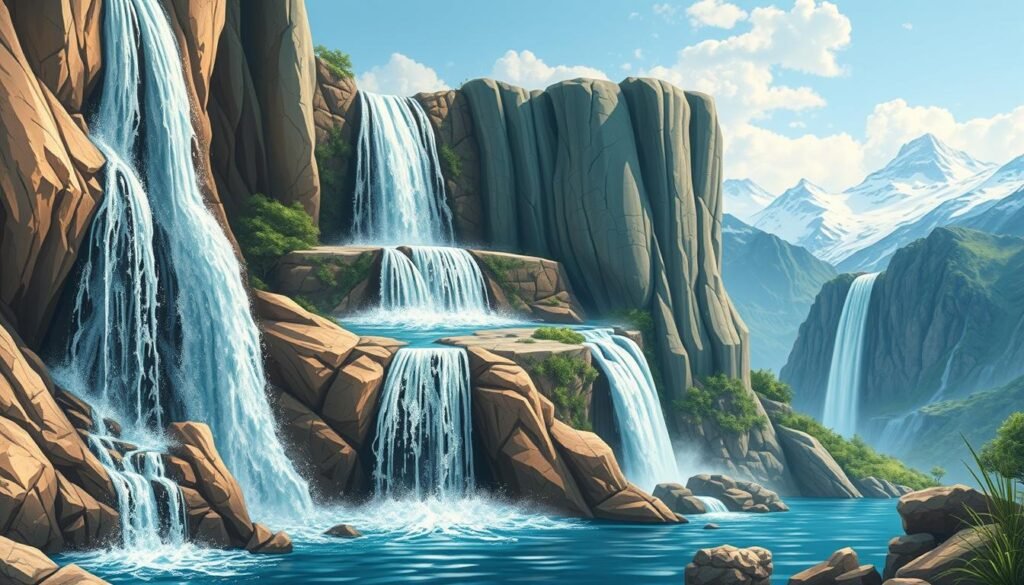
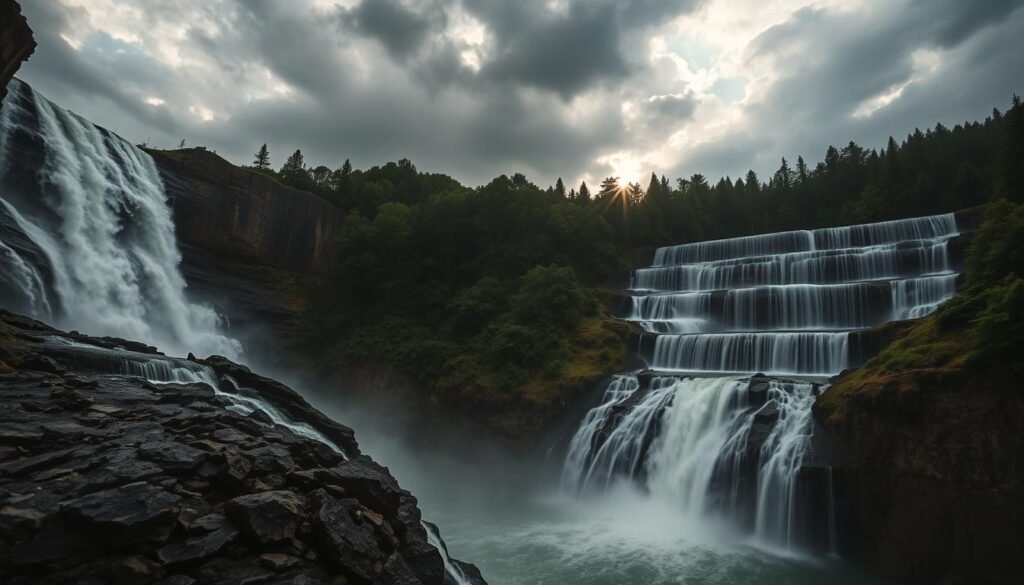
Waterfalls are nature’s amazing water slides. Cascade waterfalls are special because they slide down many rock steps. This creates a beautiful sight of water moving.
Cataract waterfalls are very different. They have a lot of water and are very powerful. Waterfall comparisons show that cataract waterfalls can be dangerous because of their strong water pressure and fast flow.
Cascade waterfalls feature:
Multiple small water drops
Stepped rock formations
Gradual descent pattern
Cataract waterfalls distinguish themselves by:
Extreme water volume
High-velocity water flow
Potential safety risks
Geologists study these waterfalls to learn about how erosion changes landscapes. The type of rock and the stream bed are key in making a waterfall a cascade or a cataract. Famous examples include Yosemite’s multi-stepped cascades and South America’s thunderous cataract waterfalls.
Knowing about these waterfalls helps us see the power and beauty of nature. Each waterfall has its own story of how water changes the landscape.
Plunge and Punchbowl Waterfalls
Waterfalls come in many shapes and sizes. Plunge and punchbowl waterfalls are two unique types that amaze everyone. They are loved by nature lovers and geology fans.
Water can change landscapes in amazing ways. Plunge waterfalls drop straight down from high places. This happens when water falls without touching the rock below, creating a beautiful sight.
Features of Plunge Waterfalls
Plunge waterfalls are known for their tall, vertical drops. They have:
Vertical water descent with minimal rock contact
Significant height differentials
Powerful water pressure during the fall
Often found in areas with steep geological formations
Understanding Punchbowl Formations
Punchbowl waterfalls have wide pools at their base. These are formed over time as water erodes a circular basin.
Both plunge and punchbowl waterfalls show nature’s amazing power to shape landscapes with water.
World’s Most Famous Waterfalls
Millions of travelers visit waterfalls every year. They want to see nature’s most amazing sights. Famous waterfalls are known for their stunning beauty and natural wonders.
Some waterfalls are truly unique. Let’s look at some of the most amazing ones:
Angel Falls, Venezuela – The world’s highest uninterrupted waterfall, dropping an astonishing 3,212 feet
Iguazu Falls, Argentina/Brazil – A massive system of 275 individual waterfalls spanning nearly two miles
Victoria Falls, Zimbabwe/Zambia – Known as the “Smoke that Thunders” with a width of 5,604 feet
Niagara Falls, USA/Canada – One of the most visited waterfalls, generating massive hydroelectric power
Each famous waterfall offers something special. You’ll see stunning views and learn about nature’s power.
Visiting these waterfalls lets you see our planet’s beauty. You’ll learn about different landscapes and nature’s wonders.
Angel Falls: The World’s Highest Waterfall
Deep in Venezuela’s wilderness, Angel Falls is a natural wonder. It’s a favorite among adventurers and nature fans. This waterfall is the tallest in the world, standing at an amazing 3,212 feet (979 meters) high.
The falls start at the top of Auyán-tepui, a huge table-top mountain in Canaima National Park. What’s special about Angel Falls is how it falls. The water drops so far that it turns into mist:
Most of the water turns into a fine mist
Winds can completely scatter the water before it touches the ground
The waterfall appears almost like a thin, ethereal ribbon
Named after Jimmy Angel, an American aviator who first saw it in 1933, reaching Angel Falls is hard. Visitors must travel through remote areas of Venezuela. They often need small planes or spend days on expeditions.
Here are some interesting facts about Angel Falls:
It’s about 15 times higher than Niagara Falls
Located in a UNESCO World Heritage Site
Water flows most consistently during the rainy season
Angel Falls is a stunning example of nature’s power and beauty. Its remote location and dramatic scenery inspire explorers and photographers worldwide.
Niagara Falls: North America’s Natural Wonder
Niagara Falls is a stunning natural wonder on the US-Canada border. It draws millions each year with its power and beauty. The waterfall system is a sight to behold.
The Niagara Falls system has two main waterfalls. They are over a kilometer wide. This makes them a unique sight for tourists and scientists.
Exploring the American Falls
The American Falls is in New York state. It’s known for its unique look and strong water flow. Visitors get to see the power of water up close.
Height: Approximately 21-30 meters (70-100 feet)
Width: About 259 meters (850 feet)
Water volume: Substantial flow rate
The Canadian Horseshoe Falls
The Horseshoe Falls is on the Canadian side. It’s even more impressive with its curved shape. This waterfall is a key part of North America’s beauty.
Feature
Horseshoe Falls Details
Height
57 meters (188 feet)
Width
790 meters (2,600 feet)
Water Flow
2,832 cubic meters per second
Niagara Falls is a wonder that inspires awe. It’s a key landmark that connects two nations with its beauty.
Victoria Falls: The Smoke That Thunders
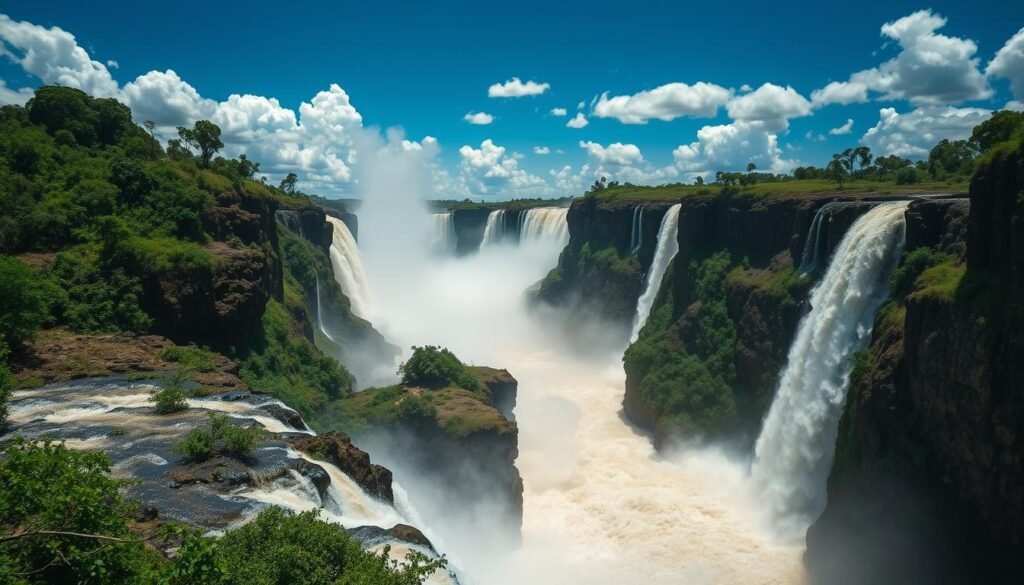
Victoria Falls is a stunning natural wonder on the Zambezi River. It lies on the border of Zimbabwe and Zambia. The falls are known as Mosi-oa-Tunya, or “The Smoke That Thunders.” This name fits perfectly, describing the falls’ powerful roar and the mist it creates.
The size of Victoria Falls is truly awe-inspiring. It stretches about 5,604 feet wide and drops 355 feet. This makes it a breathtaking sight. In 1989, UNESCO named it a World Heritage Site, recognizing its beauty.
Located on the Zambezi River between Zimbabwe and Zambia
Width: Approximately 5,604 feet
Height: 355 feet
Local name: Mosi-oa-Tunya (The Smoke That Thunders)
Visitors can hear the falls’ thunder from far away. The sound can be heard from up to 25 miles off. This shows just how powerful Victoria Falls is. It’s one of the most impressive African waterfalls.
The area around Victoria Falls is also special. The constant spray creates lush rainforests. These support a variety of plants and animals. So, Victoria Falls is not just a sight to see but a living, breathing ecosystem.
How Waterfalls Generate Electricity
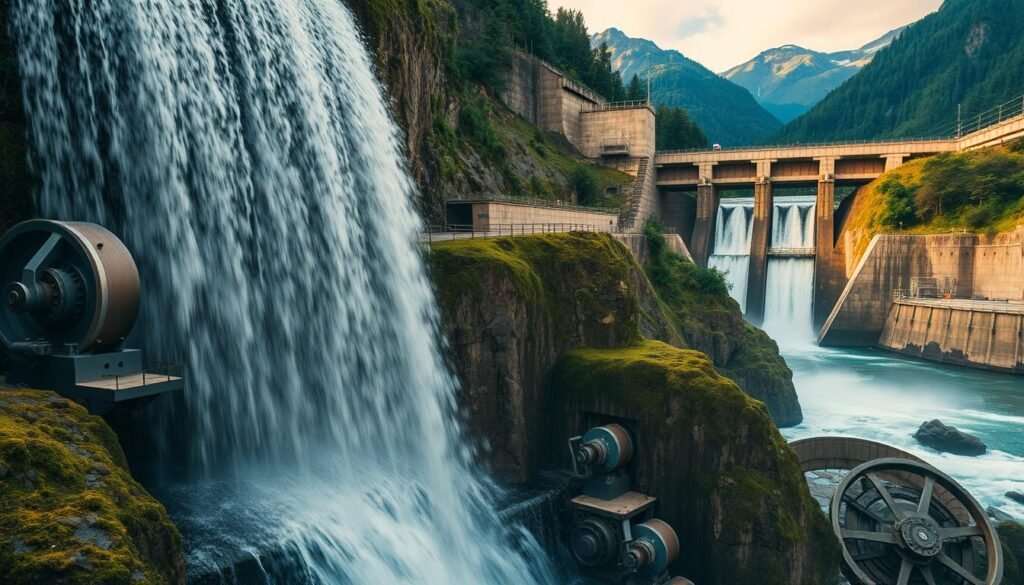
Waterfalls are not just beautiful sights. They are also powerful sources of renewable energy. Hydroelectric power turns the force of falling water into electricity. This electricity lights up homes and powers communities worldwide.
The process of making electricity from waterfalls is simple. Large turbines are placed near waterfalls. They capture the water’s energy as it falls. These turbines then spin generators, turning mechanical energy into electricity.
The Mechanics of Hydroelectric Power
To understand how power stations use waterfall energy, we need to know a few steps:
Water flows through big pipes called penstocks
The water’s pressure turns massive turbine blades
Generators turn the spinning into electrical current
Electricity is sent to power grids
Remarkable Power Stations at Waterfalls
Some of the world’s most impressive hydroelectric power stations use natural waterfalls. They generate huge amounts of electricity. These facilities show how waterfall energy can be a sustainable power source.
Location
Annual Power Generation
Key Features
Itaipu Dam (Brazil/Paraguay)
90 million MWh
World’s second-largest hydroelectric facility
Three Gorges Dam (China)
95 million MWh
Largest power station globally
Niagara Falls Power Station
2.4 million MWh
Iconic North American hydroelectric site
Frozen Waterfalls and Winter Wonders
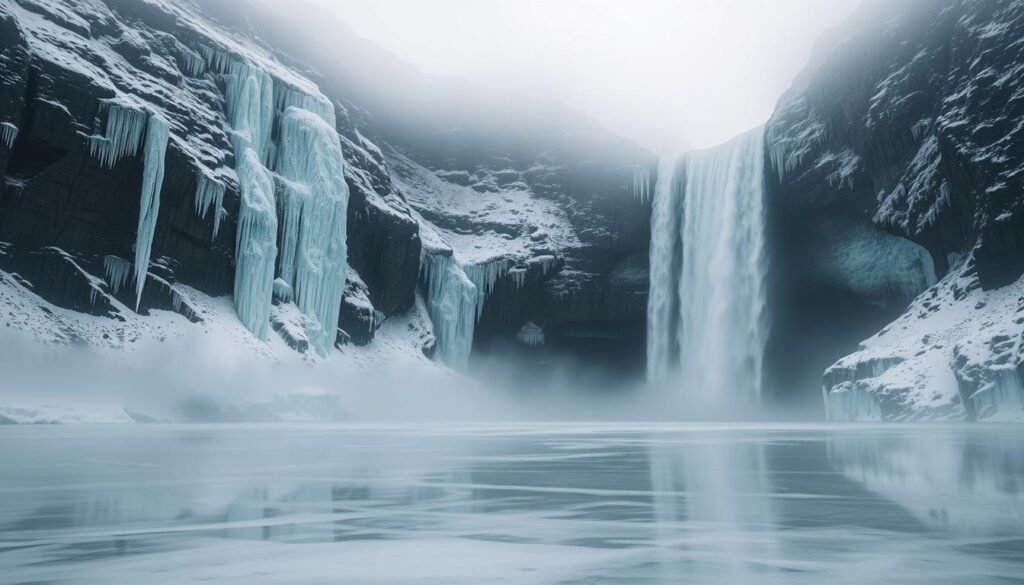
Winter turns waterfalls into magical frozen wonders. These icy creations are some of nature’s most stunning sights. They turn flowing water into beautiful crystal sculptures.
Frozen waterfalls happen when it gets cold enough. Water turns into detailed ice structures. This creates amazing patterns and shapes that draw in both adventurers and photographers.
Temperatures must consistently remain below 32°F (0°C)
Water volume and flow rate impact freezing
Elevation and terrain shape ice formation
Ice climbing is a thrilling winter sport. It challenges adventurers to climb these icy walls. Climbers use special gear like ice axes and crampons to reach the top.
Some great places to see frozen waterfalls include:
Banff National Park in Canada
Starved Rock State Park in Illinois
Ricketts Glen State Park in Pennsylvania
The beauty of frozen waterfalls shows nature’s amazing power. These ice formations give us a new view of water’s transformation under cold conditions.
Safety Tips for Visiting Waterfalls
Waterfalls are stunning, but they can be dangerous. It’s important to know how to stay safe when visiting them.
Many accidents happen because people don’t realize how powerful water and land can be. By following safety tips, you can avoid injuries and have a great time.
Viewing Distances and Barriers
Always follow the safety rules at waterfalls. These rules are there to protect you from:
Slippery rock surfaces
Unstable ground near water edges
Sudden water level changes
Steep cliff drops
Keep to the designated viewing spots and stay far from the water. Never try to climb over barriers or get too close to the waterfall.
Weather-Related Precautions
The weather can greatly affect your safety at waterfalls. Always check the forecast and be ready for unexpected changes:
Weather Condition
Safety Recommendation
Rain
Increased risk of slippery surfaces, possible flash floods
High Winds
Risk of falling branches, reduced visibility
Cold Temperatures
Potential ice on rocks and paths
Wear shoes with good grip and bring waterproof clothes when the weather is uncertain.
Protecting and Preserving Waterfalls
Waterfall conservation is key to keeping the ecosystems around them healthy. It’s important for protecting these natural wonders for the future. This way, people can enjoy and learn from them.
Experts suggest a few main steps for keeping waterfalls safe:
Limit human impact on surrounding environments
Create protected national park zones
Implement strict ecological monitoring
Educate visitors about responsible tourism
National parks and conservation groups are working hard to save waterfall ecosystems. Water resources management is essential to stop erosion and keep the natural balance. This helps these amazing formations stay intact.
World governments have made detailed plans to save waterfalls. For example, the U.S. National Park Service uses science to protect these special places.
You can help protect the environment too. By following park rules, respecting nature, and sharing what you know, you can help save these beautiful water landscapes. This way, future generations can enjoy and learn from them.
Fun Activities Near Waterfalls
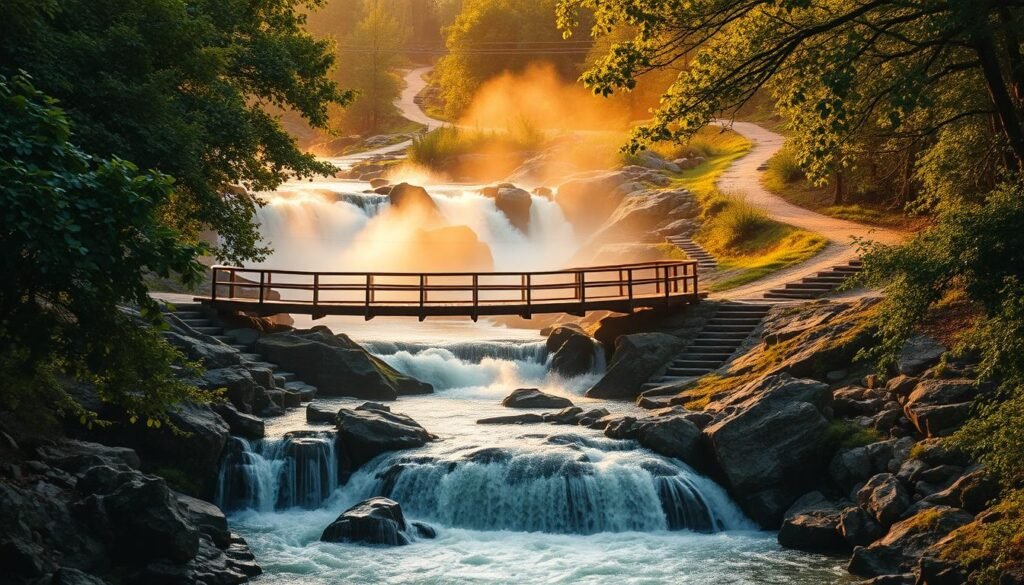
Exploring waterfalls is a great way to enjoy nature and have fun. Kids can do safe activities near these amazing sights. Photography lets them capture the beauty of waterfalls, from landscapes to water movements.
There’s more to waterfalls than just looking at them. Families can have picnics in safe spots, enjoying the mist and sound of the water. Nature walks around waterfalls teach about local plants, rocks, and animals.
Bird watching and wildlife photography are exciting near waterfalls. Kids can see native plants and animals in these areas. Guides or tours help families learn about the environment around these water features.
It’s important to stay safe near waterfalls. Always follow park rules and wear the right gear. Teach kids to keep a safe distance and not try to climb or get under the water, as it’s very dangerous.