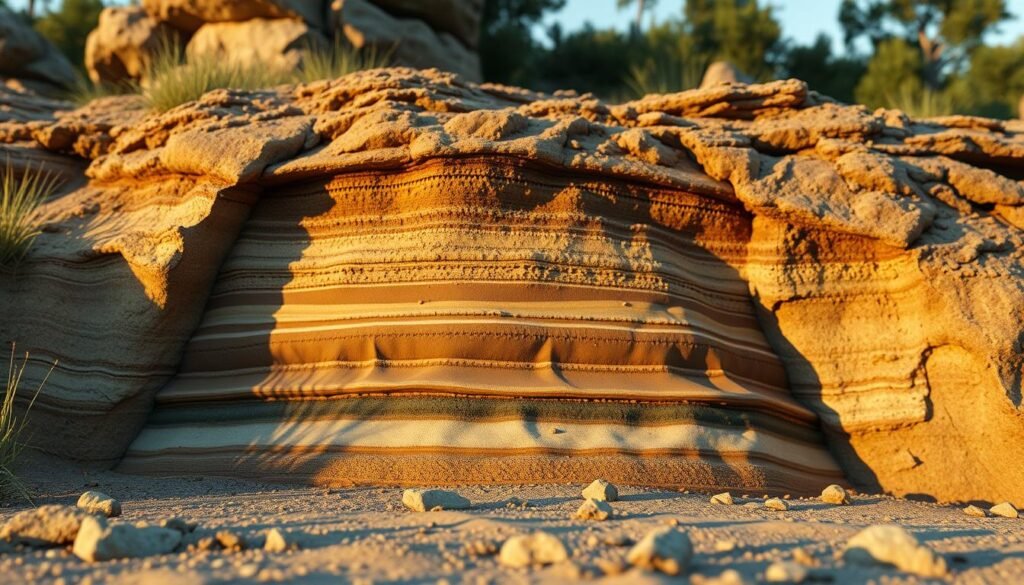
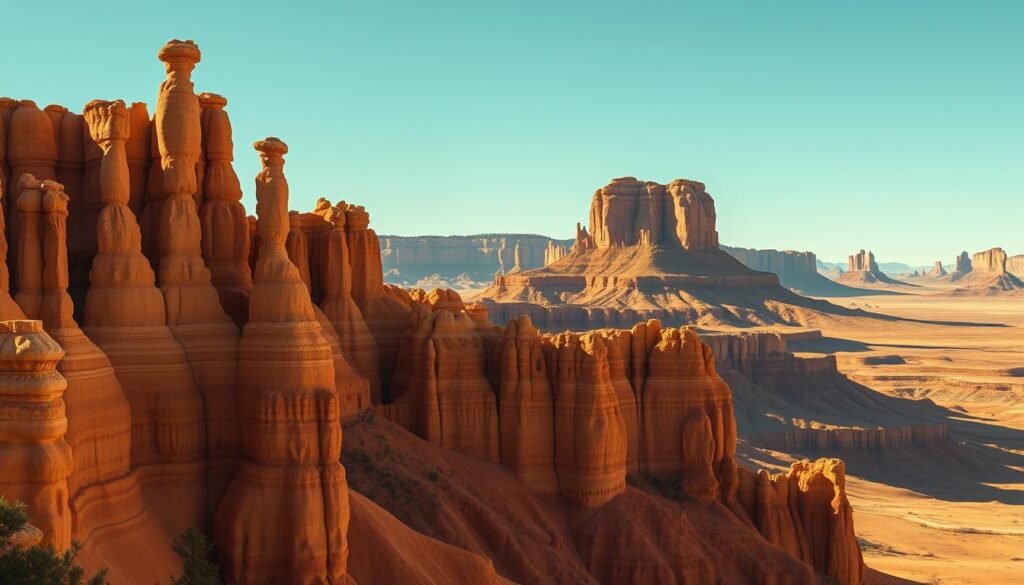
Let me tell you a secret: Earth’s crust is basically a giant, dusty scrapbook. Those striped cliffs you see in places like the Grand Canyon? They’re not just pretty—they’re pages of our planet’s diary, written in sand, mud, and time. Imagine stacking a million years of dirt, shells, and dinosaur footprints into a rocky lasagna. That’s how these layer-cake landscapes form.
Here’s the kicker: every grain of sand you’ve ever kicked at the beach could end up cemented into a mountain. Think about that next time you build a sandcastle! Water, wind, and gravity smoosh minerals and debris together over millennia—no baking required. The result? Rocks that look like they’ve been through a cosmic printer, with stripes revealing ancient floods, volcanic ash, or even fish fossils.
Unlike their flashy cousins (looking at you, sparkly igneous gems), these humble stones are the historians of geology. They don’t erupt dramatically or transform under pressure. They just… chill. And honestly? That patience makes them cooler. Next time you spot a rusty-red cliff or a slab of sandstone, remember: you’re staring at Earth’s ultimate time capsule.
Ready to dig deeper? Let’s crack open this rocky recipe book together.
Sedimentary Rocks Facts for Kids
You won’t believe how ordinary stuff becomes rock-solid history. While volcanoes spit out fiery gems and mountains morph under pressure, our layered pals play the long game. Their secret? Being nature’s ultimate recyclers—turning yesterday’s mud into tomorrow’s cliffs.
Texture Over Temperament
Unlike their flashy cousins, these stones thrive on chill vibes. Water does the heavy lifting—carrying sand, dead plants, and even tiny shells to new hangout spots. Over years (like, millions of them), these particles get cozy. Think of it as Earth’s version of making a compost lasagna. The layers? That’s erosion and weathering working overtime as sous-chefs.
Rock Detectives Wanted
Check this out: that gravel path you walk on? Could be future sandstone. Those seashells in your pocket? Prime candidates for limestone. My favorite party trick? Spotting leaf imprints in shale during hikes—it’s like finding dinosaur-era Post-it notes!
Three quick truths:
Wind + water = nature’s cement mixer
Erosion isn’t destruction—it’s relocation
Your backyard dirt might become a future canyon
Next time it rains, watch how puddles move soil. That’s geology in action, folks—and you’ve got front-row seats!
Ever wonder how dirt becomes rock? Let’s break it down like a detective story. Picture Earth’s crust as a dusty library—each layer a page waiting to be read. The process? A slow-motion ballet of particles and pressure.
Accumulation of Sand, Mud, and Organic Clues
It starts in places you’d least expect. Riverbeds collect sand like nature’s sandboxes. Lake bottoms trap mud like chocolate layers in a cake. Even wind plays delivery driver—dumping desert dust into valleys. I once found fossilized snail shells in shale near a dried-up creek. Proof: nature never wastes a good story.
Processes of Cementation and Compaction
Here’s the magic trick. Over centuries, minerals like calcium carbonate seep through gaps. Think of it as nature’s glue. Squeeze a handful of wet sand—that’s compaction. Now multiply by a million years. Voilà! You’ve got rocks formed through teamwork.
Three cool takeaways:
Limestone? Mostly crushed seashells glued by calcium carbonate
Sandstone often shows wind patterns from ancient dunes
Different types sedimentary = different Earth moods
Next time you see striped cliffs, remember—you’re flipping through Earth’s page-turner. Each layer? A cliffhanger from our planet’s past.
Processes and Mechanisms in Sedimentary Rock Formation
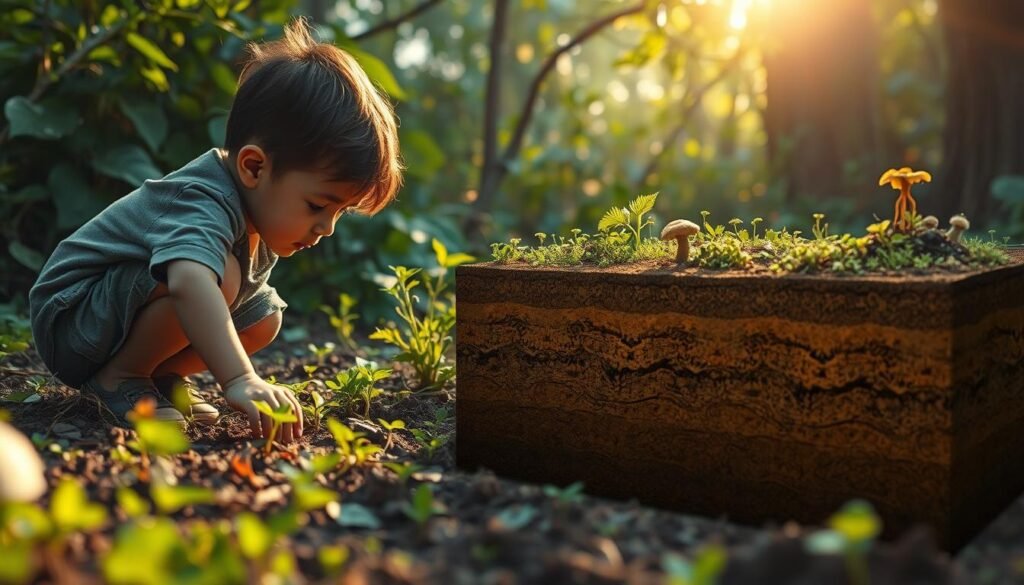
Here’s a fun experiment: grab a handful of dirt. Those tiny pieces? They’re future rock stars. Let’s break down Earth’s slow-motion rock factory—no hard hats required.
Weathering, Transport, and Deposition
Step one: nature’s demolition crew. Rain freezes in cracks, tree roots pry apart boulders, and sun-baked stones crumble like stale cookies. These sediments hitch rides on rivers or catch wind currents like sandy hitchhikers. I once watched a desert dust storm carry enough material to fill 500 dump trucks—all destined for new neighborhoods.
Cementation Dynamics without the Fluff
Now for the glue party. Minerals dissolved in water seep between grains like nature’s epoxy. Iron oxide gives rocks their rusty blush, while calcium carbonate from seashells acts like superglue. Picture making rice crispy treats—except it takes 10,000 years and creates sandstone instead of snacks.
Flow of Water, Wind, and Pressure Forces
Pressure’s the silent partner here. Layers stack up like pancake batter, squeezing lower sediments until they bond. Wind sorts grains by size—ever notice how desert dunes feel smoother than beach sand? That’s airflow quality control. Meanwhile, water currents leave ripple marks that fossilize into stone wave patterns.
Three quick processes takeaways:
Igneous metamorphic rocks form through heat—we’re the chill vibe crew
Living animals contribute shells and bones to the mix
Your gravel driveway? Future geology textbook material
Next time you kick a pebble, remember: you’re interacting with Earth’s slowest processes. That speck of dust? Could headline a canyon in a million years.
Fossils and Features Embedded in Layers
Ever spotted a seashell trapped in stone? That’s Earth’s version of hitting pause on history. These rocky pages hold clues so crisp, you’d think ancient creatures posed for us. Let’s decode nature’s scrapbooking techniques.
Fossil Preservation in Rocky Strata
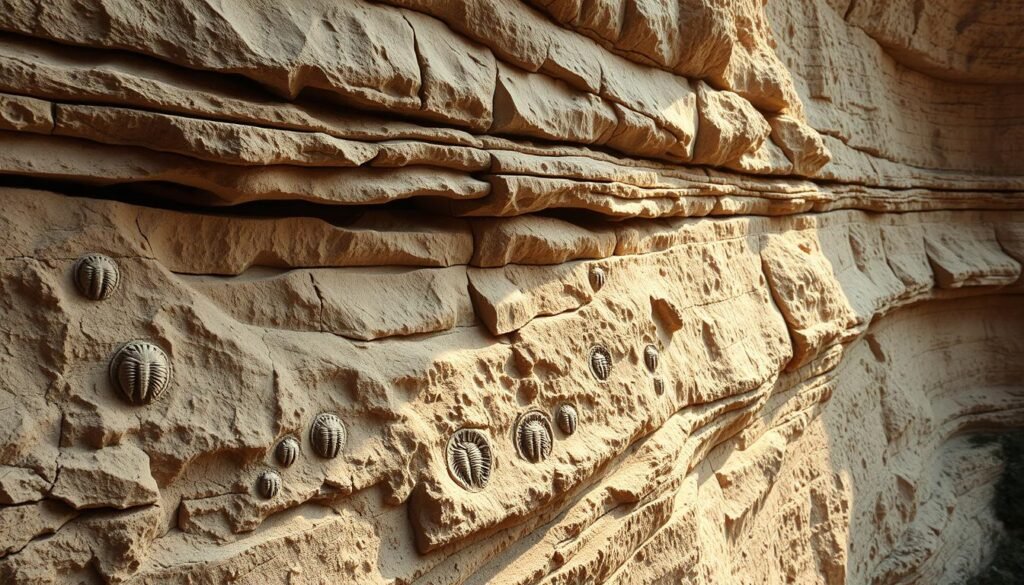
Delicate remains survive through perfect timing. When a fish dies in quiet waters, mud quickly buries it—halting decay. Minerals then seep in, replacing organic bits molecule by molecule. The result? A 100-million-year-old shrimp cocktail, served in limestone.
I once found a fern imprint so detailed, you could count its veins. These formations aren’t picky—they’ll preserve dinosaur poop with the same care as shark teeth. But here’s the kicker: weathering often acts like a museum curator. Erosion strips away top layers, revealing treasures at the bottom of cliffs.
Spotting Patterns and Colors in Sediments
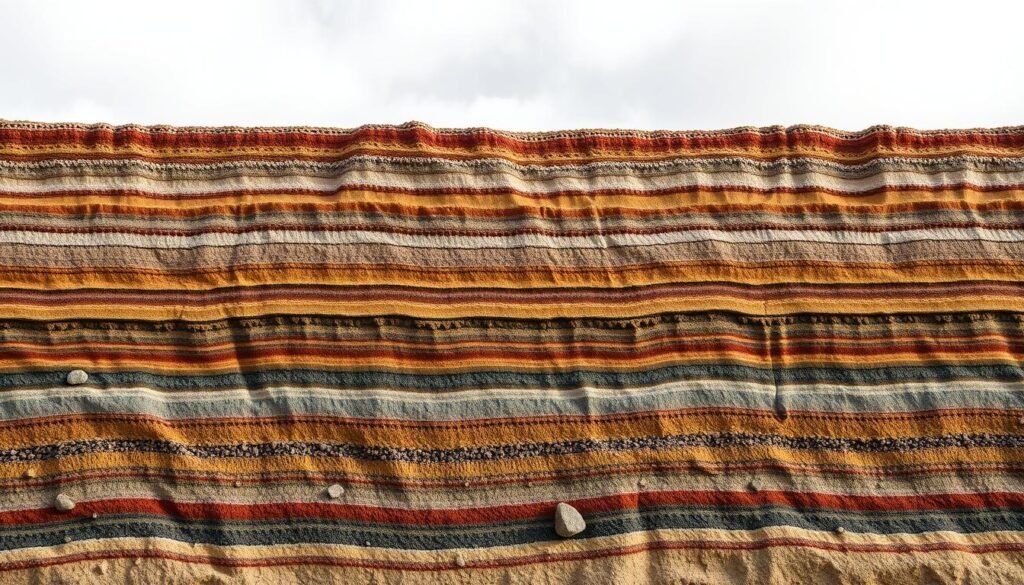
Rust-red stripes? Ancient rust from iron-rich waters. Gray blotches? Volcanic ash showers. Each hue is Earth’s mood ring. Dark layers often mean stagnant mud preserved organic gunk, while sandy bands hint at lively currents.
Color
Clue
Example
Red/Orange
Oxygen-rich iron
Desert dunes
Gray/Black
Decaying plants
Swampy basins
White
Pure calcium
Coral reefs
Green
Volcanic minerals
Ash deposits
Pro tip: Look for formation edges. Wavy lines? Tidal flats. Straight layers? Calm lakebeds. It’s like reading Earth’s diary—if you know her handwriting.
Real-World Examples: Rock Formations and Sites
Picture this: Earth’s crust moonlighting as an art gallery. From Arizona’s Grand Canyon to England’s chalky shores, nature’s sculptures reveal stories in matter and minerals. These spaces aren’t just pretty backdrops—they’re open-air museums where every layer whispers secrets.
From Grand Canyon Cliffs to English Coastlines
The Grand Canyon’s striped walls? That’s 2 billion years of materials stacked like pancakes. Each rusty band marks ancient floods, while pale layers whisper of calm eras. My jaw dropped when I spotted fish fossils there—proof that deserts once swam.
England’s White Cliffs of Dover show calcium carbonate’s power. Made from crushed seashells, these bright walls are nature’s antacid tablets. I once licked one (don’t judge)—it tasted like the ocean’s retirement plan.
Germany’s Saarschleife loop reveals how water carves spaces over millennia. Its slate layers curl like pages in a wet book. Meanwhile, India’s Bhimbetka caves blend human history with geology—Stone Age art on calcium-rich walls.
These images of Earth’s past aren’t frozen. They’re snapshots in a way that’s always evolving. Next road trip? Skip the gift shop. The real souvenirs are in the cliffs.
Final Chapter: Earth’s Layered History Unfolds
Here’s the wild part: Earth’s storybook isn’t closed—it’s still being written, one grain at a time. Those stripes in cliffs? They’re not just pretty patterns. Each layer is a sticky note from the past, showing how wind, water, and time team up to form new landscapes.
Think about this: specks of sand you’ve brushed off your hands could someday cement into a canyon wall. It’s nature’s ultimate DIY project—grains piling up until they’re pressed into a rocky surface. I once found a pebble with quartz veins that looked like lightning bolts. Proof that even tiny pieces play superhero in Earth’s process.
Every example we’ve explored—Grand Canyon stripes, Dover’s chalky walls—shares a lesson: change is slow but unstoppable. What seems rigid now was once loose mud or desert dust. That’s the magic of forms shaped by patience.
So here’s my question: if rocks can tell such epic tales, what stories will future layers say about us? Keep your eyes peeled. The next chapter’s being written right under your feet.