Water has an incredible story that’s been spinning around our planet for billions of years! The water cycle is a magical journey. It transforms tiny droplets from clouds to your drinking glass, creating an adventure more exciting than any roller coaster ride.
Imagine a single raindrop traveling through time – from prehistoric oceans to dinosaur puddles, then soaring high into the sky and falling right into your water bottle. These rain facts for kids reveal how precipitation is nature’s most incredible recycling system, constantly moving and changing forms.
Every drop of water on Earth has been here for billions of years. It travels through clouds, rivers, oceans, and even inside living creatures. It’s like a never-ending global treasure hunt where water plays hide and seek across mountains, atmospheres, and underground rivers.
Our planet is basically one giant water playground. Droplets transform from liquid to vapor, from clouds to raindrops, in a continuous dance. This dance keeps life thriving. Buckle up for an epic exploration of water’s wild ride!
What Makes Rain Fall From the Sky?
Imagine the sky as nature’s most incredible water playground! Rain isn’t just water dropping from above. It’s a complex dance of cloud formation, weather patterns, and atmospheric magic. This turns ordinary moments into wet adventures.
The journey of a raindrop begins high up in the atmosphere. Tiny water molecules start an incredible transformation. Weather patterns play a key role in this spectacular show, creating the perfect conditions for rain to develop.
The Perfect Weather Conditions for Rain
Rain needs a specific recipe to form. Here are the key ingredients:
Warm, moist air rising from the ground
Cool temperatures in the upper atmosphere
Enough water vapor to create condensation
Atmospheric pressure changes
Why Clouds Turn Gray Before Rain
Clouds don’t start gray – they become darker as they collect more water droplets. Think of clouds like giant water balloons getting heavier and heavier. When these clouds can’t hold any more moisture, they release rain.
Different Types of Raindrops
Not all raindrops are created equal! Raindrop types vary based on temperature and atmospheric conditions. Check out this fascinating breakdown:
Raindrop Type
Size
Characteristics
Drizzle
Tiny (0.5mm)
Light, misty precipitation
Normal Rain
1-2mm
Standard rainfall
Heavy Rain
4-5mm
Large, intense droplets
Understanding these rain dynamics transforms a simple weather event into a fascinating natural phenomenon. Next time it rains, you’ll see more than just water falling. You’ll witness an incredible atmospheric performance!
Think about the water in your glass. It’s older than dinosaurs, pyramids, and all humans. Water’s journey back 4 billion years is amazing. Each drop in your glass is a time-traveling marvel!
Ancient water molecules have been on a global adventure for Earth’s entire history. They’ve seen changes you can’t even imagine:
Evaporating from prehistoric oceans
Condensing into ancient clouds
Falling as rain on primeval landscapes
Freezing in glacial ice
Scientists say about 332.5 million cubic miles of water exist on Earth. Most of it has been recycling through the water cycle for billions of years. Your drinking water might have once quenched a dinosaur’s thirst or floated in a cloud during the age of mammoths!
The water in your glass has seen many ecosystems and passed through many living things. It has witnessed geological changes that are mind-boggling. Each sip is like a liquid time capsule, showing Earth’s incredible water cycle history.
The Three Magical States of Water
Water is nature’s ultimate shapeshifter, changing itself in magical ways. It can flow, float, and freeze, playing a key role in our planet’s ecosystem. Let’s explore the amazing world of water states!
Water has three incredible forms: liquid water, water vapor, and solid ice. Each form has its own unique traits and abilities to move and interact with the world.
Liquid Water in Motion
Liquid water is what we’re most familiar with. It fills oceans, rivers, and our glasses. Water molecules in this state are like tiny dancers, constantly moving and sliding past each other. This movement lets liquid water take any shape it’s poured into, making it very adaptable.
Flows freely in rivers and streams
Fills oceans and lakes
Essential for all living creatures
Water Vapor Dancing in the Air
Water vapor is the invisible ninja of water states. It’s water turned into a gas, floating in the air. When water heats up, its molecules get excited and turn into water vapor, ready to travel with the wind.
Forms clouds in the sky
Invisible to the naked eye
Critical in the water cycle
Ice and Snow Adventures
Ice forms when liquid water gets very cold and its molecules slow down and lock into a rigid structure. Snowflakes and glaciers are examples of water’s solid state, showing incredible patterns and beauty.
Forms at temperatures below 32°F (0°C)
Creates beautiful crystalline structures
Covers polar regions and high mountains
These three states of water work together in a continuous dance. They move between liquid, gas, and solid in an endless cycle that keeps our planet alive and thriving.
Get ready for nature’s most exciting water celebration! Rain facts show an amazing journey. Tiny water droplets turn into a big splash party above our heads. Clouds act like magical water collectors, gathering moisture until droplets get too heavy to stay up.
Let’s dive into some cool rain facts that make learning about the water cycle fun for kids:
Raindrops can fall at impressive speeds up to 22 miles per hour
Some raindrops change shape during their fall, starting round and flattening like tiny pancakes
The largest recorded raindrop was about the size of a quarter
Learning about the water cycle is an adventure for kids. Water droplets form in clouds, getting heavier until gravity pulls them down. Each raindrop has its own story, changing as it moves through the air before hitting the ground.
Nature’s splash party is more than just falling water. It’s a complex, beautiful process that keeps our planet hydrated and supports life. From tiny seeds sprouting to rivers flowing, rain is key to our ecosystem’s grand show.
How Clouds Form: A Sky Full of Water
Imagine the sky as nature’s most incredible canvas, constantly painting with water and light. The cloud formation process is a magical dance of water vapor, temperature, and atmospheric conditions. It transforms invisible moisture into stunning sky sculptures.
Water droplets start when warm air rises and cools down. This cooling causes condensation. It turns invisible water vapor into tiny visible droplets that cluster together, creating clouds we see overhead.
Cloud Types and Their Stories
Not all clouds are created equal. Different atmospheric conditions create unique cloud formations:
Cumulus Clouds: Puffy, cotton-like clouds that look like floating marshmallows
Stratus Clouds: Flat, layered clouds that spread across the sky
Cirrus Clouds: Thin, wispy clouds high in the atmosphere
Cumulonimbus Clouds: Massive, towering clouds that bring thunderstorms
The Science Behind Cloud Colors
Cloud colors are a fascinating light show in the sky. White clouds reflect all light wavelengths equally. Darker clouds indicate dense water droplets blocking sunlight.
Cloud Color
Meaning
Atmospheric Condition
White
Light reflection
Thin, scattered water droplets
Gray
Dense water content
Thick, heavy moisture
Dark Gray/Black
Potential precipitation
Imminent rain or storm
Next time you look up, remember: clouds are living, breathing stories of water’s incredible journey through our atmosphere.
From Ocean to Sky: The Evaporation Magic
Imagine the ocean as Earth’s ultimate water playground! Did you know that 97% of our planet’s water lives in the vast blue seas? The evaporation process is nature’s incredible magic trick that transforms liquid water into invisible vapor.
When sunlight hits the ocean’s surface, something remarkable happens. Water molecules get supercharged with energy, breaking free from their liquid bonds and dancing into the sky. This magical transformation is a critical stage in the water cycle stages, turning massive bodies of water into misty clouds.
Sunlight heats water surfaces
Water molecules gain energy
Molecules transform into water vapor
Vapor rises into the atmosphere
Water doesn’t just evaporate from oceans. Your morning coffee, a puddle after rain, or even sweat on a hot day – all demonstrate this incredible natural process. Water vapor is lighter than air, allowing it to float skyward, creating the clouds that eventually bring rain back to Earth.
Think of evaporation as nature’s recycling system. Water moves from liquid to gas, traveling incredible distances without ever truly disappearing. It’s a never-ending journey that connects every drop of water on our planet.
When Water Droplets Play Hide and Seek
Water vapor is like magic in the air, hiding and seeking in the atmosphere. Tiny water molecules float around us, invisible but ready to play a big role in the water cycle.
The way water vapor behaves is truly fascinating. These tiny travelers move through different places, changing states quickly. Some key traits include:
Ability to travel vast atmospheric distances
Transforming from invisible gas to visible droplets
Responding to temperature and pressure changes
The Secret Life of Water Vapor
Water vapor doesn’t follow simple rules. It can hide in the air for days or weeks, waiting to turn into clouds. The amount of rain depends on many things like temperature, wind, and where you are.
Different places have their own water vapor stories. Tropical areas might see more rain, while deserts struggle to get moisture. It’s like a microscopic weather dance happening right above our heads!
Why Some Places Get More Rain
Rainfall isn’t random; it’s influenced by many factors:
Elevation of terrain
Proximity to large water bodies
Wind current patterns
Local plant ecosystems
Mountains can catch more moisture, making them rain hotspots. Coastal areas often get more rain because of the ocean’s evaporation. Each place has its own water story, shaped by the environment.
Plant Power: How Trees Make it Rain
Ready to explore the amazing world of plant water magic? Trees are secret rainmakers, playing a key role in the plant water cycle. They do this through an incredible process called transpiration. It’s like nature’s own sprinkler system, but way cooler.
Imagine trees as living, breathing water pumps. Their roots draw water from the ground. Then, something incredible happens. Through tiny leaf pores, plants release water vapor into the atmosphere. This isn’t just a tiny drip – we’re talking about massive amounts of water. A single large tree can transpire up to 100 gallons of water per day!
Roots absorb water from soil
Water travels through plant stems
Leaves release water vapor through stomata
Water vapor contributes to cloud formation
The transpiration process is like a secret atmospheric dance. As trees release water vapor, they’re actually helping to create clouds and increase the likelihood of rainfall. Who knew trees were such weather wizards? This plant water cycle isn’t just about survival – it’s about creating entire weather patterns!
Scientists have discovered that forests can create their own rain. In places like the Amazon rainforest, trees pump so much moisture into the air that they generate local rainfall. Talk about plant power in action!
Next time you’re walking through a forest, remember: you’re witnessing an incredible water transformation system. It keeps our planet alive and thriving.
Crazy Ways Water Returns to Earth
Water’s return to our planet is quite a ride! It’s not just about raindrops. Nature turns the sky into a dramatic show with extreme weather.
Snow: Delicate crystal flakes that turn landscapes into sparkling wonderlands
Sleet: A mix of rain and partially frozen water that makes icy challenges
Hail: Ice pellets that bounce and crash during intense storms
Snow, Sleet, and Hail Adventures
Precipitation has mesmerizing forms beyond rain. Snow falls like nature’s confetti, covering everything in white. Sleet is a mix of rain and snow, making surfaces slippery for winter travelers.
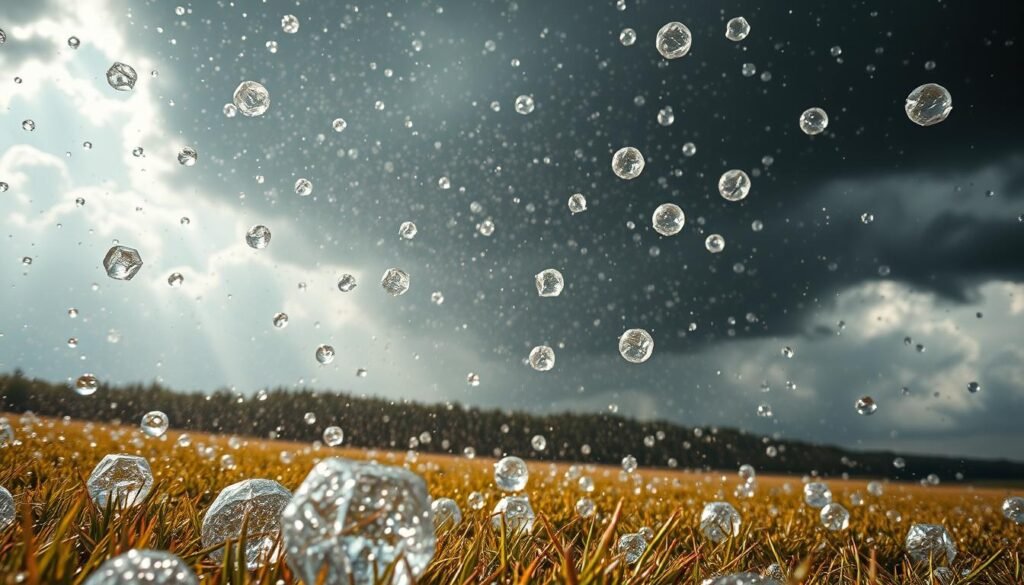
Hail is extreme weather at its most dramatic. Water droplets get swept up into freezing currents, growing until they fall. Some hailstones can be as big as golf balls!
Thunder and Lightning Shows
Thunderstorms turn the sky into a nature show. Lightning flashes with brilliant electric streaks, and thunder rumbles like a cosmic drumroll. These displays show how water and energy interact, creating awe-inspiring moments.
Water’s journey back to Earth is never dull. It’s a dance of science, energy, and excitement!
Where Does Rain Go After it Falls?
Ever wondered what happens to a raindrop after it hits the ground? The water cycle is like a magical journey. It changes rainwater into different forms and places.
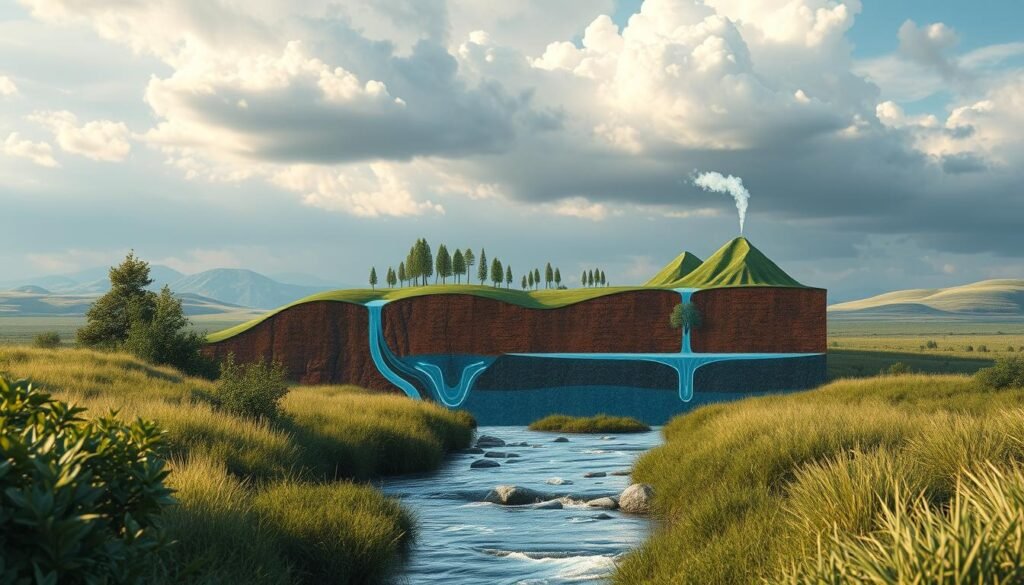
When rain falls, it doesn’t just vanish. Some raindrops become groundwater. They sink into the earth through tiny spaces between rocks and soil. This underground water moves through hidden paths, reaching aquifers. These aquifers store water for plants, wells, and springs.
Rainwater soaks into the ground, becoming groundwater
Some water flows into streams and rivers
Puddles form on surfaces like roads and sidewalks
Plants absorb water through their roots
Did you know some water can skip being a liquid? It can go straight from ice to vapor through a cool process called sublimation. This way, water can bypass the liquid phase and move on without becoming a liquid.
Rivers and streams collect rainwater, forming powerful networks. These networks eventually flow into lakes and oceans. Each raindrop is important in this amazing journey. It recycles and moves through different places.
The next time it rains, watch closely. Those droplets are starting an incredible adventure through the water cycle!
The Never-Ending Water Race Track
Imagine water as the ultimate adventurer, constantly moving through an incredible global journey. Water cycle continuity is nature’s most fascinating marathon. Every drop plays a critical role in our planet’s ecosystem. This race track spans underground tunnels, sprawling rivers, massive oceans, and delicate atmospheric currents.
Our planet’s freshwater sources are like precious treasure chests, hidden in unexpected places. Only 3% of Earth’s water is freshwater. This highlights the importance of water conservation.
Underground Water Secrets
Beneath our feet, a complex network of water pathways exists. These underground channels carry water through rock layers. They create routes that:
Filter natural minerals
Replenish aquifers
Support subterranean ecosystems
Rivers and Lakes Formation
Rivers and lakes emerge through fascinating geological processes. Rainwater, melting snow, and underground springs shape these water bodies. Each tells a unique story of landscape evolution.
Water Source
Percentage of Freshwater
Glaciers
68.7%
Groundwater
30.1%
Lakes and Rivers
1.2%
Water’s endless journey continues, reminding us of its incredible resilience and importance to our planet’s survival.
Why Ocean Water Tastes Salty
Ever wondered why ocean water tastes so salty? The story of ocean salinity is fascinating. It’s a journey that’s been going on for millions of years. Our oceans are like ancient flavor collectors, gathering minerals through a natural process.
Think of raindrops as tiny mineral collectors. When rain hits land, it picks up tiny mineral particles. These minerals then travel through rivers and streams to the ocean.
Rocks slowly dissolve, releasing mineral elements
Rivers carry dissolved minerals to the ocean
Water evaporates, leaving minerals behind
Ocean salinity increases over millions of years
This process is like a never-ending seasoning experiment. Water evaporates, but minerals stay. With 97% of Earth’s water in oceans, a lot of salt and minerals build up over time.
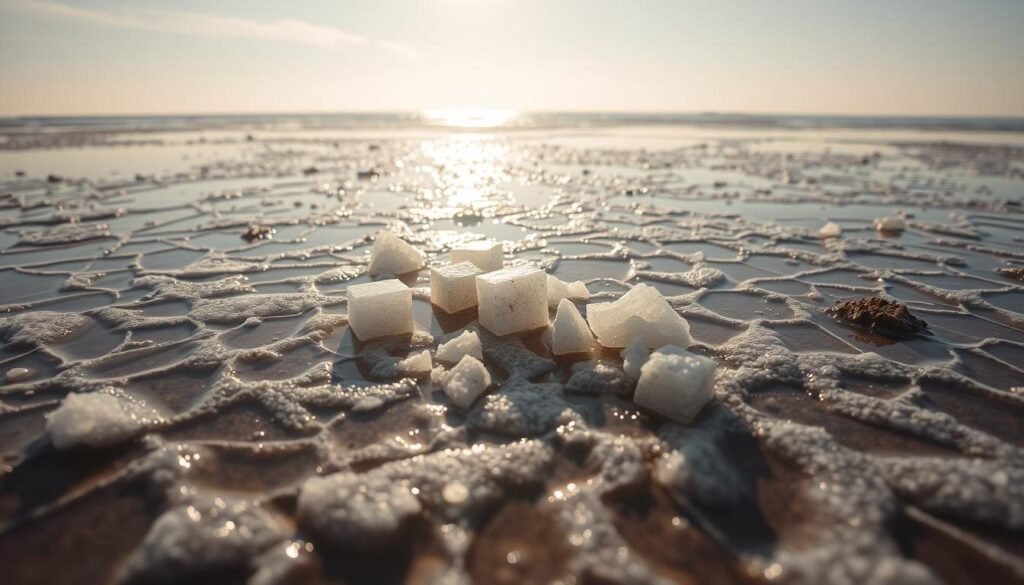
Scientists say there are about 35 grams of dissolved salts in every liter of seawater. Sodium chloride (table salt) is the main mineral, but magnesium, calcium, and potassium also add to the taste.
Next time you taste seawater, you’re tasting a liquid history book. It’s been collecting Earth’s mineral stories for billions of years!
Amazing Water Records Around the World
Exploring extreme weather records can be mind-blowing. Some places have rainfall and moisture levels that are far beyond what we think is normal.
Let’s look at some incredible water world records. They will make you see our planet’s water cycle in a new light!
Mawsynram, India holds the record for the wettest place on Earth, receiving an astonishing 467 inches of rain annually
The Atacama Desert in Chile represents the opposite extreme – some regions haven’t experienced rainfall in over 400 years
The largest recorded raindrop measured approximately the size of a quarter
Extreme weather patterns show us fascinating water facts. They challenge our understanding of precipitation. Imagine a snowflake as big as a dinner plate – that’s 15 inches wide!
Location
Water Record
Measurement
Mawsynram, India
Highest Annual Rainfall
467 inches
Atacama Desert, Chile
Longest Drought
400+ years
Worldwide Record
Largest Raindrop
Quarter-sized
These water records show nature’s incredible diversity. From heavy rain to dry landscapes, our planet is full of surprises.
How Animals Predict Rain Weather
Nature has amazing meteorologists right in front of us! Animals can predict weather changes, like rain, better than humans. Their behavior is like a natural weather forecast system.
Some animals can sense weather changes before it rains. They use special senses that scientists are trying to understand.
Nature’s Weather Forecasting Champions
Different animals have their own ways of predicting the weather:
Frogs croak more before it rains
Cows huddle or lie down when rain is coming
Birds get quiet and fly low in storms
Ants build high mounds to avoid flooding
Rain-Dancing Animals in Action
Some animals can feel changes in the air. Their behavior acts as a living barometer, showing us when the weather will change.
Animal
Rain Prediction Behavior
Frogs
Increased vocalization before rain
Cows
Grouping and lying down
Birds
Flying lower, reduced chirping
Ants
Building higher mounds
Animal behavior is not a science, but it’s very interesting. Next time you see animals acting strange, they might be telling you about the weather!
Fun Water Experiments to Try at Home
Hey, young scientists! Ready to turn your kitchen into a water research lab? Water science experiments for kids are both fun and educational. I’ll share three amazing activities that will change how you see water.
First, make a mesmerizing water cycle bag. Use a clear zip-lock bag, add water, and tape it to a sunny window. Watch as water turns into vapor, condenses, and forms droplets. It’s like having your own mini weather system at home.
Next, try the density tower experiment. Mix water with different amounts of sugar and food coloring. Layer these liquids carefully, and they’ll stack without mixing. This creates a beautiful liquid rainbow that shows how density works. It’s like a science magic show you can do at home!
For a wild experiment, drop raisins into clear soda. Watch as they dance up and down. The carbonation bubbles attach to the raisins, making them move. This simple experiment teaches about buoyancy and gas interactions. Learning has never been so fun!