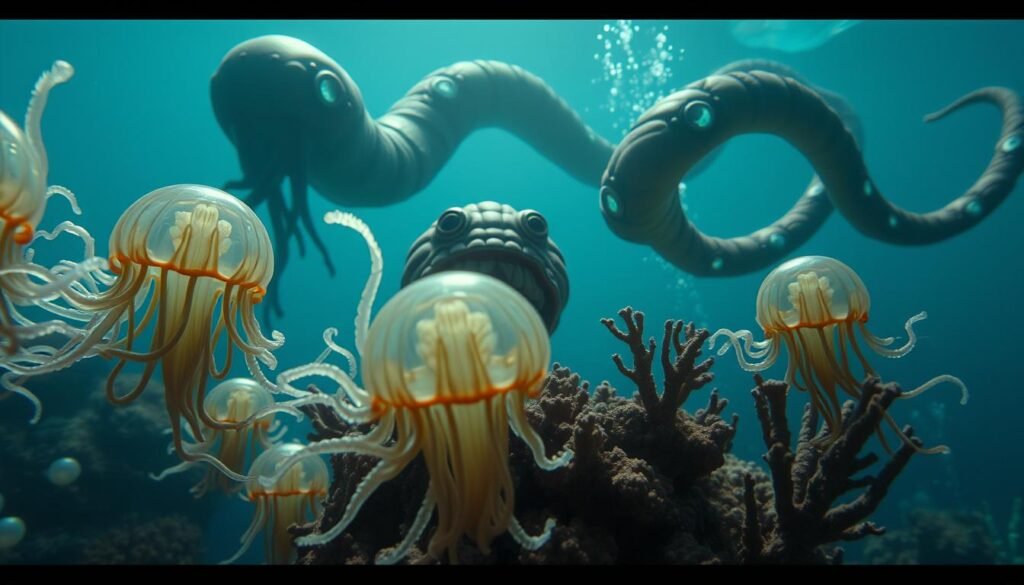
Let’s cut to the chase: the ocean is packed with creatures so bizarre, they’d make a sci-fi writer jealous. Take sea cucumbers—they’re not salad toppings but underwater vacuum cleaners that literally eat sand. And yes, they’re alive.
You won’t find these oddballs in your school textbooks. Ever heard of a fish that looks like a pancake with fins? Or sea turtles that mistake plastic bags for jellyfish? (Spoiler: It’s tragic, but we’ll get to that.)
I’ve spent years nerding out over marine life, and here’s the deal: the deep blue isn’t just “home to fish.” It’s a reality show of survival hacks. Like shrimp that punch with the speed of a bullet or glow-in-the-dark squid that communicate through neon Morse code. Think that’s wild? Just wait.
This isn’t a boring list of stats. We’re diving into the why behind the weird—how evolution cooked up these creatures and why they matter. Ready to meet animals that’ll make you say, “Wait, that’s real?” Let’s go.
Unusual Ocean Creatures That Surprise Kids
Hold onto your snorkels—the sea hides critters that’ll make your jaw drop faster than melted ice cream. Take the blobfish: this gelatinous pink blob looks like a melted gummy bear but thrives 3,000 feet deep. Pressure? What pressure?
Then there’s the mantis shrimp. It’s not a shrimp or a mantis but packs a punch that shatters aquarium glass. Imagine a boxer with rainbow claws moving at 50 mph—that’s nature’s version of a video game boss fight.
Creature
Habitat
Weirdest Trait
Blobfish
Deep sea
No bones, just squish
Mantis Shrimp
Tropical waters
Punch = bullet speed
Leafy Sea Dragon
Australian coasts
Disguises as floating seaweed
Here’s the kicker: these oddballs aren’t just weird—they’re eco-engineers. Tiny plankton in the water produce half our oxygen. Without them, breathing would feel like sucking air through a straw.
And that glowing vampire squid? It’s not Dracula’s pet. It uses bioluminescent ink to blind predators—like tossing a smoke bomb and vanishing. Makes you wonder…
Meet Sea Turtles and Other Remarkable Reptiles
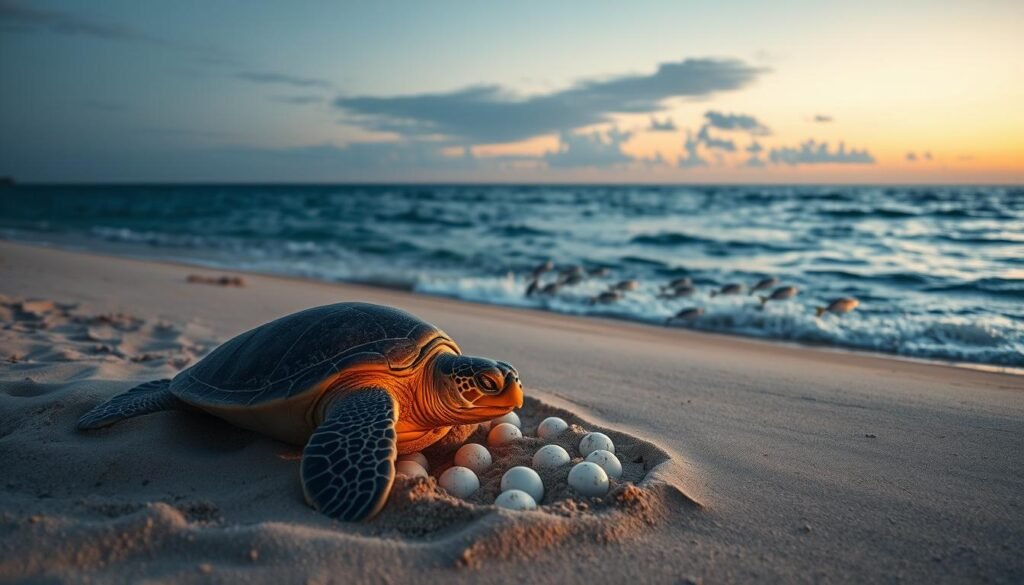
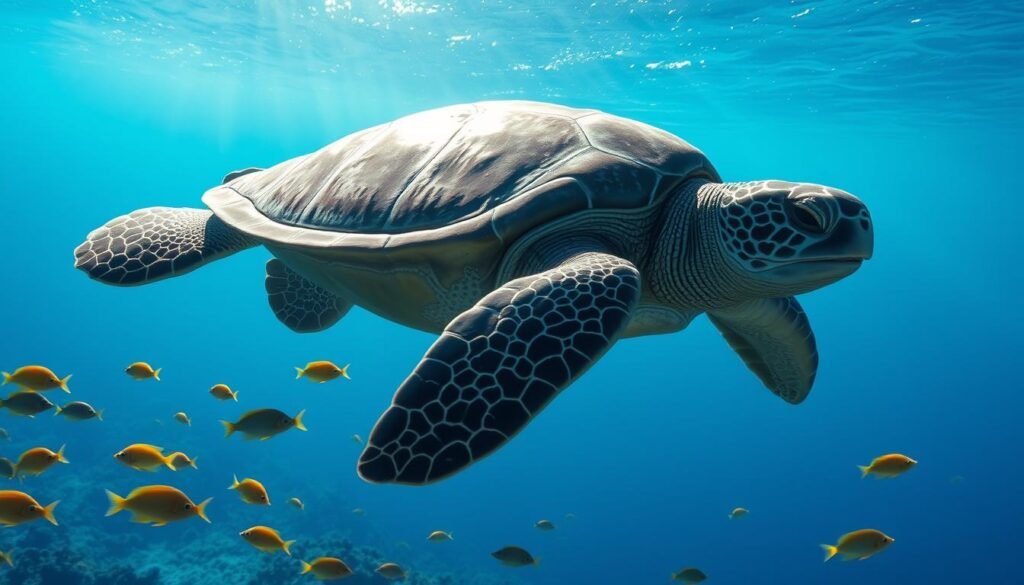
Picture this: You’re knee-deep in warm sand when a 300-pound leatherback turtle lumbers past you like a living tank. I once watched a loggerhead dig her nest on a Florida beach—she looked like a construction worker with flippers, tossing sand like confetti. These ancient mariners have cruised Earth’s waters since dinosaurs threw shade at mammals. Yet their survival tricks? Pure genius.
Green sea turtles eat so much seagrass, their fat turns green—like underwater cows with better vacation spots. Scientists found one female that swam 1,300 miles to lay eggs on the exact beach where she hatched. How? She remembers Earth’s magnetic field like you remember your Wi-Fi password.
Reptilian Houdinis of the Deep
Marine iguanas? They’re basically snorkeling lizards. On the Galápagos Islands, they dive 30 feet to scrape algae off rocks—then sneeze saltwater like grumpy old men. And saltwater crocs? They ride ocean currents for miles, mouths open, looking like floating logs with teeth.
Reptile
Superpower
Where to Spot Them
Leatherback Turtle
Survives Arctic waters
Pacific Coastlines
Marine Iguana
Eats underwater, sneezes salt
Galápagos Islands
Saltwater Crocodile
Swims 18 mph in bursts
Australian estuaries
Here’s the kicker: these scaly survivors shape their world in ways we’re just starting to understand. Turtle nests boost beach ecosystems by releasing nutrients—like fertilizer for dunes. Who knew reptiles could be gardeners?
Surprising Sea Mammals: Whales, Dolphins, and More
Imagine a world where whale poop fuels entire ecosystems. Welcome to the ocean. Gray whales stir up seafloor nutrients during migrations—like underwater farmers plowing fields. Their waste? It’s liquid gold for plankton, which feeds fish and even those leatherback turtles cruising by.
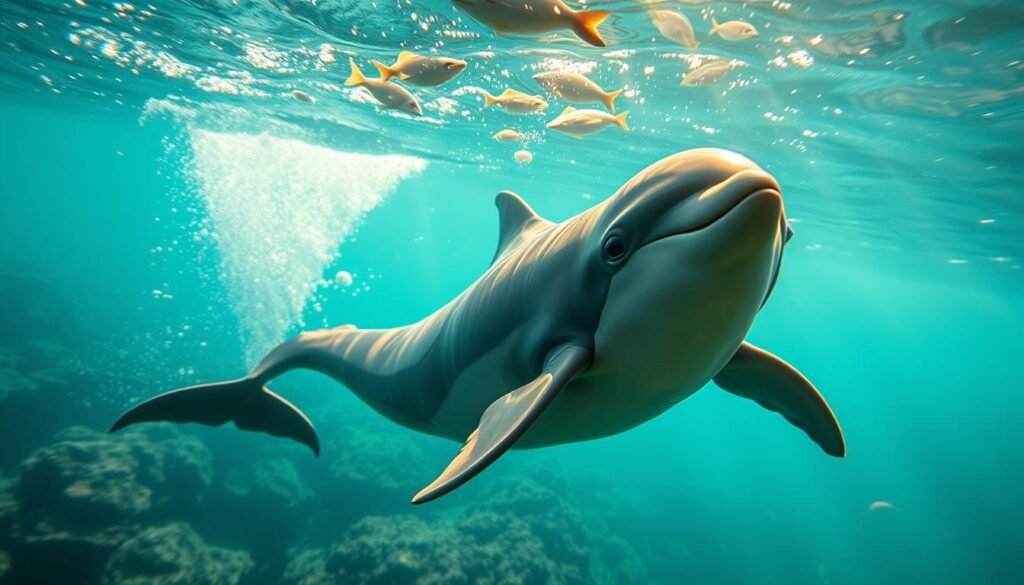
Dolphins take the cake for brainpower. They’ve got names for each other and solve puzzles faster than I can untangle headphones. Off Australia’s coast, some use sea sponges as tools to hunt—like a chef wielding a spatula. “Hey, Frank—pass the sponge!”
Mammal
Superpower
Impact
Sperm Whale
Dives 7,380 ft for squid
Fertilizes surface waters
Dusky Dolphin
1,000+ vocalizations
Maintains fish populations
Manatee
Eats 10% body weight daily
Controls invasive plants
Here’s the kicker: humpback whales team up to create “bubble nets” around fish. It’s like ordering DoorDash underwater. Scientists once saw a pod protect a seal from orcas—like bouncers at a marine nightclub.
These creatures don’t just live in the sea—they reshape it. From whale songs that travel continents to dolphin babysitting co-ops, nature’s genius shows up in the wildest ways. Makes you wonder: who’s really running this blue planet?
Ocean Animal Facts for Kids: Fascinating Fish and More!
You know that glowing nightlight in your room? Meet the flashlight fish—it has built-in headlights under its eyes. I spotted one at the Monterey Bay Aquarium last summer, lighting up the dark like a living disco ball. These creatures aren’t just cool to watch—they’re proof that nature outshines even our wildest inventions.
Let’s break down three fin-tastic stars of the sea. Clownfish don’t just look cute—they’ve got a secret handshake with anemones. Their slimy coating lets them nestle in stinging tentacles safely. It’s like having a best friend who’s also a bodyguard.
Fish
Super Skill
Why It Matters
Clownfish
Anemone immunity
Protects coral reefs
Anglerfish
Glowing lure
Controls deep-sea populations
Parrotfish
Poops sand
Builds tropical beaches
Here’s the kicker: parrotfish munch on coral all day. Their digested leftovers become the white sand you love at beaches. One fish can produce 1,000 pounds of sand yearly—talk about a home renovation expert!
These ocean animals shape our world in ways you’d never guess. Mangrove forests where baby fish hide? They buffer coastal homes from storms. Next time you visit an aquarium, look closer—you’re seeing nature’s engineers at work.
Want a fun thing to try? Hold your breath while watching a YouTube video of schooling sardines. Those shimmering groups confuse predators—it’s like thousands of fish playing ultimate hide-and-seek. Makes you wonder: who’s really running the show down there?
Brainy and Bizarre: Life with Sharks and Great Whites
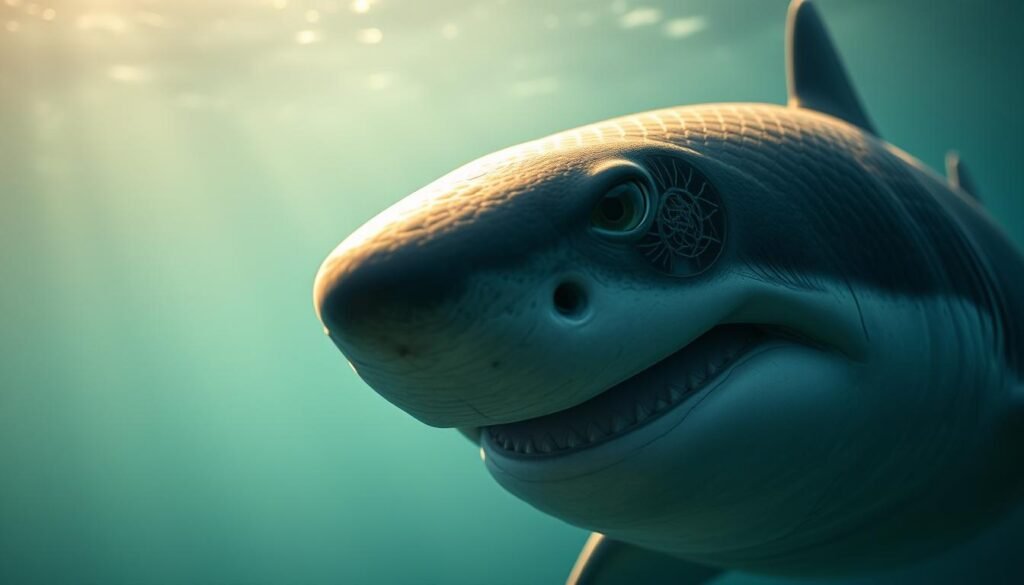
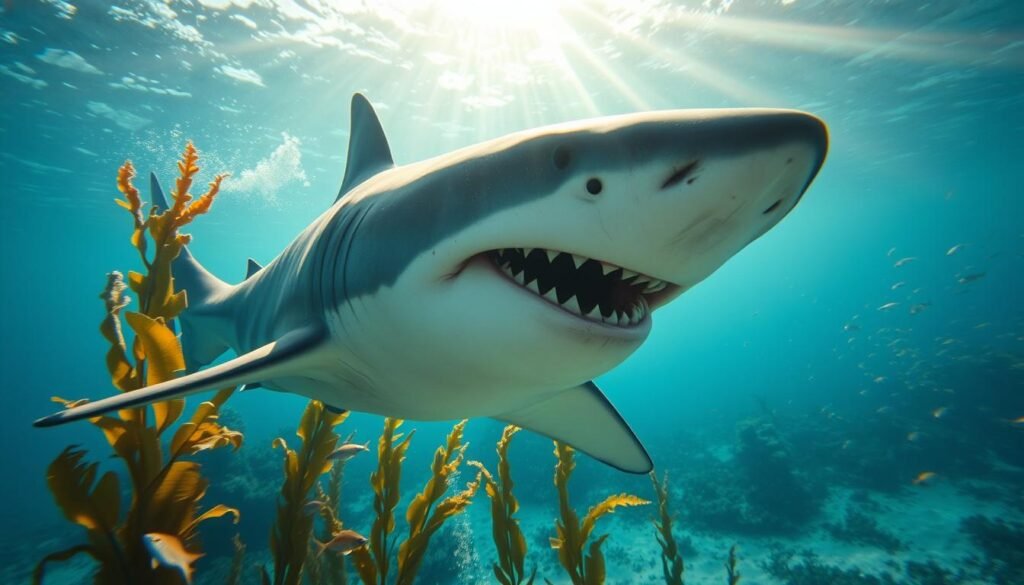
Think sharks are mindless eating machines? Think again. These marine animals have survived 450 million years by evolving brains sharper than their teeth. Take the great white—it’s warm-blooded like us, a rare trick in the fish world. Imagine having a built-in heater that lets you hunt in icy waters. Jaws who?
Research shows white sharks strategize like chess players. They’ll stalk seals for hours, timing attacks to the second. Their secret? Electroreceptors called ampullae of Lorenzini—think of them as built-in metal detectors that sense heartbeats. I’ve watched footage where one pauses mid-chase, recalculating like a GPS. Pure genius.
Species
Bizarre Trait
Brainy Behavior
Great White
Warm-blooded hunter
Learns hunting routes
Hammerhead
360° vision
Solves maze puzzles
Greenland Shark
Lives 500+ years
Hunts blind in darkness
Here’s the kicker: marine animals like the great white shape entire ecosystems. Their migrations redistribute nutrients—like Uber Eats for plankton. Scientists found areas with healthy shark populations have 50% more fish diversity. Who’s the real ocean boss now?
Next time you see a white shark documentary, watch closely. Those lazy loops? They’re scanning for weak signals we can’t detect. It’s not just survival—it’s mastery. These creatures didn’t outlast dinosaurs by accident. They’re the OG innovators of the deep.
Wacky Sea Life: Jellyfish, Octopus, and Other Oddballs
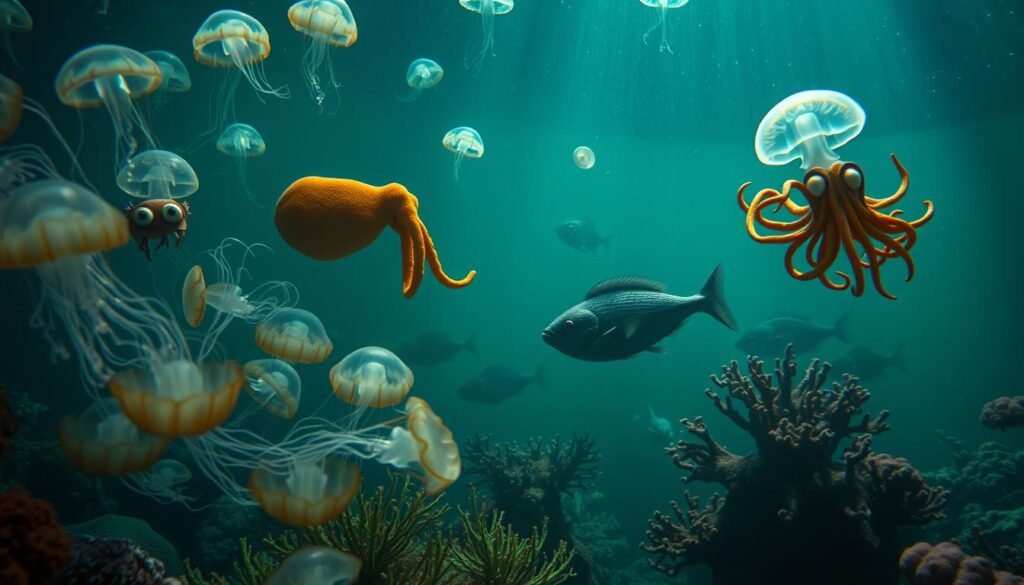
Ever seen a creature that ages backward? Meet the immortal jellyfish—a squishy Benjamin Button that resets its life cycle when injured. I once watched one at the Georgia Aquarium shrink into a blob, then regrow tentacles like a sci-fi regeneration scene. These gelatinous drifters and eight-armed geniuses redefine “weird” in the best way.
Jellyfish: Nature’s Disco Balls
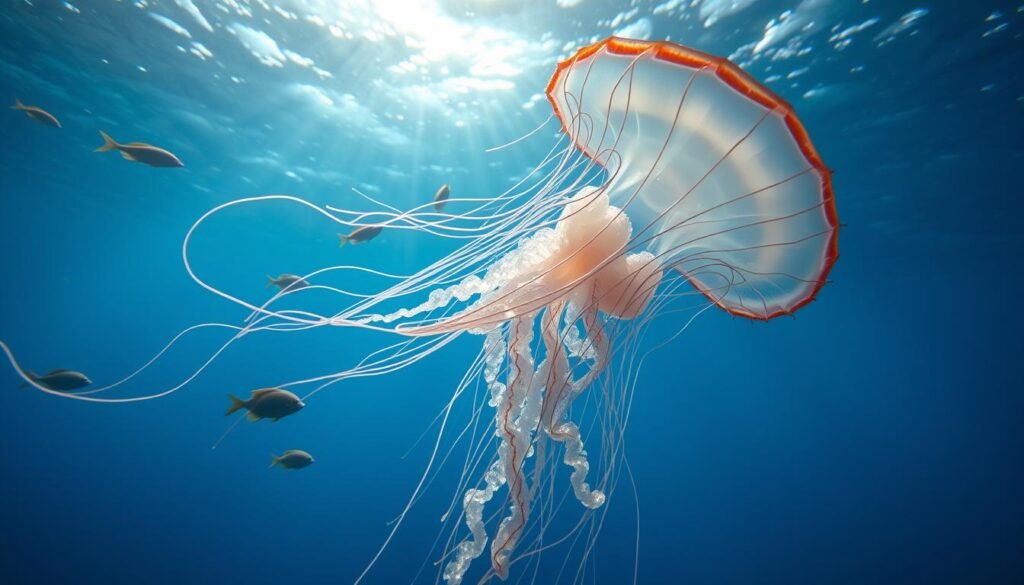
Moon jellies glow under blacklight like underwater rave decorations. But the real star? Turritopsis dohrnii. This thumb-sized marvel cheats death by reverting to its baby form. No brain? No problem. They’ve survived five mass extinctions by floating mindlessly—proof that sometimes ignorance is bliss.
Octopuses: Escape Artists with Attitude
Inky once busted out of a New Zealand aquarium by squeezing through a drainpipe. Octopuses solve puzzles, recognize faces, and shoot jets of water to short-circuit lab equipment. Their arms? Each has a mini-brain that keeps working after being detached. Imagine your hand texting friends while separated from your body!
Here’s the kicker: octopuses change color using chromatophores—tiny sacs of pigment controlled by muscles. They dream in technicolor while sleeping, shifting hues like mood rings. And jellyfish? Their stinging cells fire faster than a SpaceX rocket. Evolution’s weirdest hits just keep coming.
The Weird World of Marine Invertebrates
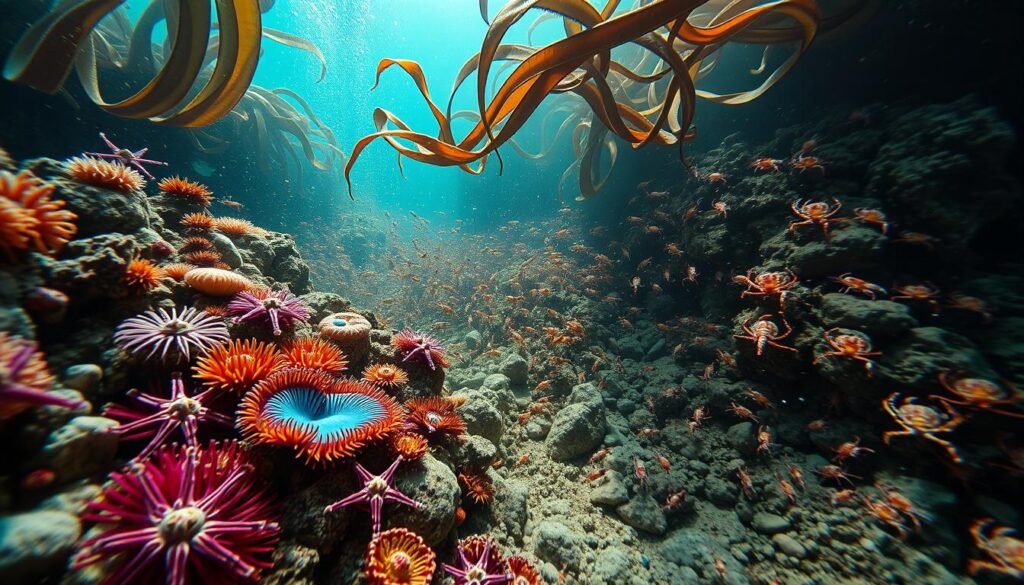
You’re wading through tide pools when a clam squirts water at your knees—welcome to the silent majority of sea life. These spineless wonders run the show in our seas, from oyster reefs that buffer coastlines to crabs that moonlight as underwater demolition crews. Let’s get weird.
Clams, Oysters, and Curious Crustaceans
I once watched a giant clam at the Shedd Aquarium filter 50 gallons hourly—that’s a swimming pool per day. Oysters? They’re cement trucks with guts. Their sticky secretions build entire reefs that shelter fish nurseries. But the real MVP? Peacock mantis shrimp. Their club-like claws smash shells with 1,500 Newtons of force—equivalent to a bullet’s acceleration. I’ve seen one crack a crab’s armor like it was bubble wrap.
Filter feeders: Clams clean entire bays by trapping pollutants
Reef architects: Oyster beds reduce storm damage by 50%
Ever seen a creature that eats its own brain? Meet sea squirts. They start life as tadpole-like swimmers, then glue themselves to rocks and digest their nervous systems. Gruesome? Maybe. Efficient? Absolutely. At Monterey Bay’s touch tank, I felt a sea squirt’s rubbery body jet water—it’s like squeezing a stress ball that fights back.
Invertebrate
Superpower
Surface Impact
Sea Squirt
Filters 2,000x body volume daily
Clears plankton blooms
Nudibranch
Steals prey’s toxins for defense
Controls sponge populations
Coconut Octopus
Walks on two legs with shell armor
Reduces crab overpopulation
Here’s the kicker: these spineless creatures shape surface life more than you’d guess. Every third breath you take comes from sea-dwelling plankton. Next time you skip a stone across waves, remember—the real magic happens beneath your feet.
See How Sea Animals Push Boundaries Underwater
Did you know some fish literally climb trees? Let’s unpack how marine life defies expectations daily. Take mudskippers—these thumb-sized acrobats use fin-arms to scale mangrove roots at low tide. They breathe through their skin and gills, switching between land and water like amphibious ninjas.
Whales are eco-engineers in disguise. When surfacing to breathe, they churn up iron-rich poop that fertilizes plankton blooms. This tiny oxygen-producing powerhouse fuels entire food chains—your every third breath comes from their bathroom breaks.
Then there’s the Atlantic horseshoe crab. It’s not a crab but a living fossil that crawls ashore to lay eggs. Those eggs feed migratory birds, linking marine and land ecosystems in a protein handshake. I’ve watched this ritual in Delaware Bay—thousands of armored critters moving like clockwork with the moon.
Species
Boundary-Pushing Trick
Ecosystem Impact
Mudskipper
Breathes air through skin
Controls insect populations
Humpback Whale
Vertical “bubble net” feeding
Boosts plankton growth
Marine Iguana
Sneezes excess salt on land
Fertilizes coastal soil
Here’s the kicker: these adaptations aren’t random. They’re survival blueprints refined over millennia. When marine species interact with land, they create feedback loops that stabilize both worlds. Next time you inhale fresh air, thank the ocean’s ultimate recyclers.
Hidden Architects: Coral Reefs and Sponges in Action
What if I told you some architects never touch a blueprint? Coral polyps work night shifts, secreting limestone skeletons that become underwater cities. I’ve watched staghorn corals in Belize grow inch by inch—like construction crews stacking LEGO towers in slow motion. These reefs shelter 25% of all marine species, from neon gobies to grumpy octopuses.
Sponges? They’re the silent plumbers of the sea. A single barrel sponge filters 1,500 bathtubs of water daily, trapping plankton and recycling nutrients. Their porous bodies become apartment complexes for shrimp and brittle stars. In Florida’s Keys, I spotted a loggerhead sponge hosting 17 different critters—it’s like a 24/7 diner with free rent.
Architect
Superpower
Who Benefits
Brain Coral
Builds wave-resistant structures
Parrotfish, damselfish
Tube Sponge
Filters toxins from water
Sea slugs, juvenile snapper
Fire Coral
Creates protective microhabitats
Cleaner shrimp, butterflyfish
Here’s the kicker: dolphins rely on these hidden builders too. Reefs attract fish schools that bottlenose dolphins hunt—like a grocery store that stocks itself. And sponge waste? It fertilizes plankton blooms that feed anchovies, which then feed bigger species. Every part connects.
These architects don’t just shape homes—they engineer survival. Next time you snorkel, look closer. That vibrant chaos? It’s a masterclass in teamwork, one polyp and pore at a time.
Amazing Adaptations That Keep Ocean Life Thriving
Ever felt your ears pop while diving? That’s nothing compared to creatures living a mile deep, where pressure could crush a submarine. Take the blobfish—its gelatinous body evolved to match deep-sea density. No bones? No problem. It floats like a water balloon in zero-gravity mode.
Unique survival tricks in high-pressure realms
Sharks here play 4D chess. The frilled shark’s flexible skeleton lets it swallow prey whole in pitch-black depths. I’ve seen footage of one lunging at squid—its jaw unhinges like a horror movie prop. But the real genius? Their livers store squalene oil, making them neutrally buoyant. No wasted energy chasing food.
Anglerfish take “fishing” literally. Females grow bioluminescent lures that blink like rave lights. Males? They’re permanent hitchhikers, fusing to their mate’s body as sperm banks. It’s nature’s version of “till death do us part”—with extra teeth.
Species
Pressure Hack
Depth Range
Blobfish
Gelatinous flesh
2,000-4,000 ft
Frilled Shark
Oil-filled liver
1,500-5,000 ft
Barreleye Fish
Transparent skull
2,000-2,600 ft
Here’s the kicker: deep-sea creatures repurpose their entire biology. Vampire squid use ammonia-filled tissues instead of muscles—like swapping steak for Jell-O. When food’s scarce, they slow their metabolism to ⅓ normal speed. Imagine surviving on one meal a month!
Even sharks get creative. Greenland sharks produce natural antifreeze, letting them hunt in near-freezing waters. Their secret? A 400-year lifespan fueled by cold-water food chains. Talk about patience paying off.
How Marine Life Balances the Planet’s Climate
What if I told you your morning breath owes a debt to whales? These giants aren’t just cruise ships with flippers—they’re climate engineers. Let’s break down how a lot of marine life keeps Earth’s thermostat in check.
Whale Nutrient Cycling and Oxygen Dynamics
When whales dive, they’re not just snacking—they’re farming. Their iron-rich poop fertilizes phytoplankton, tiny plants that produce half our air. One study found whale waste boosts plankton growth by 23%, like sprinkling Miracle-Gro across the sea. More plankton = more oxygen. Your lungs say thanks.
Here’s the kicker: every time a whale surfaces, it stirs nutrients upward like a giant blender. UN Environment Program data shows this “whale pump” cycles 22,000 tons of nitrogen yearly—enough to grow 300,000 acres of forest. Not bad for a bathroom break.
Marine Player
Action
Climate Benefit
Whales
Vertical nutrient mixing
Boosts plankton oxygen production
Phytoplankton
Photosynthesis
Absorbs CO2, releases O2
Krill
Carbon-rich waste sinking
Traps CO2 in deep sea
Even small critters matter. A lot of krill poop sinks, locking carbon underwater. It’s nature’s storage unit—keeps greenhouse gases out of our air. Scientists estimate marine life captures 40% of human-made CO2. Take that, climate change.
So next time you gasp at a whale breach, remember: that splash isn’t just cool—it’s keeping our planet alive. Who knew biology class could be this breath-taking?
Mind-Blowing Details About Fish, Crabs, and Their Gills
Ever wondered how fish breathe underwater? Their gills work like human lungs—but better. I once watched a crab scuttle across a lab table, its feathery gills fluttering like tiny accordions. Turns out, these structures extract oxygen from water 30x more efficiently than our lungs grab it from air. Evolution’s flexing hard here.
Here’s the kicker: one square millimeter of gill tissue has more surface area than your entire palm. Fish force water through these membranes like coffee filters, trapping oxygen molecules. Crabs? They’ve got “branchiostegal lungs”—gills that function as both lungs and pumps. I’ve seen fiddler crabs in Florida marshes “breathe” air during low tide, their gills staying moist under carapace armor.
Creature
Oxygen Hack
Efficiency
Tuna
Ram-jet gill flow
Extracts 80% O₂ from water
Hermit Crab
Modified gill chambers
Survives 48 hrs on land
Mangrove Killifish
Skin breathing
Lives in 0% oxygen mud
On one of my dives, I spotted a parrotfish “yawn”—it’s actually gulping water to flush its gills. Their pharyngeal jaws grind coral while separate gill rakers strain debris. Imagine chewing gum and running a marathon… underwater.
This living sea runs on tiny miracles. Humans invented scuba gear, but nature cracked the code millennia ago. Next time you see a fish, remember: those gills are masterpieces of biological engineering. And crabs? They’re basically snorkeling tanks with claws.
Captivating Tales from Marine Conservation Frontlines
Ever tried herding baby turtles under a full moon? I’ve waded through waist-deep marsh grass in Georgia, guiding disoriented hatchlings toward waves while dodging raccoons. Conservation isn’t just hashtags—it’s midnight stakeouts and rewiring human habits. Let’s break down three types of efforts changing the game.
In Florida’s Loggerhead Marinelife Center, volunteers patrol 9.5 miles of beach nightly during nesting season. Last year, they relocated 1,200 eggs from erosion zones—a size rivaling some suburban neighborhoods. One team even chased off a coyote mid-dig. “It’s like being a bouncer for reptiles,” laughed a sunburned biologist.
Community-driven cleanups: Hawaii’s Surfrider Foundation removed 52 tons of plastic from Oahu reefs in 2023
Tech-powered rescues: Drones in Mexico spot entangled whales faster than binocular crews
Habitat hacking: Artificial oyster reefs in Chesapeake Bay now host 400% more marine life
My favorite win? The “Turtle Taxi” program in Texas. When cold snaps stun sea turtles, locals ferry them to rehab centers in pickup trucks and kiddie pools. Last winter, a grandma transported 17 greens in her bathtub. “They peed everywhere,” she grinned. “But they’re alive.”
Conservation Type
Place
Scale
Nest Protection
Costa Rican beaches
90% hatchling survival rate
Ghost Net Removal
Great Pacific Garbage Patch
100+ tons extracted monthly
Coral IVF
Great Barrier Reef
1 million larvae planted/year
These stories aren’t exceptions—they’re blueprints. From place-based patrols to industrial-size cleanups, every action rewrites survival odds. Next time you spot a straw wrapper, remember: someone’s probably out there right now, fighting for the sea’s weirdest residents.
Interactive Approaches to Teach Kids About Ocean Life
Who says learning can’t splash into playtime? Let’s turn curiosity into action with methods that make marine biology feel like a treasure hunt. Forget textbooks—we’re talking hands-on discovery that sticks.
Aquariums: Where Science Meets Squee Tanks
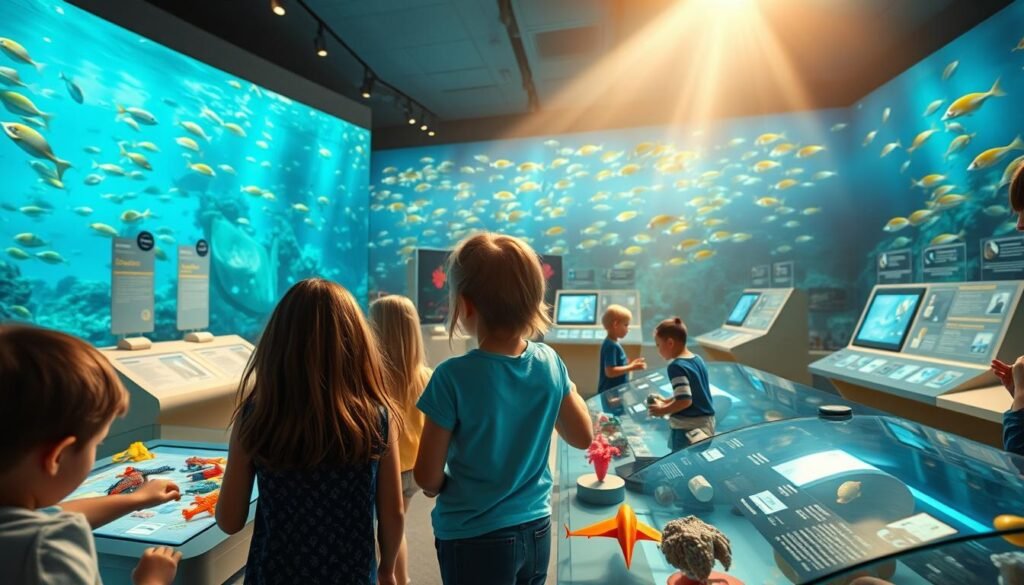
I’ll never forget watching a kid’s eyes light up at Monterey Bay Aquarium as a bat ray glided past their fingertips. Aquariums let children see entire bodies of creatures—from flapping gills to pulsating jellyfish—in real time. Pro tip: Ask staff about feeding times. Watching an octopus unscrew a jar lid beats any cartoon.
Flashcards That Flip the Script
Ditch boring drills. Create “Guess the Gill” cards with close-up photos. Pair them with fun facts: “This fish’s gills filter oxygen 30x faster than your lungs!” Turn it into a race—who can match the bodies to their habitats fastest? Bonus points for crab-walk imitations.
Screen Time, But Make It Smart
Swap mindless scrolling for apps like “Marine Explorer VR.” Kids virtually dive with sea turtles while learning how their flippers evolved. YouTube channels like Nat Geo Kids break down gills vs. lungs using soda bottles and straws. (Yes, I’ve tried this—my kitchen floor may never recover.)
Activity
Skill Built
Mess Level
DIY Tide Pool Bin
Habitat observation
Contained chaos
Gill Anatomy Puzzle
Biology basics
Low (if you skip glitter)
Virtual Whale Migration
Ecosystem connections
Screen smudges only
The key? Let kids lead. My niece once turned her tablet into a “research lab” to film backyard pill bugs—she called them “land hermit crabs.” Close enough. When learning feels like play, even gills become gasp-worthy.
A Peek into the Underwater Lab: Science in Action
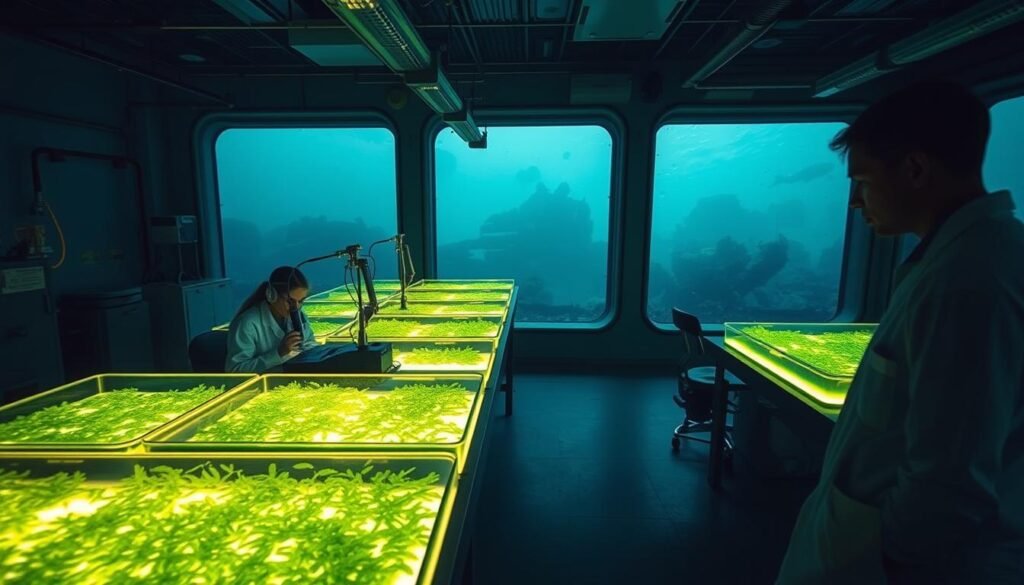
What’s cooler than a floating laboratory? Picture scientists in wetsuits tweaking equipment beside glowing vents, tracking how tiny organisms shape our planet. I once shadowed a team in Hawaii’s Neptune Labs, where researchers simulate deep-sea conditions to study algae blooms. Their secret weapon? A fish tank the size of a minivan with dials that mimic moonlight cycles.
Real Experiments and Surprising Field Observations
Let’s break down how science tackles big questions. Step 1: Deploy “algae incubators”—clear tubes anchored to reefs. These measure how algae convert CO₂ to oxygen. One experiment showed certain species produce 30% more O₂ under blue light. It’s like discovering photosynthesis has a favorite color.
Step 2: Track nutrient highways. Scientists dye seawater neon green to map currents near underwater volcanoes. I watched footage where plumes shot nutrients upward like elevator shafts. These “volcanic cafeterias” feed entire ecosystems, proving lava isn’t just destructive—it’s a planet-wide delivery service.
Experiment
Method
Discovery
Algae Light Response
Color-filtered tanks
Blue light boosts O₂ by 30%
Volcanic Nutrient Flow
Dyed seawater tracking
Feeds 500+ species monthly
Deep-Sea Pressure Test
Robotic sensor arrays
Algae survive 2x Everest pressure
Field notes get wild. A researcher once told me, “We found shrimp colonies thriving in acidic vents—like finding toddlers chugging espresso.” These critters rewrite survival rules daily. Next time you swim, remember: labs beneath the waves are cracking nature’s code, one bubbly test tube at a time.
Sign Off with a Wave: Final Thoughts on Marine Marvels
Ever wondered how squishy sea cucumbers survive crushing depths? That’s the magic of evolution—a million tiny facts conspiring to make life possible where it shouldn’t be. From bone-free blobfish to anglerfish couples fused for life, every adaptation whispers: “Pressure isn’t a problem—it’s a blueprint.”
I’ll never forget watching a vampire squid invert its body in Monterey Bay’s twilight zone. Its ammonia-filled tissues shrugged off deep-sea pressure like a submarine built from Jell-O. These creatures aren’t oddities—they’re masterclasses in biological engineering.
Here’s the kicker: we’ve barely scratched the surface. Those shrimp punching at bullet speeds? The whale poop fueling plankton blooms? Each fact connects to a larger story—one where survival dances with sheer weirdness.
So next time you dip toes in waves, think deeper. What other secrets pulse beneath the swells? The ocean’s full of answers… if you’re willing to get curious. Catch you on the flip side—I’ll be the one geeking out over snailfish anatomy.