Imagine rocks that transform like magic—no wand required! These shape-shifters are called metamorphic rocks, and they’re born from extreme heat and pressure deep underground. You know that marble countertop in your kitchen? It started as boring limestone before Earth’s oven gave it a glow-up.
Here’s the deal: Mother Nature loves recycling. Take shale, a plain-Jane sedimentary rock. Crank up the temperature, add a mountain’s worth of pressure, and poof—it becomes sleek slate. I’ve seen rocks so changed they’d make a chameleon jealous.
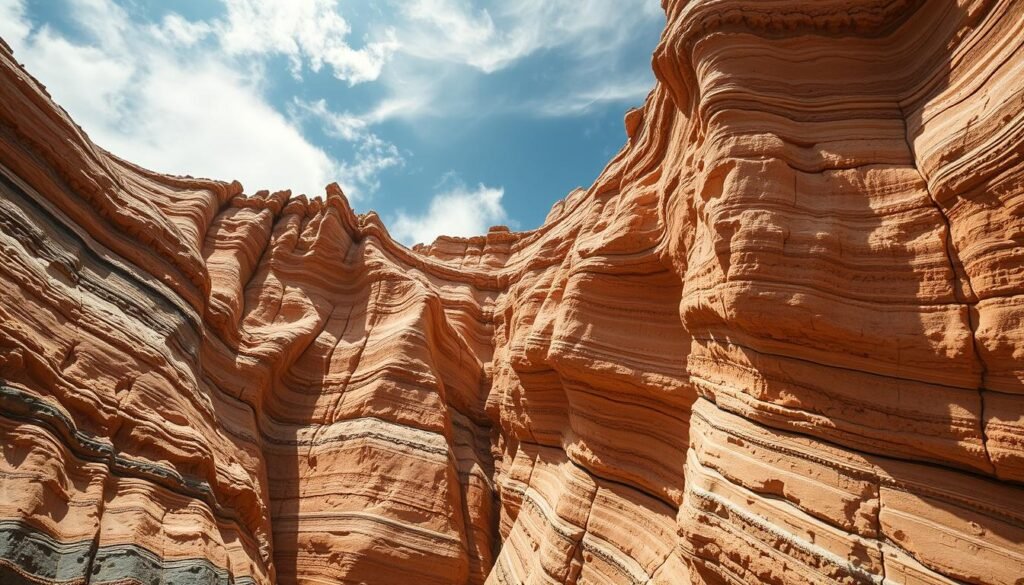
What makes these stones special? Their secret sauce is minerals rearranging like puzzle pieces. Picture layers of rock squished together like a cake in a hydraulic press. No kidding—some metamorphic rocks even sparkle with mica flakes that catch sunlight like disco balls.
Want to spot these undercover agents? Check out mountain ranges or riverbeds where Earth’s crust has done some serious heavy lifting. The wildest part? This transformation happens slower than your grandma’s dial-up internet—we’re talking millions of years.
Stick around, and I’ll show you how ordinary stones become geological superheroes. But wait until you hear how diamonds get their start in this rocky reality show…
Unraveling Metamorphic Rocks Facts for Kids: Formations Under Pressure
Ever wonder how Earth remixes its rock collection? Let’s break it down—no lab coat needed! These underground transformations start with heat and pressure cranked up to extreme levels. Picture your kitchen oven at 300°F. Now multiply that by 500, add the weight of 600 elephants stacked in a single spot, and you’ve got the recipe for nature’s rock makeover.
Heat, Pressure, and Mineral Reshaping
Here’s the step-by-step magic show. First, existing stones get buried deep—we’re talking miles underground. Then, tectonic plates play bumper cars, generating insane pressure that squishes minerals like playdough. I’ve seen rocks where flat mica sheets line up like soldiers, all thanks to this squeeze-fest.
But heat’s the real game-changer. At 150-200°C (that’s hotter than boiling water!), minerals start swapping atoms like trading cards. Some even melt just enough to recrystallize. This metamorphism process isn’t quick—it’s slower than waiting for your birthday after Christmas.
Decoding Rock Origins
Not all starter rocks are created equal. Three types can undergo this glow-up:
Sedimentary: Like sandstone, which becomes quartzite
Igneous: Granite can morph into gneiss
Older metamorphic: Yes, they can get remade again!
Here’s a twist—magma sometimes crashes the party. When molten rock invades, it bakes nearby stones like a campfire marshmallow. This “contact metamorphism” creates swirly patterns I’d wear as tie-dye any day.
These changes aren’t just skin-deep. The whole internal structure gets overhauled, like rebuilding LEGO sets without instructions. Next time you see marble floors, remember—they’re limestone that survived Earth’s pressure cooker!
Rock Solid Examples: Marble, Slate, and Quartzite in Action
Let’s dig into the rock stars of Earth’s underground makeover studio. These stones prove even geology has its version of extreme makeovers—no commercial breaks needed.
From Humble Beginnings to Showstoppers
Take marble, the Beyoncé of countertops. It starts as plain limestone—the same stuff in your classroom chalk. Add heat and pressure? Boom! Minerals recrystallize into those swirly patterns I’ve seen in Italian cathedrals. Pro tip: Scratch test real marble with a knife. If it resists, you’ve got the genuine article.
Then there’s slate, the ultimate rebrand. Imagine shale—a flaky sedimentary rock—getting pressed flatter than a pancake at a diner. The result? Sleek tiles that roofed colonial houses and still line modern pool tables. I once split a slate slab into sheets thinner than my phone—that’s layered perfection.
Architects’ Secret Weapon
Don’t sleep on quartzite. This tough cookie begins as sandstone before Earth’s pressure cooker turns it into a sparkly fortress. Construction crews love it for sidewalks because, unlike its sandy ancestor, it laughs at rain and ice. Found a glittery pink outcrop last summer—quartzite showing off its quartz crystals like jewelry.
What ties these examples together? Their origin stories. Limestone becomes marble, shale transforms into slate, and sandstone hardens into quartzite—all through nature’s slow-cooker method. Next time you see polished stone surfaces, remember: they’ve survived geological boot camp to shine this bright.
Mechanics of Change: Heat, Pressure, and Layered Transformations
Picture Earth’s crust as a giant workshop where stones get extreme makeovers. Two main processes drive these transformations—one’s like a blowtorch, the other like a hydraulic press. Let’s peek behind the geological curtain.
Magma’s Hot Handshake
When magma barges into existing rock, it’s like pressing a hot iron against fabric. This contact metamorphism happens fast—I’ve seen stones change color within feet of the intrusion zone. The heat cooks minerals into new arrangements, creating a “baked” edge called a contact aureole. Imagine cookie dough turning crisp near the oven’s edge.
Mountain-Sized Squeeze
Deep in mountain roots, rocks face a different challenge. Continental collisions generate enough heat and pressure to remodel entire layers. This regional metamorphism reshapes the earth crust over millions of years. Gneiss forms here, with those iconic zebra stripes from minerals sorting themselves under stress.
Feature
Contact Metamorphism
Regional Metamorphism
Heat Source
Magma intrusion
Earth’s internal heat
Depth
Shallow (miles)
Deep (10+ miles)
Pressure Type
Low
Extreme
Rock Example
Hornfels
Gneiss
Here’s the kicker: these processes aren’t mutually exclusive. I’ve spotted gneiss near volcanic areas where both forces team up. The layers tell stories—like geological comic books showing Earth’s epic battles with itself.
Closing Thoughts: Real-World Impressions of Metamorphic Marvels
Next time you run your hand over marble floors or spot slate roofing tiles, remember—you’re touching Earth’s greatest magic trick. That gleaming Taj Mahal marble? Centuries of heat and pressure transformed humble limestone into a monument that outshines crowns.
I’ve held stones where minerals rearranged like shuffled cards—some sparkly, others striped like candy. Each type whispers secrets: schist’s glittery flakes hint at mountain-building chaos, while quartzite’s toughness reveals ancient desert sands remade.
What blows my mind? How igneous rocks and metamorphic cousins shape our world. They’re not just pretty faces—they’re the earth crust’s diary, pages written in crystal ink. Even now, deep below cities, metamorphism works its slow alchemy.
So here’s the kicker: every pebble has backstory richer than superhero origin tales. Will you spot the next chapter? Maybe in glittering countertops… or that odd rock in your driveway. What’s their next act?