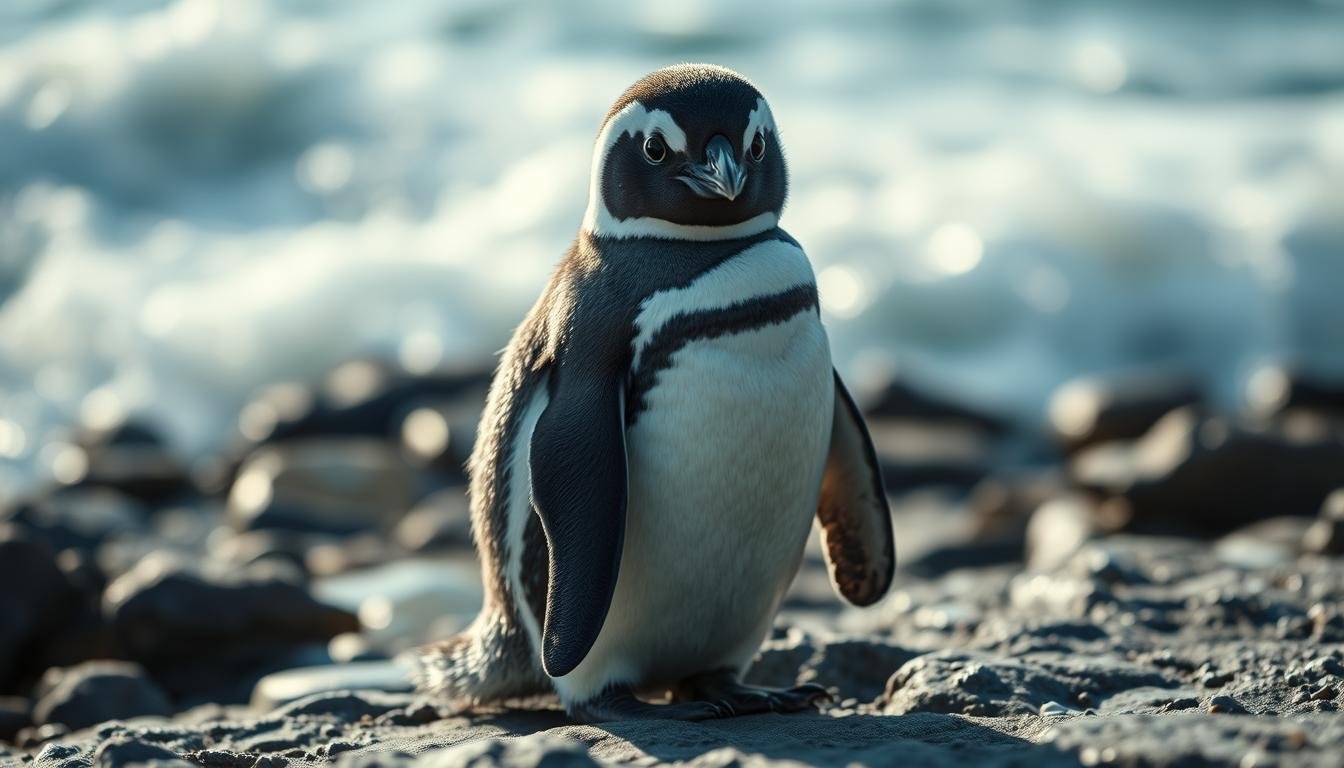
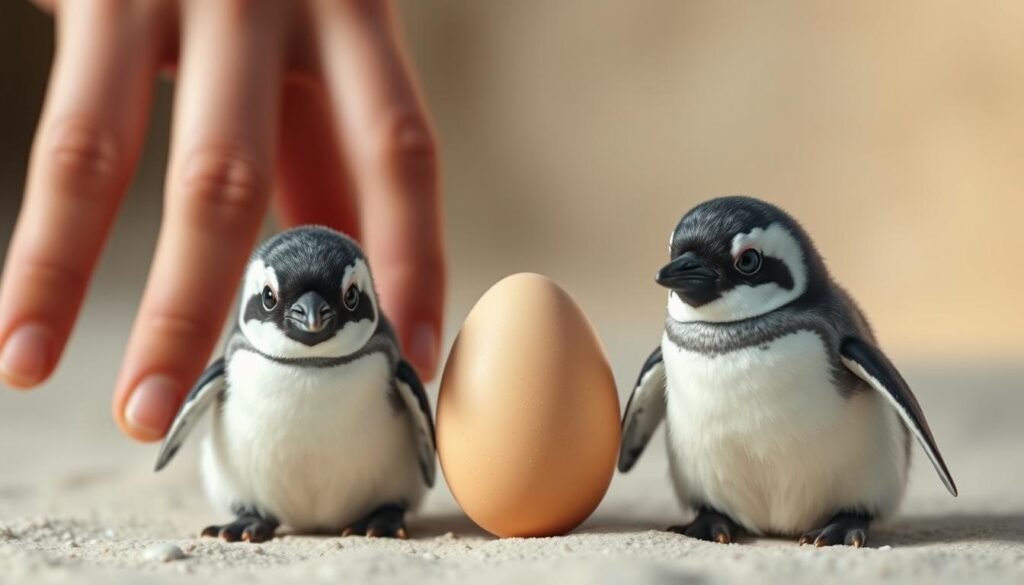
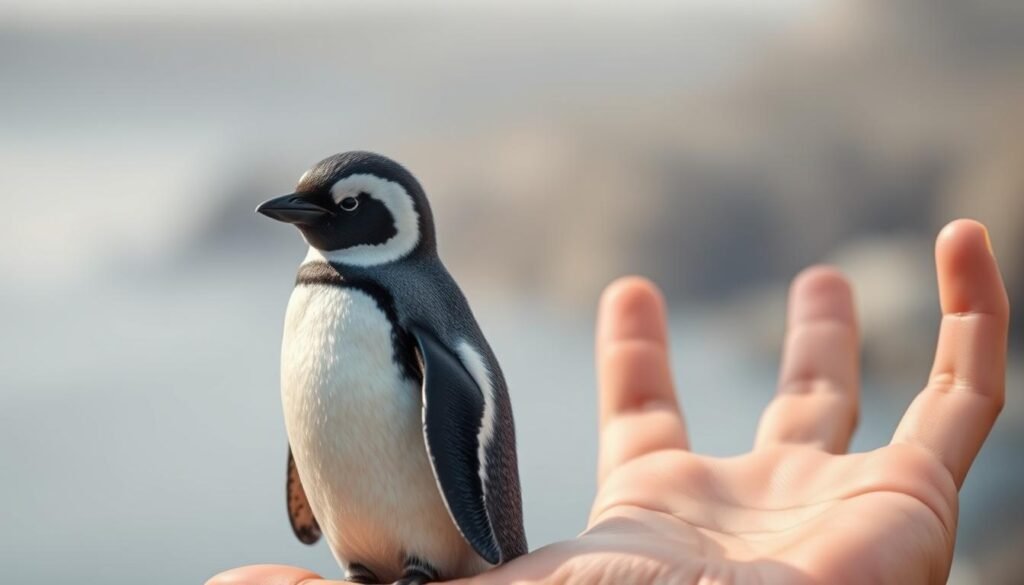
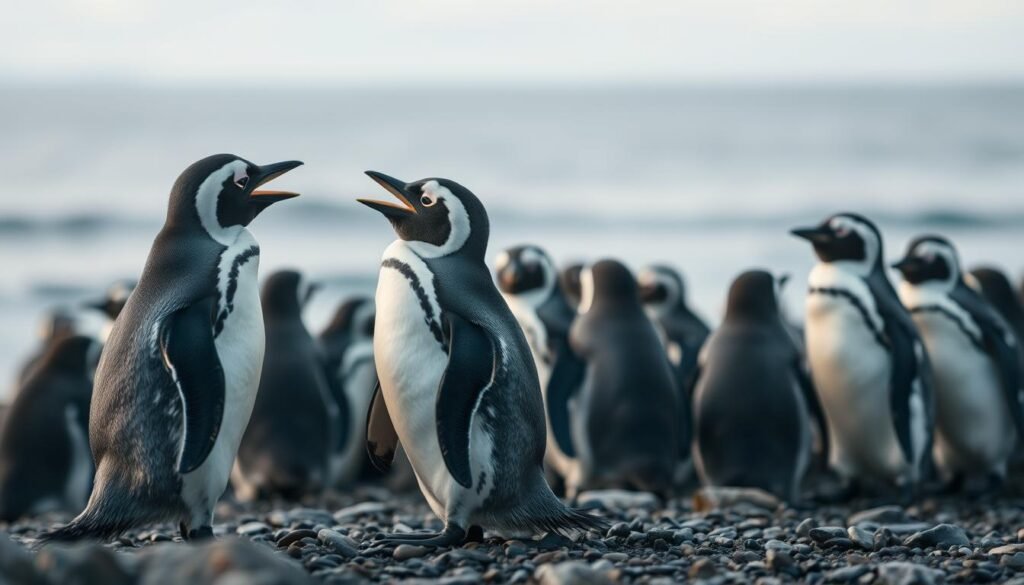
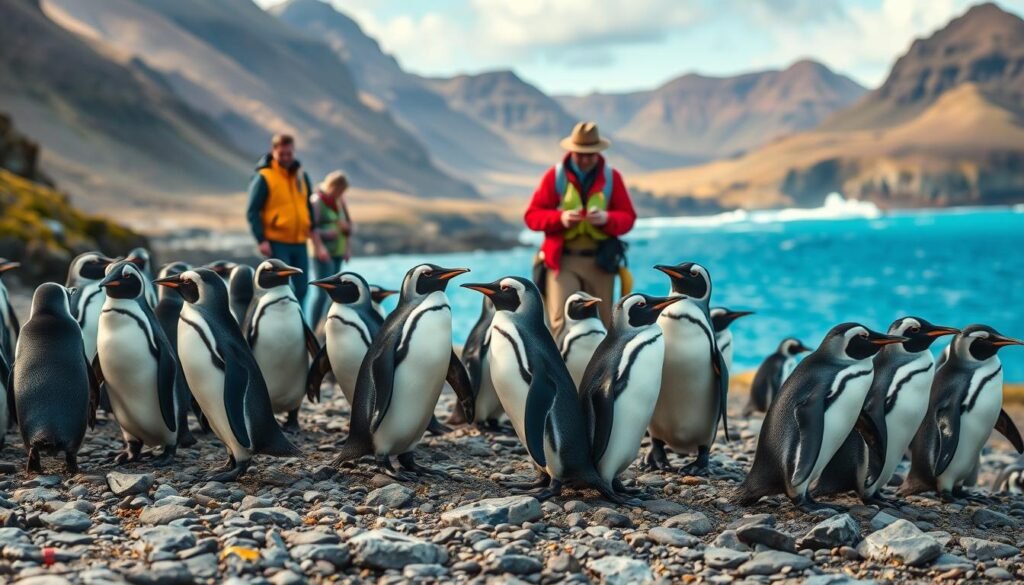
Meet the tiniest rock stars of the penguin world! Little blue penguins are the smallest penguin species. They stand just 35-43 cm tall and weigh about 1 kg. They are basically the size of a house cat with serious attitude.
These pint-sized sea warriors might be small, but they’ve got big personalities. Native to Australia and New Zealand, they bring serious swagger to the animal kingdom. Their vibrant blue-gray feathers and incredible marine skills are unmatched.
Imagine a penguin so compact it could fit in your backpack – that’s the magic of these adorable creatures! From their lightning-fast swimming to their quirky social behaviors, little blue penguin facts will blow your mind. They make you fall in love with nature’s cutest compact design.
Buckle up for an epic adventure into the world of the smallest penguin species. They prove big things truly do come in tiny packages!
Meet the World’s Tiniest Penguin Species
Imagine a penguin small enough to fit in your backpack. That’s the little blue penguin! They are the smallest penguin species, full of charm. Their size makes them a favorite among wildlife lovers.
Physical Characteristics at a Glance
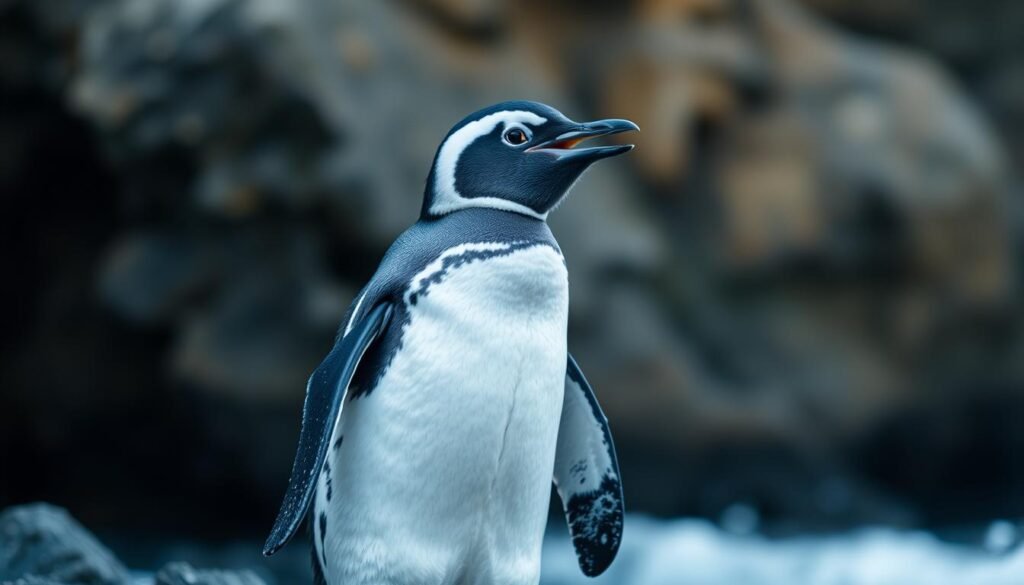
These tiny penguins are a natural wonder. They have a unique slate-blue color. Their small size is truly amazing:
Height: 35-43 cm (about the size of a school ruler)
Weight: 1-1.5 kg (lighter than a gallon of milk)
Wingspan: Approximately 30-40 cm
Size and Weight Comparisons
These penguins are like the kindergarteners of the penguin world. They’re so small, they could hide behind a house plant or fit in a large tote bag!
Comparison
Little Blue Penguin
Average Size Reference
Height
35-43 cm
Half the height of a 10-year-old child
Weight
1-1.5 kg
Similar to a small bag of sugar
Distinctive Blue Coloring
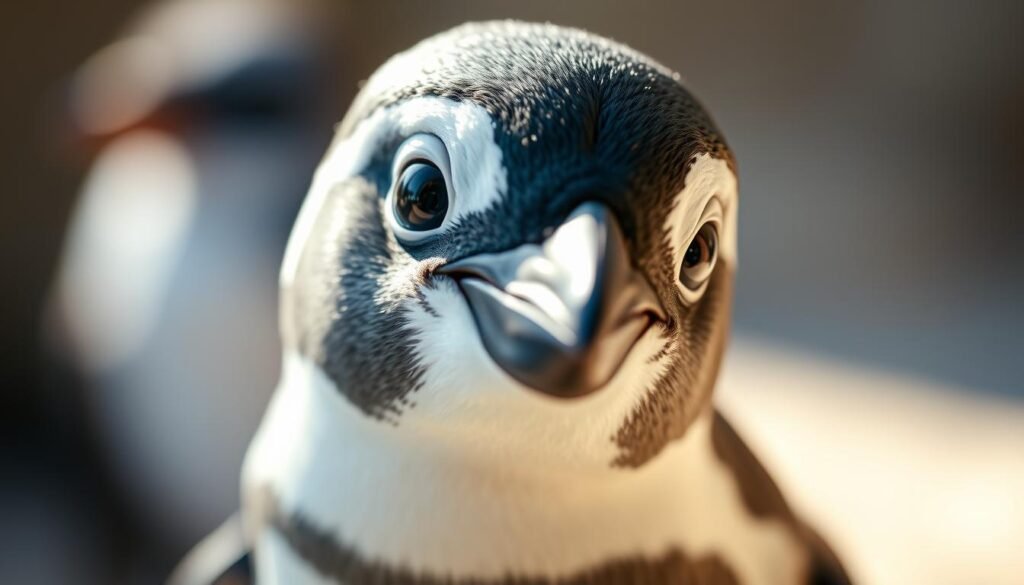
Their stunning blue color isn’t just for looks. It helps them blend in underwater. It’s like they’re wearing a natural stealth suit, keeping them safe and adorable!
Where These Pint-sized Penguins Call Home
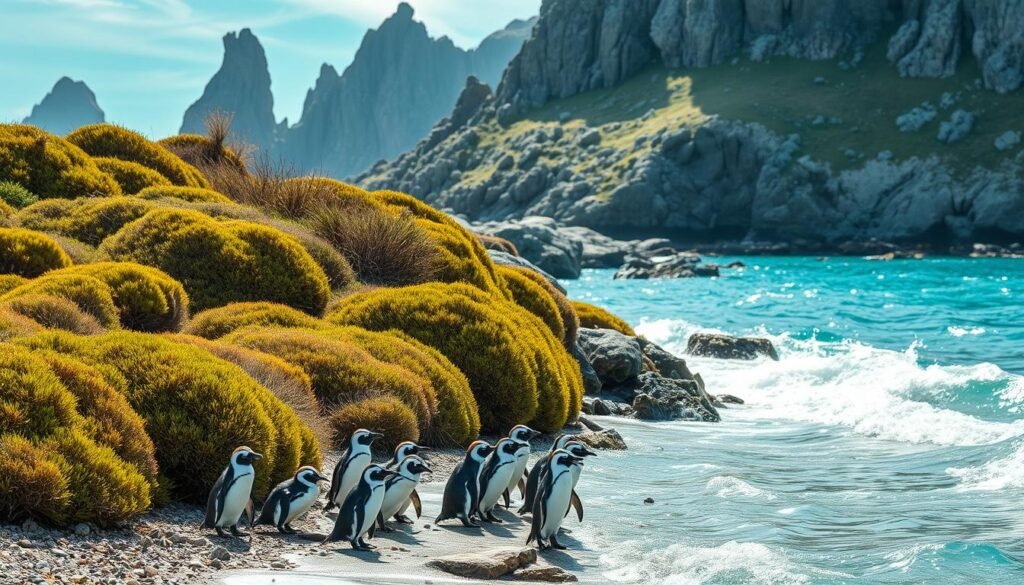
Little blue penguins are true coastal adventurers. They have fascinating habitat preferences! These tiny marine birds live in the southern coastlines of Australia, Tasmania, and New Zealand.
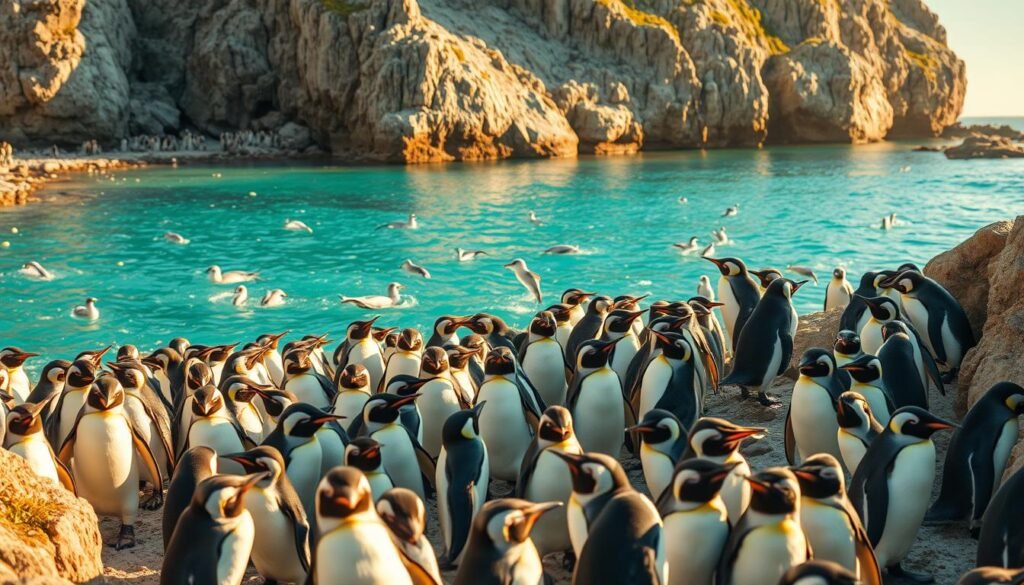
Their penguin colonies are found in diverse landscapes. You might be surprised by where they call home. They’re not just beach dwellers. They adapt to different environments:
Sandy coastal dunes
Coastal forest edges
Agricultural farmlands
Rocky shoreline areas
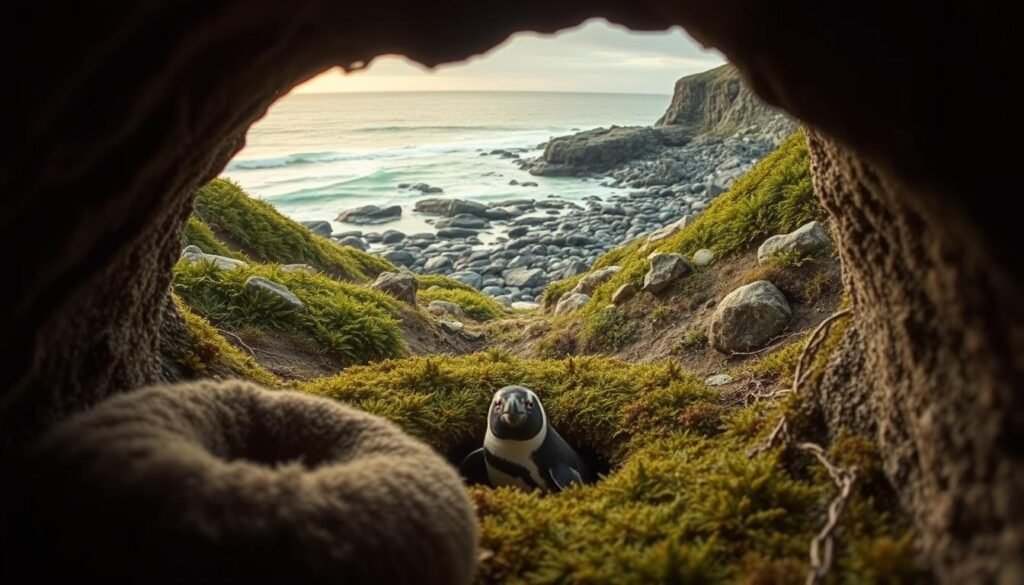
What’s remarkable is their ability to nest up to 200 meters inland. This lets them find safe spaces away from the ocean. Yet, they stay close to their hunting grounds.
Region
Typical Habitat Characteristics
Nesting Preferences
Southern Australia
Rocky coastlines
Underground burrows
Tasmania
Dense coastal vegetation
Hidden ground nests
New Zealand
Mixed terrain landscapes
Cliff side and dune nesting
Their adaptability ensures little blue penguins thrive in various coastal ecosystems. They are true survival experts of the marine world!
A Day in the Life of Little Blue Penguins
Little blue penguins are amazing marine explorers with interesting daily activities. They swim, hunt, and survive in the ocean with skills that impress. These tiny birds are true champions of the sea.
At dawn, they leave their nests for a day of adventure. These small birds are ready for a big day of exploring the ocean. They cover long distances, something bigger birds can’t do.
Daily Swimming Routines
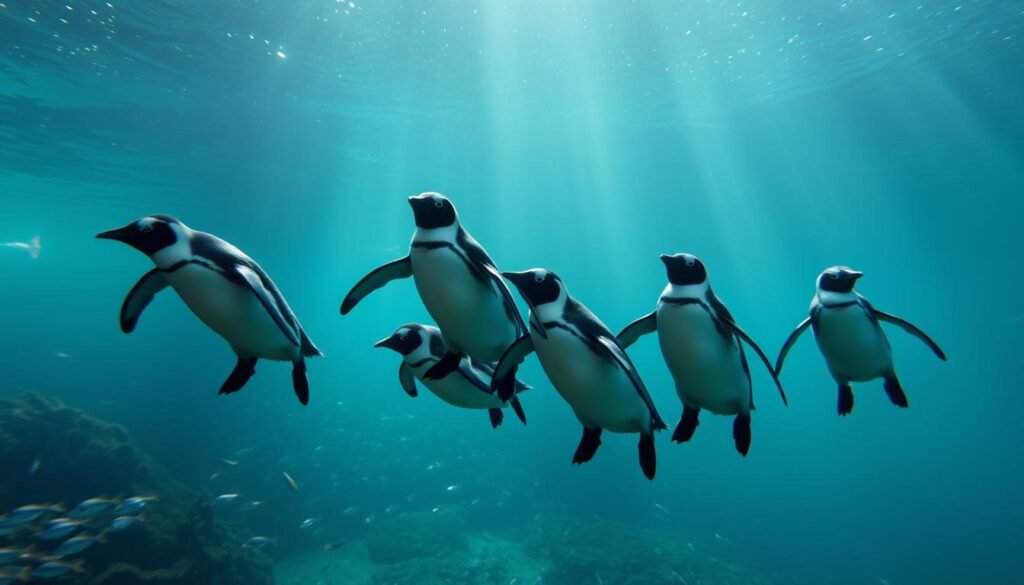
Little blue penguins are great swimmers. They swim long distances, from 15 to 75 kilometers a day. Their bodies are made for swimming fast and efficiently.
Typically leave shore at sunrise
Swim in coordinated groups
Navigate complex ocean currents
Return to shore at sunset
Hunting and Feeding Habits
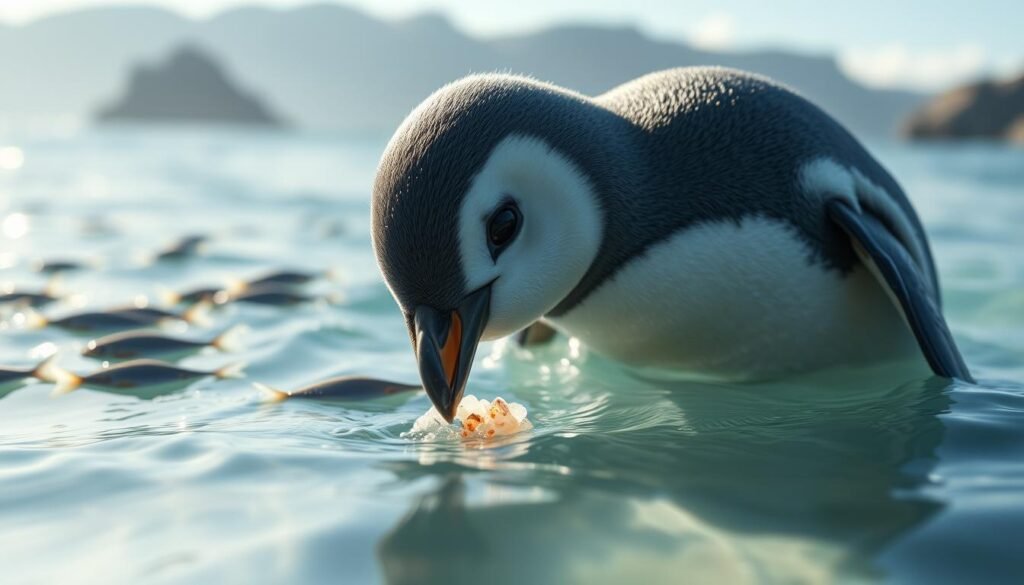
Feeding is key to their survival. They hunt small fish, squid, and krill with clever tactics. They dive deep to find food, using their sharp vision.
Dive depths up to 20 meters
Hunt in short, strategic bursts
Consume approximately 25% of their body weight daily
Use specialized beaks for catching slippery prey
They have amazing endurance and hunting skills. This keeps them going in their tough marine life.
Underwater Superstars: Swimming and Diving Abilities
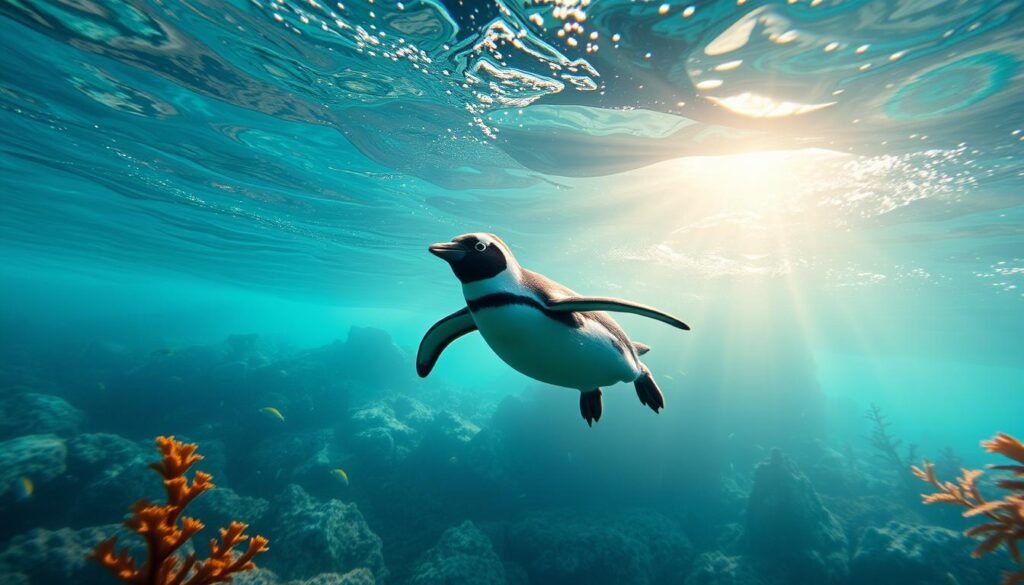
Get ready to be amazed by the incredible penguin swimming skills of these pint-sized marine marvels! Little Blue Penguins turn from awkward land wadders into underwater athletes when they hit the water. Their diving abilities are truly extraordinary.
These tiny swimmers are built for underwater excellence. Their streamlined bodies and powerful flippers let them move through ocean waters with grace and speed. Underwater, Little Blue Penguins can swim up to 6 kilometers per hour, showing they are true masters of the sea.
Average swimming speed: 2-4 km/hr
Maximum underwater speed: 6 km/hr
Scientific name Eudyptula: meaning “good little diver”
Their diving technique is a marvel of natural engineering. Little Blue Penguins can dive deep into the ocean, using their compact bodies to slice through water with minimal resistance. They can dive up to 20 meters deep, hunting for small fish, squid, and krill with remarkable precision.
What makes their swimming skills truly remarkable is their ability to change direction instantly. They use their flippers like underwater wings, creating incredible maneuverability. This would make any marine biologist drop their jaw in pure amazement.
Little Blue Penguin Facts for Kids
Get ready for some amazing penguin fun facts that will amaze you! These little blue penguins are like tiny superheroes. They have incredible abilities and surprising stats, showing that great things can be small.
Amazing Speed Statistics
Little blue penguins are swimming champions, despite their small size. They can swim up to 6 kilometers per hour. Imagine a small bird racing faster than a toddler!
Swimming speed: Up to 6 km/hr
Average height: 35-43 cm
Weight range: 1-1.5 kg
Fun Size Comparisons
These penguins are the ultimate pocket-sized performers. They’re so small, they could fit in a backpack! They’re shorter than most kids’ rulers, standing at 35-43 cm tall.
Imagine a penguin that weighs less than a house cat but moves with confidence. Their compact size doesn’t stop them from being absolute ocean adventurers!
Size Comparison
Little Blue Penguin
Comparison
Height
35-43 cm
Length of a school ruler
Weight
1-1.5 kg
Lighter than a house cat
These pint-sized penguins show that size isn’t everything. They prove that big personalities can come in small packages!
Family Life and Breeding Habits
Little Blue Penguins have a unique way of living in families. They form strong bonds that can last for many years. This is quite surprising for many people.
These penguins have a special way of showing love and commitment. Males prepare nests and dance to attract mates. It’s a beautiful sight to see.
Pair bonds typically last multiple breeding seasons
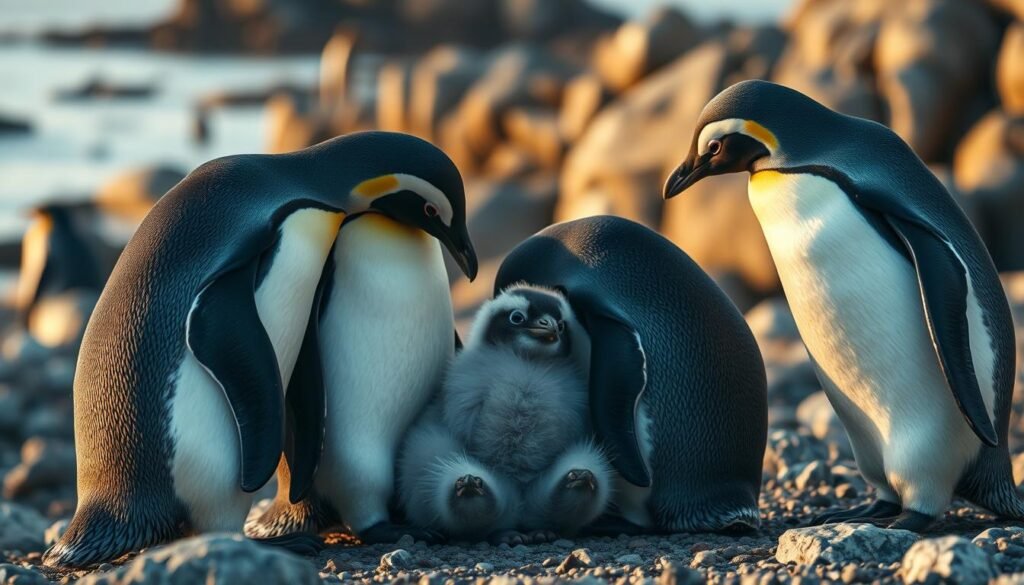
Both parents share incubation and chick-rearing responsibilities
Breeding occurs annually in specific coastal regions
Even though they are known for being faithful, Little Blue Penguins can change partners. If they don’t have chicks, they might split up. This shows they are practical about having babies.
Breeding Characteristic
Details
Breeding Season
August to December
Clutch Size
1-2 eggs
Incubation Period
33-39 days
Chick Rearing
8-10 weeks
Chicks often come back to where they were born. This creates a cycle of family life. It helps keep the colony strong and increases the chances of survival for future generations.
Clever Nest Building Techniques
Little Blue Penguins are amazing architects! They show incredible adaptability and creativity in building their homes. These small birds have developed clever ways to make safe and cozy nests in different places.
When it comes to building nests, these birds are very flexible. They find and make sheltered spots to protect themselves from predators and bad weather.
Natural Nesting Locations
Little Blue Penguins choose a wide variety of nesting sites. This shows their resourcefulness:
Rocky coastal crevices
Underground burrows
Dense vegetation areas
Coastal forest root systems
Natural rock formations
Urban Nesting Adaptations
These penguins have also become city dwellers! They’ve learned to nest in human-made environments, including:
Under building foundations
Near railroad tracks
Artificial nest boxes
Landscaped garden areas
Their ability to adapt to both natural and human-made landscapes is impressive. These small penguins show that home is where you make it!
What’s on the Menu: Favorite Foods
Explore the underwater world of little blue penguins and their amazing diet! These tiny explorers have impressive feeding habits that show off their culinary skills.
Little blue penguins are expert hunters with a menu that seafood lovers dream of. Their diet includes a variety of marine delicacies:
Sardines – small, silvery fish that are a staple in their diet
These small predators are very strategic when hunting. They can dive up to 65 feet deep. They use their streamlined bodies to chase down prey quickly.
Seasonal changes affect their menu. Little blue penguins adjust their diet based on what’s available. They’re adaptable hunters who survive in tough marine environments.
Imagine being small yet mighty in the ocean. These little blue penguins show that size doesn’t matter when hunting!
Special Adaptations for Ocean Life
Little blue penguins are experts at surviving in the tough marine world. Their adaptations are amazing, letting them live where others can’t. These small sea explorers have skills that make them true champions of the ocean.
Nature has given these birds incredible survival tools. Their bodies are like living thermal protection systems, designed to handle the cold and unpredictable ocean waters.
Waterproof Feathers: Nature’s Perfect Armor
Imagine wearing a suit that keeps you dry and warm, no matter how wet it gets. That’s what little blue penguins do with their amazing feather system. They have around 10,000 feathers – three to four times more than flying birds!
Each feather is perfectly positioned for maximum water resistance
Feather bases are ultra-downy, trapping air for insulation
Creates a waterproof barrier against cold ocean environments
Body Temperature Control Mechanisms
These penguins have a sophisticated internal heating system that would impress any arctic explorer. Their unique physiological adaptations help them keep a steady body temperature, even in freezing waters.
Adaptation
Function
Effectiveness
Dense Feather Layer
Trap Warm Air
98% Insulation Efficiency
Specialized Blood Circulation
Retain Body Heat
Reduces Heat Loss by 75%
Compact Body Shape
Minimize Surface Area
Reduces Heat Exposure
Their incredible design shows that these tiny penguins are walking – or swimming – miracles of evolutionary engineering!
Communication and Social Behavior
Little Blue Penguins are vocal superstars in penguin communication! These tiny birds might be small, but their social habits are anything but quiet. They use a fascinating array of sounds to interact with their colony, express emotions, and survive in their marine environment.
Penguin social habits reveal a complex world of communication. Their vocal repertoire includes several distinctive calls:
High-pitched beeping sounds for chicks
Loud territorial defense calls
Courtship vocalizations
Alarm signals to warn against predators
Their communication goes beyond just noise. Vocal interactions play a critical role in mate bonding, establishing social hierarchies, and protecting their young. Each call serves a specific purpose, from attracting a partner to warning colony members about threats.
Researchers have found that these penguins develop unique vocal signatures. Young chicks start with a simple high-pitched beep that gradually transforms into more complex adult calls. This sound evolution helps them integrate into their social group and communicate effectively with other colony members.
The world of Little Blue Penguin communication is a testament to their remarkable social intelligence. They prove that great things come in small packages – specially when it comes to expressing themselves!
Growing Up as a Little Blue Chick
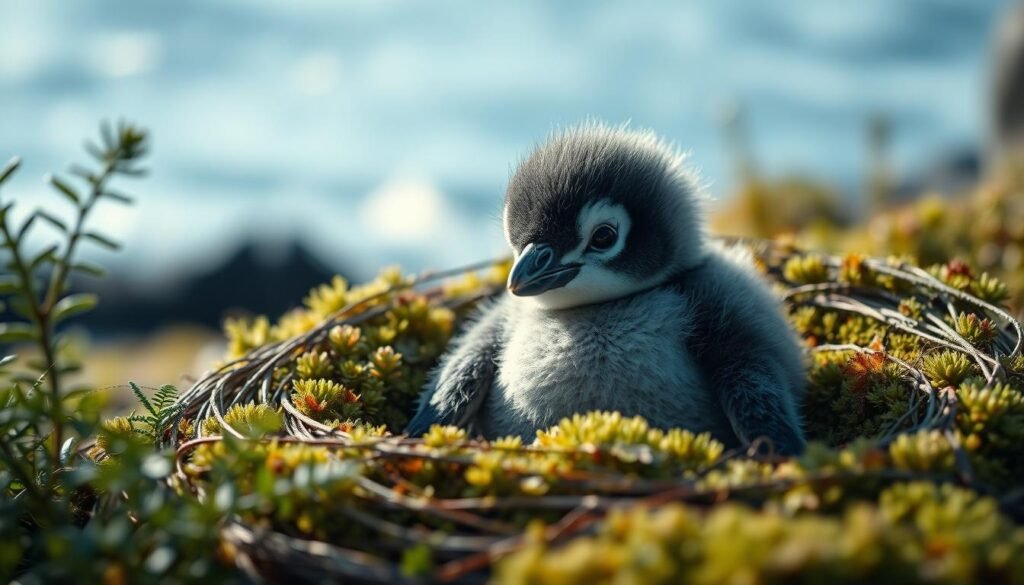
Imagine a tiny ball of fluff turning into a sleek ocean swimmer. That’s the amazing penguin life cycle! Little blue penguin chicks have a journey from egg to independent seabird that’s jaw-dropping.
The penguin chick development starts with serious parental care. Both mom and dad keep the egg warm and protect it from predators. Once the chick hatches, it’s all hands on deck for feeding and survival.
From Egg to Fluffy Adventurer
These adorable chicks go through wild changes in their early weeks:
First 2-3 weeks: Completely dependent on parents
4-5 weeks: Developing waterproof feathers
6-8 weeks: Learning to swim and hunt
By around 8 weeks, these little tykes are ready to spread their wings – or should I say, flippers! They’ll start becoming independent hunters. Though their parents continue to support them during this critical transition.
Key Milestones in Penguin Chick Development
Age
Development Stage
Key Characteristics
0-2 weeks
Newborn Stage
Covered in soft down feathers, completely dependent
What a ride these little blue chicks have! From being tiny, helpless balls of fluff to becoming ocean-swimming machines, their journey is incredible.
Unique Personalities and Behaviors
Little Blue Penguins are the introverts of the penguin world. Their behavior is fascinating and adorable. These tiny marine birds have traits that make them stand out.
Imagine a creature so shy it waits until darkness to venture onto the beach. It’s like being the ultimate night owl!
Their penguin personality traits show a complex social structure. It’s anything but boring. Some characteristics include:
Extremely cautious when moving on land
Highly social within their colony
Nocturnal navigation skills
Unique individual temperaments
Male Little Blue Penguins show interesting differences. Some become surprisingly assertive during breeding season. They compete for mates with unexpected intensity. It’s like watching a tiny, feathered reality show.
These penguins aren’t just cute – they’re strategic survivors. Their shy nature helps them avoid predators. Their tight-knit colony provides protection and companionship. It’s like they’ve mastered the art of being both invisible and incredibly connected.
Nature has equipped these little blues with a remarkable blend of caution and courage. They might seem timid, but beneath that reserved exterior lies a resilient spirit. This spirit is ready to tackle the challenges of ocean life.
Natural Predators and Survival Strategies
Life in the ocean is tough for little blue penguins. They face many predators that make survival hard. Their small size makes them easy targets in both water and on land.
These birds have developed clever ways to stay safe. They use amazing strategies to avoid dangerous hunters in their home.
Primary Marine Predators
Fur seals
Leopard seals
Killer whales (orcas)
Sea eagles
Large gulls
In the water, little blue penguins must always be on guard. Their main defense is their fast swimming and quick turns. They can quickly change direction to escape predators.
Land-Based Threats
Introduced predators like cats
Domestic and feral dogs
Rats
Foxes
On land, these penguins nest in hard-to-reach spots. They also stay together to reduce the risk of being caught by predators.
Survival Adaptation Strategies
Strategy
Purpose
Swift Swimming
Escape marine predators
Camouflage Coloration
Blend with ocean and coastal environments
Group Nesting
Collective protection against land predators
Nocturnal Movement
Reduce visibility to possible hunters
Despite many predators, little blue penguins keep thriving. They do this through their smart survival tactics and adaptability.
Conservation Status and Protection Efforts
The Little Blue Penguin might seem resilient, but conservation is key. They are listed as “Least Concern” on the IUCN Red List. Yet, they face big challenges in their homes.
Protecting penguins is vital for their numbers. They’re not endangered, but their numbers are falling in some places. Climate change, habitat loss, and human actions threaten them.
Population monitoring shows gradual decreases in specific coastal areas
Urban development disrupts traditional nesting grounds
Fishing practices impact their primary food sources
Studies show that focused conservation can help a lot. Local groups are working hard to save these penguins. They focus on:
Preserving natural nesting sites
Creating protected marine zones
Reducing human-wildlife conflicts
Remember, every small action counts in protecting these remarkable little penguins!
How Kids Can Help Protect Little Blue Penguins
Penguin conservation for kids is more than watching documentaries. It’s about taking action! Every small step can make a big difference for these cute blue ocean dwellers. You can be a superhero for little blue penguins by making simple choices in your daily life.
One of the most powerful ways to help penguins is by reducing plastic pollution. Joining beach cleanups, using reusable water bottles, and encouraging your family to avoid single-use plastics can help. This prevents dangerous marine debris from harming these tiny creatures.
Local communities are key in penguin conservation for kids. Learn about beach conservation programs and support wildlife protection organizations. By educating friends and family about little blue penguins, you can create a wave of environmental awareness.
Your voice is very important! Speak up about protecting penguin habitats and join school environmental programs. Small actions like keeping dogs controlled on beaches and respecting wildlife zones can make a big difference for these vulnerable penguin populations.