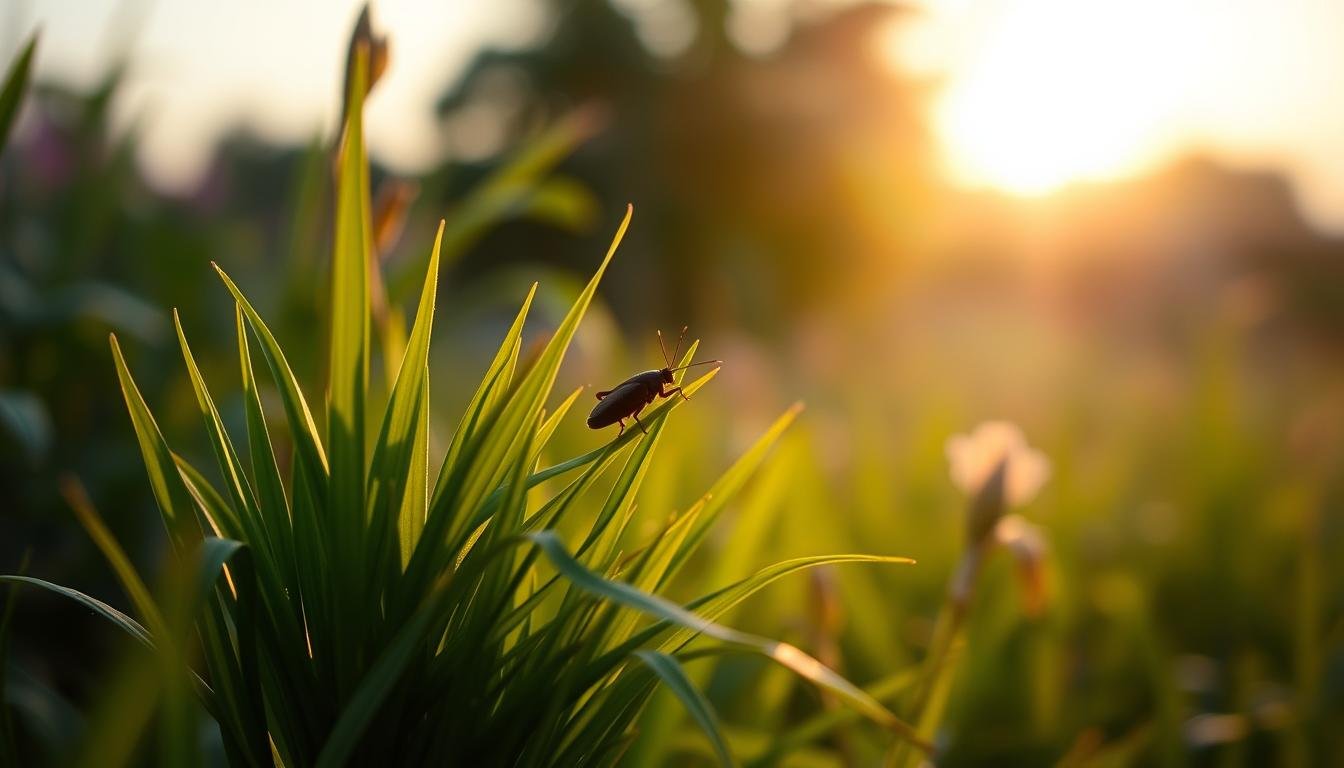
Ever notice how those chirpy backyard bugs go silent right before a storm? Turns out, your garden’s six-legged musicians aren’t just making noise—they’re basically tiny weather stations with legs. I once spent a summer counting their click-clack concerts to predict rain, and let me tell you, they’re more reliable than my weather app.
Male crickets rub their wings like violinists to create that iconic sound, but here’s the kicker: they speed up when it’s warm. Count their chirps for 15 seconds, add 40, and boom—you’ve got the temperature! My neighbor’s kid tried it last week and nailed 72°F (the actual temp was 74). Not bad for a bug with a brain smaller than a sesame seed.
These jumpy insects have 900+ species worldwide, but the ones in your flowerbed? They’re rockstars of adaptation. I’ve watched them survive downpours by hiding under leaves and outsmart hungry birds by freezing mid-hop. Next time you hear their evening symphony, listen closely—they’re not just singing, they’re teaching basic meteorology.
Understanding the Chirping: How Male Crickets Communicate
Have you ever wondered how those nighttime serenades actually work? Male insects use their bodies like built-in instruments—they’re the rockstars of the bug world. Their secret? A process called stridulation, where they scrape textured wings together like a washboard and spoon. I’ve watched them under a magnifier, and trust me, it’s more precise than my middle school garage band ever was.
Sound Mechanics and Wing Structure
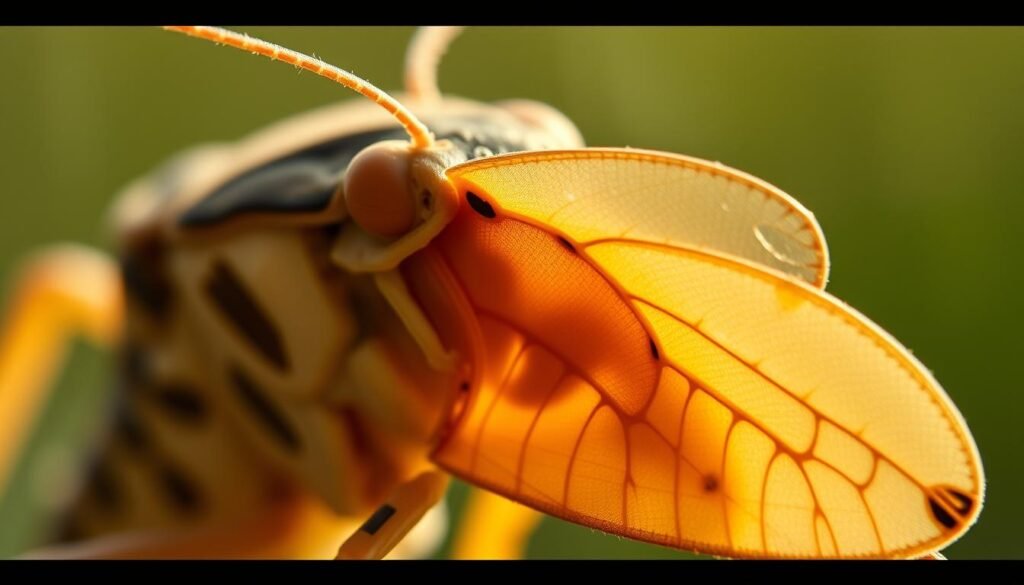
One wing sports a jagged “file,” while the other has a hardened edge. When rubbed together, they create vibrations that amplify through hollow wing chambers. It’s not random noise—it’s an engineered click-clack symphony. Fun fact: their ears are located on their knees, letting them fine-tune their performances like tiny audiophiles.
Temperature (°F)
Chirps per 15 Seconds
Total Chirps (per minute)
60
20
80
70
30
120
80
40
160
Temperature’s Role in Chirp Rates
Warmer air = faster wing action. Count chirps for 15 seconds, add 40, and voilà—you’ve got the temperature. Last summer, I tested this with my niece: 28 chirps meant 68°F (actual: 67°). Not bad for a bug that weighs less than a paperclip! Their rhythm isn’t just music—it’s a live weather report you can decode from your porch.
Decoding the Cricket Life Cycle and Diet
Let me take you on a backyard safari through a cricket’s world. Picture this: a tiny egg buried in soil becomes a full-grown jumper in just weeks. Last summer, I tracked a batch of eggs near my compost pile—what unfolded was nature’s version of a speedrun.
From Eggs to Adults: A Real-Time Process
Females lay up to 200 eggs at once—like hiding confetti that hatches into confetti-sized nymphs. These babies molt eight times, shedding exoskeletons like ill-fitting sweaters. By week six, they’re adults with wings and that signature chirp. My niece once mistook a molted shell for a ghost bug—proof that reality beats cartoons.
Omnivorous Habits and Garden Encounters
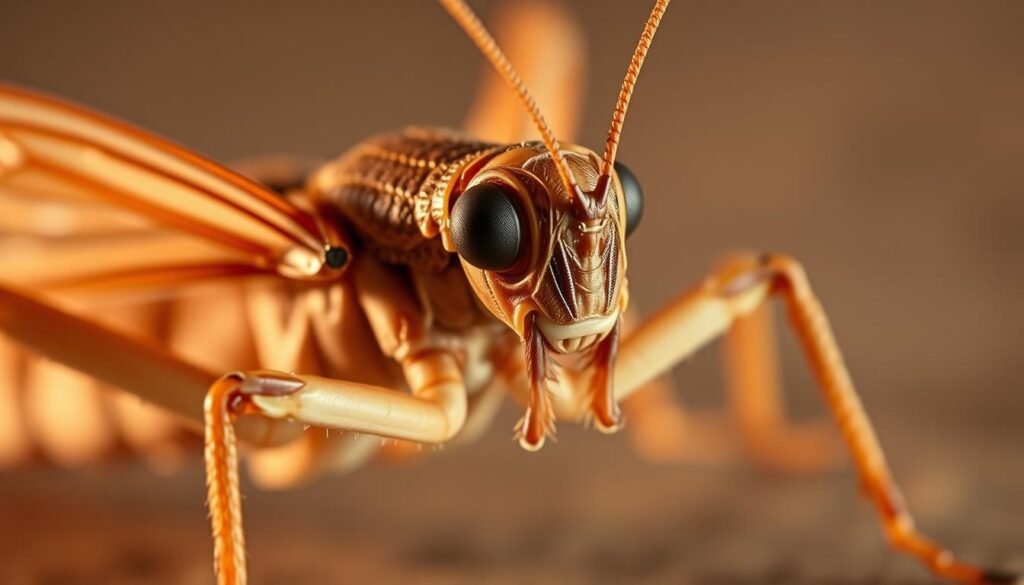
These insects aren’t picky eaters. They’ll munch decaying leaves, fungus, or even a dead aphid buffet. I’ve seen them nibble strawberry scraps in my garden, legs poised to bolt like soccer players avoiding tackles. Their secret? Front teeth for plants and powerful jaws for protein—a combo that keeps them thriving through seasons.
Watch them next time you’re outside. That darting movement? Pure survival instinct. Their lifecycle—from egg to adult in under a year—is a masterclass in adaptation. And if you spot one mid-meal, remember: they’re not just pests. They’re nature’s cleanup crew with serious hustle.
Cricket Facts for Kids: Fun Insights and Surprising Details
Ever wondered why cricket concerts only feature male performers? Grab a magnifying glass—we’re diving into nature’s most lopsided boy band. Spoiler: females don’t even have the equipment to join the show.
Male vs. Female: Who’s the Real Chirper?
Males sport ridged wings with 300+ microscopic teeth—like carrying a built-in guitar pick. Rub those bad boys at 2,000 scrapes per minute, and you’ve got 90-decibel love songs. Females? Smooth-winged silent types scanning for Mr. Right’s greatest hits.
Here’s the kicker: that chirp-chirp-chirp isn’t random noise. It’s a structured serenade with verses and choruses. I’ve timed their performances—they repeat patterns like pop songs, adjusting tempo based on competition. Last summer, two males near my porch battled for three hours straight. Talk about dedication.
Feature
Male
Female
Wing Texture
Ridged
Smooth
Chirping Ability
Yes
No
Ovipositor
Absent
Present
Size
Smaller
Larger
We humans hear their racket as background noise, but females detect nuances we’d need lab gear to notice. Their knee-mounted ears (yes, knees!) filter out everything but prime suitors. Next time you’re annoyed by their nighttime gigs, remember: you’re eavesdropping on insect speed dating.
Why evolve this way? Simple math: energy conservation. Females save calories for laying 200+ eggs, while males invest in flashy shows. It’s the ultimate trade-off—be the rockstar or the responsible one. Personally, I’d pick front-row tickets to their tiny mosh pits any day.
Crickets in Culture: Pets, Pests, and Prophecies
Let’s flip the script on these backyard performers. While you’re busy swatting them away, entire civilizations have turned six-legged musicians into cultural icons. I once bought a bamboo cricket cage in Beijing’s antique market—turns out people have been keeping these bugs as living good luck charms for 1,000+ years.
Symbolism in Asian and Western Traditions
In China’s Tang Dynasty, nobles carried pet crickets in jeweled boxes to attract fortune. Modern Tokyo shops still sell premium specimens with perfect-pitch chirps. Meanwhile, European pubs adopted them as unofficial mascots—when jokes bombed, patrons would shout “crickets!” to mock the silence.
Unexpected Roles in Pop Culture
Hollywood sound designers use their legs for otherworldly effects—the metallic skitter in “Star Trek” alien scenes? Pure cricket magic. Competitive fighting events in Thailand pit champion jumpers against each other, with bets reaching $10k. Yet my favorite crossover? French artist Hubert Duprat glued gold leaf to live specimens for a 1980s art exhibit.
Next time you hear that familiar chirp, remember: you’re not just hearing a bug. You’re witnessing a cross-cultural icon that’s outlived empires—no PR team required.
A Final Look at the Cricket World
There’s something magical about decoding nature’s hidden rhythms through six-legged meteorologists. Those ears located on knees aren’t just biological quirks—they’re evolutionary masterstrokes helping species survive another year. Last summer, I tracked a group through their entire life period, from eggs buried like secret codes to adults conducting temperature-sensitive symphonies.
Even in their final days, these insects keep teaching. Their chirping noise changes slightly as temperature drops—a real-time lesson in energy conservation. I once watched a fading soloist adjust his rhythm to match cooler evenings, his sound growing sparse but precise.
Humans could learn from their silent team dynamics. While males compete acoustically, females coordinate egg placements that sustain future generations. It’s all connected—the crickets in your yard right now are tuning forks for ecosystem health.
Next time you hear that familiar scraping noise, freeze mid-step. That’s not just a bug. It’s a reminder that nature’s most profound teachers often come knee-high and wing-powered.