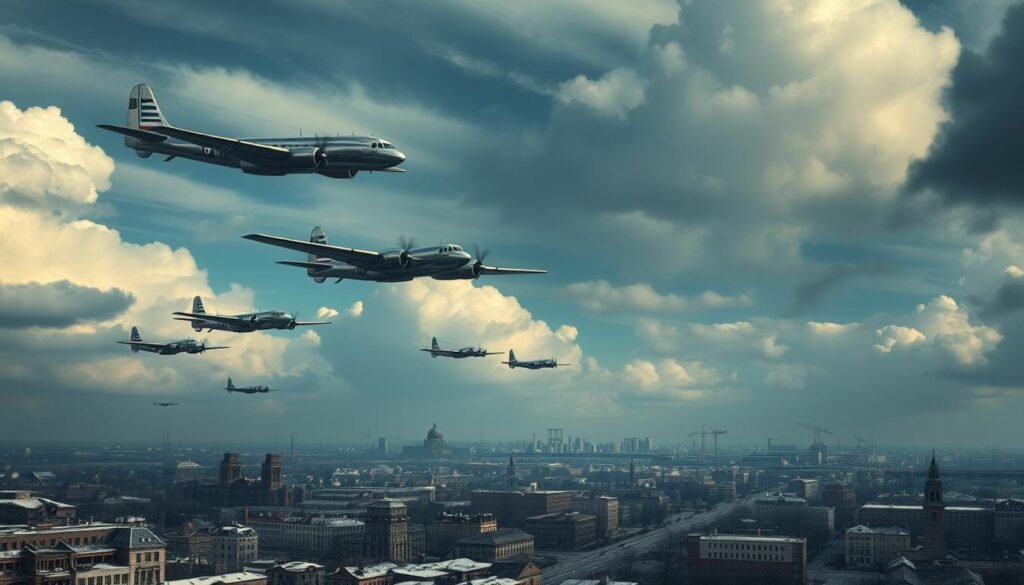
Picture this: after World War II ended, Berlin became a real-life game board. The Soviet Union and United States split the city like pizza slices, each claiming a zone. But here’s the kicker—when the Soviets suddenly blocked all roads and trains in 1948, 2 million Berliners were trapped without food or fuel. Cue the Berlin Airlift, where Western pilots flew over 200,000 missions to drop 2 million tons of supplies. Talk about a wild delivery gig!
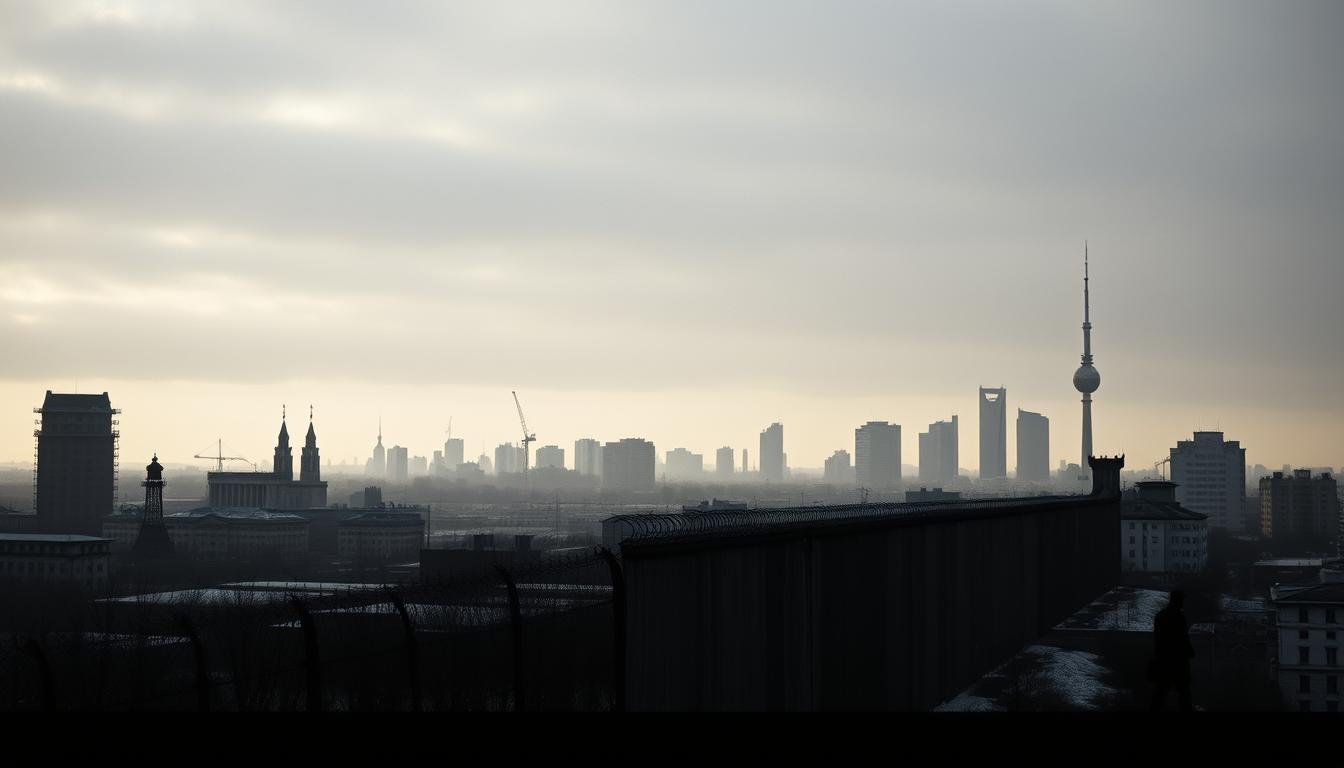
Now, imagine waking up one morning to find your city divided by barbed wire—and later, a concrete monster called the Berlin Wall. That’s exactly what happened in 1961. Families were split, spies swapped secrets faster than TikTok trends, and everyone feared nuclear weapons might rain down. The tension? Thicker than a milkshake at a 1950s diner.
Here’s a fun fact: during the airlift, U.S. pilots tossed candy parachutes to kids below. They called it “Operation Little Vittles”—because even in chaos, someone remembered to sweeten the deal. This wasn’t just about politics; it was a battle of ideas. Capitalism vs. communism, rock ‘n’ roll vs. red flags, and soda machines vs.… well, gray concrete.
Stick around, and I’ll show you how this silent showdown shaped everything from space races to school drills. Trust me, history’s never been this sneaky—or this packed with drama.
Understanding the Cold War Landscape
Let’s crack open this geopolitical puzzle like a piñata. The Soviet Union and United States weren’t just rivals—they were master chess players using entire countries as pawns. Want proof? Look no further than Berlin’s skies in 1948.
Behind the Berlin Airlift and Blockade
When Stalin slammed shut all land routes to West Berlin, Western allies turned runways into breadlines. For 11 months, planes landed every 90 seconds, delivering everything from coal to condensed milk. By May 1949, they’d flown 2.3 million tons—enough to stack 13 Eiffel Towers!
Here’s the kicker: Soviet leaders thought hunger would make Berlin surrender. Instead, they got a flying grocery store that became PR gold for democracy. Talk about a backfire!
Proxy Wars in Korea and Vietnam with Real Examples
Now let’s hopscotch to Asia. In Korea (1950-53), the United States and Soviet Union fought through local armies like puppet masters. The 38th parallel became ground zero for testing whose system worked better—capitalist Seoul vs communist Pyongyang.
Conflict
US Strategy
Soviet Response
Outcome
Korean War
UN-backed defense
Chinese troops entered
Stalemate at DMZ
Vietnam War
Domino theory
Ho Chi Minh Trail
Communist victory
Vietnam was messier. The United States poured $168 billion (that’s $1 trillion today!) into stopping communism, only to retreat in 1975. Lesson? When superpowers play Risk with real lives, everyone loses.
Cold War Facts for Kids: Espionage and Unspoken Tensions
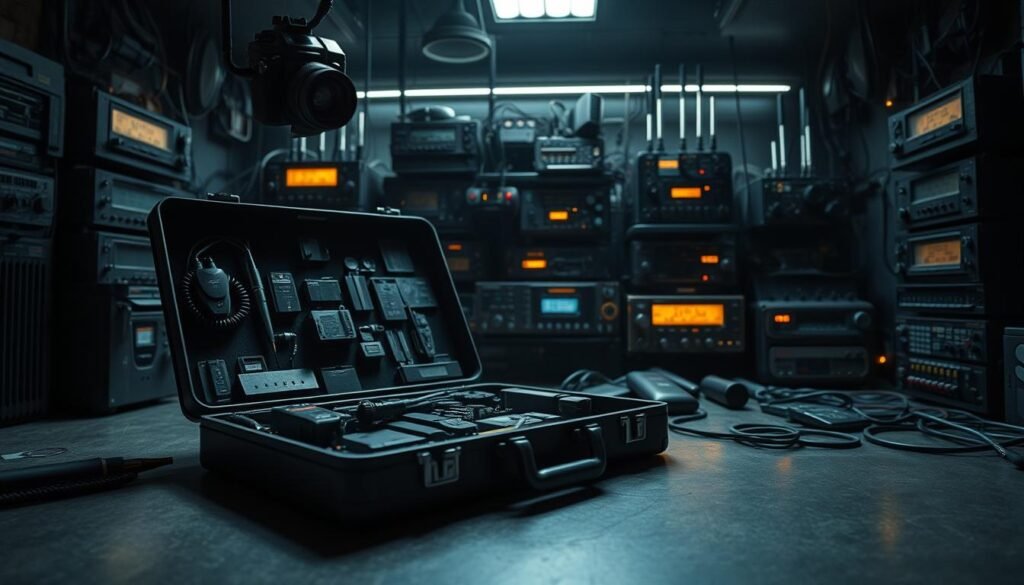
Imagine swapping your school lunchbox for a briefcase of secrets. That’s how spies rolled during this shadowy period. While leaders argued publicly, undercover agents swapped intelligence like baseball cards—except these trades could trigger global catastrophes.
Spy Tactics That Shaped History
Take Klaus Fuchs—a physicist who helped build America’s first atomic bomb while feeding nuclear weapons blueprints to the Soviet Union. His leaks gave Stalin’s scientists a 2-year head start. Talk about a double agent with terrible timing!
The 1950s became a golden age for gadget geeks. CIA engineers crafted poison-tipped umbrellas, while KGB spies hid cameras in cigarette cases. One Moscow embassy bug stayed hidden inside a carved wooden seal for seven years—proof that patience beats tech every time.
The Role of Secret Government Moves
Behind closed doors, the United States and Soviet Union played 4D chess. When U-2 spy planes snapped missile sites in Cuba during the missile crisis, those photos didn’t just avert war—they reshaped how allies gathered intel forever.
Here’s what school textbooks miss: real spies weren’t all James Bond types. Many were clerks, scientists, or even kids’ soccer coaches. Their stories remind us that history isn’t just about big events—it’s about people making wild choices under insane pressure.
Dissecting Big Political Moves and Rivalries
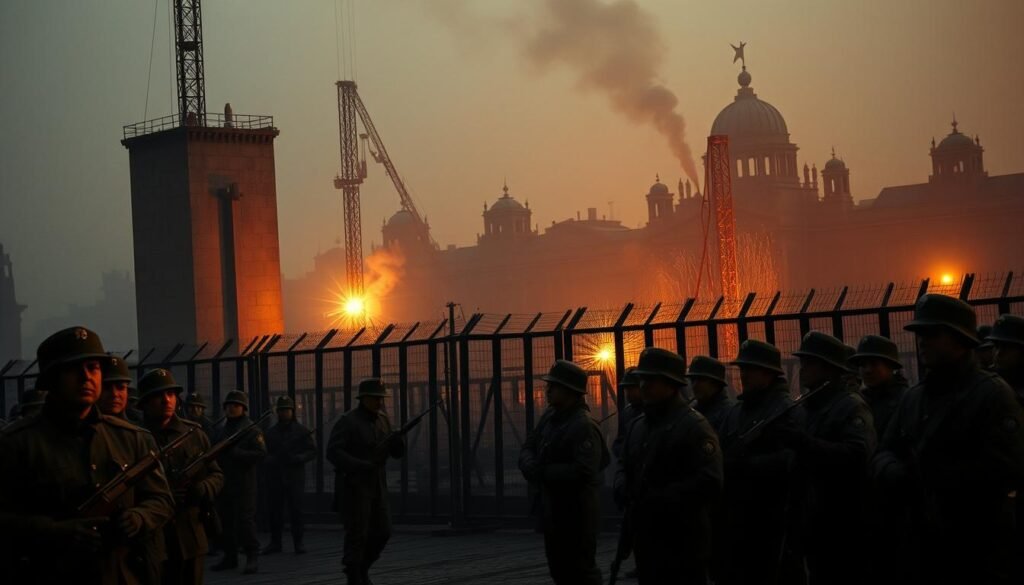
Let me show you how concrete became history’s most brutal bookmark. On August 13, 1961, East German troops unrolled barbed wire through Berlin’s heart—later replaced by a 12-foot-tall concrete monster. This wasn’t just a wall; it was a government-sanctioned divorce between neighborhoods, families, and worldviews.
The Rise and Fall of the Berlin Wall
West Berlin glowed with neon signs and jazz clubs, while the East rationed electricity under communism. The Soviet Union called it an “anti-fascist barrier,” but escape attempts told another story. Over 28 years, at least 140 people died trying to cross—some using hot air balloons made from bedsheets.
Checkpoint Charlie became the ultimate showdown spot. In 1961, United States and Soviet tanks faced off here for 16 hours, engines running. One wrong move could’ve sparked actual war—but both sides blinked.
East Berliners needed permits to visit relatives 3 blocks away
Western allies air-dropped propaganda leaflets over the wall
Stasi spies bugged 1 in 7 East German homes
When the wall finally fell in 1989, it wasn’t missiles that toppled it—it was people with hammers and hope. Chunks of graffiti-covered concrete now sit in museums worldwide, reminding us how quickly countries can rewrite their borders.
The Nuclear Arms and Space Race Conundrum
Buckle up—we’re diving into the ultimate showdown where mushroom clouds met moon rockets. The United States and Soviet Union weren’t just building bombs; they were playing 3D chess with humanity’s fate. Let’s unpack how these dueling superpowers turned science fiction into terrifying reality.
Atomic Tests and the H-Bomb Era
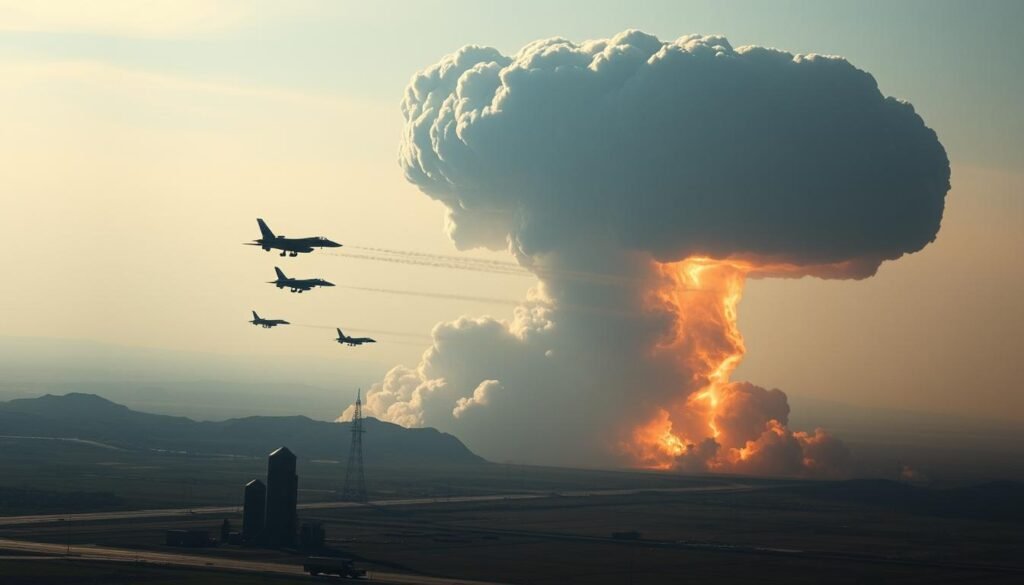
November 1, 1952: A fireball brighter than 500 suns erupts over the Pacific. The United States just detonated Ivy Mike—the first hydrogen bomb. This 10-megaton monster could’ve wiped out Manhattan in seconds. Not to be outdone, the Soviet Union tested their H-bomb within 18 months, proving they could match America’s worst ideas.
Here’s the twist: these tests weren’t just about power—they were PR stunts. Each explosion sent a clear message: “Our science is bigger than yours.” By 1961, over 2,000 nuclear tests had rattled the planet. The Tsar Bomba alone released energy equal to 3,800 Hiroshima bombs. Talk about overcompensating!
NASA vs. Sputnik: A Race Beyond Earth
October 4, 1957: A metallic beep from space shocks America. The Soviet Union’s Sputnik satellite just won the orbital lottery. Panicked U.S. scientists scrambled like kids who forgot their science fair project. Their answer? NASA—born in 1958 to turn space dreams into reality.
Sputnik weighed 184 lbs—the size of a fridge
First U.S. satellite? A humiliating 4 lbs (it failed)
Kennedy’s 1961 moon speech: “We choose to go… not because it is easy, but because it is hard”
The space race became the ultimate reality show. Soviet cosmonauts scored firsts like orbital flights and spacewalks. But America’s 1969 moon landing? That’s the mic drop of Cold War rivalries—proving capitalism could literally reach higher.
Reflecting on the Cold War’s Legacy and Its Ongoing Impact…
Let’s zoom out—three decades after the Soviet Union dissolved, its ghost still haunts global politics. I’ve lost count of how often today’s NATO meetings replay 1980s playbooks when dealing with modern Russia. Those old spy tactics? They’ve evolved into cyber warfare manuals faster than you can say “proxy conflict.”
Take Ukraine’s current borders—drawn during Soviet times—or America’s military bases in Germany. These aren’t ancient history; they’re live wires in today’s diplomatic fuse boxes. When I visited Berlin last fall, leftover wall chunks felt less like museum pieces and more like warning labels: “Handle ideologies carefully.”
Here’s what keeps me up: we’ve swapped H-bomb tests for AI arms races, but the United States and post-Soviet states still dance that tense tango of distrust. Those 1950s nuclear drills taught us panic—but did we learn prevention?
The real legacy? History’s chessboard never reset. Every time I see leaders invoke “containment” strategies or citizens debate privacy vs security, I wonder—are we replaying the Cold War’s greatest hits with new instruments? You tell me.