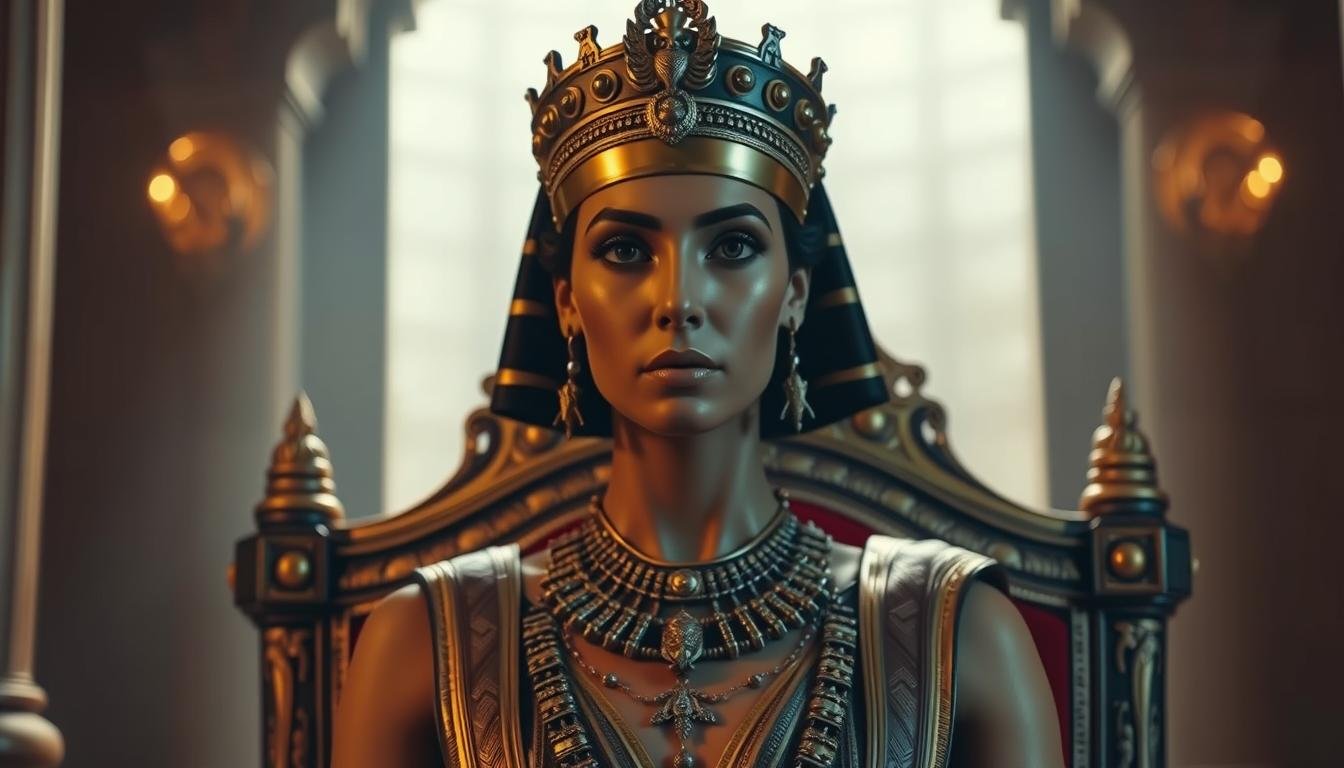
What if I told you one of history’s most legendary leaders never swung a sword or won a battle through brute force? Meet the Egyptian ruler who outsmarted empires with wit, languages, and a flair for drama. She didn’t need armor—she had a brain sharper than a pyramid’s edge.
Picture this: a teenage queen rolling herself into a carpet (yes, a *carpet*) to sneak past enemies and negotiate with Rome’s most powerful general. That’s Cleopatra VII for you—a master of “plot twists before Netflix existed.” While her family squabbled over thrones, she studied chemistry, spoke nine languages, and charmed allies like Julius Caesar. No swords. No armies. Just pure strategy.
Here’s the kicker: she became pharaoh at 18, ruled during civil wars, and kept Egypt independent while empires crumbled. How? By forging alliances smarter than a chess grandmaster. Her secret? Treating politics like a high-stakes game where brains beat brawn every time. Think of her as the original master of “work smarter, not harder.”
Oh, and forget the “evil seductress” myths. This queen used her education and charisma to protect her people—not just her power. From rewriting tax laws to inventing new trade routes, she made Egypt thrive while her siblings… well, let’s just say they didn’t get invited to her victory parties.
Unmasking Cleopatra’s Origins
Ever wonder how a Greek teenager ended up ruling ancient Egypt? Let’s peel back the layers. Her story starts with a family tree that’s part warrior kings, part political soap opera.
Greek Roots and Egyptian Realities
Here’s the twist: our famous queen wasn’t Egyptian by blood. Her father Ptolemy XII Auletes traced his lineage straight back to one of Alexander the Great’s generals. Imagine growing up speaking Greek in an Egyptian palace, surrounded by hieroglyphics you couldn’t read. Most of her family couldn’t be bothered to learn the local language. But she did—fluently. Talk about reading the room!
The Ptolemies ruled Egypt for 300 years like distant landlords. They kept Greek traditions but slapped Egyptian gods on their coins to keep locals happy. Cleopatra? She went all-in. Became the first ruler in her dynasty to actually speak Egyptian. Smart move when your family’s power depends on keeping both cultures from revolting.
Family Drama and Ptolemic Power Shifts
Now, about that family drama. When XII Auletes died, he left the throne to 18-year-old Cleopatra and her 10-year-old brother Ptolemy XIII. Yeah, that went about as well as you’d expect. Picture this: a teenager and a kid “co-ruling” while Rome breathes down their necks. Within months, advisors kicked her out, backing her brother instead.
But here’s the kicker: she didn’t just pack her bags. She raised an army in Syria, then rolled up in a carpet (literally) to charm Julius Caesar into helping. This wasn’t just sibling rivalry—it was ancient Game of Thrones, complete with betrayals and secret alliances. All while keeping Egypt independent in a world where bigger empires kept collapsing.
Cleopatra’s Political Tactics and Real-World Moves
How do you outplay empires without throwing a single punch? Let me show you how alliances and audacity kept Egypt standing while others fell. This queen turned political chess into pure theater—no swords required.
Strategic Alliances with Rome
Imagine playing both sides of a civil war—and winning. That’s exactly what happened when Julius Caesar landed in Alexandria. While her brother’s advisors bet on Pompey, she backed Caesar. Smart move. After his victory, Egypt became Rome’s favorite trading partner overnight.
Fast-forward 15 years: she repeats the playbook with Mark Antony. Their partnership wasn’t just romantic—it was strategic genius. Together, they controlled grain supplies and military routes. I’d call it the ultimate power couple move.
The Carpet Entrance and Other Bold Stunts
Picture this: 21-year-old ruler wrapped in a rug, rolling into Caesar’s war room. No invitation? No problem. While other rulers sent formal letters, she became the letter. That carpet moment wasn’t just drama—it reshaped Mediterranean politics.
Later, she sailed into Tarsus dressed as Aphrodite. Antony thought he was meeting a politician. He got a goddess instead. Talk about making an entrance!
Administering a Kingdom in Crisis
While Rome burned with war, she rebuilt Egypt’s economy. How? Tax breaks for farmers. New trade deals with India. Even invented her own currency system. Most leaders panic during crises. She upgraded the rulebook.
Tactic
Roman Rival
Outcome
Carpet Diplomacy
Julius Caesar
Regained throne
Divine Appearance
Mark Antony
Military alliance
Grain Control
Roman Senate
Economic leverage
Here’s the kicker: she navigated three roman empire power shifts without losing her crown. While others fought battle after battle, she rewrote the rules. Turns out, the best weapons are wit and a killer poker face.
Cleopatra Facts for Kids: A Deep Look at a Complex Monarch
Think ruling a kingdom for over two decades sounds glamorous? Let’s unpack the 21-year reign where brains met backbone. This wasn’t just about wearing fancy headdresses—it was chess with real armies, siblings, and Rome’s hungry empire watching.
Merging Intellectual Brilliance with Tactical Action
She spoke nine languages but knew words alone wouldn’t save Egypt. When her younger brother Ptolemy XIII kicked her out at 22, she didn’t sulk. She recruited mercenaries in Syria, then rolled into Caesar’s camp hidden in a rug. Talk about multitasking!
Her comeback? Pure strategy. While others fought, she reworked tax codes to help farmers. Invented trade deals with Arabia. Even during famine, her people ate because she stockpiled grain like a pantry prepper. Smart? More like genius-level foresight.
Unforgettable Courtroom and Battlefield Moments
Picture her brother’s advisors drowning in the Nile after losing a battle. Brutal? Yes. Effective? Absolutely. She didn’t start fights but finished them—permanently.
Then there’s Actium. Facing Rome’s navy, she sailed warships coated in flammable paste. When flames engulfed enemy ships, her escape route became legend. Loss? Maybe. PR win? Definitely.
Tactic
Opponent
Outcome
Rug Diplomacy
Ptolemy XIII
Throne regained
Grain Reserves
Famine
People loyal
Flaming Fleet
Octavian
Escape secured
Her children? Three survived her death, raised in Rome under watch. But her legacy? Still teaching rulers that sometimes, the sharpest weapon is a sharper mind.
Rulers, Rivals, and Family Backstabbing
Royal families today have nothing on this crew. Imagine your siblings trying to literally bury you alive. That’s not hyperbole—it’s Tuesday in the Ptolemaic dynasty. Let’s unpack how blood ties meant less than a sandcastle in a tsunami.
When Family Meetings Turned Deadly
Her sister Arsinoe? Executed. Brother-husband Ptolemy XIV? “Mysteriously” poisoned. Even her cleopatra father set the tone by exiling her sister Berenice. This wasn’t just drama—it was survival mode. Ancient texts use phrases like “removed from power” like we’d say “took out the trash.”
Generals weren’t bystanders. They picked sides like gamblers at a chariot race. When 15-year-old Ptolemy XIV tried seizing power, commanders “helped” him vanish. Coincidence? Please. The ruled egypt playbook demanded ruthless edits to the family tree.
Player
Move
Outcome
Arsinoe (sister)
Rebelled with Roman allies
Public execution
Ptolemy XIV (brother)
Attempted coup
Disappeared at 14
Antony & Cleopatra
Alliance against Octavian
Lost empire, kept legacy
Here’s the kicker: the antony cleopatra partnership wasn’t just romance. It was a chess move against her own family. While siblings fought for scraps, she leveraged Rome’s power to lock her throne. Turns out, marrying your brother doesn’t guarantee loyalty—but outsmarting generals does.
Modern historians still debate: was her sister’s death revenge or strategy? Either way, the language of betrayal here reads like a thriller. Ancient scrolls whisper about “accidents” and “sudden illnesses.” Translation: someone’s wine got spiked.
Final Reflections on a Queen Who Redefined Power
History remembers rulers by their battles, but true power often whispers through centuries. Cleopatra’s throne wasn’t just a seat—it became a stage where intellect outshone swords. Her son Caesarion might’ve inherited her crown, but her real legacy? Sparking debates that rage in scholarly articles four hundred years later.
The problems she faced—Roman invasions, sibling betrayals—feel ripped from today’s headlines. Yet she turned crises into chess moves, worshipped as a goddess while negotiating like a CEO. Modern leaders could learn from her playbook: solve the puzzle, don’t smash it.
Here’s what gets me: we’re still decoding her story in everyday language. Was she a brilliant strategist or a divine figure? Both. And that’s why she rules our imagination, proving sharp minds shape the world long after their time. Next time you read about Cleopatra, remember—the best history lessons come with a wink.