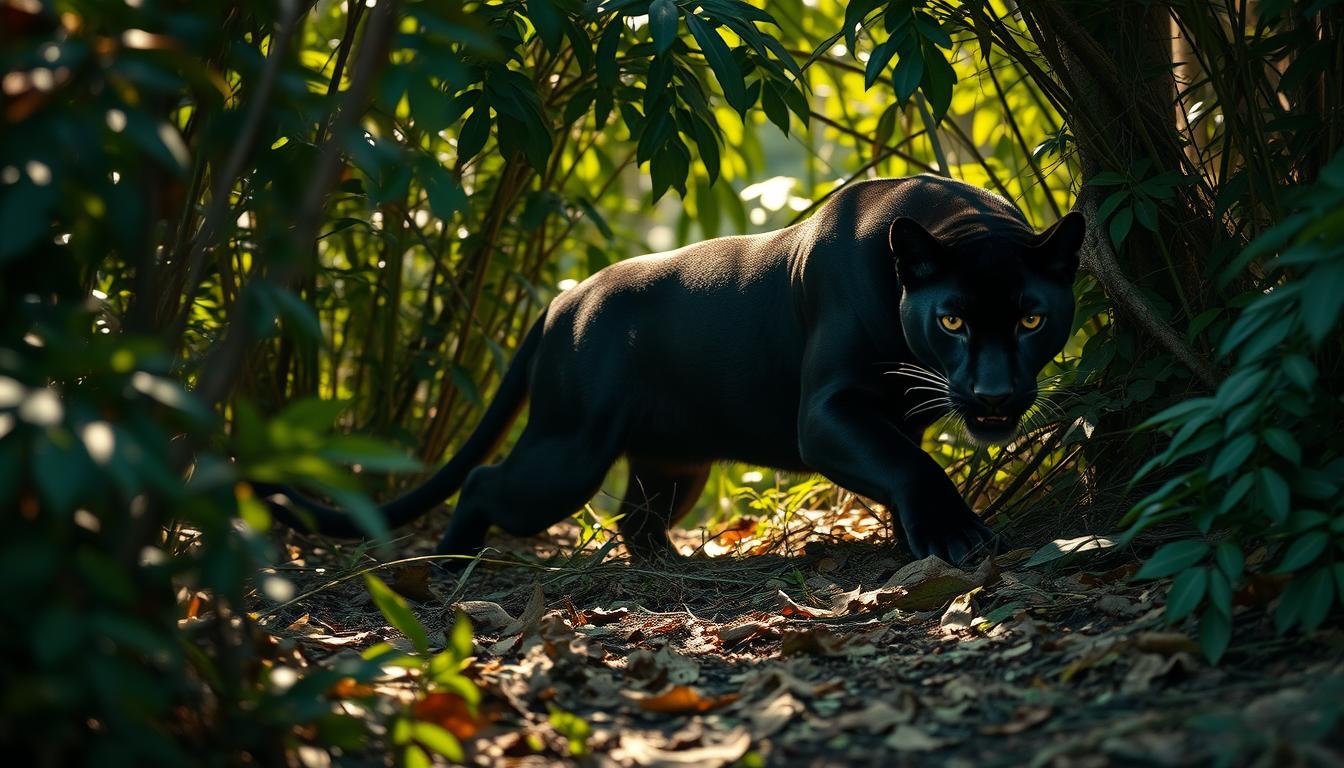
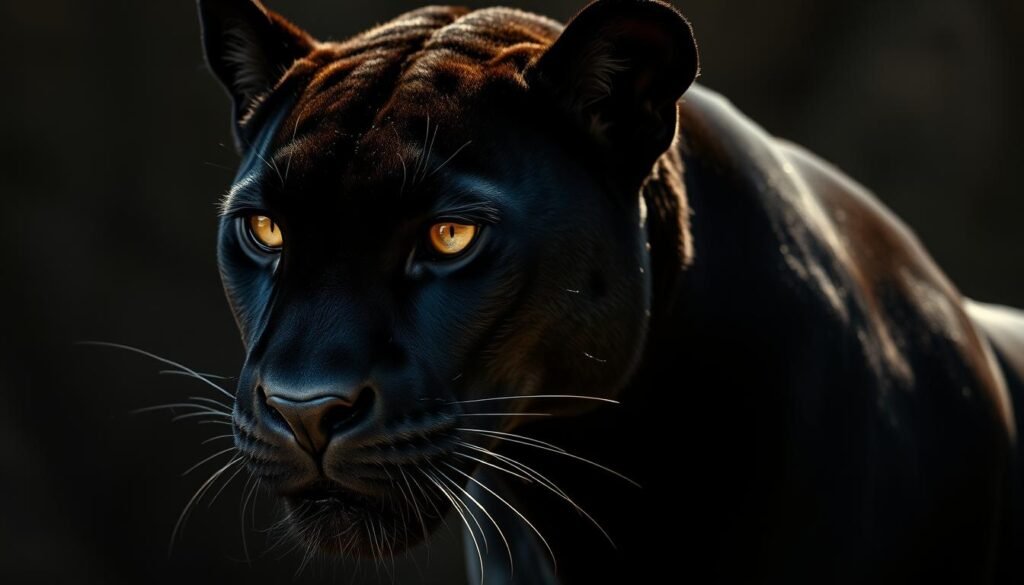
Let me spill the secret: black panthers aren’t their own species—they’re basically leopards or jaguars rocking a midnight-black wardrobe. That shadowy fur? It’s called melanism, a genetic twist that turns their coats darker than your bedroom at 3 a.m. (and hides their spots like nature’s invisibility cloak).
These cats are the coolest ninjas in the animal kingdom. Imagine having built-in night vision goggles and jaws strong enough to crack turtle shells—that’s a real superpower. Scientists say only 6% of leopards and jaguars get this rare fur upgrade, making them the ultimate rare edition collectibles of the forest.
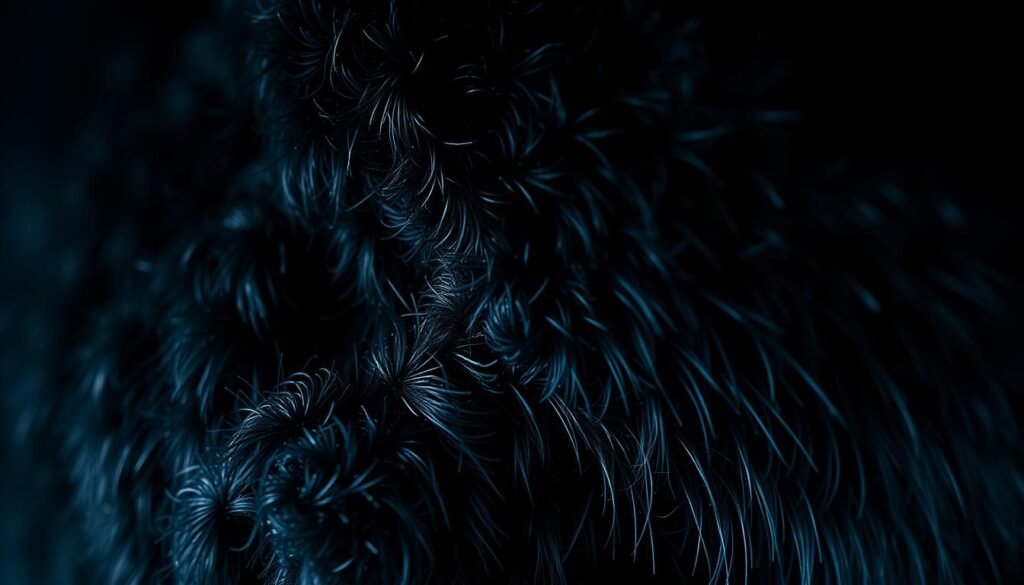
Here’s the kicker: their “black” fur isn’t actually solid. Shine a light on it, and you’ll see ghostly rosette patterns lurking underneath—like secret messages only flashlights can decode. Talk about a party trick!
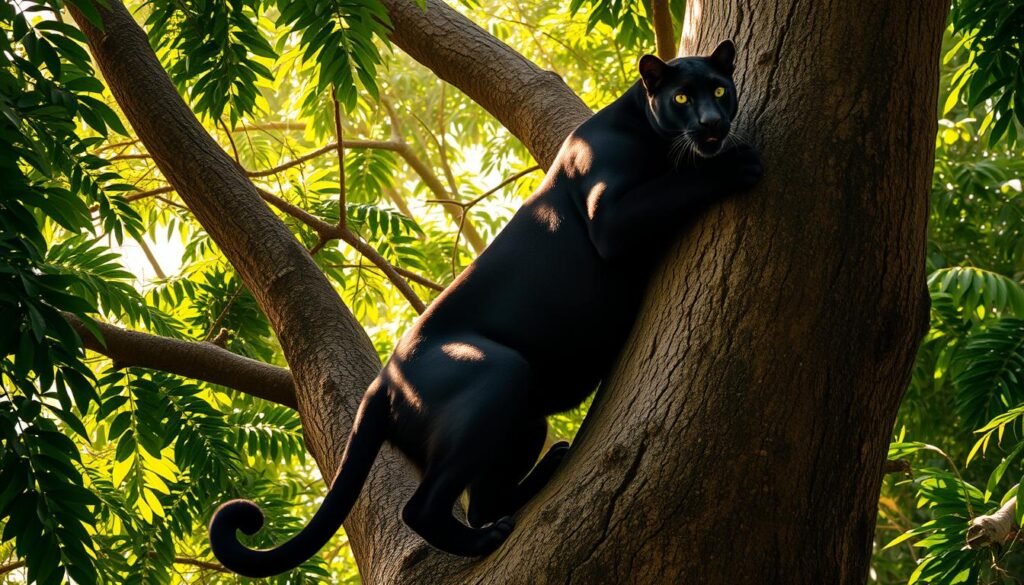
Want to know why they’re apex predators? They don’t just climb trees—they practically own them. One second they’re lounging on a branch, the next they’re dropping 20 feet to ambush dinner. And no, they don’t sparkle in sunlight—but their stealth skills? Straight-up legendary.
Unmasking the Jungle Stealth: Panther Traits Up Close
Here’s something wild: that sleek midnight coat isn’t just for looks—it’s a genetic hack. Picture melanism like a secret code in their DNA, flipping regular fur into shadow mode. Only 6% of these big cats get this upgrade, making them rarer than finding a four-leaf clover in Times Square.
Melanism Explained with Real Examples
Think of it like inheriting your grandma’s cookie recipe—except here, jaguars pass down a dominant gene for dark fur. If a black panther has cubs, they might come out spotted or shadowy. Scientists spotted a litter in Costa Rica where one cub looked like burnt toast while its sibling had classic jaguar spots. Genetics: nature’s ultimate surprise box.
How Spots Stay Hidden Behind Dark Fur
Shine a flashlight on their coat, and boom—ghostly rosettes appear like invisible ink under UV light. That’s why daytime photos of these animals often reveal hidden patterns. Their dark fur acts like a ninja outfit, blending into dim forests so well you’d walk right past them. It’s evolution’s version of a magic trick—now you see spots, now you don’t.
This stealth superpower isn’t just cool—it’s survival. In Amazon studies, melanistic cats ambushed prey 30% more successfully at dusk. Their shadowy disguise? Basically nature’s cheat code for becoming apex predators.
Black Panther Facts for Kids: A Walk Through Genetics and Behavior
Let’s play genetic detective! That shadowy coat isn’t random—it’s coded in their DNA like a secret recipe. Here’s the scoop: jaguars and leopards follow different genetic rules. For jaguars, melanism is dominant, meaning even one parent with dark fur can produce shadowy cubs. Leopards? Their melanism is recessive—both parents need to pass the gene for a cub to rock the midnight look.
Imagine two spotted jaguars having cubs. Their litter will always wear spots—like getting vanilla ice cream every time. But if one parent’s melanistic? Suddenly, you’ve got a 50/50 chance of shadowy cubs. Scientists in Costa Rica once found a black jaguar mom with three spotted cubs and one dark-furred sibling. Nature’s wildest fashion designer, right?
Species
Gene Type
Cub Possibilities
Fun Fact
Jaguars
Dominant
Mixed litters
One parent can pass dark fur
Leopards
Recessive
All-or-nothing
Both parents must carry the gene
This genetic lottery impacts behavior too. Dark-coated jaguars often hunt at dusk, their fur blending into shadows. In Malaysia, researchers noticed melanistic leopards climbing trees 40% more often than spotted ones—maybe their “stealth mode” gives extra confidence? Crazy, right? Next time you see a photo of these cats, remember: their fur’s not just cool—it’s a survival superpower written in genes.
Behavioral Quirks and Habitat Happenings in the Wild
Picture this: A shadowy figure rockets up a tree trunk faster than you can say “ninja cat,” then freezes mid-branch like a living statue. Black panthers treat forests like their personal obstacle courses, pulling off stunts that’d make Hollywood directors jealous. Let’s unpack their wildest moves.
Tree Climbing, Pouncing, and Tree Marking Explained
These cats don’t just climb trees—they own them. I’ve watched footage where a panther scales a 50-foot tree in seconds, then launches a 20-foot pounce onto unsuspecting prey below. That’s like jumping from a second-story window and sticking the landing every time!
Their secret? Razor-sharp claws grip bark like crampons, while muscular hind legs act as springs. Researchers in India clocked one individual making 18 vertical climbs in a single night—talk about a gym rat!
Territory marking gets creative too. They scratch tree trunks deep enough to leave permanent scars (nature’s “no vacancy” sign) and rub scent glands on branches. It’s like signing a yearbook, but way more hardcore.
Swimming and Night Vision: The Stealthy Arsenal
Here’s a plot twist: these cats love water. I once saw a melanistic jaguar swim across a river with the ease of an Olympic athlete—who knew cats liked pool days? Their webbed toes help paddle through currents while hunting caimans or fish.
After sunset, their eyes become biological night vision goggles. Photoreceptor cells called tapetum lucidum amplify light, letting them spot a deer’s twitch from 300 feet in near darkness. Scientists confirm their vision is six times sharper than ours at night—basically built-in predator NVGs.
From moonlit swims to aerial ambushes, every quirk serves survival. Next time you’re in panther territory, look up—you might miss them, but they’re definitely watching.
Signing Off with a Roar: Wrapping Up the Wild Insights
Ever wonder how nature’s shadow ninjas keep rewriting the rulebook? From genetic magic to moonlight acrobatics, black panthers flip every expectation we have about big cats. Their midnight coats aren’t just fashion statements—they’re survival tools sharper than a samurai’s sword.
Scientists still trip over new discoveries. One minute they’re tracking a “regular” leopard, the next they’re watching a melanistic sibling scale trees like Spider-Man. Talk about wild! These panthers don’t just own the night—they’ve hacked evolution to thrive in it.
Here’s the kicker: every litter reveals fresh mysteries. Why do some cubs inherit shadow fur while siblings stay spotted? How do they vanish mid-hunt, only to reappear 20 feet up a tree? It’s kinda epic how much we don’t know.
So next time you glimpse movement in the forests, pause. Could that shadow be a master predator rewriting nature’s code? Or maybe just the wind… but what if—