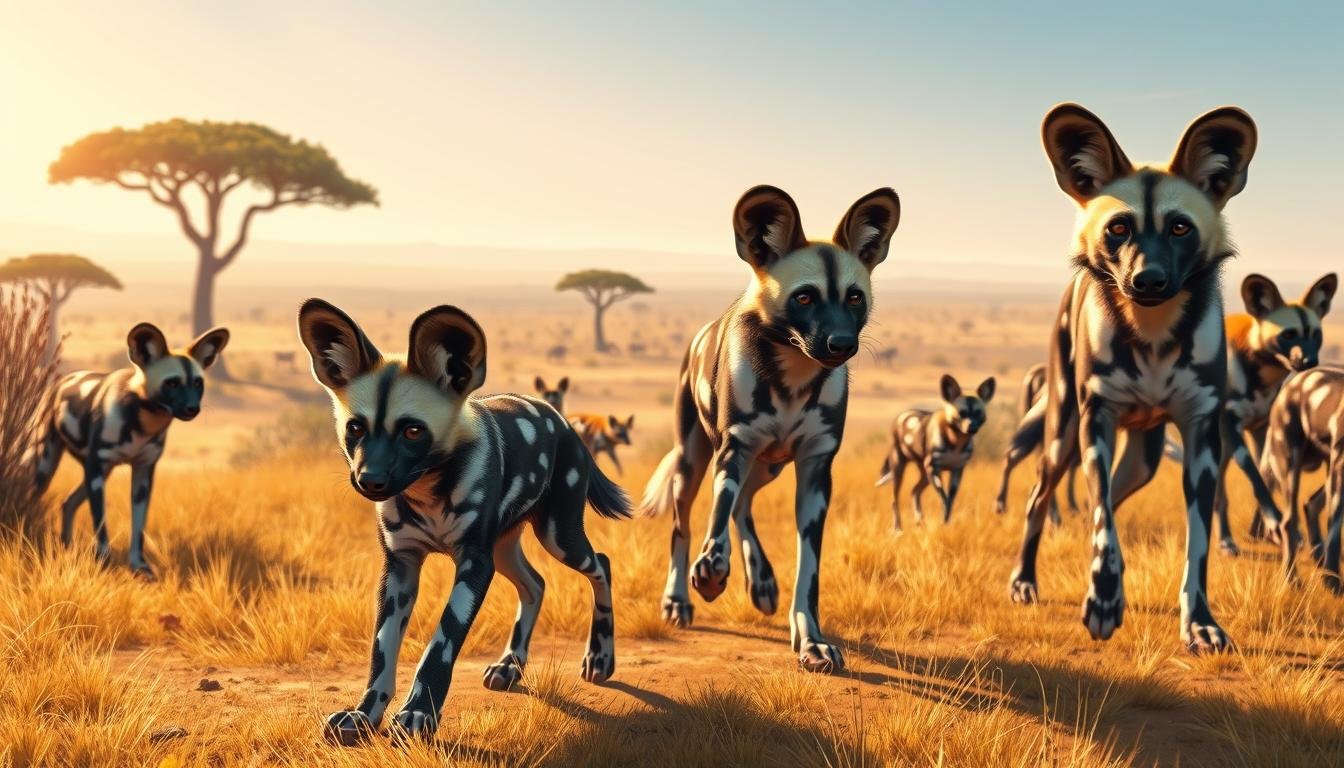
Let me tell you about Earth’s most underrated survival artists. These spotted dynamos – Lycaon pictus to science nerds – don’t just hunt. They vote on dinner plans through sneezes and share food like furry socialists. Talk about teamwork!
Imagine a dog designed by Jackson Pollock. Each animal’s coat splatters like fingerprint-confetti – no two patterns match. Their secret weapon? Four toes instead of five, missing those useless dewclaws your pet dog licks. Efficiency matters when you’re chasing impalas at 35 mph.
Here’s the kicker: these guys are the ultimate comeback kids. Only 6,500 remain across Africa, yet they still outhunt lions with brains over brawn. Males babysit pups while females lead hunts – gender roles? Not in this crew. Next time you see a “mutt” in documentaries, remember: that’s nature’s PhD in cooperation.
You’ll soon discover why their teeth could embarrass a hyena and how packs function like furry democracies. Spoiler: their playtime rituals involve more strategy than your last chess match. Ready to rethink everything you know about “wild dogs”? Let’s dive in.
Meet the African Wild Dog: Anatomy & Social Behavior
What if I told you these animals communicate better than some sports teams? Let’s break down their physical quirks and social playbook – it’s like discovering a secret animal superhero manual.
Built for Speed & Precision
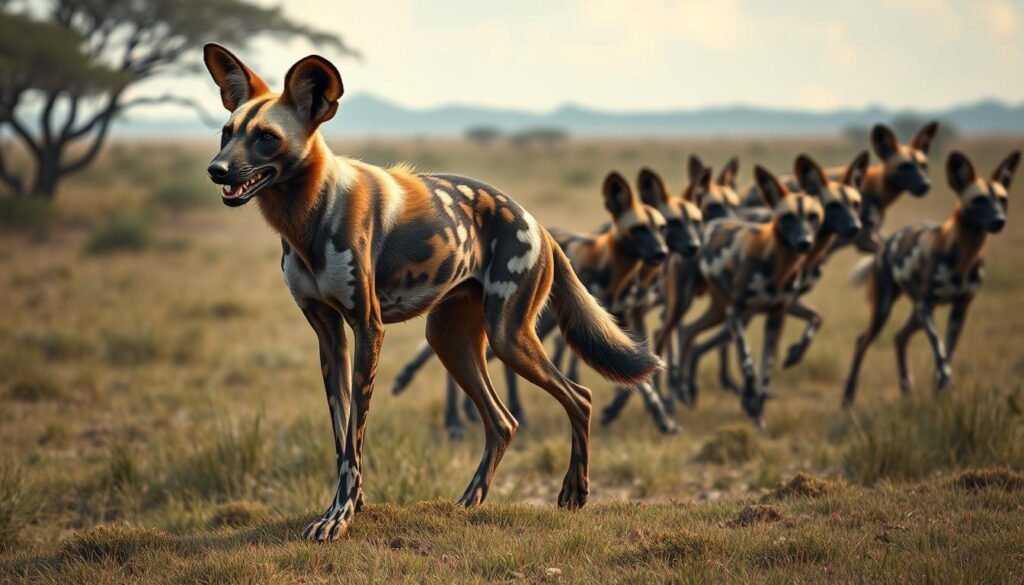
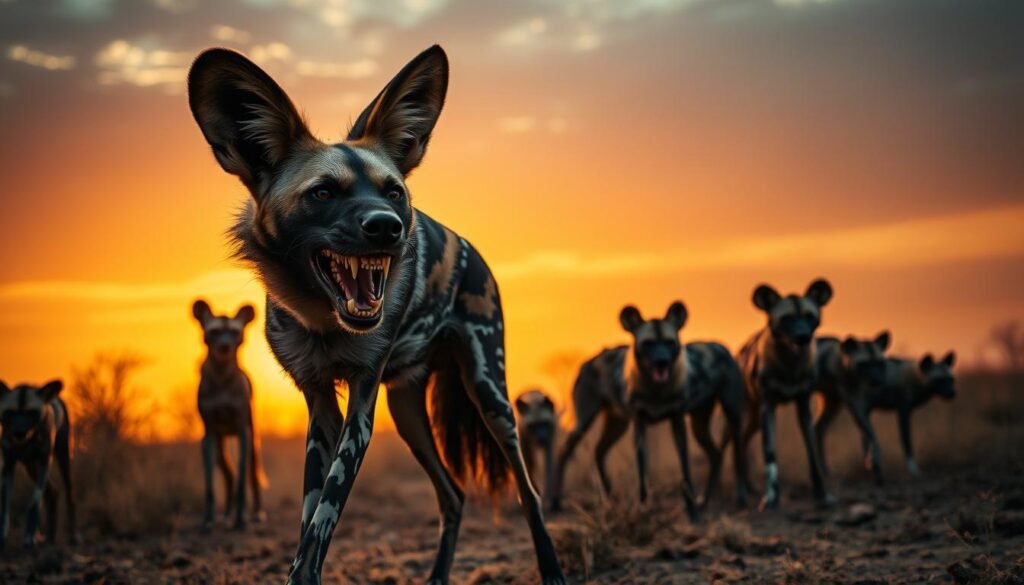
Picture a 30-inch-tall sprinter with 42 razor teeth – more than your average lion. Those satellite-dish ears aren’t just cute; they’re biological walkie-talkies catching whispers from miles away. And check their feet! Four toes instead of five mean no dewclaws snagging on terrain during 40mph chases.
Their dental game? Hyenas wish they had these scissors-like molars. I’ve watched footage where packs dismantle prey faster than a hungry teen with pizza. Evolution gave them every tool except cheat codes.
The Ultimate Team Huddle
Packs operate like family startups. Everyone votes through sneeze-like sounds before hunts – even pups get honorary “sneezes.” Females usually lead charges while males babysit, flipping traditional roles like pancakes. Ever seen wolves share meals? These guys do it voluntarily, regurgitating food for injured members.
Their vocal range puts beatboxers to shame: whines coordinate movements, twitters reunite stragglers. When dispersing, young females leave to join new groups while males stick around – a system that prevents family feuds. This isn’t just survival; it’s social engineering perfected over millennia.
African Wild Dog Facts for Kids: From Painted Coats to Overcoming Odds
Picture a living rainbow sprinting across the savanna – that’s your first clue about these canines. Their fur isn’t just decoration; it’s a survival toolkit wrapped in confetti colors. Let’s crack the code behind nature’s most fashionable camouflage.
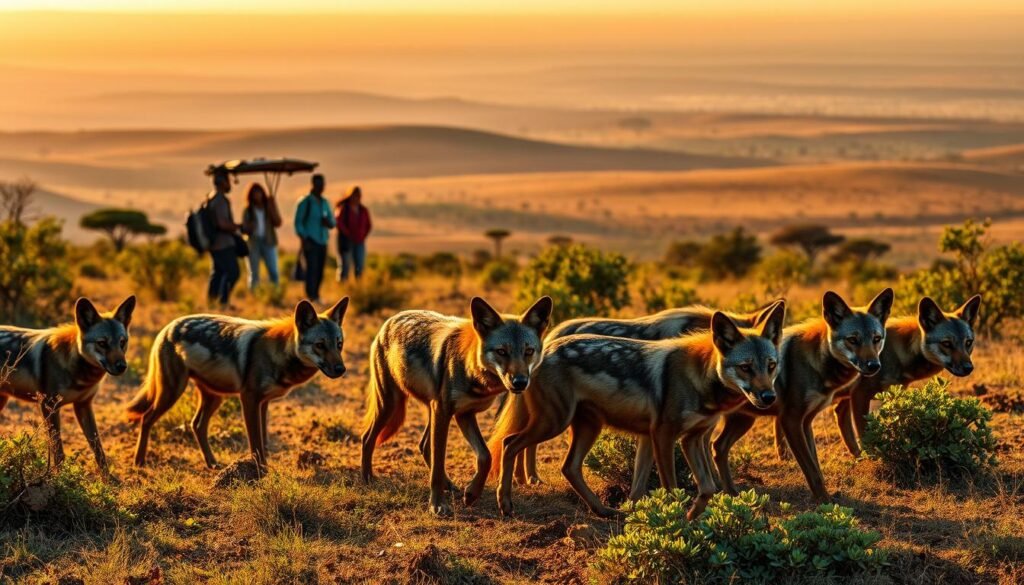
Each painted dog wears a one-of-a-kind jacket – think snowflakes, but with more style. I’ve tracked packs where older members sport faded ear tips like badges of honor, while juveniles show brighter splotches. These patterns aren’t random; they’re ID cards readable by packmates during midnight hunts.
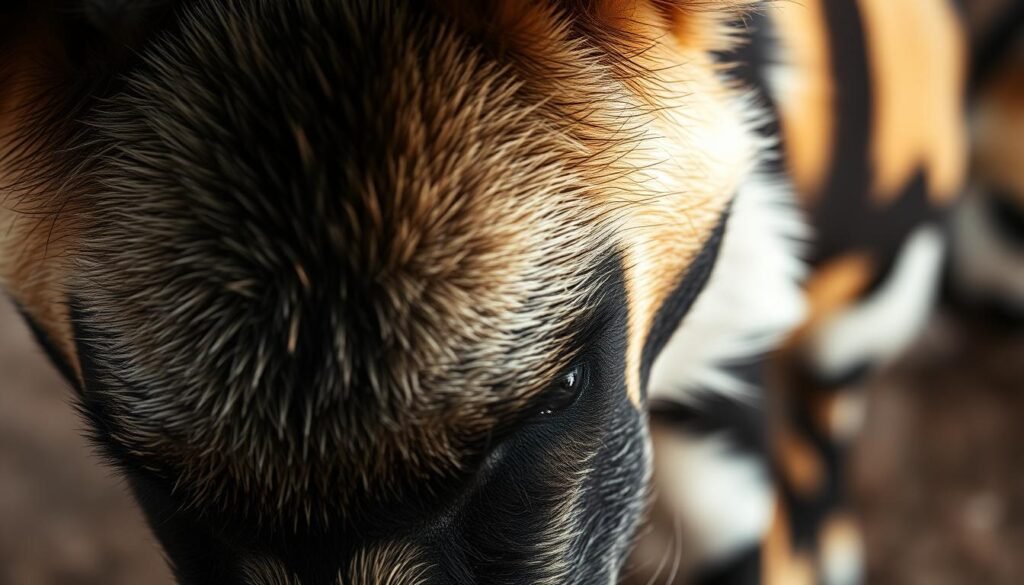
Their fur does double duty. Dark patches break outlines in dappled sunlight – military-grade camouflage for daytime chases. Lighter belly fur reflects heat when resting. And here’s the kicker: rough-textured coats often signal dominant animals, like fuzzy power suits.
Watch them move, and you’ll see why artists love these creatures. Mottled coats blur into shifting landscapes during 35mph pursuits. It’s not just pretty – it’s evolution’s cheat code against sharp-eyed prey. Even biologists get fooled sometimes when tracking them through binoculars!
Kids always ask me: “Do they know how cool they look?” While I can’t ask the dogs, their strut says yes. Next time you spot that asymmetrical face mask, remember – it’s not makeup. It’s millions of years of “look fast, eat faster” strategy woven into every hair.
Habitat, Distribution and Adaptation in Various Terrains
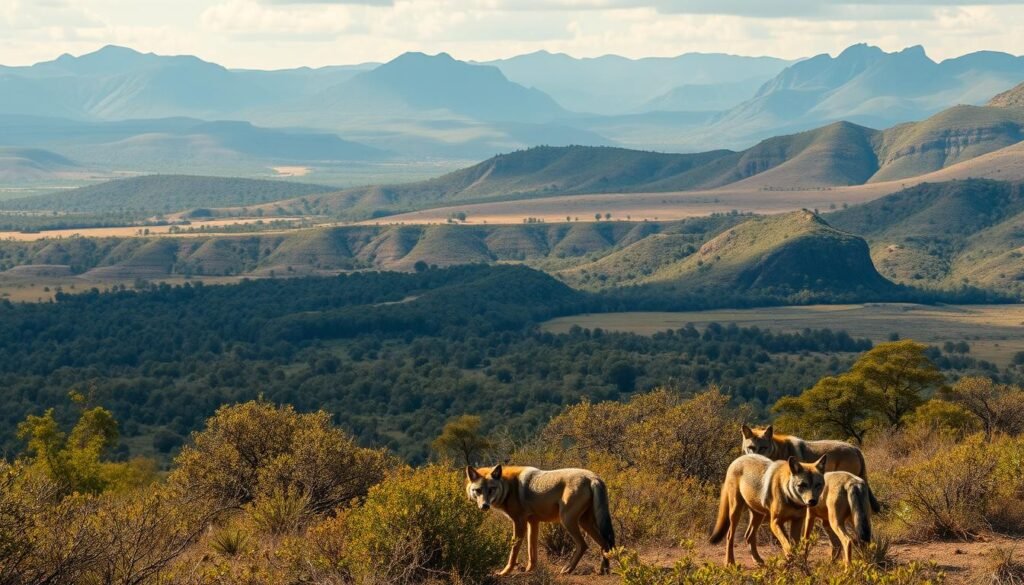
Ever seen an athlete switch sports effortlessly? That’s these canines in habitat terms. From sun-baked plains to misty mountains, they’ve mastered terrains that would leave most predators panting. Their secret? Think of them as furry Swiss Army knives – adaptable tools for every landscape.
Savannas, Scrublands, and High-Elevation Encounters
Kruger National Park’s open grasslands are their playground. Here, packs hunt like synchronized swimmers, using visibility to outflank prey. But flip the script to Ethiopia’s Bale Mountains – altitudes where oxygen’s scarce. I’ve tracked groups here moving like mountaineers, conserving energy for sudden bursts.
Scrublands demand different tricks. In Zimbabwe’s Hwange area, they’ll stalk prey through thorny brush, using dust clouds as cover. High-elevation records? Try Mount Kilimanjaro’s slopes – 3,800 meters up! Their lungs adapt faster than yours on a stair climber.
Unexpected Coastal and Woodland Insights
Coastal sightings? Rare, but mind-blowing. Tanzania’s Selous Game Reserve has packs patrolling beaches, snatching fish when antelope hide. Woodlands? They become stealth ninjas. Mozambique’s Gorongosa packs navigate dense forests by sound, their ears pivoting like radar dishes.
Let’s get real: surviving from sea level to alpine zones isn’t luck. It’s evolutionary hustle. These dogs don’t just occupy space – they reinvent their strategies for each zip code. Every terrain shift whispers clues about shrinking habitats and human pressures. Their range isn’t shrinking – it’s being stolen.
Step-by-Step Hunting Tactics and Dietary Choices
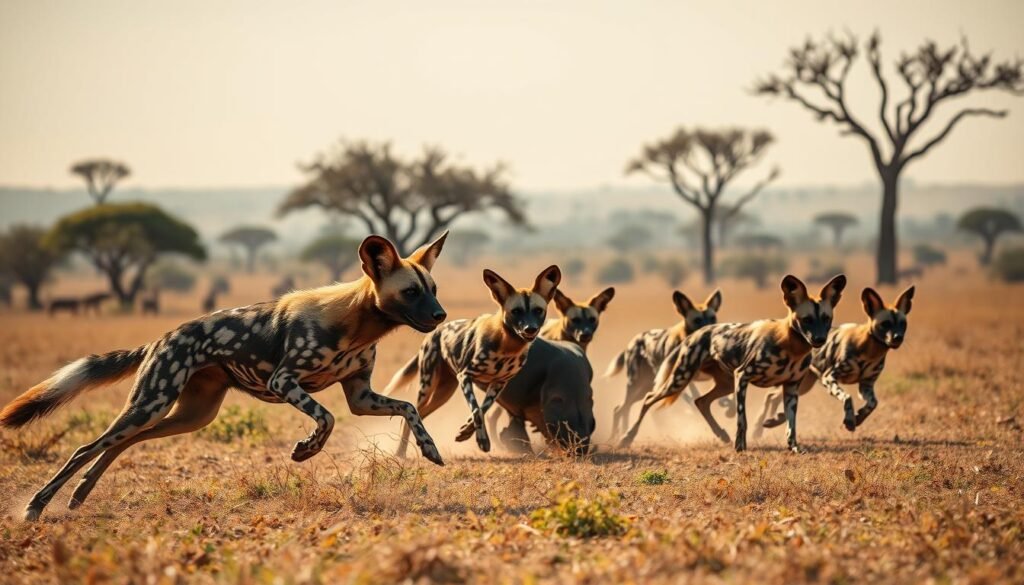
Imagine a military operation where every soldier knows their role – that’s a painted wolf hunt in action. These predators operate with 80% mission success rates, putting Navy SEALs to shame. Their secret? Cursorial hunting – marathon sprints where stamina beats speed.
Here’s how it goes down: Scouts fan out like living radar. One dog spots dinner – say, an impala herd. They don’t charge blindly. Instead, they herd prey into open terrain using zigzag sprints. Picture relay racers swapping leads to exhaust targets.
At 35 mph, the chase begins. Front runners nip at heels while flankers cut escape routes. No lion pride matches this coordination. The kill? Over in seconds. Those scissor-like teeth dispatch prey cleaner than a sushi chef’s knife.
Sharing the Spoils: Food for the Pups and Pack
Now for the real shocker: Adults voluntarily cough up meat for pups and elderly members. I’ve watched alpha females let juveniles eat first – try getting your siblings to do that! Even injured dogs get handouts via regurgitation.
Their menu’s diverse: wildebeest calves, gazelles, even duikers. But here’s the kicker – they waste nothing. Bones? Crunched. Hide? Devoured. Every hunt fuels the whole crew, proving teamwork isn’t just for touchdowns.
Understanding Threats: Human Impacts and Natural Rivals
What keeps conservationists up at night? Picture this: 6,500 athletes sprinting through shrinking stadiums while dodging landmines. That’s reality for painted wolves. Their survival game? Extreme mode – 93% of historic territory gone since 1961.
Farmers often see them as livestock thieves – a single goat loss can spark retaliation. I’ve seen poisoned carcasses wipe out entire packs overnight. Worse? Roads slice territories like pizza, isolating groups that need 150+ square miles to thrive.
Human Threats
Natural Rivals
Impact Level
Habitat loss
Lion encounters
Critical
Poisoning
Hyena thefts
High
Disease spread
Baboon raids
Moderate
Nature’s challenges? Lions steal 25% of their kills – imagine working all day to feed your neighbor’s kids. Hyenas? The ultimate bullies, outnumbering packs 3-to-1 in some areas. Even baboons snatch pups given half a chance.
Here’s the kicker: Losing one breeding female can collapse a pack. With only 700 groups left, each animal’s like a Jenga block holding up the tower. Conservation isn’t just nice – it’s emergency maintenance for Earth’s most fascinating social experiment.
Community Conservation Actions: Protecting This Endangered Species
Here’s the secret sauce you won’t find in textbooks: real conservation happens when boots hit dirt and locals lead the charge. Across Africa, communities are rewriting the survival story for these painted hunters through mind-blowing teamwork.
Grassroots Genius at Work
In Zimbabwe’s Hwange district, the Painted Dog Conservation project proves villagers aren’t bystanders – they’re frontline scientists. I’ve watched former poachers become tracking experts, using ancestral knowledge to monitor pack movements. Their secret weapon? Recycled snare wire turned into art sculptures sold to fund patrols.
Kenya’s African Wild Dog Conservancy takes it further. They train Maasai warriors to use camera traps and GPS collars – tech meets tradition. Last year, their data helped reroute a highway threatening critical breeding areas. Result? A 17% pup survival boost in Amboseli.
Three game-changing strategies:
School programs where kids name radio-collared dogs
These aren’t Band-Aid fixes. They’re blueprints showing how local knowledge outshines foreign consultants every time. When communities benefit, ecosystems thrive. That’s conservation math even math-haters can love!
Final Thoughts on African Wild Dog Survival in Today’s Shifting Landscapes
Survival isn’t a solo sport for these painted athletes. Their secret? Teamwork sharper than a chef’s knife and bonds tighter than your favorite sneaker laces. I’ve watched packs regroup after lion raids, their strategy sessions sounding like jazz improvisation – chaotic yet brilliant.
Habitat loss and human conflicts keep rewriting their playbook. But here’s the twist: they adapt faster than memes go viral. Young scouts explore new territories while elders share hunting hacks. Every meal shared, every pup guarded, becomes a rebellion against extinction.
Their story isn’t just about survival. It’s a masterclass in balance – fierce independence meets pack loyalty. One male’s keen ears detect prey, while a female’s leadership directs the chase. Even solo wanderers boost genetic diversity across fractured landscapes.
Next time you see that mottled coat blur past in documentaries, remember: You’re witnessing evolution’s greatest hustle. These creatures don’t just endure – they redefine resilience daily. If that’s not worth protecting, what is?