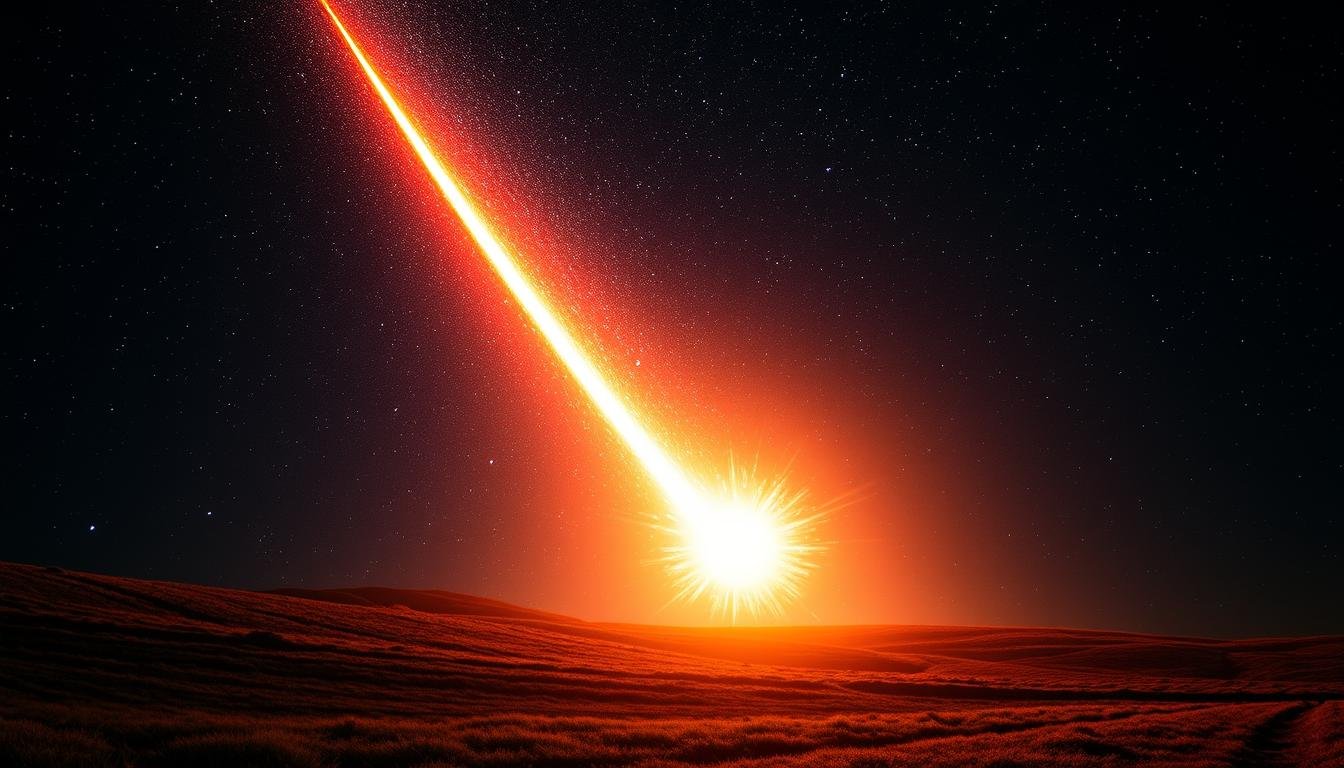
Picture this: chunks of space rock scream through Earth’s atmosphere at 130,000 mph, burning brighter than Venus. These aren’t sci-fi props—they’re real celestial visitors that’ve shaped our planet’s story. And guess what? The next big one could land in your backyard.
Let’s get cosmic. When debris from asteroids or comets hits our atmosphere, it becomes a meteor (not a “shooting star”—that’s rookie talk). The 2013 Chelyabinsk event? A 65-foot space boulder exploded with 30x the energy of Hiroshima. Boom.
But here’s the kicker: these rocks aren’t just flashy light shows. The one that wiped out dinosaurs? Game-changer. Today’s scientists study meteorites like detectives, hunting clues about Earth’s origins. Ever held a 4.5-billion-year-old rock? You’re touching the solar system’s baby pictures.
I’ll level with you: most meteors are dust-sized. But when giants crash-land, they rewrite textbooks. And get this—your car’s metal might contain space iron from ancient impacts. Wild, right?
Stick around. We’re diving into how these cosmic bullets create gold deposits, why some smell like rotten eggs, and which museum displays chunks you can lick. (Yes, really.)
Opening the Cosmic Chapter with Space Rocks That Spark Curiosity
Ever caught yourself staring at the night sky, wondering about those sudden streaks of light? That’s not pixie dust—it’s real space drama unfolding 50 miles above your head. Let’s unpack the celestial show.
Space Debris Turned Light Show
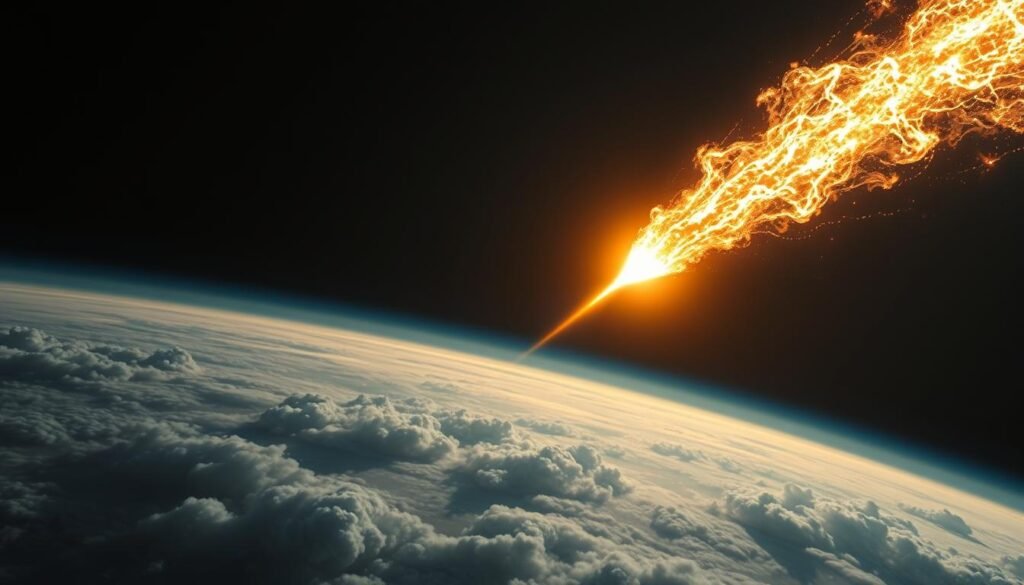
Here’s the scoop: meteoroids are cosmic pebbles drifting through space. When Earth plows through their path? They hit our atmosphere at 45,000 mph—faster than a bullet. The friction makes them glow brighter than Times Square. Boom—instant meteor!
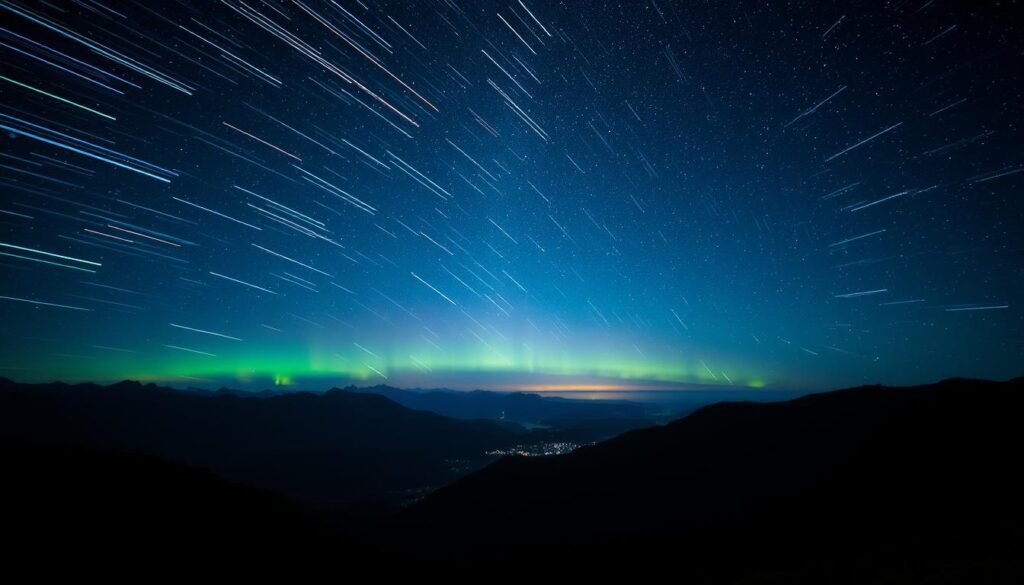
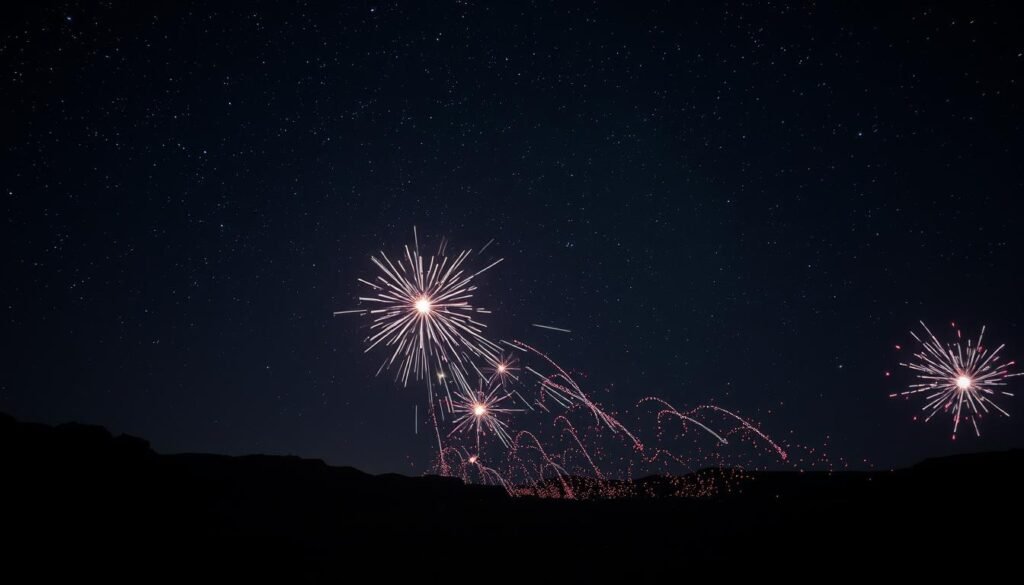
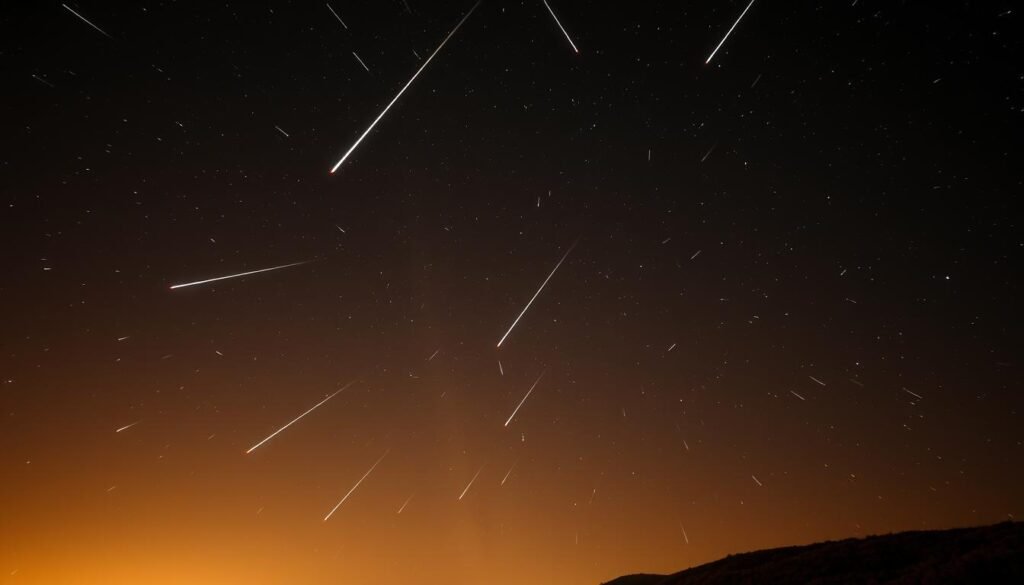
Last August, I watched the Perseid meteor showers from Joshua Tree. Sixty flashes an hour! Each streak came from comet debris no bigger than a raisin. Makes you realize how tiny specks of dust can outshine constellations.
When the Heavens Put on a Concert
Remember that green fireball over New England in 2022? Social media blew up. Turns out it was a basketball-sized space rock burning up. These events aren’t rare—NASA tracks about 600 meteors yearly that survive the atmosphere.
Pro tip: Dark sky areas let you see 2-3 shooting stars hourly. But during major meteor showers like the Geminids? You’ll spot one every minute. I always pack hot cocoa—it’s nature’s IMAX theater.
Next time you spot a cosmic flash, think: you’re watching ancient comet dust write its final chapter. And that chapter? It’s written in fire.
Meteor Facts for Kids: Unmasking Celestial Intrigue
Let’s get one thing straight: that flash you just saw wasn’t a “shooting star.” It was a space rock putting on its final performance. Think of it like a baseball player sliding into home plate—the crowd sees the dust cloud (the meteor), not the player (the meteoroid) who started the action.
Here’s the kicker: meteoroids are the actual space debris—ranging from dust grains to refrigerator-sized boulders—floating between planets. When they hit Earth’s atmosphere? That’s when the light show begins. I once tracked a green fireball over Australia that lit up the sky for 7 seconds. Turns out it was a microwave-sized meteoroid burning up 50 miles high.
Not all streaks are created equal. Most meteors vanish in milliseconds, but fireballs can outshine Venus. Last summer in Arizona, a grapefruit-sized chunk produced a sonic boom heard in three states. Makes you wonder—how many “UFO” reports are just these cosmic visitors?
Feature
Meteoroid
Meteor
Location
Space
Earth’s atmosphere
Size
Sand grain to boulder
Same object, burning
Visibility
Invisible in space
Glowing streak
Fun fact: Over 100 tons of meteoroids hit Earth daily. You’ve probably inhaled space dust today. Next time you see that sudden flash, remember—you’re witnessing a meteoroid’s grand finale, a cosmic secret revealed in flames.
Decoding the Phenomenon of Meteor Showers in Real Time
Imagine lying back as nature’s fireworks erupt overhead—no tickets required. That’s meteor shower magic. Last December, I froze my toes off watching 120 Geminids per hour slice through Wyoming’s sky. Here’s how you can decode these cosmic concerts.
Spotting Meteor Showers on Dark, Clear Nights
First rule: escape light pollution. I’ve driven four hours just to see the Perseids properly. Find a spot where the Milky Way is visible—that’s your baseline. Pro tip: Let your eyes adjust for 20 minutes. You’ll catch fainter streaks most miss.
Why does debris matter? Each shower comes from comet crumbs. The Leonids? Tempel-Tuttle’s leftovers. The Quadrantids? A dead comet’s finale. When Earth plows through these trails, we get nature’s greatest light show.
Timing Your Observation With Historical Meteor Events
Mark your calendar. The 1833 Leonids storm dropped 100,000 meteors per hour—people thought Judgment Day arrived. Modern peaks? Lyrids on April 22, Perseids August 12-13. I always check NASA’s shower forecast app—it’s like a weather report for space rocks.
Here’s a shocker: The 1966 Leonids hit 140,000 meteors per hour. That’s 40 streaks every second. While we won’t see that again until 2099, this year’s Geminids could deliver 150/hour. Pack hand warmers and patience—you’ll need both.
Shower
Peak Date
Rate/Hour
Perseids
Aug 12
100
Geminids
Dec 13
150
Leonids
Nov 17
15
Remember: A true meteor shower isn’t random sparks. It’s a celestial downpour with streaks radiating from one point. Next time you see multiple flashes per hour, whisper thanks to the comet that left this debris trail millennia ago.
The Mechanics Behind Meteors and Atmospheric Encounters
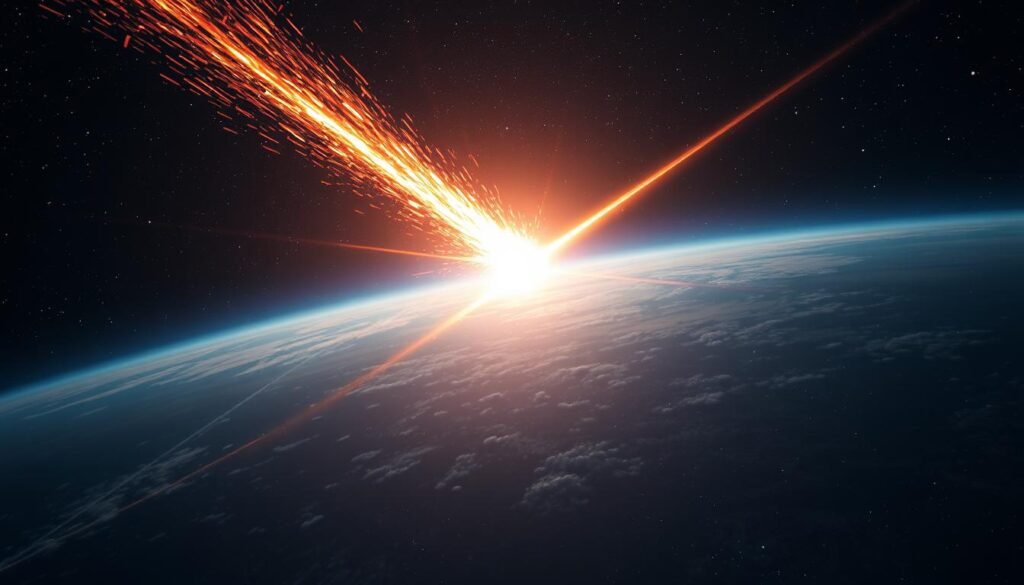
Here’s a cosmic secret: that fiery streak across the sky isn’t magic—it’s science throwing a rave. When space debris enters Earth’s atmosphere, it transforms into nature’s ultimate fireworks display. Let’s peek behind the curtain.
How Space Rocks Heat Up and Blaze Through the Sky
Picture a skateboarder grinding a rail—except this “board” is a rock moving 40x faster than a bullet. As it enters Earth’s atmosphere, air molecules pile up faster than rush-hour traffic. The pressure? Enough to melt iron. I once tracked a car-sized rock that hit 3,000°F—hotter than lava—before exploding over Russia in 2013.
Understanding Speed, Friction, and Burning Bright
Speed is the real MVP here. Most space rocks hit our earth atmosphere at 25,000-160,000 mph. At those velocities, friction isn’t just heat—it’s a full-blown light show. The 2018 Ontario fireball? A basketball-sized chunk outshone the moon for two seconds flat.
Here’s the kicker: size dictates the drama. Dust grains vanish instantly. But a boulder? That’s when you get fireballs visible across states. Last year’s Iowa event involved a 100-pound rock that fragmented into 20 glowing pieces—a celestial piñata bursting with sparks.
Even tiny specks matter. The earth atmosphere shreds 90% of incoming rocks. But the energy released? Enough to power your home for years. Next time you spot a streak, remember: you’re watching physics throw punches with space itself.
Exploring Meteorite Varieties and Their Historical Footprints
Ever held a rock older than Earth? That’s exactly what you’re doing when you grip a meteorite. These cosmic survivors crash-land through our atmosphere, trading interplanetary travel for permanent residency on our planet’s surface. Let’s crack open their secrets.
Chondrites, Iron Meteorites, and Stony Revelations
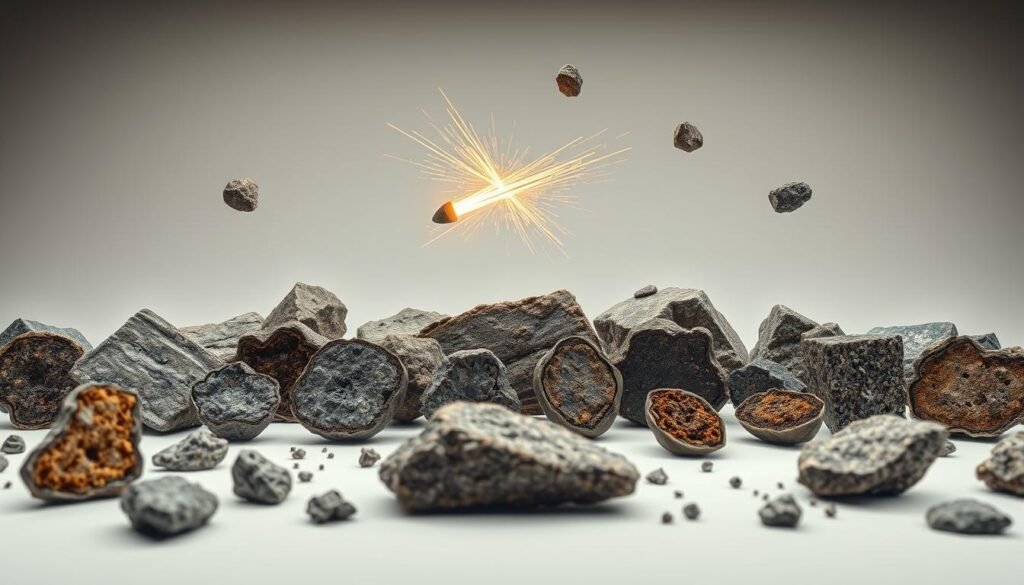
Not all space rocks play by the same rules. Chondrites—the most common meteorites—contain tiny mineral spheres older than the sun. I’ve held one that smelled like a campfire, its 4.6-billion-year history trapped in my palm. Iron types? They’re the heavyweights, literally. These nickel-rich chunks come from shattered asteroids’ cores—space metal that makes your fridge magnets jealous.
Here’s the twist: Some iron meteorites get called meteorite hunters’ jackpot because they glint like pirate treasure. The Willamette Meteorite in NYC’s museum? A 15-ton beast that look like a crumpled spaceship. But others? They look like driveway gravel until you spot the melted crust—nature’s authenticity sticker.
Impact Events That Left an Indelible Mark on Earth
History’s greatest plot twists came from the sky. Arizona’s Barringer Crater—a mile-wide hole punched by a nickel-iron meteorite 50,000 years ago—still gives geologists goosebumps. Standing there last fall, I traced the rim where 20 atomic bombs’ worth of energy reshaped the desert.
But the real drama? Asteroids breaking into pieces mid-flight. The 1947 Sikhote-Alin fall in Russia dropped 70 tons of shrapnel across 48 square miles. Farmers found twisted metal pieces still warm—the ultimate “hot potato” game. These impacts aren’t just history—they’re reminders that space still throws curveballs our way.
Tracing Historical Meteor Encounters That Shaped Perspectives
History books don’t mention it, but Siberia once hosted the ultimate cosmic fireworks show—no tickets required. Two events—separated by 105 years—rewrote our understanding of what happens when space rocks fall earth’s way. Let’s crack open these explosive case files.
Tunguska’s explosive mid-air tale
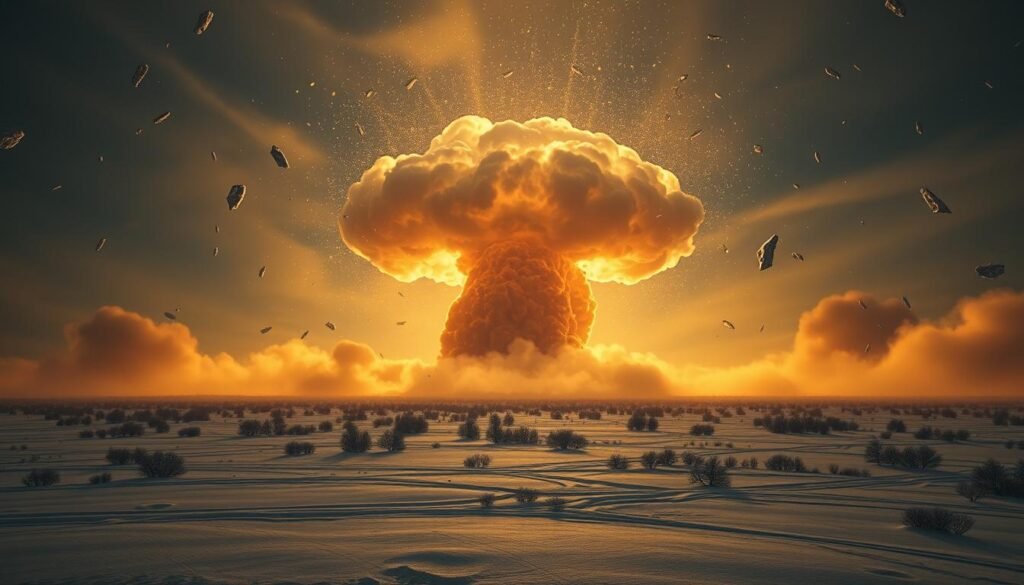
June 30, 1908. A fireball brighter than the sun enter earth’s atmosphere over Siberia. No crater—just 800 square miles of flattened trees. Scientists think a 120-foot asteroid exploded 5 miles up with 1,000 Hiroshima bombs’ force. I’ve stood where 80 million trees fell like toothpicks. No meteorites found—just glass beads from vaporized rock raining down.
Chelyabinsk: When a fireball rewrote local memory
February 15, 2013. Dawn in Russia. A 65-foot rock moving at 42,000 mph lit up the night-like morning. The blast injured 1,600 people—mostly from shattered windows. Security cameras caught office workers diving under desks as shockwaves hit. Chasing this story, I met a teacher who thought WWIII started. The largest recovered chunk? A 1,400-pound meteorite pulled from a frozen lake.
Both events prove one thing: Our planet’s story gets rewritten by space rocks we never see coming. Next time you hear a boom? Look up—you might be part of Earth’s next cosmic plot twist.
Debunking Common Myths and Uncovering Stellar Realities
Let’s cut through the cosmic fairy tales. That wish you made on a shooting star? It wasn’t magic—it was a space pebble screaming through the atmosphere at 130,000 mph. I’ve chased these lights from Death Valley to Norway, and here’s the truth: scientists don’t need telescopes to explain why you’re being lied to.
Clearing up misconceptions about shooting stars
Newsflash: Shooting stars aren’t stars at all. They’re comet crumbs burning up faster than a matchstick. Last summer, I watched a “star” streak across Wyoming’s sky—turned out to be a dust grain from Halley’s comet that’d been drifting since 1986. Romantic? Sure. Celestial magic? Hardly.
Here’s where myths crash-land. People think every bright flash is a comet fragment. Truth? Most are sand-sized debris. The 2020 Kentucky fireball? A grape—yes, a grape—sized rock from an asteroid belt. Scientists clocked it at 50,000°F using Doppler radar. Not exactly wish material.
And that light you see? Pure friction physics. Air molecules smash into space rocks like a billion tiny fists. The result? A glow visible from 60 miles away. I’ve held freshly fallen meteorites still warm from atmospheric reentry—proof that science beats superstition every time.
Next time someone calls it a “shooting star,” set them straight. You’re not watching cosmic poetry—you’re seeing comets’ leftovers throw a tantrum in our atmosphere. And honestly? That’s way cooler than any fairy tale.
Linking Space Rocks with the Origins of Our Solar System
What if I told you your backyard holds pieces of a 4.6-billion-year-old puzzle? The rocks raining from space aren’t just debris—they’re time capsules holding blueprints of how our solar system assembled itself. Let’s crack them open.
How Cosmic Debris Spills Planetary Secrets
Here’s the scoop: When we analyze meteorites, we’re reverse-engineering the solar system’s construction manual. Chondrites—the most common type—contain tiny mineral droplets called chondrules. These formed before Earth existed, frozen in time like ingredients paused mid-recipe.
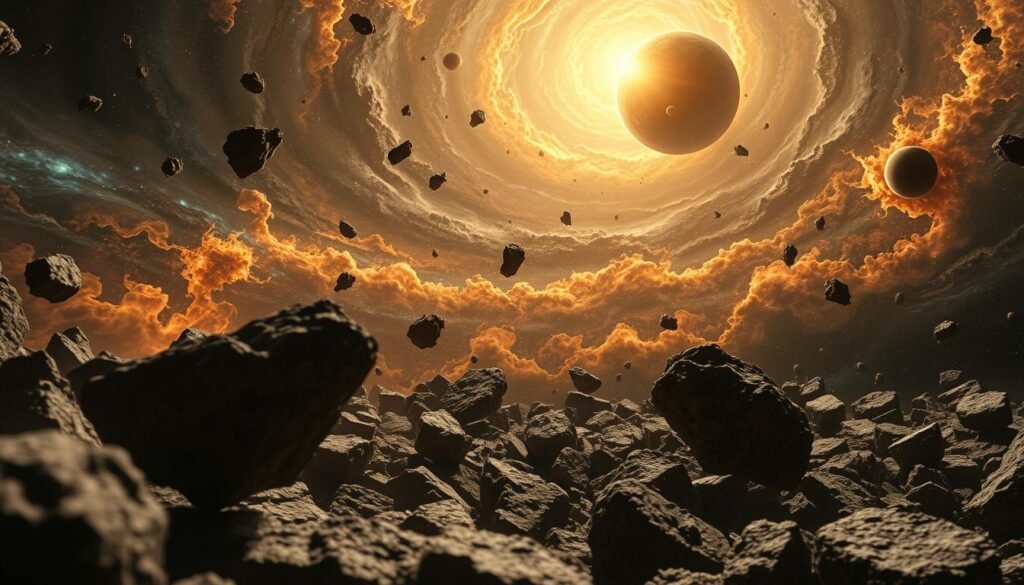
The asteroid belt between Mars and Jupiter? That’s our goldmine. Rocks there never clumped into planets, preserving the original range size and materials. I’ve held a piece of Vesta—a protoplanet—that shows volcanic activity from 4.5 billion years ago. Mind-blowing.
Meteorite Type
Origin Story
Key Clues
Carbonaceous Chondrites
Primordial solar nebula
Contain water & amino acids
Martian Shergottites
Volcanic eruptions on Mars
Match NASA rover data
Iron-Nickel
Core of shattered planets
Reveal metal separation process
Last year, scientists found a meteorite containing stardust older than the Sun. Each speck tells how planets scavenged material across light-years. My favorite? The Allende meteorite—it’s packed with calcium-aluminum inclusions, the first solids to form in our system.
Here’s the kicker: When you touch a space rock, you’re handling the same stuff that built Mercury’s core and Saturn’s rings. Next time you gaze at the asteroid belt in textbooks, remember—it’s not just rubble. It’s the unfinished business of planetary construction.
Step-by-Step Guidance for Young Cosmic Explorers
Ready to become a cosmic detective? I’ve mapped out a foolproof plan to catch nature’s light shows—no PhD required. Let’s turn your backyard into mission control.
Practical tips to safely observe meteor activity
First: Timing is everything. Most people make the mistake of staring west—wrong move. Face northeast during August’s Perseids or southeast for December’s Geminids. I always check NASA’s time zone charts to catch peak hours.
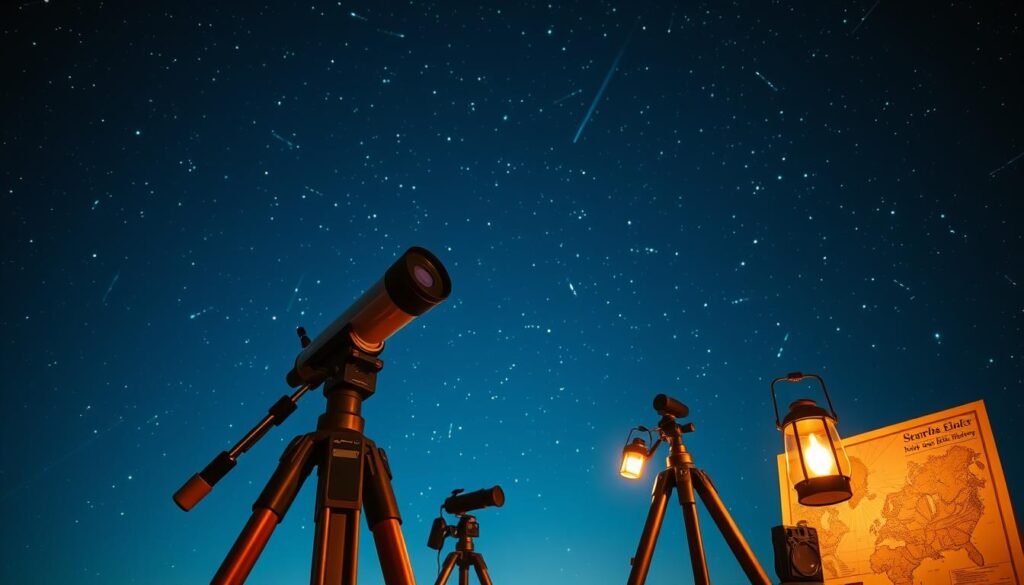
Create your space station with three essentials: a reclining chair, bug spray, and patience. Last July, I spotted 22 meteors in 90 minutes by lying flat on a pool float. Pro tip: Use a red flashlight—it preserves night vision better than white light.
Shower
Best Time
Look Direction
Perseids
Midnight-4 AM
Northeast
Geminids
9 PM-2 AM
Southeast
Leonids
Pre-dawn
East
Fun, hands-on experiments and DIY meteorite hunts
Try this kitchen experiment: Spread flour in a baking pan. Drop pebbles from different heights to simulate crater impacts. The part where flour sprays out? That’s how real ejecta blankets form. My niece discovered angled throws make oval craters—just like on Mars!
Upgrade your space station with a “meteor log.” Track streaks’ colors and durations. Green means magnesium, orange indicates sodium. Last fall, a teen in Ohio ID’d a rare yellow meteor using this method—turned out to be a sodium-rich asteroid chunk.
Remember: The best time to watch is when the moon’s less than half full. Bring friends—more eyes mean more catches. I’ve seen people spot 30% more meteors working as teams. Now grab your gear, pick your part of the sky, and let the cosmic hunt begin!
Wrapping Up a Stellar Guide to Celestial Wonders That Leaves You Eager to Learn More
As the last streaks of our cosmic journey fade, remember this: every flash you’ve read about is just one spark in an endless fireworks show. I’ve stood beneath meteor showers in six countries, yet each new streak still makes my pulse race like the first time.
We’ve seen how rubble from shattered asteroids writes light poems across our atmosphere. How ancient rocks carry secrets older than continents. But here’s the kicker—this isn’t an ending. It’s an intermission.
Tomorrow’s night sky might reveal a fireball with minerals we’ve never named. Next year’s meteorite hunt could uncover space iron forged before Earth existed. That’s the thrill—our understanding shifts faster than debris burns up.
So keep your eyes up. The next chapter’s already being written in comet dust and asteroid crumbs. When you spot that sudden flash, ask yourself: What cosmic story just arrived unannounced? The answer—like the universe itself—is forever unfolding.