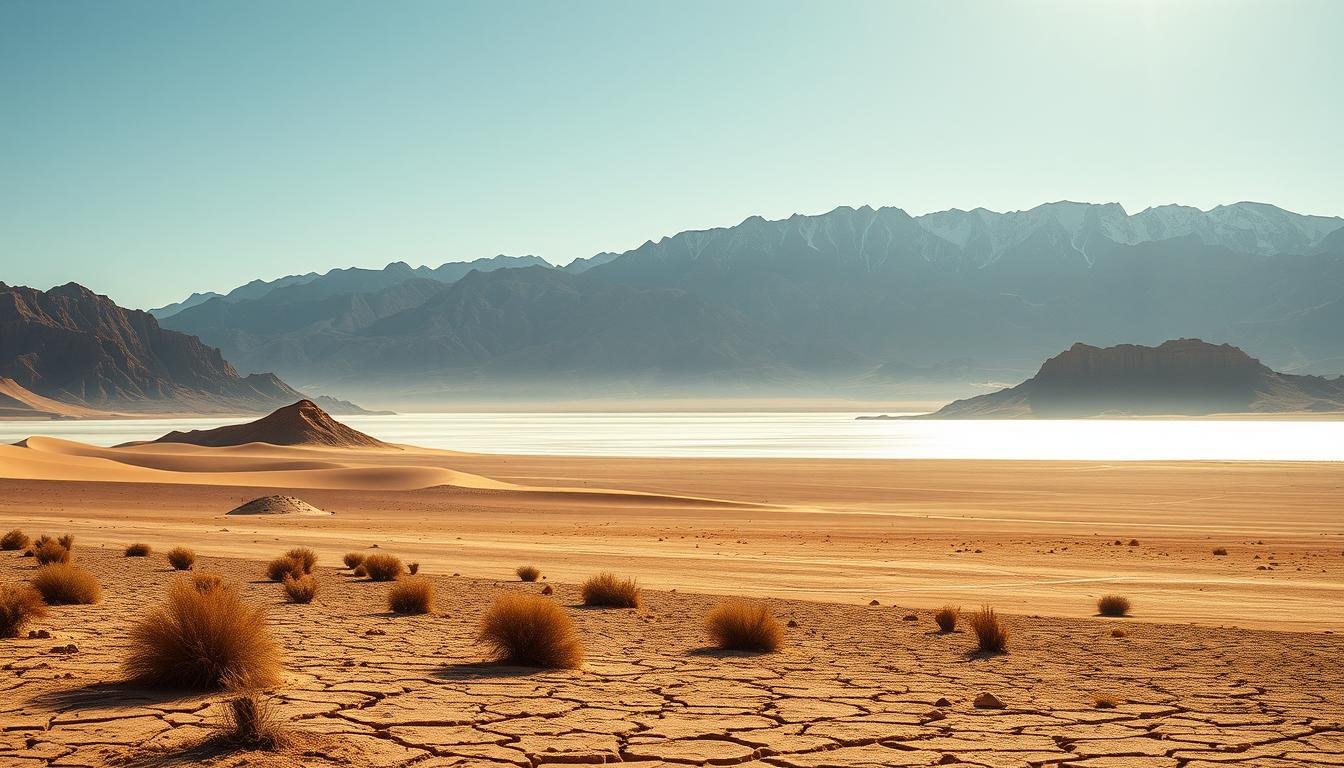
You think Death Valley is just a giant oven? Think again. This national park hit 134°F at Furnace Creek in 1913—a world record hotter than your mom’s lasagna pan. But here’s the kicker: parts of this desert actually freeze in winter. Yeah, ice in the hottest place on Earth. Let that sink in.
This valley sits 282 feet below sea level, making it the lowest point in the United States. You’d expect it to flood, right? Nope. It gets less than 2 inches of rain yearly. The sand here doesn’t just get warm—it could probably fry an egg if you’re brave enough to try.
Now, why’s it called a mountain desert? Surrounding peaks block storms, creating a natural oven. But here’s the twist: nearby Telescope Peak gets snow. Imagine sweating in the valley while snowboarding 11,000 feet up. Only in Death Valley.
I’ll level with you: this place breaks rules like a toddler with crayons. It’s got singing sand dunes, neon wildflowers after rare rains, and rocks that glide across dry lakes. Stick around—we’re just getting to the weird stuff.
Unraveling the Heat, Heritage, and Unexpected History
Think this desert’s just sand and silence? Wrong. Its cracked earth holds stories older than your great-grandma’s secret cookie recipe. Let’s dig into the valley national park’s wild past—where indigenous wisdom collides with pioneer blunders.
Native Tribes, Timeless Legends, and the Timbisha Story
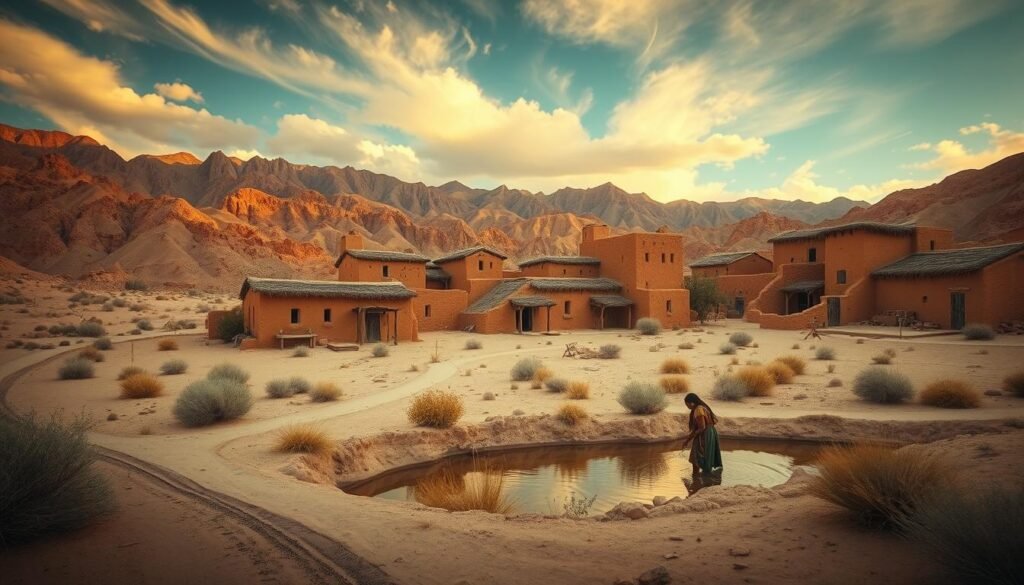
The Timbisha people didn’t just survive here—they thrived. For over 1,000 years, they’ve called this scorching basin home. I’ve always been struck by their summer migration strategy: climbing nearby peaks to escape the heat while gathering pine nuts. Smart cookies, those ancestors.
Their oral histories paint the valley as a living entity. Stories whisper of water spirits in dry creek beds and coyote tricksters shaping the land. Makes you wonder—what secrets does Furnace Creek hold beneath its blistering surface?
Pioneer Missteps and the Birth of a Grim Name
Enter the 1849 emigrants, dragging wagons through salt flats like clueless tourists. One group got stranded for weeks, burning their wagons for firewood. Spoiler: they survived, but not before dubbing this place “Death Valley” in their diaries. Talk about drama queens.
Here’s the kicker: the recorded death valley expedition didn’t actually lose anyone. The name stuck anyway, becoming America’s most metal national park title. Next time you complain about traffic, remember these folks crossed 130°F deserts in wool coats.
Funny how “death” overshadows the Timbisha’s family bonds to this land. Their tribal headquarters still stand near Furnace Creek—proof that life laughs at first impressions. Bet those pioneers never saw that twist coming.
Death Valley Facts for Kids: Surprising Climate Extremes that Defy Logic
Ever seen a desert that moonlights as a sauna and a swimming pool? Let’s get this straight: Death Valley holds the world’s hottest temperaturerecord (134°F at Furnace Creek in 1913), but meteorologists still argue about that number like kids debating pizza toppings. Some say instruments weren’t placed right. Others whisper, “That’s hotter than Mercury’s sunny side!” Either way, your water bottle would vaporize here faster than gossip in a middle school.
Record-Breaking Temperatures and Controversial Heat Records
Picture this: 2020’s 130°F reading made global headlines. But here’s the kicker—conditions here aren’t just hot. They’re scientifically rude. The national park’s depth (282 feet below sea level) traps heat like a convection oven. Yet winter nights can dip below freezing. One day you’re melting, the next you’re hunting for mittens. Makes you wonder—does this place have multiple personalities?
Strange Rainfall Episodes and the Vanishing Lake Phenomenon
Now for the plot twist: this desert occasionally floods. In 2005, a freak rainstorm dumped 3 inches—enough to create a 30-mile-long lake! Fish eggs buried for decades hatched overnight. Then, poof! The water vanished faster than your Wi-Fi during a storm. These rainfall miracles birth wildflower explosions so vibrant, they’d make rainbows jealous. Talk about nature’s mood swings.
Geological Wonders and the Mysterious Shifting Sands
What if I told you this desert’s floor is literally moving? Grab your imaginary geology hammer—we’re cracking open Death Valley’s rocky résumé. This valley national park sits in a graben, a giant crack between mountains that’s been stretching wider for millions of years. Think of it as Earth’s slow-motion tug-of-war.
Salt Pans, Sand Dunes, and Ephemeral Lake Beds
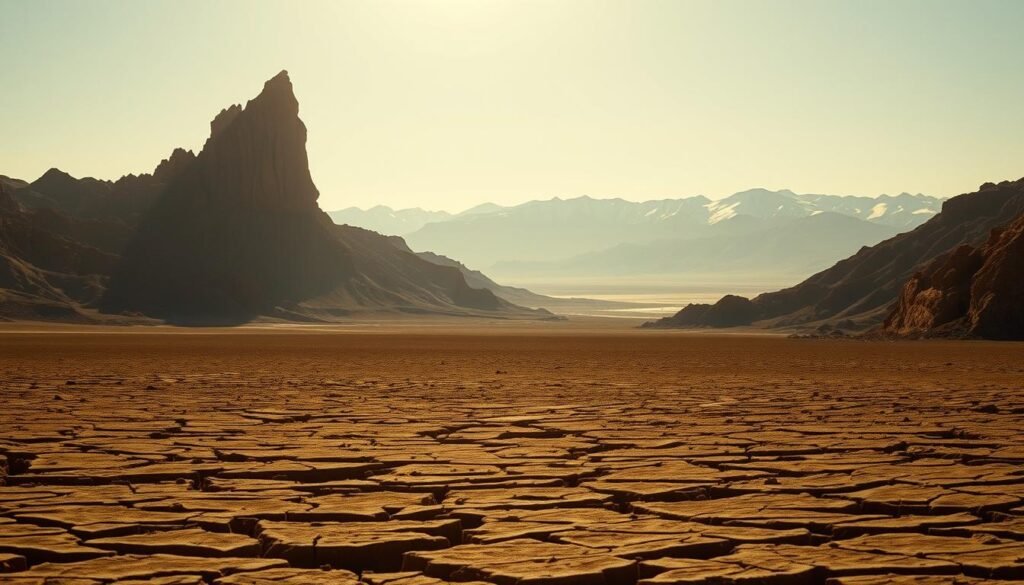
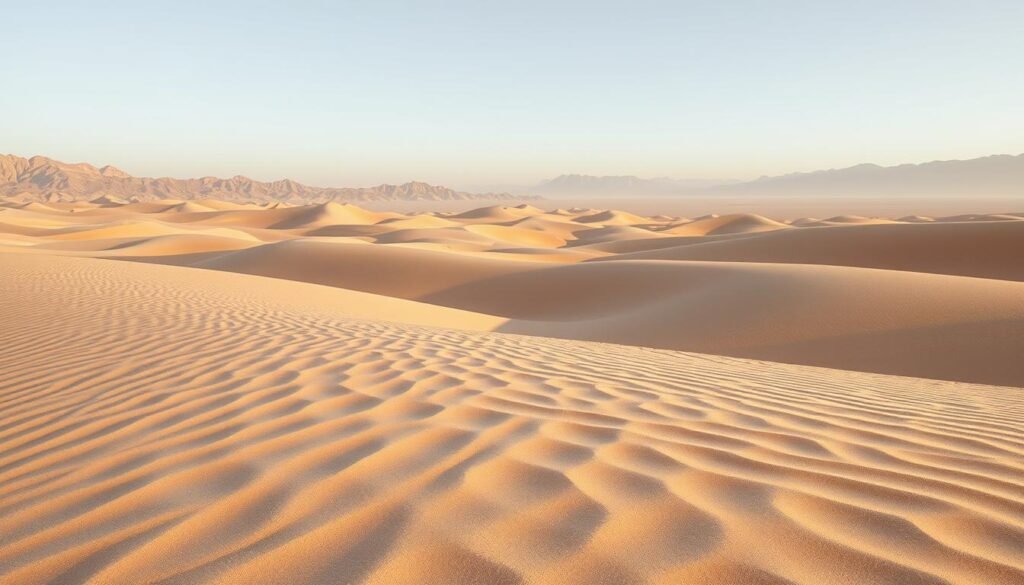
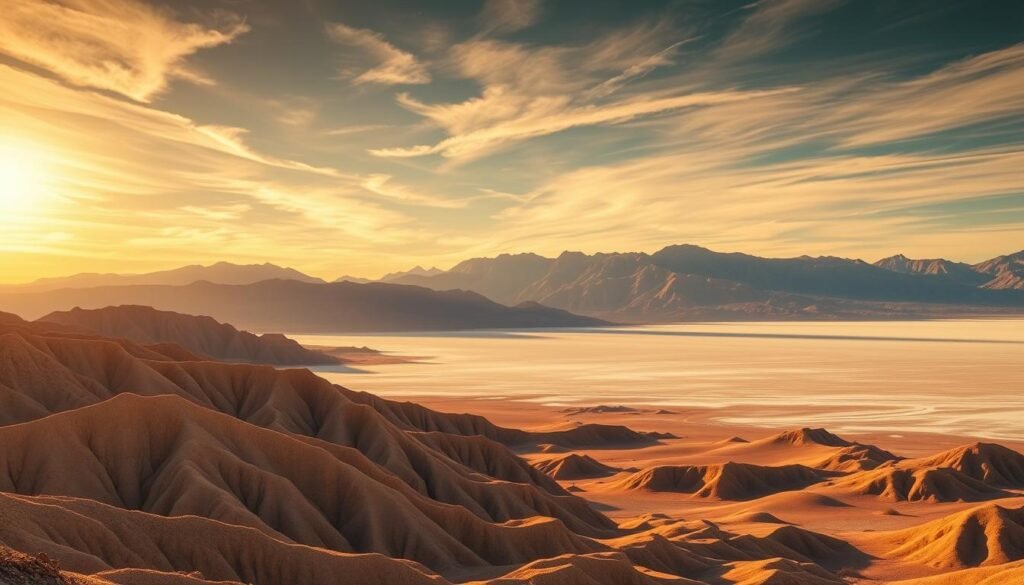
Step onto Badwater Basin’s salt flats—it’s like walking on a giant potato chip. These crusty patterns form when groundwater evaporates, leaving behind inches-thick salt deposits. But the real showstopper? The sand dunes at Mesquite Flat. These golden waves shift up to 50 feet yearly, rewriting their own maps whenever the wind whistles.
Here’s the kicker: those dunes are made of quartz that started as mountain rocks. Over millennia, erosion ground them into sparkly grains you could mistake for beach sand. Except here, the “beach” bakes at 120°F and has zero sharks.
Massive Crustal Movements and the Story of Lake Manly
Let’s time-travel 186,000 years back. Ancient Lake Manly covered this area with 600 feet of water—deep enough to submerge the Statue of Liberty. Today’s ghost lake reappears only during freak rains, proving this national park loves plot twists.
The ground here isn’t just sitting pretty. Satellite data shows the valley floor sinking 1-2 inches yearly as tectonic plates wrestle below. It’s like watching continental drift in fast-forward—if your idea of fast is slower than a sloth on vacation.
Geologists call it a “living laboratory” because every cracked salt polygon and wandering dune tells a story. Even the sand has a biography—each grain’s journey from peak to plain could fill a history book. Now that’s what I call dirt with character.
Vibrant Life in a Desert Where Survival is a Wild Bet
Imagine a place where flowers erupt like fireworks after a drizzle and fish swim in temporary ponds. This national park isn’t just surviving—it’s throwing nature’s greatest comeback tour. Life here plays by its own rules, bending heat and drought into opportunities.
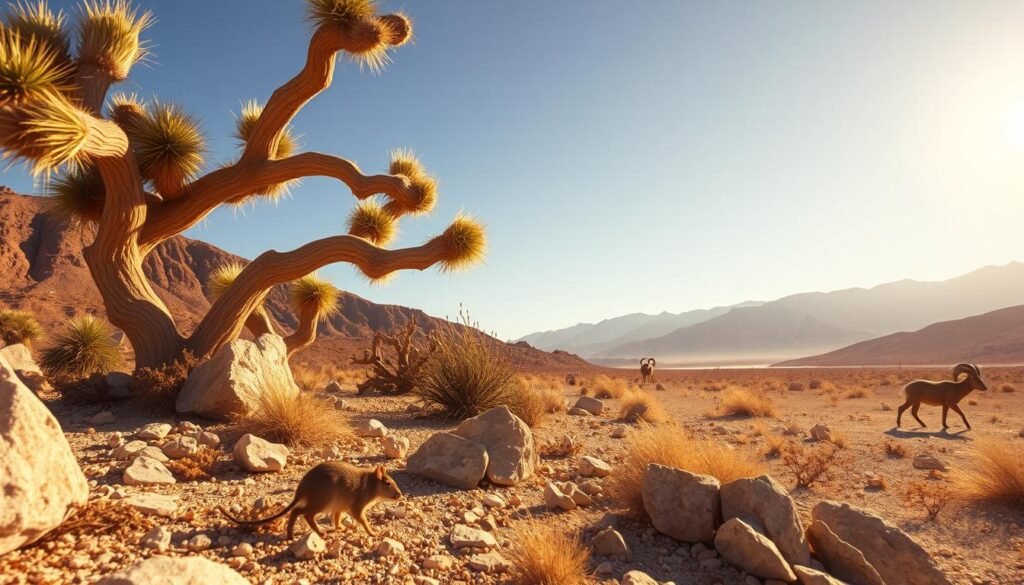
Meet the Death Valley Pupfish—a finger-sized swimmer thriving in water hotter than a jacuzzi. These “living fossils” survive in springs saltier than the ocean. Then there’s the desert tortoise, a reptile that stores a year’s water supply in its bladder. Talk about packing light!
Species
Survival Tactic
Remarkable Fact
Pupfish
Heat-resistant enzymes
Only found here
Desert Tortoise
Burrows 10 feet deep
Lives 80+ years
Creosote Bush
Roots span 70 feet
Smells like rain
Bighorn Sheep
Leap 20-foot cliffs
Drink yearly
Plants here are just as clever. The creosote bush uses toxic roots to hog water, while mesquite trees drill 150 feet underground. When rain finally falls—maybe 1.5 inches a year—dormant seeds explode into neon blooms. It’s like the desert’s throwing a surprise party.
These animals and plants aren’t just hanging on—they’re rewriting survival manuals. Next time you see a cactus, tip your hat. That’s no plant—it’s a desert ninja.
Fascinating Spots and Historic Attractions that Spark Curiosity
Think you’ve seen all this national park has to offer? Buckle up. I’m taking you on a treasure hunt through Death Valley’s wildest landmarks—where every turn reveals Hollywood-worthy views and stories stranger than fiction.
Furnace Creek, Scotty’s Castle, and Other Iconic Landmarks
Start at Furnace Creek, the park’s beating heart. This oasis got its name from 1800s borax miners who used its water to cool machinery. Today, it’s your gateway to the world’s lowest golf course (214 feet below sea level) and a visitor center that feels air-conditioned against the temperature outside.
Drive 53 miles north to Scotty’s Castle—a 1920s mansion built for a con artist’s tall tales. Rumor has it Death Valley Scotty convinced a Chicago millionaire he’d struck gold here. The unfinished “castle” now stands as America’s quirkiest site of broken dreams and killer acoustics.
Landmark
Distance (Miles)
Quirky Fact
Best View
Furnace Creek
0 (Start Here)
Home to a Date Shake Café
Golden Canyon Overlook
Scotty’s Castle
53 North
Underground Music Room
Graffiti Canyon
Titus Canyon
27 East
Petroglyphs & Ghost Town
Red Pass
Desolation Canyon
14 South
Star Wars Filming Site
Mudstone Stripes
Little-Known Trails and Hidden Corners Full of Character
Skip the crowded paths. Head to Titus Canyon’s 27-mile dirt road—you’ll pass a 1930s brothel foundation and rusted mining gear. Time it right, and sunset turns the cliffs into liquid copper.
Want real secrets? Ask rangers about “The Racetrack” near Ubehebe Crater. It’s where rocks slide mysteriously across mudflats, leaving trails that look like nature’s etch-a-sketch. Just don’t try pushing them yourself—the recorded death valley heat’s no joke.
Wrapping Up the Strangeness and Splendor with More to Uncover…
Ever stumbled into a place that laughs at rulebooks? This valley national park serves 134°F days and below-freezing nights like it’s no big deal. I’ve stood where recorded death valley pioneers panicked, yet life here—from pupfish to creosote bushes—thrives defiantly. Those salt flats? They’ve seen more drama than reality TV.
Every view hides layers. Timbisha people knew this land’s rhythms millennia before thermometers existed. Their family stories echo in canyon walls, while pioneer blunders rust quietly in forgotten mines. Even the rocks throw parties—sliding across dry lakes when we’re not looking.
Here’s what keeps me coming back: you’ll hike 3 miles thinking you’ve cracked it, then stumble upon petroglyphs or a ghost lake. The park’s 3.4 million acres hold more secrets than a magician’s sleeve. Those “just 2 inches of rainfall” facts? They’re plot twists waiting to bloom.
So pack your curiosity. This valley isn’t done surprising us—and I’ve got a hunch its wildest facts haven’t even…