Let’s get this straight: your favorite shiny shirt likely started as caterpillar spit. Meet Bombyx mori – the picky eater behind every silk scarf and tie. Not a worm at all, this little larva spends its days binge-eating mulberry leaves like a teenager at an all-you-can-eat buffet.
Ancient Chinese farmers cracked the code 5,000 years ago: one cocoon contains enough raw silk thread to stretch three football fields. Want to blow your mind? A single mama moth lays 300 eggs in three days – that’s faster than you can say “pass the ketchup.”
Here’s the kicker: these bugs domesticated themselves. Modern silkworms can’t even survive in the wild anymore. They traded flight skills for luxury threads, becoming the ultimate textile partners. Next time you pet that smooth fabric, thank a hungry caterpillar with a serious leaf habit.
Ready to see how their wild life cycle fuels global fashion? Let’s unravel this sticky (yet surprisingly elegant) story.
Fascinating Silkworm Life Cycle and Natural Quirks
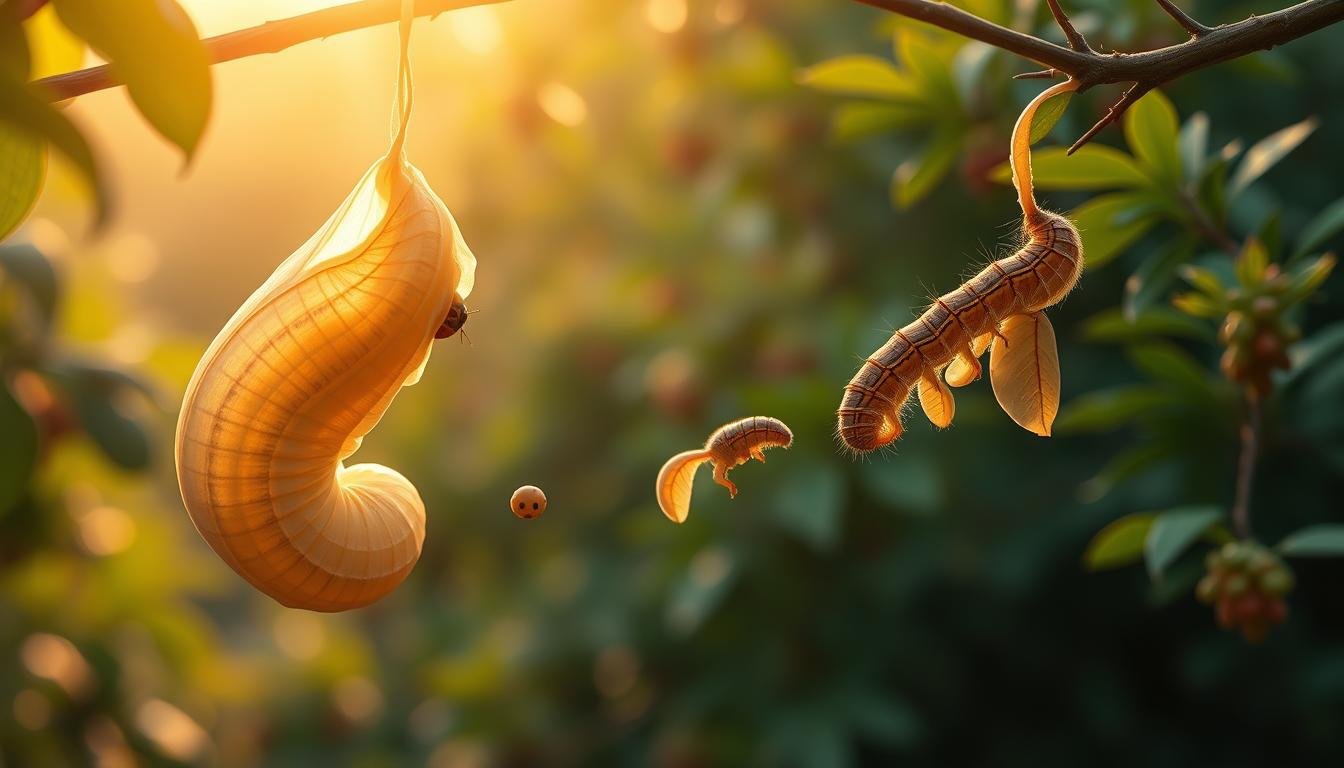
Imagine a creature that starts life smaller than a grain of rice and ends up spinning a thread longer than three football fields. This isn’t sci-fi – it’s Tuesday for Bombyx mori. Their transformation makes butterfly metamorphosis look like amateur hour.
From Egg to Hungry Larva on Mulberry Leaves
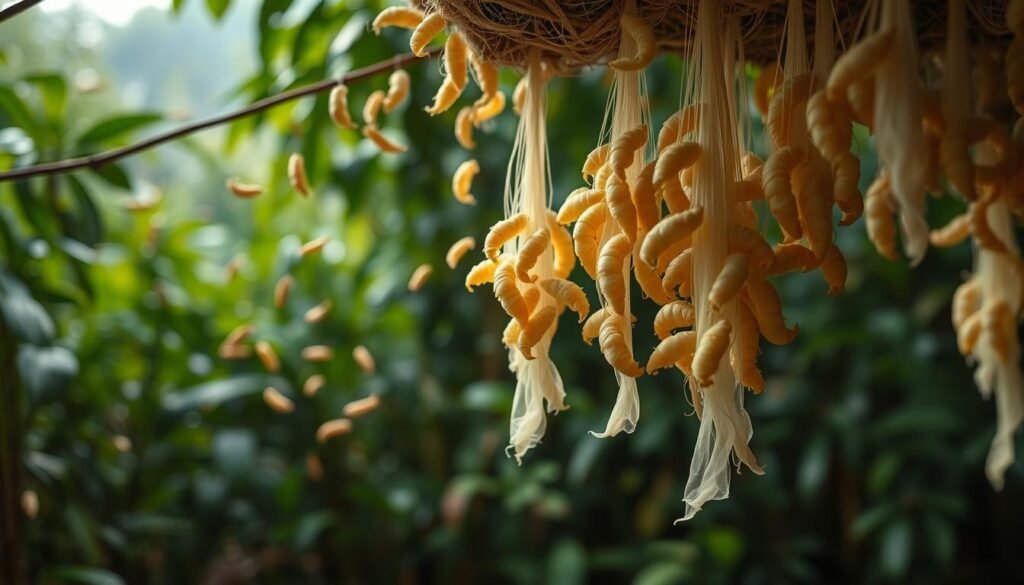
It all begins with silkworm eggs laid on – you guessed it – mulberry leaves. A single moth mom deposits about 300 pearly specks in three days. Keep them cozy (18-25°C) and watch the magic unfold.
Newborn larvae are eating machines. They devour leaves like competitive eaters at a pie contest, quadrupling their size in days. Pro tip: Never challenge a silkworm to a salad-eating competition. You’ll lose.
The Art of Spinning Cocoons in a Remarkably Short Time
After four molts, the real show begins. Using spinnerets like 3D printers, larvae wrap themselves in silk fibers – one continuous thread stretching 300-900 meters. That’s enough to circle a soccer field three times!
Here’s the kicker: they finish their liquid crystal masterpiece in under 72 hours. Human textile factories? They’ve been one-upped by bugs with PhDs in fiber optics. Next time you touch silk, remember – it’s basically caterpillar yoga pants.
Silkworms Facts for Kids
Picture this: 5,000 years ago, a Chinese empress named Leizu accidentally dropped a silkworm cocoon into her tea. When she fished it out, a single endless strand began unraveling – humanity’s first encounter with raw silk. Talk about a happy accident!
These larvae mean business at mealtime. They undergo five growth phases called instars, devouring fresh mulberry leaves like clockwork. Day one: nibble. Day three: feast. Day five? They’re basically competing in an all-leaf eating contest.
Here’s the kicker – adult moths don’t even have mouths. After emerging from cocoons, they live just long enough to mate and lay 300-500 eggs. Their entire adulthood? Shorter than your last school field trip.
Secrets Worth Their Weight in Gold Thread
Ancient China guarded silk knowledge tighter than Fort Knox. Death penalty for revealing silk production secrets? Check. Byzantine monks smuggling eggs in hollow walking sticks? Oh yes. One royal kimono could use enough silk fibers to wrap around your classroom 20 times.
My favorite detail? For centuries, silk was currency along the Silk Road trade route. Those shiny threads built empires faster than you can say “pass the mulberry pie.” Next time you see silk, remember – you’re holding history spun by a bug that outsmarted kings.
From Raw Silk to Luxurious Fabric
Here’s the wild part: that silky shirt in your closet began as gooey bug spit. Transforming cocoons into wearable magic? It’s a mad science-meets-art affair. Let me walk you through the sticky (literally) process.
Step-by-Step Reeling, Throwing, and Finishing Techniques
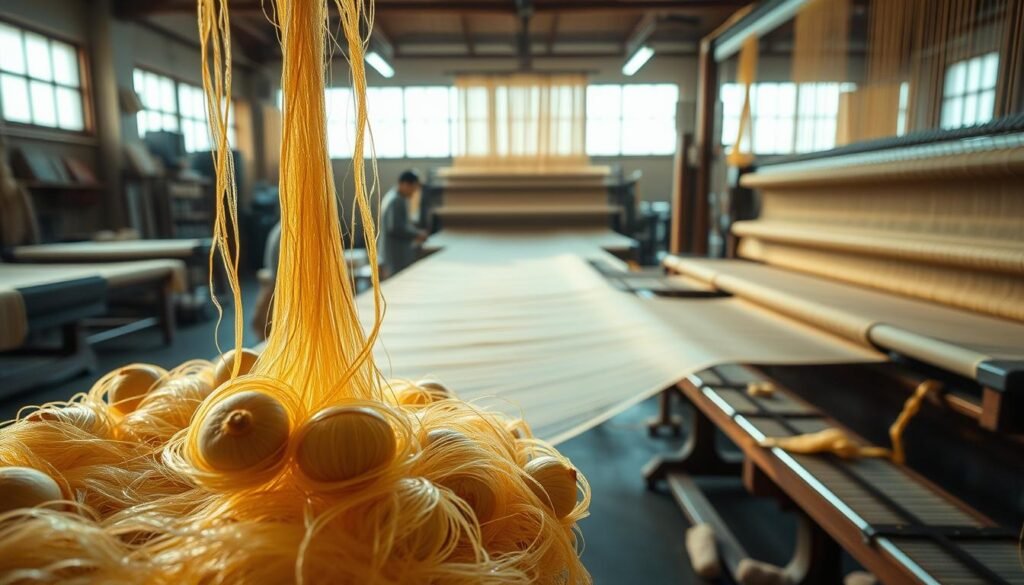
First, workers dunk cocoons in boiling water. Not cruel – crucial. The heat softens sericin, the natural glue holding silk fibers together. Ever seen a kid unwrap a candy? That’s reeling: finding the thread’s end and winding it onto spools.
Modern machines can reel 13,000 feet from one cocoon in hours. Ancient artisans used pulleys for the croisure method – twisting threads while wet. Today’s factories? They’ve upgraded to stainless steel vats and robotic arms.
Diverse Applications from Fashion to Functional Fabrics
Raw silk isn’t just for runway gowns. Surgeons use it for stitches that dissolve harmlessly. NASA tests it for space suit linings. That kimono thread count? Up to 600 twists per inch – tighter than your shoelace knots.
Here’s the kicker: degumming removes sericin’s roughness, leaving fabric softer than puppy ears. But some artisans skip this step – the slight crunch tells you it’s the real deal. Next time you touch silk, remember: you’re basically wearing caterpillar engineering at its finest.
Parting Insights on a Silky Saga That Keeps Unspooling…
Ever touched fabric that once crawled? That’s silk for you – nature’s origami folded into cloth. Standing in a Chinese mulberry grove last spring, I watched workers dunk cocoons in steaming water. One strand unraveled like magic, connecting ancient trade routes to modern runways.
Those mulberry trees? They’ve fed generations of silkworms since Marco Polo’s time. A single moth’s egg kickstarts a process unchanged for 50 centuries – yet every cocoon still feels revolutionary. Imagine packing 3,000 miles of Silk Road history into something smaller than your thumb.
Here’s what sticks with me: luxury often begins wild. Those glossy fibers started as spit-shined leaves in a bug’s jaws. Countries from Italy to India still debate whose silk shines brightest. But really? We’re all just wearing caterpillar apartments.
Next time you slip into something smooth, remember – you’re sporting a strand that outlived empires. What other everyday marvels hide in plain sight? The silkworm’s tale spins on…