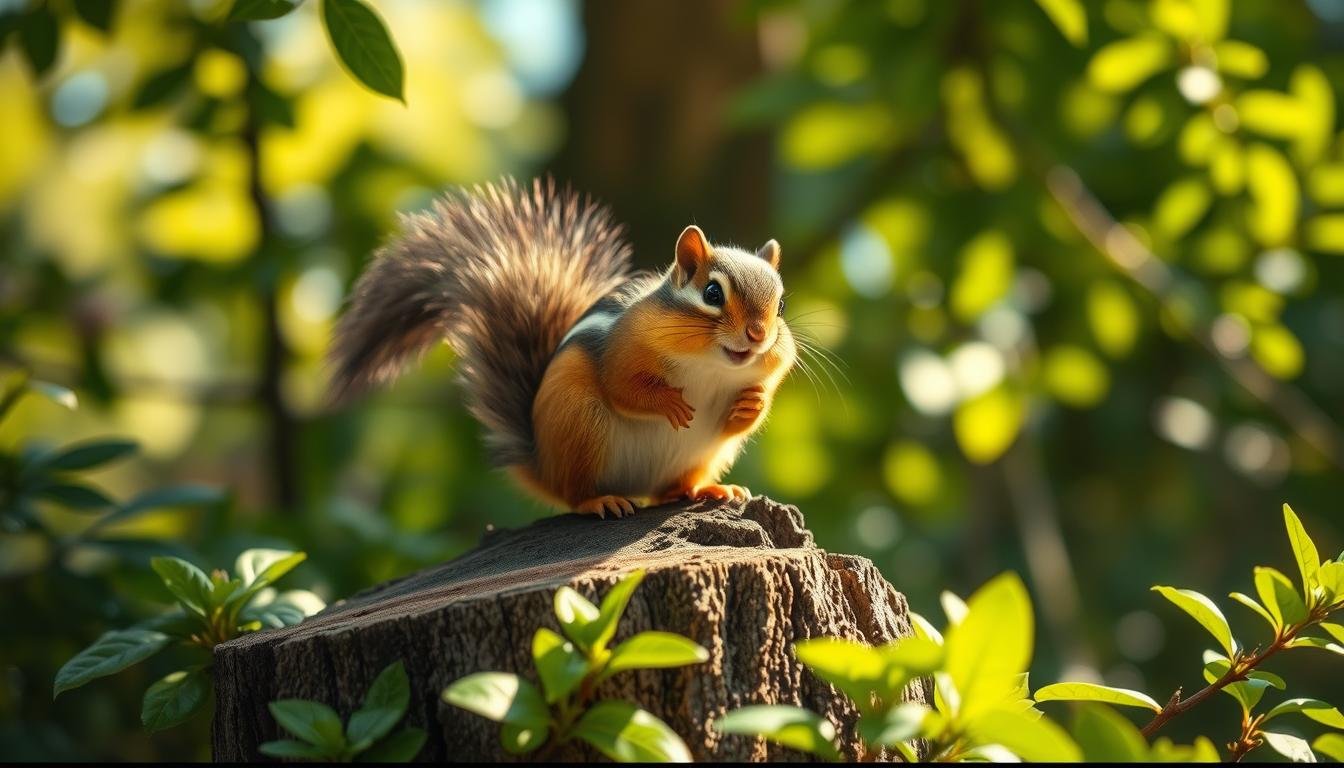
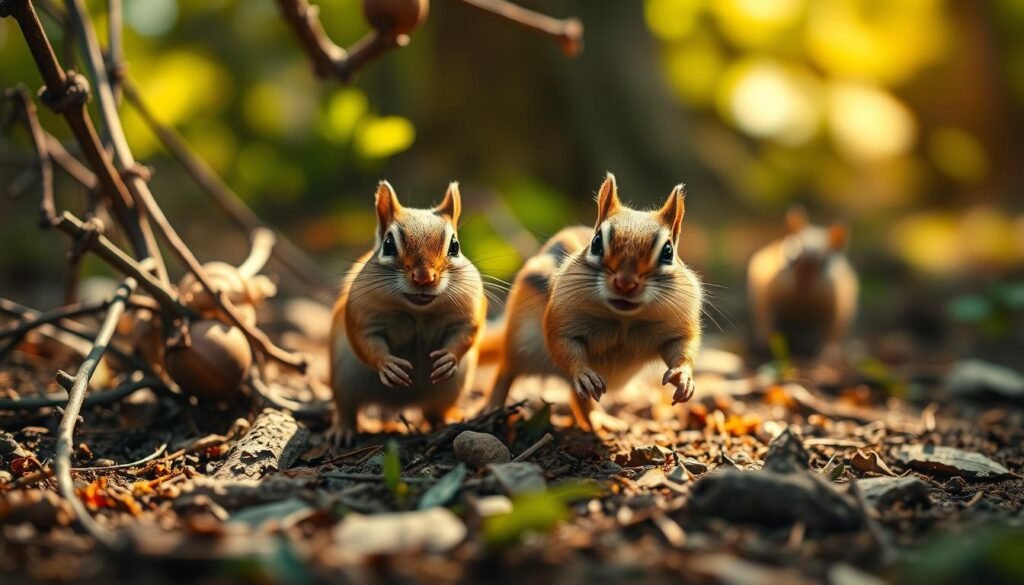
Ever spotted a striped furball sprinting across your yard like it’s late for a nut convention? Those are chipmunks—nature’s pocket-sized daredevils. They’re not just cartoon stars (looking at you, Alvin), but real-life hoarders with cheek pouches that could rival a grocery bag.
Here’s the kicker: These tiny acrobats are the smallest members of the squirrel family, yet they’ve mastered survival like pros. I once watched one stuff 15 sunflower seeds into its face in under 10 seconds—a skill I’d kill for at a buffet. Their cheek pouches stretch to three times their head size, which explains why they always look like they’re smuggling grapes.
Think your backyard’s boring? Chipmunks turn it into an Olympic training ground. They zigzag through grass, leap over sticks, and dig tunnels like they’re mining for gold (spoiler: it’s usually acorns). The Eastern chipmunk—the most common species—even hibernates, but not before stockpiling enough food to make a squirrel jealous.
Want to know why they freeze mid-sprint or how they avoid becoming hawk snacks? Stick around. We’re diving into their secret lives, one nutty escapade at a time.
Chipmunk Origins and Evolution
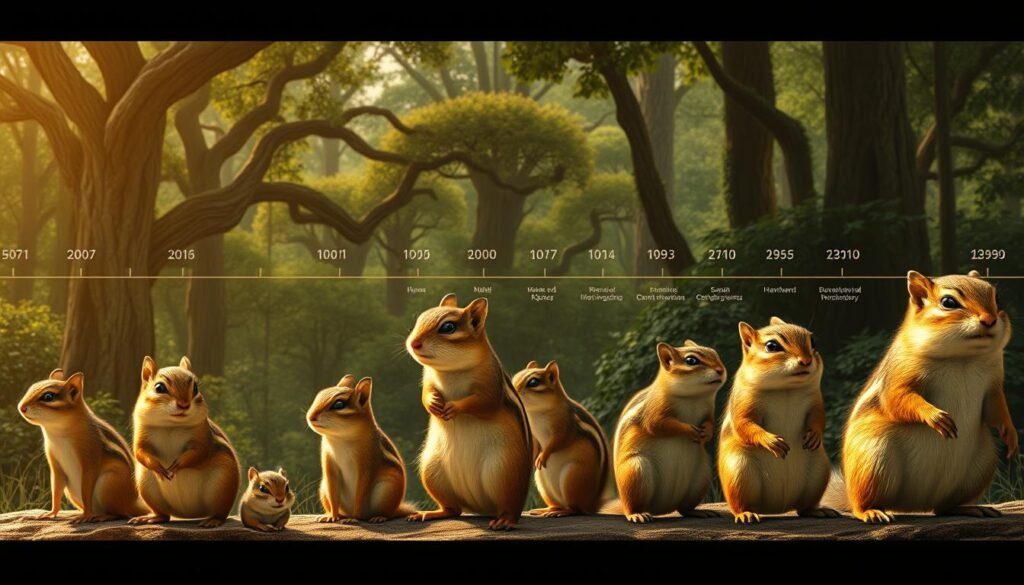
Ever wonder how these striped speedsters became nature’s tiny hoarders? Their backstory’s wilder than a squirrel on espresso. Turns out, chipmunks didn’t just pop up—they’ve been perfecting their cheek-stuffing craft for 70 million years. Yeah, you read that right. These backyard acrobats evolved from ancient mice and rats, swapping bland fur for those iconic racing stripes.
Tracing Their Ancestral Footprints
No kidding—their great-great-grandparents were basically rodent ninjas. While dinosaurs roamed, early chipmunk relatives stayed small and quick. Fast-forward 40 million years: a genetic hiccup gave them pale stripes that darkened over time. You’d never guess those lines started as faint markings, like nature’s first draft.
Genetic Quirks and Striped Surprises
Here’s the kicker: Their stripes aren’t just fashion statements. A single gene mutation caused fur cells to produce less pigment, creating that signature look. North America’s eastern chipmunk? Its five black stripes act as natural camouflage, blending into shadows and fallen leaves. I’ve watched them vanish mid-sprint against tree bark—pure magic.
What’s crazier? Their closest living relatives include ground squirrels and prairie dogs. But let’s be real—none rock those face-stretching cheek pouches quite like chipmunks. Evolution basically said, “Here, hold ALL the snacks.”
Chipmunk Habitat and Burrow Details
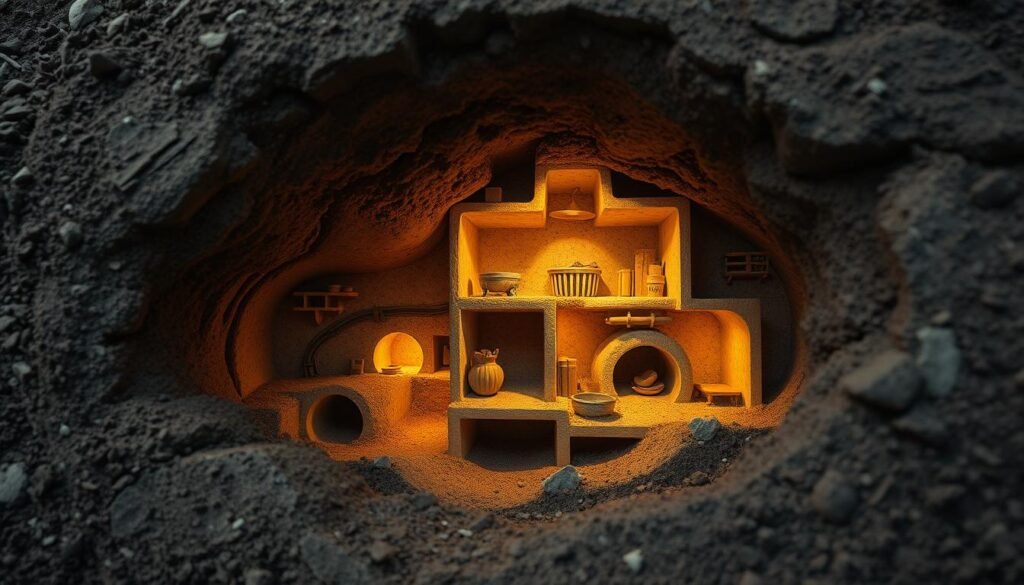
What’s hiding under your garden gnome? Odds are, there’s a miniature metropolis of tunnels beneath your feet. These striped engineers build underground bunkers across North America that put human architects to shame. Their burrows aren’t just holes—they’re survival fortresses with twisty hallways and secret exits.
Imagine a maze stretching over 11 feet long—that’s longer than most SUVs. I’ve watched them dig escape routes disguised as rock crevices or tree roots. Their main entrance? Barely wider than a golf ball. But here’s the kicker: They build fake doorways to trick hungry foxes and hawks. Clever little Houdinis.
Inside, you’ll find specialized rooms:
A pantry stuffed with seeds and nuts (hauled in those stretchy cheek pouches)
A cozy sleeping chamber lined with leaves
Even a dedicated bathroom—because nobody wants to live next to their toilet
Their cheek pouches aren’t just storage sacks—they’re high-efficiency snack transporters. I once counted 28 sunflower seeds crammed into one pouch during fall harvest season. Come winter, these underground vaults become lifesavers when snow blankets their squirrel cousins’ treetop pantries.
Next time you spot fresh dirt near your flowerbed, look closer. You might be standing on a rodent penthouse with better security than Fort Knox.
Chipmunk Facts for Kids: Real-Life Behavior
Ever caught a striped blur raiding your bird feeder? That’s chipmunk hustle in action. These pocket-sized dynamos turn snack time into an extreme sport, using biology’s weirdest hacks to survive. Let me show you how they pull it off.
Snack Blitz Champions
Their cheek pouches aren’t just storage—they’re emergency snack kits. I once clocked a juvenile stuffing 18 acorn pieces in 12 seconds flat. Those stretchy pockets can hold three times their head volume, turning them into walking pantries. Watch how they shovel seeds like they’re late for a bus—no hands required!
Behavior
Purpose
Speed
Cheek stuffing
Food transport
5 items/sec
Ground freeze
Predator evasion
Instant
Drumming
Group alerts
20 beats/sec
Nature’s Alarm System
Hear that rapid “chip-chip-chip”? That’s their version of yelling “CODE RED!” When my neighbor’s cat creeps close, they hammer logs with front paws—a woody Morse code that echoes through forests. Their high-pitched squeaks carry farther than you’d think, giving buddies time to bolt.
Here’s the kicker: They combine these sounds with lightning zigzags to dodge hawks. I’ve seen one reverse direction mid-air against a fence—like a furry parkour artist. Next time you spot them, listen closely. That drum solo? Pure survival genius.
Anatomy and Appearance of Chipmunks
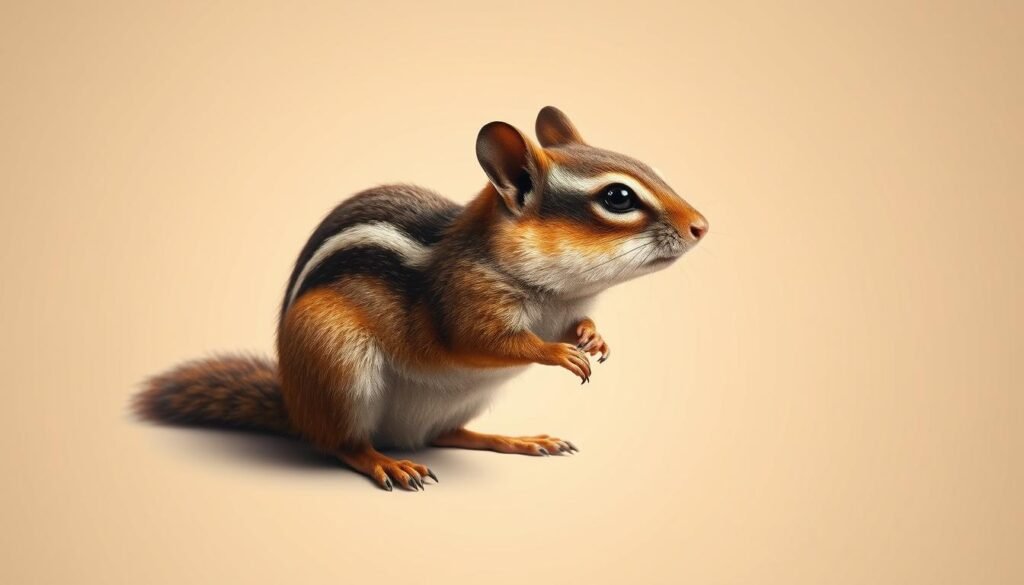
Ever notice how these striped dynamos look ready for a woodland marathon? The eastern chipmunk rocks nature’s best tracksuit—five black stripes racing down its reddish-brown back, framed by creamy-white underbelly fur. It’s like they’re wearing built-in shadows to vanish into fallen leaves. Check out those front paws: four stubby toes perfect for excavating acorn vaults.
Striped Superpowers & Pocket-Sized Build
Their compact size—just 5-6 inches long—makes them the ninjas of the squirrel world. Those signature stripes aren’t random: the central black line runs nose-to-tail, flanked by two brown and two white bands. I’ve watched them disappear against tree bark mid-burrow dash—pure optical magic.
Here’s a fun quirk: their back feet have five toes versus four up front. Those extra digits work like mini shovels during digging frenzies. Their bushy tail? Not just for show—it balances tightrope walks along branches and flares when threatened, doubling their silhouette to scare off curious cats.
Next time you spot one, peek at their cheek pouches. They’re lined with fur to prevent snack scratches—nature’s grocery bags with built-in insulation. From striped camouflage to multitasking paws, every inch of these furballs is engineered for backyard survival.
Survival Tactics and Winter Rest in Chipmunks
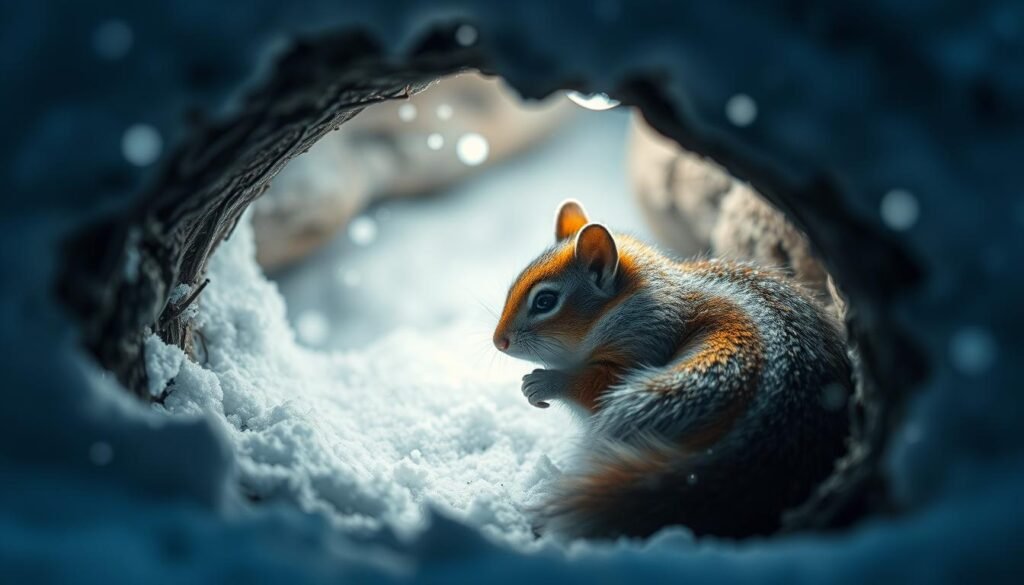
How do these striped furballs vanish when snow hits? They’re not hibernating like bears—they’re running nature’s sneakiest energy-saving program. Let me break down their cold-weather hustle.
Torpor Mechanics over Traditional Hibernation
Here’s the deal: Chipmunks enter torpor—a lighter sleep where their heartbeat slows to 4 beats per minute. I’ve tracked them waking every 3-4 days to nibble stored snacks. Unlike groundhogs that snooze for months, these guys risk midnight snack raids. Their body temp drops to 40°F, making them sluggish if predators crash their pantry. Talk about living on the edge!
Trait
Torpor
Hibernation
Duration
Days
Months
Heart Rate
4 bpm
3 bpm
Food Needs
Weekly
None
Food Hoarding with Cheek-Stuffed Caches
Their secret weapon? Those expandable cheek pouches become bulk grocery carriers. I once found a hidden stash under my log pile—327 acorns crammed into a tennis-ball-sized cavity. They’ll spend fall shuttling seeds like UPS drivers, stockpiling 8 pounds of food. That’s 10x their body weight! When blizzards hit, they munch cached meals between torpor cycles.
Three survival hacks that blew my mind:
Built-in alarm clocks: They instinctively wake before starving
Decoy burrows: Fake food stores distract thieves
Snow tunnels: Secret routes to above-ground snacks
Next time you see fresh tracks in powder, look closer. That mini commuter’s surviving winter through sheer grit—and killer snack management.
Chipmunk Reproduction and Pet Considerations
Who needs reality TV when chipmunk love stories unfold in your backyard? These striped romantics have spring flings that’d make Shakespeare blush. Let me spill the nuts-and-bolts details about their family life—and why keeping one as a pet isn’t like adopting a hamster.
Baby Boom on Fast-Forward
Here’s the scoop: Females go from first date to motherhood in 30 days flat. I once watched a mom juggle eight squirming kits—each no bigger than a thumb—while still managing her seed stash. Litters range from 2-8 babies, all born hairless and blind. You’ll get a kick out of this: By week six, they’re already digging practice tunnels in the nest.
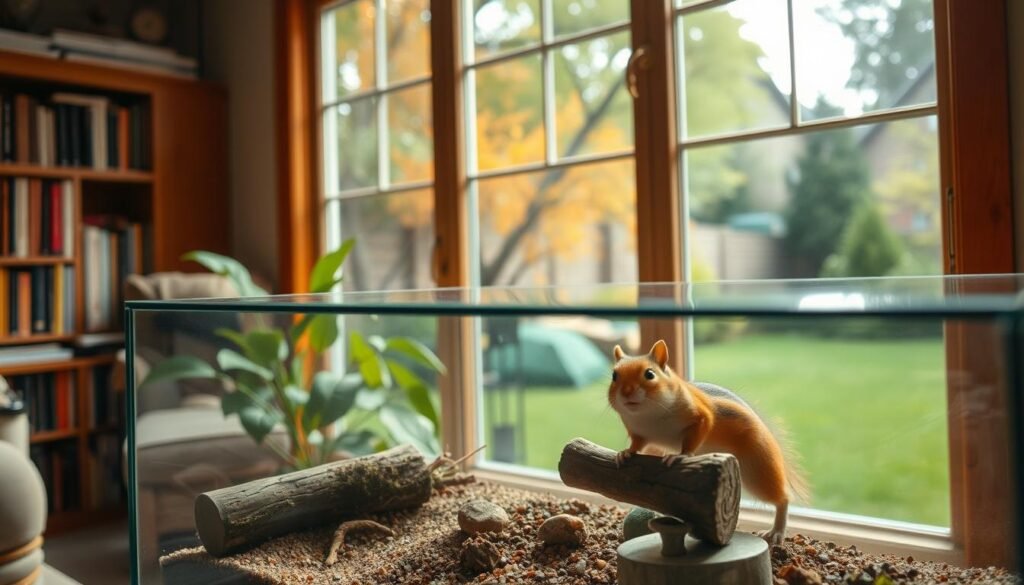
Thinking of adopting? Their “cage” needs to be a mini playground. I learned the hard way—anything under 4 feet long turns them into furry Houdinis. Line it with untreated wood chips and hiding spots. Pro tip: Add a sand bath—they’ll groom themselves better than most teenagers.
Three must-haves for happy chipmunk roommates:
Vertical space for climbing (they’re part squirrel, remember?)
Rotating toy selection to prevent boredom chewing
Daily nut puzzles to mimic wild foraging
Here’s the kicker: Their self-cleaning habits mean less work for you. I’ve seen them spend 20 minutes straight smoothing their stripes after a meal. Just don’t expect cuddles—these guys are more “look don’t touch” than your average pet.
Wrapping Up Chipmunk Facts as Seasons Shift…
As autumn leaves crunch underfoot, those striped sprinters are already plotting their next move. I’ve watched eastern chipmunk crews turn fallen acorns into forest currency, their pouches bulging like overstuffed wallets. Every seed they drop—or forget—helps shape North America’s woodlands. Nature’s gardeners with dirt under their claws.
Their burrow networks? Underground empires that outlast skyscrapers. Those tiny feet shuffle enough soil each year to fill a pickup truck. And get this: Their forgotten snack stashes sprout into trees decades later. Talk about playing the long game!
Next time you spot leaf litter twitching, remember—it’s not just some squirrel cousin. It’s a fur-covered ecosystem engineer. One that’s been redesigning landscapes since your grandparents were kids. So when winter whispers through bare branches, know this: Those striped hustlers are already…