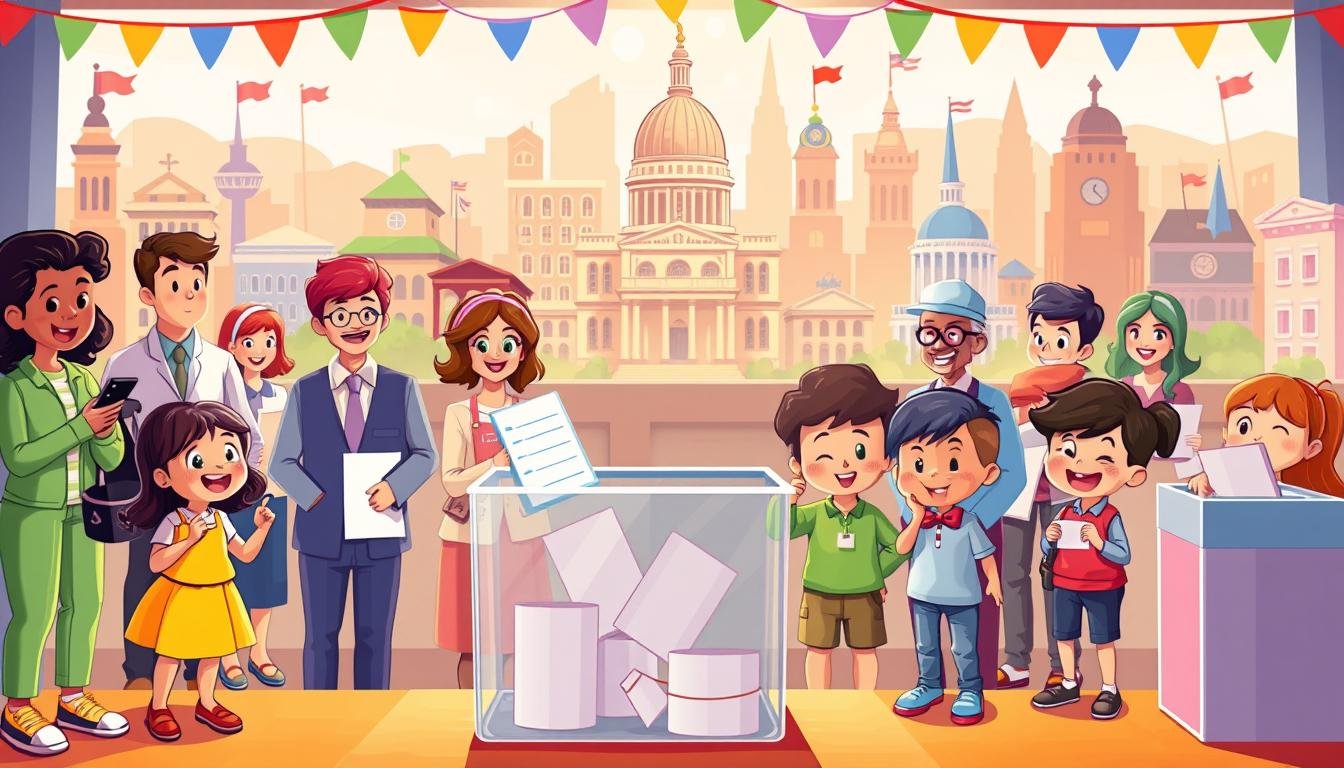
Think voting’s just for adults? Think again. Even if you can’t cast a ballot yet, the wild world of elections is way cooler than a recess game of four-square—and way more important.
Here’s the scoop: Back in 1845, politicians picked November for Election Day because farmers were done harvesting, and shopkeepers weren’t drowning in month-end bookkeeping. (Yes, adults actually agreed on something.)
But here’s where it gets spicy. For decades, only white men with property could vote. Then came 1920—boom! Women crashed the party. 1965? Civil rights heroes bulldozed racist voting laws. Today, over 240 million people in the United States can vote. That’s 73% of adults—bigger than Taylor Swift’s fanbase.
Wanna hear something wild? In 1872, Susan B. Anthony got arrested for voting illegally. She refused to pay the $100 fine and dared officials to jail her. Spoiler: They chickened out.
Stick around. We’re diving into why some states use paper ballots (hi, Vermont!), others use touchscreens (looking at you, Texas), and how your future vote could shape everything from school lunches to Mars colonies.
How Voting Empowers Individuals
Voting isn’t just a right—it’s a superpower in disguise. Picture this: in 1890, secret ballots became law, letting people choose without fear. Before that? You had to shout your pick in public. Talk about peer pressure!
Rights and Responsibilities in Action
Here’s the kicker: Every vote is a tiny earthquake in presidential elections. In 1960, JFK beat Nixon by less than 1 vote per precinct. Imagine being that person who stayed home that Tuesday in November!
Modern candidates know this. Take FDR—he rallied millions during the Great Depression by promising “a new deal.” His secret? Treating voters like teammates, not spectators.
Real Examples from Government History
Let’s get spicy. In 1845, Congress picked Tuesday in November for election day because farmers weren’t plowing and shopkeepers weren’t swamped. Smart move, right? But here’s the twist: They didn’t consider travel time for horse-drawn carriages. Oops.
Fast-forward to 2000. Bush vs. Gore came down to 537 votes in Florida. That’s fewer people than a high school basketball game. Moral? Your future vote could literally decide who becomes president.
So next time someone says “my vote doesn’t matter,” hit ‘em with this: 73% of adults can vote, but only 60% usually do. The ones who show up? They’re the ones rewriting history.
election facts for kids: Breaking Down the Voting Process
Let’s crack open the voting machine—figuratively, of course—and see how this democracy thing really works. Today, 18+ U.S. citizens can vote, but that wasn’t always true. In 1920, the 19th Amendment let women join the party, while the 1965 Voting Rights Act smashed racial barriers. Together, these changes reshaped who gets a say in our government.
Who Can Vote and Why It Matters
Imagine if only people with land could vote. That was America until 1856! Now, here’s the modern rulebook:
| Year | Who Could Vote | Game-Changer |
|---|---|---|
| 1789 | White male landowners | Constitution ratified |
| 1870 | Men of all races* | 15th Amendment |
| 1920 | Women nationwide | 19th Amendment |
| 1971 | 18-year-olds | 26th Amendment |
*States still found loopholes until 1965. That’s why showing up matters—every day someone fought for your ballot.
From Ballot Boxes to Secret Votes
Before 1890, voting worked like a school election: raise your hand, get judged. Then came the “Australian ballot”—private choices on identical papers. Suddenly, your nosy neighbor couldn’t see who you picked for president elected.
Modern systems mix tech and tradition. Vermont uses paper trails; Texas has touchscreens. But here’s the kicker: All methods must answer to government rules. Even that “I Voted” sticker? It’s democracy’s high-five.
Fun fact: Oregon votes by mail. Yes, you can pick the next president elected in pajamas. Just don’t spill coffee on the ballot—those stains could void your choice!
Step-by-Step Election Mechanics and System Surprises
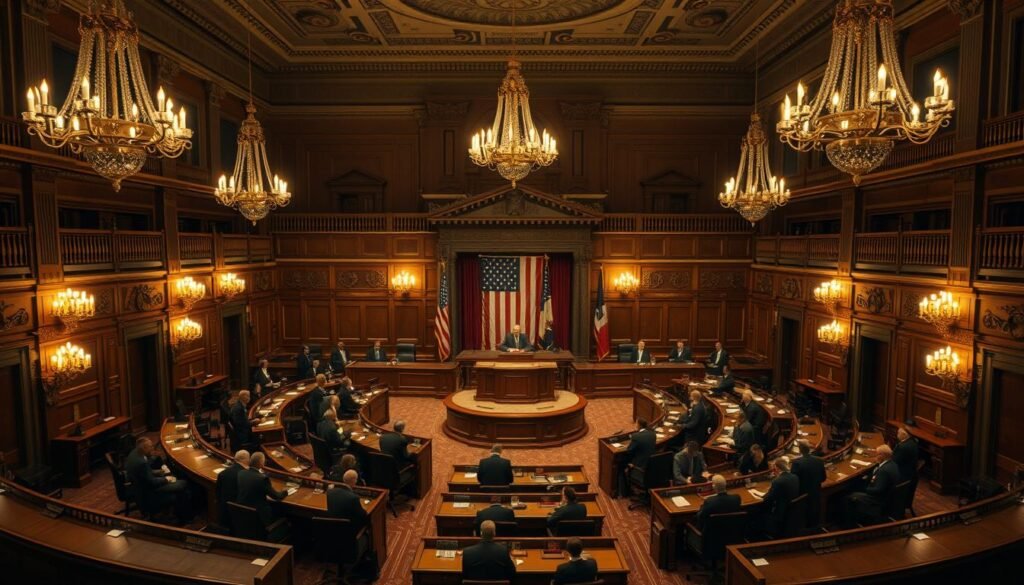
Ever wonder why some states get presidential candidates camping out for weeks, while others barely see a campaign ad? The answer’s in the numbers game called the Electoral College. Let’s break it down like a pizza party—every slice (state) gets a set number of pieces (votes), but not all slices are equal.
Understanding the Electoral College’s Role
Here’s how it works: Each state gets electoral votes equal to its Congress members. California has 54, Texas 40, Wyoming? Just 3. To win, you need 270 votes—like scoring runs in baseball. But here’s the twist: 48 states give all their votes to the statewide winner. Maine and Nebraska? They split theirs by district.
| State | Electoral Votes | Fun Fact |
|---|---|---|
| California | 54 | Most votes nationwide |
| Florida | 30 | Often decides close races |
| Wyoming | 3 | Minimum guaranteed |
Candidates don’t just chase popularity—they hunt for state math. A 70-year-old and a 40-year-old might both campaign hard in Michigan (15 votes) but skip Utah (6). Why? Battleground states flip elections. In 2016, Trump won Michigan by 0.3%—that’s 10,704 votes out of 4.8 million!
Even if you’re under 18, you can track how your state swings results. Oregon mails ballots 3 weeks early. Texas lets you vote while grabbing tacos—some locations stay open till 9 PM! The way time zones affect results? Networks can’t call races until polls close nationwide. Imagine waiting till midnight for Alaska’s final count!
This system’s quirky, but it’s why every voter matters. Your future ballot could tip your state—and the whole race. Now that’s power worth understanding.
Final Thoughts on Democracy and Voting in Real Time
The heartbeat of democracy isn’t in laws—it’s in the debates at your kitchen table. I’ve watched heated discussions about school funding turn into ballot measures, and casual chats about parks evolve into city council campaigns. That’s the magic: every conversation plants seeds for tomorrow’s policies.
Take same-day voter registration—now law in 21 states. That change started with college students arguing their case at town halls. Or mail ballots, which exploded during COVID debates. These things didn’t just happen; they were fought for.
Here’s what surprises me: Casting a ballot is just part of the story. Showing up at marches, writing letters, even sharing memes—they’re all threads in democracy’s fabric. Remember 2020? Those record-breaking turnout numbers? They reshaped entire political strategies overnight.
I’ll never forget watching Virginia’s 2017 governor race. A last-minute debate about healthcare flipped suburban voters, creating a blueprint for 2018’s midterms. Moments like these prove ideas can spark faster than campaign ads can air.
Our system keeps morphing. Automatic registration? Ranked-choice voting? These weren’t fringe ideas a decade ago. What’s next? Maybe your suggestion—shouted across a dinner table—becomes the next big thing. Now that’s a thought worth chewing on…