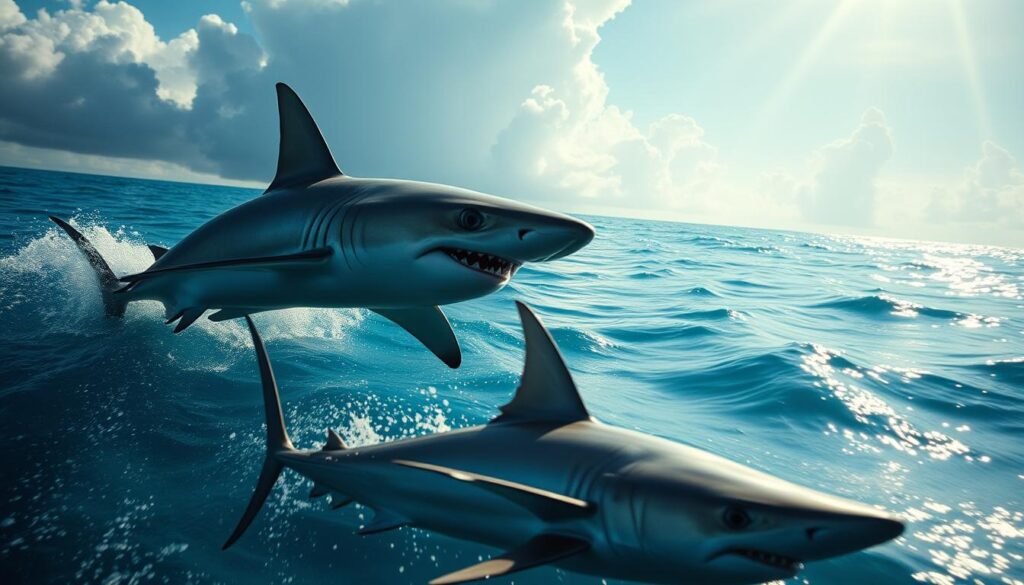
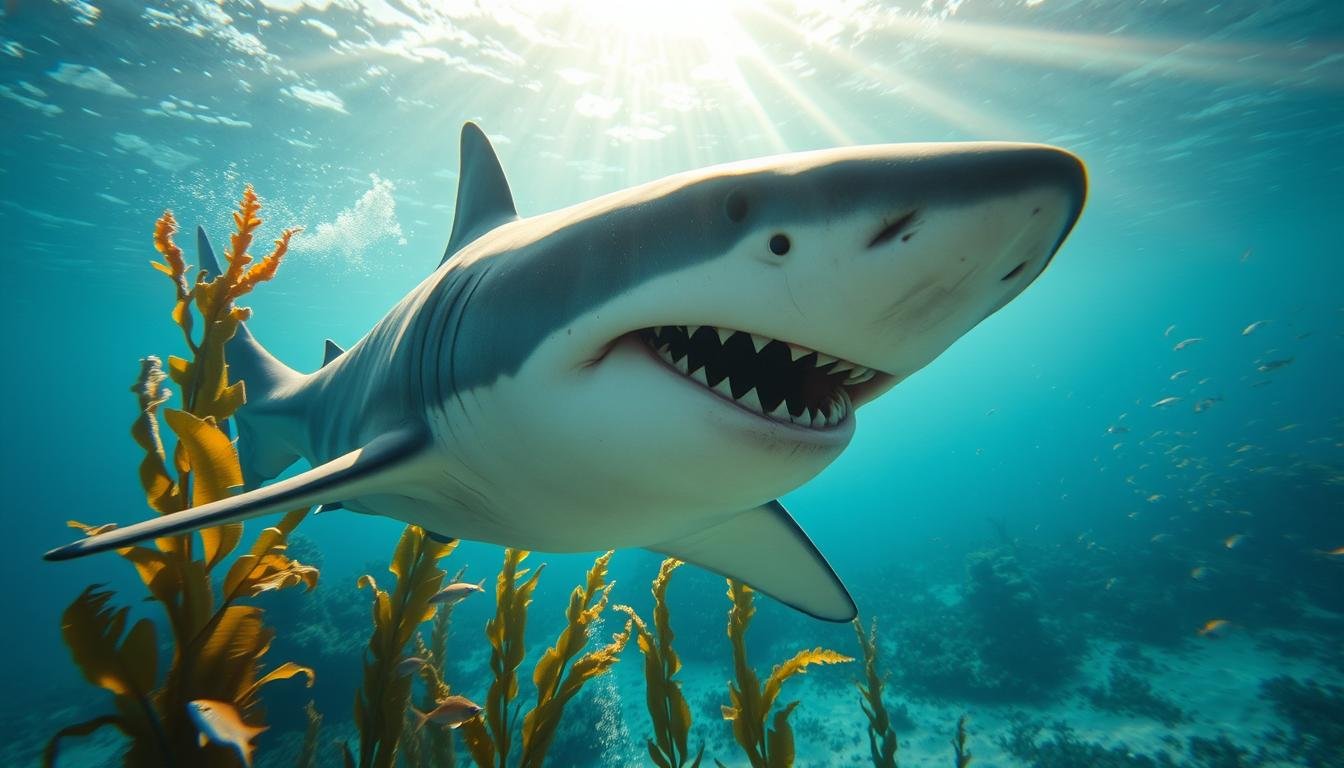
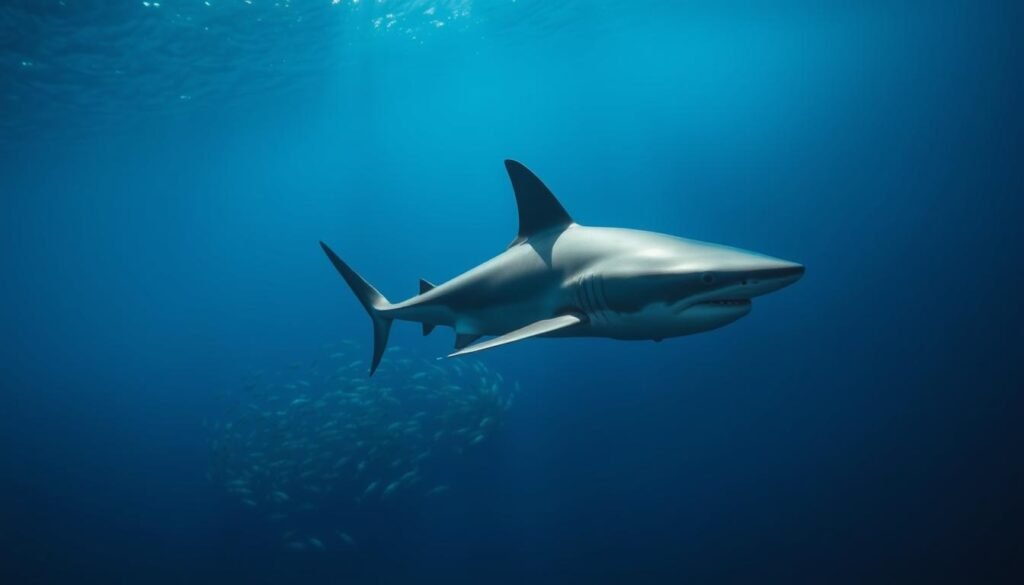
I’m diving into the amazing world of mako sharks, and you’re invited to join me on this fin-tastic adventure! These incredible creatures are known as the speed demons of the ocean, and for good reason – they can swim up to 46 miles per hour!
There are two main species of mako sharks: the shortfin and the longfin. The shortfin mako can grow up to 4 meters in length and weigh as much as 570 kilograms. That’s one massive fish! But what’s even more impressive is their speed, making them the fastest sharks in the ocean.
As we explore more about these fascinating creatures, you’ll discover why they’re classified as Endangered and why it’s crucial to learn more about them. Get ready to uncover some cool facts about mako sharks that’ll leave you hooked!
Meet the Ocean’s Fastest Sharks
Mako sharks are the Ferraris of the sea, and I’m excited to share their incredible story with you. As members of the Lamnidae family, they’re related to great white sharks, but what sets them apart is their incredible speed.
What Makes Mako Sharks Special
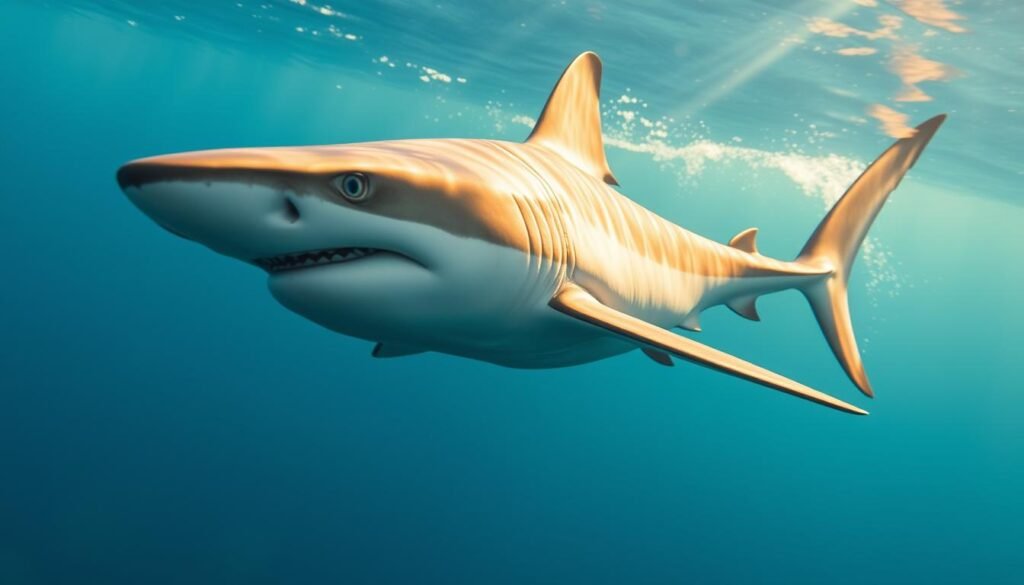
Mako sharks belong to the Isurus genus, a name derived from the Greek word for ‘equal tail,’ referring to their distinctive crescent-shaped tail. This unique feature is key to their speed, making them some of the fastest swimmers in the ocean. In fact, they can reach speeds of up to 46 mph, making them a formidable predator.
Speed Champions: Their streamlined bodies and powerful tails make them perfect for catching fast-moving prey like tuna and swordfish. To put their speed into perspective, imagine a race car zooming down the highway – that’s how fast mako sharks can swim!
The Two Mako Species: Shortfin and Longfin
There are two living species within the Isurus genus: the shortfin mako shark and the longfin mako shark. While both are incredibly agile, they have some key differences. The shortfin mako has a streamlined body and metallic blue coloration, making it a sleek hunter.
Characteristics
Shortfin Mako
Longfin Mako
Body Shape
Streamlined
Slimmer body
Pectoral Fins
Shorter
Longer
Speed
Faster
Slower
The longfin mako, on the other hand, has longer pectoral fins and a more slender body, making it less active than its shortfin counterpart but no less deadly. Understanding these differences helps us appreciate the unique traits of each species.
Mako Shark Facts for Kids: Speed, Size, and Super Senses
When it comes to speed, size, and super senses, mako sharks are among the most fascinating creatures in the ocean. As we explore these incredible animals, you’ll discover what makes them so unique.
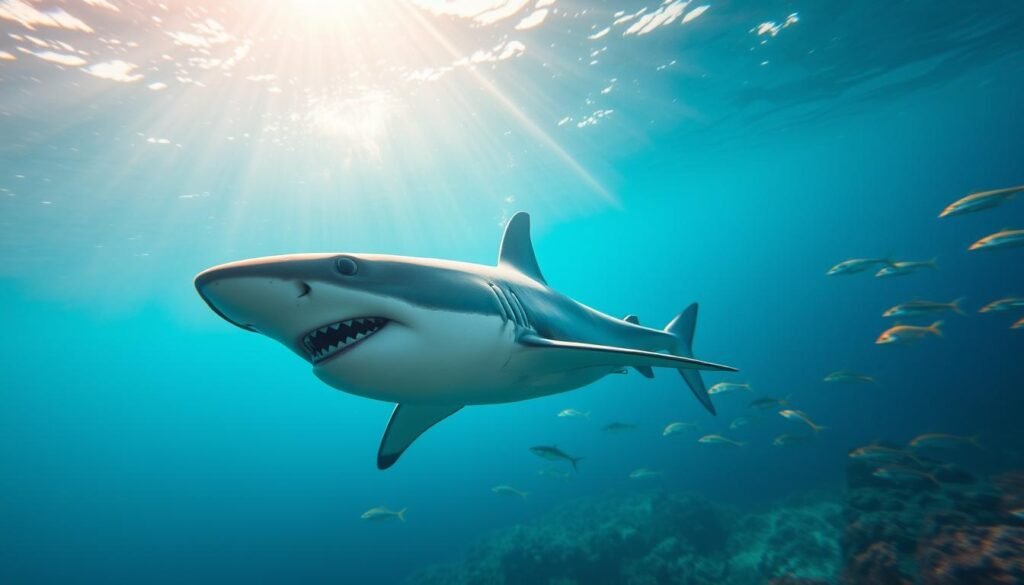
Mako sharks are known for their incredible speed. They can swim up to 46 miles per hour in short bursts, making them the fastest sharks in the ocean. This speed is crucial for catching prey like tuna and swordfish, which are also fast swimmers. To put that speed into perspective, imagine being on a bike, going as fast as you can, and then suddenly having to catch a friend who’s riding alongside you – that’s what it’s like for mako sharks when they hunt!
How Big Do Mako Sharks Get?
Mako sharks come in two main species: the shortfin mako and the longfin mako. On average, an adult shortfin mako shark measures between 8 to 10 feet in length and weighs around 298 to 507 pounds. However, some females can grow even larger, reaching lengths of up to 12 feet and weighing as much as 1,210 pounds. To give you a better idea, here’s a comparison table:
Mako Shark Species
Average Length (feet)
Maximum Weight (pounds)
Shortfin Mako
8-10
507
Longfin Mako
Similar to Shortfin
Less documented
Large Female Shortfin
Up to 12
1,210
Sharp Teeth and Killer Senses
Mako sharks have triangular-shaped teeth that are designed for catching and holding onto prey. Unlike some other sharks, their teeth are not serrated, which is perfect for gripping onto smooth-skinned fish. Their bite force is incredibly strong, recorded at around 3,000 pounds of force. This, combined with their excellent vision and acute sense of smell, makes them formidable hunters. They can detect movement and track fast-moving prey with ease, thanks to their large eyes and specialized sensory adaptations.
These super senses, along with their speed and powerful build, make mako sharks apex predators in the ocean. Their ability to detect and chase down prey is a testament to their remarkable adaptability and survival skills.
The Mako’s Awesome Body
The shortfin mako shark is a masterclass in streamlined design, built for speed and hunting prowess. Let’s take a closer look at what makes their bodies so special.
Built for Speed: Body Shape and Fins
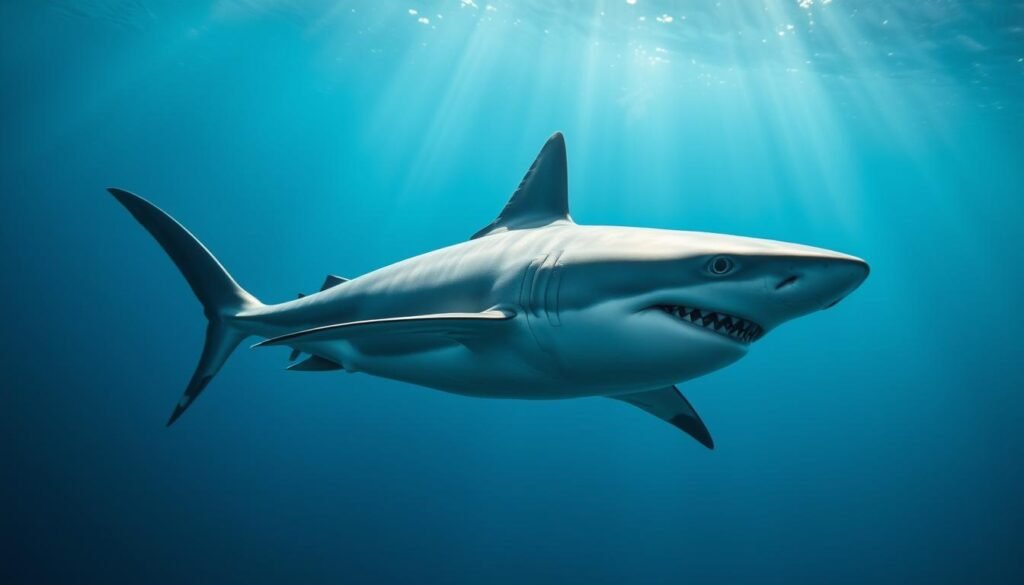
The mako shark’s body is cylindrical in shape, with a vertically elongated tail that propels it through the water at incredible speeds. Their pectoral fins are perfectly positioned to enhance their agility and maneuverability. This unique combination allows the shortfin mako to chase down prey with ease.
Feature
Description
Benefit
Cylindrical Body
Streamlined shape
Reduces drag, enhancing speed
Vertically Elongated Tail
Crescent-shaped
Provides powerful propulsion
Pectoral Fins
Positioned for agility
Enhances maneuverability
Hot-Blooded Hunters
Unlike most fish, mako sharks are “warm-blooded” or endothermic, meaning they can maintain a body temperature higher than the surrounding water. This is made possible by a special heat-exchange circulatory system. As a result, they have more energy and muscle power to chase down fast prey.
Colors and Camouflage
The shortfin mako exhibits a striking color pattern known as countershading. Their body is a brilliant metallic blue on top and white underneath, making it difficult for predators to spot them from above or below. Juvenile makosharks have a distinctive black marking on the tip of their head, which fades as they mature.
What Do Mako Sharks Eat?
Mako sharks are apex predators with a varied diet that includes some of the ocean’s fastest and most elusive creatures. Their feeding habits are a fascinating aspect of their biology, showcasing their adaptability and hunting prowess.
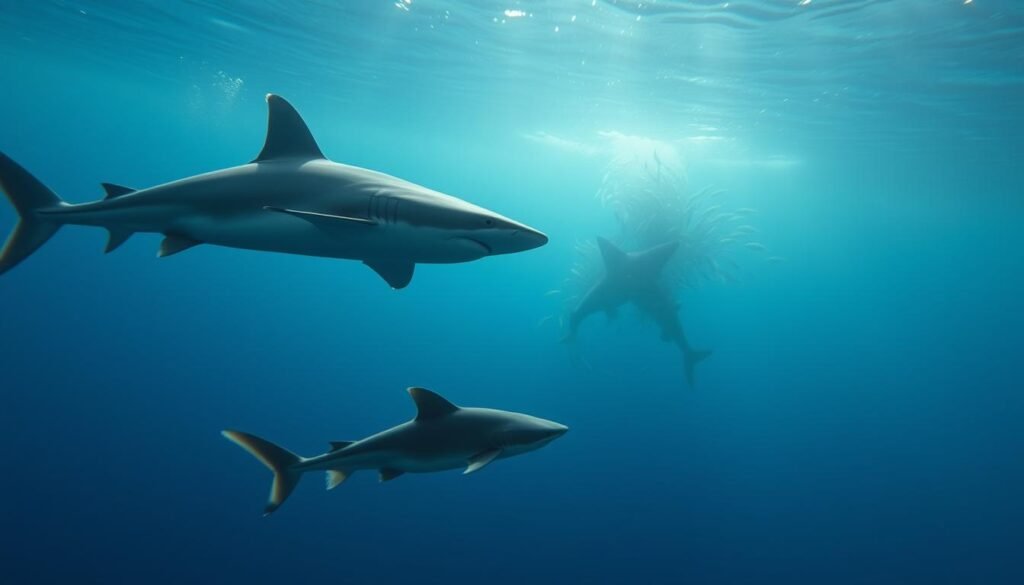
The shortfin mako shark feeds mainly on cephalopods and bony fish, including mackerel, tunas, bonitos, and swordfish. They employ a clever hunting strategy, swimming below their prey to gain the element of surprise.
This tactic allows them to lunge upward and tear off chunks of their prey’s flanks and fins. It’s a gruesome yet effective method that highlights their status as formidable predators.
Taking Down Swordfish
One of the most remarkable aspects of a mako shark’s diet is their epic battles with swordfish. Evidence from locations like Ganzirri and Isola Lipari in Sicily shows that shortfin mako sharks have been found with amputated swordfish bills impaled into their heads and gills.
This suggests that swordfish can seriously injure, and likely kill, mako sharks. Interestingly, these encounters often occur during the swordfish’s spawning season, when they are most vulnerable. This strategic hunting behavior demonstrates the mako shark’s intelligence and adaptability as predators.
By examining the diet and hunting strategies of mako sharks, we gain a deeper appreciation for these incredible creatures and their role in the ocean’s ecosystem.
Where Mako Sharks Live
If you’re wondering where mako sharks live, you’re about to embark on a journey across the globe. Mako sharks are found in temperate and tropical seas around the world, making them one of the most widespread shark species.
Ocean Homes Around the World
The shortfin mako inhabits offshore temperate and tropical seas worldwide, while the longfin mako is primarily found in the Gulf Stream and warmer offshore waters. For instance, you can find them in the waters around New Zealand and off the coast of Maine. These sharks are pelagic, meaning they spend most of their time in the open ocean rather than near coastlines.
Mako sharks are known to travel long distances. A remarkable example is a female shortfin mako shark that was tagged off California and later captured in the central Pacific by a Japanese research vessel, having traveled over 1,725 miles. Another specimen swam 1,322 miles in just 37 days, averaging 36 miles per day.
How Deep Do They Swim?
Mako sharks are capable of diving to considerable depths. They can be found from the surface down to depths of about 490 feet. Despite their ability to regulate their body temperature, making them one of the few endothermic sharks, they prefer warmer waters and are seldom found in waters colder than 61°F.
In the western Atlantic, mako sharks can be found from Argentina and the Gulf of Mexico to Browns Bank off Nova Scotia. Their ability to migrate across vast distances and inhabit various parts of the world’s oceans makes them fascinating creatures.
Baby mako sharks are born after a journey that’s as remarkable as it is unusual. You’re about to dive into the fascinating world of mako shark reproduction, where things get pretty wild.
How Mako Babies Are Born
Mako sharks are yolk-sac ovoviviparous, which is a big term that means they produce eggs that hatch inside the mother’s body. The shortfin mako shark, for instance, has a gestation period of about 15 to 18 months, which is unusually long. During this time, the developing embryos feed on unfertilized eggs in a process called oophagy. This unique feeding behavior helps the embryos grow stronger.
When they’re finally born, usually in late winter or early spring, shortfin mako pups are about 28 inches long. Females can have between 4 to 18 pups per litter and may only give birth every three years. This slow reproduction rate makes them vulnerable to population decline.
Sibling Snacking (Yikes!)
Let’s talk about something that might make you squirm: oophagy in mako sharks. While it might sound like a horror movie, it’s just how these sharks grow. Both shortfin and longfin mako embryos eat unfertilized eggs, and in some cases, they might even consume their weaker siblings. Longfin makos typically have only 2 pups per litter, but they’re much larger, measuring about 3.2 feet long at birth.
Mako Species
Litter Size
Newborn Length
Shortfin Mako
4-18 pups
28 inches
Longfin Mako
2 pups
3.2 feet
Are Mako Sharks in Danger? What Kids Can Do to Help
Let’s dive into the current state of Mako Sharks and see how we can help protect these incredible creatures. The shortfin mako shark is now classified as Endangered by the International Union for Conservation of Nature (IUCN). This is a big jump from its previous classification as Vulnerable in 2019.
So, what’s putting these amazing sharks in danger? The main threats include targeted commercial fishing, sport fishing, and getting caught accidentally in nets meant for other fish. Mako Sharks also have a slow reproduction rate, which makes it hard for their numbers to bounce back when too many are caught.
But there’s hope! The shortfin mako is listed on Appendix II of CITES, which means there’s international cooperation to regulate the trade of their products. You can help too! Start by learning and sharing shark facts to dispel myths. Support organizations that work to protect our oceans, reduce your use of plastics, and make sustainable seafood choices.
Mako Sharks play a crucial role in keeping our oceans healthy as apex predators. By protecting them, we’re helping the entire ocean ecosystem. So, become an ocean advocate! Continue learning about these fascinating creatures and inspire others to join you in making a difference for mako sharks and our ocean’s future.