Get ready, young weather detectives! Hail forms inside storm clouds when water droplets freeze into amazing ice balls in summer. This creates a wild meteorological magic trick that surprises everyone.
These frosty projectiles aren’t like regular raindrops. They’re nature’s frozen surprise, falling from thunderclouds like icy cannonballs. Hail facts for kids tell a fascinating science story about how these ice balls form high up in the atmosphere.
Imagine tiny water droplets dancing inside huge storm clouds. They get tossed up and down by strong air currents. They freeze, grow, and collect ice layers until they become too heavy and fall to earth. Each hailstone is like a unique frozen sculpture with its own amazing journey.
Scientists have studied these incredible ice formations for decades. They’ve found amazing details about their formation. Some hailstones can grow bigger than golf balls, making summer storms into extraordinary weather events.
Ready to become a hail expert? Let’s explore the chilly, thrilling world of these unexpected ice balls. We’ll uncover the scientific secrets behind their formation!
What Makes Hail Different from Regular Ice
Hail is not just frozen water. It’s a unique weather phenomenon that turns water droplets into ice high up in the sky. Unlike regular ice, hail has a story of temperature, movement, and the sky’s acrobatics.
The Secret Life of Supercooled Water Droplets
Imagine water playing a mind-bending game of temperature hide-and-seek. Supercooled water droplets exist in a magical state below freezing point while remaining liquid. These rebellious droplets defy normal physics, waiting for the perfect moment to transform.
Water stays liquid below 32°F (0°C)
Droplets need a trigger to freeze
Tiny dust particles can initiate freezing
Why Hail Forms in Warm Weather
It might seem strange, but hail forms in warm summer thunderstorms. Strong updrafts in thunderclouds create a perfect environment for ice crystals to develop and grow.
The Dance of Ice Crystals in Clouds
Ice crystals perform an aerial ballet inside thunderclouds. As they move up and down through different temperature zones, they collect layers of supercooled water. This gradually builds mass and creates unique hailstone structures.
Hail Formation Stage
Temperature Range
Process
Initial Formation
Below 32°F
First ice crystal creation
Growth Phase
-10°F to 32°F
Accumulation of water layers
Final Stage
Varies
Falling to ground as hailstone
Understanding hail formation shows us nature’s incredible complexity. These icy travelers remind us that weather is an ever-changing system full of surprises.
The Amazing Journey of a Hailstone Through the Sky
Imagine a tiny ice crystal starting an epic journey high above the earth. This is the amazing story of how a small speck turns into a stunning ice ball in storm clouds.
Cloud updrafts act like nature’s magical elevator, launching these tiny ice crystals into the cold upper atmosphere. As the hailstone travels, it meets supercooled water droplets. These droplets freeze instantly, adding layers to its growing structure.
Hailstones start as small ice particles
Powerful updrafts lift them high into thunderstorm clouds
Each trip through the cloud adds another layer of ice
The journey isn’t smooth. Hailstones bounce and collide within cloud updrafts, creating unique patterns and shapes. Some hailstones can make multiple trips up and down before becoming too heavy to remain suspended.
Hailstone Stage
Characteristics
Initial Formation
Tiny ice crystal in thundercloud
Growth Phase
Collecting water droplets and freezing layers
Final Stage
Heavy ice ball falling from sky
When the hailstone becomes too massive for cloud updrafts to support, it plummets to earth. This creates those surprising ice balls that can startle us during summer storms.
Mind-Blowing Sizes: From Pea-Sized to Bowling Ball Hail
Get ready to be amazed by giant hailstones! Most hailstones are small, but some can grow huge. When Mother Nature decides to go big, she really means business!
Imagine hailstones starting as small as a pea but growing to be huge. They can even knock out a car windshield in seconds. The record hail size is so big, it sounds like something from a sci-fi movie!
Record-Breaking Hailstones in History
In 2010, Vivian, South Dakota, saw a hailstone that amazed everyone. It was 8 inches in diameter and weighed nearly 2 pounds. This was a record that made meteorologists very happy.
Largest recorded hailstone: 8 inches in diameter
Weight: 1.93 pounds
Location: Vivian, South Dakota
Year: 2010
How Scientists Measure Giant Hail
Scientists don’t just guess the size of giant hailstones. They use special tools and methods to measure them. They’re like detectives of the sky, tracking every detail about these frozen giants!
The Vivian, South Dakota Monster
The Vivian hailstone is more than just a record. It’s a meteorological legend. Bigger than a softball and heavier than most newborn babies, it shows the extreme power of severe thunderstorms. Scientists studied it like a precious artifact from nature’s most intense moments.
Next time you hear a thunderstorm coming, remember: those small ice pellets could turn into something huge!
Hail isn’t just a boring white chunk of ice falling from the sky. These fascinating frozen droplets come in a surprising array of colors and shapes. They tell a unique story about their journey through the atmosphere.
The color of hailstones can vary dramatically depending on their formation environment. Dust, minerals, and even microscopic organisms can paint these icy travelers in unexpected hues:
Dirty brown from soil particles
Grayish tones from pollution residue
Pale blue from mineral interactions
Milky white from dense ice crystals
Hail shapes are equally fascinating. Unlike regular raindrops, hailstones develop unique structures during their cloud travels. Temperature and wind currents sculpt these ice formations into remarkable designs.
Scientists categorize hail shapes based on their unique characteristics:
Spherical: Classic round shape
Irregular: Lumpy and asymmetrical
Conical: Pointed or peaked
Layered: Showing distinct growth rings
Each hailstone is like a tiny meteorological fingerprint. It records its complex atmospheric creation through its color and shape. The next time a hailstorm hits, take a closer look. You might just discover a miniature work of art!
Hail Facts for Kids: Nature’s Frozen Laboratory
Calling all young scientists! Hail isn’t just a weather phenomenon – it’s a frozen playground for curious minds. Our backyard can become a real-world research station where hail experiments spark imagination and learning.
Exploring hail requires both excitement and caution. Safety during hailstorms is key for budding researchers. Let’s dive into some cool ways to study these icy marvels while staying protected!
Fun Experiments with Hail
Get ready to turn hailstones into your personal science project! Here are some awesome hail experiments you can try:
Measure hailstone size using a ruler
Track melting rates with a stopwatch
Create a hailstone collection journal
Compare hailstone shapes and textures
Hailstorm Safety Tips
When hail starts falling, knowing hailstorm safety is vital. It can protect you from dangers. Check out these critical guidelines:
Seek immediate indoor shelter
Stay away from windows
Protect yourself from impacts
Listen to local weather alerts
Hail Size
Potential Damage
Safety Level
Pea-sized (1/4 inch)
Minimal
Low Risk
Golf ball-sized (1.75 inches)
Significant property damage
High Risk
Softball-sized (4.5 inches)
Extreme damage
Extreme Danger
Pro tip: Always prioritize personal safety during hail events!Hail experiments are fascinating, but your well-being comes first. Remember, understanding nature’s frozen laboratory is an exciting journey that requires careful observation and smart precautions.
Strange Places Where Hail Falls Around the World
Hail doesn’t follow the usual rules. Our planet has some really unusual places where hail falls. These places range from tropical paradises to hot deserts. It’s amazing how ice can fall in such unexpected places.
Let’s look at some amazing global hail patterns. They will make you think differently about ice falling from the sky:
Hawaii experiences surprising hailstorms despite its warm climate
Dubai encounters unexpected ice balls in its desert environment
Australian outback regions report random hailstone formations
Scientists studying hail have found interesting patterns. Some places get hail in seasons and locations you’d never guess. This unpredictability keeps meteorologists around the world very interested.
Region
Unusual Hail Frequency
Average Hailstone Size
Hawaii
2-3 times per year
0.5-1 inch
Dubai Desert
Rare occurrences
0.25-0.75 inch
Brazilian Rainforest
1-2 times annually
0.5-1.5 inches
Next time you’re traveling, watch the sky. Nature’s frozen surprises might just pop up unexpectedly!
The Thunderstorm Factory: How Storms Create Hail
Imagine a massive atmospheric kitchen where nature cooks up intense weather. Thunderstorm hail formation is like a wild science experiment above us. Storm updrafts act as master chefs.
Thunderstorms create perfect conditions for hail with powerful vertical air currents. These storm updrafts act like invisible elevators. They push water droplets high into the cold atmosphere.
Understanding the Vertical Dance of Air Currents
Inside a thundercloud, water droplets go on an incredible journey. Strong updrafts lift them into extremely cold zones where they freeze. As they rise and fall, layers of ice build up, creating the hailstone structure.
Updrafts can reach speeds of 110 miles per hour
Droplets get tossed around like ping pong balls in the cloud
Temperature differences can be extreme – from warm to freezing in seconds
Temperature: The Secret Ingredient in Hail Formation
Temperature variations are key in thunderstorm hail formation. When water droplets hit sub-zero temperatures at high altitudes, they freeze instantly. The cycling between warm and cold zones determines the size and complexity of the hailstone.
Altitude
Temperature
Hail Formation Stage
0-5,000 feet
50-70°F
Initial Water Droplet Formation
20,000-40,000 feet
-20 to -50°F
Freezing and Layer Building
Next time you hear thunder, remember you’re seeing nature’s ice-making machine in action!
Megacryometeors: The Mystery of Giant Ice Balls
Imagine walking outside on a clear day when suddenly – CRASH! – a huge chunk of ice falls from the sky. Welcome to the world of megacryometeors. These are the most puzzling unexplained ice falls that scientists can’t figure out.
These ice balls are not like regular rain or hail. They can weigh hundreds of pounds and seem to come out of nowhere. They fall even when the weather is calm, making it even more mysterious.
Size ranges from basketball to car-sized chunks
Often fall from clear blue skies
Can cause significant damage upon impact
Scientific explanation remains uncertain
Researchers have come up with a few theories about megacryometeors. Some think they might be caused by:
Aircraft condensation build-up
Unusual atmospheric conditions
Potential climate change impacts
Rare meteorological phenomena
Even as scientists keep studying, these giant ice balls show us how much we don’t know. They challenge our ideas about weather and keep scientists guessing. They wonder what other surprises the sky might have in store for us.
How Animals React to Hailstorms in Nature
Nature has amazing ways to survive hailstorms. Animals have developed special ways to deal with hail. They can sense storms coming and find safe places to hide.
Each animal has its own way to protect itself from hail. Their instincts and knowledge of their surroundings help them stay safe.
Snow Monkey Ice Ball Adventures
Japanese macaques show us how animals can enjoy hail. These smart monkeys play with hailstones instead of hiding. They roll and toss them, turning a scary situation into fun.
Macaques detect atmospheric pressure changes
They quickly identify safe zones during storms
Some monkeys interact playfully with fallen hailstones
Wildlife Shelter Strategies
Animals have clever ways to protect themselves from hail. They use:
Detecting atmospheric pressure shifts
Seeking immediate natural cover
Huddling together for protection
Using body positioning to minimize exposure
Different animals adapt in amazing ways. Birds hide in thick leaves, while mammals find shelter in rocks or underground. Their quick actions show nature’s incredible survival skills.
Animal Type
Hailstorm Survival Strategy
Birds
Dense vegetation cover
Mammals
Rock shelters, underground burrows
Primates
Group huddling, playful interaction
Nature’s resilience shines through these incredible animal survival strategies, proving that adaptability is key to weathering unexpected challenges.
Ancient Stories and Legends About Hail
Hail mythology goes back thousands of years. It shows how cultures saw hail as more than just weather. They believed it was a message from the gods.
In Greek myths, Zeus threw hailstones as punishment. This turned storms into stories of godly anger. It was like thunderstorms were battles with hail as the weapons!
Zeus used hail as divine punishment
Native American tribes saw hail as spiritual ammunition
European farmers believed in a mythical “Hail King”
Native American tribes had deep stories about hailstorms. They saw hail as proof of battles between thunder beings. Sky warriors battling with frozen projectiles was a key part of their tales.
Culture
Hail Interpretation
Significance
Greek
Zeus’s Weapon
Divine Punishment
Native American
Sky Battle Debris
Spiritual Conflict
European Folklore
Hail King’s Influence
Agricultural Protection
Christian traditions also have interesting views on hail. Saint Barbara was linked to protecting fields from hail. This turned a storm into a story of divine help.
These old tales show us hail was more than ice. It was a way for humans to express their fears and wonders.
The Hail Belt: America’s Ice Ball Hotspot
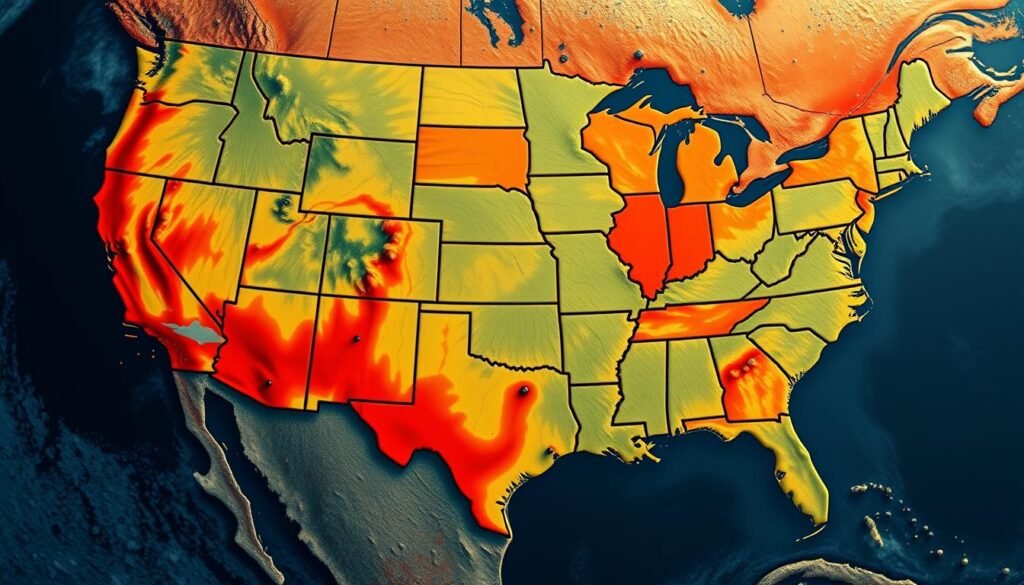
Get ready for an exciting journey through America’s most amazing weather event! The US hail regions, known as Hail Alley, cover a vast area. Here, ice balls fall from the sky with surprising regularity.
This unique zone spans across several states, making it a special weather spot. The Hail Alley includes parts of:
Texas
Oklahoma
Colorado
Wyoming
So, what makes these areas so unique? It’s the perfect mix of weather conditions. Cold air from Canada, warm winds from the Gulf of Mexico, and the Rocky Mountains all come together. This creates a perfect place for hailstones to form.
State
Hail Frequency
Average Hailstone Size
Texas
45-50 days/year
1-2 inches
Oklahoma
40-45 days/year
1-1.5 inches
Colorado
35-40 days/year
0.75-2 inches
Wyoming
30-35 days/year
1-1.75 inches
Storm chasers and weather fans love Hail Alley. It’s famous for being the best place to see hailstones. Nature’s ice ball arena awaits!
Protecting Cars and Buildings from Hail Damage
Hail can cause a lot of damage, costing nearly a billion dollars each year in the U.S. To protect your car and home, you need smart strategies and new technology.
Car owners can take several steps to lessen damage:
Invest in inflatable car covers for quick protection
Use thick padded blankets during hailstorms
Park in covered garages or sturdy carports
Get auto insurance that covers hail damage
Protecting buildings requires advanced technology. Homeowners can take several steps:
Install impact-resistant roofing materials
Apply protective roof coatings to absorb hail
Use hail-resistant shingles
Keep your roof in good shape to reduce damage
Some new methods include sonic hail cannons. They try to stop hail by making sound waves in clouds. Their success is not proven, but they show new ways to fight hail damage.
Being ready is important to fight hail. By using these methods, you can lower the risk of damage from severe weather.
How Scientists Study and Track Hailstorms
Tracking hailstorms is like being a weather detective. Scientists use advanced technology to solve the mystery of these icy balls. Hail research has grown a lot, making storm chasing a serious science.
Today’s meteorologists have many tools to predict and understand hailstorms. Their main tool is advanced radar technology that looks deep into storm clouds.
Modern Weather Radar Technology
Doppler radar is key for predicting hailstorms. It can:
Detect temperature changes in storm clouds
Measure wind speeds and updraft intensity
Spot areas where hail might form
Guess the size of hailstones before they hit the ground
Predicting Hail Formation
Predicting hailstorms is a complex task. Meteorologists use many data points to make accurate forecasts:
Atmospheric temperature profiles
Wind current measurements
Humidity levels
Cloud structure analysis
Supercomputers now process huge amounts of weather data. They turn raw info into exact storm predictions. These digital trackers can guess hail chances very well.
Even with all the tech, nature can surprise us. Hailstorms can catch even the most skilled weather experts off guard. This shows us how exciting and unpredictable the world of weather science is.
When Summer Snowballs Strike: Seasonal Hail Patterns
Summer hail occurrences might surprise you! Many think hail is a winter thing, but it loves summer storms too. Imagine a hot July day with ice chunks falling from the sky – it’s a weather shock!
Seasonal hail trends show warm weather is perfect for hail. Hot air rising quickly creates strong updrafts. These send water droplets up through cold layers, turning them into ice. The Great Plains, known as Hail Alley, sees the most summer hail.
Meteorologists watch these ice formations closely in late spring and early summer. Places like Colorado, Nebraska, and Wyoming see amazing hailstorms. Knowing these patterns helps communities get ready and protect against ice damage.
Hail doesn’t follow usual weather rules. It can show up on calm days, keeping us on our toes. Always be ready for those summer ice surprises!