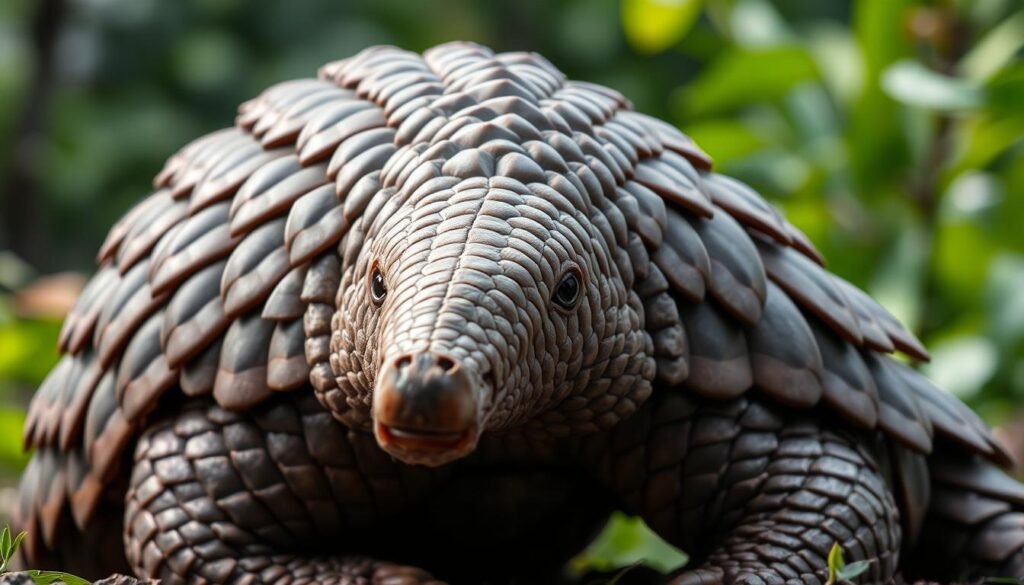
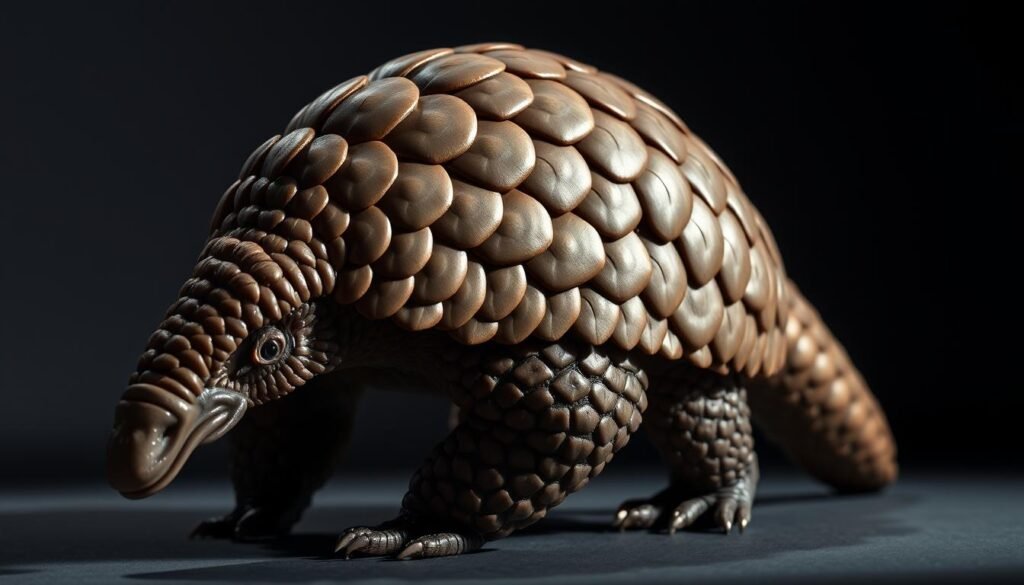
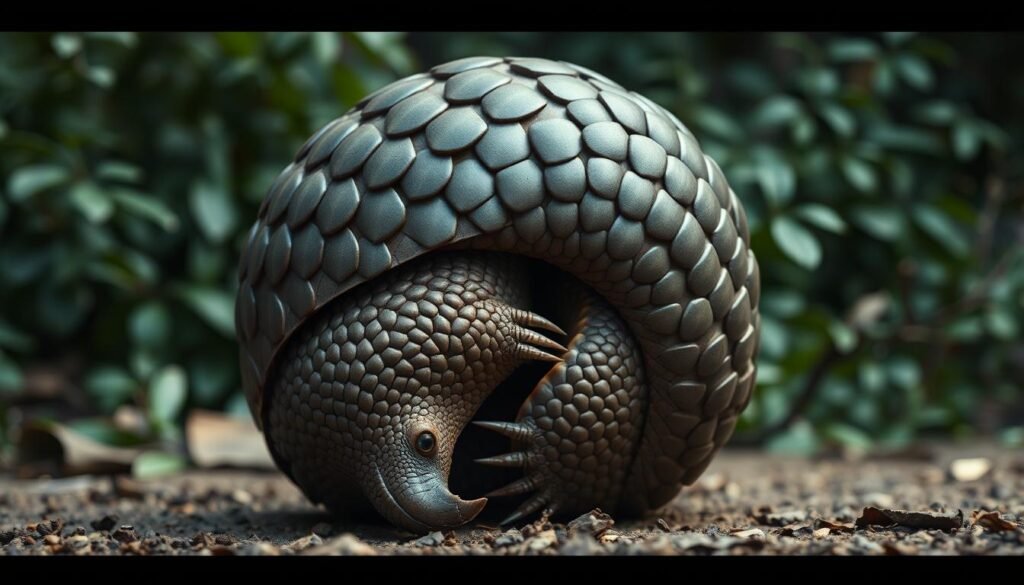
Pangolins are amazing scaly mammals that look like living artichokes. They have incredible powers! When threatened, they can roll into perfect balls, making them fascinating creatures.
Imagine an animal covered in tough, overlapping scales that can curl up tighter than a baseball glove. Pangolin facts show these mammals are nature’s ultimate defenders. Their armor would make knights jealous.
Scattered across Africa and Asia, pangolins climb trees, dig underground burrows, and hunt insects with their sticky tongues. Their prehistoric look and defense mechanisms make them stand out in the animal kingdom.
Each pangolin species has its own special tricks. Some are as big as a house cat, while others are small enough to fit in your hands. Their scale-covered bodies protect them from predators and give them an alien-like appearance that amazes everyone.
These extraordinary creatures aren’t just weird-looking – they’re vital to maintaining ecological balance by controlling insect populations. Their unique survival strategies have helped them thrive for millions of years. They prove that being different is an incredible survival skill.
Meet the Amazing Pangolin: Nature’s Living Pinecone
Imagine an animal that looks like a walking pinecone with scales! Pangolins are amazing mammals found in Asia and Africa. They are special creatures with unique features that set them apart from others.
Pangolin species have incredible features. They are called nature’s living armor because of their protective scales. Let’s explore what makes them so fascinating!
Eight different pangolin species exist worldwide
Found in Asian and African regions
Covered in protective keratin scales
Specialized insect-eating mammals
These remarkable mammals have developed incredible survival skills. Their armor-like exterior keeps them safe from predators. They can also curl into a tight ball when threatened.
Pangolin Region
Number of Species
Key Characteristics
Asia
4 Species
Smaller body size, forest dwellers
Africa
4 Species
Larger body size, grassland inhabitants
Pangolins might look like walking pinecones, but they’re actually sophisticated mammals. Their unique design helps them survive in tough environments.
Get ready to be amazed by pangolins! These incredible creatures are nature’s living marvels. They have unique features that make them stand out in the animal kingdom. From their remarkable scales to their incredible defense mechanisms, they are truly one-of-a-kind.
Their Incredible Armor-Like Scales
Pangolin scales are a true wonder of nature. Made from keratin, the same protein as human hair and fingernails, these scales create an impenetrable armor. Each scale acts like a natural shield, covering the pangolin’s body from head to tail.
Scales made entirely of keratin protein
Overlapping design provides maximum protection
Grows continuously throughout the pangolin’s life
The Perfect Defense Mechanism
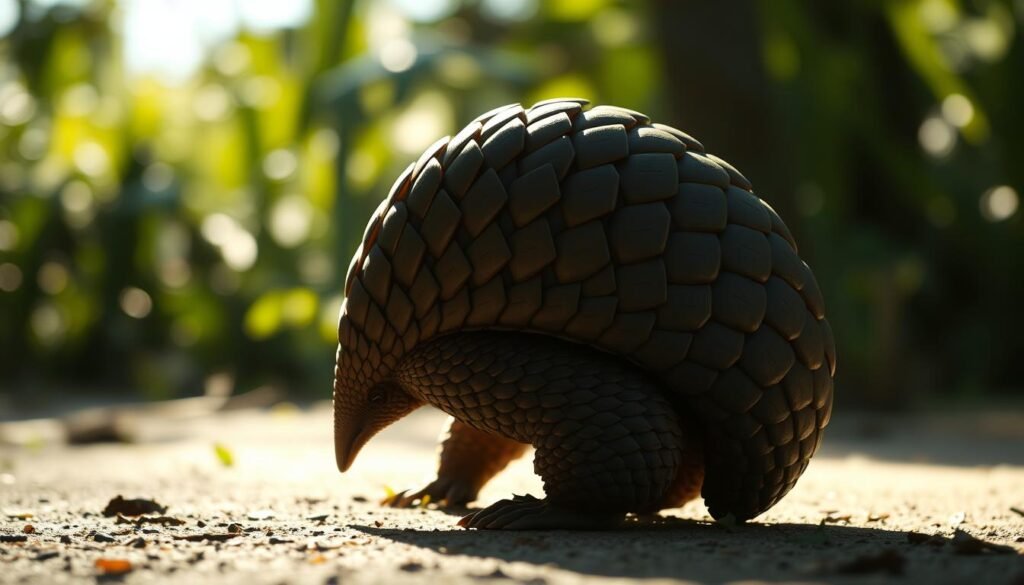
When threatened, pangolins turn into living armor balls. Their defense mechanism is so effective that predators find it nearly impossible to penetrate their protective shell. By rolling tightly into a compact ball, pangolins create a nearly impenetrable fortress of scales.
Defense Strategy
Effectiveness
Rolling into a ball
99% protection against predators
Scale coverage
Complete body protection
Super-Strong Senses
Pangolins have extraordinary animal senses that help them navigate their environment. Their sense of smell is remarkable, allowing them to detect insects and dangers with incredible precision. Despite poor eyesight, they rely on their acute hearing and powerful sense of smell to survive.
Eight Different Types of Pangolins Around the World
Pangolins are amazing creatures found in Asia and Africa. There are eight different types, each with special features. These make them stand out in the animal world.
The pangolin world is divided into two main groups:
Four Asian pangolins
Four African pangolins
Let’s dive into these incredible scaly mammals and their unique homes!
Asian Pangolin Species
Asian pangolins are a diverse group of scaled mammals. They live in different areas. The species include:
Chinese Pangolin
Sunda Pangolin
Indian Pangolin
Philippine Pangolin
African Pangolin Species
African pangolins are also very interesting. They have their own special traits. The African species are:
Giant Ground Pangolin
White-bellied Pangolin
Black-bellied Pangolin
Temminck’s Ground Pangolin
Region
Species Count
Habitat Range
Asia
4 Species
Southeast Asia, Indian Subcontinent
Africa
4 Species
Sub-Saharan African Regions
Each pangolin species has special ways to survive in their homes. This shows the incredible variety of nature.
Imagine an animal so unique it could be nature’s very own superhero! Pangolins are extraordinary creatures with remarkable survival skills. They have developed some of the most impressive defense mechanisms in the animal kingdom.
Pangolins are like walking armor tanks, designed by nature to protect themselves from predators. Their incredible adaptations make them true survival experts in the wild.
Rolling Into a Perfect Ball
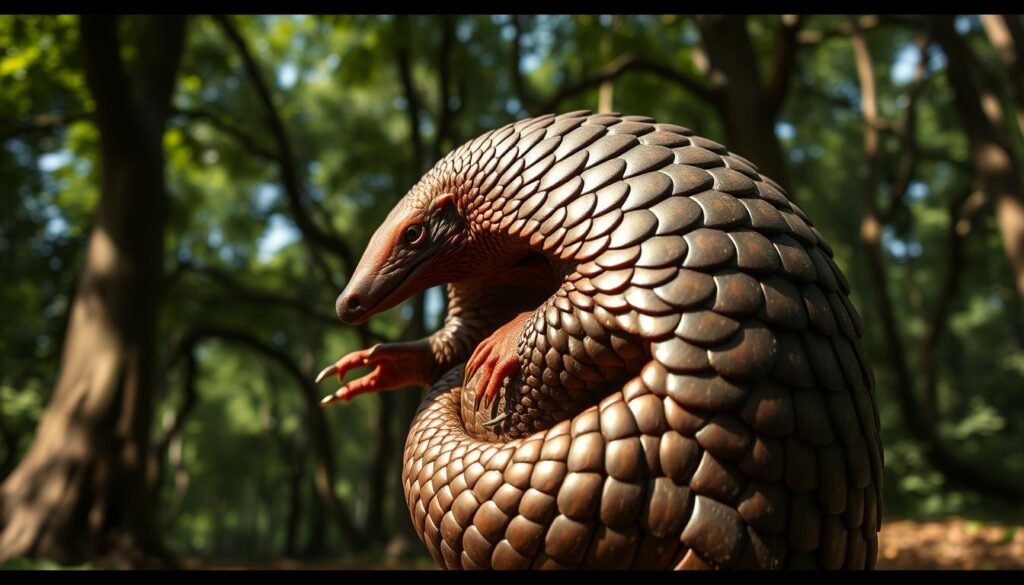
Pangolin defense is nothing short of miraculous. When threatened, these animals can instantly transform into a tight, impenetrable ball. Their overlapping scales act like armor, creating a protective shield that keeps them safe from predators.
Scales cover nearly 60% of their body
Can roll up in less than 1 second
Scales are made of keratin – the same material as human fingernails
Amazing Climbing Abilities
Climbing pangolins showcase remarkable agility. Their strong claws and flexible bodies allow them to navigate trees and branches with incredible precision. These climbing skills help them escape ground predators and find food in different environments.
Can climb vertical tree trunks
Use their powerful tails for balance
Reach heights up to 15 feet in trees
Super-Long Sticky Tongues
Pangolin tongues are a true marvel of nature. These incredible insect-catching tools can extend longer than their entire body length. Pangolin tongues are designed to reach deep into ant and termite nests, allowing them to feast on their favorite meals.
Tongue can be up to 16 inches long
Covered in sticky saliva
Can flick in and out 160 times per minute
The Secret Life of Baby Pangolins
Pangolin babies start their lives in a unique way. They are small and need their mothers for everything. This journey of animal parenting is both cute and amazing.
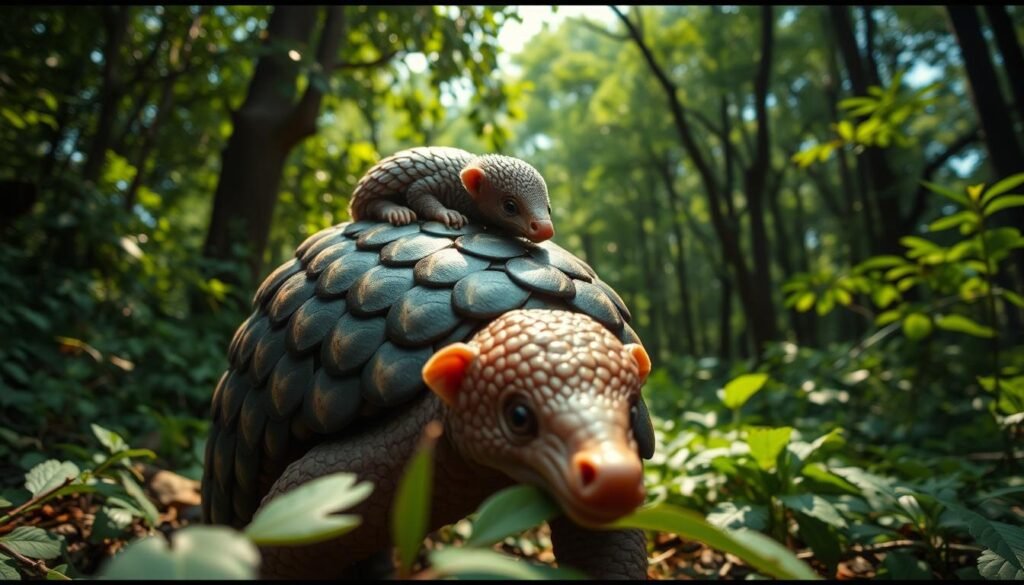
The way pangolins reproduce is special. Mother pangolins care for their babies in a surprising way. Baby pangolins ride on their mother’s back or tail for months.
Baby pangolins are born weighing around 100 grams
They stay with their mothers for about 3-4 months
Young pangolins learn survival skills directly from their mothers
Picture a baby pangolin holding onto its mother’s scales, exploring the forest. They grow fast, learning how to find food and avoid dangers. They also learn to curl up into a ball for protection.
Baby pangolins form a strong bond with their mothers. They learn to hunt, move around, and defend themselves. The mother teaches them everything they need to know.
The life of pangolin babies shows the amazing ways animals care for their young. Each baby pangolin is a symbol of hope for these unique animals. They learn the skills they need to survive in their tough environments.
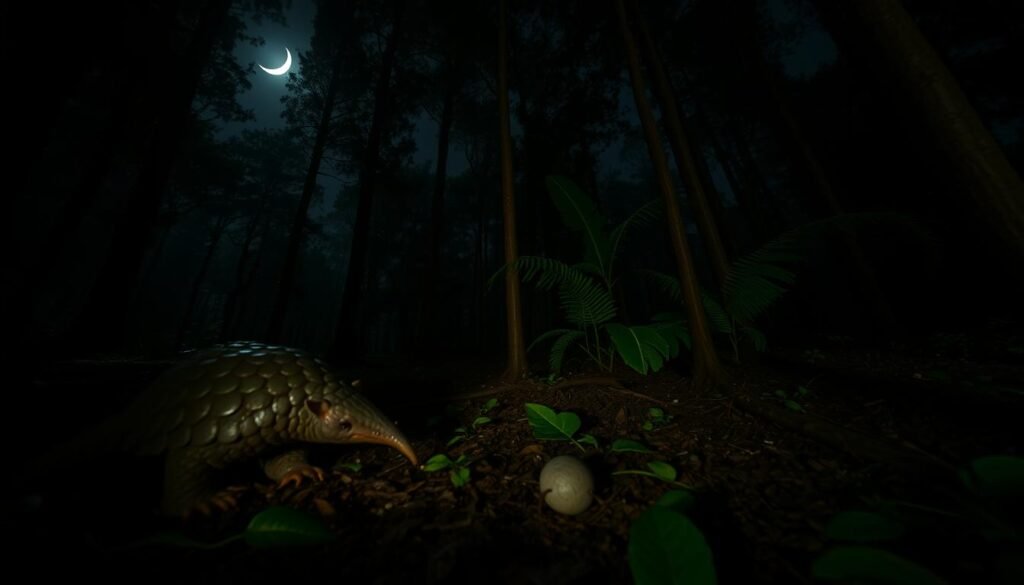
Pangolins live fascinating lives as unique nocturnal animals. They thrive in the shadows. Their daily routine shows their amazing survival skills.
When it gets dark, pangolins come out. They turn into stealthy hunters. Their nighttime behavior helps them avoid predators and find food.
Nighttime Adventures
Pangolin behavior at night is amazing. They explore alone, using their sense of smell. They move through dense forests and grasslands.
Rely on acute hearing and smell
Move silently through their habitat
Avoid dangerous predators
Hunting for Food
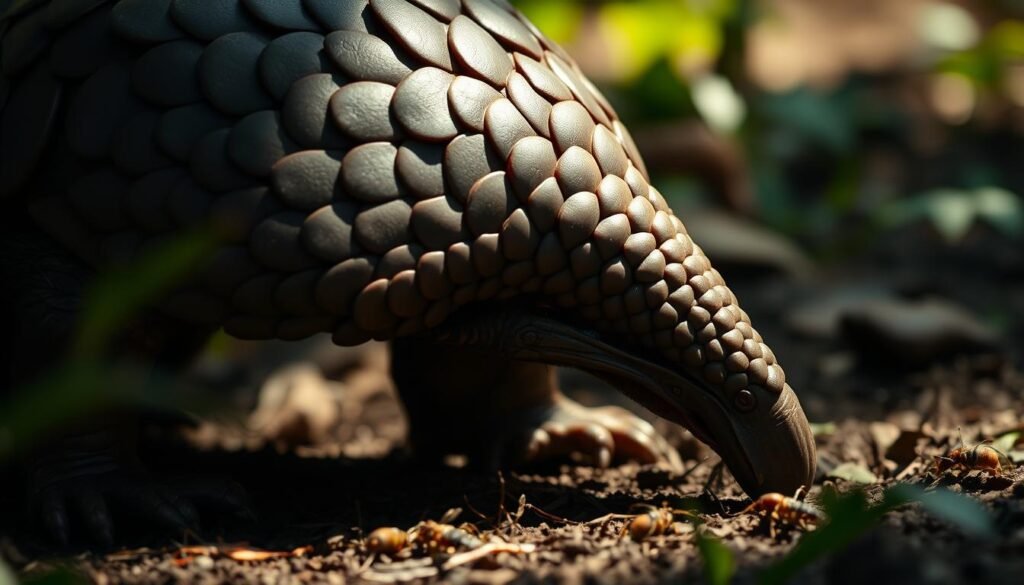
Pangolins are experts at hunting insects. Their long, sticky tongues can reach up to 16 inches. This lets them get insects from deep in ant hills and termite mounds.
Detect insect nests using powerful sense of smell
Break open nests with strong claws
Collect insects with specialized tongue
Building Homes and Burrows
Pangolins are skilled at building homes. They create underground homes for protection. They use their claws to dig complex burrows with many entrances.
These incredible creatures show amazing adaptability in their nightly routines. They are truly unique mammals.
The Mighty Pangolin Appetite: Insect-Eating Champions
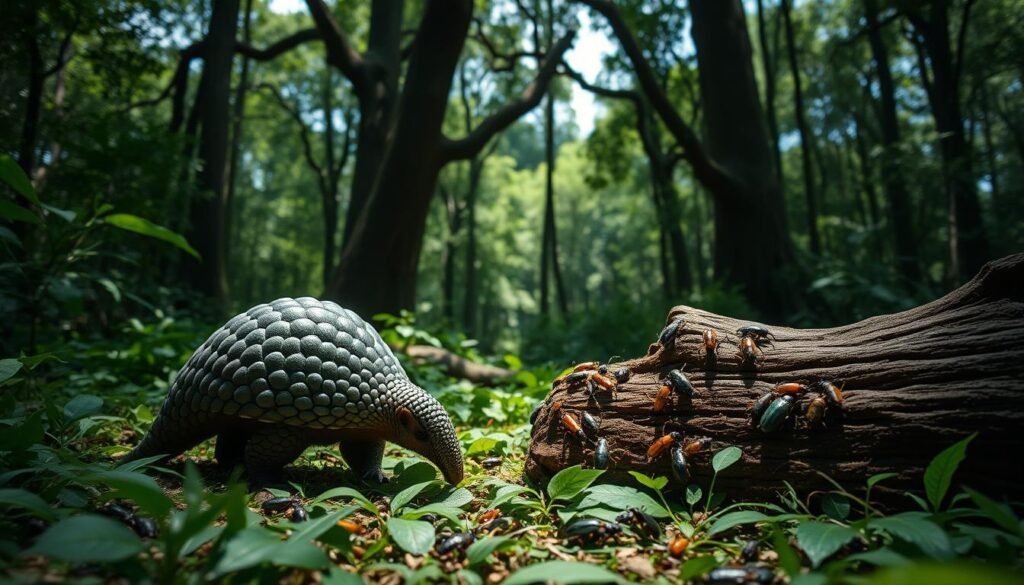
Pangolins are nature’s ultimate pest control experts. They have a specialized diet that makes them true insect-eating champions. An adult pangolin can eat an astonishing 70 million insects in just one year. That’s a lot of bugs!
Their ant-eating skills are impressive. Pangolins have unique adaptations for hunting termites and ants. Their long, sticky tongues can extend up to 16 inches. This lets them reach deep into ant hills and termite mounds with precision.
Daily insect consumption: Up to 200,000 ants and termites
Primary targets: Termite consumption and ant colonies
Hunting technique: Using powerful claws to break open insect nests
The pangolin’s termite consumption is key to ecosystem balance. They control insect populations, protecting crops and natural habitats. Their diet makes them environmental superheroes in the animal kingdom.
Equipped with powerful senses and razor-sharp claws, pangolins are perfectly designed for their insect-hunting lifestyle. They can smell ant nests from a distance. Then, they use their incredibly long tongues to scoop up insects with lightning-fast precision.
Pangolins are walking miracles of nature, with incredible specialized body parts. They have unique adaptations that make them survival experts in the wild.
Nature has given pangolins amazing animal defense mechanisms. They turn into living tanks. Their body is a masterpiece of evolutionary engineering, perfectly adapted to protect and survive in challenging environments.
Keratin Armor Protection
Imagine wearing a suit of armor that covers your entire body. That’s what pangolins do with their scales! These scales are made of keratin, the same material as human fingernails. Incredibly, these scales make up about 20% of their total body weight.
Scales act as a protective shield against predators
Provide excellent camouflage in natural habitats
Can be raised and lowered for different levels of protection
Digging and Climbing Equipment
Pangolins have built-in survival tools. Their powerful claws are like Swiss Army knives. They are perfect for digging burrows, tearing open termite mounds, and climbing trees with incredible precision.
The Amazing Extendable Tongue
The pangolin’s tongue is a true superpower. When hunting, this extraordinary organ can extend up to 16 inches – longer than the animal’s entire body! It’s sticky and thin, perfectly designed for capturing insects deep inside narrow tunnels and tree bark.
Tongue can be longer than the pangolin’s body
Extremely sticky surface for capturing insects
Can reach deep into tight spaces
Where Do Pangolins Live?
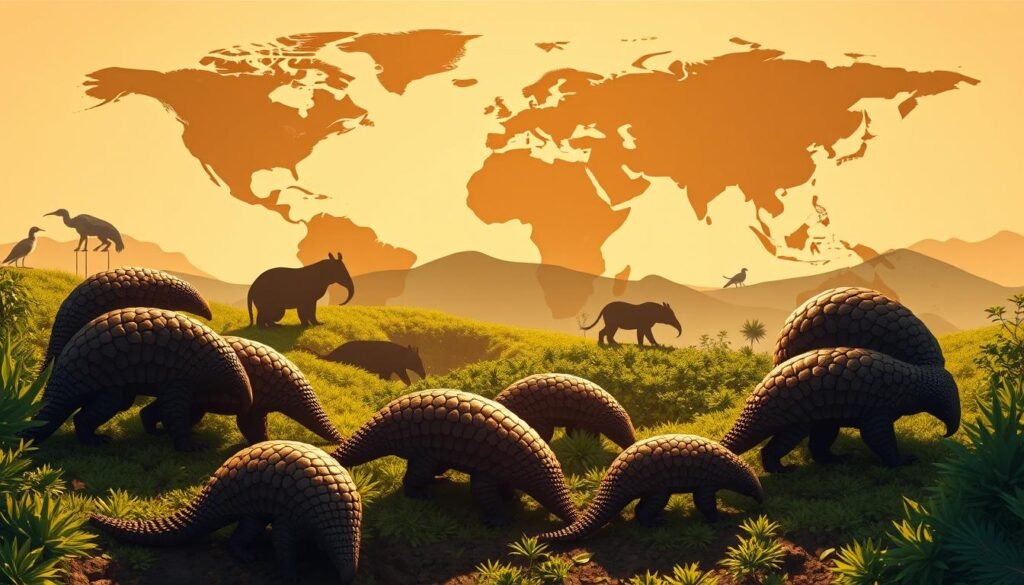
Pangolins are amazing creatures that live in many places. They can be found in both Asian and African continents. These animals are good at surviving in different environments, like dense forests and open grasslands.
Asian pangolins live in different places:
Tropical rainforests of Southeast Asia
Thick bamboo forests in China
Lowland woodland areas in India
Sparse brush regions in Indonesia
African pangolins also live in various places:
Savannah grasslands of Kenya
Woodland regions in South Africa
Dense Congo Basin rainforests
Mountainous terrains in Ethiopia
Where pangolins live depends on the species and the area. Some like to burrow underground. Others make nests in tree hollows or in dense plants.
Continent
Primary Habitat Types
Typical Species
Asia
Tropical forests, bamboo regions
Chinese, Sunda, Indian pangolins
Africa
Grasslands, woodland areas
Giant, Ground, Tree pangolins
Pangolin habitats are facing threats from humans. This makes it very important to protect these amazing animals.
How Pangolins Help Our Environment
Pangolins are secret heroes for our planet. They play a big role in keeping our ecosystems balanced. By eating lots of insects, they stop problems before they start.
But pangolins do more than just eat bugs. They protect farms and keep nature diverse. They eat millions of insects every year. This helps crops and plants stay healthy.
Consume up to 70 million insects annually
Protect agricultural ecosystems
Maintain natural insect population balance
Support soil health through feeding behaviors
Pangolins have amazing benefits for the environment. Their diet helps connect different parts of nature. When they dig, they make the soil better for plants.
Scientists see pangolins as important signs of a healthy planet. They keep insect numbers in check. This stops big problems in farms and nature.
The Giant Pangolin: Biggest of Them All
Size is everything when it comes to pangolins. The giant pangolin is the largest of all, fascinating both animal lovers and scientists. It’s the top in terms of size and strength.
Get ready to be amazed by the giant pangolin’s size. These animals are much bigger than their smaller relatives. They truly stand out in animal size comparisons.
Record-Breaking Size and Weight
Maximum recorded weight: 33 kilograms (72.6 pounds)
Typical length: 1.5 to 1.8 meters (4.9 to 5.9 feet)
Scale coverage: Approximately 70% of body surface
Unique Lifestyle Characteristics
The giant pangolin moves with surprising agility, despite its large size. These nocturnal animals have adapted well to their environment. They use their big body and strong claws to survive in tough terrains.
How they hunt is different from smaller pangolins. Their size lets them reach food and defend themselves better. They mainly eat ants and termites, using their amazing sense of smell.
Unlike other pangolins, the giant pangolin is very strong and can last a long time. They dig big burrows and protect themselves from predators with their size and scales.
Pangolin Family Life
Pangolin reproduction is a world full of unique parenting strategies. These mammals have developed amazing ways to raise their young. Their methods of nurturing are truly extraordinary.
Female pangolins reach sexual maturity around two years old. They usually have one baby per year. This baby gets a lot of care and protection from its mother, forming a very close bond.
Baby pangolins, called pangopups, ride on their mother’s tail for protection
Mothers carry their babies for several months, teaching them survival skills
Young pangolins learn hunting and defense techniques directly from their parents
The first few months of a pangolin’s life are very important. Mothers create safe burrows to nurse and teach their young. They teach them how to find food and use their scales for protection. These lessons are key for survival in the wild.
Pangolin fathers don’t play a big role in raising their young. The mother does most of the work, showing a unique approach to parenting in the mammal world.
Clever Pangolin Tricks and Behaviors
Pangolins show off their smarts with amazing survival skills. They are experts at adapting to tough environments. Their behavior is full of clever ways to find food and stay safe.
Pangolins have incredible tricks to survive. Their sense of smell is like a GPS, leading them to hidden insect nests. They can find ant and termite colonies deep underground, making them skilled hunters.
Use extremely sensitive nostrils to locate food sources
Create complex climbing strategies to reach hard-to-reach places
Roll into a perfect defensive ball when threatened
Climbing is another skill they’re good at. Pangolins have sharp, curved claws for climbing trees and moving through tough terrain. Their strong tails help them balance and move with precision.
Survival Skill
Unique Adaptation
Purpose
Scent Tracking
Hyper-sensitive Smell
Locate Hidden Insect Nests
Defense Mechanism
Armor-Like Scales
Protection from Predators
Mobility
Strong Curved Claws
Tree Climbing and Exploration
Another smart move is their defensive posture. When danger comes, they curl into a tight ball. Their scales overlap, making a natural shield that keeps them safe.
The Smallest Pangolin Species
The long-tailed pangolin is the smallest in the pangolin family. It weighs about 2-3 kg, or 4-6 pounds. These tiny creatures are a marvel of nature among scaly mammals.
Animal size comparisons show how unique these small pangolins are. They are as small as a house cat. Their delicate scales and compact body help them move through dense forests and avoid predators.
Average weight: 2-3 kg
Length: Approximately 30-40 cm
Habitat: West African tropical forests
Their small size lets them fit into tight spaces and move quickly. Despite their size, they have impressive survival skills. They are experts at adapting to their complex ecosystem.
Pangolin Species
Average Weight
Primary Habitat
Long-tailed Pangolin
2-3 kg
West African Forests
Giant Pangolin
30-40 kg
Central African Rainforests
Despite their small size, they have amazing adaptations. They have sharp claws for climbing and can roll into a ball for protection.
Why We Need to Protect Pangolins
Pangolin conservation is a vital mission for wildlife protection. All eight pangolin species are endangered due to human threats. Poaching and habitat loss have pushed them to the edge of extinction, making urgent action necessary.
The global wildlife trade is the biggest threat to pangolins. Hunters capture them for their scales, believing they have medicinal value. Over 100,000 pangolins are trafficked yearly, severely impacting their populations in Asia and Africa.
Local and international groups are fighting to save these animals. Organizations like the World Wildlife Fund are working to raise awareness and protect habitats. Kids can help by learning about pangolins and supporting conservation efforts through education and campaigns.
Every action counts in saving these amazing animals. By understanding their challenges and sharing their importance, we can help. This way, we can prevent these incredible species from disappearing forever.