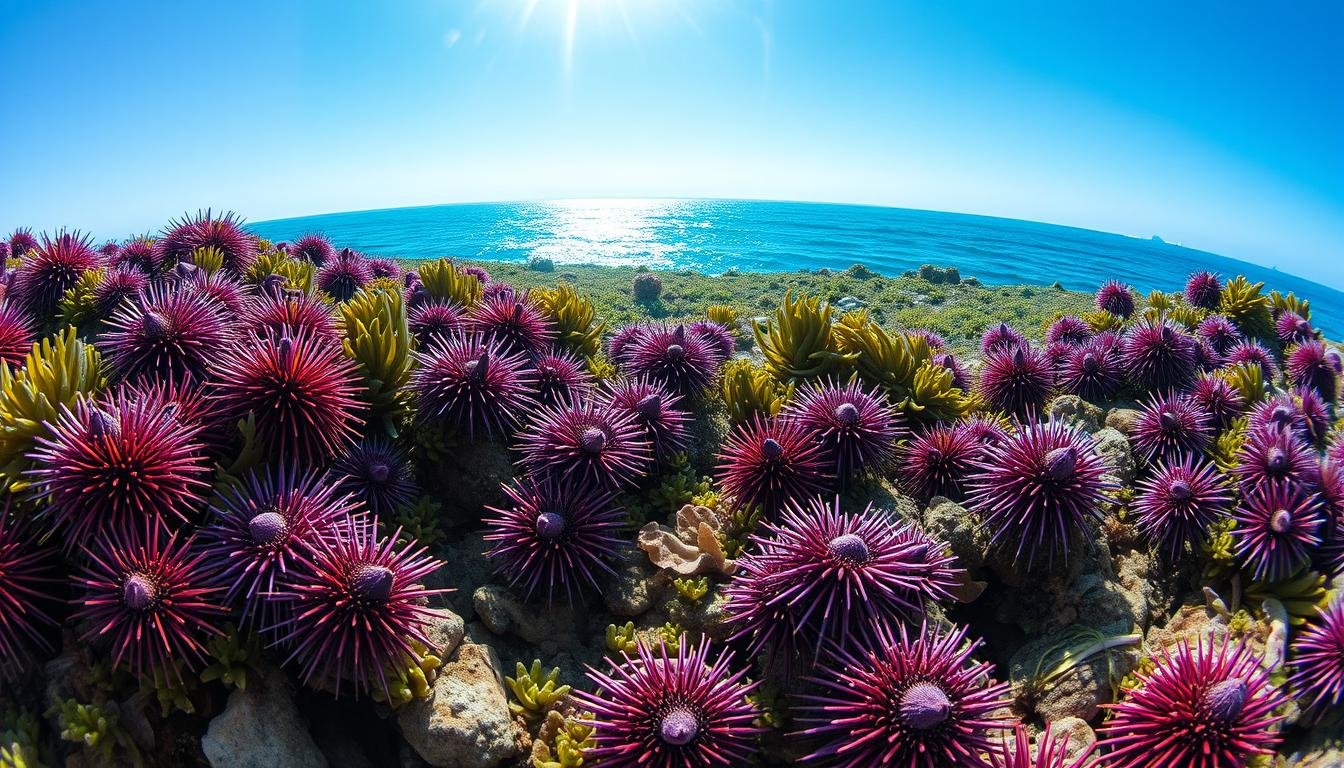
Sea urchins are nature’s amazing ocean cleaners! They move around the ocean floor, eating algae. This keeps the underwater world clean.
Picture tiny round balls with sharp needles slowly moving on the ocean floor. Sea urchins might look strange, but they’re vital to the ocean. They act like living vacuum cleaners, keeping the ocean healthy.
These amazing animals are part of a group called echinoderms, which also includes starfish and sea cucumbers. Their special body helps them live in different ocean places, from shallow waters to deep sea.
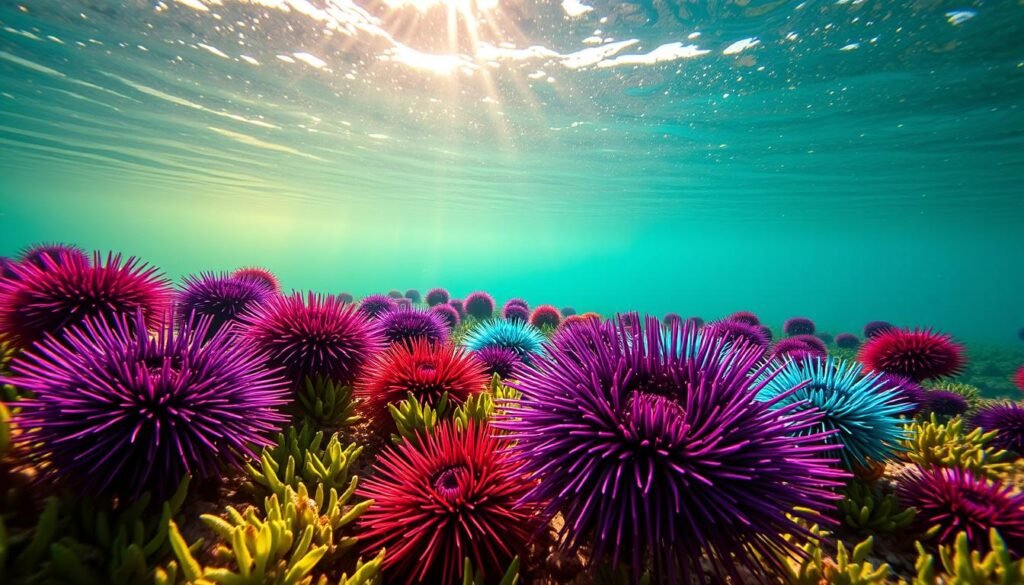
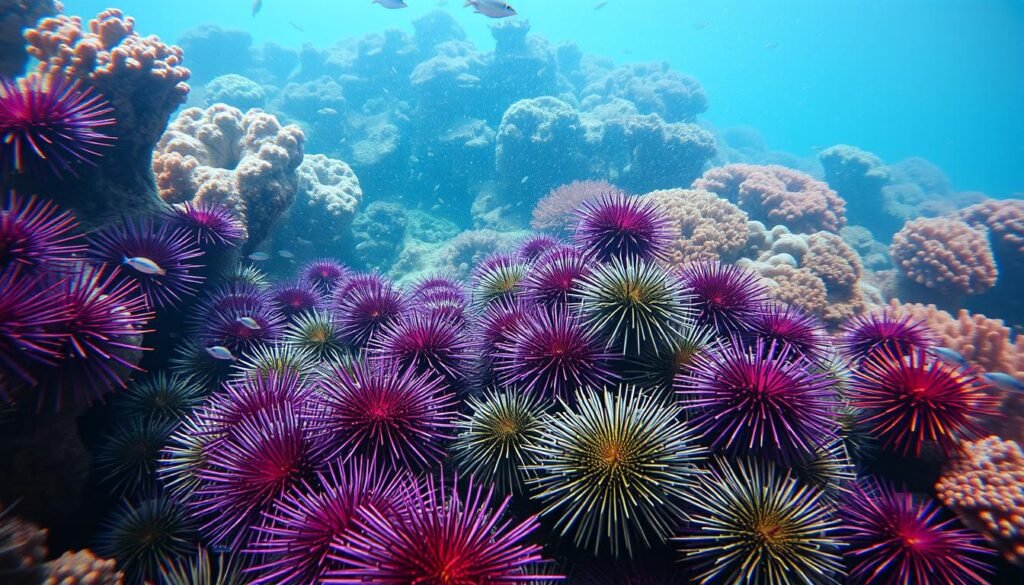
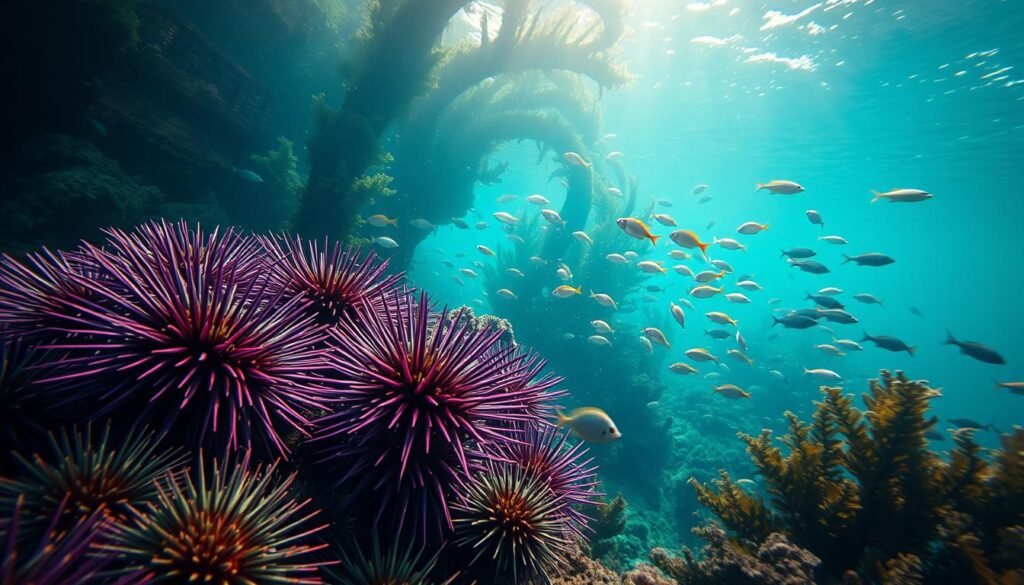
Sea urchins come in many colors and sizes, with spines that vary from small to long. Some live in warm waters, while others prefer cold deep-sea areas. This shows how flexible these creatures are.
Are you ready to learn more about these spiky ocean wonders? Let’s discover how they survive, move, and help keep our oceans balanced and beautiful!
What Are Sea Urchins and Their Amazing Features
Sea urchins are fascinating marine creatures with a unique body design. This design helps them survive in underwater environments. They have a remarkable sea urchin anatomy that makes them both beautiful and resilient.
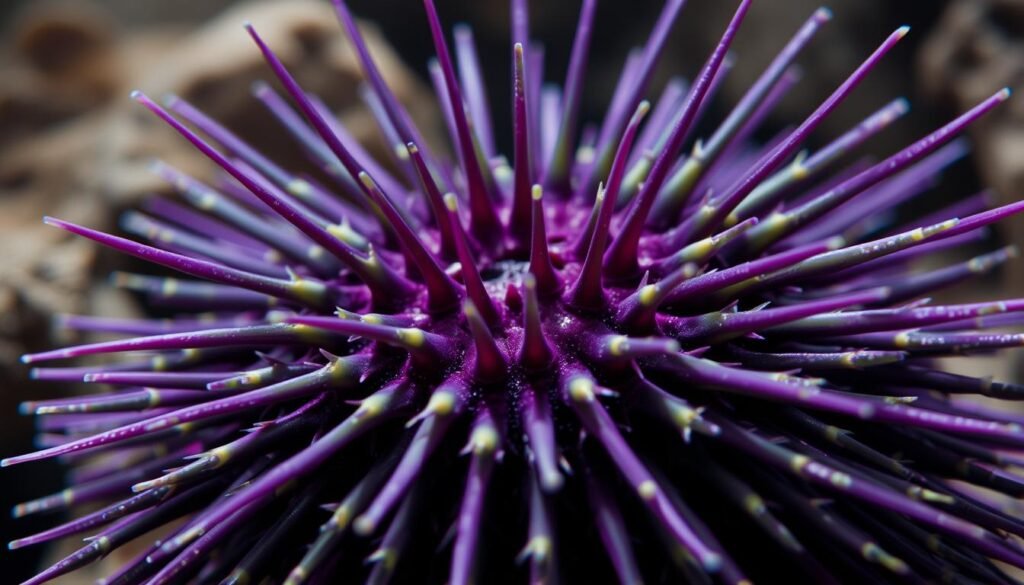
Imagine a living golf ball covered in moving spines – that’s what a sea urchin looks like! Their round body is protected by a hard shell called a test. This shell provides defense against predators.
Basic Body Structure
The sea urchin’s body contains several key components that make it special:
A central mouth located underneath the body
A protective outer shell (test)
Multiple movable spines
Tiny tube feet for movement
Types of Spines
Sea urchin spines come in different shapes and sizes. Some spines are long and sharp, while others are short and blunt. These spines serve multiple purposes:
Protection from hungry predators
Helping with movement
Sensing environmental changes
Movement Mechanisms
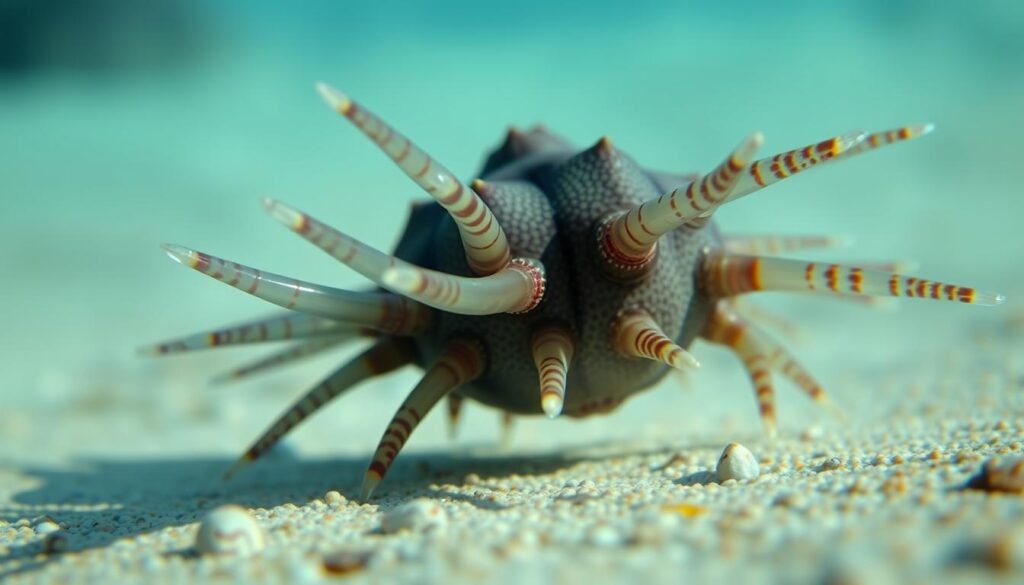
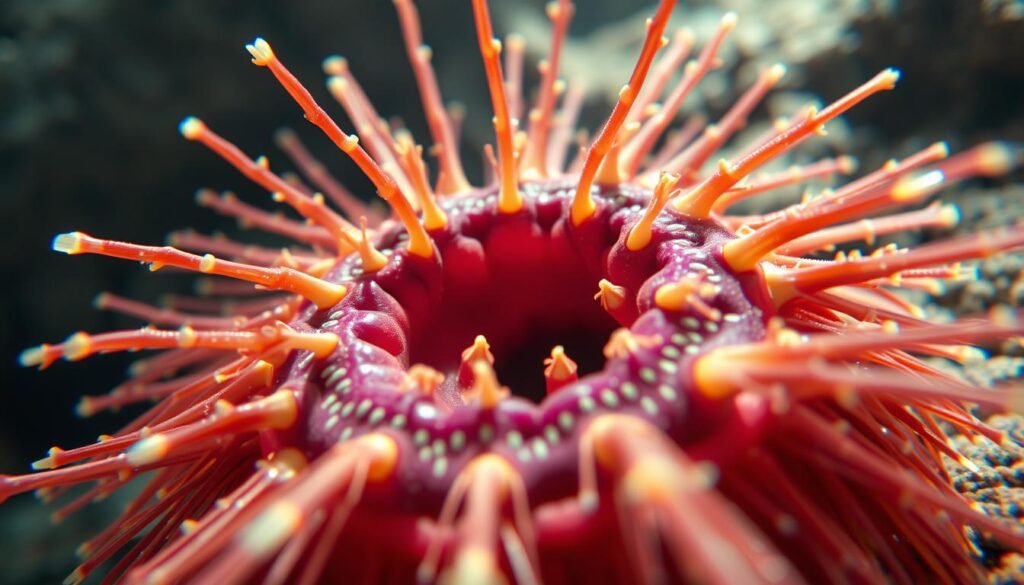
Sea urchins move using fascinating tube feet – tiny hydraulic appendages that work like suction cups. These tube feet allow them to crawl across rocky surfaces and attach themselves securely to underwater terrain.
Each tube foot can extend and contract, creating a walking-like motion. This motion helps sea urchins navigate their marine world with surprising efficiency.
Sea Urchins Facts for Kids: Meet These Ocean Creatures
Sea urchins are amazing ocean animals that look like spiky balls underwater. They have unique features that make them stand out. They come in many colors and sizes, from tiny to big, up to 4 inches wide.
Let’s explore some cool facts about these incredible ocean creatures:
Sea urchins can live up to 30 years in the right conditions
They exist in more than 950 different species worldwide
Colors include purple, green, red, and even white
These ocean animals have amazing survival skills. Their spiky exterior protects them from predators. They have special tube feet for moving and attaching to rocks.
Did you know sea urchins are key to marine ecosystems? They eat algae and keep coral reefs clean. They can even grow back damaged spines, making them very resilient.
Sea urchins live in oceans all over the world, from shallow reefs to deep floors. Their ability to adapt shows how incredible they are.
The Rainbow World of Sea Urchin Species
The ocean is full of sea urchin species that add color to the underwater world. These creatures show off vibrant colors, making them like living rainbows. They amaze marine lovers with their stunning variety.
Over 950 sea urchin species have been found in the ocean. Each one has its own special traits and ways to survive in the water.
Purple Sea Urchins
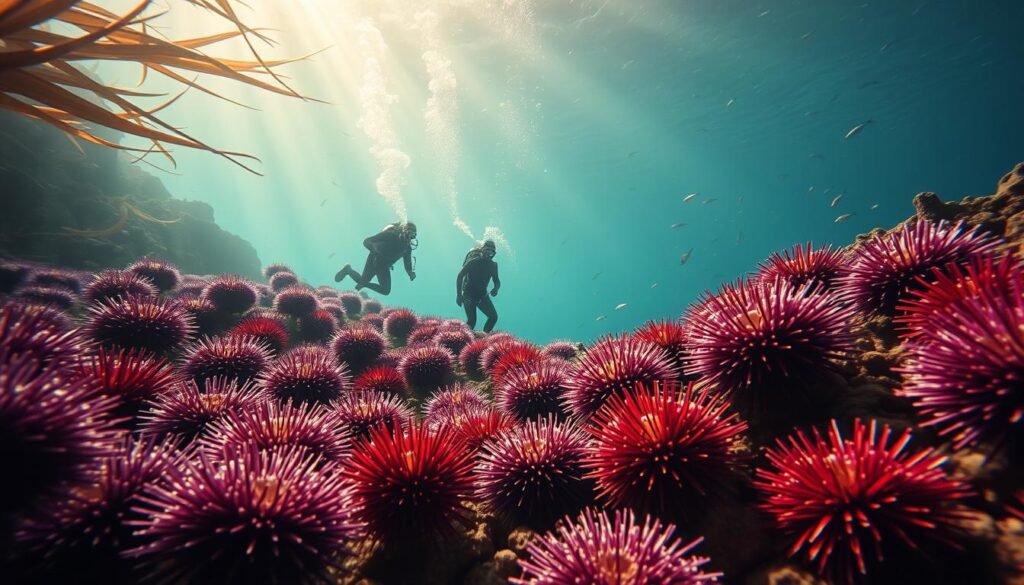
Purple sea urchins are well-known along the Pacific Coast. Their purple spines stand out against the sea floor. They live in shallow waters, using their spines for defense and to move.
Green sea urchins show off nature’s colors. They live in cooler waters and have green colors that match kelp forests. This helps them blend in.
Habitat: Kelp forests and rocky coastlines
Color Range: Light to dark green
Unique Feature: Excellent camouflage abilities
Red Sea Urchins
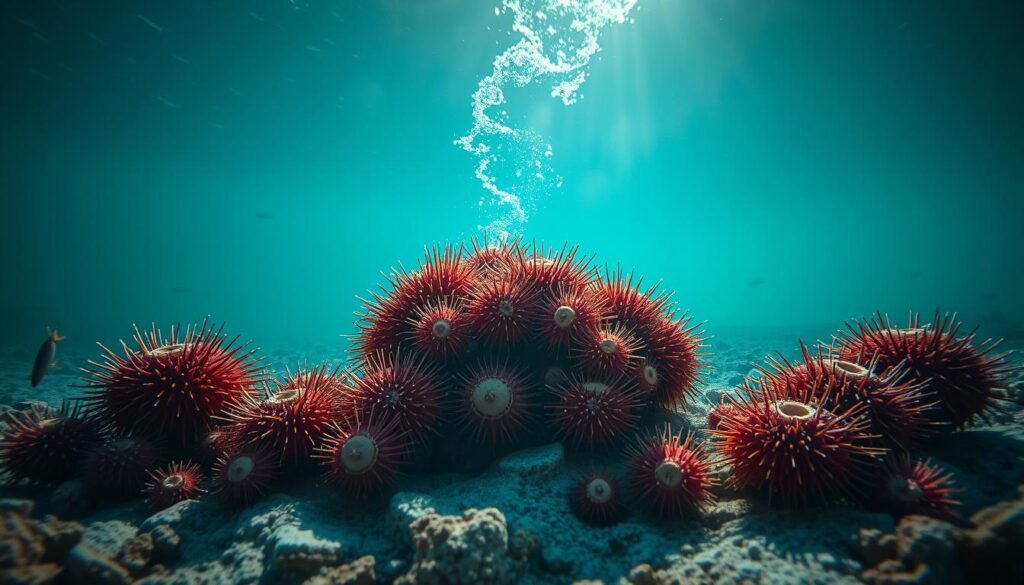
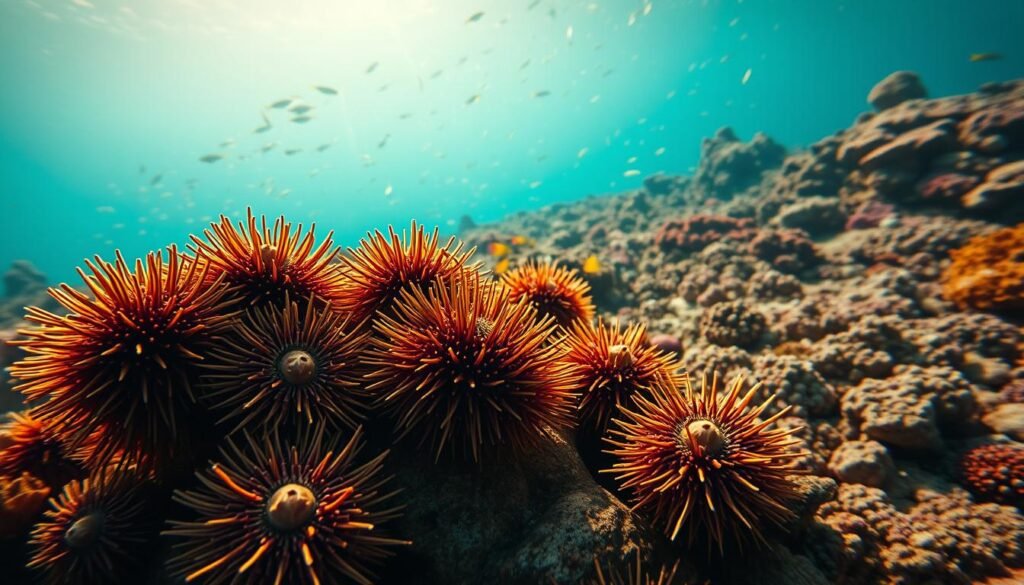
Red sea urchins add a splash of color to the sea. Their bright red to deep crimson spines are striking. They stand out in the marine world.
Characteristic
Details
Color
Bright red to deep crimson
Lifespan
Up to 200 years
Typical Location
Pacific Northwest coastal waters
These colorful sea urchins show the amazing variety of marine life. Each one adds its own beauty to the underwater world.
How Sea Urchins Protect Themselves
Sea urchins have amazing ways to protect themselves in the ocean. They use sharp, movable spines as their main defense. These spines act like a shield, keeping predators away.
Their spines are like needles, making it hard for predators to get close. Some sea urchins can even move their spines in all directions. This makes them almost impossible to reach.
Spine Length: Typically 1-3 inches long
Spine Movement: Can rotate 360 degrees
Spine Composition: Calcium carbonate material
Some sea urchins also have venomous spines. These spines have toxins that hurt and scare off predators. The venom isn’t usually dangerous but warns predators to stay away.
Defense Mechanism
Effectiveness
Predator Response
Sharp Spines
High
Immediate Retreat
Venomous Spines
Medium-High
Pain and Deterrence
Sea urchins also hide in crevices or coral. This helps them blend in and stay safe from threats. Their ability to hide adds to their defense.
Sea Urchin Habitat and Living Spaces
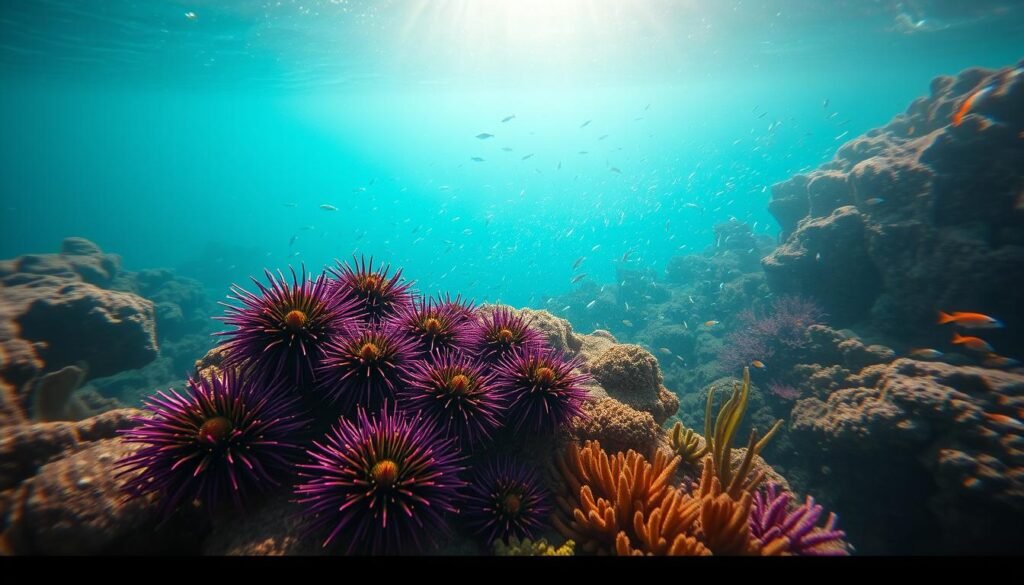
Sea urchins live in many underwater places. They are amazing at surviving in different sea urchin habitats. They can be found in colorful coral reefs, rocky shores, and even the deep ocean.
Sea urchins have special ways to live in these tough places. They adapt to each environment in their own way.
Coral reefs are full of life and are home to many sea urchins. These reefs are like underwater cities. Sea urchins help keep the reefs healthy by:
Cleaning algae from coral surfaces
Preventing algal overgrowth
Creating space for coral regeneration
Rocky Shore Communities
Rocky shores are another place where sea urchins live. These areas have strong waves and changing water levels. But sea urchins are very good at surviving here by:
Attaching firmly to rocks using tube feet
Protecting themselves with sharp spines
Surviving temperature and salinity fluctuations
Deep Ocean Dwellers
The deep ocean is the most mysterious place for sea urchins. It’s dark and very pressurized. But some sea urchins have evolved to live there. These deep-sea inhabitants demonstrate incredible resilience, surviving with minimal nutrients and adapting to complete darkness.
What Do Sea Urchins Eat
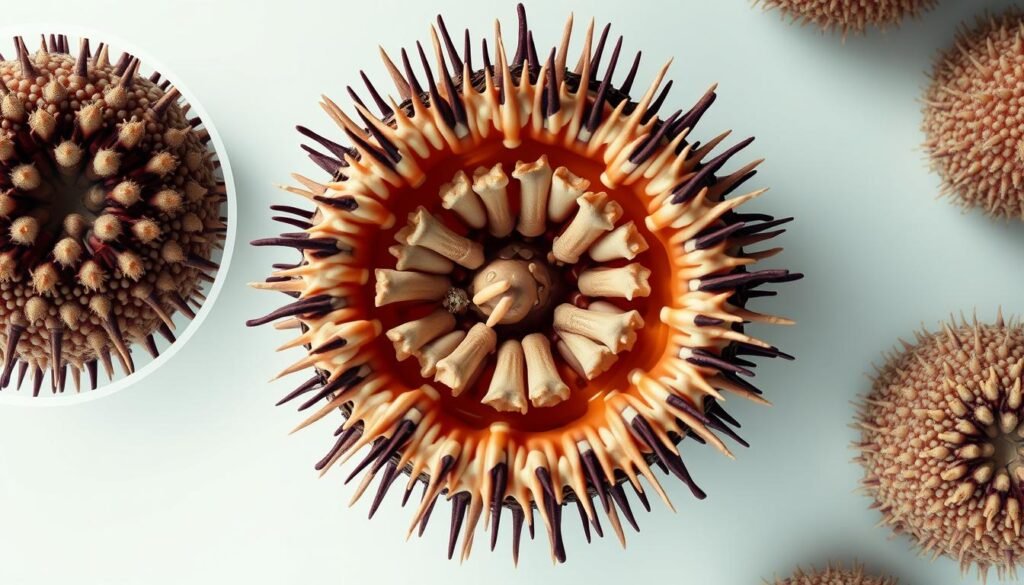
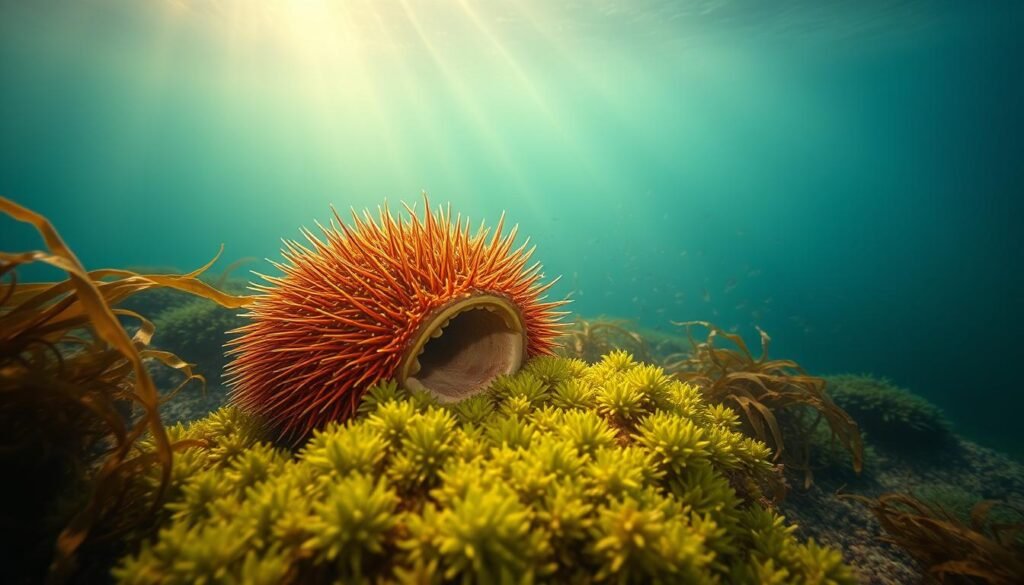
Sea urchins are the ocean’s amazing cleanup crew! They have a fascinating diet that keeps marine ecosystems balanced. Their main food is marine algae, which they scrape off rocks and coral using a unique mouth structure called Aristotle’s lantern.
Let’s explore what makes sea urchins such incredible underwater diners:
Primary Diet: Marine algae and seaweed
Feeding Mechanism: Scraping surfaces with specialized mouth parts
Eating Style: Constant grazers of underwater environments
Sea urchins use their powerful Aristotle’s lantern – a complex mouth structure with five sharp teeth – to carefully remove algae from rocky surfaces. They move slowly across underwater landscapes, nibbling on marine algae and helping to control plant growth in their habitats.
Sea Urchin Species
Primary Food Source
Feeding Behavior
Purple Sea Urchin
Kelp and Brown Algae
Continuous Grazing
Green Sea Urchin
Red and Green Algae
Surface Scraping
Red Sea Urchin
Mixed Marine Algae
Opportunistic Feeding
Some sea urchin species occasionally eat small marine invertebrates along with algae. This varied diet helps them survive in different underwater environments. They are key players in maintaining ocean ecosystem balance.
The Important Role of Sea Urchins in Ocean Health
Sea urchins are true heroes of the marine ecosystem balance. They play a critical role in maintaining ocean health through their unique behaviors. These spiky creatures act as underwater gardeners and cleaners, keeping marine environments in perfect harmony.
Their work in marine environments is so important that scientists consider them keystone species. These small but mighty creatures have massive impacts on the ocean’s delicate balance.
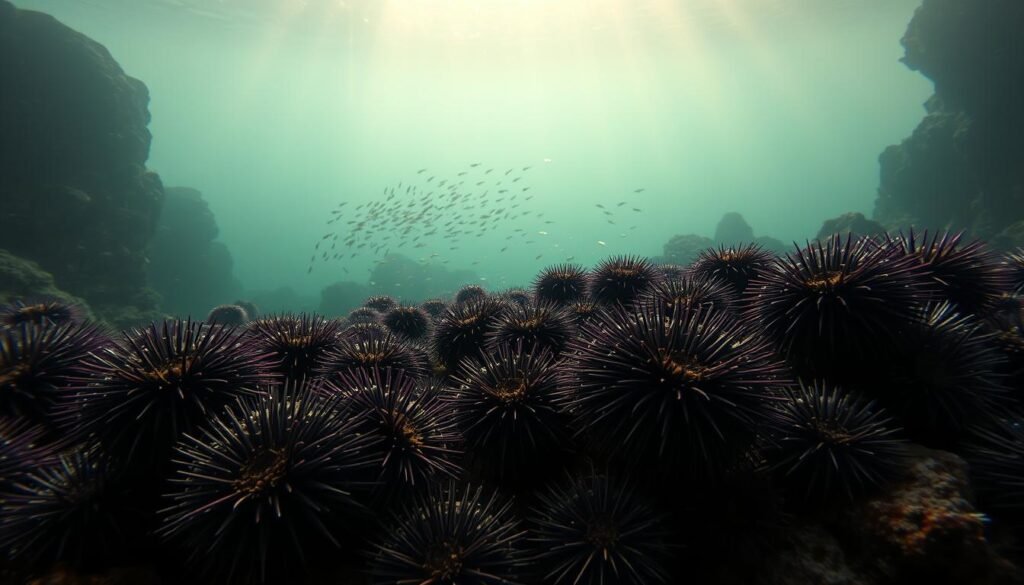
Sea urchins serve as natural lawn mowers in kelp forests. They carefully control algae growth by grazing on excess plant material. This prevents algae from overwhelming other marine plants and ensures a healthy underwater ecosystem.
Control excessive algae growth
Prevent plant overpopulation
Maintain diverse marine habitats
Reef Cleaners
In coral reef environments, sea urchins act as essential cleanup crews. They remove dead organic matter and prevent the buildup of debris that could harm coral health. Their constant grazing helps keep reef systems clean and vibrant.
Remove dead marine materials
Prevent reef debris accumulation
Support coral ecosystem survival
Through their constant work, sea urchins show us how even small marine creatures can have a huge impact on ocean health and marine ecosystem balance.
Sea Urchin Life Cycle
Sea urchins start as tiny creatures and grow into spiky ocean dwellers. Their reproduction is like a magic show under the sea. Microscopic eggs and sperm meet in the vast ocean.
Spawning is the start of sea urchin reproduction. Female and male sea urchins release millions of eggs and sperm into the ocean. It’s like a wild party underwater! These cells float around, hoping to find each other.
Eggs are tiny, about 0.1 mm in diameter
Females can release up to 20 million eggs at once
Fertilization happens quickly in the open water
After fertilization, something amazing happens. The eggs turn into larvae – tiny, free-swimming creatures. These larvae drift with the ocean currents, exploring the sea before settling down.
Life Stage
Duration
Key Characteristics
Egg Stage
1-2 days
Microscopic, floating in water
Larval Stage
4-6 weeks
Transparent, swimming freely
Juvenile Stage
1-2 years
Developing spines, settling on ocean floor
As larvae grow, they change into tiny sea urchins. They settle on rocky surfaces or coral reefs, growing their spiny exterior. This growth takes several years before they reach adulthood.
How Sea Urchins Move Around
Sea urchins have a special way to move underwater. They use tiny tube feet that act like suction cups. These tiny feet help them slide over rocky surfaces with great accuracy.
Tube feet are key to sea urchin movement. They are like hundreds of tiny, flexible fingers. These fingers help sea urchins:
Grip rocky surfaces
Capture small food particles
Sense their surrounding environment
Climb vertical underwater landscapes
Each tube foot works through a unique hydraulic system. Water pressure inside the sea urchin’s body makes these feet extend and contract. When a sea urchin wants to move, its tube feet work in synchronized waves. This creates a smooth motion, like a living carpet on the ocean floor.
Sea urchins aren’t fast movers. They go slowly but steadily. Their tube feet let them move a few centimeters per minute. This slow pace helps them explore safely while avoiding predators.
Amazing Sea Urchin Senses
Sea urchins are experts in sensing their underwater world. They don’t need eyes, ears, or a nose to do it. Their skin and spines have special cells that help them feel their surroundings.
Sea urchin perception is truly unique. They can sense their environment in amazing ways. This lets them interact with their marine home in incredible ways.
Detecting Light Without Eyes
Sea urchins can sense light without eyes. Their whole body acts like a light detector. This helps them:
Find safe, shaded areas to hide
Avoid predators
Navigate rocky underwater landscapes
Chemical Sensing in Water
Sea urchins can also sense chemicals in water. This skill lets them:
Find food
Identify mates
Recognize environmental changes
Touch Response Systems
Sea urchins are very sensitive to touch. Their spines and skin have special cells that detect even the slightest touch. This touch response helps them:
React quickly to threats
Move away from danger
Communicate with other sea urchins
These amazing senses show how sea urchins have adapted to their marine home. They prove that perception can go beyond traditional senses.
Sea Urchin Friends and Enemies
Sea urchins have a key role in the marine food chain. They live in a world filled with predators and unexpected friends. These spiky creatures survive by using clever tricks and forming important alliances.
Predators see sea urchins as a tasty meal. But these creatures have amazing ways to protect themselves. Their sharp spines keep many hungry hunters away.
Primary Predators of Sea Urchins:
Sea Otters
Large Fish
Certain Sea Birds
Crabs
Sea urchins are a vital food source for many marine animals. They help keep the underwater world in balance.
Predator
Hunting Strategy
Sea Otters
Crack open urchin shells with rocks
Large Fish
Bite between spines or swallow whole
Crabs
Attack vulnerable areas of urchin body
Some sea creatures form symbiotic relationships with sea urchins. Small fish and crustaceans hide in their spines. This creates a special survival partnership in the ocean.
Sea urchins do more than just survive in the marine food chain. They control algae growth and offer shelter to smaller sea creatures. This helps shape their underwater world.
Why Sea Urchins Matter to Humans
Sea urchins are more than just their spiky look. They are vital for science, food, and keeping our oceans healthy. Scientists study them to learn about animal growth and the sea.
Sea urchin eggs are key in research labs worldwide. Their special cells help scientists understand life’s mysteries. These eggs are clear, making them great for looking at tiny details.
Scientific research tool
Marine ecosystem indicator
Culinary delicacy in some cultures
In cooking, sea urchin roe is a prized ingredient. Chefs love it for its creamy taste. Places like Japan and Chile have big sea urchin fishing industries, showing their value.
Sea Urchin Contribution
Impact
Scientific Research
Cellular development studies
Ecosystem Management
Kelp forest regulation
Economic Value
Fishing industry support
Sea urchins are essential for our oceans. They keep the balance by eating algae and helping other sea creatures. This stops kelp from taking over, making room for more life.
Helping Sea Urchins Survive
Sea urchins are key to marine conservation but face big challenges. Climate change and human actions threaten them. This makes protecting the ocean more urgent than ever.
To save sea urchins, we must protect their homes in the sea. Scientists and marine biologists are working to help these creatures survive.
Conservation Challenges
Sea urchins face many threats:
Ocean warming
Habitat destruction
Overfishing
Pollution
Protection Methods
Experts have found ways to help sea urchins:
Creating marine protected areas
Setting up sustainable fishing rules
Watching the health of the ocean
Lowering carbon emissions
Conservation Strategy
Impact on Sea Urchins
Marine Protected Areas
Provides safe breeding grounds
Fishing Quotas
Prevents population depletion
Climate Change Mitigation
Stabilizes ocean temperatures
You can help by learning about sea urchins and sharing their importance. Every small action counts in protecting these fascinating creatures!
Fun Sea Urchin Activities for Young Scientists
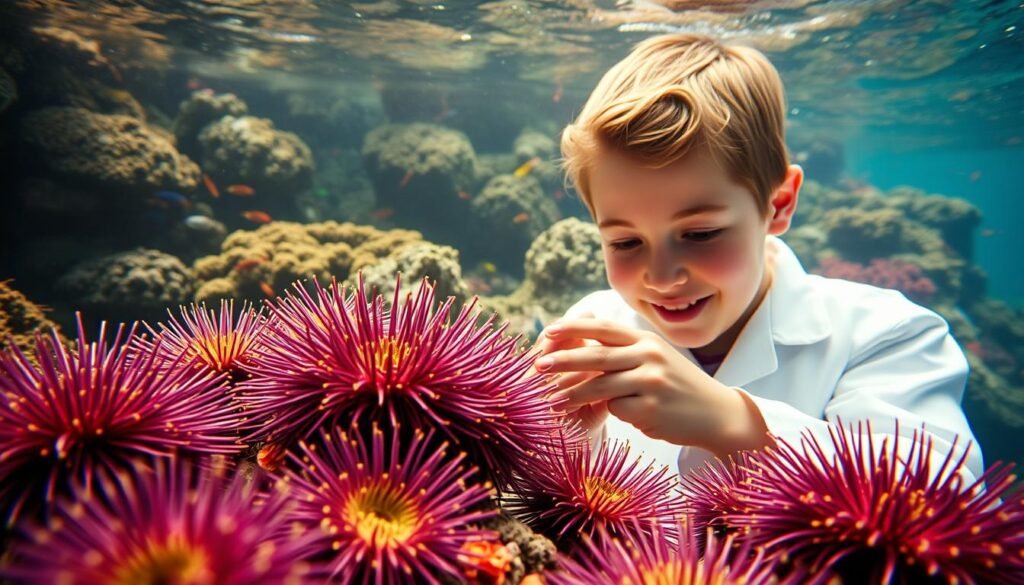
Dive into the exciting world of marine biology for kids with these awesome sea urchin science projects! Young scientists can explore the fascinating underwater world. They learn about these spiky ocean creatures through hands-on activities.
Ready to become a sea urchin expert? Check out these cool experiments and creative projects. They will spark your curiosity about marine life:
Paper Sea Urchin Anatomy Model
Cut colorful paper into spiky shapes
Create a 3D model showing sea urchin body structure
Label different parts of the sea urchin
Spine Protection Experiment
Test different materials to understand how sea urchin spines work
Use clay, toothpicks, and various surfaces
Observe how spines help protect marine creatures
Virtual Tide Pool Exploration
Use online marine biology resources
Watch sea urchin videos
Learn about their habitat and behaviors
These marine biology for kids activities transform ocean science projects into exciting adventures. You’ll discover the incredible world of sea urchins. You’ll also develop important scientific observation skills!
Safety tip: Always ask an adult to help you with experiments. Respect marine ecosystems during your scientific explorations.
Incredible Sea Urchin Records
Sea urchins are full of surprising facts that will amaze young ocean explorers! Some of these spiky creatures can live for an amazing 200 years. This is longer than most human lifespans. Scientists have found species that survive in extreme underwater environments, making them true champions of marine survival.
The giant red sea urchin holds remarkable size records, growing up to 36 cm in diameter. That’s about the size of a dinner plate! These incredible creatures inhabit rocky Pacific coastlines, showing remarkable resilience in challenging underwater ecosystems. Their impressive size helps them navigate complex reef environments and protect themselves from predators.
Deep-sea researchers have uncovered fascinating details about sea urchin populations in extreme ocean locations. Some species thrive at depths of over 6,500 meters. They survive incredible pressure and near-freezing temperatures. These remarkable marine animal facts show how adaptable and robust sea urchins can be, surviving where few other creatures could endure.
From their extraordinary longevity to their ability to survive in challenging environments, sea urchins continue to surprise marine biologists. Each new discovery reveals another incredible chapter in these unique ocean dwellers’ world of survival and adaptation.