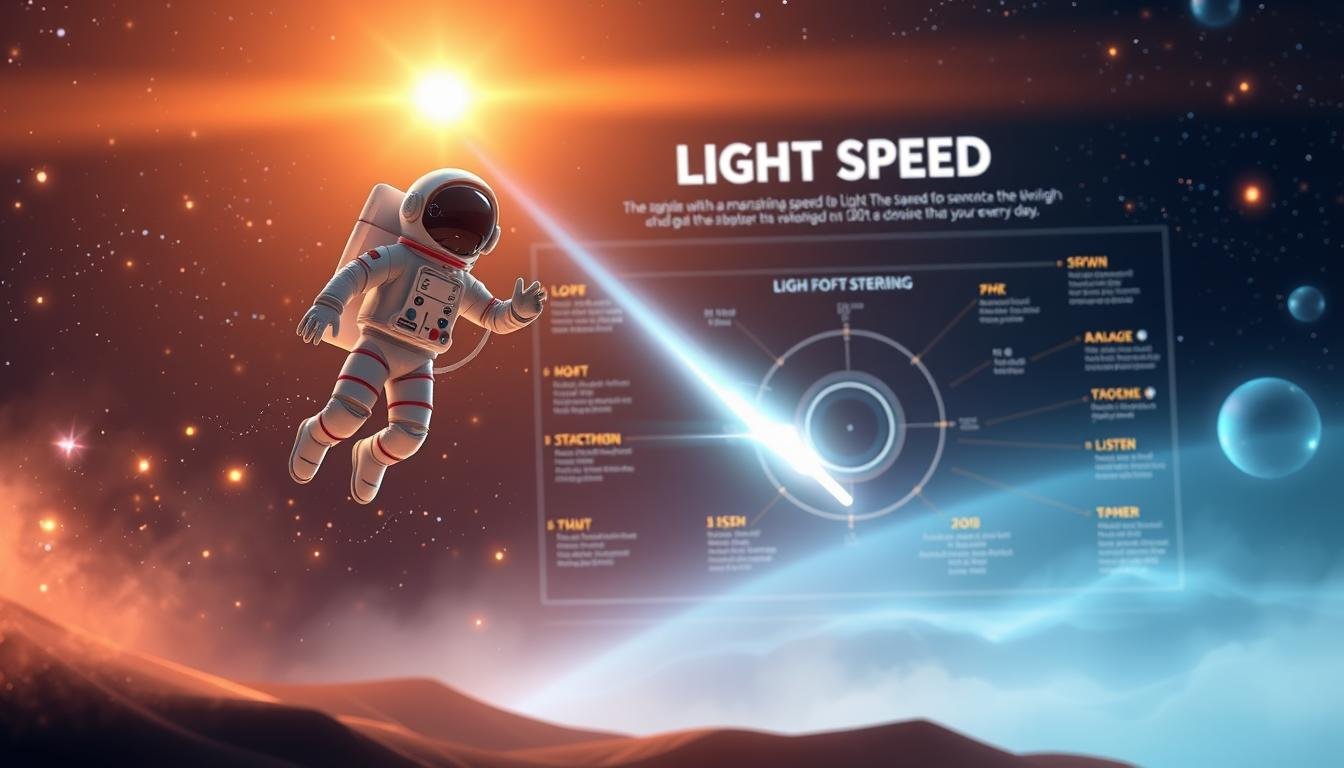
Light is the fastest thing in the universe, moving at 299,792 kilometers per second. These light facts for kids show an amazing journey that happens every moment around us. Light is the fastest traveler we know.
Imagine something so quick it could circle the Earth seven times in just one second. That’s how fast light is. Everywhere you look, light is racing through space. It brings brightness, color, and information to your eyes instantly.
Scientists have found that light isn’t just a beam of brightness. It’s a complex energy that travels in waves and particles. When sunlight streams through your window or a flashlight lights up a dark room, you’re seeing an incredible cosmic journey.
Light moves so fast that by the time you blink, it has already traveled thousands of kilometers. This superfast space traveler connects our world. It lets us see colors, feel warmth, and understand our environment in ways we often take for granted.
From the stars twinkling at night to the screen you’re reading this on, light is the invisible messenger. It brings us information about the world around us. Get ready to explore the fascinating universe of light and its incredible secrets!
What Is Light and Why It Matters
Light is a form of energy that moves through space as tiny particles called photons. These photons are like super-fast messengers that carry information and light everywhere. They move at incredible speeds, helping us see and powering many technologies.
Light energy is more than just for seeing. It’s key to how our universe works, linking everything from tiny plants to huge stars.
The Building Blocks of Light
Photons are the smallest parts of light energy. They act in two amazing ways:
As waves that can spread out
As particles that can travel through space
This special ability makes light sources unique. They can create different types of energy and help us understand the world.
How Light Affects Our Daily Lives
Light is vital in everything we do. It helps plants grow, powers solar panels, and lets us see colors, read, and enjoy activities.
Get ready for an incredible journey through space! The speed of light is incredibly fast. It can circle the Earth about 7.5 times in just one second. That’s like zooming around our entire planet multiple times before you could even blink!
Light travels at an amazing 299,792 kilometers per second in space. To understand this, imagine:
Light racing from the Earth to the Moon in just 1.3 seconds
Light crossing the entire United States in a mere 0.01 seconds
Light zipping around the entire planet multiple times in a single breath
Scientists have measured the speed of light in space with incredible precision. This speed means that when you look at distant stars, you’re seeing light that started its journey years or even centuries ago. It’s like receiving a postcard from the past!
Light moves so fast that it seems instantaneous to us. But in the vast emptiness of space, even light takes time to travel. A beam of light from the Sun takes approximately 8 minutes to reach Earth. This means you’re always seeing the Sun as it was 8 minutes ago.
Want to wrap your head around this cosmic speed demon? Think of light as the ultimate cosmic express train, racing through the universe faster than anything else we know!
Light Facts for Kids: Understanding the Basics
Light is an amazing form of energy that moves through space in cool ways. Kids who are curious about light will find some cool facts. These facts make our world bright and colorful. Learning about light energy helps us understand how our world works.
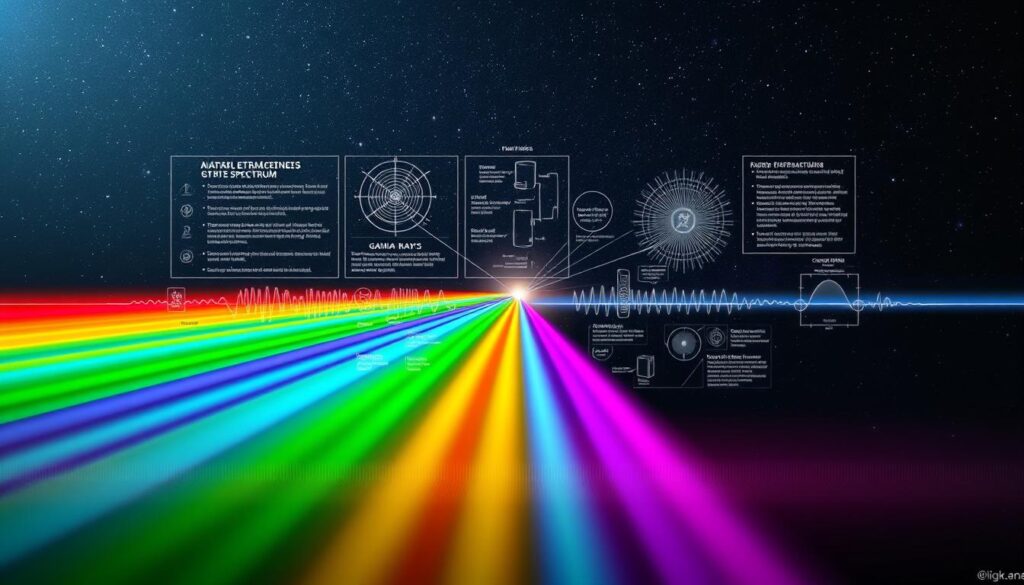
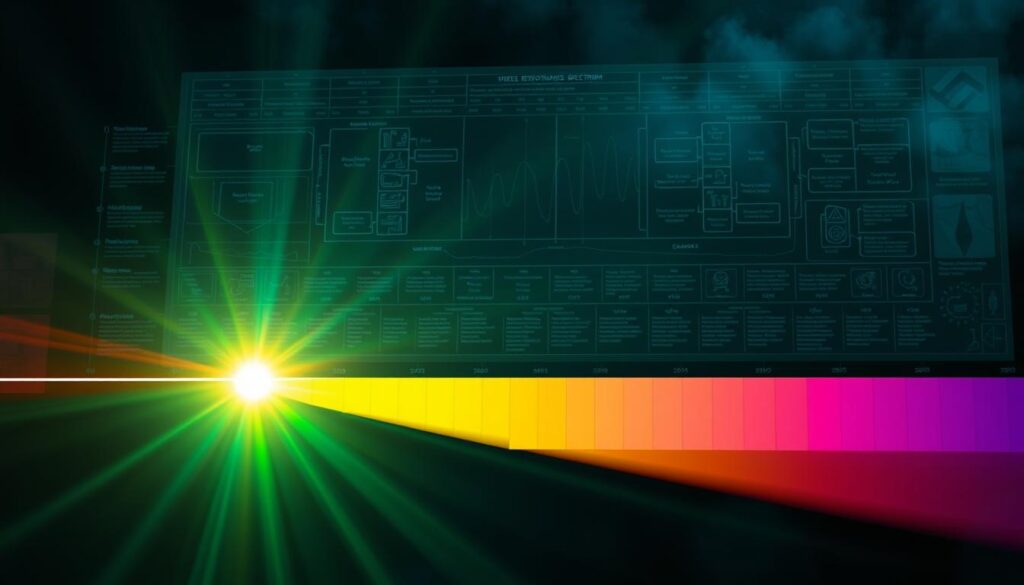
The electromagnetic spectrum is like a magical rainbow of light. It goes beyond what our eyes can see. Light is super fast, moving at about 186,000 miles per second. This means it can circle the Earth seven and a half times in just one second.
How Light Moves Through Space
Light moves in straight lines, zipping through space fast. It can travel through:
Light has special properties that make it unique. Electromagnetic waves let light move without needing a physical medium. Different colors show different wavelengths in the light energy spectrum.
Different Forms of Light Energy
Not all light is visible to us. The electromagnetic spectrum includes:
Visible light
Infrared rays
Ultraviolet rays
X-rays
Radio waves
Each type of light energy is important for understanding and interacting with our world.
The Rainbow Connection: Colors of Light
Imagine light as a magical paintbrush that creates the vibrant world around you! The visible light spectrum is like a spectacular rainbow of colors that dance and shine everywhere. When sunlight passes through a prism, it reveals seven stunning rainbow colors that make up our colorful universe.
The rainbow colors appear in a specific order that’s easy to remember with a fun acronym: ROY G. BIV. Each letter represents a color in the visible light spectrum:
Red – the warmest color
Orange – like a glowing sunset
Yellow – bright as sunshine
Green – the color of nature
Blue – deep as the ocean
Indigo – a rich, deep shade
Violet – the coolest color
White light is actually a blend of all these colors. When sunlight hits different objects, some colors are absorbed while others reflect, creating the amazing array of colors you see every day. Your eyes are incredible detectors that help you experience this rainbow of light in ways no other creature can!
Scientists use special tools to study the visible light spectrum, breaking down light into its most fundamental colors. Each color has a unique wavelength that travels at incredible speeds, painting our world with breathtaking hues and magical visual experiences.
Sunlight and Its Powerful Energy
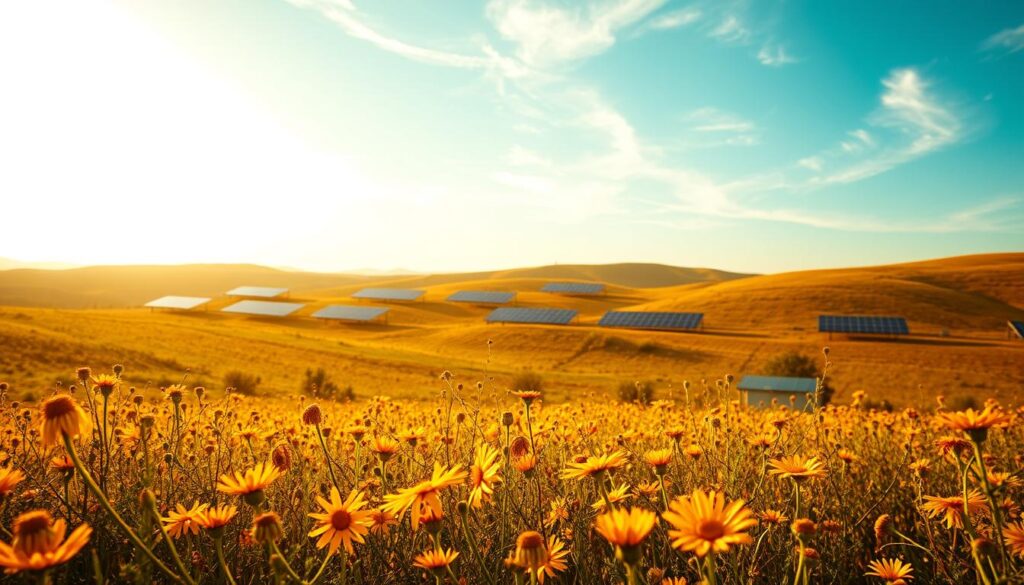
Sunlight is a remarkable source of energy that powers life on our planet. It helps plants grow and even generates electricity. Let’s explore how this incredible natural resource works and transforms our daily lives.
How Plants Use Sunlight
Plants have an amazing ability to convert sunlight into food through a process called photosynthesis. This incredible transformation happens in the green leaves of plants, where special cells capture solar energy. During photosynthesis, plants take in sunlight, water, and carbon dioxide to create oxygen and glucose.
Sunlight triggers chemical reactions in plant leaves
Chlorophyll absorbs light energy
Plants produce oxygen as a byproduct
Glucose provides nutrition for plant growth
Solar Power and Modern Technology
Solar energy has revolutionized how we generate electricity. Photovoltaic panels can now capture sunlight and convert it into clean, renewable power for homes and businesses. These innovative technologies help reduce our dependence on fossil fuels.
From powering satellites to charging your smartphone, solar energy represents a bright future of sustainable technology. The power of sunlight as an energy source continues to grow with new scientific discoveries.
Reflection and Mirrors: Light’s Bouncing Adventure
Looking in a mirror is like playing a magical game of bounce. Light waves hit a smooth surface and bounce back in a predictable way. This creates the reflections we see every day. Mirrors are the best at this light-bouncing game.
The science behind light reflection is really cool. Light travels in straight lines but changes direction when it hits a smooth surface like a mirror. The rule is simple: the angle of incoming light equals the angle of reflected light. Think of light rays as tiny arrows bouncing off mirrors at precise angles.
Smooth surfaces create clear reflections
Rough surfaces scatter light in multiple directions
Mirrors are designed to provide the most perfect reflections
Different surfaces react differently to light reflection. A polished metal surface reflects light almost perfectly. But a rough wall scatters light in many directions. Mirrors are made to give the most accurate reflections, using special coatings and precise techniques.
You see light reflection everywhere: in car windows, sunglasses, lakes, and bathroom mirrors. Each surface has its own way of bouncing light. This creates the visual world we see every day.
How Light Bends: Understanding Refraction
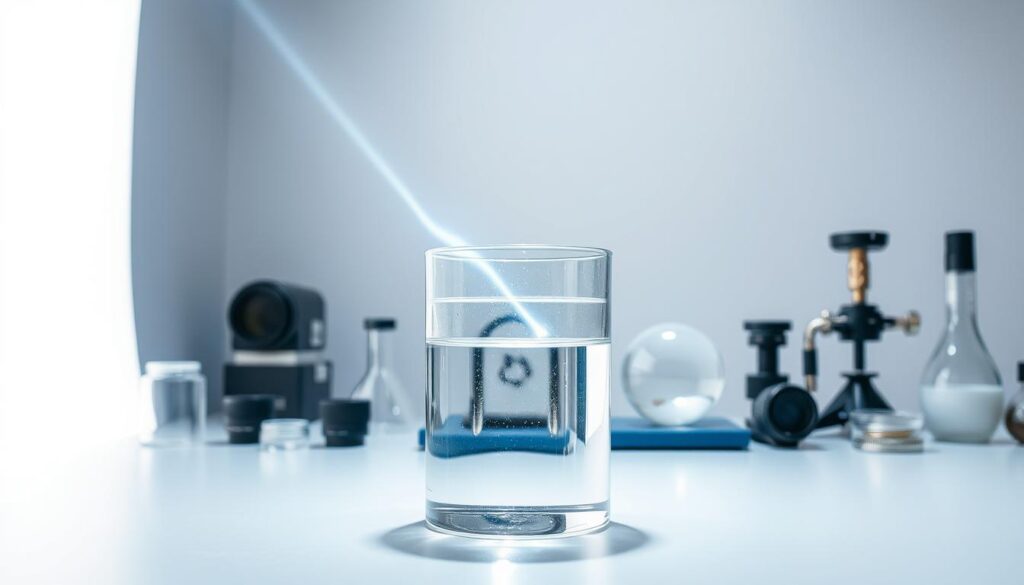
Light is an amazing traveler that changes its path in different materials. Refraction shows how light bends when it moves from one substance to another. It’s like light is a curious explorer that gets a little turned around in new places.
Light bends because it moves at different speeds in different materials. When light enters a new medium, its path can change a lot. This creates magical visual effects that we see every day.
What Happens When Light Travels Through Water
Water is a great example of light refraction. When you put a straw in a glass of water, something cool happens:
The straw looks broken or bent
Light waves speed up when they enter water
This makes the light bend at a different angle
Real-World Examples of Refraction
Bending light is not just a cool trick. It’s also key in many technologies and natural events. Some amazing examples include:
Eyeglasses that fix vision problems
Underwater photography
Prisms that make rainbows
Telescopes and microscopes
Scientists and engineers use light refraction to create amazing technologies. These help us see and understand the world in new ways.
Invisible Light: Beyond What Eyes Can See
Did you know your eyes can only see a small part of the electromagnetic spectrum? Invisible light is all around us, but we can’t see it. It includes many types of electromagnetic radiation that we can’t see.
The electromagnetic spectrum has many invisible light waves. These waves are important for our technology. They range from radio waves to X-rays, each with its own uses.
Radio waves: Used for communication technologies
Infrared light: Detected by thermal cameras
Ultraviolet light: Responsible for sunburns and sterilization processes
X-rays: Critical for medical imaging
Scientists use special tools to study invisible light. Infrared cameras see heat, and radio telescopes catch signals from far away. These tools help us learn about the invisible light around us.
Invisible Light Type
Wavelength Range
Common Applications
Radio Waves
Longest wavelengths
Wireless communication
Infrared
Shorter than radio waves
Thermal imaging
Ultraviolet
Shorter wavelengths
Sterilization
X-rays
Very short wavelengths
Medical diagnostics
Looking into the invisible light world shows us a fascinating side of our universe. Each invisible light type has its own energy and information. It helps us understand our world in amazing ways.
Natural vs. Artificial Light Sources
Light surrounds us every day. It ranges from the bright sun to the soft glow of lamps. Knowing the difference between natural and artificial light helps us appreciate how we use light.
Natural light mainly comes from the sun. It has been our planet’s key light source for billions of years. Artificial light, made by humans, has changed how we live and work.
The Sun: Earth’s Primary Light Source
The sun is an amazing natural light source. It provides:
Warmth for our planet
Energy for plants through photosynthesis
Illumination during daylight hours
Human-Made Light Technology
Humans have created incredible artificial light sources over time. Let’s look at the evolution of light technologies:
Era
Light Source
Key Characteristics
Prehistoric
Fire
First human-controlled light source
19th Century
Candles
Portable and personal lighting
Early 20th Century
Incandescent Bulbs
First widespread electrical lighting
Modern Era
LED Lights
Energy-efficient and long-lasting
Artificial light has changed how we live. It lets us work, read, and explore at night. From candles to LED lights, humans keep finding new ways to use light.
Light and Space Exploration
Space exploration depends on light as its key messenger. Scientists use light to uncover cosmic secrets and talk across huge distances. Light travels at an amazing 299,792 kilometers per second, faster than anything else we know!
Telescopes are the heroes of space exploration, catching light from far-off stars and galaxies. They act like cosmic detectives, gathering light waves that travel millions of light-years to reach us. These amazing tools help us learn about:
Star formation and evolution
Planet characteristics
Distant galaxy structures
Spacecraft use light for more than just looking. They send and receive signals with optical communication technologies. Radio waves and laser beams are the main language of space exploration. They let mission control track and talk to probes exploring our solar system.
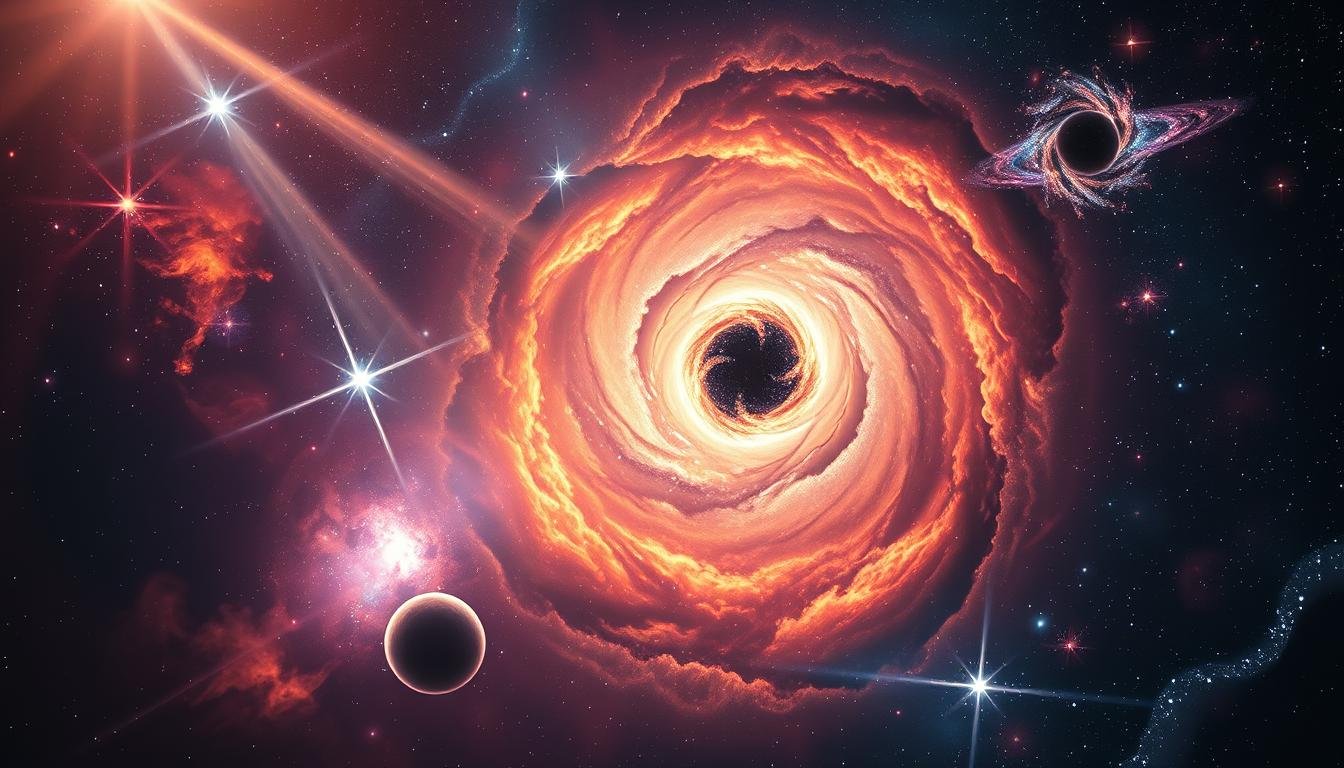
Different types of light reveal unique cosmic secrets. Infrared light shows us hidden star nurseries, while X-rays expose extreme cosmic events like black holes and neutron stars. Each wavelength tells a different part of the universe’s incredible story.
When spacecraft launch, they carry advanced light-based technologies. These technologies help us understand more. From solar panels that use light energy to sophisticated optical sensors, light is key in modern space exploration.
How Animals Use Light Differently Than Humans
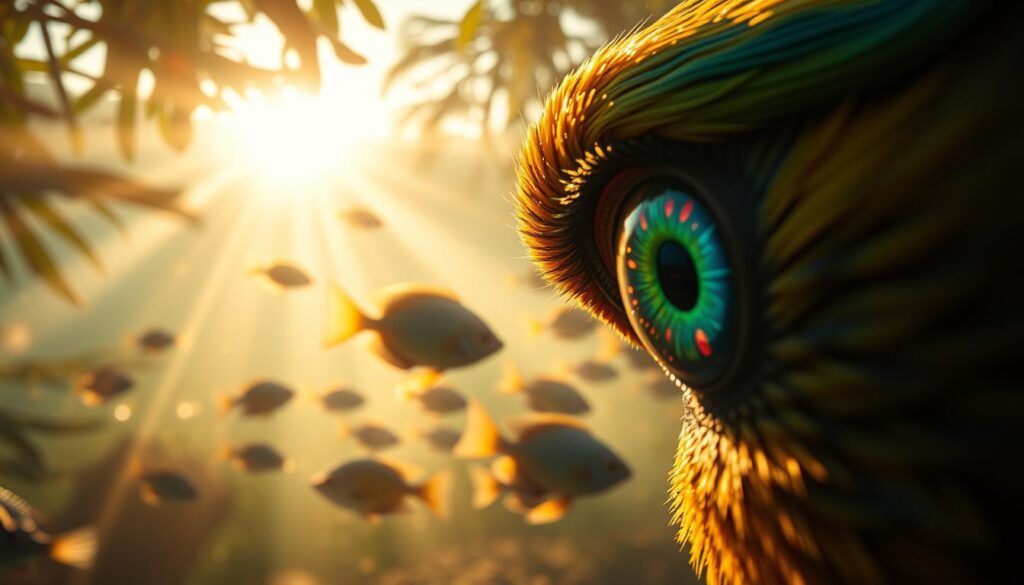
Animal vision is truly amazing. Creatures see light in ways we can’t even imagine. Some animals can see light spectrums that are invisible to us.
Many animals have special vision to survive in tough places. For instance:
Cats can see in near-darkness with remarkable precision
Bees visualize ultraviolet light invisible to human eyes
Snakes detect infrared radiation through specialized heat sensors
Light perception varies a lot across different species. Some animals use light for navigation, communication, and hunting. These abilities seem magical to us.
Animal
Special Light Perception
Unique Ability
Fireflies
Bioluminescent communication
Produce and read light signals
Mantis Shrimp
16 color receptor types
See most complex color spectrum
Owl
Exceptional night vision
Hunt in near-total darkness
Light pollution affects wildlife a lot. It disrupts their natural behaviors and migration patterns. Knowing how animals see light helps us understand their world better.
The Future of Light Technology
Light technology is changing how we talk, work, and interact with our surroundings. Scientists are exploring new ways to use light for communication and computing. They are making big steps forward in optical communication.
The future of light technology will impact everything from sending data to how fast computers work. Researchers are finding new ways to use light’s power.
Light-Based Communications
Optical communication is making huge strides. These new technologies are making data transfer quicker and more efficient:
Quantum light communication networks
Ultra-high-speed fiber optic systems
Wireless optical communication platforms
Imagine sending lots of data at the speed of light, safely and reliably. Light technology is making this a reality with advanced optical communication.
Innovations in Light Science
Scientists are looking into new uses for light technology in many areas:
Photonic computing systems
Light-based medical imaging
Advanced solar energy technologies
Quantum light manipulation
These breakthroughs show the huge promise of light technology. It’s helping solve big technological problems. Light is becoming a key tool for scientific progress.
Light Pollution and Our Night Sky
Light pollution turns our dark nights into a bright, artificial glow. It makes it hard for astronomers and nature lovers to see the stars. The city lights hide the beauty of the sky that has amazed us for centuries.
Wildlife faces big problems from light pollution. Animals that are active at night have trouble finding their way and hunting. Birds that migrate get lost in city lights and don’t follow their usual paths.
Sea turtle hatchlings, guided by the moon, get confused by streetlights. They move inland instead of to the ocean.
To fight light pollution, we need smart plans. Dark sky projects help by using lights that shine down, not up. Astronomers suggest using warm LED lights and motion sensors to save energy.
Students and families can help by pushing for better lighting in their areas. This way, we can all enjoy the stars and planets that have amazed us for so long.