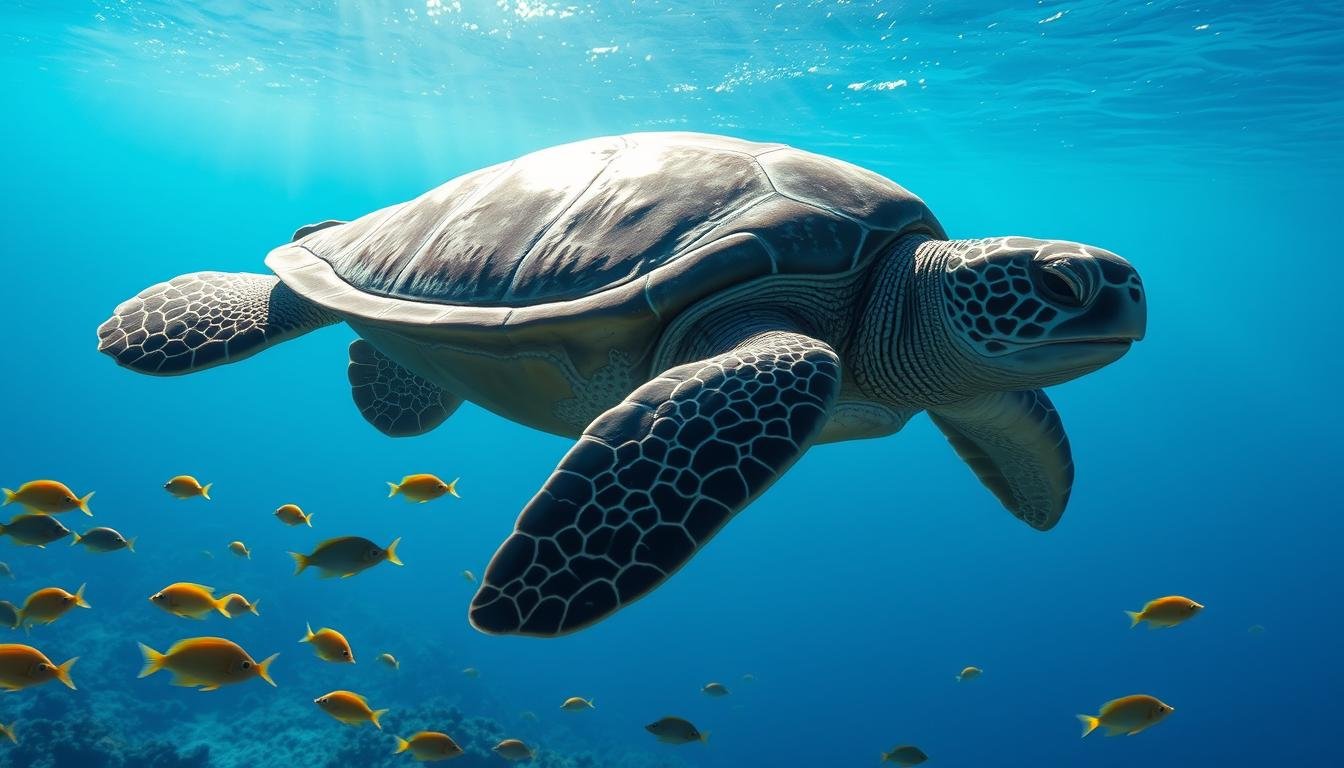
Meet the ocean’s living dinosaur: the leatherback turtle. These ancient reptiles—scientifically named Dermochelys coriacea—have roamed Earth’s oceans for over 100 million years, and guess what? They’re *still* here today, diving deeper than submarines and sporting shells that feel like squishy football helmets. Want to know how they pull that off? Buckle up.
First off, forget everything you know about turtle shells. Unlike their bony cousins, leatherbacks have a rubbery, ridged carapace (that’s science-speak for “shell”) made of thick skin. Think of it as nature’s wetsuit—perfect for plunging into icy depths over 4,000 feet deep. Oh, and they’re massive: imagine a reptile the size of a compact car, weighing up to 2,000 pounds. Jurassic Park vibes, anyone?
Here’s the kicker: these turtles are *globetrotters*. They’ll swim from Indonesia to California just to feast on jellyfish, using backward-facing spikes in their throats to keep the slimy snacks from escaping. But their status today? Not great. Only about 1 in 1,000 hatchlings survives to adulthood—thanks to plastic pollution and lost nesting beaches.
Speaking of nests, female leatherbacks return to the exact same beach where they hatched to lay their eggs. How’s that for GPS skills? I’d get lost in a parking lot. Stick around, and I’ll share why their rubbery shells aren’t even their weirdest feature. Spoiler: it involves eating rocks.
Meet the Leatherback Turtle: A Wild Introduction
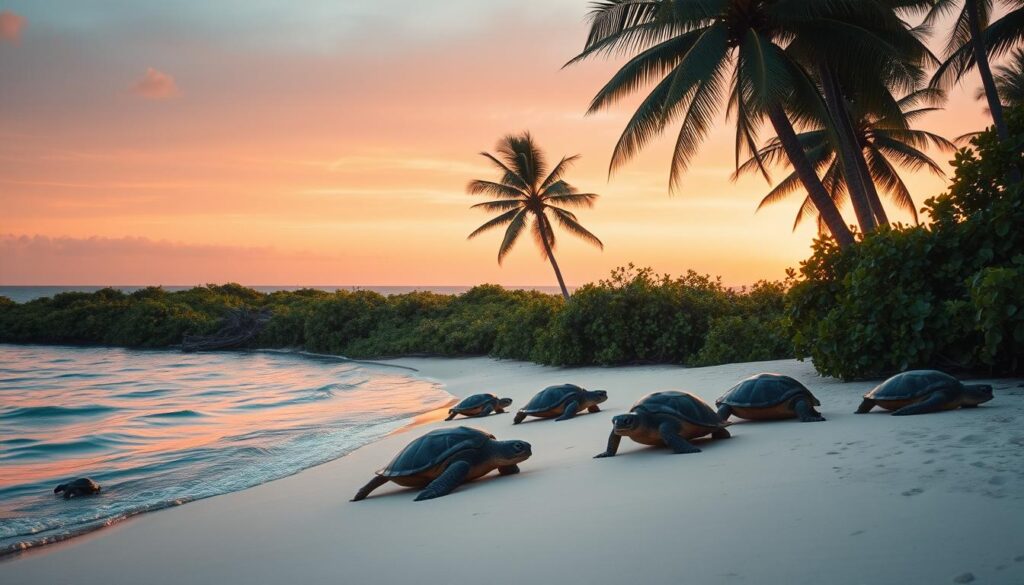
Picture a marine giant whose travels span from icy Alaskan waters to tropical New Zealand coasts. These sea turtles don’t stick to one neighborhood—they’ve been spotted in 80+ countries. Why? Their built-in GPS guides them across entire oceans. Talk about nature’s ultimate road trip!
Every few years, females drag themselves onto nesting beaches under cover of darkness. Imagine digging a 3-foot hole with flippers! They’ll drop 80-120 rubbery eggs per clutch—that’s like filling a basketball with ping-pong balls. But here’s the twist: only hatchlings that avoid crabs, birds, and washed-up plastic bags make it to the surf.
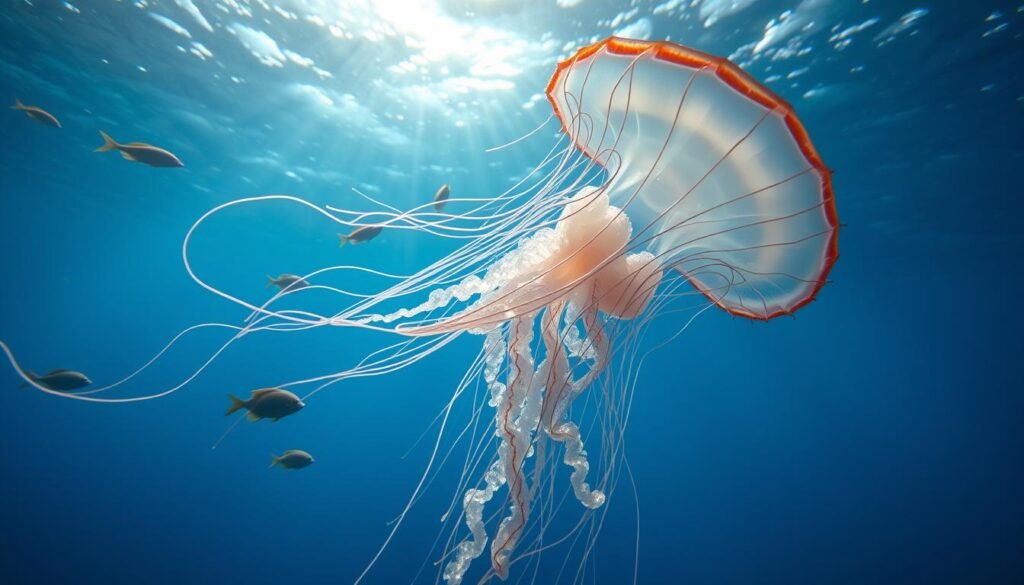
Now let’s discuss snacks. Their entire menu? Jellyfish. I’m talking 200+ pounds daily—enough to fill a bathtub. Those backward throat spikes? They’re not decoration. They act like Velcro, trapping slippery prey. Scientists call this “obligate gelatinivory.” I call it commitment to the jiggle life.
Why does this matter? Because meeting one feels like time travel. You’re staring at a creature that outlived T-rex, navigates using Earth’s magnetic field, and thinks moonlit beaches make perfect nurseries. If that’s not wild, I don’t know what is.
Leatherback Turtles Facts for Kids: A Closer Look
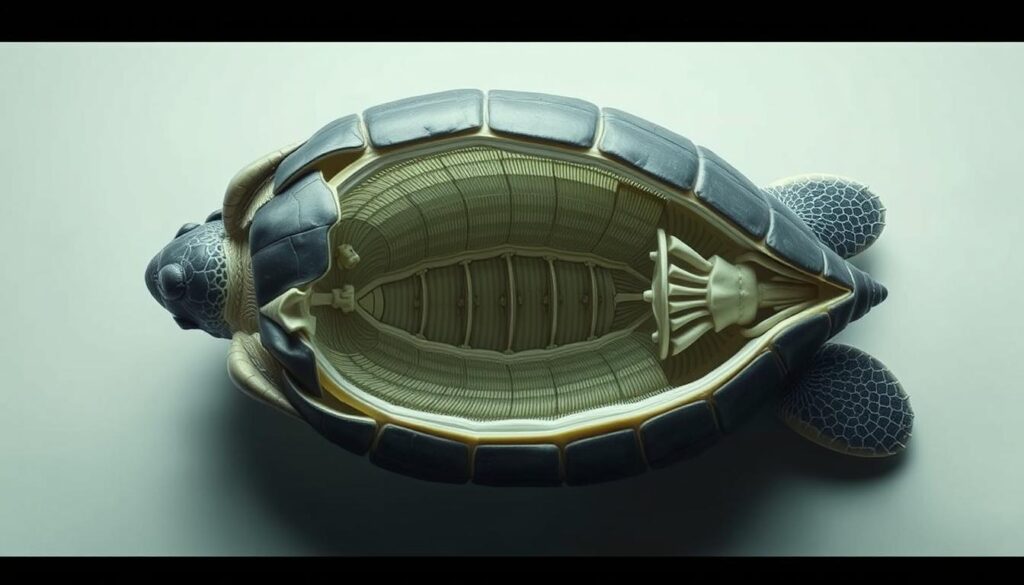
What if I told you some ocean giants prefer rubbery shells over hard ones? The leatherback sea creature’s carapace feels like a stress ball dipped in tire rubber. Scientists measured it at 1.5 inches thick—thinner than your phone but tougher than steel cables when diving. Now that’s engineering.
Real-life quirks and surprising traits
Their rubbery armor isn’t just for show—it’s built for deep dives. Unlike rigid shells that crack under pressure, this flexible design lets them plunge deeper than whales. Researchers once tracked a female descending 4,200 feet. I’d get claustrophobic in an elevator.

How many years do they log? Estimates range from 30 to 50+, but here’s the kicker: we’re not sure. Tagging studies suggest some might outlive your grandparents. Imagine swimming the Pacific annually since Nixon was president.
| Trait | Leatherback | Other Turtles |
|---|---|---|
| Shell Type | Rubbery skin | Bony plates |
| Max Depth | 4,200 ft | 1,000 ft |
| Lifespan | 30-50+ years | 20-80 years |
| Favorite Snack | Jellyfish | Seagrass/crabs |
Why these giant reptiles capture our imagination
It’s not just their size—it’s their body hacks. Those throat spikes? Perfect for hoovering jellyfish like nature’s Slurpee machine. Even their blood has built-in antifreeze for polar swims. I’d trade my GPS for that skill.
But threats lurk everywhere. Only 1% of hatchlings survive their sprint from beaches to waves. Plastic bags mimic their prey, clogging stomachs. Yet they persist—ancient mariners reminding us that weird works.
Anatomy Up Close: Soft Shells and Mighty Flippers
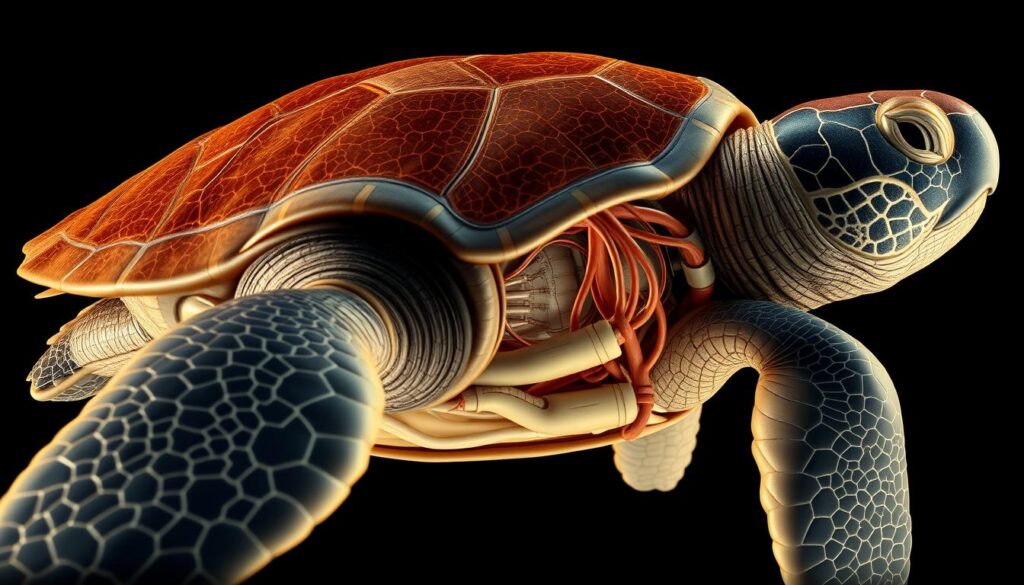
Ever seen a turtle that moonlights as a deep-sea submarine? Let’s crack open nature’s design notebook. Their shells aren’t shells at all—they’re flexible armor made of cartilage and oil-saturated skin. Picture pressing your palm against a car tire filled with gelatin. That’s a leatherback’s carapace.
Leathery carapace vs. hardened shells of other turtles
While most turtles sport bony plates, these giants rock a 1.5-inch-thick rubbery shield. It’s like comparing a medieval knight’s armor to a high-tech wetsuit. Their secret? Seven ridges along the back act like submarine reinforcements, letting them dive 4x deeper than rigid-shelled species.
Now, the flippers. Front limbs stretch up to 9 feet—longer than your couch. They’re not just paddles; they’re hydrofoils with built-in rudders. Watch one bank through currents, and you’ll swear it’s piloting a stealth fighter jet. I’ve seen kayakers struggle with less precision.
- Rubbery carapace bends 45° during dives
- Flippers generate 2x more thrust than green turtles’
- Blood vessels in shoulders prevent heat loss
Here’s what blows my mind: hatchlings emerge with miniature versions of these adaptations. Their quarter-sized “shells” feel like silicone phone cases, ready to flex as they grow. Nature’s rulebook? These creatures tossed it overboard.
| Feature | Leatherback | Typical Turtle |
|---|---|---|
| Carapace Material | Cartilage & Skin | Bone |
| Flipper Span | Up to 9 ft | 2-3 ft |
| Neck Mobility | Limited | Retractable |
You’re basically looking at evolutionary jazz—a brilliant improv on the standard turtle blueprint. Who needs hard shells when you’ve got liquid nitrogen blood and flippers that double as airplane wings?
Feeding Frenzy and Deep Sea Dives
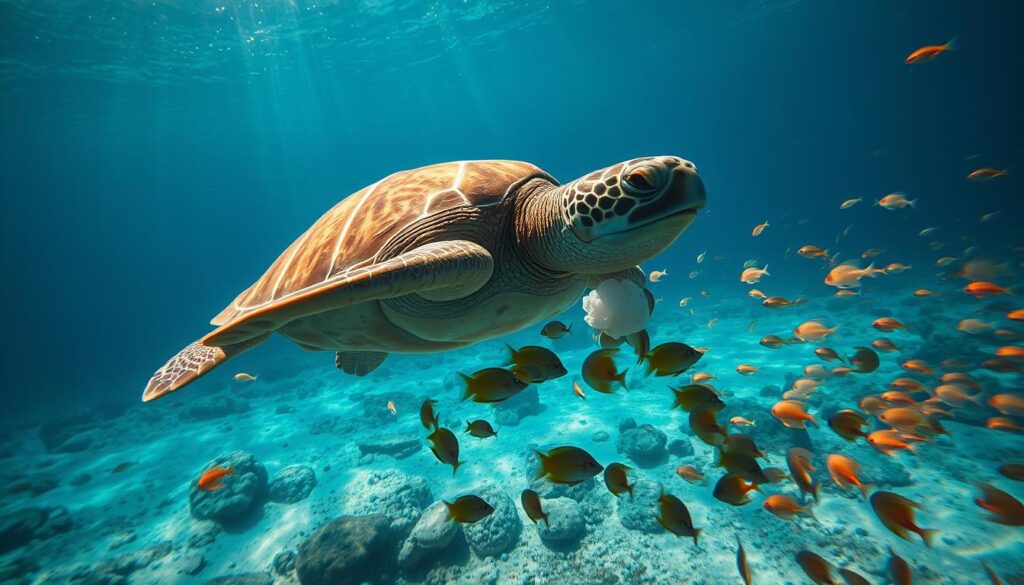
Imagine chasing jellyfish across entire oceans while holding your breath longer than a submarine. That’s lunchtime for leatherbacks. These sea turtles don’t nibble—they inhale 500-1,000 jellyfish daily. I’ve seen footage of them vacuuming up prey like nature’s Slurpee machine. But how do they avoid becoming sushi themselves? Let’s dive in.
How jellyfish become the menu in a high-stakes snack hunt

Their secret weapon? Throat spikes sharper than a sushi chef’s knife. These backward-facing barbs snag gelatinous meals mid-swallow. Picture trying to eat Jell-O with chopsticks—leatherbacks make it look easy. Scientists once found 200 pounds of jellyfish in one turtle’s stomach. That’s like you eating 800 hot dogs in a day!
Diving to depths that defy expectations
Leatherbacks laugh at submarine limits. Tagged individuals have plunged 1,280 meters—deeper than four Empire State Buildings stacked end-to-end. Their secret? Collapsible lungs and blood packed with oxygen-storing proteins. I’d pass out before reaching the lobby of that underwater skyscraper.
| Dive Feature | Leatherback | Sperm Whale | Emperor Penguin |
|---|---|---|---|
| Max Depth | 1,280m | 2,250m | 530m |
| Duration | 85 mins | 90 mins | 27 mins |
| Prey Targeted | Jellyfish | Squid | Fish |
Here’s the catch: their food runs come with risks. A 2021 study found 40% of adult leatherbacks have fishing gear scars. They’ll swim 10,000 miles annually chasing jellyfish blooms, only to face nets and hooks. Yet they persist—oceanic foodies refusing to quit their favorite dish.
Nesting Beaches and the Drama of Early Life
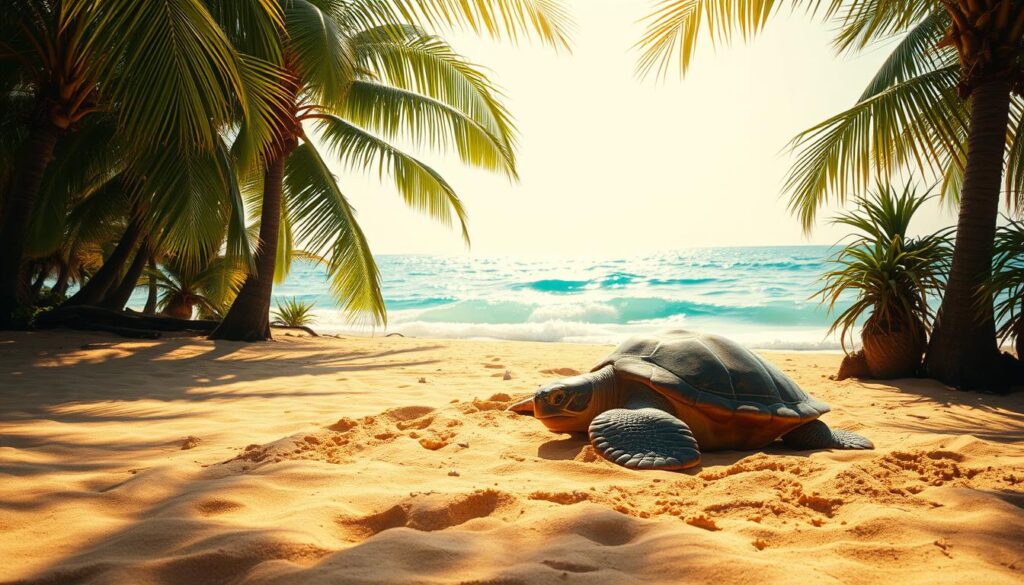
Let’s crash a turtle’s homecoming party—but bring tissues. Every 2-3 years, adult females swim thousands of miles back to nesting beaches they haven’t seen since hatching. How? They’ve got a built-in GPS homing beacon sharper than your phone’s maps app. Picture crawling onto moonlit sand with flippers made for swimming, not digging. Now the real work begins.
The sandy battleground where eggs face nature’s gauntlet
Step 1: Digging the VIP suite. Using rear flippers like shovels, she carves a 3-foot-deep chamber—about the height of a kindergarten chair. Then comes the main event: dropping 80-120 soft-shelled eggs resembling ping-pong balls dunked in glue. One wrong move? Sand collapses the hole. Waves wash over nests. Ghost crabs lurk nearby, ready to turn breakfast into an all-you-can-eat buffet.
Step 2: The great escape. After 60 days, hatchlings erupt from sand like popcorn kernels. Their mission? Sprint to the oceans before becoming snacks. Only 50% make it past crabs and birds. Even then, plastic debris on beaches tricks them into crawling toward streetlights instead of moonlight. Talk about a rigged game.
- Average clutch size: 110 eggs
- Hatching success rate: 40-60%
- Odds of reaching adulthood: 1 in 1,000
Why does this matter? These beaches are evolutionary classrooms. The sand’s temperature decides hatchlings’ genders—warmer nests = more females. As rising temps skew ratios, entire populations hang in the balance. Every grain here writes a survival story older than dinosaurs.
Predators, Perils, and the Plastic Problem
Imagine a ping-pong ball with flippers racing toward the ocean—that’s a leatherback hatchling’s first test. Before sunrise, ghost crabs snatch stragglers while frigatebirds dive-bomb the sprinting crowd. By dawn, 70% vanish. But that’s just Act One.
Tackling threats from natural predators and human debris
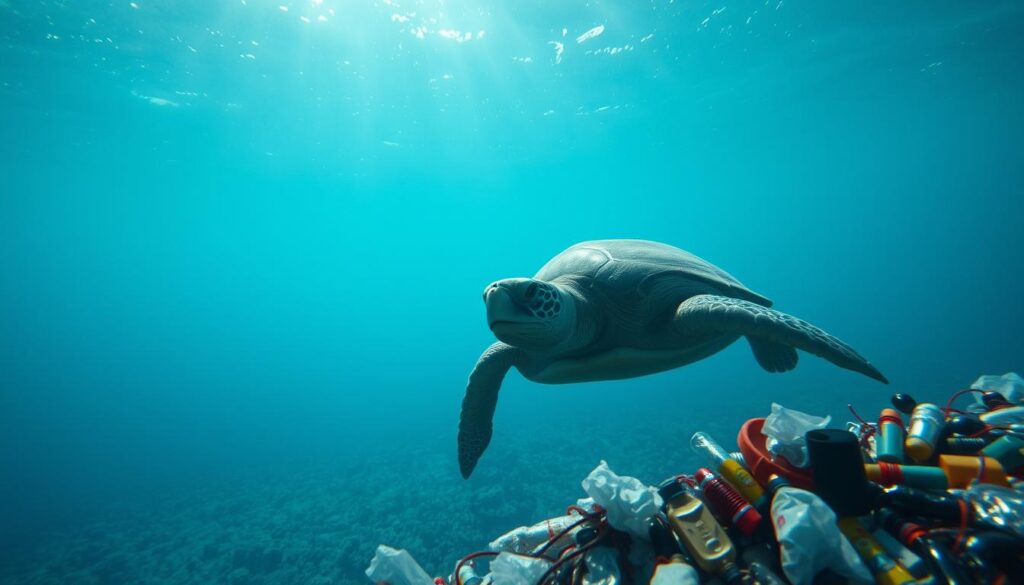
Adults? They’ve got their own nightmares. Floating plastic bags mimic jellyfish—their favorite snack. A 2022 study found 34% of leatherbacks examined had synthetic debris in their guts. I’ve watched one regurgitate a grocery bag like it owed her money. New Zealand’s waters tell the same story: 12 strandings last year linked to fishing gear entanglements.
Here’s the math that stings: For every 1,000 eggs laid, maybe one turtle survives to adulthood. Females returning to nest face beaches eroded by rising seas or cluttered with trash. Their ancestral habitat now doubles as a minefield of bottle caps and abandoned nets.
Why care? Because this species doesn’t just live in the ocean—it shapes it. Each leatherback gobbles 16,000 jellyfish annually, keeping blooms in check. Lose them, and we’re stuck with stingier beaches and collapsed fisheries. Their survival isn’t just about turtles—it’s about whether we’ll let ancient mariners school us in resilience.
Life History Mysteries: Age, Migration, and More
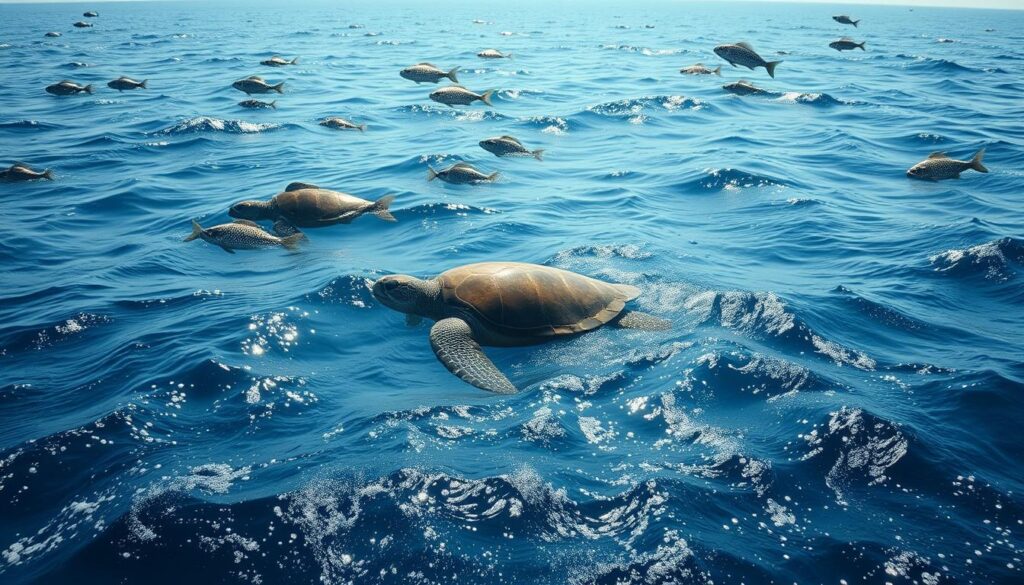
Let’s crack a 100-million-year-old mystery: how do these rubbery-shelled navigators outpace modern GPS? I’ve tracked tagged leatherbacks crossing entire ocean basins—one female swam 10,000 miles from Indonesia to California in 647 days. That’s like walking from New York to Sydney… underwater.
The puzzle of leatherback longevity and record journeys
Scientists still debate their lifespan. Some tagged individuals vanish for decades, then reappear. We know they mature around 15-25 years—but one tagged male kept migrating for 37 years. Imagine graduating high school, then spending your entire adult life swimming to jellyfish buffets.
How these titans navigate from polar waters to tropical nesting grounds
Their secret? A built-in compass detecting Earth’s magnetic field. They sense intensity and angle like living submarines. I’ve seen maps of their routes—zigzagging through currents with 94% accuracy. One hatchling’s path from Florida to Norway? Straight-line precision your car GPS envies.
| Species | Record Migration | Navigation Method |
|---|---|---|
| Leatherback | 12,774 km (Indonesia→USA) | Magnetic field detection |
| Humpback Whale | 8,300 km | Star patterns |
| Monarch Butterfly | 4,800 km | Sun position |
Here’s where it gets wild: they adjust routes based on ocean temps. Cold snap in the Atlantic? They’ll detour through warmer eddies. Satellite data shows some diving 1,000 feet to catch favorable currents. I’d get lost in a mall food court.
Conservation in Action: Global and Local Efforts
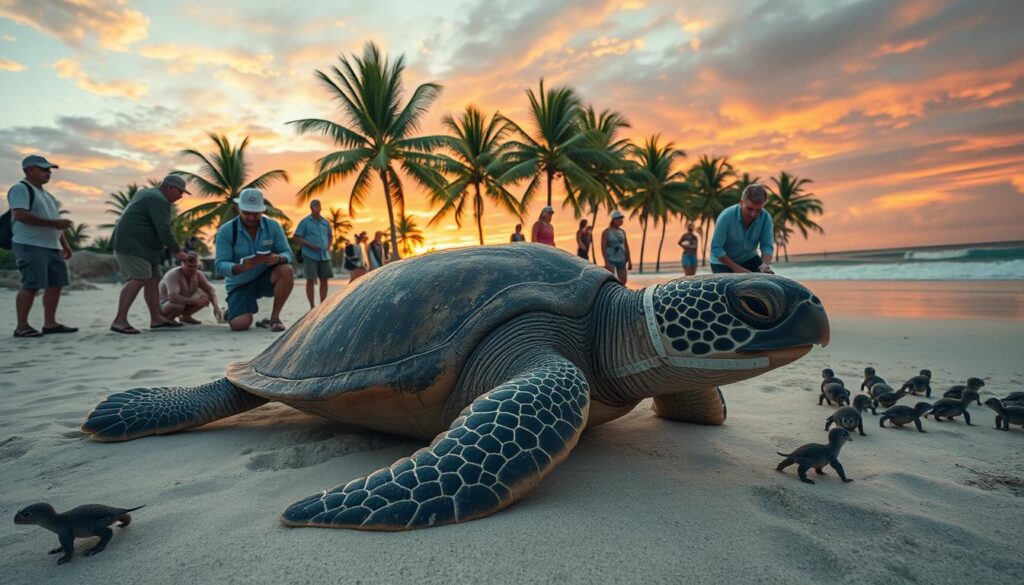
What does saving an ancient mariner look like in 2024? I’ve walked moonlit beaches where volunteers guard nests like treasure, and watched scientists tag migrating giants in midnight seas. Let’s unpack how the world’s rallying to protect these oceanic nomads.
When nations team up for deep-blue diplomacy
Over 180 countries now ban leatherback trade under CITES—a global pact shielding endangered species. Satellite tracking reveals migration highways, helping ships avoid collision zones. In Costa Rica’s Gandoca Reserve, nests surged 74% after patrols began. That’s 1,200+ hatchlings yearly reaching waves instead of poachers’ buckets.
Beach towns rewriting survival stories
In Terengganu, Malaysia, former egg collectors now run hatcheries. “We protect what we love,” a local guide told me, showing baby tracks in dawn sand. Florida’s Juno Beach sees 30% fewer disoriented hatchlings since switching streetlights to turtle-friendly amber.
| Approach | Location | Impact |
|---|---|---|
| Beach Guardians | Papua New Guinea | 92% nest survival rate |
| Fishing Gear Mods | California Coast | 67% fewer entanglements |
| Plastic Swap Programs | Ghanaian Villages | 41% less beach debris |

Here’s what fuels hope: when conservation clicks, recovery follows. The Eastern Pacific population grew 4% annually since 2010. Not bad for a species that’s outlived ice ages and asteroids. Their secret? Us—communities choosing nets over plastic, moonlight over flashlights, and wonder over waste.
Signing Off with Real-World Insights and a Nod to Nature
Standing knee-deep in Costa Rican surf at midnight, watching a two-thousand-pound shadow vanish into black waves, I realized something: we’re all part of their story. Over the years, I’ve seen beach patrols boost hatchling survival by 74% in one season—proof that small actions spark big waves.
These ancient mariners still surprise us. Last year, researchers found a female who’d swum 12,000 miles since 2005—her path scribbling hope across ocean maps. Yet every nest I’ve guarded whispers the same truth: plastic bags and fishing lines don’t play fair.
Here’s what sticks with me. When Malaysian villagers swapped egg-poaching for hatchery jobs, nests tripled. When Florida swapped white streetlights for amber, confused hatchlings found the sea faster. We’re learning.
So keep wondering about those odd rubbery shells and moonlit beaches. Share that curiosity like kids trading baseball cards. Who knew following rubbery-shelled nomads could teach us about grit? The ocean’s full of teachers—if we’re brave enough to wade in.