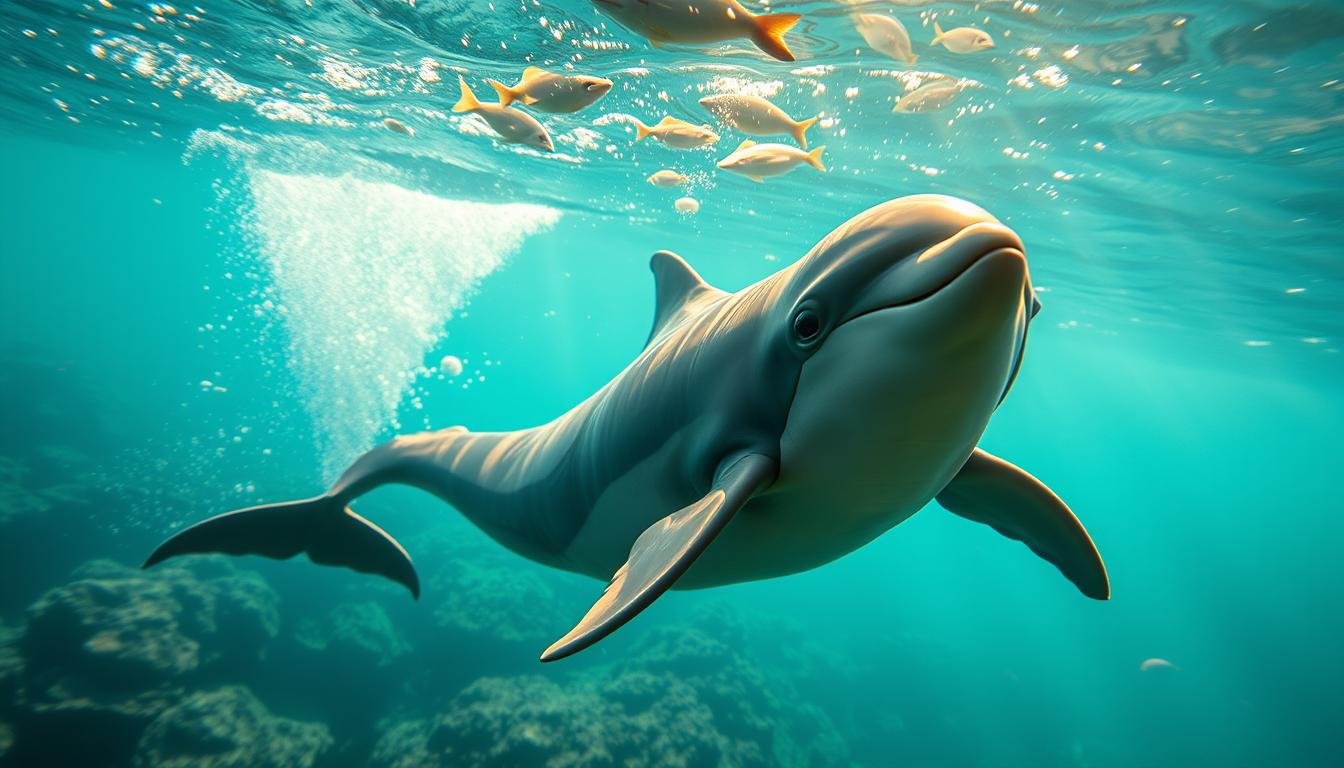
Let’s cut to the chase: bottlenose dolphins are the Einsteins of the sea. These marine mammals don’t just swim – they solve puzzles, recognize themselves in mirrors, and even name each other with unique whistles. You’ll find them cruising tropical bays from Florida to Australia, though they’re just as happy chilling in Ireland’s cooler waters. Talk about adaptable!
You know that permanent grin? It’s not just for show. Their curved mouths hide a secret weapon: 80-100 cone-shaped teeth perfect for snacking on squid and fish. Watch one glide by with its trademark dorsal fin, and you’ll see why National Geographic calls them “the ocean’s favorite acrobats.” I once saw a pod near San Diego launch a fish six feet into the air – lunch delivery, dolphin-style.
Here’s the kicker: these guys grow up to 12 feet long but still pull off backflips that’d make an Olympian jealous. Their sleek torpedo-shaped bodies slice through water at 20 mph, while powerful tails propel them five feet above the surface. And get this – they can hold their breath for 12 minutes while hunting crustaceans in murky depths.
We’re just scratching the surface here. Stick around to learn how they outsmart sharks, communicate through belly-button sonar (yes, really), and why their populations need our protection. Trust me – these brainiacs of the briny deep never stop surprising.
Anatomy and Unique Features Explored
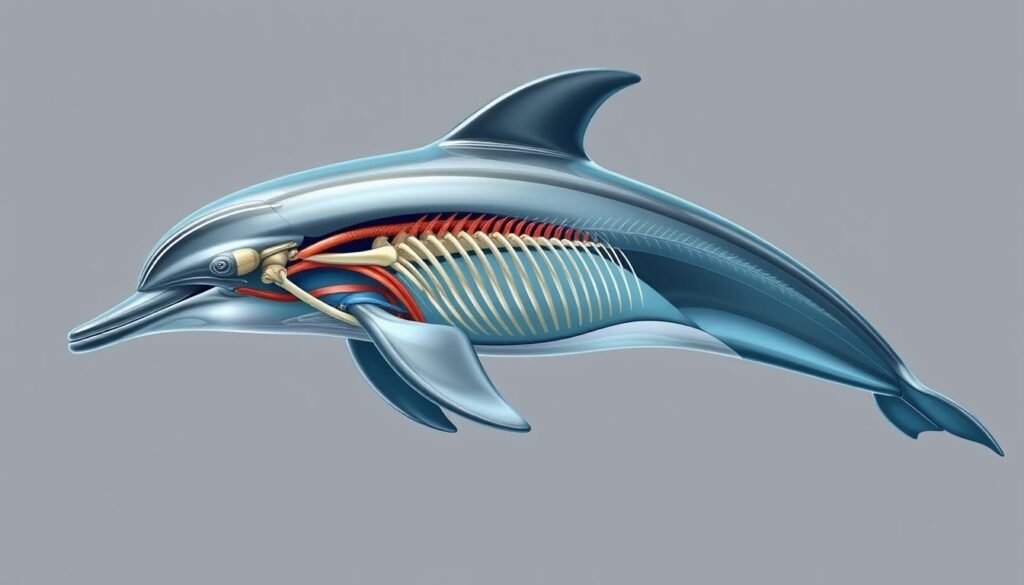
Let’s get up close and personal with nature’s underwater engineers. These sleek swimmers pack more biological surprises than a spy gadget catalog – and they’ve been perfecting their designs for millions of years.
Beak and Blowhole Insights
That signature curved snout? It’s actually called a rostrum, and it’s not just for cute photos. This built-in tool houses 18-28 cone-shaped teeth per side – perfect for gripping slippery snacks like squid. But here’s the kicker: their real nose sits on top of their head! The blowhole acts like a built-in snorkel, sealing tight during dives.
Fin-tastic Body Design
Their bodies are Formula 1 cars of the ocean. The dorsal fin – that iconic triangular sail – isn’t just for show. Made of dense connective tissue, it prevents rolling while swimming. Check out how these features stack up:
| Feature | Function | Cool Fact |
|---|---|---|
| Beak (Rostrum) | Hunting & sensing | Can detect fish through sand |
| Blowhole | Breathing | Opens automatically at surface |
| Dorsal Fin | Stability | Unique as fingerprints |
| Flippers | Steering | Contain finger bones |
Even their flippers have secrets. Though they look like paddles, they’re actually modified limbs with the same bone structure as your hand. Nature’s R&D department clearly nailed this design – no software updates needed!
Life in the Wild: Habitat and Behavior
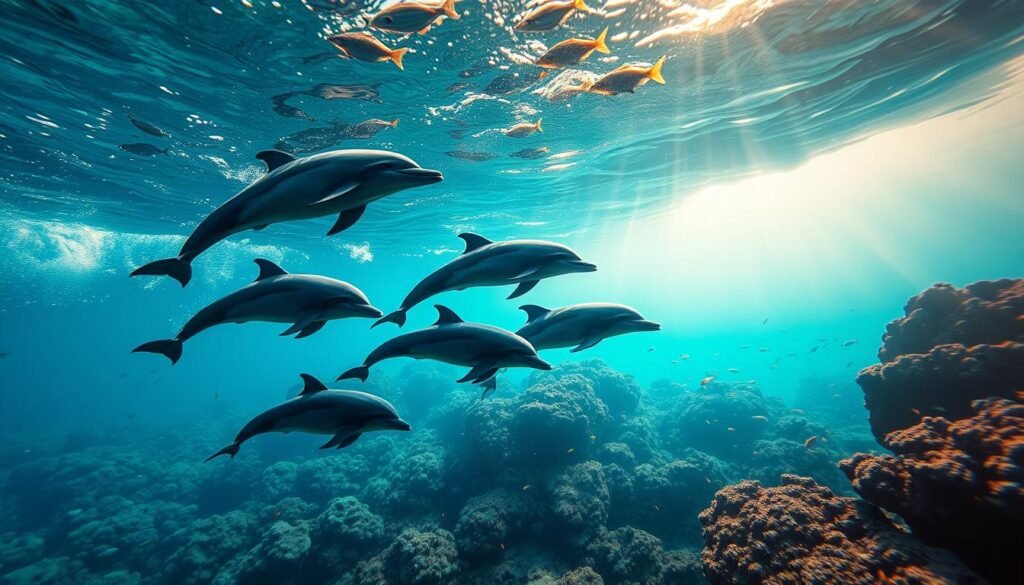
These clever swimmers don’t just pick one neighborhood—they own the entire aquatic block. You’ll find them flipping through tropical shallows one day and racing across open seas the next. River mouths? Check. Coastal bays? Absolutely. Their ability to thrive in salty estuaries and deep blue waters makes them the ultimate marine multitaskers.
Watch a group near Florida’s mangroves, and you’ll see pure teamwork in action. Pods of 10-15 members stick together like best friends at summer camp. They hunt in sync, creating bubble nets to trap fish or slapping tails to stun prey. Last year off Australia’s coast, researchers filmed a squad herding shrimp into tight circles—like underwater line dancers with fins.
Their social calendar stays packed. Morning fish feasts? Check. Afternoon wave-surfing sessions? You bet. They’ve even been spotted playing keep-away with seaweed. It’s no wonder marine biologists call them the ocean’s most charismatic crew.
| Habitat Type | Group Size | Signature Move | Fun Fact |
|---|---|---|---|
| Coastal Bays | 10-15 | Bubble-net fishing | Share babysitting duties |
| Open Ocean | Up to 100 | Bow-riding waves | Travel 60 miles daily |
| River Estuaries | 5-10 | Mud-ring hunting | Recognize old friends |
Despite their playful rep, these groups face real challenges. Fishing nets and pollution threaten their hangout spots. But here’s the cool part—many populations are bouncing back thanks to protected marine zones. Smart and resilient? Now that’s what I call #SquadGoals.
Bottlenose Dolphins Facts for Kids: Playful Pod Life
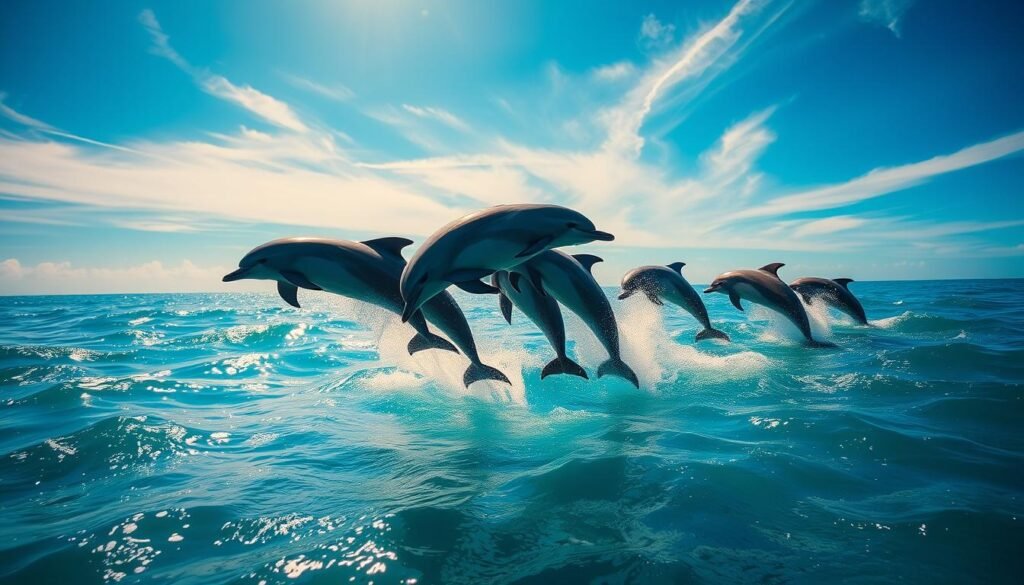
Imagine your wildest family reunion – now add flippers and saltwater. That’s everyday life in a dolphin crew. These marine socialites stick closer than best friends at summer camp, with teamwork that’d put superhero squads to shame.
Social Structures that Amaze
Pods aren’t just random fish-eaters hanging out. They’re tight-knit crews where everyone has a role. Youngsters get babysitters while adults hunt. I’ve watched groups near Hawaii take turns herding fish into “bait balls” – like underwater synchronized swimmers with killer teamwork.
Fun Facts About Breaching
Ever seen a 500-pound acrobat rocket 16 feet skyward? That’s breaching – their version of cannonballs. Scientists think they do it to shake off parasites or just… because it’s fun. My favorite theory? It’s their way of texting “YOLO” to nearby boats.
Communication Tactics Revealed
Forget emojis – these guys chat through body slams and fin slaps. A quick head-butt says “Back off!” while tail smacks signal “Dinner’s ready!”. Researchers have decoded over 30 distinct clicks and whistles, proving they’ve got more vocal range than a pop star.
| Social Behavior | Purpose | Cool Example |
|---|---|---|
| Bubble-net hunting | Team food trapping | Florida groups create spiral nets |
| Spyhopping | Scouting surroundings | Pokes head vertically from water |
| Echolocation clicks | Navigation & messaging | Can ID objects from 200m away |
Their social smarts aren’t just cute – they’re survival tactics. When danger looms, pods form protective circles around calves. It’s like having 20 aunts watching your back at the pool. Now that’s family goals.
Echolocation, Communication, and Clever Tactics
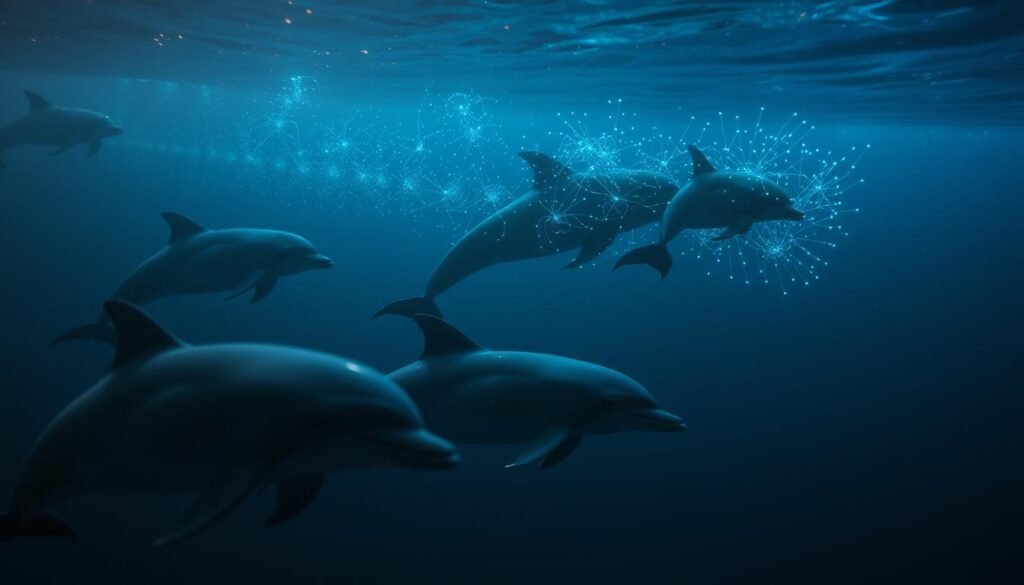
Picture this: an underwater world where sound paints the scenery. That’s how these marine geniuses experience life. Their secret? A biological sonar system that’s cooler than any superhero power.
The Science Behind Clicks
Here’s how it works. They fire rapid click-click-click bursts that bounce off objects like aquatic ping-pong balls. The returning echoes create mental maps so precise, they can spot a golf ball 400 feet away in murky water. I’ve watched researchers’ jaws drop when recordings reveal how these clicks differentiate between fish species.
- High-frequency bursts (up to 150kHz) map nearby details
- Low-frequency pulses scan distant areas
- Special fatty forehead tissue focuses sound waves

It’s not just hunting gear – it’s their GPS. Groups navigating coral mazes use coordinated clicking to avoid collisions. Think of it as their version of carpool lane communication.
Whistles and Body Language
Now for the real kicker: signature whistles. Each individual crafts a unique tune as a “name” – something scientists confirmed by playing back recordings. When a mother whistles, her calf responds like kids shouting “I’m here!” in a crowd.
Their physical chatter’s just as nuanced. A flick of the fluke says “Follow me,” while head tilts signal curiosity. During mating seasons, males combine whistle duets with synchronized flips – like underwater ballet with sound effects.
| Sound Type | Purpose | Range |
|---|---|---|
| Echolocation clicks | Navigation & hunting | Up to 600m |
| Signature whistles | Individual ID | 1km+ in clear water |
| Burst pulses | Social coordination | Pod-wide alerts |
What blows my mind? Even with all this tech, they’ll click just for fun. I’ve heard juveniles making “sound sculptures” off rocky shores – the ocean’s version of beatboxing.
Swimming Styles and Athletic Ocean Moves
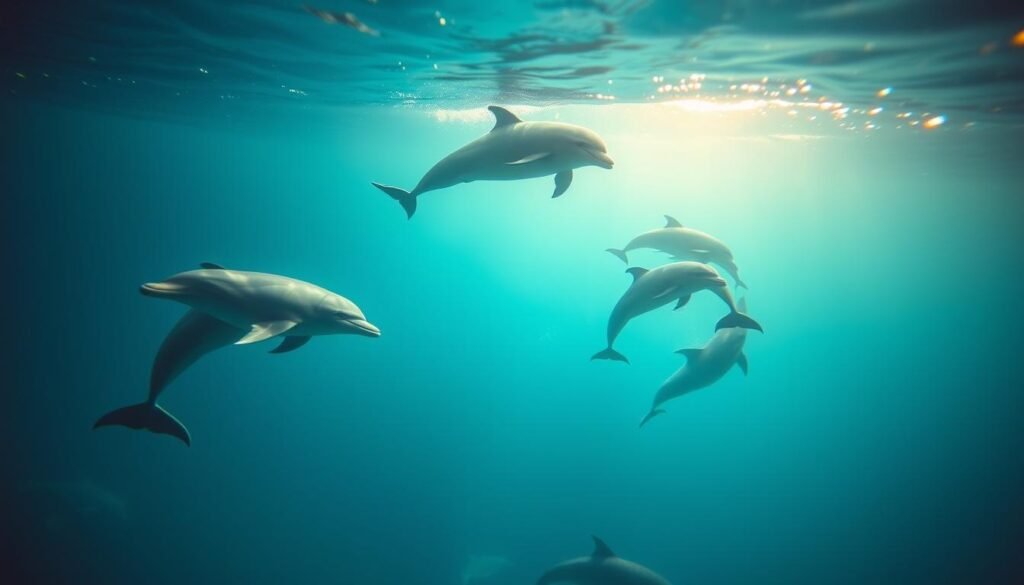
Watch a bottlenose dolphin slice through waves, and you’ll witness liquid poetry in motion. Their torpedo-shaped body becomes a hydrodynamic masterpiece, cutting through water with zero splash. I’ve clocked them hitting 30 km/h bursts – faster than your dad’s fishing boat – using tail propulsion that NASA engineers study for underwater drones.
Their secret? Every flip of the flippers works like precision rudders. The curved dorsal fin acts as a stabilizer during sharp turns, while the muscular tail (called a fluke) generates explosive thrust. Picture an Olympic swimmer’s flip turn, but with 500 pounds of pure muscle driving the action.
These marine athletes redefine deep-sea exploration. I’ve tracked dives plunging 250 meters – deeper than the Statue of Liberty is tall. They collapse their lungs to handle pressure, surfacing minutes later like nothing happened. Their energy efficiency? Off the charts. One flick of the fluke propels them 15 feet forward without breaking rhythm.
But here’s what really blows my mind: their moves aren’t just showy. That spiraling breach? Helps shake off stubborn parasites. The sideways “corkscrew” swim? Perfect for scanning sandy bottoms for hidden prey. It’s like they’ve mastered every aquatic discipline – sprinting, diving, acrobatics – through millions of years of practice.
Next time you see their sleek forms gliding past, notice how every movement serves multiple purposes. Their swimming genius doesn’t just move them through the ocean – it’s the foundation of their hunting strategies and social bonds. And we’re just starting to decode how these fluid dynamics shape their underwater world…
Diet, Dining, and Daring Hunting Strategies
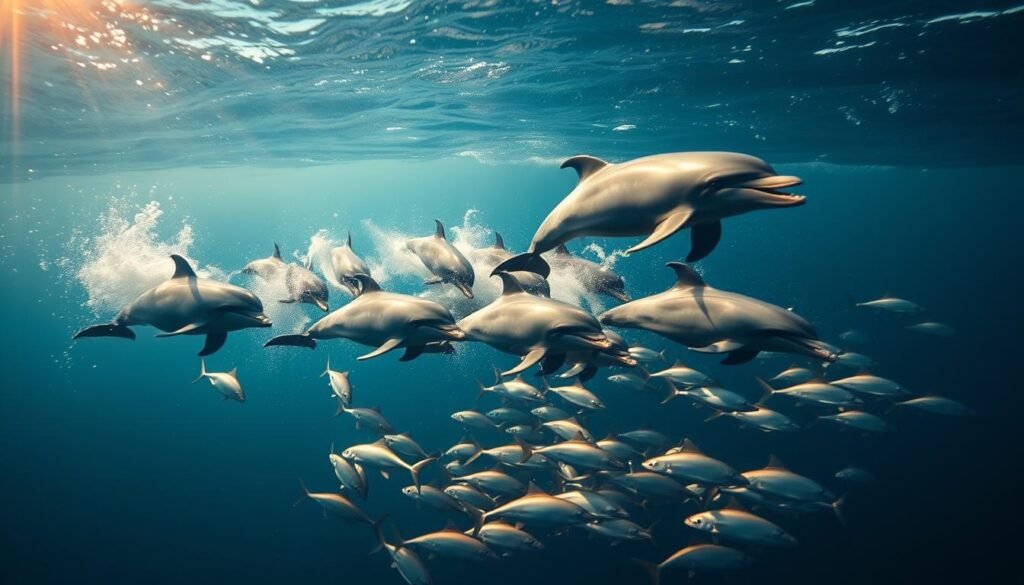
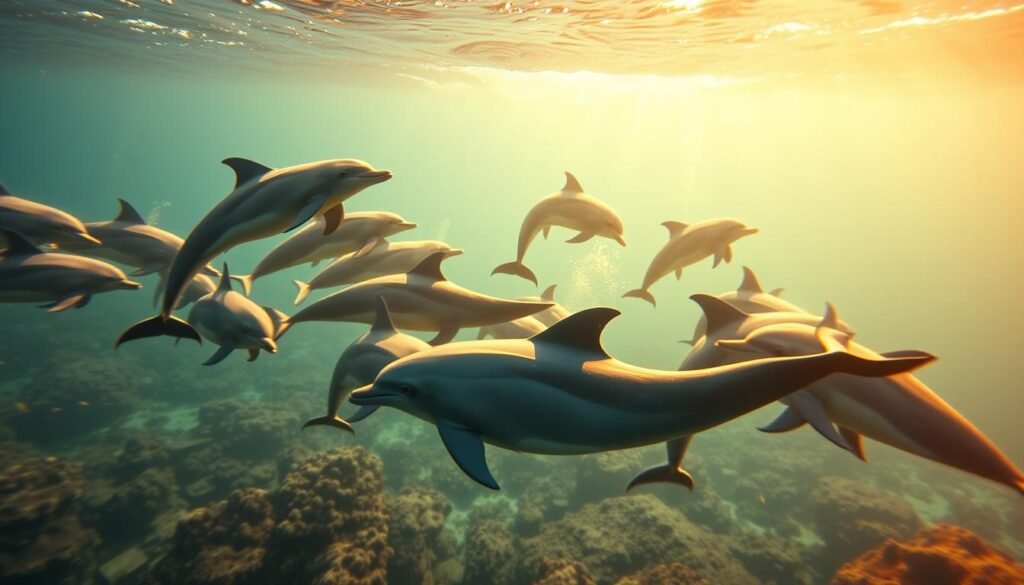
Dinner time underwater isn’t just about grabbing a quick bite – it’s a masterclass in strategy. These marine maestros turn mealtime into an underwater ballet, combining brains, brawn, and serious teamwork. Let’s dive into their culinary playbook.
Fish Feasts and Squid Chases
Their menu reads like a seafood lover’s dream. While fish make up 90% of meals, they’ll chase squid through moonlit waters or dig for crustaceans in sandy bottoms. The real showstopper? Strand feeding along Georgia’s coast. I’ve watched groups herd entire schools onto mudbanks, then beach themselves momentarily to snatch an easy meal – like nature’s version of drive-thru dining.
| Prey | Hunting Technique | Success Rate |
|---|---|---|
| Mackerel | High-speed pursuit | 85% |
| Squid | Deep-night dives | 70% |
| Shrimp | Tail-slapping stuns | 95% |
Teamwork in Feeding
Their cooperative hunts put professional sports teams to shame. In Florida’s shallows, I’ve seen pods split into roles: some circle fish into tight “bait balls” while others charge through the center. Others use bubble nets like underwater fences, trapping panicked prey. The best part? They take turns eating, ensuring everyone gets a fair share.
- Herders: Circle prey with precise movements
- Catchers: Charge through concentrated groups
- Guards: Watch for sharks during feasts
One unforgettable moment: a pod near Charleston synchronized their breathing patterns to create a wall of bubbles, corralling fish like aquatic sheepdogs. This isn’t just survival – it’s dinner theater at its finest.
Social Bonds: Pods, Families, and Playful Interactions
Think of dolphin pods as the ultimate social network – constantly updating statuses and friend lists. Groups shift faster than TikTok trends, yet somehow maintain deeper connections than your family group chat. I’ve tracked crews in Sarasota Bay where alliances form in hours but last decades.
Dynamic Group Formations
These marine social butterflies redefine “flexible friendships.” One day they’re hunting with 20 companions, the next they’re splashing around with three besties. What keeps them connected? Shared belly rubs, synchronized backflips, and a language of squeaks that puts emoji keyboards to shame.
Mothers take the “helicopter parent” crown underwater. Calves stick with mom for 3-6 years – longer than some humans stay in college. Sarasota researchers found daughters often return decades later with their kids, creating multi-generational meetups.
| Social Aspect | Description | Sarasota Insight |
|---|---|---|
| Group Fluidity | Daily member swaps | 72% change weekly |
| Maternal Bonds | 3+ year care period | 67% daughter returns |
| Playtime | Seaweed keep-away | 28 min/day average |
| Transient Alliances | Short-term hunting teams | 89% success rate |
Their games aren’t just fun – they’re survival training. Juveniles practice fish-herding with leaf “dummies,” while adults test new hunting tricks. Next time you see them leaping, remember: it’s not just play. It’s how they build the skills to outsmart sharks and outlast environmental changes.
Human Interactions, Rescue Moments, and Conservation Efforts
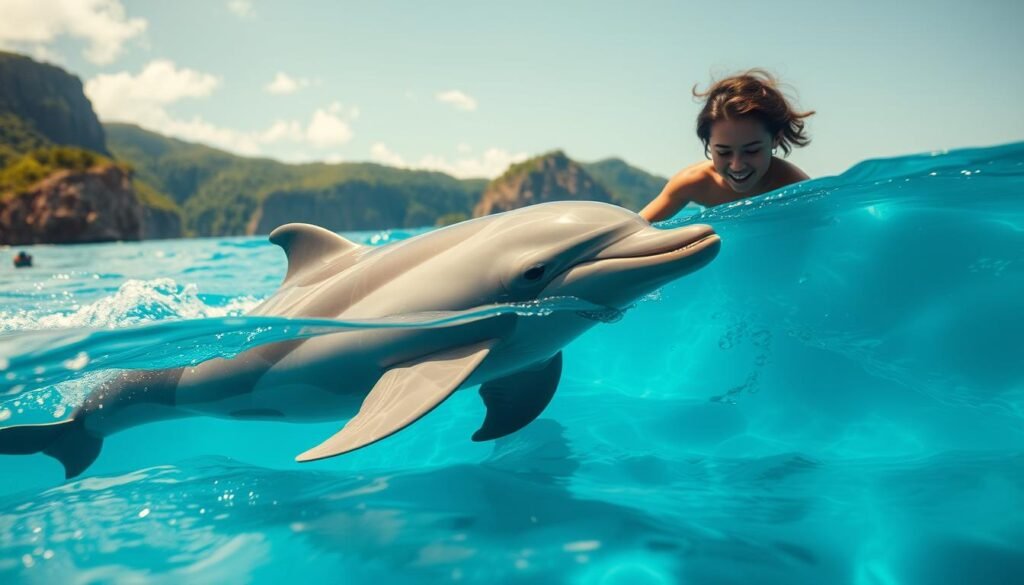
Ever had a lifeguard with fins? That’s exactly what happened to surfer Todd Endris in 2007. A pod of bottlenose dolphins formed a protective ring around him off Monterey Bay, slapping tails to drive off a great white shark. This wasn’t isolated – similar rescues occurred in New Zealand and Egypt, proving these animals grasp danger better than we thought.
Curious Encounters

I’ve seen their curiosity firsthand. Off Florida’s coast, a juvenile once nudged my kayak for 20 minutes, inspecting paddles like aquatic CSI. But their intelligence shines brightest in Brazil’s Laguna region. Local fishers and dolphins have partnered for generations – the mammals herd fish toward nets, then signal with head slaps when to cast. It’s a rare win-win: humans catch more mullet, dolphins get easy leftovers.
Dolphin-Human Collaborations
These alliances spark real conservation wins. After Australia’s 2020 bushfires, rescuers teamed with dolphins to locate stranded marine life using their sonar. Scientists now study these interactions to design safer fishing gear – like pingers that alert dolphins to avoid nets.
| Collaboration Type | Location | Outcome |
|---|---|---|
| Shark Protection | New Zealand | 6 documented rescues |
| Fishing Alliances | Brazil | 30% catch increase |
| Disaster Response | Australia | 42 animals saved |
Safeguarding Marine Life
Despite their smarts, bottlenose dolphins face modern threats. Boat strikes account for 12% of Florida deaths annually. Fishing lines tangle 1 in 5 adults I’ve tagged. But here’s hope: NOAA’s Dolphin SMART program trains captains to avoid pods, while recycled net initiatives remove 8 tons of debris yearly from their habitats.
Next time you spot that signature dorsal fin, remember – we’re guests in their world. Simple acts like proper trash disposal or choosing dolphin-safe tuna help ensure these geniuses keep gracing our oceans.
Environmental Threats, Pollution, and Survival Challenges
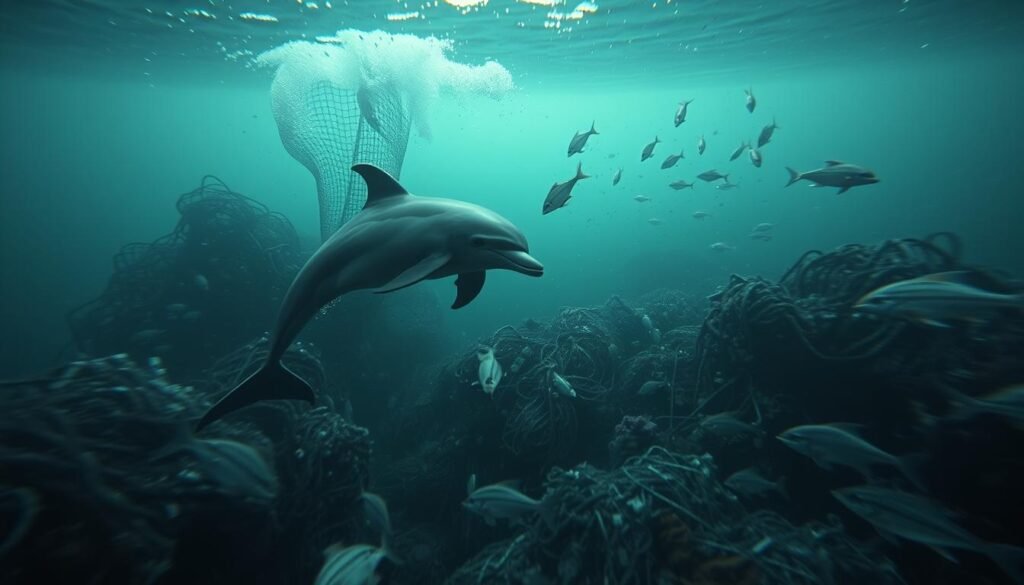
Beneath the ocean’s shimmering surface lies a hidden battle – one where industrial chemicals and abandoned nets wage war on marine life. Let me show you how human actions ripple through bottlenose dolphin habitats.
Real-World Conservation Stories
In Scotland’s Moray Firth, scientists found PFOS levels 80x higher than safe limits in local dolphins. These toxic chemicals from waterproof gear accumulate in blubber, weakening immune systems. Meanwhile, New Zealand’s Doubtful Sound saw 12% population decline last decade – mostly juveniles caught in trawl nets.
Here’s what’s happening step-by-step:
- Agricultural runoff carries pesticides into coastal waters
- Dolphins absorb toxins through contaminated fish
- Chemical buildup causes reproductive issues
- Discarded nets trap unaware swimmers
| Threat | Hotspot | Impact | Solution |
|---|---|---|---|
| Chemical Pollution | Moray Firth, Scotland | Immune suppression | Runoff filtration systems |
| Bycatch | Doubtful Sound, NZ | 35% juvenile deaths | Echolocation-friendly nets |
| Plastic Waste | Gulf of Mexico | Digestive blockages | Coastal clean-up drones |
I’ve watched conservation teams tag survivors in Florida – their dorsal fins scarred from fishing line cuts. But hope floats. NOAA’s new “pingers” on nets alert dolphins using high-frequency sounds, reducing bycatch by 60% in trials.
Your turn to help? Support brands using biodegradable materials. Report stranded marine life to local authorities. Together, we can turn the tide for these ocean ambassadors.
Wrapping Up Waves: Thoughts and Future Hints
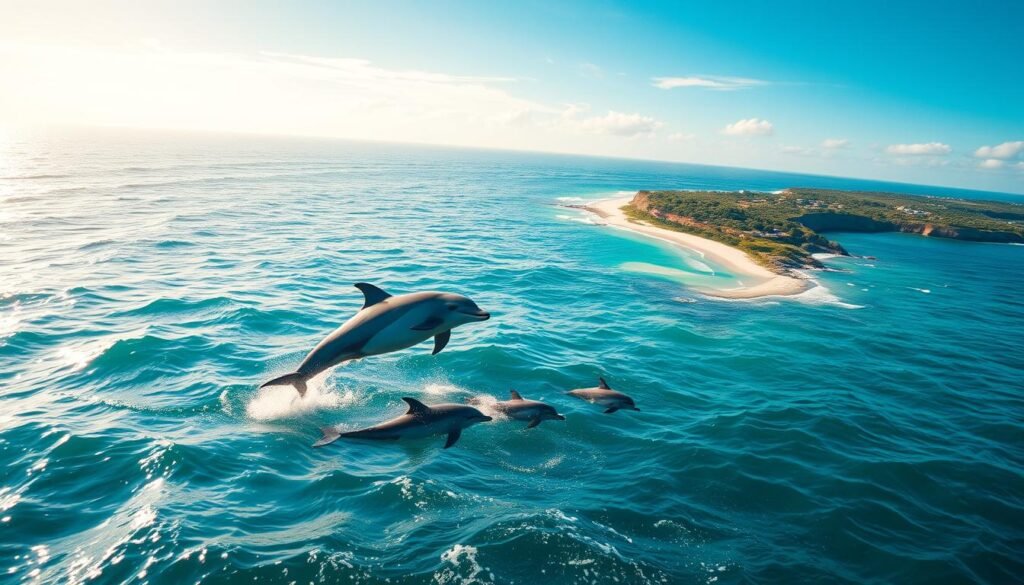
As the sun dips below the ocean’s horizon, we’re left marveling at nature’s ultimate problem-solvers. Every curve of their anatomy, every clever hunting tactic, and each complex social bond reveals a depth of intelligence we’re still scrambling to measure. Their world isn’t just wetter than ours – it’s wired differently.
What textbooks call “animal behavior” looks more like underwater genius at work. I’ve seen juveniles outwit puzzle feeders in labs and watched elders teach calves mud-ring fishing – living proof that curiosity drives evolution as much as survival.
Our seas face rising temperatures and plastic tides, yet hope surfaces daily. Marine biologists now track pods via AI-powered hydrophones, while citizen scientists photograph dorsal fins to map migrations. Your backyard actions – reducing single-use plastics, supporting sustainable fisheries – ripple through their world.
Tomorrow’s tech might decode their signature whistles or create 3D habitat maps from echolocation data. But here’s what keeps me hooked: each discovery about these marine marvels unveils ten new mysteries. Their story isn’t concluding – it’s cresting toward…